

As the world's largest coconut sugar producer, Indonesia supplies more than half of the global market.
This dominance is not a recent development — it reflects centuries of agricultural tradition, unique geographic conditions, and an increasingly sophisticated export infrastructure that no other producing country has been able to fully replicate.
For buyers sourcing coconut sugar globally, understanding why Indonesia leads is not just academic — it explains the quality characteristics, certification availability, and supply reliability that make Indonesian coconut sugar the preferred choice for importers in Europe, the USA, Australia, and Japan.
This article covers the six structural reasons behind Indonesia's production dominance, the current state of the global coconut sugar market including organic segment growth, a comparison with other producing countries, and what Indonesia's position means for buyers making sourcing decisions today.
For a detailed look at the production process itself — from coconut palm flower sap tapping through granulation — our article on how coconut sugar is produced in Indonesia provides the full technical and cultural context.
Indonesia Coconut Sugar: Key Facts at a Glance
| Metric | Data | Source/Notes |
| Indonesia's share of world coconut sugar production | > 50% | Largest single producing country globally |
| Total coconut cultivation area (Indonesia) | ~3.5 million hectares | Largest in the world — spread across 33 provinces |
| Primary producing regions | Central Java, West Java, Sulawesi, North Maluku | Central Java (Banyumas, Purwokerto) = heartland of traditional coconut sugar production |
| Annual coconut sugar export value (Indonesia) | USD 100-150 million+ | Growing annually — driven by organic premium demand from EU and US |
| Number of BRCGS-certified coconut sugar facilities | More than any other country | Indonesia leads the world in food safety certified coconut sugar supply |
| Main export destinations | EU (Germany, Netherlands, France), USA, Australia, Japan | EU and US represent majority of certified organic volume |
| Organic coconut sugar market growth rate | ~8-12% per year (2020-2026) | Driven by clean label and health food trends in Western markets |
| Price competitiveness vs Philippines | 10-20% more competitive | For equivalent BRCGS + organic certified product |
1. Unmatched Agroclimatic Conditions for Coconut Palm Cultivation
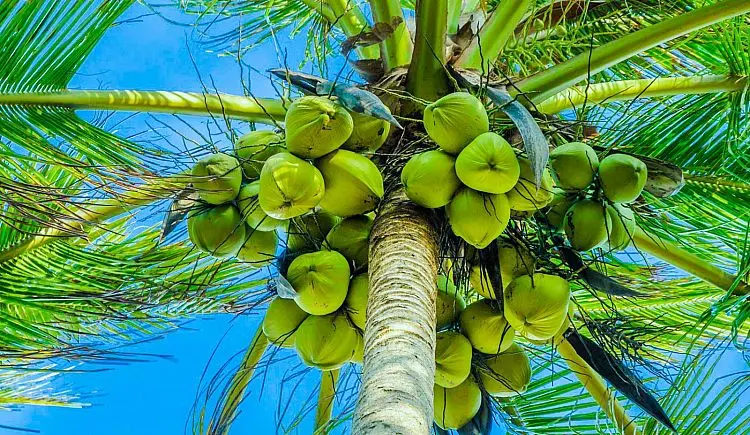
Indonesia's geographic position — straddling the equator across an archipelago of more than 17,000 islands — creates agroclimatic conditions that are ideal for coconut palm cultivation in ways that cannot be replicated in other producing countries.
- Year-round tropical climate: Unlike many agricultural commodities that are highly seasonal, Indonesia's equatorial location provides consistent temperatures (25-32°C) and rainfall year-round — enabling continuous coconut sap production without the pronounced seasonal fluctuations that affect Philippine and Sri Lankan producers.
- Volcanic soil fertility: Central Java's coconut growing regions sit on some of the most fertile volcanic soils in the world. The mineral-rich volcanic substrate — from active volcanoes including Merapi, Merbabu, and Sindoro — produces coconut palms with higher sap yields and more consistent sap quality than palms grown in less fertile soils.
- Optimal elevation range: The coconut sugar producing regions of Central Java (Banyumas, Purwokerto, Kebumen) are situated at elevations of 200-800 meters above sea level — within the optimal range for coconut sap sugar content. Higher sugar content in the sap means less evaporation required to produce granulated sugar, lower production costs, and more consistent end-product quality.
- Water availability: Consistent rainfall across most of Indonesia's coconut growing regions ensures that coconut palms maintain consistent productivity — unlike some Philippine growing regions that experience drought stress during El Niño periods, which can reduce sap yield significantly.
2. 300+ Years of Unbroken Production Heritage
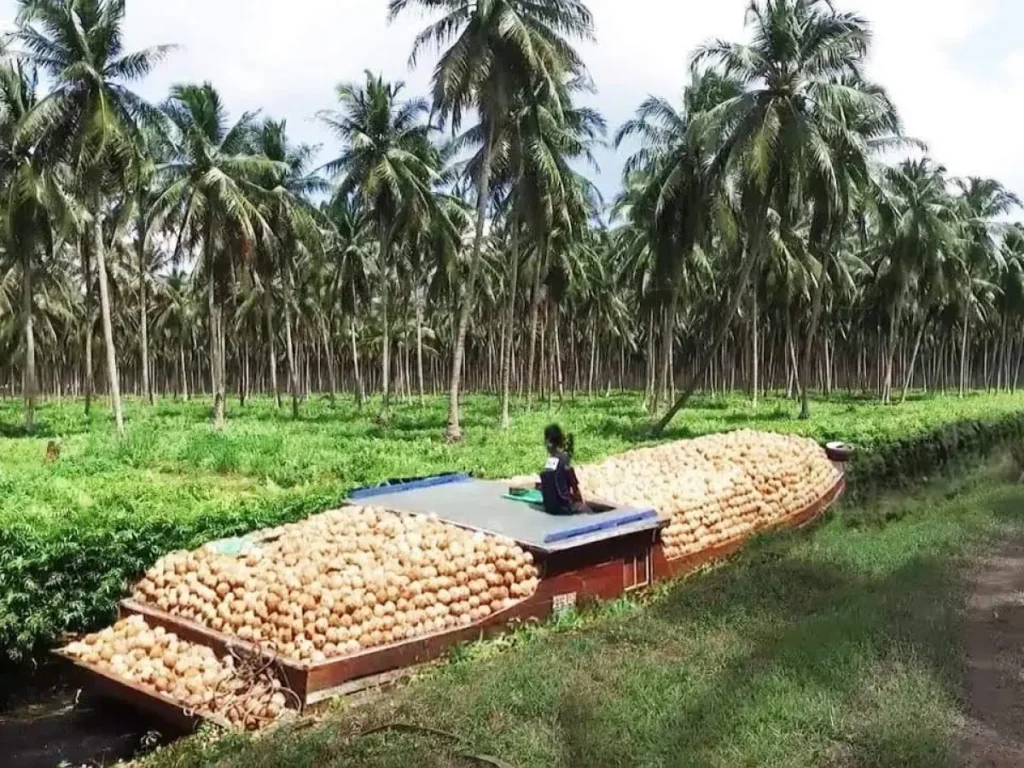
Indonesia's coconut sugar production heritage extends back more than a thousand years — with documented commercial production in Java dating to at least the 8th century.
This depth of tradition is not just cultural — it translates into accumulated production knowledge that has direct commercial implications.
As we explore in detail in our article on the history of coconut blossom sugar in Indonesia, the specific knowledge of which coconut palms to tap, at what frequency, at what time of day, and how to process the sap optimally has been refined over centuries through direct farmer-to-farmer knowledge transfer in ways that cannot be acquired through formal agricultural training alone.
The villages of Banyumas, Purwokerto, and Kebumen in Central Java have been synonymous with quality coconut sugar production for generations.
Farmers in these regions have tapped the same coconut palm groves — sometimes the same individual trees — for multiple generations.
This accumulated knowledge manifests in measurable ways: lower rejection rates, more consistent color and flavor profiles, and lower post-harvest quality incidents compared to producers in newer producing regions or countries.
This heritage cannot be replicated by a new entrant to the coconut sugar market — not in five years, not in twenty. It is Indonesia's single most durable competitive advantage.
3. Production Scale That No Other Country Can Match
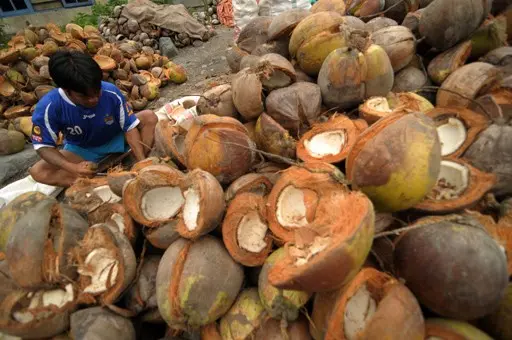
Indonesia's raw material base for coconut sugar production — the coconut palm plantation area — is the largest in the world.
With more than 3.5 million hectares of coconut cultivation spread across 33 provinces, Indonesia has a raw material supply that dwarfs its nearest competitors:
| Country | Coconut Cultivation Area | Annual Coconut Production | Est. Coconut Sugar Production Share | Certified Export Capacity |
| Indonesia | ~3.5 million ha | ~18 billion nuts/year | > 50% of global coconut sugar | Highest — most BRCGS + organic certified facilities |
| Philippines | ~3.3 million ha | ~15 billion nuts/year | ~30-35% of global supply | Significant — but fewer BRCGS-certified coconut sugar producers |
| Sri Lanka | ~400,000 ha | ~3 billion nuts/year | ~5-8% of global supply | Limited — smaller certified export base |
| India | ~2.1 million ha | ~21 billion nuts/year | Primarily copra/oil, not sugar | Minimal coconut sugar export |
| Thailand | ~300,000 ha | ~1.5 billion nuts/year | Small — primarily palm sugar | Mostly palm sugar, not coconut palm sugar |
The Philippines is often cited as Indonesia's closest competitor — and in terms of raw coconut cultivation area, the two countries are comparable.
The key differentiator is the proportion of coconut production dedicated to sugar versus oil: Indonesia's Central Java coconut sugar tradition means a much higher proportion of coconut palms are managed specifically for sap production, while Philippine coconut production is more diversified across copra, coconut oil, and desiccated coconut.
4. The World's Most Developed Certified Coconut Sugar Export Infrastructure
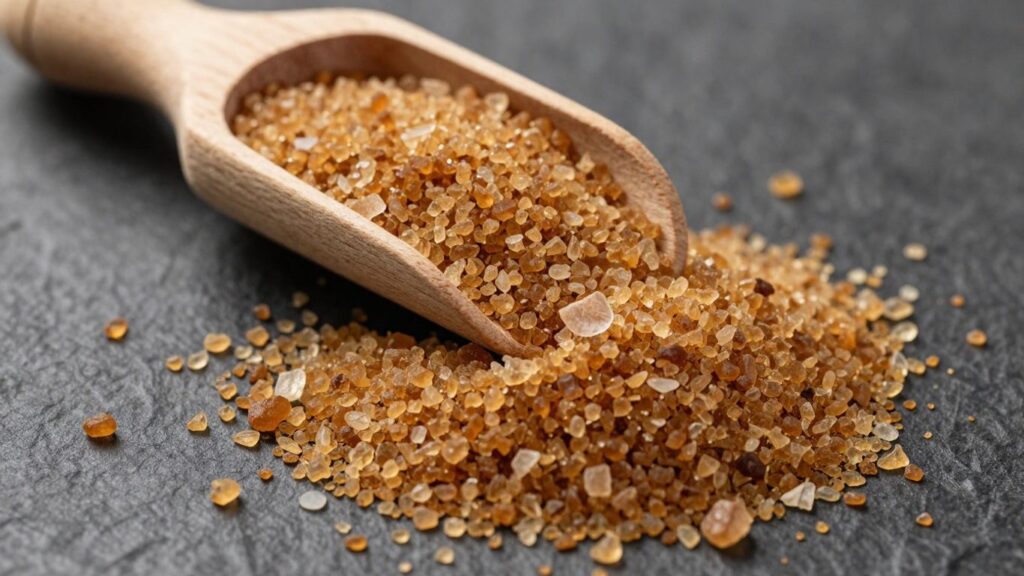
The story behind the world's largest coconut sugar producer is not just about agricultural scale — it is about the transformation of a traditional craft product into a globally compliant, certified export commodity.
Indonesia has more BRCGS certified coconut sugar suppliers than any other producing country in the world.
This certification leadership reflects a decade of investment by Indonesian producers in food safety management systems, laboratory testing infrastructure, and organic certification frameworks that the global market demands.
Our guide to finding a bulk coconut sugar supplier in Indonesia covers the full evaluation framework buyers should apply when assessing this certified supply base.
| Certification | Indonesia | Philippines | Sri Lanka |
| BRCGS Food Safety Grade A | Multiple certified facilities — the most of any producing country | Some certified facilities | Very limited |
| USDA Organic (NOP) | Widely available — multiple USDA-accredited certifying bodies active | Available but fewer options | Limited |
| EU Organic | Strong infrastructure — Control Union, Skal, IMO all active | Available | Limited |
| JAS Organic (Japan) | Available | Available | Very limited |
| Halal MUI | National — widely applicable | IDCP/Philippine equivalent | Not standard |
| ISO 17025-accredited lab testing | Multiple options within Indonesia | Available | Limited local options |
This certification infrastructure advantage is cumulative and self-reinforcing: as more Indonesian producers achieve BRCGS and organic certification, the overall market perception of Indonesian coconut sugar as a reliable, verified source strengthens — which drives more international buyer relationships, which creates more revenue to invest in maintaining and improving certifications.
5. Indonesian Producers Were First to Meet the Clean Label Revolution

The global health food movement that accelerated in the 2010s created a demand for minimally processed, natural sweeteners with a lower glycemic index than refined white sugar.
Coconut sugar's glycemic index of approximately 35 — significantly lower than white sugar's GI of 60-65 — positioned it perfectly for the clean label, health-conscious premium food segment that was growing most rapidly in Western markets.
Indonesian producers, with their existing export infrastructure and deepest production tradition, were best positioned to scale certified supply to meet this demand quickly.
Our article on applications of coconut sugar in the food industry covers the full range of food manufacturing applications where coconut sugar has replaced refined sweeteners.
The timing of Indonesia's certification investment — primarily between 2010-2018 — coincided precisely with the peak growth phase of the clean label movement.
Producers who achieved BRCGS and organic certification during this window established long-term supply relationships with EU and US importers that continue to generate premium pricing and stable demand today.
6. Competitive Pricing Without Compromising Certification Quality

Indonesia's combination of production scale, agricultural efficiency, and competitive labor costs means that BRCGS-certified, EU Organic coconut sugar from Indonesia is typically 10-20% more price-competitive than equivalent certified product from the Philippines, and 25-40% more competitive than Sri Lankan product.
For a complete current pricing reference, our article on coconut sugar export price from Indonesia per ton covers 2026 FOB price ranges by product category, certification tier, and volume.
This pricing advantage is not achieved at the expense of quality — it reflects genuine structural cost advantages including lower raw material costs per unit (higher palm productivity), more established processing infrastructure (lower capital depreciation per MT), and deeper logistical networks (lower per-container handling costs at major Indonesian export ports like Tanjung Emas and Tanjung Perak).
The Indonesian Organic Coconut Sugar Market: Growth, Trends & Projections
Within Indonesia's total coconut sugar production, the organic certified segment has been the fastest-growing subsector for the past decade.
Our article on exporting organic coconut sugar from Indonesia explains the full certification chain for organic product — from farm inspection through per-shipment Transaction Certificate documentation.
| Market Segment | 2020 Estimated Value | 2026 Estimated Value | CAGR | Key Driver |
| Global coconut sugar market (all) | USD 400-500M | USD 700-900M | 8-10% | Health food growth in EU, USA, Australia |
| Organic coconut sugar (global) | USD 150-200M | USD 320-400M | 12-15% | Premium retail demand, organic label claims |
| Indonesia's organic export value | USD 60-80M | USD 150-200M+ | 15-18% | EU organic retail expansion, US health food |
| EU organic coconut sugar import | USD 50-70M | USD 120-150M+ | 12-15% | EU organic food market growth, BRCGS requirements |
| US organic coconut sugar import | USD 30-50M | USD 70-90M+ | 12-14% | Paleo, keto, clean label food trends |
| What this market growth means for buyers The combination of strong demand growth and the structural supply advantages of the largest coconut sugar producer creates a favorable sourcing environment for buyers: sufficient certified supply to meet growing demand without the supply shortage premiums seen in smaller specialty ingredient markets, increasing number of certified supplier options as more Indonesian producers invest in BRCGS and organic certification, and competitive pricing maintained by Indonesia's production scale. For buyers establishing long-term supply relationships, annual contracts with Indonesian certified producers are increasingly the standard approach. |
Indonesia's Coconut Sugar Export Destinations: Where the Product Goes
Europe is Indonesia's largest destination for certified organic coconut sugar, followed closely by the USA and Australia.
For European wholesale buyers specifically, our dedicated article on coconut sugar wholesale importers in Europe covers the full regulatory framework, including BRCGS requirements for EU retail access and EU GSP duty preference rates from Indonesia.
| Destination | Primary Buyers | Certification Required | Volume Trend |
| Germany | Natural food distributors, food manufacturers (Alnatura, dm, Rewe Bio) | BRCGS Grade A + EU Organic | Growing strongly — largest EU organic food market |
| Netherlands | Commodity importers (Rotterdam hub), distributors | BRCGS Grade A + EU Organic | Stable — major transit point for EU distribution |
| United States | Natural food brands, health food retailers, food manufacturers | BRCGS + USDA Organic | Growing — driven by paleo, keto, clean label |
| France | Organic food distributors, premium food brands | BRCGS + EU Organic | Growing — strong organic retail network |
| Australia | Health food importers, organic food brands | BRCGS + USDA/Organic | Stable growth — high per-capita health food spending |
| Japan | Natural food importers, specialty food brands | BRCGS + JAS Organic | Niche but high-value — premium pricing |
| Middle East | Food manufacturers, specialty distributors | BRCGS + Halal MUI | Growing — rising health food awareness |
| Source coconut sugar directly from its largest producing country Global Coco Sugar is a BRCGS Food Safety Grade A certified exporter of organic and conventional coconut sugar from Central Java, Indonesia. We supply to buyers across Europe, USA, Australia, Middle East, and Japan with full certification documentation, COA from ISO 17025-accredited laboratories, and REX registration for EU GSP preference claims. Request a Sample or Bulk Quote >>> View Our Certified Coconut Sugar Range >>> |
Conclusion: Why the Largest Coconut Sugar Producer Dominates the Market
Indonesia's position as the world's largest coconut sugar producer is not the result of any single factor — it is the cumulative product of geography, agricultural heritage, production scale, certification investment, and market timing that have compounded over centuries.
No other producing country combines all six of these advantages simultaneously.
For buyers, this means that sourcing certified coconut sugar from Indonesia is not just the most obvious choice — it is structurally the most defensible one.
The combination of the world's deepest production heritage, the largest certified supply base, and the most competitive pricing for equivalent quality makes Indonesia the natural anchor of any serious coconut sugar sourcing strategy.
| Source from the world's most experienced coconut sugar producing country Global Coco Sugar is a BRCGS Food Safety Grade A certified manufacturer and exporter of organic and conventional coconut sugar from Central Java, Indonesia — connecting centuries of traditional production expertise with the certification infrastructure that global buyers require. Available in granulated, fine powder, and cube formats with full documentation support. Contact Our Export Team >>> View Our Coconut Sugar Range >>> Our Certifications & Company Profile >>> |


