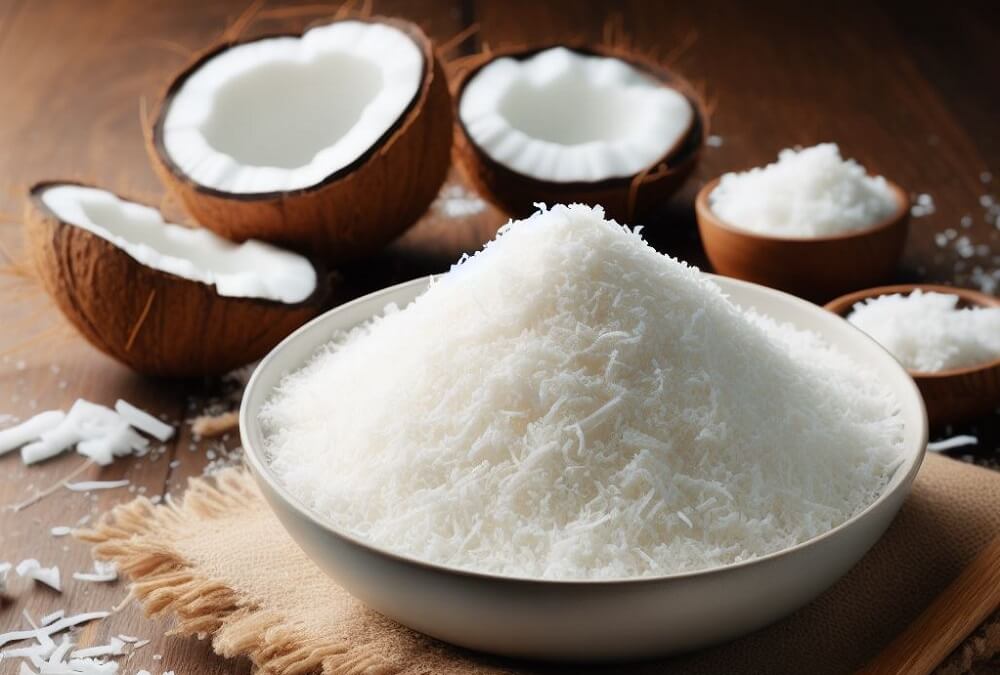
Coconut has long been one of the most loved tropical ingredients in the world. It’s rich in flavor, beautifully aromatic, and adds a natural touch of sweetness to both desserts and savory dishes. One of the most convenient ways to enjoy coconut’s versatility is through Desiccated Coconut, a form of dried and grated coconut meat that blends easily into countless recipes.
But not all desiccated coconut is the same. The two most popular grades — fine and medium — differ in texture, appearance, and best usage. Choosing the right one can make a big difference in the final result of your cooking or baking. This guide will help you understand the distinctions, when to use each, and the health benefits of this delicious ingredient.
What Is Desiccated Coconut?
Desiccated coconut is simply dried coconut meat, prepared from fresh, mature coconuts. After removing the shell and brown skin, the white flesh is washed, grated, blanched, and dried to a low moisture level. This drying process helps preserve the coconut’s natural oil, nutrients, and flavor, giving it a long shelf life.
It comes in different grades depending on particle size — with fine and medium being the most common. Each serves a unique purpose depending on your recipe’s texture and visual goals.
Fine Desiccated Coconut
Fine-grade coconut has a soft, powdery texture. The tiny particles blend seamlessly with batters, fillings, and doughs, making it ideal for recipes that require a smooth, consistent finish.
You’ll often find fine coconut in baking recipes, where it adds gentle moisture and a light tropical note without altering texture. It’s perfect for:
- Sponge cakes, muffins, and cookies
- Pastries and confectionery fillings
- Ice creams and creamy desserts
Fine desiccated coconut is also great for extracting coconut milk or cream because its smaller flakes release oil and flavor efficiently. If you prefer a smooth consistency and subtle taste, this grade is the right choice.
Medium Desiccated Coconut
Medium-grade coconut features larger, more visible flakes that retain their natural chewiness. This type adds texture, crunch, and a more pronounced coconut flavor. It’s perfect for anyone who enjoys a little bite and wants the flakes to stand out visually.
Medium coconut works beautifully as:
- A topping for cakes, doughnuts, and cupcakes
- An ingredient in granola, snack bars, and cereals
- A flavorful addition to savory dishes such as curries and coated fried shrimp
When toasted lightly, medium flakes become golden brown and emit an irresistible nutty aroma. If you want your dish to look more artisanal and taste more textured, this is the better grade to use.
Fine vs. Medium: Which One Should You Choose?
Your choice depends on what you’re making and the result you want to achieve.
If your recipe requires a smooth, even mixture — like soft cakes or creamy desserts — go with fine-grade coconut. It blends easily without leaving visible flakes.
If you want crunch, texture, and visual appeal, medium-grade coconut is the better option. Its flakes add an attractive finish and make every bite more exciting.
In short, fine coconut is for refinement, while medium coconut is for texture. Both are delicious and versatile, enhancing everything from desserts to savory dishes.
The Health Benefits of Desiccated Coconut
Beyond its culinary uses, dried coconut also offers many health benefits. It’s not only tasty but also packed with nutrients that support your overall wellness.
1. Rich in Healthy Fats
Dried coconut is full of medium-chain triglycerides (MCTs), a type of fat that the body quickly converts into energy. These fats can help boost metabolism and improve endurance, making them a great natural energy source.
2. Excellent Source of Fiber
High in dietary fiber, grated coconut supports healthy digestion and helps you feel full longer. It’s an excellent choice for anyone looking to maintain digestive balance or manage appetite naturally.
3. Packed with Minerals
Coconut contains important minerals such as iron, manganese, and copper, all of which play key roles in bone health and energy production.
4. Gluten-Free and Plant-Based
This tropical ingredient is naturally gluten-free, non-GMO, and vegan-friendly, making it suitable for almost any diet or lifestyle.
5. Boosts Immunity
Thanks to its healthy fats and nutrients, coconut helps strengthen the immune system and provides long-lasting energy throughout the day.
Including this ingredient in your meals not only makes them more delicious but also contributes to a balanced and nourishing diet.
Baking with Desiccated Coconut
Few ingredients elevate desserts quite like baking with desiccated coconut. It brings warmth, flavor, and aroma to baked goods, making every bite feel tropical and satisfying.
Here are some tips for baking success:
- Adjust the moisture: Coconut absorbs liquid easily, so if your batter seems dry, add a little more milk or oil.
- Toast for flavor: Lightly toasting coconut enhances its aroma and gives a beautiful golden color.
- Use fine coconut inside the batter: It helps maintain structure and consistency.
- Use medium flakes for decoration: They add crunch and visual appeal on top of cakes or cookies.
- Pair with complementary flavors: Coconut pairs wonderfully with chocolate, caramel, mango, or lime.
From macaroons to muffins, adding a handful of this ingredient ensures your treats are flavorful, aromatic, and perfectly textured.
Storage Tips
To keep your coconut flakes fresh:
- Store in a cool, dry place, away from direct sunlight.
- Use airtight containers to prevent moisture absorption.
- Refrigerate or freeze for long-term storage while preserving aroma and texture.
Proper storage helps maintain the freshness and delicious flavor for months.