Coconut nectar is made from the sap collected from coconut flower blossoms.
The fresh sap is filtered and carefully heated to remove water, concentrating its natural sugars until it becomes a thick syrup.
The nectar is then cooled, checked for consistency, and packed for storage or further use.
The raw material is coconut flower sap—not coconut water from inside the fruit.
The production process is closely related to coconut sugar production, but coconut nectar remains in liquid syrup form instead of being concentrated further until crystals form.
How Is Coconut Nectar Made? Quick Answer
In simple terms, coconut nectar production follows six main stages:
- Prepare a suitable coconut flower cluster.
- Tap the blossom so fresh sap can flow.
- Collect the sap and move it to processing promptly.
- Filter the fresh sap.
- Heat and concentrate the sap until it reaches a syrup-like consistency.
- Cool, check the finished nectar against the required specification, and package it.
The most important part of the process is control.
Changes in collection, filtration, heating, and concentration can influence the syrup’s color, flavor, viscosity, and consistency from batch to batch.
Where Does Coconut Nectar Come From?
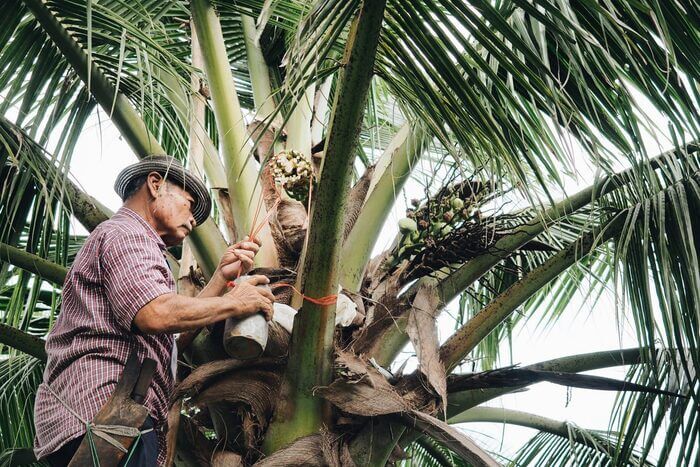
Coconut nectar starts with coconut sap, a naturally sweet liquid collected from the unopened flower clusters of the coconut palm (Cocos nucifera).
It is different from coconut water, which is the liquid found inside the coconut fruit.
For a deeper explanation of the raw material, tapping process, and other products made from coconut sap, read our guide to coconut sap.
The Coconut Nectar Production Process

1. Selecting and Preparing the Coconut Flower
Production begins with a suitable coconut palm flower cluster, also called an inflorescence.
Before sap collection starts, the flower stalk is prepared so it can release sap consistently during tapping.
Good raw-material handling starts at this stage.
A clean collection setup and careful preparation help reduce unnecessary contamination before the sap reaches the processing area.
2. Tapping the Coconut Blossom
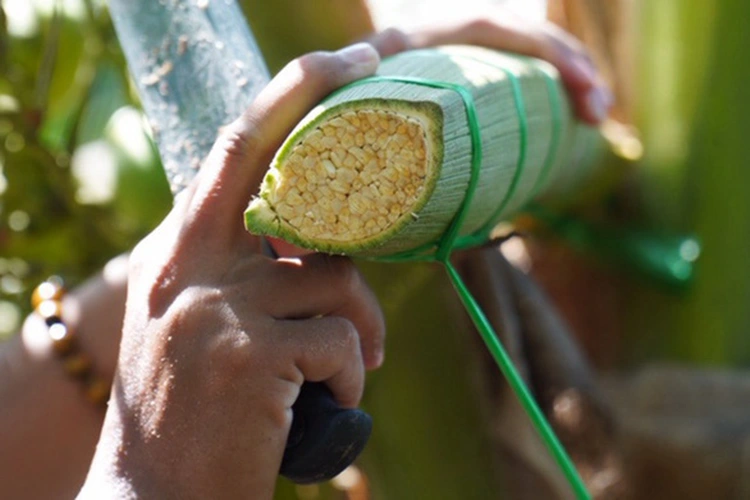
A small cut is made at the prepared flower stalk so the sap can flow into a collection container.
The tapping process requires regular attention because the collection point must remain clean and the flow must be maintained without unnecessary damage to the plant.
For commercial production, the objective is not simply to collect as much sap as possible.
Consistent handling matters because the condition of the fresh sap affects the next processing steps.
3. Collecting Fresh Coconut Sap
Fresh coconut sap is collected regularly and transferred for processing.
Because sap is a sugar-rich liquid, it can begin to change if it is left for too long before processing.
For this reason, producers need controlled collection and handling practices that limit unwanted fermentation and keep the incoming raw material as consistent as possible.
4. Filtering the Sap
Before concentration, the collected sap is filtered to remove visible debris or foreign material picked up during collection.
This is a simple but important step because the syrup becomes more concentrated later in the process.
Filtration also prepares the sap for a more controlled heating stage and helps producers maintain a cleaner, more consistent finished product.
5. Heating and Concentrating the Sap
The filtered sap is heated so part of its water content evaporates.
As water is removed, the liquid becomes progressively thicker and its sweetness and flavor become more concentrated.
Process control matters here.
Research on coconut sap processing has shown that different evaporation methods and processing temperatures can affect production time, color, and the physicochemical characteristics of the resulting syrup.
Excessive or inconsistent heating can therefore change the color and characteristics of the syrup, while insufficient concentration can leave a product that is thinner than the intended specification.
Producers monitor the syrup until it reaches the desired concentration and consistency.
This is also the point where coconut nectar and coconut sugar begin to separate as products: for nectar, processing stops while the product is still a pourable syrup.
For coconut sugar, concentration continues further and the material is worked toward crystallization.
6. Cooling, Quality Checks, and Packaging
Once the target syrup consistency is reached, the coconut nectar is cooled under controlled conditions.
The finished product can then be checked against the supplier’s specification before packaging.
For B2B supply, this stage is important because buyers need more than an attractive syrup.
They need a product that can be supplied with consistent characteristics, suitable packaging, and the documentation required for their procurement or quality-control process.
What Does Coconut Nectar Look and Taste Like?
Finished coconut nectar is typically a thick amber-to-brown syrup with a caramel-like sweetness.
Depending on the raw sap and the degree of concentration, the flavor may also have mild floral, toasted, or earthy notes.
Its viscosity, color, and flavor can vary between suppliers and production batches, which is why industrial buyers should evaluate a product specification and, when possible, a sample before committing to commercial volume.
Coconut Nectar Production: What Matters for B2B Buyers
For food manufacturers, importers, distributors, and procurement teams, understanding how coconut nectar is made is useful because production variables can affect how the ingredient performs in a formulation.
| Buyer Check | Why It Matters | What to Request |
| Concentration / soluble solids | Influences sweetness, viscosity, and formulation consistency. | Current product specification or batch COA. |
| Color and flavor profile | Can affect the appearance and sensory profile of the finished product. | Sample, specification, and agreed quality range. |
| Moisture / water content | Affects concentration, handling, and product stability. | Specification and relevant batch test result. |
| Microbiological quality | Important for food-safety and buyer quality systems. | Relevant microbiological parameters and COA where applicable. |
| Packaging | Needs to protect the syrup during storage and international shipment. | Available bulk formats and food-contact packaging details. |
| Certifications and documents | Requirements differ by market, buyer, and end use. | Only documents and certifications that are current and within scope. |
The exact parameters should be confirmed with the supplier rather than assumed from a generic article.
For commercial evaluation, request the current specification, available COA, packaging information, and any certification documents relevant to your market.
Coconut Nectar vs Coconut Sugar: How the Process Differs
Coconut nectar and coconut sugar start from the same basic raw material—coconut flower sap—but the processing endpoint is different.
| Factor | Coconut Nectar | Coconut Sugar |
| Starting material | Fresh coconut flower sap | Fresh coconut flower sap |
| Main processing goal | Concentrate the sap into a liquid syrup | Concentrate further and form sugar crystals |
| Final form | Pourable syrup | Granulated or crystalline sugar |
| Formulation impact | Adds sweetness plus liquid to a recipe | Functions more like a dry granulated sweetener |
For manufacturers, that difference matters because replacing a dry sugar with a liquid sweetener changes the moisture balance and processing behavior of a formulation.
Source Coconut Nectar Syrup from Indonesia
If you are evaluating coconut nectar for food manufacturing, distribution, or private-label supply, review the current organic coconut nectar syrup sourcing page for product and procurement information.
For specifications, samples, packaging, or quotation requirements, contact the Global Coco Sugar export team and confirm the latest documentation for your intended market and application.
Frequently Asked Questions
What is coconut nectar made of?
Coconut nectar is made from sap collected from coconut flower blossoms. The sap is filtered and concentrated by heating until it becomes a thick syrup.
Is coconut nectar the same as coconut sap?
No. Coconut sap is the fresh raw liquid collected from the flower. Coconut nectar is the processed syrup made by filtering and concentrating that sap.
Is coconut nectar the same as coconut sugar?
No. Both start from coconut flower sap, but coconut nectar remains a liquid syrup. Coconut sugar is concentrated further and processed into a dry, crystalline or granulated form.
Does coconut nectar taste like coconut?
Not strongly. Coconut nectar is generally known for caramel-like sweetness with mild floral, toasted, or earthy notes rather than the flavor of coconut flesh.
Is coconut nectar heated during production?
Yes. Heating is used to remove water from the fresh sap and concentrate it into syrup. The exact process conditions depend on the producer and the target product specification.
What should a B2B buyer check before sourcing coconut nectar?
Review the current product specification, concentration or soluble-solids target, color and flavor expectations, relevant quality tests, packaging, available COA, and any certifications required for your market.