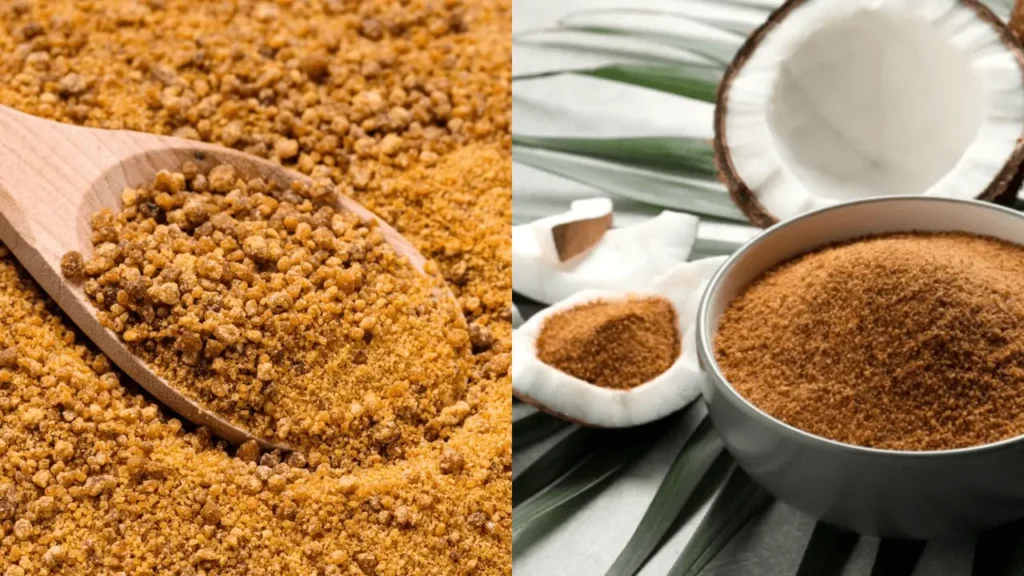
Category: Product Knowledge

  • Desiccated Coconut Grades Explained: Fine, Medium, Coarse, Long Thread & Flakes — Complete Buyer’s Guide

    Desiccated Coconut Grades Explained: Fine, Medium, Coarse, Long Thread & Flakes — Complete Buyer’s Guide

    Desiccated Coconut Grades Explained
    Quick Answer: Which grade should you use?
    Fine: cakes, cookies, coatings, chocolate fillings — disperses invisibly. Medium: granola, snack bars, curries, general baking — visible but not dominant. Coarse / Long Thread: premium granola, artisan bakery, decorative toppings — strong visual presence. Flakes / Chips: toasted toppings, trail mix, gifting — maximum visual impact. DCM Powder: coconut milk production, high-fiber baking — completely different product. Detailed specifications, COA parameters, and per-application guidance follow below.

    If you need desiccated coconut grades explained, you are in the right place. Choosing the wrong grade is one of the most common and costly mistakes in food product development.

    The grade affects not just appearance, but texture throughout the product, moisture distribution during baking, mouthfeel in the finished product, and how prominently the coconut flavor registers.

    A cookie made with fine grade will taste and feel completely different from the same cookie made with medium grade — even with identical quantities and all other ingredients unchanged.

    This guide provides a complete technical breakdown of all six desiccated coconut grades available from Indonesian suppliers — including particle size specifications, key COA parameters, applications, and a decision matrix for choosing the right grade for your specific food product.

    Browse our desiccated coconut product range from Indonesia for current specifications and availability.

    For background on how desiccated coconut grading standards developed from Victorian-era Ceylon to the modern APCC Codex standard, see our article on the history of desiccated coconut.

    How Desiccated Coconut Grading Works: Particle Size and Moisture

    Desiccated Coconut Grades Explained

    Desiccated coconut grading is primarily determined by two variables: cut size (particle dimensions after shredding or cutting) and moisture content. Both are specified in the Certificate of Analysis (COA) and should be verified per production lot from any supplier.

    The Codex Alimentarius Standard for Desiccated Coconut (CODEX STAN 177-1991) and the Asian and Pacific Coconut Community (APCC) Quality Standards provide the reference framework for global desiccated coconut grading.

    In practice, commercial specifications may vary slightly between suppliers and markets — always request the supplier’s specification sheet alongside the general grade description.

    The Two Primary COA Parameters That Define Grade Quality

    • Moisture content: Maximum 3% for all standard grades. Higher moisture reduces shelf life, increases microbial risk, and indicates potential quality issues. Always verify moisture is tested immediately before container loading, not weeks earlier.
    • Fat content: Approximately 60-68% on dry basis for standard high-fat desiccated coconut. Fat content is an indicator of coconut meat quality — low fat may indicate immature coconuts, bleached product, or adulteration. Low-fat grades (for specific applications) are processed separately.
    High fat vs low fat desiccated coconut — the other important grade dimension
    Beyond cut size, desiccated coconut is also graded by fat content: high fat (>60% fat on dry basis — most common), medium fat (40-60%), and low fat (<40%). Low fat desiccated coconut is produced by mechanical pressing to remove coconut oil, then drying. It is used in specific applications where reduced fat content is required — some breakfast cereals, certain health food formulations. Most baking and confectionery applications require high fat desiccated coconut for proper flavor and texture. Always specify which fat tier you require in your purchase order.

    All 6 Desiccated Coconut Grades: Complete Technical Specifications

    desiccated coconut products

    The table below provides a comprehensive comparison of all commercially available desiccated coconut grades from Indonesian suppliers:

    GradeParticle SizeVisual DescriptionMoisture (max)Fat ContentBest ForPrice Position
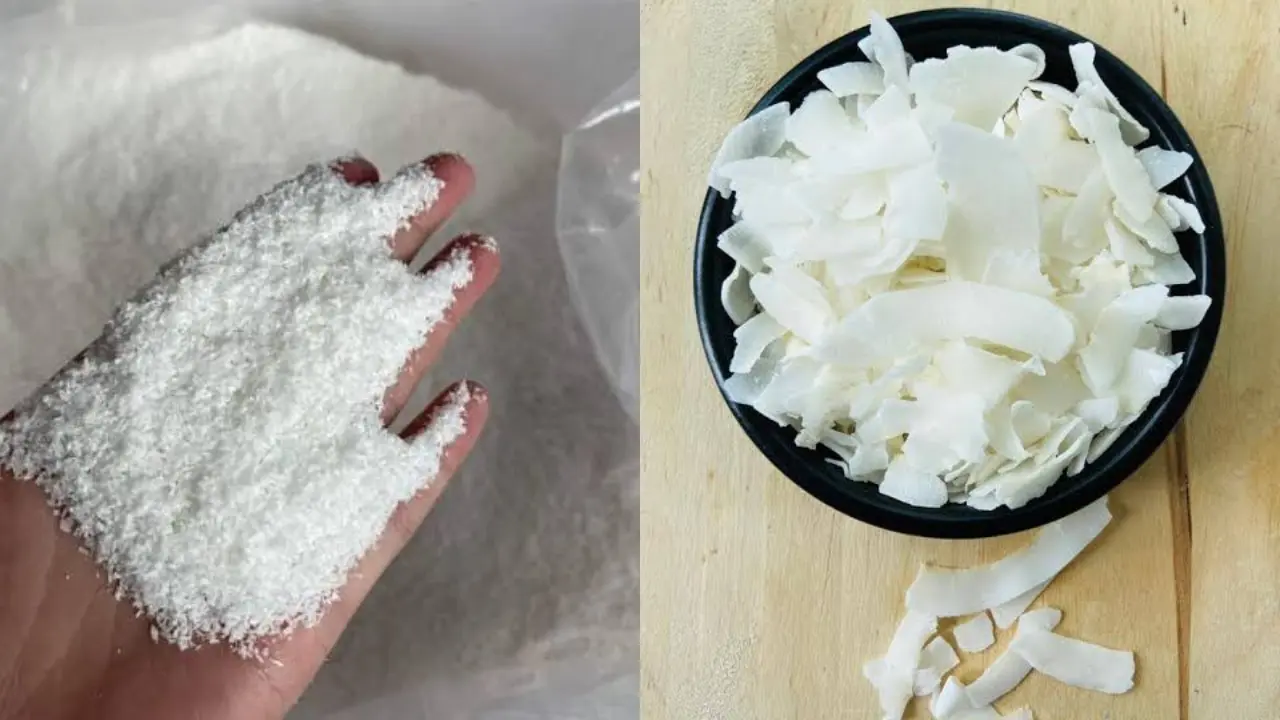
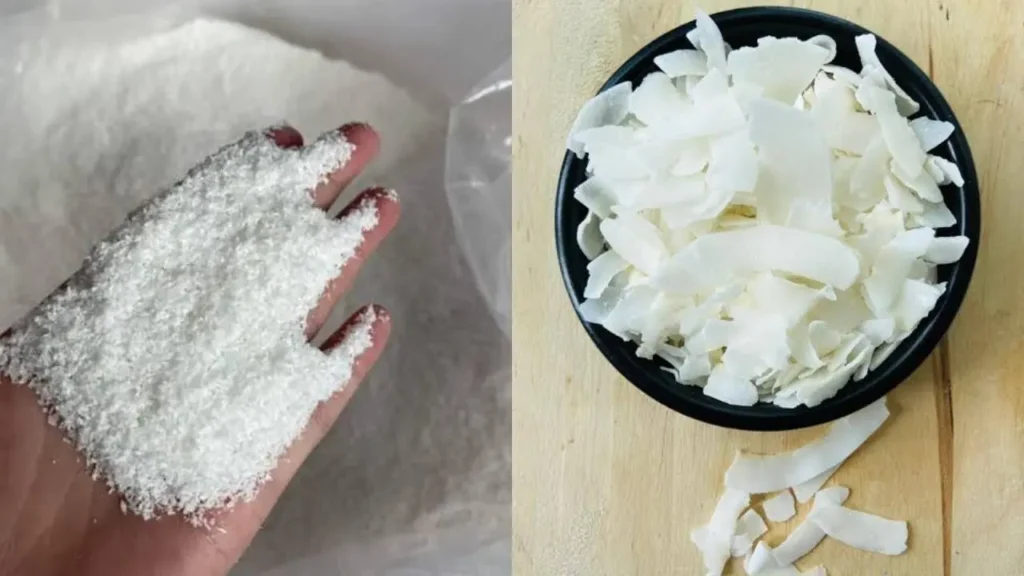
    Extra Fine / Fine< 1.0 mmPowder-like, very small particles — barely visible individually3%60-68%Cakes, cookies, coatings, chocolate, cereal bars, biscuitsBaseline
    Medium1.0 – 3.0 mmStandard shredded texture — clearly visible individual pieces3%60-68%Granola, snack bars, muesli, curries, general baking, toppings+2-5% vs fine
    Coarse3.0 – 6.0 mmLonger shreds — prominent texture, strong visual presence3%60-68%Premium granola, artisan bakery, snack coatings, visible toppings+5-10% vs fine
    Long Thread6.0 – 15 mmLong, thin strips — most visually striking of shredded grades3%60-68%Premium products, artisan confectionery, decorative applications+8-15% vs fine
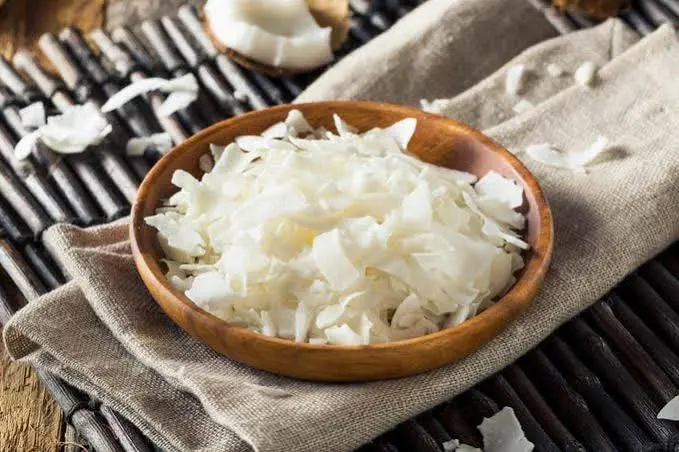
    Flakes / Chips5-15 mm wide, flatWide flat pieces — distinct from shredded grades3%60-68%Trail mix, topping, toasting, gifting, premium visual applications+10-20% vs fine
    DCM Powder< 0.3 mmVery fine powder — appears similar to coconut flour3%60-68%Coconut milk production, high-fiber baking, ingredient blendingDifferent pricing — contact for quote
    Important: DCM Powder is not the same as coconut flour
    Desiccated Coconut Meat (DCM) Powder is finely ground desiccated coconut — it retains most of the original fat content (60-68%). Coconut flour is produced by first pressing out the coconut oil, then grinding the defatted solids — resulting in a high-fiber, low-fat product. They look similar but have completely different fat content, fiber content, and functional properties. They cannot be substituted for each other in food formulation without significant recipe adjustment.

    Each Grade Explained in Detail

    Fine Desiccated Coconut: The Most Versatile Grade

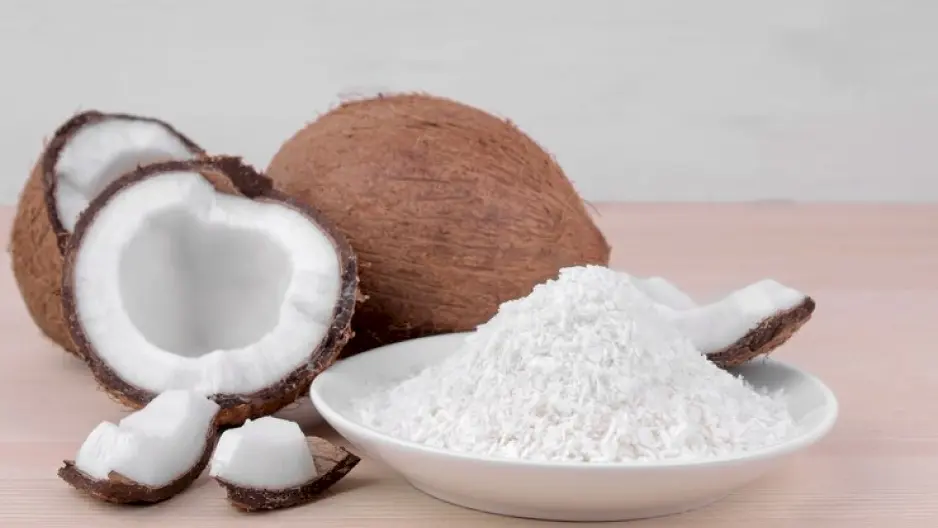
    Fine desiccated coconut has particle sizes below 1.0 mm — almost powder-like in texture, though not as fine as DCM powder.

    Individual pieces are visible up close but the grade disperses invisibly into batters and doughs during mixing.

    This invisible dispersion is precisely why fine grade is the default choice for most baking applications: it delivers coconut flavor and fat throughout the product without creating identifiable coconut texture that might be unwanted.

    • Best applications: Butter cakes, sponge cakes, muffins, cookies and biscuits, chocolate confectionery fillings, energy bar binding, breading and coating mixes, cereal bar production.
    • Why fine works here: Invisible dispersal in batter means no texture surprises in the finished product. High surface area relative to volume means faster flavor release per bite. Even fat distribution throughout the product improves moisture retention and shelf life.
    • What to avoid: Do not use fine grade when you want visible coconut in your finished product. Do not use fine grade as a decorative topping — it lacks the visual impact of coarser grades.
    • COA to request: Moisture (max 3%), fat content (min 60%), FFA (max 0.2%), total plate count (max 5,000 CFU/g), Salmonella (absent in 25g), sulphite content (negative or max 10 ppm for EU clean label).

    Medium Desiccated Coconut: The Industry Standard Grade

    Medium grade — with particle sizes between 1.0 and 3.0 mm — is the most commonly traded desiccated coconut in the global food industry.

    It creates clearly visible coconut texture in finished products without dominating.

    The medium grade has the broadest range of applications of any grade, which is why it is the default specification when a recipe simply says ‘desiccated coconut’ without specifying further.

    • Best applications: Granola and muesli, snack and protein bars, coconut macaroons, no-bake energy balls, curries and Asian sauces (after rehydrating), general baking where visible texture is acceptable.
    • Why medium works here: Visible texture adds premium appearance without overwhelming other ingredients. Texture contrast in granola and snack bars is a key consumer appeal factor. In curries, medium grade rehydrates evenly and distributes well through sauce.
    • What to avoid: Medium grade is too coarse for applications where invisible coconut is required (light-colored cakes, chocolate bars with smooth texture). It is less visually striking than coarse or flakes for premium decorative applications.
    • COA to request: Same parameters as fine grade. Additionally verify mesh size compliance — medium grade should pass through a 3mm sieve and be retained on a 1mm sieve for consistent specification.

    Coarse Desiccated Coconut: For Premium Texture and Visual Impact

    Coarse grade (3.0-6.0 mm) sits between the everyday medium grade and the more specialized long thread grade.

    It delivers a strong, prominent coconut texture that is clearly felt in every bite — making it a premium-positioning ingredient in granola, artisan baked goods, and any product where ‘generous coconut’ is a key selling point.

    • Best applications: Premium granola (the ‘chunky’ segments that consumers appreciate), artisan bakery products, snack coatings, coconut-forward cookies and bars, visible toppings on cakes and desserts.
    • Why coarse works here: The larger particle size creates satisfying texture ‘hits’ that short-texture fine or medium grade cannot replicate. In premium positioning, visible large coconut pieces signal generosity and quality to consumers.
    • What to avoid: Coarse grade can cause structural issues in thin or delicate baked goods — the large particles can create weak points in cookies or crackers. Not suitable for smooth-textured confectionery.

    Long Thread Desiccated Coconut: The Premium Visual Grade

    Long thread grade (6.0-15 mm) consists of long, thin strips that create the most visually striking appearance of all shredded desiccated coconut grades.

    It is used almost exclusively for premium and artisan applications where the visual impact of the coconut is a key part of product appeal.

    • Best applications: Premium confectionery (decorative coconut coating on truffles, bon bons, chocolate bark), artisan cake decoration, high-end granola products where long coconut threads are a visible selling point, premium gifting products.
    • Why long thread works here: The elongated form creates a uniquely premium visual impression that no other grade replicates. Consumers perceive long thread coconut as a sign of quality and minimal processing — it looks less processed than fine or medium grades.
    • Availability note: Long thread grade has more variable availability than fine or medium from Indonesian suppliers. Confirm availability and lead time when specifying.

    Coconut Flakes and Chips: Maximum Visual Impact

    Coconut flakes and chips are distinct from all shredded grades — they are cut or broken into flat, wide pieces rather than shredded.

    The flat form creates a completely different visual impression and texture profile.

    Flakes are the most visually distinctive of all desiccated coconut forms — their wide, irregular flat pieces are instantly recognizable and command premium pricing.

    • Best applications: Toasting and using as premium toppings (the most common application), trail mix and nut mixes, granola toppings, cake and dessert decoration, snack products where visual coconut presence is the primary appeal, corporate gifting and premium retail.
    • Why flakes work here: The large flat surface area creates maximum visual impact per gram of coconut. Toasted flakes develop a spectacular golden color and deep flavor that no shredded grade can match. The flat form also provides a different textural experience — a delicate snap rather than a chewy texture.
    • Toasting note: Flakes are the most popular grade for toasting — their large surface area makes them toast evenly to a beautiful golden color in 3-5 minutes in a 160°C oven or 2-3 minutes in a dry pan. Watch carefully — flakes burn faster than shredded grades.

    For detailed toasting and rehydrating techniques that apply across all grades, see our practical guide on what desiccated coconut is used for and how to cook with it.

    Quality Standards and Certification: What to Verify Before Ordering

    the best coconut sugar certification you should consider

    Regardless of which grade you specify, the same quality verification process applies.

    Our guide on what certifications a coconut supplier should have covers the full verification protocol for each certification.

    For buyers supplying EU or US major retail, our article on BRCGS certified coconut suppliers from Indonesia explains why BRCGS Grade A certification is the minimum standard for vendor approval at Tesco, Aldi, Lidl, and most major Western retailers.

    Quality ParameterSpecification (all grades)Why It MattersVerify At
    Moisture contentMax 3.0%Higher moisture = shorter shelf life + microbial riskCOA from ISO 17025 lab
    Fat contentMin 60% (high fat grade)Indicator of coconut meat quality and freshnessCOA from ISO 17025 lab
    Free Fatty Acid (FFA)Max 0.2% as lauric acidIndicator of oxidation and rancidity onsetCOA from ISO 17025 lab
    Peroxide valueMax 1.0 meq/kgMeasures oxidative degradation — rises with storageCOA from ISO 17025 lab
    Total plate countMax 5,000 CFU/gMicrobial safety — must be third-party lab, not in-houseAccredited lab COA
    SalmonellaAbsent in 25gZero tolerance in all global marketsAccredited lab COA per lot
    Yeast and moldMax 50 CFU/gCritical for EU and US food safety complianceAccredited lab COA
    Sulphite contentNegative (max 10 ppm)Allergen declaration required in EU if >10 ppm — clean labelAccredited lab COA
    Particle sizeGrade-specific (see table)Grade consistency — ensure specification is met per lotSupplier spec sheet + COA
    BRCGS certificationGrade A minimum for EU/US retailVendor approval prerequisite for major retailersbrcdirectory.com

    For buyers requiring organic desiccated coconut, all grades listed above are available in USDA Organic and EU Organic certified versions from Indonesian suppliers.

    The grade specification and COA parameters are identical — the difference is the farming and processing certification chain.

    Our article on exporting organic coconut products from Indonesia explains the Transaction Certificate (TC) requirement per organic shipment.

    Decision Matrix: Which Grade to Choose for Your Application

    For a comprehensive breakdown of all food industry applications for coconut-derived ingredients, our article on applications of coconut products in the food industry provides additional context.

    The matrix below gives direct grade recommendations for the 15 most common applications:

    ApplicationRecommended GradeFat LevelReason
    Butter cake / Victoria spongeFineHigh fatInvisible dispersal; moisture retention; no texture disruption
    Chocolate chip cookiesFine or MediumHigh fatFine for invisible; medium for subtle texture contrast
    Coconut macaroonsFine or MediumHigh fatDense, chewy texture requires good binding — fine or medium both work
    Standard granolaMediumHigh fatVisible but not dominant; toasts evenly; good flavor distribution
    Premium ‘chunky’ granolaCoarse or Long ThreadHigh fatLarge coconut pieces signal premium quality to consumers
    Snack and protein barsMediumHigh fatTexture and flavor without structural weakness
    Chocolate confectionery fillingFineHigh fatSmooth texture; even fat distribution throughout ganache or truffle
    Decorative topping on cakes/dessertsFlakes or CoarseHigh fatMaximum visual impact; toasted version preferred
    Coconut coating on truffles / bonbonsMedium or Long ThreadHigh fatVisible coconut exterior; long thread most premium visual
    Trail mixFlakesHigh fatVisual impact; texture contrast; easy to identify in mix
    Curries and Asian saucesMedium (rehydrated)High fatRehydrates evenly; distributes well through sauce
    Coconut chutney / sambolFine or Medium (rehydrated)High fatProcesses smoothly; even texture throughout chutney
    Protein coating for chicken/fishCoarse or FlakesHigh fatLarge pieces create crispy, textural crust
    Coconut milk production (industrial)DCM PowderHigh fatMaximum extraction efficiency; complete fat integration
    Gluten-free baking (coconut flour sub)Fine (partial substitute only)High fatDifferent fiber/fat ratio than flour — test carefully

    How to Order the Right Grade: Specification Tips for Buyers

    how to order Desiccated Coconut
    desiccated coconut

    For pricing, MOQ, container specifications, and the full commercial ordering process for desiccated coconut from Indonesia, our complete guide on bulk desiccated coconut from Indonesia: grades, price & where to buy provides all the information you need.

    For documentation requirements, HS codes, and logistics for EU, US, and other destination markets, see our guide on how to import coconut products from Indonesia.

    When placing a purchase order for desiccated coconut, always specify the following — do not rely on just the grade name:

    • Grade name AND particle size range: e.g., ‘Medium grade, particle size 1.0-3.0mm’ — grade names can vary between suppliers; the size range is unambiguous.
    • Fat content tier: ‘High fat (min 60% fat on dry basis)’ or ‘Low fat (max 40%)’ — default is high fat but always confirm.
    • Sulphite-free: Specify ‘sulphite-free, SO2 negative’ if required for EU clean label or allergen management.
    • Organic certification: Specify ‘USDA NOP certified’ or ‘EU Organic certified’ with requirement for Transaction Certificate per lot.
    • COA requirements: Specify ‘COA from ISO 17025-accredited laboratory’ — do not accept in-house testing COA as sole quality documentation.
    Request samples of multiple grades before your first commercial order
    Choosing between grades is difficult from a specification sheet alone — the visual and textural differences are much clearer when you can hold and compare actual samples. Most serious Indonesian desiccated coconut exporters will provide 100-200g samples of each grade at no cost (or at cost) for evaluation before commercial orders. Always evaluate samples in your specific product formulation, not in isolation — a grade that looks ideal in the hand may behave unexpectedly in your specific recipe.
    Request samples of all desiccated coconut grades from Global Coco Sugar
    Global Coco Sugar supplies BRCGS Food Safety Grade A certified desiccated coconut from Indonesia in all grades — fine, medium, coarse, long thread, and flakes — in conventional and organic versions. We provide COA from ISO 17025-accredited laboratories per production lot. Sample packs of multiple grades available for food manufacturer evaluation.
    Request Grade Samples or a Bulk Quote >>>
    View Our Desiccated Coconut Specifications >>>

    Conclusion: Match Grade to Application, Then Verify the Specification

    Desiccated coconut grade selection is not a trivial decision — the wrong grade can compromise product texture, visual quality, and shelf life in ways that are difficult and expensive to correct after commercial production begins.

    The decision framework is straightforward: fine for invisible coconut, medium for visible but balanced, coarse or long thread for premium texture statements, flakes for maximum visual impact, DCM powder for ingredient blending.

    Once you have selected the right grade, the specification verification process is equally important: COA from ISO 17025-accredited laboratory, BRCGS certification from the supplier, and — for EU or US organic positioning — Organic Transaction Certificate per shipment.

    Grade selection and certification verification together determine whether your desiccated coconut sourcing decision will be commercially successful.

    Source certified desiccated coconut in all grades from Indonesia
    Global Coco Sugar supplies BRCGS Grade A certified desiccated coconut from Central Java, Indonesia — all grades available, conventional and organic, with full COA documentation from ISO 17025-accredited laboratories. Minimum order 1 MT per grade. Sample packs available.
    Contact Our Export Team >>>
    View All Desiccated Coconut Grades & Prices >>>
    Our Certifications & Company Profile >>>
  • Coconut Sugar vs Brown Sugar: Health Benefits, GI, Baking & What the Science Actually Says

    Coconut Sugar vs Brown Sugar: Health Benefits, GI, Baking & What the Science Actually Says

    Coconut Sugar vs Brown Sugar
    the difference between coconut sugar and brown sugar
    Quick Answer
    When evaluating coconut sugar vs brown sugar, coconut sugar is healthier in three specific ways: lower glycemic index (GI 35 vs GI 64), minimal processing (it is a genuine single-ingredient natural sweetener), and slightly higher trace mineral content. Brown sugar is simply white refined sugar with molasses added back — it is not a natural sweetener. However, both are still sugars that should be consumed in moderation. Neither is a ‘health food.’ The practical difference matters more for specific contexts: baking, blood sugar management, clean label food production, and sustainability.

    Coconut sugar and brown sugar look similar, have comparable sweetness levels, and are often used interchangeably in recipes.

    But they are fundamentally different products with meaningfully different health profiles, production processes, and effects on the body.

    Understanding these differences goes beyond the simple ‘which is healthier’ question — it helps you make better decisions in baking, daily sweetener use, and food product formulation.

    This article covers the complete science-backed comparison — production method, nutritional data, glycemic index, health implications, baking behavior, sustainability, and an honest verdict.

    At Global Coco Sugar, we produce certified organic coconut sugar from Indonesia and believe in transparent, evidence-based communication about what our product actually is — and what it is not.

    Understanding how coconut sugar is produced in Indonesia from coconut palm flower sap to granulated crystals helps clarify exactly why it differs so fundamentally from refined brown sugar.

    What Is Coconut Sugar? What Is Brown Sugar? The Production Difference Matters

    Coconut Sugar: A Single-Ingredient Natural Sweetener

    coconut sugar

    Coconut sugar — also called coconut palm sugar or coconut blossom sugar — is produced by collecting the sap that flows from the flower buds of the coconut palm (Cocos nucifera).

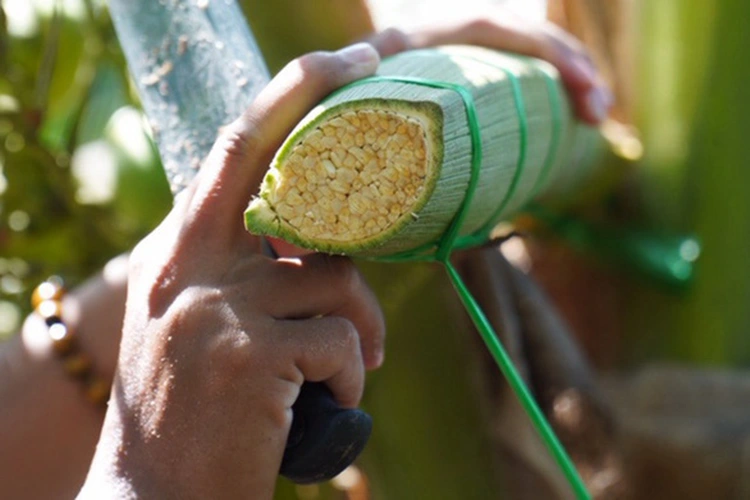
    Farmers make careful incisions in the flower bud stalks twice daily, collecting the fresh sap in bamboo containers.

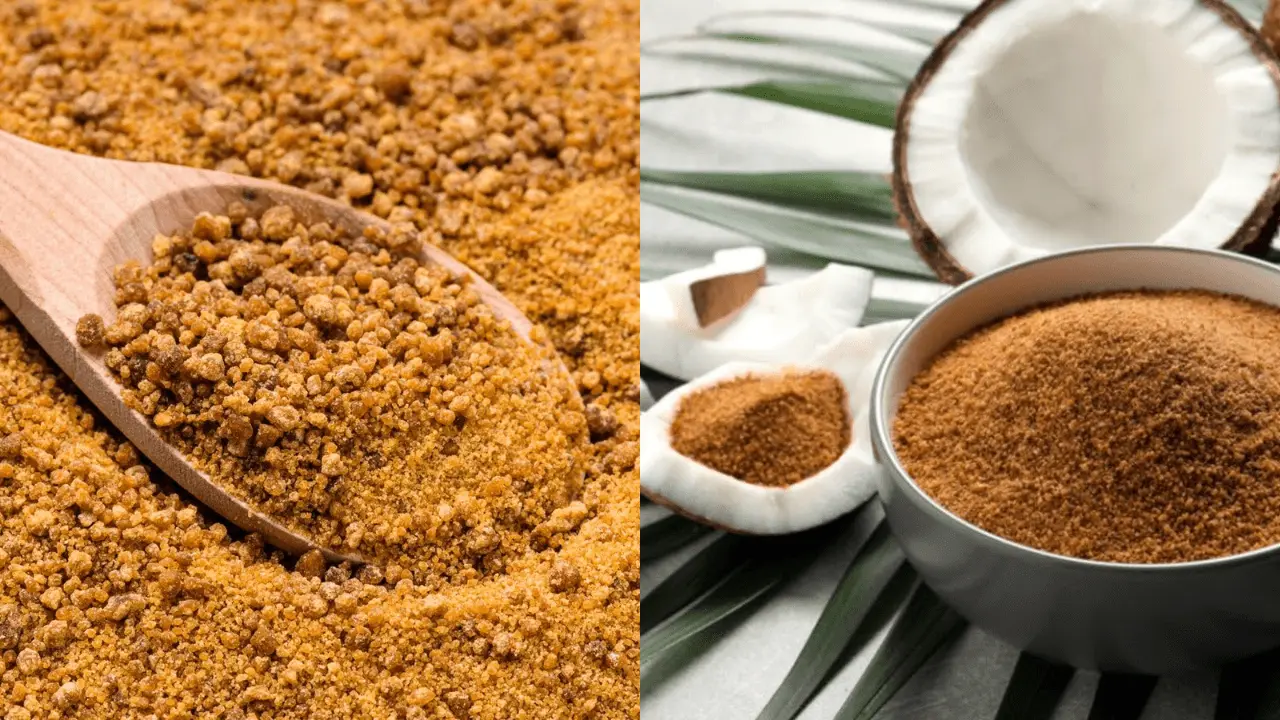
    The sap is then gently heated to evaporate excess moisture, and the concentrated liquid crystallizes into the small, golden-brown granules we recognize as coconut sugar.

    The entire process involves a single ingredient — coconut palm flower sap — and minimal processing: no refining, no bleaching, no chemical agents.

    The result retains the naturally occurring minerals, trace amino acids, and inulin fiber present in the original sap.

    This minimal processing is why coconut sugar can legitimately claim ‘natural’ and ‘unrefined’ status on food labels.

    Brown Sugar: White Refined Sugar with Molasses Added Back

    organic coconut sugar
    Granulated brown sugar on coconut shell bowl

    This is the most important fact that most coconut sugar vs brown sugar articles fail to state clearly: brown sugar is not a natural sweetener.

    It is refined white sugar — which has been completely stripped of all naturally occurring compounds including minerals, fiber, and moisture — with molasses added back in a controlled proportion.

    Light brown sugar contains approximately 3.5% molasses. Dark brown sugar contains approximately 6.5% molasses.

    The molasses gives brown sugar its color, its moist texture, and a slightly richer flavor compared to white sugar — but it does not restore the nutritional complexity of the original sugarcane plant.

    Brown sugar is nutritionally almost identical to white sugar. The trace minerals present in brown sugar come from the molasses — and they are present in quantities too small to have meaningful nutritional impact.

    Why this production difference matters for health claims
    When a food label says ‘made with brown sugar,’ it means ‘made with refined white sugar plus added molasses.’ When a food label says ‘made with coconut sugar,’ it means ‘made with minimally processed coconut palm sap.’ These are not equivalently natural ingredients — and for consumers and food brands concerned with clean label formulation, this distinction is significant.

    Nutritional Comparison: Coconut Sugar vs Brown Sugar per 100g

    NutrientCoconut Sugar (per 100g)Brown Sugar (per 100g)Notes
    Calories~380 kcal~380 kcalNearly identical — both are calorie-dense sweeteners
    Total carbohydrates~95g~98gVery similar — both are primarily carbohydrate
    Sucrose~70-80%~97%Coconut sugar has more complex carbohydrate composition
    Fructose~3-9%~0.2%Coconut sugar has more free fructose from natural sap composition
    Glucose~3-9%~0.2%Similar small amounts of free glucose
    Inulin (fiber)1-3% of carbs0%Coconut sugar’s prebiotic fiber — contributes to lower GI
    Potassium~1,030 mg~133 mgCoconut sugar has ~8x more potassium
    Calcium~40 mg~85 mgBrown sugar slightly higher calcium from molasses
    Iron~2.5 mg~1.2 mgCoconut sugar ~2x higher iron
    Zinc~0.56 mg~0.03 mgCoconut sugar significantly higher zinc
    Magnesium~29 mg~9 mgCoconut sugar ~3x higher magnesium
    Glycemic Index (GI)35 (low GI)64 (medium GI)Most clinically significant difference
    Processing levelMinimal — single ingredientHighly refined + additive (molasses)Key clean label distinction
    Important context: trace minerals are present but not transformative
    Coconut sugar contains more trace minerals than brown sugar — and the difference is real. But it is important to be honest: the quantities are too small to be a meaningful nutritional source in a normal diet. You would need to consume many tablespoons of coconut sugar daily to get significant mineral intake — and at that level, the sugar itself becomes the health concern. The mineral advantage of coconut sugar over brown sugar is real, but it should not be the primary reason to choose it. The GI difference and processing difference are the more clinically meaningful distinctions.

    Glycemic Index: The Most Important Health Difference

    glycemic index coconut sugar brown sugar

    The glycemic index (GI) measures how quickly a carbohydrate-containing food raises blood glucose levels on a scale of 0-100.

    Coconut sugar has a GI of approximately 35 — firmly in the low GI range. Brown sugar has a GI of approximately 64 — in the medium GI range.

    This is the single most clinically meaningful health difference between the two sweeteners.

    For a deep dive into the science behind coconut sugar’s GI, why the value ranges between 35-54 across different studies, and what this means for food label claims, our detailed article on the glycemic index of coconut sugar covers everything you need to know.

    GI CategoryGI RangeCoconut SugarBrown SugarWhite Sugar
    Low GI0–55✅ GI ~35
    Medium GI56–69✅ GI ~64
    High GI70–100✅ GI ~65

    Why coconut sugar has a lower GI: the inulin explanation

    Coconut sugar’s lower GI is not mysterious — it is explained by its inulin content.

    Inulin is a prebiotic dietary fiber naturally present in coconut palm flower sap that survives the minimal processing of coconut sugar production.

    Inulin slows the digestion and absorption of sugars in the small intestine — meaning blood glucose rises more gradually and to a lower peak after consuming coconut sugar compared to brown or white sugar.

    Inulin content in coconut sugar typically ranges from 1-3% of total carbohydrates, depending on the specific production batch, origin, and processing temperature.

    Higher processing temperatures can degrade inulin — one reason why minimally processed, low-temperature coconut sugar from traditional Indonesian producers typically shows lower GI values than more industrially processed product.

    What lower GI means in practice

    • For people managing blood sugar: coconut sugar causes a slower, more gradual blood glucose rise — relevant for reducing post-meal blood sugar spikes.
    • For sustained energy: lower GI sweeteners are associated with more stable energy levels and reduced mid-afternoon energy crashes.
    • For people with diabetes: coconut sugar should still be consumed in moderation — it is not a ‘safe’ sweetener for people with diabetes, simply a less aggressive one. Always consult a healthcare professional for diabetes dietary management.
    • For general health: the practical difference in daily use (1-2 teaspoons in coffee, for example) is minor. The GI advantage is more meaningful when coconut sugar replaces brown sugar in significant quantities in food manufacturing.

    Health Benefits: Coconut Sugar vs Brown Sugar — An Honest Assessment

    Health Benefits of Coconut Sugar

    • Lower glycemic index (GI 35): The most evidence-backed health advantage. Slower blood sugar rise vs brown sugar (GI 64) and white sugar (GI 65). Supported by Philippine Coconut Authority research published in the Philippine Journal of Crop Science.
    • Prebiotic inulin content: Inulin acts as prebiotic fiber — feeding beneficial gut bacteria (Lactobacillus and Bifidobacterium species). At the concentrations present in coconut sugar, this is a minor but genuine benefit absent from brown sugar.
    • Trace minerals: Meaningfully higher levels of potassium, iron, zinc, and magnesium compared to brown sugar. Relevant as a contribution to total mineral intake in context of a varied diet.
    • Minimal processing / no additives: Single-ingredient product with no refining, bleaching, or chemical processing agents. For consumers concerned with food additives and processing, this is a genuine advantage.
    • Clean label compatibility: Can be declared as ‘coconut sugar’ on food labels — a single, recognizable ingredient. This is increasingly valuable for food brands positioning in natural and clean label segments.

    Health Benefits of Brown Sugar

    • Minimal molasses-derived minerals: Slightly higher calcium than coconut sugar due to molasses content — but at amounts that are nutritionally negligible in typical consumption.
    • Moisture-retaining properties in baking: Not a health benefit per se, but brown sugar’s hygroscopic properties (ability to attract and retain moisture) can produce baked goods with a softer texture — relevant for certain therapeutic or dietary-modified baking applications.
    • Traditional digestive use: Some traditional medicine systems use brown sugar (jaggery-adjacent products) in herbal preparations for mild digestive support. This is anecdotal and not supported by clinical evidence for commercially produced brown sugar.
    The honest verdict: coconut sugar wins on health, but ‘winning’ is relative
    Coconut sugar has meaningfully better health credentials than brown sugar: lower GI, more trace minerals, minimal processing, and prebiotic inulin content. These are real, not marketing claims. However, coconut sugar is still approximately 95% carbohydrate and 380 kcal per 100g — essentially the same as brown sugar. ‘Healthier’ does not mean ‘healthy in large quantities.’ The health advantages of coconut sugar are most meaningful when it replaces brown or white sugar in significant quantities — not when consuming identical small amounts.

    Baking with Coconut Sugar vs Brown Sugar: Substitution Guide

    coconut sugar and brown sugar

    For home bakers and food manufacturers, the practical baking comparison is as important as the nutritional one.

    Coconut sugar and brown sugar behave differently in baking — understanding why helps you substitute successfully.

    Baking FactorBrown SugarCoconut SugarPractical Implication
    GI / sweetness levelHigher GI — sharper sweetnessLower GI — gentler sweetnessCoconut sugar cookies and cakes taste slightly less sweet — adjust quantity if needed
    Moisture retentionHigh — molasses is hygroscopicLower — less hygroscopicCoconut sugar baked goods may be slightly drier — add 1-2 tsp extra liquid if texture seems dry
    Caramelization~160°C standardSlightly lower due to fructoseCoconut sugar edges brown faster — reduce oven temp by 5-10°C or watch carefully
    Maillard reactionModerateMore pronouncedDeeper, more complex flavor development in coconut sugar baked goods
    Color of finished productMedium golden-brownDarker golden-brown to dark brownProducts made with coconut sugar will be visibly darker — factor into product appearance
    Crystal sizeFine — dissolves quicklySlightly coarserCoconut sugar may require longer creaming time — 3-4 minutes vs 2 for brown sugar
    Flavor contributionMild toffee / molassesRich caramel / butterscotchCoconut sugar adds more flavor complexity — desirable in most applications

    Substitution ratio: how to replace brown sugar with coconut sugar

    Coconut sugar can replace brown sugar at a 1:1 ratio by volume or weight in most recipes. This works well for:

    • Cookies — the most successful application (see our coconut sugar cookie recipe for a tested formula with specific tips for the best chewy texture)
    • Cakes and muffins — slight color darkening is expected but acceptable
    • Granola and cereal bars — excellent match, caramel notes enhance
    • Coffee and tea — direct 1:1 substitution, flavor upgrade
    • Savory glazes and marinades — deeper caramel note is an advantage

    Recipes that need adjustment when substituting:

    • Light-colored cakes (vanilla, white cake) — the darker color from coconut sugar may not be visually acceptable
    • Recipes requiring very precise moisture balance — add 1 tsp extra liquid per cup of coconut sugar to compensate for lower hygroscopicity
    • Frostings and icings — coarser crystals may not dissolve fully in cold applications; use fine-grind coconut sugar or powder first

    For Food Manufacturers: What the Coconut Sugar vs Brown Sugar Difference Means for Your Products

    coconut sugar vs brown sugar

    For food manufacturers and R&D professionals, the coconut sugar vs brown sugar comparison has implications beyond consumer health — it affects label claims, product positioning, and formulation decisions.

    Our technical article on coconut sugar vs cane sugar for food manufacturing covers the full technical comparison including Maillard reaction behavior, hygroscopicity, and substitution ratios by product category.

    For a breakdown of the specific food applications where coconut sugar delivers the strongest commercial and technical results, see our article on applications of coconut sugar in the food industry.

    Commercial ConsiderationBrown SugarCoconut Sugar
    Label declaration‘Brown sugar’ or ‘cane sugar’ — consumers increasingly aware it is refined‘Coconut sugar’ — single recognizable ingredient, natural positioning
    ‘Natural’ claimCannot be claimed — it is refined white sugar with added molassesCan be legitimately claimed — minimally processed, no additives
    ‘Refined sugar-free’ claimDoes not qualify — brown sugar is refinedQualifies — coconut sugar is unrefined
    ‘Low GI’ product positioningDoes not support low GI claims (GI 64)Supports low GI ingredient positioning (GI 35) — verify at finished product level
    Clean label compatibilityIncreasingly scrutinized by clean label consumersClean label compatible — natural, single ingredient, recognizable
    Price premiumCommodity ingredient — low costPremium ingredient — 2-4x cost of brown sugar — must be captured in retail pricing
    Target product categoryConventional baked goods, confectionery, saucesPremium, health-positioned, organic, clean label, natural food segments

    Sustainability: Coconut Sugar vs Brown Sugar Environmental Footprint

    Sustainability is an increasingly important purchase criterion — particularly for EU and US food brands that must satisfy retailer sustainability requirements.

    Our article on why buyers choose certified organic coconut sugar covers the organic certification framework that validates sustainable coconut sugar production.

    Environmental FactorBrown Sugar (Sugarcane)Coconut Sugar
    Water usageVery high — sugarcane is one of the most water-intensive crops globallyLow — coconut palms require relatively little water, primarily rain-fed in Indonesia
    Land useMonoculture — large-scale sugarcane plantations displace biodiversityLow-intensity — coconut palms grow in biodiverse agroforestry systems
    Soil impactHeavy pesticide and fertilizer use; soil degradation common in intensive cultivationMinimal inputs in traditional Indonesian production — organic farming compatible
    Carbon footprintHigh — industrial refining requires significant energy inputLow — minimal processing, no industrial refining
    Farmer livelihoodLarge commercial operations; smallholder access limitedPrimarily smallholder farmer production in Indonesia — supports rural livelihoods
    Biodiversity impactNegative — monoculture displacement of native ecosystemsPositive — coconut palms can coexist with diverse crop and natural ecosystem

    The sustainability advantage of coconut sugar over brown sugar is genuine and significant — not just marketing language.

    Traditional Indonesian coconut sugar production by smallholder farmers in Central Java is a model of low-input, biodiverse, farmer-supportive agriculture that is the opposite of industrial sugarcane refining.

    What About Coconut Nectar? The Liquid Alternative to Both

    If you are evaluating natural sweetener alternatives and comparing coconut sugar to brown sugar, it is worth also considering coconut nectar syrup — the liquid form of coconut sweetener made from the same coconut palm flower sap.

    Coconut nectar has a similar GI to coconut sugar (approximately 35), the same clean-label and natural credentials, but is better suited to liquid applications like beverages, sauces, and dressings where a granulated sweetener would need to be dissolved.

    For a detailed comparison of coconut nectar against honey, maple syrup, and agave nectar — including GI, caloric content, and applications — see our article on coconut nectar syrup vs other natural sweeteners.

    For food manufacturers: source coconut sugar directly from certified Indonesian producers
    Global Coco Sugar is a BRCGS Food Safety Grade A certified manufacturer of organic and conventional coconut sugar from Indonesia. If you are a food brand evaluating coconut sugar as a brown sugar replacement in your formulation, we provide 2-5 kg samples with full COA from ISO 17025-accredited laboratory for R&D evaluation.
    Request a Sample for R&D Evaluation >>>
    View Our Coconut Sugar Product Range >>>

    The Verdict: When to Choose Coconut Sugar, When to Choose Brown Sugar

    Choose Coconut Sugar when…Choose Brown Sugar when…
    You want a genuinely natural, unrefined sweetener with clean label credentialsCost is the primary consideration — brown sugar is significantly cheaper per kg
    You are managing blood sugar and want a lower GI sweetenerYou need maximum moisture retention in baked goods (chewy cookies, dense brownies)
    You are formulating a ‘refined sugar-free’, ‘natural’, or ‘clean label’ food productPrecise light coloring is required — vanilla cakes, white frostings, pale confectionery
    You value the deeper caramel flavor in your baking or beverageThe molasses flavor specifically is desired in the recipe
    Sustainability and smallholder farmer support matter to your purchasingYou are using sugar in large quantities where the price premium is not commercially viable
    Source certified coconut sugar from the world’s leading producing country
    Global Coco Sugar supplies BRCGS certified organic coconut sugar from Central Java, Indonesia — available in granulated and fine powder formats for food manufacturers, health food brands, and bulk buyers. For wholesale pricing and sourcing information, see our guide on where to buy coconut sugar in bulk from Indonesia.
    Contact Our Export Team >>>
  • Coconut Sugar vs Cane Sugar for Food Manufacturing (2026)

    Coconut Sugar vs Cane Sugar for Food Manufacturing (2026)

    For decades, cane sugar has been the default sweetener in food manufacturing, predictable, affordable, and technically well-understood. 

    But in 2026, food manufacturers across Europe, the United States, and Asia Pacific are being pushed in a new direction: clean-label reformulation, lower glycemic positioning, and sustainable sourcing.

    Coconut sugar has emerged as one of the most credible natural sweetener alternatives for the food industry. But swapping sweeteners is not as simple as a 1:1 ingredient substitution. There are real technical differences, in flavor, behavior under heat, moisture dynamics, and label compliance, that every R&D team and procurement manager needs to understand before making a formulation decision.

    This guide breaks down the core differences in coconut sugar vs cane sugar for food manufacturing. No hype, no wellness blogs, just the technical and commercial data your team needs to make an informed decision.

    What Is the Fundamental Difference Between the Two?

    coconut sugar vs cane sugar for food manufacturing

    Both sugars are derived from plant sap, but from entirely different sources and with very different processing methods, which ultimately drives their technical properties.

    ParameterCoconut SugarCane Sugar (Refined)
    SourceSap from coconut palm flower (Cocos nucifera)Juice from sugarcane stalks (Saccharum officinarum)
    Processing LevelMinimal — sap is heated and crystallizedHeavily refined — multiple filtration and centrifuge stages
    Primary CompositionSucrose (~70-80%), fructose, glucose, inulinSucrose (99.9%)
    Glycemic Index35-54 (varies by study)60-65
    ColorLight to dark brownWhite (refined), off-white (raw)
    Mineral ContentPotassium, iron, zinc, calcium (trace)Negligible after refining
    Typical MoistureMax 3% (granulated)Max 0.1%
    Shelf Life18-24 months (properly stored)Indefinite

    Understanding this table is step one. The most important takeaway: coconut sugar is not pure sucrose. The presence of fructose, glucose, and inulin fundamentally changes how it behaves in manufacturing — for better and for worse, depending on your application. You can read more about how coconut sugar is produced in Indonesia at our factory.

    Technical Comparison: Coconut Sugar vs Cane Sugar for Food Manufacturing

    Coconut sugar granules spilling from a wooden scoop.

    Let’s go deeper than the basics. Here is how coconut sugar and cane sugar compare across the seven dimensions that actually matter in industrial food production.

    1. Flavor Profile and Aroma

    This is perhaps the most discussed difference — and for good reason. It is also the most misunderstood.

    Cane sugar is essentially flavor-neutral, pure sucrose delivers clean sweetness without adding complexity. This is ideal for products where the original flavor profile (fruit, dairy, meat) must be preserved. Think fruit beverages, neutral baked goods, and dairy products.

    Coconut sugar carries a distinctive flavor signature: caramel, butterscotch, with a subtle earthiness. This is not a defect — for the right product category, it is a feature. Granola bars, artisan chocolates, premium sauces, and craft baked goods actively benefit from this complexity. The flavor comes from trace amino acids and natural inulin in the coconut sap that interact differently with heat.

    Practical implication: Do not assume coconut sugar is universally better or worse. The flavor addition requires a recipe evaluation specific to your product. For flavor-neutral applications (clear beverages, white confectionery), cane sugar remains superior. For applications where depth and warmth are desired, coconut sugar adds commercial value.

    2. Thermal Behavior: Maillard Reaction and Caramelization

    This is where the technical story gets interesting, and where most consumer-facing articles fail to go deep enough.The Maillard reaction is the non-enzymatic browning process that creates flavor and color in baked goods, roasted products, and cooked foods. It requires reducing sugars (glucose, fructose) plus amino acids at temperatures above 140°C.

    Key Technical Insight:

    Coconut sugar contains free glucose and fructose alongside sucrose. This means it is more reactive in the Maillard reaction than refined cane sugar (which is almost entirely sucrose — a disaccharide that must first hydrolyze to react). Products formulated with coconut sugar will often:

    • Brown faster and at lower temperatures
    • Develop richer, more complex flavors in baked applications
    • Require adjustment of baking time and temperature (typically 5-15°C lower, 5-10 minutes shorter)

    Caramelization point also differs: sucrose caramelizes at approximately 186°C, while fructose (present in coconut sugar) begins caramelizing at around 110°C. This wider reactivity window requires attention during process development but also opens opportunities for unique flavor development.

    3. Moisture Dynamics and Hygroscopicity

    Coconut Sugar vs Cane Sugar

    All sugars are hygroscopic — they absorb moisture from the environment. But fructose is significantly more hygroscopic than sucrose. Since coconut sugar contains fructose (approximately 2-5% typically), it behaves differently in storage and processing compared to highly refined cane sugar.

    ConditionCoconut SugarRefined Cane Sugar
    Moisture Absorption RateHigher — due to fructose contentLower — sucrose is less hygroscopic
    Caking TendencyHigher in humid environmentsLow (especially granulated white)
    Required PackagingMoisture-proof barrier packaging essentialStandard packaging acceptable
    Storage RecommendationCool, dry — below 25°C, RH < 60%Standard dry storage conditions
    Impact on Shelf LifeMonitor moisture content — max 3% specificationEssentially indefinite when dry

    For manufacturers in humid climates or those producing shelf-stable products with long lead times, this difference is non-trivial. Sourcing coconut sugar with consistently low moisture content (specification: max 3%) from a certified supplier is critical. At Global Coco Sugar, our granulated coconut sugar meets a max 3% moisture specification, verified per batch with Certificate of Analysis documentation.

    4. Substitution Ratio and Formula Adjustment

    This is the most practical question for R&D teams: can I just swap coconut sugar 1:1 for cane sugar?

    The short answer is: approximately yes for most applications, but with caveats. Always consult your supplier’s exact coconut sugar specifications before locking in a formula.

    Application TypeSubstitution RatioKey Adjustment Needed
    Bakery (cookies, cakes)1:1 by weightReduce temperature by 5-10°C, watch browning
    Granola and cereal bars1:1 by weightMinimal adjustment needed — often superior results
    Beverages (hot)1:1 by weightSlight flavor note — evaluate with your base
    Beverages (cold)1:1 by weightDissolves slightly slower — pre-dissolve recommended
    Confectionery1:1 by weightColor change significant — evaluate for final product
    Sauces and marinades1:1 by weightFlavor enhancement — often positive for savory profiles
    Dairy (yogurt, ice cream)0.9:1 (slightly less)Enhanced sweetness perception in cold applications

    Note: Coconut sugar is slightly less sweet than refined cane sugar on a gram-for-gram basis — generally perceived at about 85-90% relative sweetness. For applications where precise sweetness level matters, a slight upward adjustment (add 10%) may be needed, or pair with a complementary natural sweetener. For more detailed guidance on baking applications specifically, see our complete guide on baking with coconut sugar.

    5. Color Impact on the Final Product

    indonesia coconut sugar

    This is a critical consideration that is frequently underestimated during early reformulation stages.

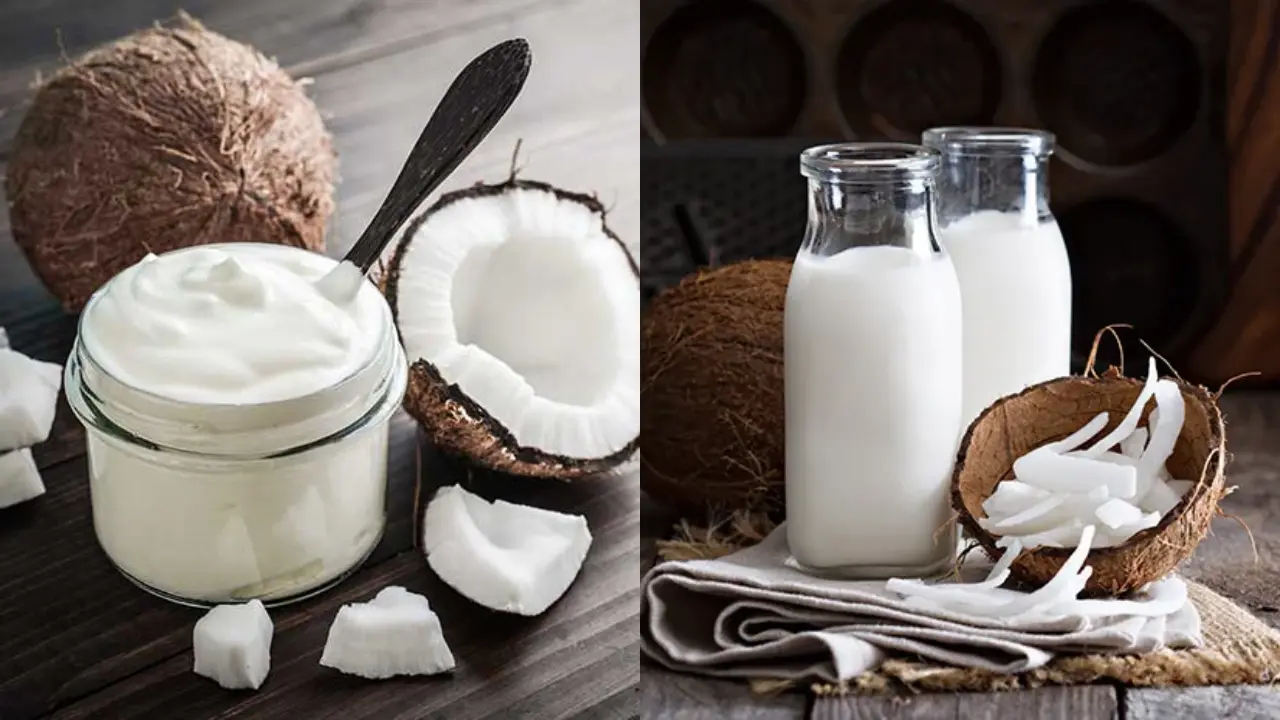
    Coconut sugar ranges from light amber to dark brown depending on grade, origin, and processing. When incorporated into a formulation, it will impart color, the intensity depends on concentration and the base color of your product.
    • Light-colored products (white frosting, clear beverages, white bread): color impartation is significant and will likely require a product repositioning or alternative sweetener
    • Mid-toned products (whole grain bread, granola, cookies): color integration is natural and often enhances premium perception
    • Dark products (chocolate, dark sauces, coffee beverages): coconut sugar integrates seamlessly with no visible color difference

    For brands actively embracing the ‘natural’ and ‘artisan’ positioning, the color shift from coconut sugar is not a problem, it is a feature that communicates authenticity to the consumer.

    6. Label Compliance and Clean-Label Positioning

    This is where the business case for coconut sugar strengthens significantly in 2025-2026. The global clean-label trend is no longer a niche — it is mainstream.

    According to market data, the global coconut sugar market is projected to grow from USD 408.7 million in 2025 to USD 600 million by 2033 (CAGR ~4.9%), driven specifically by demand from food manufacturers reformulating with natural, minimally processed ingredients.

    From a label compliance standpoint, coconut sugar offers clear advantages for manufacturers targeting specific market segments:

    Label ClaimCoconut SugarRefined Cane Sugar
    Natural / Minimally ProcessedYes — single-ingredient, no refining agentsNo — undergoes extensive chemical refining
    Organic CertifiedAvailable (USDA, EU Organic)Available but less common in premium tier
    Non-GMOInherently non-GMOTypically non-GMO but requires verification
    VeganYesYes (refined cane may use bone char — check supplier)
    Gluten-FreeYesYes
    Lower GI ClaimPossible (GI 35-54) — verify with nutritionistNot applicable (GI 60-65)
    Clean Label ScoreHigh — recognized as whole food sweetenerLower — ‘sugar’ is under consumer scrutiny

    Important caveat: for organic label claims on coconut sugar, ensure your supplier holds valid, current USDA Organic or EU Organic certification with traceable Transaction Certificates (TC) per shipment. At Global Coco Sugar, our organic coconut sugar is USDA and EU Organic certified, and we provide complete documentation per order. Learn more about our bulk organic coconut sugar specifications and available packaging.
    7. Cost Comparison and Return on Investment

    Let’s address the most common objection directly: coconut sugar costs more than refined cane sugar. This is true, and it needs to be understood in context.

    Cost FactorReality
    Typical Price PremiumCoconut sugar is priced approximately 3-5x higher per MT than refined white cane sugar on global markets
    Organic PremiumOrganic coconut sugar carries an additional 15-25% premium over conventional coconut sugar
    Manufacturing OffsetHigher ingredient cost is typically offset by product repositioning — premium SKUs carry 40-80% higher retail margin
    Volume EfficiencyAt scale (container quantities), coconut sugar pricing becomes more competitive
    ROI RealizationBrands that successfully reposition products with coconut sugar typically recover the cost premium within 6-12 months through improved margin mix

    The key commercial insight: coconut sugar is not a cost-parity ingredient swap, it is a margin-improvement strategy. Brands that have successfully incorporated coconut sugar are not trying to maintain the same retail price. They are repositioning products upward to capture the growing premium natural segment.

    For procurement teams evaluating FOB pricing from Indonesia, feel free to . We supply in 20ft and 40ft container quantities with full documentation, including COA, phytosanitary certificate, and organic transaction certificates.

    Which Products Are Best Suited for Coconut Sugar?

    bulk coconut sugar packaging from indonesia

    Based on the technical analysis above, here is a practical guide to product categories where coconut sugar delivers the strongest results versus where cane sugar remains the preferred choice:

    Strongest Fit for Coconut Sugar

    • Premium granola bars and energy snacks — the caramel note enhances flavor, the natural label supports the positioning
    • Artisan and premium baked goods — cookies, brownies, banana bread — where depth of flavor is a feature
    • Health-positioned beverages — oat drinks, plant-based milk alternatives, health teas — where ‘natural sweetener’ is a marketing asset
    • Dark chocolate and cacao-based products — seamless color integration, flavor affinity
    • Premium sauces, marinades, and condiments — savory applications where slight sweetness and umami depth are desired
    • Functional foods and supplements in granule or powder form — label clarity is critical in this category

    For a complete breakdown of food industry applications, see our dedicated article on the applications of coconut sugar in food industry.

    Where Cane Sugar Remains Superior

    • Crystal-clear beverages — any visible color from coconut sugar will affect product appearance
    • White or lightly colored confectionery — meringues, white fondant, neutral hard candies
    • High-precision confectionery where crystallization behavior must be exact
    • Cost-parity commodity applications where the margin does not allow for premium ingredient sourcing

    Conclusion: Making the Right Decision for Your Product Line

    The decision between coconut sugar vs cane sugar for food manufacturing is not binary.. It is a product-category and business-model decision as much as a technical one.

    If your goal is cost-parity reformulation with no change in product positioning, refined cane sugar remains the more pragmatic choice. But if your goal is to move product lines upmarket, differentiate in a crowded natural food segment, meet clean-label demands from European or North American retail buyers, or support sustainability claims, coconut sugar from Indonesia is one of the most credible tools available in 2026.

    The critical success factors are: sourcing from a certified supplier who can guarantee consistent moisture content, specification stability, and complete documentation per shipment; doing proper R&D on your specific formulation before scale-up; and building the switch into your product repositioning strategy, not just your ingredient list.

    Ready to Source Coconut Sugar for Your Manufacturing Operation?

    Global Coco Sugar is an Indonesian coconut products supplier certified by BRCGS Food Safety (GFSI recognized), USDA Organic, EU Organic, HACCP, Halal MUI, and Kosher. We supply bulk coconut sugar in granulated and powder forms to food manufacturers and importers across Europe, the USA, Australia, the Middle East, and Japan.

    Contact Our Export Team for a Bulk Quote >>>
    View Full Product Specifications >>>
  • Palm Sugar vs Coconut Sugar: Are They Really the Same?

    Palm Sugar vs Coconut Sugar: Are They Really the Same?

    Walk into any health food store and you’ll see bags labeled “coconut sugar,” “coconut palm sugar,” and “palm sugar” sitting right next to each other. They look nearly identical. The price is similar. So are they the same thing — or are you actually choosing between two different sweeteners?

    The short answer: coconut sugar and palm sugar are NOT the same, even though they’re closely related. “Coconut palm sugar” is just another name for coconut sugar — but plain “palm sugar” can come from a completely different tree. This distinction matters for flavor, nutrition, cooking results, and sustainability.

    In this guide, we break down every meaningful difference between the two — including glycemic index, taste, substitution rules, and which one belongs in your kitchen.

    FeatureCoconut SugarPalm Sugar
    Source treeCoconut palm only (Cocos nucifera)Multiple palms: arenga, date, nipa, palmyra
    Also calledCoconut palm sugar, coconut blossom sugarJaggery, gula merah, gula aren, arenga sugar
    FlavorMild caramel, butterscotchRicher, smokier, earthy undertones
    ColorLight to medium brownMedium to dark brown, sometimes near-black
    FormGranulated (like brown sugar)Blocks, discs, or paste; granulated versions exist
    Glycemic Index35–54 (lower)Varies by species; generally 35–55
    Inulin contentYes — slows glucose absorptionGenerally absent or trace amounts
    Best useBaking, coffee, Western recipesSoutheast Asian curries, sauces, desserts
    1:1 substitute?Yes, for white/brown sugarYes, with flavor adjustment

    What Is Coconut Sugar?

    Coconut sugar — also called coconut palm sugar or coconut blossom sugar — is made from the sap collected from the flower bud stems of the coconut palm tree (Cocos nucifera).

    Farmers make a cut on the flower’s spadix, collect the liquid sap into bamboo containers, then boil the sap down until it thickens and crystallizes into golden-brown granules.

    The result is a fine-to-coarse granulated sugar that looks and behaves much like brown sugar, but with a distinct mild caramel and butterscotch flavor.

    Because it undergoes minimal processing, coconut sugar retains small amounts of trace minerals including potassium, iron, zinc, and calcium, as well as a fiber called inulin.

    What Is Inulin, and Why Does It Matter?

    Inulin is a soluble fiber naturally present in coconut sugar. Unlike regular carbohydrates that are quickly absorbed, inulin slows down glucose absorption in the gut.

    This is one of the main reasons coconut sugar has a lower glycemic index compared to plain white sugar — not just because of the sugar type, but because of this fiber content.

    That said, the amount of inulin per teaspoon is small, so coconut sugar shouldn’t be treated as a health food. It’s still sugar — just a slightly more complex one.

    Read more coconut sugar glycemic index guide for the full breakdown of GI numbers and what they mean for daily consumption.


    What Is Palm Sugar?

    Palm sugar” is a broader category of sweetener made from the sap of various palm tree species, not exclusively the coconut palm. Depending on the region and producer, it can come from:

    • Arenga palm (Arenga pinnata) — known as gula aren in Indonesia, produces a dark, intensely flavored sugar
    • Nipa palm (Nypa fruticans) — common in the Philippines and coastal Southeast Asia
    • Palmyra palm (Borassus flabellifer) — popular in South Asia and Thailand
    • Date palm (Phoenix dactylifera) — used in the Middle East and North Africa

    The production process is similar: tap the tree for sap, boil it down, and solidify it.

    However, the different tree species create significantly different flavor profiles. Palm sugar made from arenga has a richer, smokier, more complex taste compared to the mild caramel of coconut sugar.

    Traditionally, palm sugar is sold in solid rounds, blocks, discs, or cones — a form sometimes called jaggery. You may also see it labeled as gula merah (Indonesian) or nam taan peep (Thai). Granulated versions are now widely available.

    Is Coconut Palm Sugar the Same as Coconut Sugar?

    Yes — coconut palm sugar and coconut sugar are exactly the same product. The terms are used interchangeably in the market. Both refer to sugar made from the sap of the coconut palm (Cocos nucifera) flower.

    The confusion arises from labeling inconsistencies: some brands say “coconut sugar,” others say “coconut palm sugar,” and a few use “coconut blossom sugar.” Despite the different names on the package, if the source is the coconut palm, it’s the same sugar.

    However, if a product is simply labeled “palm sugar” without the word “coconut” — that’s a different product. It likely comes from arenga palm, date palm, or another species, and will have a different flavor, color, and texture.

    Quick rule: “Coconut sugar” = “Coconut palm sugar” (same thing). “Palm sugar” alone = different product, different source tree.


    Palm Sugar vs Coconut Sugar: 7 Key Differences

    Although they are often confused or even used interchangeably in recipes, coconut sugar and palm sugar have distinct characteristics.

    1. Source Tree

    The most fundamental difference is the tree source. Coconut sugar always and only comes from the coconut palm (Cocos nucifera). Palm sugar can come from arenga, date, nipa, or palmyra palms. This determines everything else: flavor, color, texture, and nutritional profile.

    2. Flavor Profile

    • Coconut sugar: mild sweetness with caramel and butterscotch notes. Subtle enough not to overpower baked goods or beverages.
    • Palm sugar (arenga): richer, smokier, earthier. A complex sweetness that adds depth to savory-sweet Southeast Asian dishes.
    • Palm sugar (palmyra): lighter flavor, slightly floral, less intense than arenga.

    In Thai cooking, hot-thai-kitchen.com notes that while the two sugars taste very similar when used in dishes, a direct side-by-side tasting reveals subtle differences. For most recipes, they are interchangeable — but in delicate preparations, coconut sugar’s milder profile wins.

    3. Color and Appearance

    Coconut sugar is light to medium brown, similar to raw cane sugar. Arenga palm sugar is much darker — ranging from deep brown to nearly black. This affects the final color of your dishes: using palm sugar in a light-colored cake batter will produce a noticeably darker result than coconut sugar.

    4. Physical Form

    Coconut sugar is almost always sold as free-flowing granules, similar to brown sugar. It dissolves readily in liquids and measures the same as white or brown sugar in recipes.

    Traditional palm sugar comes in solid blocks, discs, cones, or paste. You may need to grate, chop, or melt it before use. Granulated palm sugar is becoming more common, but it may dissolve slightly differently than coconut sugar due to different moisture content.

    5. Glycemic Index (GI)

    SweetenerGlycemic Index (GI)Notes
    Coconut sugar35–54Contains inulin which slows glucose absorption
    Palm sugar (arenga)35–45Varies by processing and species
    Brown sugar~64More refined, no inulin
    White sugar (sucrose)58–65Most refined, rapid glucose spike
    Honey45–64High in fructose
    Maple syrup54Similar to coconut sugar

    Both coconut sugar and palm sugar have a lower GI than refined white sugar, which is why they’re often marketed as healthier alternatives. The inulin content in coconut sugar may give it a slight edge, though the difference in real-world blood sugar impact is modest.

    Important: GI values can vary significantly depending on the specific product, processing method, and how it’s consumed. Always consult a healthcare provider if you’re managing blood sugar conditions.

    → See our full guide to coconut sugar glycemic index for how coconut sugar compares to 10+ common sweeteners.

    6. Inulin and Fiber Content

    Coconut sugar naturally contains inulin, a prebiotic soluble fiber that feeds beneficial gut bacteria and slows glucose absorption. This is one key reason its GI is lower and more consistent than many other sugars.

    Most palm sugars — especially those from arenga or palmyra — do not contain significant inulin. This makes coconut sugar the preferred option for people who are mindful of blood sugar management.

    7. Sustainability and Environmental Impact

    Coconut palms are highly productive trees. According to the Food and Agriculture Organization (FAO), coconut palm sugar crops produce 50–75% more sugar per acre than cane sugar, using significantly less water and nutrients.

    A single coconut tree produces sap continuously for decades while still yielding coconuts, making coconut sugar one of the most sustainable natural sweeteners available.

    Palm sugar sustainability varies widely by species. Arenga and nipa palms are generally sustainable and do not require deforestation. Date palms are also low-impact. The controversy around “palm” products usually relates to oil palm (Elaeis guineensis), which is unrelated to sugar production.

    Related Read: how coconut sugar is made and sourced at our farms

    At Global Coco Sugar, sustainability is embedded in our supply chain. Our coconut palms are integrated into local agroforestry systems that support biodiversity and provide a stable, long-term livelihood for Indonesian farmers without causing deforestation. This corporate responsibility aligns with the strict sustainability standards required by European and North American buyers.

    Can You Substitute Palm Sugar for Coconut Sugar (and Vice Versa)?

    In most recipes, yes — coconut sugar and palm sugar can substitute for each other 1:1 by volume. But there are important nuances:

    Use CaseRecommendationNotes
    Baking (cakes, cookies, muffins)Use coconut sugar for lighter results. Palm sugar (especially arenga) will make baked goods darker and add a stronger flavor. Ratio: 1:1, but expect a color difference.1:1
    Beverages (coffee, tea, smoothies)Coconut sugar dissolves faster and has a more neutral sweetness. Palm sugar blocks need to be dissolved first. Ratio: 1:1 once dissolved.1:1
    Southeast Asian cooking (curries, sauces)Palm sugar (arenga) is traditional and preferable for authentic flavor. Coconut sugar works as a substitute but the dish will taste slightly different. Ratio: 1:1.1:1
    Desserts (ice cream, pudding)Coconut sugar works seamlessly. Palm sugar adds complexity — use it if you want a deeper, more caramel-like result. Ratio: 1:1.1:1
    Raw/no-bake recipesBoth work well. Coconut sugar has a more consistent granule size, making it easier to measure. Ratio: 1:1.1:1

    One practical tip: if you’re substituting palm sugar (block form) for granulated coconut sugar, melt or dissolve the palm sugar first in a small amount of warm water, then measure by weight rather than volume for accurate results.

    → Looking for the right product? See our guide to the best coconut sugar brands and how to choose quality coconut sugar.

    Palm Sugar vs Coconut Sugar for Health: Which Is Better?

    Both palm sugar and coconut sugar are marketed as healthier alternatives to white sugar. Here’s what the evidence actually says:

    For People with Diabetes

    The lower glycemic index of both sugars means they may cause a slower rise in blood glucose compared to white sugar. The inulin in coconut sugar provides an additional buffer.

    However, both still contain roughly the same number of carbohydrates and calories as white sugar (about 15 calories and 4g carbs per teaspoon).

    The consensus among dietitians: coconut sugar and palm sugar are not “diabetic-friendly” sugars in the way that artificial sweeteners or stevia are.

    They are marginally better than white sugar, but should still be used in strict moderation. Always consult your healthcare provider before changing your diet if you have diabetes.

    Related Read: coconut sugar and blood sugar: a full guide

    Mineral Content

    Both sugars contain trace amounts of potassium, iron, zinc, calcium, and magnesium — minerals largely absent in refined white sugar. However, the amounts per serving are very small.

    You would need to consume a large, unhealthy quantity of sugar to obtain meaningful mineral benefits. Don’t choose coconut or palm sugar primarily as a mineral source.

    For Weight Management

    Neither coconut sugar nor palm sugar is a low-calorie sweetener. Both contain approximately 45–50 calories per tablespoon — almost identical to white sugar.

    If weight loss is the goal, reducing total sugar intake is more effective than switching sugar types. That said, the stronger flavor of palm sugar may mean you use less of it, which can help reduce total intake.

    Are you an F&B manufacturer, distributor, or cosmetics brand looking for a reliable wholesale partner?
    Global Coco Sugar
    is a leading certified organic coconut sugar manufacturer and exporter from Indonesia. We provide premium-grade coconut sugar tailored for industrial needs, backed by international certifications (USDA Organic, EU Organic, Halal, Kosher).
    Contact Our Export Team >>>
    View Our Certified Coconut Product Range >>>


    Culinary Uses: When to Use Each One

    coconut sugar, palm sugar, sweeteners, healthy

    Coconut Sugar in the Kitchen

    Coconut sugar’s mild flavor and granulated form make it the most versatile of the two. It substitutes 1:1 for white or brown sugar in virtually every recipe. Use it in:

    • Baking: cookies, muffins, banana bread, granola bars — adds a subtle caramel depth without changing the recipe
    • Beverages: coffee, matcha latte, chai tea — dissolves quickly, less overpowering than brown sugar
    • Sauces and marinades: teriyaki, BBQ sauce, salad dressings
    • Breakfast: oatmeal, smoothies, yogurt toppings
    • Chocolate making: pairs beautifully with dark chocolate (GI-conscious confectionery)

    See our product pageusing coconut sugar in everyday recipes

    Palm Sugar in the Kitchen

    Palm sugar — particularly arenga — is deeply embedded in Southeast Asian cooking. Its complex, smoky sweetness elevates dishes where a simple sweet note isn’t enough. Use it in:

    • Thai cooking: pad thai, green and red curries, nam prik dipping sauces
    • Indonesian dishes: rendang, kecap manis (sweet soy sauce), serundeng, onde-onde
    • Filipino desserts: kakanin (sticky rice cakes), sago at gulaman, bibingka
    • Vietnamese cuisine: caramelized pork (thit kho), iced coffee (ca phe sua da)
    • Indian and Sri Lankan cooking: payasam (rice pudding), tamarind chutneys

    For block-form palm sugar, the standard technique is to shave or grate the block or melt it in a small amount of warm water before adding to the dish. This ensures even distribution and prevents clumping.
    What Coconut Sugar and Palm Sugar Have in Common

    coconut sugar and palm sugar have in common

    Despite their differences, these two natural sweeteners share several important characteristics:

    • Both are derived from palm trees through traditional sap-tapping methods
    • Both are minimally processed compared to refined white or brown sugar
    • Both have a lower glycemic index than sucrose or corn syrup
    • Both contain trace minerals absent in refined sugar
    • Both offer a rich caramel-adjacent flavor that enhances sweet and savory dishes
    • Both are widely used as natural, clean-label ingredients in the health food industry
    • Both can be sustainable when sourced from responsible producers

    Which Should You Choose? A Simple Decision Guide

    Use this quick guide to choose the right sweetener for your situation:

    SituationBest Choice
    You need a direct 1:1 sugar substitute for baking→ Coconut sugar
    You want a mild flavor that won’t change your recipe→ Coconut sugar
    You’re cooking Thai, Indonesian, or Filipino dishes→ Palm sugar (arenga preferred)
    You want the lowest GI option→ Coconut sugar (inulin content)
    You prefer a deeper, more complex sweetness→ Palm sugar
    You need granulated form for easy measuring→ Coconut sugar
    You’re buying for health food or organic product formulation→ Certified organic coconut sugar
    You’re managing blood sugar→ Both with caution; coconut sugar slightly preferable

    Conclusion

    Palm sugar and coconut sugar are related but distinct sweeteners. The key takeaway: “coconut palm sugar” = “coconut sugar” (same thing), but plain “palm sugar” is different — it comes from other palm species and has a richer, smokier flavor.
    Coconut sugar wins for versatility, consistency, and a slight edge in GI management (thanks to inulin). Palm sugar wins for authentic Southeast Asian flavors and complexity in savory-sweet cooking.

    For most everyday baking and cooking in a Western kitchen, coconut sugar is the more practical choice. For traditional Asian recipes, palm sugar is the way to go.

    Both are real improvements over refined white sugar — but both are still sugars. Use mindfully, and you’ll get the best of what they offer.

    Looking for certified organic coconut sugar in bulk for food manufacturing or retail? Contact our export team now to discuss your specifications!

  • Can You Freeze Coconut Flakes? Storage Guide & Benefits

    Can You Freeze Coconut Flakes? Storage Guide & Benefits

    If you have a surplus of coconut flakes in your pantry, you might be wondering: can you freeze coconut flakes to extend their shelf life?

    The answer is a resounding yes. Because coconut flakes contain high amounts of natural oils, freezing them is actually the best storage method to prevent them from going rancid.

    Not only does freezing keep them perfectly fresh for months, but it also provides you with a convenient, nutrient-packed ingredient that is always ready to be tossed into smoothies, baked goods, or morning oatmeal.

    Once you start storing them in the freezer, you’ll find that these tropical flakes bring both incredible flavor and vital nutrition to your daily routine.

    Let’s take a closer look at the proper way to freeze them, followed by the top 5 health benefits of adding frozen coconut flakes to your diet.

    ❄️ Quick Answer: Can You Freeze Coconut Flakes?
    Yes, you can absolutely freeze coconut flakes.
    Because coconut flakes retain a high amount of natural oils, freezing them is the best way to prevent them from going rancid. When stored in an airtight, freezer-safe bag or container, coconut flakes can last in the freezer for up to 12 to 18 months. To use them, simply let them thaw at room temperature for a few minutes, or toss them directly into smoothies and baked goods.

    1. Boosts Energy with Healthy Fats

    Frozen coconut flakes are rich in medium-chain triglycerides (MCTs)—a type of fat that the body processes differently than long-chain fats found in many other foods. MCTs are absorbed quickly in the digestive system and transported directly to the liver, where they are used as an immediate source of energy.

    This makes coconut flakes an excellent option for a quick energy boost, especially for athletes, active individuals, or anyone looking to avoid the energy crashes that come from refined carbs and sugars.

    In fact, many people on low-carb or ketogenic diets use coconut flakes to stay in a state of ketosis while still enjoying a naturally sweet and satisfying snack. Unlike sugary snacks, coconut won’t spike your blood sugar, making it ideal for sustained energy.

    Pro tip: Add frozen coconut flakes to your post-workout shake or sprinkle them into Greek yogurt for a naturally energizing treat.


    2. Supports Digestive Health

    Another major benefit of coconut flakes is their high dietary fiber content. Just one ounce (about 28 grams) of dried or frozen coconut flakes can offer up to 4-5 grams of fiber, which is about 15-20% of your daily fiber needs.

    Fiber is essential for healthy digestion. It promotes regular bowel movements, prevents constipation, and feeds beneficial gut bacteria. In turn, a healthy gut microbiome has been linked to better mood, stronger immunity, and even weight control.

    Coconut fiber also helps regulate blood sugar levels by slowing the digestion of carbohydrates, reducing the likelihood of energy crashes and sugar cravings.

    How to use it: Add a tablespoon or two of frozen coconut flakes to your oatmeal, smoothie bowl, or chia pudding to get a satisfying crunch and a fiber boost.


    3. Enhances Heart Health

    Although coconut products contain saturated fat, much of this comes in the form of lauric acid, a unique type of fatty acid that may have a positive effect on cholesterol levels. Some studies suggest that lauric acid can increase HDL (good) cholesterol while only mildly affecting LDL (bad) cholesterol.

    The key here is moderation. When used as part of a balanced diet, coconut flakes can contribute to a heart-healthy lifestyle, especially when used as an alternative to processed snacks that contain trans fats or refined sugars.

    Additionally, the MCTs in coconut have been associated with improved lipid profiles and better metabolic function, which can reduce risk factors for heart disease over time.

    Heart-healthy tip: Replace sugary toppings like granola clusters or flavored yogurt with unsweetened frozen coconut flakes to get natural flavor and good fats without the added sugars.


    4. Provides Immune Support

    Frozen coconut flakes are not just a tasty topping—they’re also packed with immune-boosting compounds. Chief among them is lauric acid, which has natural antibacterial, antiviral, and antifungal properties.

    When lauric acid is consumed, the body converts it into a compound called monolaurin, which can help combat pathogens like viruses, bacteria, and yeast. That means a simple serving of coconut flakes could help support your body’s natural defenses.

    In addition, frozen coconut flakes contain trace minerals like zinc, selenium, and manganese, which all play important roles in immune function and antioxidant defense.

    Cold season tip: Mix frozen coconut flakes into warm herbal tea or hot cereal in the winter months for an extra layer of immune protection.


    5. Helps Manage Weight and Cravings

    Despite being calorie-dense, frozen coconut flakes can actually support weight management when eaten in reasonable portions. The combination of healthy fats and fiber helps promote satiety—meaning you feel full for longer periods and are less likely to snack unnecessarily.

    The MCTs in coconut may also slightly increase your metabolism, according to some studies. These fats can promote fat oxidation and energy expenditure, which can assist with maintaining a healthy weight.

    Plus, the mild sweetness and satisfying crunch of coconut flakes can help satisfy sweet cravings without turning to processed desserts or sugar-laden snacks.

    Snack swap idea: Instead of reaching for a cookie or candy bar, try a mix of frozen coconut flakes, almonds, and dark chocolate chips for a nutrient-dense, delicious snack.


    Bonus: Why Choose Frozen?

    You might be wondering why frozen coconut flakes are better than dried or sweetened options. Here are a few reasons:

    • Minimal Processing: Frozen flakes are often less processed and closer to their natural state.
    • No Added Sugars: Unlike many dried coconut products, frozen flakes are typically unsweetened.
    • Better Texture: When added to smoothies, baked goods, or yogurt, frozen flakes offer a pleasant texture and natural moisture.
    • Nutrient Preservation: Freezing helps preserve more of the natural nutrients and healthy oils in coconut.

    Just be sure to read the ingredient label to ensure you’re getting a product with no added sugars or preservatives.

    📦 Sourcing Bulk Coconut Flakes for Your F&B Business?
    Maintaining ingredient freshness across your supply chain is crucial. Global Coco Sugar is a top-tier Indonesian exporter providing premium, unsulfured, and unsweetened coconut flakes designed for commercial food processing and long-term storage.
    – Specs: Available in various cuts (Fine, Medium, Flakes) with optimal moisture levels for freezing or ambient storage.
    – Certifications: 100% USDA & EU Organic, Halal, and Kosher.
    – Global Logistics: Reliable wholesale distribution tailored to your factory or franchise requirements.

    🧊 Contact Our Export Team to Request Specifications and Bulk Pricing >>>

    How to Incorporate Frozen Coconut Flakes Into Your Diet

    If you’re new to frozen coconut flakes, here are a few simple and delicious ways to include them in your meals:

    • Smoothies: Toss a handful into your morning smoothie for added creaminess and fiber.
    • Baking: Use them in muffins, pancakes, or granola bars for a tropical twist.
    • Bowls: Sprinkle over smoothie bowls, yogurt parfaits, or oatmeal for crunch and flavor.
    • Snacks: Toast them lightly and mix with nuts and seeds for a homemade trail mix.
    • Salads: Add a pinch of toasted coconut flakes to Thai-inspired salads for an unexpected flair.

    Final Thoughts

    Frozen coconut flakes aren’t just a trendy topping—they’re a nutritional powerhouse packed with fiber, healthy fats, and beneficial compounds. By incorporating them into your meals and snacks, you can enjoy a host of health benefits, from improved digestion to a stronger immune system and even enhanced heart health.

    Best of all? They’re naturally sweet, satisfying, and incredibly versatile—making them one of the easiest and most enjoyable superfoods to add to your diet.

    So next time you’re grocery shopping, grab a bag of unsweetened frozen coconut flakes and start sprinkling your way to better health!

  • Desiccated Coconut vs Coconut Flakes: Are They the Same?

    Desiccated Coconut vs Coconut Flakes: Are They the Same?

    Coconut has long been a favorite in kitchens around the world. From Southeast Asian curries to tropical desserts and even vegan cooking, coconut in its many forms plays a versatile role. Two of the most commonly used types are coconut flakes and desiccated coconut—both derived from the same fruit, but processed and used in very different ways.

    At first glance, they might look similar, but the differences in texture, moisture, processing, and culinary uses can significantly impact your recipe’s outcome. So what exactly sets them apart?

    Let’s dive into the key distinctions between coconut flakes and desiccated coconut, how each is made, their nutritional benefits, and when to use one over the other.

    Quick Answer: Are They the Same?
    No, coconut flakes and desiccated coconut are not the same.
    While both are made from the dried white meat of mature coconuts, they differ significantly in size, texture, and moisture. Coconut flakes are large, wide strips that retain more moisture and chewiness, making them ideal for garnishes. Desiccated coconut is finely grated, extremely dry (under 3% moisture), and powdery, making it the standard ingredient for blending into commercial baking batters and doughs.

    1. What Are Coconut Flakes?

    Coconut flakes are large, thin pieces of coconut meat that have been dried. They’re typically created by shaving the white flesh of mature coconuts into wide, flat strips, which are then dried to remove most of the moisture. Depending on the brand or preparation method, coconut flakes may be sweetened or unsweetened, and toasted or untoasted.

    Coconut flakes retain some of their natural coconut oil, which gives them a rich flavor and satisfying crunch, especially when toasted. Their texture is slightly chewy but still crisp, making them ideal for topping dishes or adding visual appeal to baked goods.


    2. What Is Desiccated Coconut?

    Desiccated coconut, on the other hand, is much finer in texture. It’s made by grating the white meat of mature coconuts and drying it at low temperatures to reduce the moisture content to below 3%. The result is a dry, fine, powdery or finely shredded product.

    Unlike coconut flakes, desiccated coconut is rarely sweetened. It can come in different grades—fine, medium, or coarse—but all share a much smaller and drier texture compared to flakes.

    Desiccated coconut is often used in baking and cooking where you want coconut flavor without altering the texture too much.

    In the global B2B food industry, high-fat and low-fat desiccated coconut is a critical raw material sourced in bulk by biscuit manufacturers, commercial bakeries, and confectionery brands for its long shelf life and consistent texture.


    3. Texture and Appearance

    The most noticeable difference between coconut flakes and desiccated coconut is their texture:

    • Coconut Flakes: Larger, wider, and more irregular in shape. They have a visible “chip” or flake-like appearance. Their texture is crisp and chewy.
    • Desiccated Coconut: Much finer, almost like grated cheese or coarse flour. It’s dry, powdery, and light.

    This difference in texture means they behave differently in recipes. Using one in place of the other without adjustments can affect moisture levels, texture, and even flavor distribution.


    4. Flavor Differences

    Both forms of coconut retain the tropical, nutty, and slightly sweet flavor of the fruit, but their processing can lead to subtle taste differences.

    • Coconut Flakes usually have a richer, fuller flavor due to their larger size and higher oil content. If toasted, they develop a deeper, nuttier taste.
    • Desiccated Coconut has a milder flavor and is more neutral, making it great for blending into recipes without overpowering other ingredients.

    Sweetened versions of coconut flakes can be quite sugary, which is something to watch out for if you’re managing sugar intake.


    5. Culinary Uses

    Both coconut flakes and desiccated coconut have wide-ranging uses, but they aren’t always interchangeable. Here’s when to use each:

    Coconut Flakes: Best For…

    • Topping smoothie bowls, oatmeal, or yogurt
    • Garnishing cakes, cupcakes, or desserts
    • Adding crunch to granola or trail mixes
    • Baking into cookies, bars, or macaroons
    • Toasting as a snack or salad topping

    Desiccated Coconut: Best For…

    • Mixing into cake batters or cookie dough
    • Making coconut-based truffles or energy balls
    • Coating sweets like lamingtons or brigadeiros
    • Thickening sauces or curries (in some cuisines)
    • Adding to bread, muffin, or pancake mixes
    • Commercial food manufacturing: Mass-producing coconut biscuits, macaroons, and industrial snack bars.

    When a recipe calls for a specific texture—like chewy coconut chunks vs. fine coconut integrated into batter—it’s best to follow it closely.


    6. Moisture and Storage

    Because of their different sizes and surface areas, coconut flakes and desiccated coconut differ in moisture content and how they’re stored.

    • Coconut flakes retain more natural oils and can go rancid more quickly, especially if not stored properly. Store in an airtight container in a cool, dry place. Refrigeration or freezing can extend shelf life.
    • Desiccated coconut is drier and has a longer shelf life when stored in a sealed bag or container in a cool pantry. However, it can absorb moisture from the air and clump if not sealed properly.

    7. Can You Substitute One for the Other?

    While they both come from the same source, coconut flakes and desiccated coconut aren’t always easy substitutes for each other due to their differences in texture, size, and moisture.

    That said, you can substitute one for the other with some adjustments:

    • If a recipe calls for desiccated coconut and you only have flakes, try pulsing the flakes briefly in a food processor to break them down into smaller pieces.
    • If you need flakes but only have desiccated coconut, the texture will be different, but you can try lightly toasting the desiccated coconut to enhance the flavor and give it a bit more bite.

    Keep in mind, sweetened vs. unsweetened coconut also plays a role. Using sweetened flakes instead of unsweetened desiccated coconut can significantly change the sweetness of your dish.


    8. Nutritional Comparison

    Nutritionally, both coconut flakes and desiccated coconut are quite similar:

    Nutrient (per 28g / 1 oz)Coconut FlakesDesiccated Coconut
    Calories~185~185
    Fat~18g~18g
    Saturated Fat~16g~16g
    Carbohydrates~7g~7g
    Fiber~5g~5g
    Protein~2g~2g

    Note: These values vary slightly depending on whether the coconut is sweetened, toasted, or contains added preservatives.

    Both are rich in healthy fats, particularly medium-chain triglycerides (MCTs), which are believed to support energy levels and metabolic health.


    9. Which One Should You Use?

    Ultimately, the choice between coconut flakes and desiccated coconut depends on the recipe and the desired texture:

    • Want a crispy, crunchy topping or visual appeal? Go for coconut flakes.
    • Need a fine texture that blends smoothly? Choose desiccated coconut.

    Both offer unique benefits and flavor profiles that can elevate your cooking and baking. Understanding their differences helps you make better choices in the kitchen and ensures your dishes turn out just right.

    Bulk Sourcing for Coconut Flakes & Desiccated Coconut
    Scaling up your bakery, confectionery, or healthy snack production? Ensuring a consistent texture and moisture level in your coconut ingredients is vital for your product’s success.

    Global Coco Sugar is a premier Indonesian supplier and exporter of high-quality coconut derivatives. We provide industrial-grade Desiccated Coconut (Fine & Medium grades) and Coconut Flakes in wholesale volumes.
    – Quality Assurance: 100% pure, sulfite-free options available, Kosher, Halal, and Organic certified.
    – Global Export: Reliable shipping and bulk packaging tailored to industrial manufacturing needs.

    Contact Our Sales Team for Bulk Pricing and Specifications!

    Final Thoughts

    While coconut flakes and desiccated coconut come from the same source, their differences in texture, flavor, and culinary applications are significant. By knowing when and how to use each, you can enhance everything from baked goods to savory dishes.

    Next time you’re browsing the baking aisle or working on a tropical recipe, you’ll know exactly which coconut product to reach for—and why it matters.

  • RBD vs Virgin Coconut Oil: 2026 Comparison Guide

    RBD vs Virgin Coconut Oil: 2026 Comparison Guide

    In the ever-expanding world of natural health and clean beauty, coconut oil has carved out a permanent place in kitchens, skincare routines, and even medicine cabinets. But a common question persists: Is virgin coconut oil better than regular (refined) coconut oil? While both types originate from the same source—the humble coconut—their processing, purity, and uses vary significantly.

    This article explores the differences between virgin coconut oil and regular coconut oil, comparing their nutritional value, production methods, uses, health benefits, and potential drawbacks, so you can decide which one is better suited to your needs.

    🔍 Quick Answer: RBD vs Virgin Coconut Oil
    The primary difference between RBD (Refined, Bleached, and Deodorized) coconut oil and Virgin Coconut Oil (VCO) lies in the processing and final application. Virgin Coconut Oil is cold-pressed from fresh meat, unrefined, and retains a strong coconut aroma, making it ideal for cosmetics, direct consumption, and health supplements. RBD Coconut Oil is extracted from dried copra, fully refined to eliminate odor and taste, and boasts a much higher smoke point (400°F), making it the superior choice for high-heat commercial food manufacturing and fragrance-free cosmetic bases.

    What Is Virgin Coconut Oil?

    Virgin coconut oil (VCO) is derived from the fresh meat of mature coconuts, without the use of high temperatures or chemical refining. It’s extracted through processes such as cold-pressing, centrifugal separation, or wet milling.

    Because it undergoes minimal processing, virgin coconut oil retains:

    • A strong coconut aroma and flavor
    • High levels of antioxidants
    • Naturally occurring polyphenols and vitamins
    • No chemical additives or bleaching agents

    It’s often labeled as extra virgin, although unlike olive oil, there is no official classification between virgin and extra virgin in coconut oil standards.


    What Is RBD (Refined, Bleached, and Deodorized) Coconut Oil?

    Regular coconut oil, often referred to as refined coconut oil or RBD coconut oil (Refined, Bleached, and Deodorized), is made from copra—dried coconut meat. It goes through several stages of industrial processing including:

    • Refining to remove impurities
    • Bleaching using clays or other agents to purify the oil
    • Deodorizing to eliminate the strong coconut smell

    The result is a neutral-flavored, light-colored oil with a higher smoke point and longer shelf life. Some refined coconut oils may be partially hydrogenated, though many modern brands offer non-hydrogenated versions.

    Due to this intensive filtration, RBD coconut oil loses its distinct taste and aroma. In the global B2B market, this neutrality is a massive advantage. Industrial bakeries, snack manufacturers, and beauty brands prefer sourcing bulk RBD coconut oil because it acts as a highly stable cooking medium or cosmetic base without altering the intended flavor or scent of their final products.


    Key Differences at a Glance

    FeatureVirgin Coconut OilRBD Coconut Oil
    SourceFresh coconut meatDried coconut meat (copra)
    ProcessingCold-pressed, unrefinedRefined, bleached, deodorized
    Flavor & AromaStrong coconut taste and smellNeutral taste and odor
    ColorClear to slightly cloudyClear and light
    Nutrient RetentionHigher (antioxidants, phenolics)Lower due to processing
    Smoke Point350°F (177°C)~400°F (204°C)
    Shelf LifeShorterLonger
    CostMore expensiveHighly Cost-Effective for Large-Scale Production”.

    Nutritional Comparison

    Both virgin and refined coconut oils share similar macronutrient profiles:

    • About 120 calories per tablespoon
    • 14g total fat, of which ~90% is saturated fat
    • Rich in medium-chain triglycerides (MCTs), especially lauric acid

    However, virgin coconut oil retains naturally occurring antioxidants such as tocopherols and polyphenols, which may be stripped away during the refining process.

    Lauric Acid Content

    Both oils contain lauric acid (about 40-50%), a unique MCT known for its antimicrobial and immune-boosting properties. This compound remains largely intact in both forms of coconut oil.


    Health Benefits: Virgin vs. Regular

    1. Heart Health

    Coconut oil has been controversial due to its high saturated fat content. However, MCTs in coconut oil are metabolized differently from long-chain fats, potentially offering benefits like:

    • Increased HDL (good) cholesterol
    • Improved metabolic function

    Virgin coconut oil, being less processed, may offer more cardioprotective benefits due to its antioxidant content, though more human studies are needed to confirm this.

    2. Weight Management

    Some studies suggest that MCTs in coconut oil may slightly boost energy expenditure and fat burning. Virgin coconut oil, being richer in unrefined compounds, could offer marginally better metabolic effects, but refined coconut oil still provides the essential MCTs.

    3. Antimicrobial Properties

    Virgin coconut oil has shown greater antibacterial, antifungal, and antiviral activity in lab studies—largely attributed to its high lauric acid and antioxidant levels. For topical applications (e.g., treating minor skin infections), virgin oil is generally preferred.

    4. Skin and Hair Benefits

    Both oils are excellent moisturizers and are widely used in:

    • Lip balms
    • Hair conditioners
    • Body lotions
    • Oil pulling for oral health

    Virgin coconut oil may offer superior skin protection due to its antioxidant profile, helping to reduce inflammation and support skin healing.


    Culinary Uses: Which One’s Better?

    Cooking & Frying

    Regular coconut oil is better suited for high-heat cooking (stir-frying, deep frying) because of its higher smoke point (~400°F). Its neutral taste also makes it more versatile in a variety of dishes without imparting a coconut flavor.

    Virgin coconut oil, with a lower smoke point, is ideal for low to medium heat cooking, baking, and dishes where the natural coconut flavor is desirable (e.g., curries, granola, Thai soups).

    Baking

    Both oils work well for baking, but if you want a buttery, coconut-tinged flavor in your cookies or cakes, virgin coconut oil is the winner.


    Which One Should You Choose?

    Choose Virgin Coconut Oil If:

    • You prefer natural, unprocessed foods
    • You enjoy the taste and aroma of coconut
    • You’re using it for skin care, oil pulling, or natural remedies
    • You want maximum antioxidants and nutrients

    Choose Regular Coconut Oil If:

    • You need a neutral flavor for everyday cooking
    • You cook with high heat
    • You’re on a budget
    • You want a longer shelf life for pantry storage
    🏭 Verified Bulk Supply for RBD and Virgin Coconut Oil (VCO)
    Sourcing coconut oil at an industrial scale demands consistent purity, volume capacity, and stringent international compliance. Global Coco Sugar is an established Indonesian manufacturer and exporter, delivering premium-grade Virgin Coconut Oil (VCO) and industrial RBD Coconut Oil to global markets.
    Our Industrial Solutions: Cold-pressed organic VCO for high-end wellness/cosmetics, and premium non-hydrogenated RBD coconut oil for high-volume food processing.
    Global Compliance: Fully certified with USDA Organic, EU Organic, Halal, and Kosher standards.
    Supply Reliability: High-capacity production lines with flexible wholesale packaging options (totes, drums, or flexibags).

    Inquire Today to Receive Technical Specifications and Commercial Bulk Quotes


    Are There Any Downsides?

    Virgin Coconut Oil:

    • More expensive
    • Strong coconut taste may not suit all dishes
    • Shorter shelf life than refined oils

    Regular Coconut Oil:

    • Lower in antioxidants
    • May be processed with chemicals or high heat (check labels for quality)
    • Risk of hydrogenation in cheaper brands (look for non-hydrogenated)

    Always read labels carefully and opt for cold-pressed, non-hydrogenated, or organic options when possible, especially for refined oils.


    Conclusion: Which Is Better?

    In the debate between virgin coconut oil vs. regular coconut oil, there is no one-size-fits-all answer. It depends on your goals, preferences, and how you plan to use the oil.

    • For maximum health benefits, topical applications, and natural flavor, virgin coconut oil is the clear choice.
    • For cooking at high temperatures, budget-friendly versatility, and neutral taste, regular coconut oil performs better.

    Ideally, keep both in your pantry—virgin for nutrition and skincare, refined for versatile cooking.

  • What is Coconut Sugar and Why Global Buyers Prefer It ?

    What is Coconut Sugar and Why Global Buyers Prefer It ?

    What is Coconut Sugar and Why Global Buyers Prefer It?

    Pile of granular coconut sugar with palm leaves

    What is Coconut Sugar and Why Global Buyers Prefer It? We’ve all seen it popping up more and more, right? Coconut sugar, also known as coco sugar or coconut palm sugar, is a sweetener that comes from the coconut palm tree. It’s made from the sap of the tree’s flower buds. Think of it like this: farmers carefully tap the buds, collect the sweet sap, and then gently heat it to let the water evaporate.

    What’s left is a granulated sugar that looks a bit like brown sugar but has its own unique, subtle caramel flavor. It’s not a new thing, though; people in many tropical places have been using it for ages. It’s pretty neat how it’s made with just a couple of simple steps, mostly just evaporation, without a bunch of chemicals or bleaching agents. This natural way of making it means it keeps some of the good stuff from the original sap.

    How Coconut Sugar Is Made?

    The process starts with the coconut palm tree itself. Farmers make a small cut on the unopened flower bud, and a clear, watery sap begins to flow out. This sap is collected, often in bamboo containers. The collected sap is then heated in large pans. As it heats, the water slowly evaporates.

    This reduction process causes the sap to thicken and turn into a syrup. If it’s heated further, it will eventually crystallize into the granulated sugar we often see. The color, which is usually a warm brown, comes from the natural caramelization that happens during the heating. It’s a pretty straightforward method, relying on heat to concentrate the natural sweetness of the sap.

    A Taste of the Tropics

    When we taste coconut sugar, it’s a bit different from the white sugar we might be used to. It has a mild sweetness, often described as being similar to brown sugar, but with a gentle hint of caramel.

    This flavor makes it a nice addition to coffee or tea, and it works well in baking too. Because it’s not heavily processed, the exact taste and color can vary a little depending on where the coconuts grew and when they were harvested. It’s a sweetener that brings a little something extra to your food and drinks, a subtle tropical note that many people enjoy.

    Why Global Buyers Prefer Coconut Sugar

    Pile of coconut sugar with husks and coconut

    So, why are so many people around the world choosing coconut sugar? We think it comes down to a few key things that make it stand out from other sweeteners. It’s not just about the taste, though that’s a big part of it. Many folks are looking for options that feel a bit more natural and less processed than what they might be used to.

    Nutritional Value Compared to Other Sugars

    When we look at coconut sugar, we see it’s made from coconut palm sap. The way it’s prepared involves heating the sap to get rid of the water, and that’s pretty much it. This simple process means it keeps some natural compounds that you don’t find in highly refined white sugar.

    While it’s true that all sugars, including coconut sugar, should be enjoyed in moderation, it does contain trace amounts of things like inulin, a type of fiber, along with some minerals such as iron, zinc, calcium, and potassium. It also has a small amount of amino acids.

    It’s important to remember that the amounts of these nutrients are quite small, and you’d have to eat a lot of coconut sugar to get a significant amount. However, for those trying to make small changes, these little differences can add up. We’ve seen that Indonesian coconut sugar is often favored for its quality and consistency, which is a big plus for bakers and cooks.

    The Glycemic Index Explained

    Another reason people are drawn to coconut sugar is its Glycemic Index (GI). The GI tells us how quickly a food raises our blood sugar levels after we eat it. Coconut sugar generally has a lower GI compared to regular white sugar. This means it tends to cause a slower, more gradual rise in blood sugar, rather than a sharp spike.

    For many, this can translate to more sustained energy levels throughout the day. While there can be some variation in GI readings depending on how the sugar is processed and what it’s tested with, the general trend shows it’s a gentler option. Think of it like this: white sugar is like a quick burst of energy that fades fast, while coconut sugar is more like a steady burn that lasts longer. This difference is a big deal for people who want to manage their energy and avoid those sugar crashes.

    Many people around the world choose coconut sugar because it’s a natural sweetener. It’s seen as a healthier option compared to regular sugar, and it has a unique, pleasant taste. Plus, it’s good for the environment! Curious to learn more about why coconut sugar is becoming so popular? Visit our website to discover all the benefits and explore our range of high-quality coconut sugar products.

    So, What’s the Takeaway?

    After looking into coconut sugar, we see it’s a sweetener made from coconut tree sap. It’s less processed than regular white sugar and has a nice caramel flavor, kind of like brown sugar. Some folks think it’s a healthier choice because it has a few more minerals and a lower glycemic index. While it does have some nutrients, it’s important to remember it’s still sugar. We should use it in moderation, just like any other sweetener. If you like the taste and it fits your needs, go for it, but don’t think of it as a magic health food. It’s best to enjoy it as part of a balanced diet.

  • coconut sugar production process

    coconut sugar production process

    How Coconut Sugar Is Produced in Indonesia

    Coconut sugar production in Indonesia

    We often see coconut sugar in stores, but have you ever wondered how it actually gets made, especially in a place like Indonesia where it’s a big deal? It’s a pretty neat process that starts way up high in the coconut trees.

    How Coconut Sugar is Produced in Indonesia : Collecting Sap From The Coconut Palm

    How Coconut Sugar is Produced in Indonesia? It all begins with the flower buds of the coconut palm. Farmers, who are really skilled at climbing these tall trees, carefully make a small cut into the unopened flower bud. From this cut, a sweet, clear liquid starts to flow out. This liquid is called sap.

    They collect this sap in containers, usually bamboo or plastic ones, that they hang there. This has to be done carefully and often twice a day. The sap is mostly water with natural sugars, and it’s important to collect it quickly, usually within 12 hours, so it doesn’t start to ferment. A single tree can give a decent amount of sap each day, maybe a liter or two.

    How Coconut Sugar is Produced in Indonesia : Transforming Sap Into Sweet Crystals

    Once the sap is collected, it’s not sugar yet. We need to get rid of the water. The farmers take the sap and pour it into big pans, often heated over a wood fire. This is where the magic happens. They heat the sap, and as the water evaporates, the liquid gets thicker and thicker. It turns into a syrup, kind of like what you’d see with maple syrup, but with a different flavor. Constant stirring is key here to stop it from burning and to make sure it all cooks evenly.

    As it cooks down, it starts to change color, getting darker and developing that caramel-like taste we know. When it reaches the right thickness, they take it off the heat. Sometimes it’s poured into molds to cool and harden into blocks, or it’s stirred more as it cools to break into small grains, which is the granulated coconut sugar we usually buy. It’s a simple process, really, just heating and stirring, but it takes a lot of care to get it just right.

    The Journey From Flower Bud To Sweetener

    Coconut sugar production from flower bud to sweetener.

    How Coconut Sugar is Produced in Indonesia : Tapping The Trees For Sap

    How Coconut Sugar is Produced in Indonesia, It all begins with the coconut palm, a tree that gives us so much. We carefully tap into the flower buds, also known as the inflorescence, of the coconut palm. This isn’t a quick job; it requires a gentle touch and a lot of patience. Farmers have been doing this for ages, using traditional methods passed down through families.

    The sap that drips out is a clear, slightly sweet liquid. We collect this sap in small containers, making sure not to harm the tree so it can keep producing. This sap is the very first step in making our delicious coconut sugar. It’s a natural process that respects the tree and the environment. The collected sap needs to be processed quickly, usually within a day, to keep it fresh and prevent it from fermenting. This fresh sap is the foundation for the unique flavor of coconut sugar.

    How Coconut Sugar is Produced in Indonesia : Boiling And Evaporating The Sap

    Once we have collected the sap, the next step is to transform it into something sweet. We take the sap to a processing area where it’s heated. This is done in large pans, either over controlled fires for a more traditional approach or using modern equipment. The main goal here is to let the water evaporate. As the water boils away, the sap gets thicker and thicker, turning into a rich, caramel-like syrup.

    We have to watch the temperature closely during this stage. If it gets too hot, the sugar can burn, and that would ruin the taste. We want to keep that lovely, subtle caramel flavor that makes coconut sugar special.

    This careful boiling process concentrates the natural sugars present in the sap. The result is a thick, amber-colored syrup that’s ready for the final stage. It’s quite a sight to see the clear sap turn into this deep, sweet liquid. This transformation is a key part of how coconut sugar is made, retaining many of the natural elements from the original sap coconut palm’s sap.

    Ensuring Quality In Coconut Sugar

    Coconut sap being processed for sugar production.

    Traditional Methods Meet Modern Standards

    When we look at how coconut sugar is made, we see a blend of old ways and new ideas. For a long time, people have collected sap from coconut palms and boiled it down. This traditional method gives coconut sugar its unique taste and color. But to make sure it’s good for everyone, everywhere, we also use modern checks. This means looking closely at things like how fine the sugar crystals are and how much moisture is in them.

    We want to make sure that every bag of coconut sugar we produce is just right, no matter where it’s going. It’s about keeping that natural goodness while meeting today’s needs. We work with farmers who know the old ways but also use updated tools to help with things like filtering the sap. This helps us get a cleaner product right from the start. It’s a careful balance, really.

    The Importance Of Careful Processing

    Making sure our coconut sugar is top-notch involves paying attention to every little step. The way the sap is boiled, for instance, really changes the final product. If it gets too hot for too long, the sugar can get darker and taste more like caramel. If we keep the heat just right, we get a lighter color and a milder flavor. We also check the moisture content, because too much can make the sugar clump up. Keeping the moisture low helps it stay free-flowing and last longer.

    We aim for a consistent grain size too, so it works well in baking or whatever you’re using it for. Some producers might use things like lime to help with processing, but we stick to just heat and stirring for a clean, natural product. This careful handling means you get a pure, reliable sweetener every time. It’s important for us that the sugar we provide meets strict standards, like those found in SNI 01-2978-1992 quality standards, which helps us confirm the sugar content is just right.

    Making sure our coconut sugar is top-notch is super important. We carefully check every step, from how it’s grown to how it’s packed, to guarantee you get the best quality. This commitment means you can trust the pure, natural goodness in every spoonful. Want to know more about our quality checks? Visit our website today!

    Wrapping It Up : How Coconut Sugar is Produced in Indonesia

    So, that’s pretty much the lowdown on how we get that sweet coconut sugar. It’s a pretty neat process, really, starting from the sap of a coconut tree and ending up as that lovely granular stuff we use.

    We’ve seen how it’s done traditionally and how things have changed a bit with modern methods, but the core idea stays the same. It’s cool to know that this sugar is not just tasty but also comes from a pretty sustainable source, supporting farmers along the way. We hope this gives you a good idea of what goes into making it.

  • desiccated coconut production

    desiccated coconut production

    How Desiccated Coconut Is Produced

    Shredded desiccated coconut flakes

    How Desiccated Coconut is Produced? Making desiccated coconut is a pretty interesting process, and it all starts with getting the best coconuts we can find. We pick coconuts that are just right – not too young, not too old. The quality of the coconut we start with really makes a difference in the final product. After we get them, we give them a good look over to make sure they’re top-notch. The ones that pass our inspection are kept safe and sound, ready for the next steps. If a coconut doesn’t quite meet our standards, we send it back. It’s all about starting with good ingredients.

    How Desiccated Coconut is Produced : Getting The Coconuts Ready

    Once we have our chosen coconuts, the next step is getting them ready for processing. This involves taking off the tough outer husk and then the hard shell. What we’re left with is the white coconut meat. We’re careful during this part to make sure we don’t damage the meat. After the shell is off, we give the white meat a good wash. This helps get rid of any dirt or bits that might have stuck to it. We also do another check here, just to be sure everything is clean and ready to go. It’s important to us that we handle the coconuts with care at every stage.

    How Desiccated Coconut is Produced : Preparing The Coconut Meat

    After washing, the white coconut meat is often put into a temporary holding area. Think of it like a little waiting room that keeps a steady supply of meat ready for the machines. This way, the production line doesn’t stop. For some types of desiccated coconut, we might treat the meat with a solution containing sodium metabisulfite.

    This step helps keep the product fresh and stable, and it’s something we monitor closely. If we’re making a sulfite-free version, this step is just a simple rinse with water. Following this, the meat is ground up. We can make it into fine grains, almost like powder, or into larger, specific shapes depending on what the final product needs to be. This grinding step is key to getting the texture just right.

    How Desiccated Coconut is Produced : Transforming Coconut Meat Into Desiccated Coconut

    Shredded desiccated coconut flakes being processed

    Once we have our clean, white coconut meat ready, it’s time to turn it into that familiar desiccated product. This part of the process is all about getting the moisture out and making sure it’s just right for all sorts of uses.

    How Desiccated Coconut is Produced : Grinding and Drying

    First, we take the coconut meat and grind it. We can adjust how fine or coarse we want it, depending on what the final product will be used for. Some folks like it really fine, almost like powder, while others prefer larger flakes.

    After grinding, the meat goes into a dryer. This is where we carefully remove most of the water. We start with meat that has quite a bit of moisture, maybe around 55%, and we dry it down to a very low level, usually about 2.5% to 3%. This low moisture content is what helps it last a long time and keeps it from going bad.

    We also have a step here called pasteurization. We use steam to heat the ground coconut. This is important because it helps get rid of any tiny germs that might be around, making the product safer to eat. We keep a close eye on the temperature the whole time, and there are alarms that go off if it gets too low, so we can fix it right away. After drying, we pass the coconut through a magnet station. This catches any tiny metal bits that might have gotten in, which is another way we keep the quality high.

    Ensuring Quality and Safety How Desiccated Coconut is Produced

    Quality control is a big deal for us. After the drying process, we use a color sorter machine. This machine looks at each piece of coconut and sorts out any that don’t look right, like if they’re too brown or have other bits mixed in. We also have a metal detector later on, just to be extra sure no metal made it through. These steps help make sure that what you get is clean, consistent, and safe to use in your cooking and baking. We want to make sure every batch meets our standards before it moves on to the next stage.

    Final Steps In How Desiccated Coconut Is Produced

    Desiccated coconut flakes in production

    How Desiccated Coconut is Produced : Packaging For Freshness

    After all the drying and sorting, we get to the part where we make sure our desiccated coconut stays fresh for you. We carefully pack it into special bags. These bags are designed to keep out moisture and air, which are the main things that can make the coconut go bad. Think of it like giving the coconut a cozy, protective blanket.

    This packaging is key to keeping that nice, nutty flavor locked in until you’re ready to use it. We use a strong inner liner, often made of a material called LLDPE, and then a sturdy outer bag, usually Kraft paper, to give it extra protection. We offer it in a few different sizes, like 25 lbs, 50 lbs, 25 kgs, and 100 lbs, so you can get just what you need.

    How Desiccated Coconut is Produced : Getting The Product Ready For You

    Before our desiccated coconut heads out the door, we do a few more checks. Every batch gets sampled and sent to our lab for quality control. We want to be absolutely sure it meets our high standards. Once it passes, the packed coconuts go into a special holding area, kind of like a waiting room, for about a week.

    This is just to make sure everything is perfect. After that, and just before it gets loaded onto trucks or into shipping containers, we give it one last scan with an X-ray machine. This is an extra step to catch anything that might have been accidentally introduced during storage. Then, it’s ready to be shipped out to stores and eventually, to your kitchen. We want to make sure that when you open a bag, you’re getting the best quality desiccated coconut possible.

    Wrapping up the process of making desiccated coconut involves a few key final touches. These steps ensure the product is ready for you. Want to learn more about how we get our coconut ready? Visit our website today!

    Wrapping Things Up : How Desiccated Coconut is Produced To Ready-To-Sell

    So, we’ve walked through how desiccated coconut gets made, from picking the coconuts to getting them ready to ship out. It’s quite a process, really, involving careful steps to make sure we get that dry, tasty product everyone likes. We’ve seen how important things like drying and keeping things clean are. It’s pretty neat how a simple coconut can turn into something that ends up in so many different foods we enjoy. We hope this gave you a good look at what goes into making this common kitchen item.

Secret Link