

If you are looking to source bulk desiccated coconut, Indonesia is the world's largest producer and one of its leading exporters — the dried, shredded, or grated coconut meat used extensively in food manufacturing, bakery, confectionery, and health food applications globally.
Whether you are looking to buy desiccated coconut, shredded coconut, or grated coconut in bulk, sourcing directly from certified Indonesian suppliers offers significant advantages in price, grade availability, and certification coverage.
This guide covers everything buyers need to know about sourcing bulk desiccated coconut from Indonesia — grades and specifications, organic options, MOQ tiers, and the step-by-step ordering process.
You can view our full desiccated coconut product range before reading further.
For context on the broader Indonesian coconut supplier landscape, our guide on finding a bulk coconut supplier in Indonesia covers evaluation principles that apply equally to desiccated coconut sourcing.
Desiccated Coconut, Shredded Coconut, Grated Coconut: Are They the Same?

This is the most common point of confusion for buyers new to this category. The short answer: in the context of bulk food ingredient sourcing, desiccated coconut, shredded coconut, and grated coconut all refer to the same basic product — dried coconut meat — with differences only in cut size and moisture content.
| Term | Definition | Common Usage Context |
| Desiccated coconut | Dried coconut meat with low moisture (max 3%). The most widely used industry term for all cut sizes. | B2B trade, food manufacturing, export documentation — this is the term you will find on COA and customs documents |
| Shredded coconut | Coconut meat cut into thin, thread-like strips. Can be sweetened or unsweetened. | US and Australian retail market terminology. In bulk B2B, 'shredded' = desiccated coconut medium or long thread cut. |
| Grated coconut | Finely grated coconut — similar to 'fine' or 'medium' desiccated coconut cut. | Used interchangeably with desiccated coconut in many Asian and European markets. Same product, different name. |
| Flaked coconut | Flat, wide flakes — larger than shredded. Often toasted or used as a premium ingredient. | Distinct cut from shredded — wider and flatter. Specify 'flakes' explicitly when ordering. |
| Coconut flour | Very finely ground desiccated coconut — almost powder consistency. High fiber content. | Different product from desiccated coconut — used in gluten-free baking. Do not confuse with fine desiccated coconut. |
| For your purchase order and export documentation: always use 'desiccated coconut' Regardless of what term you use internally or on your retail label, specify 'desiccated coconut' with the specific grade (fine, medium, coarse, long thread, flakes) when placing a bulk order from an Indonesian supplier. This is the industry standard term used in Customs HS codes (HS 0801.11 for desiccated coconut), COA documents, phytosanitary certificates, and export paperwork. |
Desiccated Coconut Grades: Fine, Medium, Coarse, Long Thread & Flakes

The most important specification decision when sourcing desiccated coconut is the grade — which refers primarily to the cut size and shape of the dried coconut meat. Each grade has distinct applications and slightly different pricing:
| Grade | Particle Size | Moisture | Best Applications | Price Position |
| Extra Fine / Fine | < 1mm — very small, almost powdery texture | Max 3% | Baked goods (cakes, cookies, breads), coatings, chocolate fillings, cereal bars | Baseline — most commonly available |
| Medium | 1–3mm — standard shredded texture | Max 3% | Granola, trail mix, muesli, confectionery, toppings, general baking | + 0–5% vs fine |
| Coarse / Long Thread | 3–6mm — longer strips, more visible texture | Max 3% | Premium granola, artisan bakery, snack coatings, decorative toppings | + 5–10% vs fine |
| Flakes / Chips | Wide flat pieces, 5–15mm — distinct visual impact | Max 3% | Premium snack products, trail mix, decorative applications, toasted products | + 10–20% vs fine |
| Toasted / Roasted | Any cut size — heat-treated for golden color and aroma | Max 2% | Snack coatings, premium granola, ready-to-eat products | + 15–30% vs raw (same cut) |
| Dessicated Coconut Powder (DCM) | < 0.3mm — very fine, high fiber content | Max 3% | Coconut milk manufacturing, coconut flour alternative, high-fiber formulations | Separate product — price varies significantly |
| Which grade should you order? A simple decision framework For BAKED GOODS (cakes, cookies, muffins): Fine or Medium — blends seamlessly into batter without visible pieces. For GRANOLA & SNACK BARS: Medium or Coarse/Long Thread — visible texture adds premium appearance. For DECORATIVE TOPPINGS: Flakes or Coarse — visual impact is the primary function. For CHOCOLATE & CONFECTIONERY: Fine or Medium — even distribution throughout product. If unsure, request 100g samples of each grade and evaluate in your specific formulation before committing to a bulk order. |
What Affects Bulk Desiccated Coconut Pricing?
Bulk desiccated coconut pricing can vary depending on product type, cut size, moisture level, fat content, certification requirements, packaging format, order volume, destination country, Incoterms, and current supply conditions.
Because these factors can change from one buyer requirement to another, Global Coco Sugar does not use fixed public pricing as a final reference for bulk desiccated coconut orders.
For accurate pricing, buyers are encouraged to request a formal quotation based on their required product grade, volume, packaging preference, certification scope, and delivery terms.
| Product Type | Common MOQ Reference | What Buyers Should Confirm |
|---|---|---|
| Conventional desiccated coconut – fine/medium | 1 MT | Cut size, moisture, fat content, packaging, and lead time |
| Conventional desiccated coconut – coarse/long thread | 1 MT | Availability, product grade, and application suitability |
| Conventional desiccated coconut – flakes | 500 kg or based on availability | Lead time, cut size consistency, and packaging |
| Organic desiccated coconut – fine/medium | 1 MT | Organic scope, certification documents, and COA availability |
| Organic desiccated coconut – coarse/long thread | 1 MT | Availability, certification scope, and sample approval |
| Toasted desiccated coconut | 500 kg or based on availability | Toast level, color, aroma, and production lead time |
| Sweetened desiccated coconut | 1 MT | Sugar type, sweetness level, ingredient declaration, and COA |
FOB price, freight cost, insurance, import duty, customs clearance, inland delivery, and documentation requirements can all affect the final landed cost.
Buyers should confirm the latest quotation with the sales team before making procurement decisions.
Need current pricing for bulk desiccated coconut from Indonesia?
Contact our export team to request product specifications, MOQ details, packaging options, samples, and a quotation based on your order requirements.
Technical Specifications: What to Request in Your COA
A Certificate of Analysis (COA) from an ISO 17025-accredited laboratory should accompany every bulk desiccated coconut shipment. Here are the key parameters to verify:
| Parameter | Typical Specification | Why It Matters |
| Moisture content | Max 3.0% | Higher moisture = shorter shelf life and increased microbial risk. Non-negotiable for long transit times. |
| Fat content | 60–68% (on dry basis) | Indicates quality of coconut meat used. Low fat may indicate immature or poor-quality coconut. |
| Free Fatty Acid (FFA) | Max 0.2% (as lauric acid) | Indicator of oxidation and rancidity. Higher FFA = shorter effective shelf life. |
| Peroxide value | Max 1.0 meq/kg | Measures oxidative degradation. Low peroxide = fresh product. Rises during storage. |
| Total plate count | Max 5,000 CFU/g | Microbial safety indicator. Ensure this is from an accredited third-party lab. |
| Yeast & mold | Max 50 CFU/g | Critical for food safety compliance in EU and US markets. |
| Salmonella | Absent in 25g | Zero tolerance in all markets. Must be confirmed per lot. |
| Sulphite content | Negative (max 10 ppm) | Some conventional producers use sulphites as preservative — many EU buyers prohibit this. Always confirm. |
| Shelf life | 12–18 months from production | Confirm minimum remaining shelf life at time of shipment. |
| Sulphite-free specification: increasingly required by EU buyers A growing number of EU food manufacturers and retailers specify 'sulphite-free' desiccated coconut — typically as a requirement under clean label or allergen management policies (sulphites are declared allergens under EU Regulation 1169/2011 at concentrations above 10 ppm). Always confirm whether your supplier uses sulphites in their production process, and request sulphite test results in the COA if clean label or allergen compliance is relevant to your application. |
Organic Desiccated Coconut: Certifications and Premium
Certified organic desiccated coconut follows the same certification framework as organic coconut sugar — USDA NOP for US market organic claims, EU Organic (EC 834/2007) for EU market claims, and JAS for Japan.
Our article on exporting certified organic coconut products from Indonesia explains the Transaction Certificate (TC) requirement per shipment and how to verify organic certification independently.
The organic premium for desiccated coconut — typically 25-40% above conventional pricing — reflects the cost of organic farm certification, dedicated production lines or thorough cleaning verification to prevent cross-contamination, and per-shipment TC documentation.
For buyers making organic label claims on finished products, always confirm that the TC lot number matches the COA and packing list exactly before accepting any shipment.
| Organic Certification | Required For | Verify At |
| USDA Organic (NOP) | US market 'USDA Organic' label claims | ams.usda.gov/organic |
| EU Organic | EU market EU Organic logo claims | OFIS database — ec.europa.eu |
| JAS Organic (Japan) | Japanese market organic claims — separate from USDA/EU | MAFF Japan website |
| BRCGS Grade A | EU/US major retail vendor approval — food safety (not organic claim) | brcdirectory.com |
Order Volume Options: From Trial Order to Full Container
| Order Volume | Best For | Practical Notes |
|---|---|---|
| Sample order | Product evaluation and grade comparison | Buyers can request samples of fine, medium, coarse, flakes, toasted, or sweetened desiccated coconut before confirming commercial orders. |
| LCL shipment | Trial orders or smaller initial purchases | Useful for buyers testing demand, but freight and handling requirements should be confirmed with the sales team. |
| 1 MT – 4 MT order | Early commercial orders | Practical for new buyers that need commercial volume without starting from a full container. Packaging options should be confirmed based on product type. |
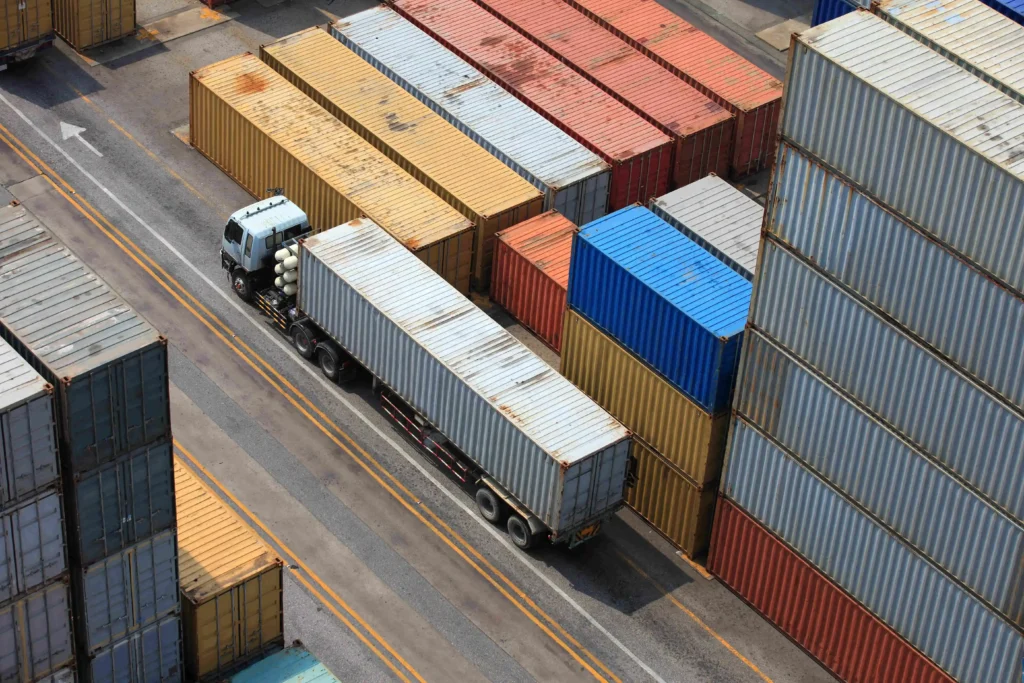
| 20ft FCL | Regular bulk procurement | Suitable for buyers with stable demand. Multiple grades may be arranged in one shipment depending on availability and order planning. |
| 40ft FCL | Higher-volume procurement | Suitable for established buyers with larger and more predictable demand. Production schedule, packaging, and lead time should be confirmed in advance. |
| Annual contract | Long-term supply planning | Useful for buyers that need recurring shipments, forecast planning, consistent specifications, and stable supplier coordination. |
Order volume can affect quotation structure, packaging planning, production scheduling, freight efficiency, and shipment arrangement.
For accurate pricing, buyers should request a formal quotation based on product type, grade, volume, packaging, destination country, Incoterms, and required documentation.
One practical advantage of desiccated coconut is that buyers may be able to combine multiple grades, such as fine, medium, coarse, or flakes, within one shipment depending on availability and production planning.
This can help buyers evaluate different grades without creating separate shipment arrangements for each product type.
Packaging Options for Bulk Desiccated Coconut
| Packaging Format | Net Weight | Best For | Notes |
| 50 kg polypropylene (PP) sack | 50 kg | B2B manufacturing, large-volume re-packaging | Most common export format. Food-grade PP inner liner. Most cost-effective per kg. |
| 25 kg carton box with PP inner bag | 25 kg | Food manufacturers, smaller re-packers | More structured than sacks — easier to stack. Slightly higher per-kg cost. |
| 1 kg retail stand-up pouch | 1 kg | Private label retail, health food brands | Custom label available. Significant per-kg premium. MOQ typically 500 units. |
| 200g / 400g retail bag | 0.2/0.4 kg | Premium retail, D2C, gifting | Custom label. High per-kg cost — retail margin supports it. |
| Bulk bag (FIBC / jumbo bag) | 500–1,000 kg | Very large volume buyers, industrial food | Lowest per-kg cost. Requires forklift handling at both ends. |
Why Source Desiccated Coconut from Indonesia?

Indonesia's position as a leading desiccated coconut supplier is backed by genuine structural advantages — not just competitive pricing.
For buyers who want to verify certification status before contacting any supplier, our article on what certifications a coconut supplier should have explains how to independently verify BRCGS, organic, and Halal certifications in their respective public databases.
Our own certifications and company profile are fully verifiable and publicly accessible.
| Advantage | Detail |
| Production scale | Indonesia produces millions of MT of coconuts annually — consistent raw material availability year-round |
| Certification depth | Indonesian desiccated coconut producers have among the most developed certification infrastructure in the world — BRCGS, USDA Organic, EU Organic, Halal, Kosher |
| Grade availability | Fine, medium, coarse, long thread, flakes, toasted — full range available from established exporters |
| Competitive pricing | Typically 10-20% more competitive than Sri Lankan and Philippine desiccated coconut for equivalent specification |
| Port infrastructure | Major export ports: Tanjung Priok (Jakarta), Tanjung Perak (Surabaya) — well-connected to global shipping routes |
| Transit times (approx) | EU: 25–35 days. USA: 20–30 days. Australia: 10–16 days. Middle East: 12–20 days |
Desiccated Coconut Applications in Food Manufacturing
Desiccated coconut is one of the most versatile functional ingredients in food manufacturing — contributing texture, flavor, fat, and visual appeal simultaneously.
For a comprehensive breakdown of food manufacturing applications for coconut-derived ingredients, see our article on applications of coconut products in the food industry.
| Application | Recommended Grade | Function |
| Bakery — cakes, muffins, cookies | Fine or Medium | Moisture retention, flavor, texture. Blends invisibly into batter. |
| Granola & muesli | Medium or Long Thread | Visual texture, flavor, fat content. Toasted grade popular for premium positioning. |
| Confectionery — chocolate, truffle | Fine | Even distribution throughout product. Adds coconut flavor and fat complexity. |
| Snack bars & energy balls | Medium or Coarse | Binder function + visible texture. Works well with dates, nuts, oats. |
| Breakfast cereals | Medium or Flakes | Visible texture in premium cereals. Toasted grade adds visual appeal. |
| Coatings & toppings | Flakes or Coarse | Decorative, premium appearance. Strong visual impact on finished product. |
| Asian & Middle Eastern cuisine (food service) | Fine or Medium | Ingredient in curries, rice dishes, desserts. Widely used in HoReCa. |
| Coconut milk production | DCM (desiccated coconut meat powder) | Primary raw material for coconut milk — different product from standard desiccated coconut. |
How to Buy Desiccated Coconut in Bulk from Indonesia: Step by Step
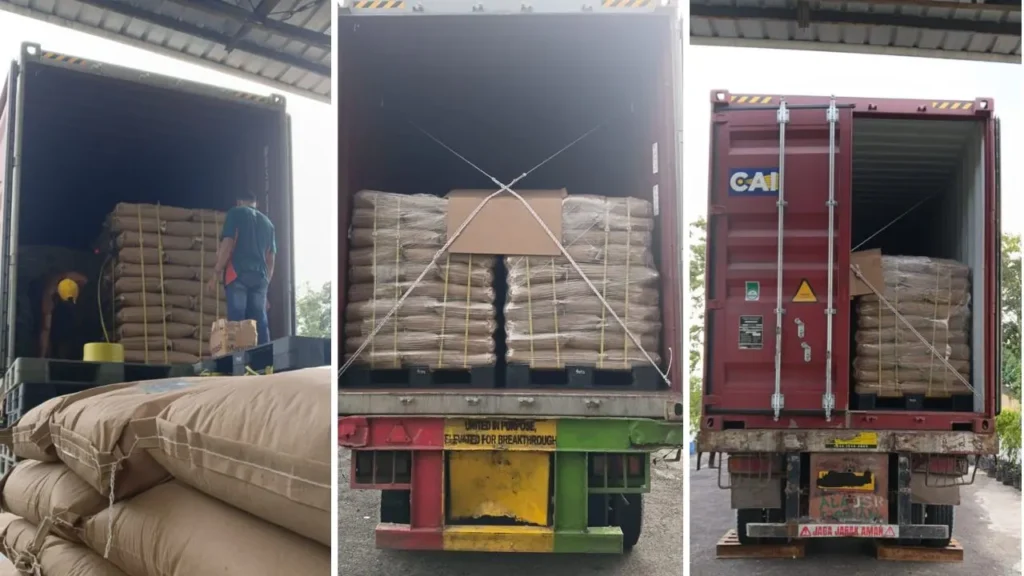
The import process for desiccated coconut follows the same framework as other Indonesian coconut products, with HS Code 0801.11 typically applicable for desiccated coconut.
Our comprehensive article on how to import coconut products from Indonesia covers the full documentation requirements, HS codes, and logistics process for each major destination market — EU, USA, Australia, Middle East, and Japan.
- Define your specifications: grade (fine, medium, coarse, flakes), organic or conventional, sweetened or unsweetened, and whether sulphite-free is required.
- Request samples: 100-500g of each grade you are evaluating, together with the COA for the sample lot. Evaluate in your specific formulation — fat content and moisture affect recipe balance.
- Verify supplier certifications independently: BRCGS on brcdirectory.com, organic on USDA or EU OFIS databases.
- Request COA data from at least three consecutive production lots — not just the sample lot — to verify batch consistency.
- Confirm sulphite status: ask explicitly whether sulphites are used in production and request sulphite test results in the COA if required.
- Place your first commercial order with full documentation requirements specified in writing: COA from ISO 17025 lab, phytosanitary certificate, certificate of origin, and organic TC if applicable.
- Work with your freight forwarder to coordinate container booking and customs clearance.
How to Choose a Reliable Desiccated Coconut Supplier from Indonesia
The evaluation framework for a desiccated coconut supplier is identical to that for any Indonesian coconut product supplier.
Our article on how to choose a reliable coconut exporter from Indonesia provides the full framework including red flags, green flags, and 15 questions to ask before placing any commercial order.
For desiccated coconut specifically, pay particular attention to:
- Sulphite policy. Confirm whether the supplier uses sulphites in their desiccated coconut production. This is a dealbreaker for clean-label and allergen-compliance buyers.
- COA consistency across lots. Fat content, FFA, and peroxide value are the most informative parameters for assessing raw material quality consistency. Request COA from three consecutive lots.
- Moisture control. Desiccated coconut with moisture above 3% at point of shipment is a significant quality risk for long transit times. Confirm moisture is tested immediately before container loading.
- Microbial testing from accredited lab. Salmonella and mold/yeast counts must be from an ISO 17025-accredited laboratory — not in-house testing. Ask for the lab name and accreditation number.
| Ready to source bulk desiccated coconut from Indonesia? Global Coco Sugar supplies BRCGS Food Safety Grade A certified desiccated coconut from Indonesia — fine, medium, coarse, long thread, and flakes — in conventional and organic grades. COA per batch from ISO 17025-accredited laboratory. Samples available with no minimum order. Request a Desiccated Coconut Price Quote or Sample >>> View Our Full Desiccated Coconut Product Range >>> |
Private Label Desiccated Coconut from Indonesia
For brand owners wanting to sell desiccated coconut under their own brand in retail-ready packaging, our private label coconut products program covers desiccated coconut in all grades and packaging formats — from 1 kg kraft stand-up pouches to premium gift sets.
Custom label and artwork support included. No minimum order quantity for sample development.
Private label desiccated coconut commands a significant retail premium — a 200g pack of premium organic desiccated coconut flakes in branded packaging typically retails at 5-8x the per-kg wholesale price.
The margin math is compelling for brands with established retail or D2C distribution channels.
Conclusion: Match Your Grade to Your Application, Then Scale
Sourcing bulk desiccated coconut from Indonesia is a well-established supply chain for food manufacturers and brand owners globally — and the right grade selection, paired with verified certification and consistent COA documentation, makes it one of the most reliable ingredient sourcing decisions available in the natural food sector.
The practical approach: define your grade requirements based on your application, request samples of your target grades with COA, verify sulphite status and all certifications independently, and evaluate samples in your specific formulation before placing your first commercial order.
Once quality and consistency are confirmed, scale to FCL volumes and negotiate annual contract pricing.
| Source certified desiccated coconut from Indonesia — all grades available Global Coco Sugar is a BRCGS Food Safety Grade A certified exporter of desiccated coconut from Indonesia. Fine, medium, coarse, long thread, and flakes — conventional and organic. Sulphite-free available. COA from ISO 17025-accredited laboratory per batch. Private label and custom packaging available. Minimum order 1 MT. Request a Price Quote or Samples >>> View Our Desiccated Coconut Range >>> Our Certifications & Company Profile >>> |


