Category: B2B Sourcing & Export Guide

  • Best Countries to Source Coconut Sugar: Indonesia vs Philippines vs Sri Lanka — A Complete Buyer’s Comparison (2026)

    Best Countries to Source Coconut Sugar: Indonesia vs Philippines vs Sri Lanka — A Complete Buyer’s Comparison (2026)

    Best Countries to Source Coconut Sugar
    Quick Answer: Which country should you source from?
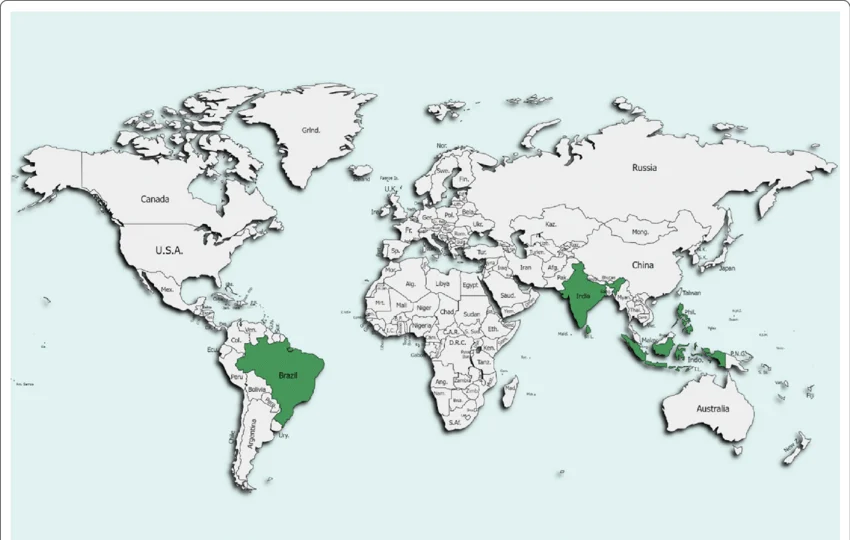
    For most buyers: Indonesia is the best country to source coconut sugar — it has the largest certified supply base, the most BRCGS and organically certified facilities, the most competitive pricing for certified product, and the deepest production heritage. The Philippines is a credible alternative with strong supply but fewer certified options and slightly higher pricing. Sri Lanka is the best choice for specialty or premium-position products where distinctive terroir and flavor profile justify the premium. India and Vietnam are emerging sources not yet recommended for buyers requiring BRCGS or EU Organic certification.

    For a buyer new to the industry, deciding on the best countries to source coconut sugar is one of the first and most consequential decisions in the supply chain.

    The answer is not the same for every buyer — it depends on your certification requirements, volume, target market, flavor preferences, and willingness to pay a premium for specific origin characteristics.

    This guide gives you a comprehensive, honest comparison of the four main coconut sugar producing countries — Indonesia, Philippines, Sri Lanka, and India — across the dimensions that matter most for B2B sourcing decisions: production scale, certification availability, pricing, flavor and quality profile, and supply reliability.

    Before diving in, if you are ready to request pricing from a certified Indonesian supplier, view our certified coconut sugar product range for current specifications and availability.

    Master Comparison: Coconut Sugar Producing Countries at a Glance

    This table summarizes the key sourcing criteria across the four main producing countries. Detailed analysis of each country follows.

    CriteriaIndonesia ⭐PhilippinesSri LankaIndia
    Production volumeLargest globally — >50% world supplySecond largest — ~30-35%Small — ~5-8%Minimal coconut sugar — mainly copra/oil
    BRCGS certified facilitiesMost of any countrySome certifiedVery limitedNone known for coconut sugar
    USDA Organic availabilityWidely availableAvailableAvailable (limited)Not commercially available
    EU Organic availabilityWidely availableAvailableLimitedNot commercially available
    Halal certificationMUI — widely availableIDCP equivalentLimitedLimited
    FOB price (conventional)USD 1.80-2.40/kgUSD 1.90-2.60/kgUSD 2.00-2.80/kgNot commercially available at scale
    FOB price (organic)USD 2.40-3.20/kgUSD 2.60-3.40/kgUSD 3.00-4.00/kgN/A
    Flavor profileCaramel-butterscotch, moderate aromaLighter caramel, milderComplex, darker, earthierN/A
    Transit time to EU25-35 days (via Rotterdam)28-38 days18-25 days (closer geographically)20-28 days
    Supply reliabilityExcellent — largest supply baseGoodVariable — smaller baseNot reliable at scale
    MOQ (FCL)14-16 MT (20ft FCL)14-16 MT (20ft FCL)14-16 MT (20ft FCL)N/A
    Best forMost buyers — best overall combinationAlternative to IndonesiaSpecialty/premium segmentNot recommended currently

    Indonesia: The World’s Best Overall Source for Most Buyers

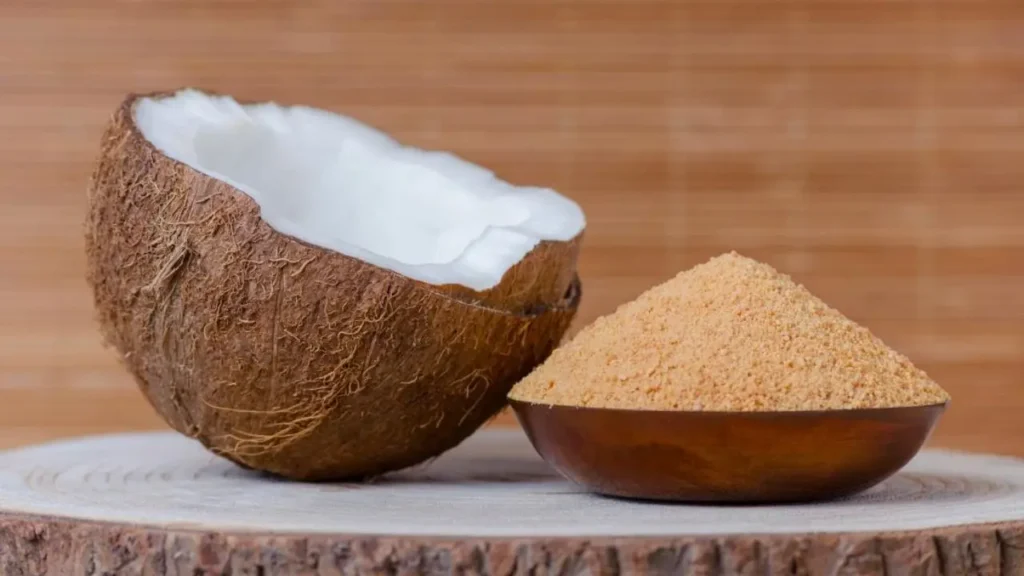
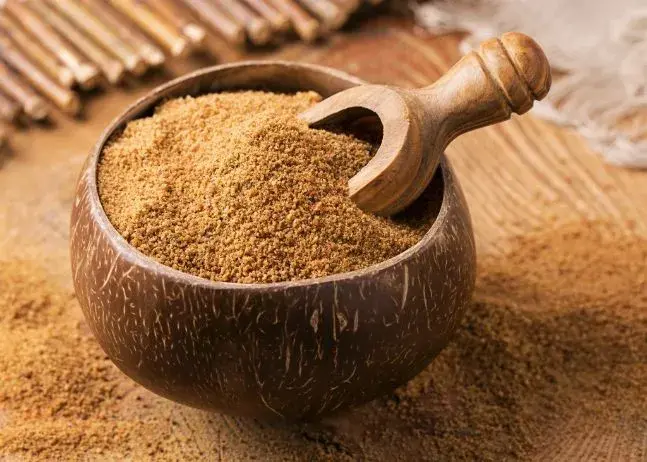
    indonesia is the best countries to source coconut sugar

    Indonesia’s dominance in global coconut sugar production is not accidental — it reflects six structural advantages that compound over time.

    For a detailed analysis of exactly why Indonesia leads, our article on why Indonesia is the world’s largest coconut sugar producer covers the full picture.

    Understanding how coconut sugar is produced in Indonesia also explains why the deep production heritage of Central Java villages produces consistently higher quality raw material than newer producing regions.

    Indonesia’s Key Sourcing Advantages

    • Largest certified supply base in the world. More BRCGS Food Safety Grade A certified coconut sugar facilities than any other country — essential for buyers serving EU or US major retail.
    • Best price-to-certification ratio. BRCGS + EU Organic certified coconut sugar from Indonesia is typically 10-20% cheaper than equivalent certified Philippine product and 25-40% cheaper than Sri Lankan product.
    • Widest grade and format availability. Granulated, fine powder, cubes, coconut nectar syrup — all available certified from established Indonesian exporters.
    • Production heritage. 300+ years of unbroken coconut sugar production in Central Java creates quality consistency and production knowledge that newer origins cannot replicate.
    • Most established export infrastructure. REX registration for EU GSP preference, FDA registration for US import, full phytosanitary documentation — all standard from established Indonesian exporters.

    Indonesia’s Limitations

    • Transit time to EU (25-35 days) is slightly longer than Sri Lanka (18-25 days) — relevant for buyers with tight lead time requirements.
    • The large number of suppliers — including uncertified ones — means buyer due diligence is essential. Not all ‘Indonesian’ coconut sugar comes from certified facilities.
    • Some Philippine buyers argue Indonesian coconut sugar has a slightly stronger flavor than their preference — worth evaluating via sample.
    The certification advantage in numbers
    When evaluating which country to source from for EU or US retail supply, certification availability is often the deciding factor — not price or flavor. Indonesia’s lead in BRCGS-certified coconut sugar facilities is the single most commercially significant country-level advantage. Buyers who require BRCGS Grade A certification — as most EU and US major retail chains do — will find far more qualified supplier options in Indonesia than in any other producing country. For a full breakdown of what BRCGS means and how to verify it, see our article on

    The Philippines: A Strong Alternative with Specific Use Cases

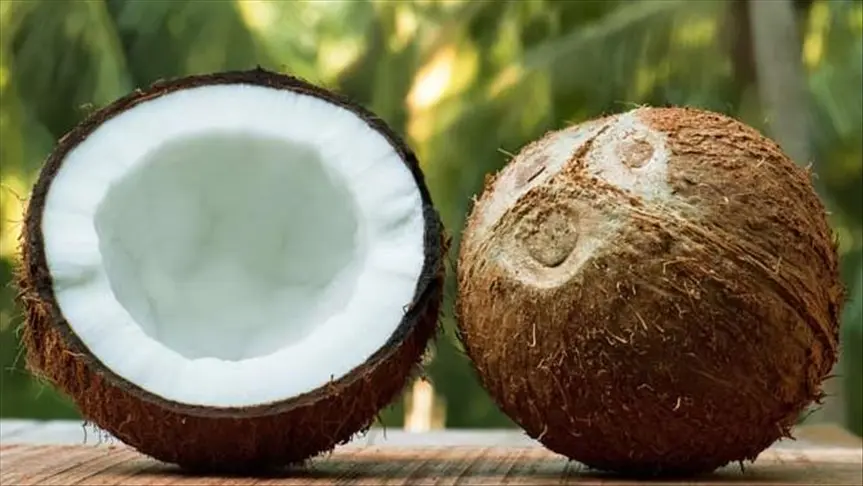
    cocos nucifera

    The Philippines is Indonesia’s most credible competitor in coconut sugar production — and for certain buyers and applications, it is genuinely the better choice.

    Understanding when and why requires looking beyond the headline production numbers.

    Philippines’ Key Sourcing Advantages

    • Milder, lighter flavor profile. Philippine coconut sugar typically has a lighter caramel flavor with less pronounced earthiness than Indonesian product. For buyers formulating products where a neutral sweetener with gentle caramel notes is preferred — certain beverage applications, lighter confectionery — Philippine coconut sugar may be the better fit.
    • Established quality reputation. The Philippines has been a significant coconut sugar exporter for decades and has a strong quality reputation in certain US health food segments.
    • Diversified coconut industry. Philippine exporters often offer complementary coconut products (coconut flour, desiccated coconut) alongside coconut sugar — convenient for buyers sourcing multiple coconut-derived ingredients.
    • English language business culture. The Philippines’ English-language business environment can make communication slightly easier for some European and US buyers.

    Philippines’ Limitations

    • Typically 10-20% higher pricing than equivalent certified Indonesian product — partially explained by lower production scale and higher farm-gate costs.
    • Fewer BRCGS-certified facilities than Indonesia — buyers targeting EU or US major retail may have fewer certified supplier options.
    • More susceptible to supply disruption from typhoons and El Niño drought events than Indonesian Central Java production.
    • Slightly longer transit time to EU compared to direct Indonesian routes via Rotterdam.

    Sri Lanka: The Premium Origin for Specialty and Gourmet Applications

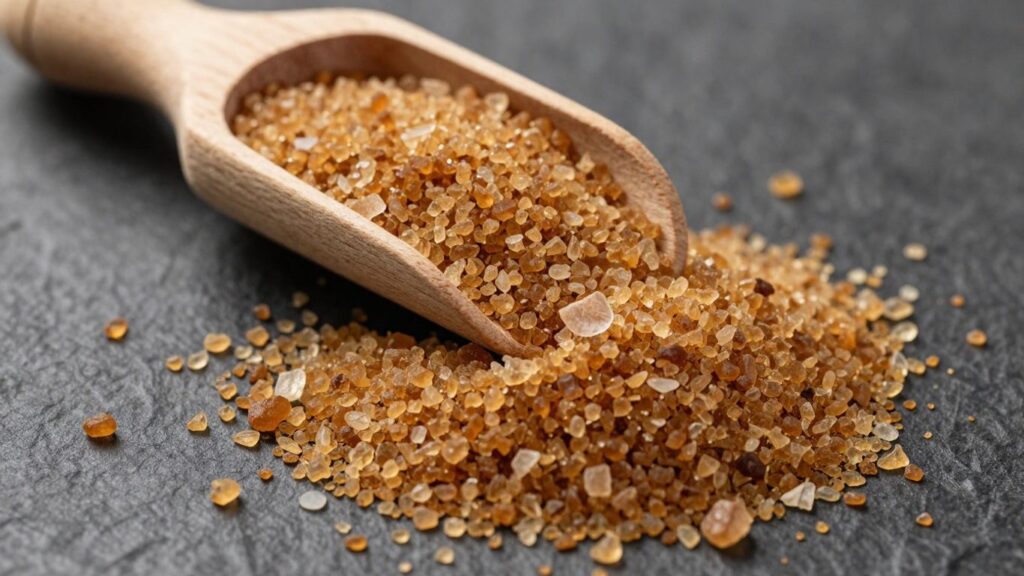
    sri lanka coconut sugar

    Sri Lanka holds a unique position in the global coconut sugar market — it is neither the largest producer nor the most certified, but it offers something the other origins cannot: distinctive terroir-driven flavor characteristics that command genuine premium pricing in specialty food markets.

    Sri Lanka’s Key Sourcing Advantages

    • Distinctive flavor profile. Sri Lankan coconut sugar has a more complex, darker, and earthier flavor profile than Indonesian or Philippine product — often described as having notes of molasses or brown butter alongside the standard caramel character. For premium confectionery, artisan food producers, and gourmet applications where flavor differentiation matters, this is a genuine advantage.
    • Premium positioning story. ‘Sourced from Sri Lanka’ carries authentic terroir and origin differentiation that resonates with premium food and beverage brand positioning in European and US gourmet markets.
    • Closer to EU geographically. Sri Lanka’s transit time to EU ports (18-25 days) is meaningfully shorter than Indonesia (25-35 days) — relevant for buyers with tight procurement cycles.
    • Organic availability. Certified organic Sri Lankan coconut sugar is available, though from a smaller base of certified producers than Indonesia.

    Sri Lanka’s Limitations

    • Higher pricing — 25-40% above equivalent Indonesian certified product. The premium is real, but must be justified by corresponding retail premium.
    • Smaller supply base — fewer certified facilities, lower production volumes, more limited grade and format availability.
    • BRCGS-certified suppliers are very limited — buyers requiring BRCGS for major retail may struggle to find compliant Sri Lankan sources.
    • Supply reliability risk is higher due to smaller total production base.

    India and Vietnam: Emerging Sources Not Yet Ready for Most Buyers

    India

    India has the world’s third-largest coconut cultivation area — but the vast majority of Indian coconut production is directed toward copra, coconut oil, and desiccated coconut rather than coconut sugar.

    Coconut sugar production in India is small, fragmented, and largely lacks the certified export infrastructure (BRCGS, EU Organic) that international buyers require.

    Some specialty organic coconut sugar from India is available through niche channels, but it is not a commercially reliable source for buyers needing BRCGS certification or FCL volumes at consistent quality.

    Vietnam

    Vietnam has emerged as a new coconut sugar producing country in recent years — particularly in Ben Tre province, which is known for its coconut cultivation.

    However, Vietnam’s coconut sugar export industry is nascent: BRCGS-certified facilities are extremely rare, EU Organic certified supply is limited, and export volumes are small.

    For buyers who need certified supply at commercial scale, Vietnam is not yet a viable primary source. It bears monitoring as the industry matures, but should not be on a current sourcing shortlist.

    Why not to source from non-certified origins — even at lower prices
    Buyers are sometimes tempted by lower prices from uncertified or minimally certified suppliers in India or Vietnam. The risk is significant: a supplier who cannot provide BRCGS certification or EU Organic documentation may create compliance failures at the retail buyer audit stage — potentially resulting in delisting, product recalls, or import refusal. The cost of a compliance failure vastly exceeds any short-term price saving. Always require certification verification before qualifying any new supplier, regardless of origin.

    Certification Availability by Country: The Most Important Comparison for B2B Buyers

    the best coconut sugar certification you should consider

    Certification availability is the single most important country-level comparison for buyers who supply EU or US retail channels.

    Our guide on what certifications a coconut sugar supplier should have explains how to verify each certification independently in its respective public database.

    CertificationIndonesiaPhilippinesSri LankaIndiaVietnam
    BRCGS Food Safety Grade A✅ Multiple facilities — market leader✅ Some available⚠️ Very limited❌ Not available❌ Not available
    USDA Organic (NOP)✅ Widely available✅ Available✅ Available (limited)⚠️ Very limited⚠️ Very limited
    EU Organic (EC 2018/848)✅ Widely available✅ Available⚠️ Limited❌ Not commercially available❌ Not available
    JAS Organic (Japan)✅ Available✅ Available⚠️ Very limited
    Halal (MUI or equivalent)✅ MUI — widely available✅ IDCP equivalent⚠️ Limited⚠️ Limited⚠️ Limited
    Kosher✅ Available from select suppliers✅ Available⚠️ Limited
    ISO 17025-accredited COA✅ Multiple labs in Indonesia✅ Available⚠️ Limited local labs⚠️ Limited⚠️ Limited
    REX (EU GSP preference)✅ Registered exporters available✅ Available✅ Available✅ Available⚠️ Limited

    Price Comparison by Country of Origin

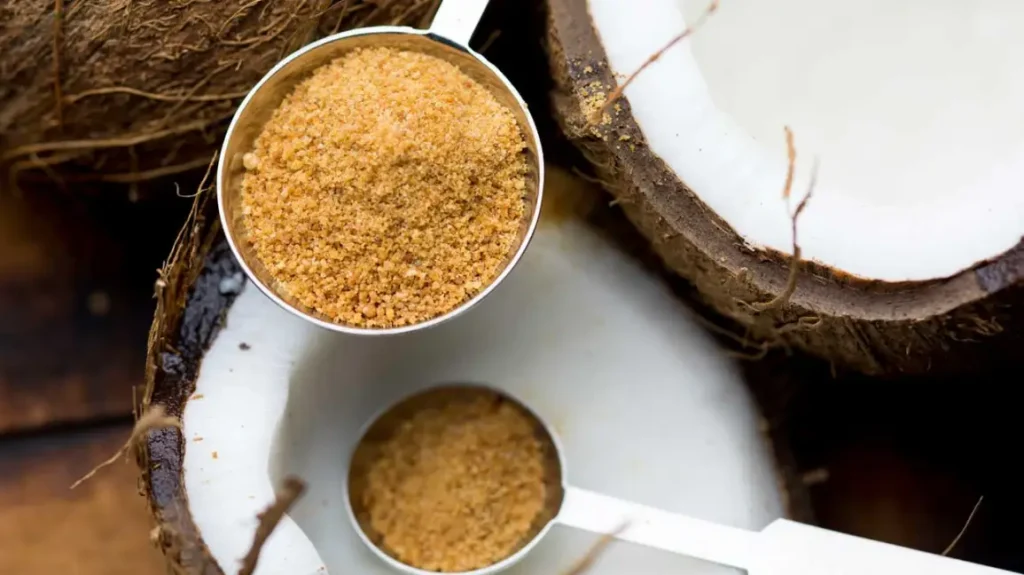
    coconut sugar

    The following price ranges are FOB (Free on Board) at the respective export ports.

    For a complete landed cost calculation including freight, duty, and handling to EU or US destinations, our article on coconut sugar export price from Indonesia per ton provides worked examples for major destination markets.

    Product CategoryIndonesia FOB/kgPhilippines FOB/kgSri Lanka FOB/kgPrice Premium (SL vs ID)
    Conventional granulated (standard grade)USD 1.80-2.40USD 1.90-2.60USD 2.00-2.80+10-20%
    Organic granulated (USDA/EU)USD 2.40-3.20USD 2.60-3.40USD 3.00-4.00+25-40%
    Fine powder (conventional)USD 2.00-2.80USD 2.10-2.90USD 2.20-3.00+10-15%
    Fine powder (organic)USD 2.80-3.60USD 3.00-3.80USD 3.40-4.50+20-35%
    BRCGS Grade A premium vs non-BRCGS+USD 150-300/MTSimilar rangeRarely applicable
    The real cost comparison: landed cost, not FOB price
    A 10-20% FOB price premium for Philippine product or a 25-40% premium for Sri Lankan product looks significant — but it must be evaluated in the context of total landed cost. If your EU customer requires BRCGS and you can only find a BRCGS-certified supplier from Indonesia, the Philippine ‘premium’ is irrelevant — Indonesia is the only viable option. Similarly, if your gourmet retail customer is willing to pay EUR 1.50/kg more for ‘Sri Lankan origin’ coconut sugar, the Sri Lankan FOB premium is fully justified. Always evaluate pricing in the context of your specific certification requirements and what your end market will pay.

    Flavor and Quality Profile: Understanding the Sensory Differences

    indonesia coconut sugar

    The nutritional profile — including the glycemic index of approximately 35 — is consistent across well-produced coconut sugar from any origin.

    The meaningful quality differences between origins are primarily sensory: flavor, aroma, color, and the specific flavor compounds that develop during production.

    Quality AttributeIndonesia (Central Java)PhilippinesSri Lanka
    Primary flavor notesRich caramel, butterscotch, moderate earthinessLighter caramel, milder sweetness, subtle butterscotchComplex caramel, darker molasses undertones, pronounced earthiness
    Color (granulated)Golden brown to dark brownLight golden to golden brownDark brown to very dark brown
    Aroma intensityModerate to strongMild to moderateStrong, complex
    GI (approximate)35-5435-5435-54
    Consistency batch-to-batchExcellent — deep production heritageGoodVariable — smaller production base
    Moisture specificationMax 3% (standard)Max 3% (standard)Max 3% (standard)
    Best application fitAll applications — most versatileLight-flavored products, beverages, confectioneryArtisan, gourmet, premium applications

    Decision Matrix: Which Country to Choose Based on Your Situation

    Use this matrix to identify the best country of origin based on your specific requirements:

    Your SituationBest CountryReason
    You supply EU major retail (Tesco, Aldi, Carrefour) requiring BRCGS Grade AIndonesiaMost BRCGS-certified options, competitive pricing
    You supply US natural food retail (Whole Foods, Sprouts) requiring USDA OrganicIndonesia or PhilippinesBoth have USDA Organic; Indonesia has better pricing
    You are a premium gourmet food brand and ‘origin story’ matters to your customersSri LankaDistinctive flavor, premium provenance story
    You are a food manufacturer needing large annual volumes at FCL pricingIndonesiaLargest supply base, lowest per-MT pricing at scale
    You are evaluating coconut sugar for first time — need samples before decisionIndonesiaMost supplier options, easiest to get multiple samples
    You formulate light-colored confectionery and need neutral caramel flavorPhilippinesLighter flavor profile, lighter color
    You supply Japan and need JAS Organic certificationIndonesia or PhilippinesBoth have JAS-certified options
    You need custom packaging or private label with branded origin storyIndonesia or Sri LankaIndonesia for cost efficiency; Sri Lanka for premium
    You need the shortest possible transit time to EUSri LankaClosest geographically — 18-25 days vs 25-35 for Indonesia
    Ready to source from the best country for your needs?
    If your decision matrix points to Indonesia — Global Coco Sugar is a BRCGS Food Safety Grade A certified manufacturer and exporter of organic and conventional coconut sugar from Central Java. We supply to buyers in EU, USA, Australia, Middle East, and Japan with full certification documentation and REX registration for EU GSP preference.
    Request a Sample or Bulk Quote >>>
    View Our Certified Coconut Sugar Range >>>

    Due Diligence Checklist: Evaluating Suppliers Regardless of Country

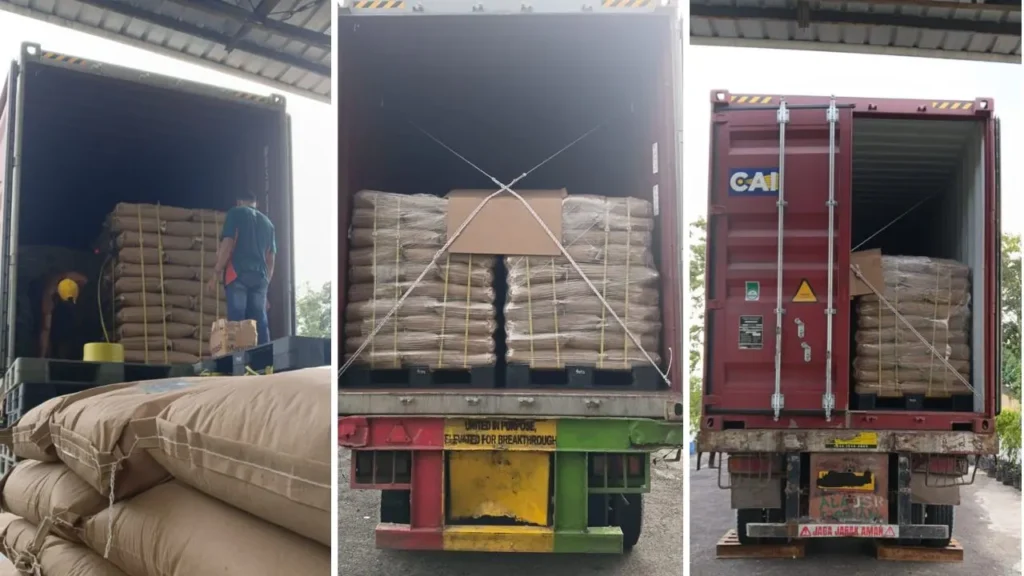
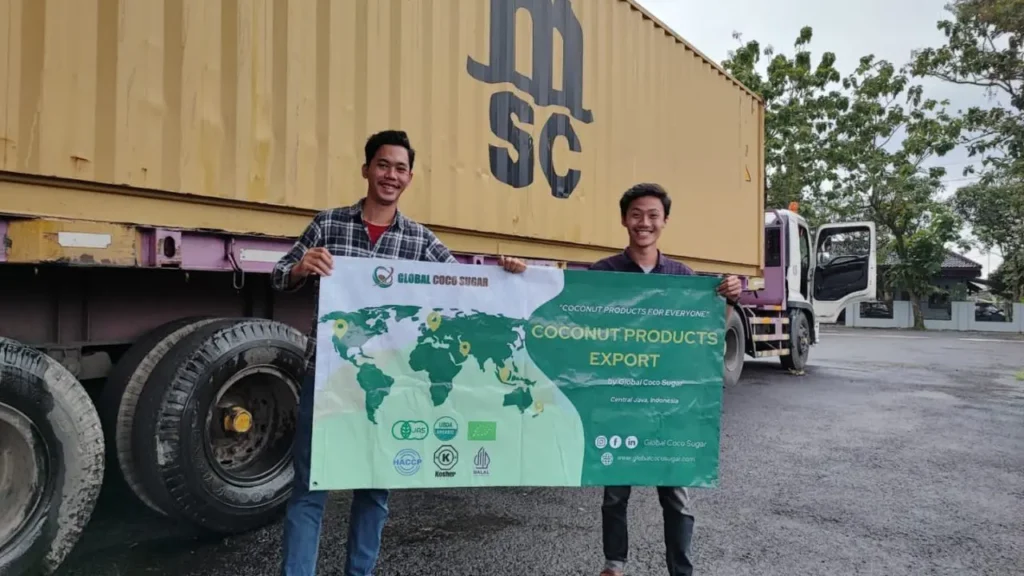
    Global Coco Sugar Ships Certified Coconut Products to the USA and Europe

    Regardless of which country you choose, the supplier evaluation process should be rigorous — certification claims must be verified independently, documentation quality must be assessed, and reference buyers should be contacted.

    Our guide on what certifications a coconut sugar supplier should have provides the full verification protocol for each certification.

    Our article on how to choose a reliable coconut sugar exporter from Indonesia provides the complete due diligence framework — applicable to suppliers from any country.

    Country-specific due diligence notes:

    • For Indonesian suppliers: Verify BRCGS on brcdirectory.com. Verify EU/USDA Organic on their respective public databases. Confirm REX registration for EU GSP preference. Verify facility ownership vs trading company.
    • For Philippine suppliers: Apply the same certification verification process. Additionally confirm export history to your specific target market — some Philippine suppliers have strong US experience but limited EU documentation capability.
    • For Sri Lankan suppliers: Verify organic certification carefully — Sri Lanka has a small certified base and some suppliers may overstate certification scope. Request COA from ISO 17025-accredited laboratory — local lab options are more limited.
    • For any country: Always request COA from three consecutive production lots, not just the sample lot. Always request references from existing buyers in your target market.

    Specific Guidance for European Buyers

    For European buyers, country of origin has direct regulatory implications beyond quality and price — it affects duty rates and organic compliance requirements.

    Our dedicated article for European coconut sugar wholesale buyers covers EU GSP preference rates from each producing country, BRCGS requirements for EU retail, and the EU Organic importer registration process.

    For the full documentation and logistics framework for importing from Indonesia specifically, our complete import guide for coconut sugar from Indonesia provides step-by-step guidance.

    EU-specific country considerations:

    • All three main producing countries (Indonesia, Philippines, Sri Lanka) qualify for EU GSP preference — meaning reduced import duties vs standard TARIC rate.
    • For EU Organic label claims: verify that the specific supplier holds EU Organic certification — not just USDA Organic. Both Indonesia and Philippines have EU Organic certified options; Sri Lanka’s is more limited.
    • For BRCGS requirement (mandatory for major EU retail chains): Indonesia has the most available certified supplier options.
    • Transit time consideration: Sri Lanka’s shorter transit (18-25 days) can be meaningful for buyers with tight procurement cycles, but Indonesia’s larger supply base typically allows better lead time planning.

    Conclusion: Match Country of Origin to Your Specific Requirements

    The answer to finding the best countries to source coconut sugar is not a single answer — it is a framework question.

    For the majority of buyers — those requiring BRCGS certification, EU or USDA Organic compliance, reliable FCL supply at competitive pricing — Indonesia is the clear answer.

    For buyers with specific premium positioning needs, flavor differentiation requirements, or geographic considerations, the Philippines and Sri Lanka offer genuine alternatives.

    What is not a viable answer for any serious buyer is sourcing from uncertified or minimally certified origins simply to save 10-15% on FOB pricing.

    The compliance and quality risks of under-certified supply — particularly for buyers supplying EU or US major retail — far outweigh the short-term price benefit.

    Source from Indonesia’s most certified coconut sugar exporter
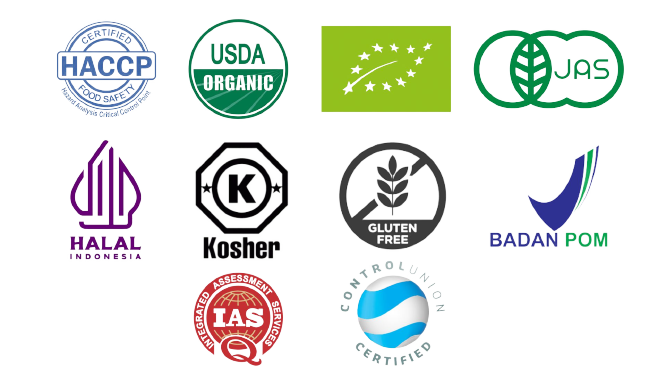
    Global Coco Sugar holds BRCGS Food Safety Grade A, EU Organic, USDA Organic, HACCP, Halal MUI, and Kosher certification from Central Java, Indonesia. We supply certified organic and conventional coconut sugar to buyers across EU, USA, Australia, Middle East, and Japan. Full documentation support, REX registration for EU GSP preference, and ISO 17025-accredited COA per batch.
    Contact Our Export Team >>>
    View Our Coconut Sugar Product Range >>>
    Our Certifications & Company Profile >>>
  • Coconut Sugar Wholesale Supplier for European Importers: Certifications, Pricing & Complete Sourcing Guide (2026)

    Coconut Sugar Wholesale Supplier for European Importers: Certifications, Pricing & Complete Sourcing Guide (2026)

    Coconut Sugar Wholesale Europe

    For food manufacturers and ingredient distributors navigating coconut sugar wholesale Europe, establishing a compliant, traceable, and direct supply chain from Indonesia is critical to securing market share in 2026.

    German health food distributors, Dutch commodity importers, French organic food brands, and UK natural food retailers collectively represent a significant share of global coconut sugar import volume — and they impose the most stringent certification and documentation requirements of any market in the world.

    This guide is written specifically for European wholesale buyers — importers, distributors, food manufacturers, and private label brands — who want to source coconut sugar directly from certified Indonesian suppliers rather than through European commodity traders or distributors.

    You can view our certified coconut sugar product range for European buyers before reading further.

    For broader context on the Indonesian supplier landscape, our guide on finding a bulk coconut sugar supplier in Indonesia provides the full evaluation framework.

    Why the European Market Has Different Requirements from the Rest of the World

    european market coconut sugar

    Buyers in the USA, Australia, or the Middle East face significant certification requirements when sourcing coconut sugar.

    European buyers face all of those requirements plus additional layers of regulatory complexity that make the EU the most demanding — and most commercially rewarding — market in the world for certified coconut sugar suppliers.

    RequirementEU Specific?Detail
    BRCGS Food Safety Grade AStrongly preferredRequired by Tesco, Aldi, Lidl, Carrefour, REWE, Albert Heijn for vendor approval. Non-negotiable for major retail.
    EU Organic certificationEU-specificEC 834/2007 / EC 2018/848. USDA Organic is NOT sufficient for EU organic label claims. Separate EU Organic certificate required.
    Organic Transaction Certificate (TC)EU-specific processRequired per shipment lot. EU importer must register with an EU control body. Supplier must issue TC before container loading.
    EU importer organic registrationEU-specificThe EU buyer must also hold organic operator status from an EU-recognized control body to make organic claims on products sold in the EU.
    TARIC customs classificationEU-specificHS 1702.90.95 for coconut sugar. Standard duty rate 8% but Indonesia qualifies for GSP preference — can reduce to 0%.
    EU food labeling complianceEU-specificRegulation 1169/2011 — full ingredient declaration, allergen listing, net weight in metric, country of origin.
    Phytosanitary certificateRequired all marketsIssued by Indonesian Ministry of Agriculture (BARANTAN). Required for all plant-based food imports into the EU.
    Halal certificationNot EU-requiredRequired for specific channels (halal food retail, Muslim demographic products). MUI Indonesia is widely accepted.

    For a complete breakdown of how to verify each certification independently — including the public databases for BRCGS, EU Organic, and USDA Organic — our guide on what certifications a coconut sugar supplier should have covers the full verification process.

    Our dedicated article on BRCGS certified coconut sugar suppliers from Indonesia explains what BRCGS grades mean and why Grade A is the minimum standard for EU retail access.

    The European Coconut Sugar Market: Key Importing Countries and Channels

    european coconut sugar market

    Europe’s coconut sugar import market is not uniform — different countries have different channel structures, different dominant retailers, and different certification requirements that influence how Indonesian suppliers need to position themselves.

    Our article on exporting coconut sugar to Europe provides the full regulatory landscape for EU market access.

    CountryKey Import ChannelDominant Retailers Requiring BRCGSOrganic Demand Level
    GermanyNatural food distributors, direct food manufacturersREWE, Aldi, Lidl, dm-drogerie marktVery High — largest EU organic market
    NetherlandsCommodity importers (Rotterdam hub), distributorsAlbert Heijn, Jumbo, EkoplazaHigh — major transit/distribution hub for EU
    FranceOrganic food distributors, food manufacturersCarrefour, Monoprix, BiocoopHigh — strong organic retail network
    United KingdomDirect importers, health food distributorsTesco, Waitrose, Holland & BarrettVery High — premium health food market
    ScandinaviaRegional distributors, organic food chainsICA, Coop, RimiVery High — high per-capita organic spending
    Poland/CzechFood manufacturers, regional distributorsLidl, Biedronka, AlbertGrowing — price-sensitive but quality-aware
    Italy/SpainFood manufacturers, gourmet distributorsCarrefour, Esselunga, MercadonaModerate — growing health food segment
    The Netherlands: Why Rotterdam matters for every EU coconut sugar buyer
    Rotterdam is the largest port in Europe and the primary entry point for Indonesian coconut sugar into the EU. Several major European commodity traders — including BATA Food, which stores Indonesian coconut sugar in its Netherlands warehouse — use Rotterdam as their distribution hub for the entire EU market. For EU buyers evaluating whether to source directly from Indonesia or from a European distributor, Rotterdam’s role in the supply chain is a key consideration: direct sourcing from Indonesia via Rotterdam typically costs 15-30% less than purchasing from a European distributor, but requires more logistical setup for first-time importers.

    What EU Wholesale Buyers Need from Their Indonesian Coconut Sugar Supplier

    coconut sugar wholesale EU

    Based on the requirements of EU importers, food manufacturers, and retail buyers, here is the minimum qualification checklist for an Indonesian coconut sugar supplier to be commercially viable for the European market:

    Non-Negotiable Certification Requirements

    • BRCGS Food Safety Grade A (minimum): Verifiable on brcdirectory.com. This is the gateway certification for any supplier seeking to serve major EU retail chains. Suppliers without BRCGS cannot pass vendor onboarding at Tesco, Aldi, Lidl, Carrefour, or REWE.
    • EU Organic certification (for organic product): Issued under EC 834/2007 or EC 2018/848 by an EU-accredited control body operating in Indonesia — Control Union, Skal, IMO, or BioAgriCert. Verifiable on the OFIS EU organic database.
    • Organic Transaction Certificate per shipment lot: The TC connects a specific production lot to the organic certificate. Required before container loading. The lot number on the TC must match the COA and packing list exactly.
    • Certificate of Analysis from ISO 17025-accredited laboratory: Per production lot. Parameters: moisture, fat, FFA (for desiccated coconut), microbiological counts including Salmonella, pesticide residue (for organic claims), heavy metals.

    Documentation Package per Shipment

    • Commercial invoice (with HS code 1702.90.95 for coconut sugar)
    • Packing list
    • Bill of lading
    • Phytosanitary certificate (BARANTAN — Indonesian Ministry of Agriculture)
    • Certificate of Origin (Form A for GSP preference, or REX Registered Exporter statement)
    • Certificate of Analysis — ISO 17025 accredited laboratory
    • EU Organic Transaction Certificate per lot (organic product only)
    • EUR.1 movement certificate (if applicable for certain FTA preferences)

    For a complete documentation guide per destination market — including specific EU country requirements, HS codes, and how to claim GSP duty preference — our article on how to import coconut sugar from Indonesia covers the full process.

    EU Import Duties for Indonesian Coconut Sugar: GSP and TARIC Explained

    Understanding EU import duties is essential for calculating landed cost accurately.

    The good news for EU buyers sourcing from Indonesia: Indonesia qualifies for EU GSP (Generalised Scheme of Preferences), which can significantly reduce import duties compared to the standard TARIC rate.

    Tariff ScenarioHS CodeDuty RateCondition
    Standard TARIC rate (no preference)1702.90.958%Applied if no preferential origin proof provided
    EU GSP preference — Indonesia (Standard)1702.90.953.2%Requires Form A (certificate of origin) or REX statement from Indonesian exporter
    EU GSP preference — Indonesia (Enhanced SPG)1702.90.950–1.6%If specific conditions met — verify current TARIC schedule
    EU-ASEAN FTA (if applicable)1702.90.95To be verifiedCheck current EUSFTA status — not yet fully in force as of 2026
    How to claim GSP preference — practical steps for EU importers
    To claim GSP duty preference for Indonesian coconut sugar, you need: (1) a REX (Registered Exporter) statement of origin on the invoice or a separate Form A certificate of origin from the Indonesian supplier, (2) the supplier must be registered in the REX database, and (3) the goods must meet the EU rules of origin requirements for Indonesia. Always verify the current GSP rates on the EU TARIC database before finalizing your landed cost calculation, as rates are subject to annual review.

    Pricing for Coconut Sugar Wholesale Europe: FOB, CIF Rotterdam, and Landed Cost

    global coco sugar ships certified coconut products to the USA and Europe

    For EU buyers, the relevant pricing reference is not just FOB Indonesia — it is the fully landed cost at your EU warehouse.

    Our article on coconut sugar export price from Indonesia per ton provides current 2026 FOB price ranges by product category and certification tier.

    Here is a practical landed cost calculation for a standard 20ft FCL of BRCGS-certified organic coconut sugar, FOB Tanjung Emas (Semarang), delivered to Rotterdam:

    Cost ComponentEstimated Range (EUR)Notes
    FOB product cost (15 MT @ ~EUR 2,300/MT organic)EUR 34,500BRCGS Grade A, EU Organic, 25kg kraft sacks
    Ocean freight (Indonesia → Rotterdam)EUR 2,000 – 3,20020ft FCL — varies by shipping line and season
    Marine insurance (0.3% of CIF value)EUR 100 – 120Standard cargo insurance
    EU import duty (HS 1702.90.95 — GSP rate ~3.2%)EUR 1,180Based on CIF value ~EUR 37,000. Check current GSP rate.
    Customs brokerage & port handlingEUR 400 – 700Licensed customs agent at Rotterdam
    Inland freight Rotterdam → warehouseEUR 300 – 600Depends on destination within EU
    Total estimated landed costEUR 38,480 – 40,300Per 20ft FCL of ~15 MT net
    Landed cost per MTEUR 2,565 – 2,687All-in cost per metric ton at EU warehouse
    Landed cost per kgEUR 2.57 – 2.69/kgReference for wholesale pricing to EU buyers
    Comparison: direct from Indonesia vs buying from EU distributor
    European commodity traders and distributors — such as BATA Food (Netherlands) who store coconut sugar in Rotterdam — typically sell to EU buyers at EUR 3.20-4.50/kg for organic coconut sugar, already customs-cleared and stored locally. Direct sourcing from Indonesia costs approximately EUR 2.57-2.69/kg landed — a saving of EUR 0.50-1.80/kg. For a 20ft FCL of 15 MT, this is a EUR 7,500-27,000 saving per container. The trade-off: direct sourcing requires more setup time (supplier qualification, freight forwarder relationship, import customs process) and longer lead times. For buyers placing 3+ FCL orders per year, direct sourcing economics are compelling.
    Request a wholesale price quotation for EU delivery
    Global Coco Sugar provides FOB pricing within 1 business day for EU buyers — including BRCGS certificate verification details, EU Organic certificate documentation, REX statement availability for GSP preference, and estimated freight guidance for Rotterdam or Hamburg. No obligation for the first inquiry.
    Request a Wholesale Quote for European Delivery >>>
    View Our Certified Coconut Sugar Range >>>

    EU Organic Coconut Sugar: What European Importers Must Know

    The EU Organic certification framework is more complex for importers than for US buyers — because the EU requires not just certification from the Indonesian supplier, but also active registration from the EU importer with an EU-recognized organic control body.

    Our article on exporting organic coconut sugar from Indonesia explains the full documentation chain from the supplier’s perspective.

    The key steps specific to EU organic imports that differ from US organic imports:

    1. The Indonesian supplier must hold EU Organic certification (not just USDA Organic) from an EU-accredited control body operating in Indonesia.
    2. The EU importer must register with an organic control body in their EU member state and obtain their own organic operator certificate.
    3. The EU importer must notify the relevant EU competent authority before importing — typically through the TRACES NT system.
    4. Each shipment must be accompanied by an EU Organic Transaction Certificate (TC) issued by the certifying body — prior to loading, not after arrival.
    5. The EU importer must receive and verify the TC against the shipment COA and packing list before goods can be sold as organic in the EU.

    These requirements explain why some EU buyers choose to source through European distributors who have already navigated this process — but also why direct sourcers who establish this infrastructure gain a significant cost advantage over the long term.

    Private Label Coconut Sugar for European Retail Brands

    natural coconut sugar indonesia

    For European brand owners — natural food brands, health food retailers operating their own label lines, or e-commerce operators — private label coconut sugar from Indonesia is one of the most commercially attractive ingredient sourcing options available.

    Our private label coconut sugar program covers all product forms (granulated, fine powder, cubes, coconut nectar) with EU Organic certified options and full BRCGS compliance.

    Key considerations for EU private label buyers:

    • EU Organic label claims require the EU buyer’s own organic operator certificate — not just the supplier’s certification. Verify this with an EU organic control body in your country before designing packaging with organic claims.
    • EU food labeling (Regulation 1169/2011) requires: product name, net quantity in metric units, ‘best before’ date, name and address of EU food business operator, country of origin (‘Product of Indonesia’), and storage conditions.
    • BRCGS certification from the Indonesian supplier is typically required by major EU retailers for any branded food product — even if your product is sold under your own label rather than in bulk.
    • Minimum order quantities for private label vary by packaging format — typically 500 kg to 1 MT for custom-label products, lower than for bulk commodity orders.

    Sourcing Direct from Indonesia vs Buying from a European Distributor: How to Decide

    One of the most common questions from buyers navigating coconut sugar wholesale Europe is whether to source directly from Indonesian suppliers or to buy from European distributors who import and warehouse Indonesian coconut sugar locally.

    Here is a structured comparison:

    FactorDirect from IndonesiaVia European Distributor (e.g. BATA Food, Nutrada)
    Price per kgEUR 2.57-2.69/kg landed (organic, FCL)EUR 3.20-4.50/kg (customs-cleared, warehouse pickup)
    Minimum order1 MT minimum (LCL), 14-16 MT FCL recommendedOften lower — can buy as little as 1 pallet
    Lead time6-10 weeks (production + shipping)1-2 weeks (from EU warehouse stock)
    Certification accessFull chain: BRCGS + EU Organic at sourceDepends on what they stock — verify per batch
    Documentation controlFull control — direct relationship with certified facilityDocumentation provided by distributor — less traceability depth
    FlexibilityCustom specifications, grades, packagingLimited to what distributor carries
    Setup requiredFreight forwarder, customs broker, organic registrationMinimal — distributor handles logistics
    Best forBuyers placing 3+ FCL/year; private label; specific spec requirementsBuyers needing small volumes, fast delivery, or testing before FCL commitment

    How to Start Sourcing Coconut Sugar from Indonesia as a European Buyer

    For EU buyers who are ready to establish a direct supply relationship with an Indonesian certified supplier, the evaluation process follows the same framework as for any market — with additional EU-specific documentation and certification steps.

    Our guide on how to choose a reliable coconut sugar exporter from Indonesia provides the complete evaluation framework including red flags, green flags, and 15 questions to ask before placing any order.

    EU-specific steps beyond the standard evaluation:

    • Verify the supplier holds EU Organic certification — not just USDA Organic. Check on the EU OFIS organic database (ec.europa.eu/organic).
    • Confirm the supplier is registered in the REX (Registered Exporter) database for GSP preference claims — search at rex.trade.ec.europa.eu.
    • Register your own company as an organic operator with an EU control body in your member state (if importing organic for sale under organic claims).
    • Set up a TRACES NT account (European Commission traceability system) for organic import notifications.
    • Engage a licensed customs broker experienced with Southeast Asian food imports at your entry port (Rotterdam, Hamburg, Antwerp).
    • Request a test shipment (LCL, 1-2 MT) before committing to full FCL volumes — verify document quality and product consistency.

    Conclusion: The EU Market Rewards Certified Suppliers — and Informed Buyers

    The market for coconut sugar wholesale Europe is the most demanding and the most commercially rewarding in the world.

    The combination of stringent certification requirements, sophisticated consumer demand for organic and clean-label products, and willingness to pay premium prices for verified, traceable supply makes Europe the market where Indonesian certified coconut sugar suppliers — and the European buyers who source directly from them — create the most mutual value.

    For European importers, the key insight is straightforward: the cost of establishing a direct supply relationship with a BRCGS and EU Organic certified Indonesian supplier — including the setup time, freight forwarder relationships, and organic operator registration — is a one-time investment that pays back on the very first container through lower per-kg costs, higher traceability, and direct access to certified supply.

    Start your European wholesale supply relationship with Global Coco Sugar
    Global Coco Sugar holds BRCGS Food Safety Grade A, EU Organic, USDA Organic, HACCP, Halal MUI, and Kosher certification — all independently verifiable. We are REX-registered for EU GSP preference claims. We supply organic and conventional coconut sugar to European importers, food manufacturers, and private label brands across Germany, Netherlands, France, UK, and Scandinavia.
    Request a Wholesale Quote for European Delivery >>>
    View Our Certified Coconut Sugar Range >>>
    Our Certifications & Company Profile >>>
  • Bulk Desiccated Coconut from Indonesia: Grades, Price & Where to Buy (2026)

    Bulk Desiccated Coconut from Indonesia: Grades, Price & Where to Buy (2026)

    bulk desiccated coconut

    If you are looking to source bulk desiccated coconut, Indonesia is the world’s largest producer and one of its leading exporters — the dried, shredded, or grated coconut meat used extensively in food manufacturing, bakery, confectionery, and health food applications globally.

    Whether you are looking to buy desiccated coconut, shredded coconut, or grated coconut in bulk, sourcing directly from certified Indonesian suppliers offers significant advantages in price, grade availability, and certification coverage.

    This guide covers everything buyers need to know about sourcing bulk desiccated coconut from Indonesia — grades and specifications, current price per kg, organic options, MOQ tiers, and the step-by-step ordering process.

    You can view our full desiccated coconut product range before reading further.

    For context on the broader Indonesian coconut supplier landscape, our guide on finding a bulk coconut supplier in Indonesia covers evaluation principles that apply equally to desiccated coconut sourcing.

    Desiccated Coconut, Shredded Coconut, Grated Coconut: Are They the Same?

    buy desiccated coconut products

    This is the most common point of confusion for buyers new to this category. The short answer: in the context of bulk food ingredient sourcing, desiccated coconut, shredded coconut, and grated coconut all refer to the same basic product — dried coconut meat — with differences only in cut size and moisture content.

    TermDefinitionCommon Usage Context
    Desiccated coconutDried coconut meat with low moisture (max 3%). The most widely used industry term for all cut sizes.B2B trade, food manufacturing, export documentation — this is the term you will find on COA and customs documents
    Shredded coconutCoconut meat cut into thin, thread-like strips. Can be sweetened or unsweetened.US and Australian retail market terminology. In bulk B2B, ‘shredded’ = desiccated coconut medium or long thread cut.
    Grated coconutFinely grated coconut — similar to ‘fine’ or ‘medium’ desiccated coconut cut.Used interchangeably with desiccated coconut in many Asian and European markets. Same product, different name.
    Flaked coconutFlat, wide flakes — larger than shredded. Often toasted or used as a premium ingredient.Distinct cut from shredded — wider and flatter. Specify ‘flakes’ explicitly when ordering.
    Coconut flourVery finely ground desiccated coconut — almost powder consistency. High fiber content.Different product from desiccated coconut — used in gluten-free baking. Do not confuse with fine desiccated coconut.
    For your purchase order and export documentation: always use ‘desiccated coconut’
    Regardless of what term you use internally or on your retail label, specify ‘desiccated coconut’ with the specific grade (fine, medium, coarse, long thread, flakes) when placing a bulk order from an Indonesian supplier. This is the industry standard term used in Customs HS codes (HS 0801.11 for desiccated coconut), COA documents, phytosanitary certificates, and export paperwork.

    Desiccated Coconut Grades: Fine, Medium, Coarse, Long Thread & Flakes

    buy desiccated coconut online

    The most important specification decision when sourcing desiccated coconut is the grade — which refers primarily to the cut size and shape of the dried coconut meat. Each grade has distinct applications and slightly different pricing:

    GradeParticle SizeMoistureBest ApplicationsPrice Position
    Extra Fine / Fine< 1mm — very small, almost powdery textureMax 3%Baked goods (cakes, cookies, breads), coatings, chocolate fillings, cereal barsBaseline — most commonly available
    Medium1–3mm — standard shredded textureMax 3%Granola, trail mix, muesli, confectionery, toppings, general baking+ 0–5% vs fine
    Coarse / Long Thread3–6mm — longer strips, more visible textureMax 3%Premium granola, artisan bakery, snack coatings, decorative toppings+ 5–10% vs fine
    Flakes / ChipsWide flat pieces, 5–15mm — distinct visual impactMax 3%Premium snack products, trail mix, decorative applications, toasted products+ 10–20% vs fine
    Toasted / RoastedAny cut size — heat-treated for golden color and aromaMax 2%Snack coatings, premium granola, ready-to-eat products+ 15–30% vs raw (same cut)
    Dessicated Coconut Powder (DCM)< 0.3mm — very fine, high fiber contentMax 3%Coconut milk manufacturing, coconut flour alternative, high-fiber formulationsSeparate product — price varies significantly
    Which grade should you order? A simple decision framework
    For BAKED GOODS (cakes, cookies, muffins): Fine or Medium — blends seamlessly into batter without visible pieces. For GRANOLA & SNACK BARS: Medium or Coarse/Long Thread — visible texture adds premium appearance. For DECORATIVE TOPPINGS: Flakes or Coarse — visual impact is the primary function. For CHOCOLATE & CONFECTIONERY: Fine or Medium — even distribution throughout product. If unsure, request 100g samples of each grade and evaluate in your specific formulation before committing to a bulk order.

    Quick Reference: Desiccated Coconut Price per kg in 2026

    ProductFOB Price per kg (Indonesia)MOQNotes
    Conventional desiccated coconut — fine/mediumUSD 1.20 – 1.70 / kg1 MT (1,000 kg)Standard bulk grade. Most widely available.
    Conventional desiccated coconut — coarse/long threadUSD 1.30 – 1.85 / kg1 MTSlightly higher processing complexity.
    Conventional desiccated coconut — flakesUSD 1.40 – 2.00 / kg500 kgLower availability — confirm lead time.
    Organic desiccated coconut — fine/mediumUSD 1.70 – 2.40 / kg1 MTUSDA / EU Organic certified. 25-40% premium over conventional.
    Organic desiccated coconut — coarse/long threadUSD 1.85 – 2.60 / kg1 MTOrganic + premium grade — confirm availability.
    Toasted desiccated coconutUSD 1.60 – 2.20 / kg500 kgAdditional processing cost. MOQ often lower.
    Sweetened desiccated coconutUSD 1.30 – 1.80 / kg1 MTAdded sugar — verify sugar type and content in COA.
    Note: FOB prices — your landed cost will be higher
    FOB (Free on Board) price is the cost at the Indonesian export port. Add ocean freight, insurance, import duty (HS 0801.11 — verify rate for your country), customs brokerage, and inland delivery to calculate your full landed cost. For a complete landed cost calculation framework including worked examples for EU and US destinations, see our article on coconut export pricing.

    Technical Specifications: What to Request in Your COA

    A Certificate of Analysis (COA) from an ISO 17025-accredited laboratory should accompany every bulk desiccated coconut shipment. Here are the key parameters to verify:

    ParameterTypical SpecificationWhy It Matters
    Moisture contentMax 3.0%Higher moisture = shorter shelf life and increased microbial risk. Non-negotiable for long transit times.
    Fat content60–68% (on dry basis)Indicates quality of coconut meat used. Low fat may indicate immature or poor-quality coconut.
    Free Fatty Acid (FFA)Max 0.2% (as lauric acid)Indicator of oxidation and rancidity. Higher FFA = shorter effective shelf life.
    Peroxide valueMax 1.0 meq/kgMeasures oxidative degradation. Low peroxide = fresh product. Rises during storage.
    Total plate countMax 5,000 CFU/gMicrobial safety indicator. Ensure this is from an accredited third-party lab.
    Yeast & moldMax 50 CFU/gCritical for food safety compliance in EU and US markets.
    SalmonellaAbsent in 25gZero tolerance in all markets. Must be confirmed per lot.
    Sulphite contentNegative (max 10 ppm)Some conventional producers use sulphites as preservative — many EU buyers prohibit this. Always confirm.
    Shelf life12–18 months from productionConfirm minimum remaining shelf life at time of shipment.
    Sulphite-free specification: increasingly required by EU buyers
    A growing number of EU food manufacturers and retailers specify ‘sulphite-free’ desiccated coconut — typically as a requirement under clean label or allergen management policies (sulphites are declared allergens under EU Regulation 1169/2011 at concentrations above 10 ppm). Always confirm whether your supplier uses sulphites in their production process, and request sulphite test results in the COA if clean label or allergen compliance is relevant to your application.

    Organic Desiccated Coconut: Certifications and Premium

    Certified organic desiccated coconut follows the same certification framework as organic coconut sugar — USDA NOP for US market organic claims, EU Organic (EC 834/2007) for EU market claims, and JAS for Japan.

    Our article on exporting certified organic coconut products from Indonesia explains the Transaction Certificate (TC) requirement per shipment and how to verify organic certification independently.

    The organic premium for desiccated coconut — typically 25-40% above conventional pricing — reflects the cost of organic farm certification, dedicated production lines or thorough cleaning verification to prevent cross-contamination, and per-shipment TC documentation.

    For buyers making organic label claims on finished products, always confirm that the TC lot number matches the COA and packing list exactly before accepting any shipment.

    Organic CertificationRequired ForVerify At
    USDA Organic (NOP)US market ‘USDA Organic’ label claimsams.usda.gov/organic
    EU OrganicEU market EU Organic logo claimsOFIS database — ec.europa.eu
    JAS Organic (Japan)Japanese market organic claims — separate from USDA/EUMAFF Japan website
    BRCGS Grade AEU/US major retail vendor approval — food safety (not organic claim)brcdirectory.com

    Price by Order Volume: From Trial Order to Full Container

    bulk desiccated coconut Global Coco Sugar
    Order VolumePrice Position vs FCLPractical Notes
    Sample (100g – 500g per grade)Not applicable — sample pricingRequest samples of each grade you are evaluating. Usually shipped at cost or FOC. Essential step before any commercial order.
    LCL (100 kg – 999 kg)+ 15–30% above FCL per-kgHigher freight cost per kg. Use for first trial orders only. Multiple grades can often be combined in one LCL shipment.
    1 MT – 4 MT (LCL)+ 8–18% above FCL per-kgPractical entry point for new buyers. Often shipped in 50 kg polypropylene bags inside cartons.
    20ft FCL (~14–16 MT net)Standard reference priceMost competitive per-kg pricing. Typically 50 kg PP bags. Can mix grades within same container.
    40ft FCL (~28–32 MT net)3–8% below 20ft FCLVolume discount for established buyers with consistent demand.
    Annual contract (3+ FCL/year)8–15% below spot FCLBest pricing available. Suppliers value production planning certainty.

    One practical advantage of desiccated coconut over coconut sugar: buyers can often mix multiple grades (fine, medium, coarse, flakes) within a single 20ft FCL shipment, split across different bags — allowing you to trial multiple grades simultaneously without paying LCL freight premium for each.

    Packaging Options for Bulk Desiccated Coconut

    Packaging FormatNet WeightBest ForNotes
    50 kg polypropylene (PP) sack50 kgB2B manufacturing, large-volume re-packagingMost common export format. Food-grade PP inner liner. Most cost-effective per kg.
    25 kg carton box with PP inner bag25 kgFood manufacturers, smaller re-packersMore structured than sacks — easier to stack. Slightly higher per-kg cost.
    1 kg retail stand-up pouch1 kgPrivate label retail, health food brandsCustom label available. Significant per-kg premium. MOQ typically 500 units.
    200g / 400g retail bag0.2/0.4 kgPremium retail, D2C, giftingCustom label. High per-kg cost — retail margin supports it.
    Bulk bag (FIBC / jumbo bag)500–1,000 kgVery large volume buyers, industrial foodLowest per-kg cost. Requires forklift handling at both ends.

    Why Source Desiccated Coconut from Indonesia?

    desiccated coconut indonesia

    Indonesia’s position as a leading desiccated coconut supplier is backed by genuine structural advantages — not just competitive pricing.

    For buyers who want to verify certification status before contacting any supplier, our article on what certifications a coconut supplier should have explains how to independently verify BRCGS, organic, and Halal certifications in their respective public databases.

    Our own certifications and company profile are fully verifiable and publicly accessible.

    AdvantageDetail
    Production scaleIndonesia produces millions of MT of coconuts annually — consistent raw material availability year-round
    Certification depthIndonesian desiccated coconut producers have among the most developed certification infrastructure in the world — BRCGS, USDA Organic, EU Organic, Halal, Kosher
    Grade availabilityFine, medium, coarse, long thread, flakes, toasted — full range available from established exporters
    Competitive pricingTypically 10-20% more competitive than Sri Lankan and Philippine desiccated coconut for equivalent specification
    Port infrastructureMajor export ports: Tanjung Priok (Jakarta), Tanjung Perak (Surabaya) — well-connected to global shipping routes
    Transit times (approx)EU: 25–35 days. USA: 20–30 days. Australia: 10–16 days. Middle East: 12–20 days

    Desiccated Coconut Applications in Food Manufacturing

    Desiccated coconut is one of the most versatile functional ingredients in food manufacturing — contributing texture, flavor, fat, and visual appeal simultaneously.

    For a comprehensive breakdown of food manufacturing applications for coconut-derived ingredients, see our article on applications of coconut products in the food industry.

    ApplicationRecommended GradeFunction
    Bakery — cakes, muffins, cookiesFine or MediumMoisture retention, flavor, texture. Blends invisibly into batter.
    Granola & muesliMedium or Long ThreadVisual texture, flavor, fat content. Toasted grade popular for premium positioning.
    Confectionery — chocolate, truffleFineEven distribution throughout product. Adds coconut flavor and fat complexity.
    Snack bars & energy ballsMedium or CoarseBinder function + visible texture. Works well with dates, nuts, oats.
    Breakfast cerealsMedium or FlakesVisible texture in premium cereals. Toasted grade adds visual appeal.
    Coatings & toppingsFlakes or CoarseDecorative, premium appearance. Strong visual impact on finished product.
    Asian & Middle Eastern cuisine (food service)Fine or MediumIngredient in curries, rice dishes, desserts. Widely used in HoReCa.
    Coconut milk productionDCM (desiccated coconut meat powder)Primary raw material for coconut milk — different product from standard desiccated coconut.

    How to Buy Desiccated Coconut in Bulk from Indonesia: Step by Step

    desiccated coconut bulk indonesia global coco sugar

    The import process for desiccated coconut follows the same framework as other Indonesian coconut products, with HS Code 0801.11 typically applicable for desiccated coconut.

    Our comprehensive article on how to import coconut products from Indonesia covers the full documentation requirements, HS codes, and logistics process for each major destination market — EU, USA, Australia, Middle East, and Japan.

    1. Define your specifications: grade (fine, medium, coarse, flakes), organic or conventional, sweetened or unsweetened, and whether sulphite-free is required.
    2. Request samples: 100-500g of each grade you are evaluating, together with the COA for the sample lot. Evaluate in your specific formulation — fat content and moisture affect recipe balance.
    3. Verify supplier certifications independently: BRCGS on brcdirectory.com, organic on USDA or EU OFIS databases.
    4. Request COA data from at least three consecutive production lots — not just the sample lot — to verify batch consistency.
    5. Confirm sulphite status: ask explicitly whether sulphites are used in production and request sulphite test results in the COA if required.
    6. Place your first commercial order with full documentation requirements specified in writing: COA from ISO 17025 lab, phytosanitary certificate, certificate of origin, and organic TC if applicable.
    7. Work with your freight forwarder to coordinate container booking and customs clearance.

    How to Choose a Reliable Desiccated Coconut Supplier from Indonesia

    The evaluation framework for a desiccated coconut supplier is identical to that for any Indonesian coconut product supplier.

    Our article on how to choose a reliable coconut exporter from Indonesia provides the full framework including red flags, green flags, and 15 questions to ask before placing any commercial order.

    For desiccated coconut specifically, pay particular attention to:

    • Sulphite policy. Confirm whether the supplier uses sulphites in their desiccated coconut production. This is a dealbreaker for clean-label and allergen-compliance buyers.
    • COA consistency across lots. Fat content, FFA, and peroxide value are the most informative parameters for assessing raw material quality consistency. Request COA from three consecutive lots.
    • Moisture control. Desiccated coconut with moisture above 3% at point of shipment is a significant quality risk for long transit times. Confirm moisture is tested immediately before container loading.
    • Microbial testing from accredited lab. Salmonella and mold/yeast counts must be from an ISO 17025-accredited laboratory — not in-house testing. Ask for the lab name and accreditation number.
    Ready to source bulk desiccated coconut from Indonesia?
    Global Coco Sugar supplies BRCGS Food Safety Grade A certified desiccated coconut from Indonesia — fine, medium, coarse, long thread, and flakes — in conventional and organic grades. COA per batch from ISO 17025-accredited laboratory. Samples available with no minimum order.
    Request a Desiccated Coconut Price Quote or Sample >>>
    View Our Full Desiccated Coconut Product Range >>>

    Private Label Desiccated Coconut from Indonesia

    For brand owners wanting to sell desiccated coconut under their own brand in retail-ready packaging, our private label coconut products program covers desiccated coconut in all grades and packaging formats — from 1 kg kraft stand-up pouches to premium gift sets.

    Custom label and artwork support included. No minimum order quantity for sample development.

    Private label desiccated coconut commands a significant retail premium — a 200g pack of premium organic desiccated coconut flakes in branded packaging typically retails at 5-8x the per-kg wholesale price.

    The margin math is compelling for brands with established retail or D2C distribution channels.

    Conclusion: Match Your Grade to Your Application, Then Scale

    Sourcing bulk desiccated coconut from Indonesia is a well-established supply chain for food manufacturers and brand owners globally — and the right grade selection, paired with verified certification and consistent COA documentation, makes it one of the most reliable ingredient sourcing decisions available in the natural food sector.

    The practical approach: define your grade requirements based on your application, request samples of your target grades with COA, verify sulphite status and all certifications independently, and evaluate samples in your specific formulation before placing your first commercial order.

    Once quality and consistency are confirmed, scale to FCL volumes and negotiate annual contract pricing.

    Source certified desiccated coconut from Indonesia — all grades available
    Global Coco Sugar is a BRCGS Food Safety Grade A certified exporter of desiccated coconut from Indonesia. Fine, medium, coarse, long thread, and flakes — conventional and organic. Sulphite-free available. COA from ISO 17025-accredited laboratory per batch. Private label and custom packaging available. Minimum order 1 MT.
    Request a Price Quote or Samples >>>
    View Our Desiccated Coconut Range >>>
    Our Certifications & Company Profile >>>
  • Organic Coconut Nectar Syrup: Bulk Supplier Indonesia — Specifications, Price & How to Order (2026)

    Organic Coconut Nectar Syrup: Bulk Supplier Indonesia — Specifications, Price & How to Order (2026)

    Organic Coconut Nectar Syrup

    Coconut nectar syrup is one of the most versatile natural sweeteners available from Indonesia — a thick, dark amber liquid derived from the sap of coconut palm flower blossoms, with a rich caramel flavor profile, low glycemic index, and clean-label credentials that make it increasingly valuable for food manufacturers, beverage brands, and health food importers worldwide.

    This article covers everything buyers need to know about sourcing organic coconut nectar syrup from Indonesia in bulk — from technical specifications and certifications to price per kg, MOQ, and the ordering process.

    You can browse our organic coconut nectar syrup product range before reading further.

    For context on how the raw material — coconut palm flower sap — is transformed into finished nectar, our article on how coconut sugar is produced in Indonesia explains the full production process, which is closely related to coconut nectar production.

    Quick Reference: Coconut Nectar Syrup Specifications

    For buyers who need technical specifications immediately:

    ParameterSpecificationNotes
    Product formViscous liquid syrupDark amber to dark brown color
    Brix (sugar content)70 – 75 BrixConsistent across batches — verified per COA
    pH4.5 – 5.5Mildly acidic — stable for most food applications
    Moisture contentMax 25%Lower moisture = higher Brix = more concentrated sweetness
    ColorDark amber to dark brownNatural — no artificial coloring added
    Flavor profileCaramel, butterscotch, mild earthinessDistinctive — evaluate with your base before formulation
    Glycemic Index~35 (low GI)Similar to granulated coconut sugar
    Shelf life18 – 24 months (sealed, cool & dry)Store below 25°C, away from direct sunlight
    Packaging25 kg drums, 20 kg jerricans, customFood-grade packaging only
    MOQ500 kgLower MOQ than granulated coconut sugar (1 MT)
    CertificationsUSDA Organic, EU Organic, BRCGS, HalalAll independently verifiable — see section below

    What Is Organic Coconut Nectar Syrup?

    organic coconut nectar syrup

    Organic coconut nectar syrup is a natural liquid sweetener made from the sap collected from the flower buds of the coconut palm (Cocos nucifera).

    The tapping process involves making careful incisions in the flower blossom stalks, from which the sap flows naturally and is collected daily.

    The fresh sap is then gently heated to evaporate excess moisture, concentrating it into a thick, syrupy liquid — without chemical processing, bleaching, or artificial additives.

    The result is a minimally processed sweetener that retains the natural minerals, amino acids, and inulin fiber present in fresh coconut sap — giving it a nutritional profile significantly richer than refined cane sugar or corn syrup, and a flavor profile that no industrial sweetener can replicate.

    Coconut Nectar vs Coconut Sugar: The Key Difference

    coconut nectar vs coconut sugar

    Coconut nectar syrup and granulated coconut sugar both originate from the same raw material — coconut palm flower sap. The difference lies in processing: for coconut sugar, the sap is heated until it crystallizes into granules.

    For coconut nectar, the evaporation process is stopped at the syrup stage, preserving the liquid form. Both share a similar low glycemic index of approximately 35 — significantly lower than refined white sugar (GI 60-65) — due to the inulin fiber content naturally present in coconut sap.

    For a detailed side-by-side comparison of coconut nectar syrup against honey, maple syrup, agave nectar, and other common natural sweeteners — including GI, caloric content, mineral profile, and price per kg — see our dedicated article on coconut nectar syrup vs other sweeteners.

    The Flavor Profile: What Makes Coconut Nectar Unique for Food Formulation

    The caramel-like flavor of coconut nectar is not artificial — it develops naturally during the gentle evaporation process.

    When the sugars in the coconut sap (primarily fructose and glucose) are heated, they undergo a mild Maillard reaction — a non-enzymatic browning process that creates the characteristic warm, complex flavor notes: caramel, butterscotch, and a subtle earthiness.

    This flavor complexity is precisely what makes coconut nectar valuable as a food ingredient beyond its sweetening function.

    Unlike neutral sweeteners such as refined sugar or agave, coconut nectar actively contributes to the flavor profile of the finished product — adding depth without overpowering other ingredients.

    Important note for food formulators: evaluate flavor interaction before scale-up
    The distinctive caramel notes of coconut nectar make it an excellent match for baked goods, confectionery, coffee beverages, sauces, and dark chocolate applications — but require evaluation in lighter-flavored products (clear beverages, white confectionery, neutral dairy) where the flavor addition may be visible or unwanted. Always request a sample and evaluate in your specific formulation before committing to a bulk order.

    Coconut Nectar Syrup Applications in Food Manufacturing

    coconut nectar syrup applications

    Coconut nectar syrup’s combination of liquid format, low GI, and distinctive flavor makes it particularly well-suited for applications where granulated coconut sugar would require dissolution.

    For a comprehensive breakdown of food industry applications for coconut-derived sweeteners — including dosage guidance and technical suitability per product category — see our article on applications of coconut sugar and coconut nectar in the food industry.

    ApplicationWhy Coconut Nectar Works WellFormulation Notes
    Coffee syrups & beveragesLiquid format dissolves instantly — no heating required. Caramel note complements coffee naturally.Typical dosage: 10-20g per 250ml serving. Evaluate with your coffee base — dark roast pairs best.
    Premium sauces & marinadesSavory-sweet balance adds umami depth. No dissolution step needed in sauce production.Can replace honey or brown sugar 1:1 by weight. Slightly more caramel note than honey.
    Health bars & snack coatingsLiquid binder with natural sweetening. Contributes to chewy texture in no-bake applications.Blend with nut butters or oats — acts as natural binder at 15-30% of dry ingredient weight.
    Bakery glazes & toppingsNatural glaze without artificial shine agents. Caramel notes enhance baked aroma.Dilute 1:1 with water for thin glaze. Use at full concentration for thick caramel-like drizzle.
    Plant-based beveragesRounds out the ‘green’ or ‘beany’ flavors common in plant milks and protein beverages.Start at 1-2% of total liquid weight and adjust to taste. Pairs well with oat and almond bases.
    Fermented beverages (kombucha)Low-GI sweetener for secondary fermentation. Distinctive flavor survives fermentation well.Monitor Brix carefully — start at Brix 70-75 nectar and dilute to target fermentation sugar level.
    Confectionery & chocolateNatural caramel note pairs with dark and milk chocolate. Color integration excellent.Suitable for ganaches, truffles, and soft confectionery. Avoid in white chocolate — color visible.

    For food manufacturers evaluating whether to switch from cane sugar or corn syrup to coconut nectar as a liquid sweetener, our technical article on coconut sugar vs cane sugar for food manufacturing provides relevant context on the Maillard reaction behavior, hygroscopicity, and flavor interaction that also applies to the liquid nectar form.

    Certifications for Organic Coconut Nectar Syrup

    Buyers making organic label claims on products containing coconut nectar must verify that their supplier holds current organic certification — and that each shipment is accompanied by an Organic Transaction Certificate (TC) per production lot.

    Our article on what certifications a coconut products supplier should have explains how to independently verify each certification.

    For the specifics of organic documentation requirements per shipment, see our guide on exporting organic coconut products from Indonesia.

    CertificationCoverageVerifiable At
    BRCGS Food Safety Grade AFood safety management system — required by EU and US major retail buyersbrcdirectory.com (public search)
    USDA Organic (NOP)US market organic label claims — requires TC per shipmentams.usda.gov/organic (public search)
    EU OrganicEU market organic label claims — requires TC per shipmentOFIS database ec.europa.eu (public search)
    Halal MUICompliance with Islamic dietary law — required for Middle East marketshalalmui.org (public search)
    HACCPBaseline food safety prerequisite — all marketsSupplier document — request copy
    KosherJewish dietary law compliance — US/EU specialty retailCertifying body registry

    Global Coco Sugar holds all certifications listed above for our coconut nectar syrup.

    Our certifications and company profile page provides full documentation details including certifying body names, certificate numbers, and validity periods — all independently verifiable.

    Coconut Nectar Syrup Price per kg and Order Volumes

    Coconut nectar syrup pricing depends on grade (conventional vs organic), order volume, and packaging format. Below are current FOB price reference ranges from certified Indonesian exporters in 2026:

    GradeFOB Price per kgMOQPackaging
    Conventional coconut nectar syrupUSD 1.60 – 2.20 / kg500 kg25 kg drum or 20 kg jerrican
    Organic coconut nectar (USDA / EU Organic)USD 2.20 – 3.00 / kg500 kg25 kg drum or 20 kg jerrican
    Private label (retail bottle, custom label)USD 3.50 – 7.00 / kg200 kg250ml / 500ml glass or PET bottle
    Full container 20ft FCL (conventional)Best per-kg pricing~14-15 MTMixed drums possible for multi-SKU
    Why coconut nectar MOQ (500 kg) is lower than granulated coconut sugar (1 MT)
    Coconut nectar syrup is denser than granulated sugar — 500 kg of nectar occupies significantly less volume than 500 kg of granulated sugar. This makes smaller LCL (Less than Container Load) orders more practical and cost-effective for nectar buyers who are testing the product for the first time. A 500 kg sample order in 20 kg jerricans fits comfortably in a shared container without excessive freight penalty.

    How to Order Coconut Nectar Syrup from Indonesia

    The import process for coconut nectar syrup follows the same framework as other Indonesian coconut products, with HS Code 1702.90 typically applicable.

    Our comprehensive guide on how to import coconut products from Indonesia covers the full documentation requirements, HS codes, and logistics process for the EU, USA, Australia, Middle East, and Japan.

    For coconut nectar specifically, confirm the following with your supplier before placing an order:

    • Brix specification guarantee per lot. Request COA from minimum three consecutive production lots to verify Brix consistency — not just the sample lot.
    • Packaging suitability. Confirm packaging is food-grade and appropriate for liquid products — food-grade HDPE jerricans or steel drums with food-grade lining.
    • Organic TC documentation. If ordering organic, confirm the TC will be issued before container loading and that the lot number on the TC matches the COA and packing list.
    • Shelf life remaining. Confirm minimum shelf life remaining at time of shipment — typically at least 12 months remaining is standard for import buyers.
    • Sample first. Always evaluate a 1-2 kg sample in your specific formulation before placing a commercial order — flavor interaction with your base is best evaluated before commitment.
    Ready to source organic coconut nectar syrup in bulk?
    Global Coco Sugar supplies BRCGS Food Safety Grade A certified organic and conventional coconut nectar syrup from Indonesia. Minimum order 500 kg. Full certification documentation and COA per batch from ISO 17025-accredited laboratory included with every shipment. Samples available for quality evaluation.
    Request a Sample or Bulk Quote >>>
    View Our Full Coconut Nectar Product Range >>>

    Coconut Nectar in Food Manufacturing: Key Considerations

    For food manufacturers evaluating coconut nectar as an ingredient for scale-up production, here are the most important technical considerations beyond flavor:

    1. Sugar Content and Labeling

    Coconut nectar syrup at Brix 70-75 contains approximately 70-75g of total sugars per 100g. For EU and US nutrition labeling, this must be declared as ‘Sugars’ in the nutrition facts panel.

    The low GI of approximately 35 is a product characteristic — but a ‘low GI’ label claim on a finished product must be based on testing of the complete formulation, not the raw ingredient alone.

    2. Hygroscopicity and Shelf Stability

    Like all high-Brix syrups, coconut nectar is hygroscopic — it will absorb moisture from the environment if exposed. In finished products, this affects texture and shelf life.

    Ensure proper packaging with moisture barrier properties for any finished product containing coconut nectar as a significant ingredient.

    Storage at Brix 70-75 is self-stable against microbial growth — do not dilute until point of use.

    3. Substitution Ratios

    When substituting coconut nectar for other liquid sweeteners in a formulation, use these approximate starting ratios (adjust to taste): 1:1 for honey, 1:1 for maple syrup, 0.85:1 for agave nectar (coconut nectar is slightly sweeter at equivalent Brix), and 1.3:1 for golden syrup (coconut nectar is less sweet by volume).

    Always adjust liquid content in the formulation to maintain total moisture balance.

    Private Label Coconut Nectar Syrup

    For brand owners wanting to sell coconut nectar syrup under their own brand in retail-ready packaging — glass bottles, PET bottles, or custom formats — our private label coconut products program covers coconut nectar alongside coconut sugar, VCO, and desiccated coconut.

    No minimum order quantity for sample development. Custom label and packaging artwork support available.

    Private label coconut nectar is particularly popular in the premium condiment, health food, and gifting segments.

    A 250ml glass bottle of organic coconut nectar with custom branding commands 4-6x the per-kg price of bulk nectar at retail — making the margin math strongly favorable for established brands with distribution channels.

    Conclusion: A Versatile, Certified, and Commercially Compelling Ingredient

    Organic coconut nectar syrup from Indonesia represents a genuinely distinctive sweetener option for food manufacturers and brand owners who need more than just sweetness from their ingredients.

    Its caramel flavor complexity, low glycemic index, clean-label credentials, and liquid-format convenience make it suitable for a wide range of applications where conventional liquid sweeteners fall short.

    For buyers, the key to unlocking this ingredient’s value is working with a certified supplier who can guarantee consistent Brix, provide per-lot COA documentation, and support your organic and food safety certification requirements with the right documentation chain.

    Source Certified Organic Coconut Nectar Syrup from Indonesia
    Global Coco Sugar is a BRCGS Food Safety Grade A certified exporter of organic and conventional coconut nectar syrup from Indonesia. Available from 500 kg minimum, in 25 kg drums or 20 kg jerricans. Full organic TC, COA, and export documentation per shipment. Private label available.
    Contact Our Export Team >>>
    View Our Coconut Nectar Syrup Range >>>
    Our Certifications & Company Profile >>>
  • Bulk Virgin Coconut Oil from Indonesia: Price, Suppliers & Sourcing Guide (2026)

    Bulk Virgin Coconut Oil from Indonesia: Price, Suppliers & Sourcing Guide (2026)

    bulk virgin coconut oil

    If you are looking to source bulk virgin coconut oil (VCO), Indonesia is among the world’s largest producers — and for buyers ranging from personal care brands to food manufacturers and nutraceutical companies, sourcing directly from certified Indonesian suppliers offers significant advantages in price, certification availability, and supply reliability.

    Whether you are looking to buy cold pressed coconut oil in bulk for the first time, comparing extra virgin coconut oil prices before placing a repeat order, or evaluating suppliers for a private label VCO product, this guide gives you the current pricing data, key product distinctions, and practical sourcing steps you need.

    You can view our full coconut product range including VCO before reading further. For broader context on the Indonesian coconut supplier landscape, our guide on finding a bulk coconut sugar supplier in Indonesia covers evaluation principles that apply equally to VCO sourcing.

    Quick Answer: Virgin Coconut Oil Price per kg in 2026

    For buyers who need a fast price reference:

    ProductPrice per kg (FOB Indonesia)Typical MOQBest For
    Conventional VCO — cold pressedUSD 1.40 – 1.90 / kg500 kgFood manufacturing, personal care, supplement
    Organic VCO — cold pressed (USDA/EU)USD 1.90 – 2.60 / kg500 kgOrganic food brands, premium personal care, EU/US retail
    Extra virgin coconut oil (food grade)USD 1.50 – 2.00 / kg500 kgPremium food, nutraceutical, gourmet retail
    Organic extra virgin coconut oilUSD 2.00 – 2.80 / kg500 kgCertified organic food brands, premium retail
    RBD coconut oil (refined, bleached)USD 0.90 – 1.30 / kg1 MTIndustrial food, commercial baking, non-premium applications
    Fractionated coconut oil (MCT oil)USD 2.00 – 3.50 / kg200 kgSupplement, keto/MCT products, personal care carrier oil
    Note: FOB price — your landed cost will be higher
    These are FOB (Free on Board) prices at Indonesian ports. Your actual cost per kg at your warehouse will include ocean freight, insurance, import duty, customs brokerage, and inland delivery. For coconut oil, HS Code 1513.11 (crude coconut oil) or 1513.19 (other, including VCO) applies — verify exact duty rates with your customs broker for your destination market.

    Cold Pressed vs Centrifugal VCO: What the Price Difference Means

    buy coconut oil online

    The most important technical distinction in VCO sourcing — and one that directly affects both price and product positioning — is the production method. Two primary methods are used commercially:

    FeatureCold Pressed VCOCentrifugal (Wet Milling) VCO
    Production methodFresh coconut meat is pressed at low temperature (no heat)Fresh coconut milk is centrifuged to separate oil from water
    TemperatureBelow 50°C — preserves heat-sensitive compoundsRoom temperature centrifuge — similar preservation
    Aroma & flavorStrong, fresh coconut aromaMild to moderate coconut aroma
    ColorClear to slightly yellowClear
    Lauric acid content~48–52% (high)~48–52% (similar)
    Price premiumBaseline premium over RBDSimilar to cold pressed — process cost comparable
    Typical applicationsPremium food, nutraceutical, personal carePersonal care, supplement, premium food
    ‘Extra virgin’ claimMost commonly associated with cold pressedCan also be claimed if unrefined — verify with supplier

    For most buyers, the choice between cold pressed and centrifugal VCO comes down to flavor profile preference and supplier availability — not a significant difference in nutritional composition.

    Both are unrefined, retain high lauric acid content, and are suitable for food and personal care applications.

    The key distinction from RBD (refined, bleached, deodorized) coconut oil is that both cold pressed and centrifugal VCO are unrefined — preserving the natural aroma and bioactive compounds.

    ‘Extra Virgin’ vs ‘Virgin’ Coconut Oil: Is There a Real Difference?

    coconut oil cold pressed price

    Unlike olive oil — where ‘extra virgin’ is a legally defined grade with specific acidity and sensory requirements — there is no internationally standardized definition distinguishing ‘extra virgin’ coconut oil from ‘virgin’ coconut oil.

    Both terms are used commercially to describe unrefined coconut oil produced from fresh coconut meat without chemical processing.

    What ‘extra virgin’ actually means in practice for VCO
    In the coconut oil industry, ‘extra virgin’ is typically used by suppliers to indicate: (1) cold pressed or centrifugal production from fresh coconut (not dried copra), (2) no heat, chemicals, or refining agents used, and (3) higher sensory quality — stronger aroma, cleaner flavor. However, because there is no universal standard, two suppliers can use ‘extra virgin’ and ‘virgin’ interchangeably for the same product. Always evaluate VCO on its specifications — Free Fatty Acid (FFA) content, moisture, peroxide value, and lauric acid — not just the label claim.

    For buyers making ‘extra virgin coconut oil’ label claims on their products, confirm with your supplier: (1) what production method they use, (2) what FFA specification they guarantee, and (3) whether their COA from an accredited laboratory confirms these parameters per batch. At Global Coco Sugar, our VCO is produced from fresh coconut meat using cold pressing — and every batch is accompanied by a COA from an ISO 17025-accredited laboratory.

    Why Source Virgin Coconut Oil from Indonesia?

    virgin coconut oil suppliers

    Indonesia is one of the world’s largest coconut producing countries, with extensive coconut cultivation concentrated in Sulawesi, North Maluku, and Java.

    The combination of tropical climate, established smallholder farming tradition, and increasingly sophisticated export infrastructure makes Indonesia a competitive and reliable source for certified VCO.

    Our certifications and company profile documents all current certifications held by Global Coco Sugar covering our VCO product line.

    AdvantageDetail
    Competitive pricingIndonesian VCO pricing is typically 10-20% more competitive than Philippine VCO for equivalent specification
    Organic certification availableUSDA Organic and EU Organic certified VCO available from select certified facilities
    BRCGS certified facilitiesA growing number of Indonesian VCO producers hold BRCGS Food Safety certification — essential for EU and US retail supply
    Halal certifiedHalal MUI certification available — important for Middle East and Muslim-segment retail
    Port infrastructureMajor export ports: Tanjung Priok (Jakarta), Tanjung Perak (Surabaya), Bitung (Sulawesi) — well-connected to major global shipping routes
    Transit timesEU: 25–35 days. USA West Coast: 20–28 days. Australia: 10–16 days. Middle East: 12–20 days

    What Certifications Should Your VCO Supplier Hold?

    buy extra virgin coconut oil

    The certification requirements for VCO are essentially the same as for coconut sugar — and buyers targeting EU or US retail channels should apply the same rigorous verification process.

    Our comprehensive guide on what certifications a coconut products supplier should have covers the full verification process for each certification, including the public databases where you can independently confirm any supplier’s status.

    CertificationRequired ForVerify At
    BRCGS Food Safety Grade AEU major retail (Tesco, Aldi, Whole Foods), US premium retail, food manufacturersbrcdirectory.com
    USDA OrganicUS organic label claims on finished products containing the VCOams.usda.gov/organic
    EU OrganicEU organic label claimsOFIS database — ec.europa.eu
    HACCPAll markets — absolute minimum for any serious food or personal care applicationSupplier document — request copy
    Halal MUIMiddle East markets, Muslim-segment retail globallyhalalmui.org
    KosherUS/EU Jewish community retail, some food manufacturersCertifying body registry
    ISO 22000Additional food safety credential valued by pharmaceutical-grade buyersCertification body registry
    GMP (Good Manufacturing Practice)Cosmetic and personal care grade VCO — required for many EU/US cosmetic buyersSupplier document

    VCO Price by Order Volume: From Sample to Full Container

    Order VolumePrice Position vs FCLNotes
    Sample (1 – 5 kg)Not applicable — sample pricingFor quality testing before commercial order. Available in retail-sized bottles or bulk sample drums.
    LCL (50 kg – 499 kg)+ 20–35% above FCL per-kg priceAvailable in 20L jerricans or 200L drums. Higher freight cost per kg.
    500 kg – 999 kg (LCL)+ 10–20% above FCL per-kg pricePractical MOQ for most first orders. 200L drums standard packaging.
    20ft FCL (~14–16 MT net)Standard reference priceMost competitive pricing tier. VCO typically packed in 200L drums or 20L jerricans.
    40ft FCL (~28–32 MT net)3–8% below 20ft FCLVolume discount. For established buyers with consistent demand.
    Annual contract (3+ FCL)8–15% below spot FCLBest pricing. Most suppliers welcome annual supply agreements for planning certainty.

    Note that VCO’s lower density compared to water means a 20ft FCL of VCO in 200L drums carries approximately 14-16 MT net — slightly less than coconut sugar in sacks due to drum tare weight and stacking configuration.

    Always confirm net weight per container with your supplier when calculating per-kg landed cost.

    VCO Packaging Options for Bulk Buyers

    VCO is available in several packaging formats depending on your application — food manufacturing, personal care, retail consumer, or re-packaging for private label:

    Packaging FormatCapacityBest ForKey Notes
    200L food-grade steel drum~185 kg netB2B manufacturing, large-volume re-packagingStandard export format. Food grade lined drum. Most cost-effective per kg.
    20L plastic jerricans (HDPE)~18.5 kg netSmall manufacturers, cosmetic brands, re-bottlingFood/cosmetic grade HDPE. Easier handling. Higher per-kg cost than drums.
    1L retail glass bottles~0.92 kg netPremium retail, private label consumer productCustom label available. High per-kg cost — retail margin supports it.
    500ml / 250ml retail bottles0.46 / 0.23 kgPremium gifting, health food retail, D2CCustom label available. MOQ typically 500–1,000 units per SKU.
    Bulk flexitank (ISO container)~20,000 LVery large volume industrial buyersLowest per-kg cost. Requires specialized handling at destination.

    Organic Virgin Coconut Oil: Price Premium and Certification Requirements

    The certification framework for organic VCO mirrors that of organic coconut sugar — and the same documentation requirements apply.

    Our article on exporting certified organic products from Indonesia provides detailed context on the Transaction Certificate (TC) requirement per shipment, which is mandatory for any organic VCO order where the buyer intends to make an organic label claim.

    The organic premium for VCO is typically 25-40% above conventional cold pressed VCO pricing.

    This reflects: annual organic certification audits at the coconut farm and processing facility level, the requirement for dedicated production lines or thorough cleaning verification to prevent contamination, and the additional documentation (Transaction Certificates) required per shipment.

    Important: organic VCO for personal care vs food applications
    If you are using organic VCO in a personal care or cosmetic product and wish to make an organic claim, the certification framework differs by market. In the EU, cosmetic organic claims are typically governed by private standards such as COSMOS Organic (BDIH, Ecocert, ICEA, Cosmebio, Soil Association) — not the EU food organic regulation. In the USA, the USDA NOP organic standard can apply to cosmetics containing agricultural ingredients, but is not mandatory. Always verify the applicable certification standard for your specific product category and target market before specifying organic VCO.

    Private Label Virgin Coconut Oil from Indonesia

    For brand owners who want to sell VCO under their own brand name — in your own packaging, with your own label — private label VCO from Indonesia is a well-established service.

    Our private label coconut products program covers VCO in all packaging formats — from 200L bulk drums for re-packers to fully branded 250ml retail glass bottles for D2C and retail brands — with no minimum order quantity for sample development.

    Private label VCO pricing adds a premium above bulk pricing to cover: custom packaging material (glass, HDPE, labels), filling and sealing line costs, and any additional labeling compliance for your destination market (EU cosmetic labeling, US FDA cosmetic labeling, etc.).

    The private label premium typically ranges from 15-50% above bulk pricing depending on packaging complexity and volume.

    How to Buy Bulk Virgin Coconut Oil from Indonesia: Step by Step

    The import process for VCO follows the same framework as other Indonesian coconut products.

    Our comprehensive article on how to import coconut products from Indonesia covers the full documentation requirements, HS codes, and logistics process for each major destination market — EU, USA, Australia, Middle East, and Japan.

    1. Define your specifications: production method (cold pressed or centrifugal), grade (conventional, organic, extra virgin), packaging format, and estimated annual volume.
    2. Request FFA specification and COA from recent batches — Free Fatty Acid content is the primary quality indicator for VCO. Premium grade: FFA below 0.1%. Standard grade: FFA below 0.5%.
    3. Verify supplier certifications independently: BRCGS on brcdirectory.com, Organic on USDA or EU OFIS databases.
    4. Request 1-5 kg samples in the packaging format closest to your intended use — evaluate aroma, color, clarity, and taste against your specification.
    5. Confirm Incoterms (FOB or CIF) and place your first commercial order with full documentation requirements specified in writing.
    6. Work with your freight forwarder to coordinate container booking. Standard export documentation: commercial invoice, packing list, COA, Certificate of Origin, and phytosanitary certificate.

    How to Choose a Reliable VCO Supplier from Indonesia

    Evaluating a VCO supplier requires the same rigorous approach as evaluating any food ingredient supplier from Indonesia.

    Our article on how to choose a reliable coconut products exporter from Indonesia provides a complete framework including red flags, green flags, and 15 questions to ask before placing any commercial order.

    For VCO specifically, pay particular attention to:

    • FFA specification guarantee. Ask for COA data from at least three consecutive production lots to verify consistency — not just the sample lot.
    • Production method documentation. If you are sourcing ‘cold pressed’ VCO, ask for documentation of the pressing process and temperature controls. Genuine cold pressed VCO should be processed below 50°C.
    • Whether the supplier owns their production facility. VCO quality consistency is highly dependent on production control. Trading companies that aggregate from various small producers cannot guarantee the same consistency as a manufacturer with their own facility.
    • GMP certification for personal care buyers. If you are using VCO in cosmetic or personal care products, confirm the supplier holds GMP certification in addition to food safety certification.
    Ready to source bulk virgin coconut oil from Indonesia?
    Global Coco Sugar supplies BRCGS Food Safety Grade A certified virgin coconut oil from Indonesia — cold pressed, available in conventional and organic grades. We provide COA per batch from ISO 17025-accredited laboratories, full export documentation support, and custom packaging for private label orders. Samples available with no minimum order.
    Request a VCO Price Quote or Free Sample >>>
    View Our Full Coconut Product Range >>>

    Conclusion: Start with Specifications, Then Scale

    Sourcing bulk virgin coconut oil from Indonesia is one of the most commercially viable decisions for brands in the food, supplement, and personal care sectors in 2026.

    Indonesia’s combination of competitive pricing, growing certified supply base, and established export infrastructure makes it the natural starting point for any serious VCO sourcing evaluation.

    The practical approach: define your FFA specification, production method preference, and annual volume estimate before contacting suppliers. Request 1-5 kg samples with COA documentation.

    Verify all certifications independently before placing any commercial order. Then scale from a first LCL or FCL order into an annual supply agreement once quality and reliability are confirmed.

    Get current VCO pricing from a certified Indonesian supplier
    Global Coco Sugar is a BRCGS Food Safety Grade A certified supplier of virgin coconut oil from Indonesia. We provide FOB pricing within 1 business day, COA from ISO 17025-accredited laboratories, full export documentation support, and custom packaging for private label orders.
    Request a Price Quote or Sample >>>
    View Our VCO and Coconut Product Range >>>
    Our Certifications & Company Profile >>>
  • Where to Buy Coconut Sugar in Bulk from Indonesia: Price per kg, MOQ & Complete Sourcing Guide (2026)

    Where to Buy Coconut Sugar in Bulk from Indonesia: Price per kg, MOQ & Complete Sourcing Guide (2026)

    buy organic coconut sugar bulk Indonesia

    Indonesia is the world’s largest producer and exporter of coconut sugar — and for buyers ranging from small health food brands to large food manufacturers, buying directly from Indonesian suppliers offers the most competitive pricing, the widest range of certified options, and the highest degree of supply chain transparency.

    “Whether you are looking to buy organic coconut sugar bulk Indonesia for the first time, comparing prices before placing a repeat order, or evaluating coconut palm sugar and coconut nectar as alternatives, this guide gives you the current pricing data, MOQ tiers, and sourcing process you need to make an informed decision. You can view our full coconut sugar product range — including granulated, powder, cubes, and coconut nectar — before reading further. For a broader overview of the Indonesian supplier landscape, our article on finding a bulk coconut sugar supplier in Indonesia covers the full evaluation framework.

    Quick Answer: Coconut Sugar Price per kg in 2026

    For buyers who need a fast reference before diving into the details:

    ProductPrice per kg (FOB Indonesia)Typical MOQBest For
    Conventional coconut sugar — granulatedUSD 1.80 – 2.40 / kg1 MT (1,000 kg)Food manufacturing, bulk retail, private label
    Organic coconut sugar — granulatedUSD 2.40 – 3.20 / kg1 MTHealth food brands, organic retail, EU/US market
    Coconut sugar — fine powderUSD 2.00 – 2.80 / kg1 MTSupplement, beverage, baking specialty
    Organic coconut sugar — fine powderUSD 2.80 – 3.60 / kg1 MTPremium health food, functional food
    Coconut sugar cubesUSD 2.20 – 3.00 / kg500 kgGifting, premium retail, HoReCa
    Coconut nectar syrup (liquid)USD 1.60 – 2.20 / kg500 kgBeverages, sauces, premium condiments
    Note: These are FOB prices — your landed cost will be higher
    FOB (Free on Board) price means the cost at the Indonesian port. Your actual cost per kg at your warehouse will be higher once you add: ocean freight, insurance, import duty, customs brokerage, and inland delivery. For a full landed cost calculation breakdown, see our article on coconut sugar export price from Indonesia per ton.

    Coconut Sugar Price Breakdown by Order Volume

    coconut sugar price

    One of the most important factors in coconut sugar pricing is order volume. Here is how pricing typically tiers from small orders to full container shipments:

    Order VolumeApprox. Price Premium vs FCLNotes
    Sample (2 – 10 kg)Not applicable — sample pricing onlyUsed for quality testing before commercial order. Not representative of commercial pricing.
    LCL (100 kg – 999 kg)+ 15–30% above FCL per-kg priceLess-than-container-load. Higher freight cost per kg. Good for first trial orders.
    1 MT – 5 MT (LCL)+ 10–20% above FCL per-kg priceStill LCL range for most destinations. Consider FCL at 3+ MT depending on destination.
    20ft FCL (14 – 16 MT net)Standard reference priceThis is the benchmark. Most exporters quote based on 20ft FCL.
    40ft FCL (28 – 32 MT net)3–8% below 20ft FCL per-kg priceVolume discount for double container. Good for established buyers.
    Annual contract (3+ FCL)8–15% below spot FCL per-kg priceBest pricing available. Suppliers value supply predictability highly.

    For most first-time buyers, the most practical entry point is a 20ft FCL order (14-16 MT). This gives you the best per-kg price without the complexity of annual contract negotiations, and is large enough for most certified suppliers to fulfill efficiently.

    Organic vs Conventional Coconut Sugar: Price Difference and What You Get

    organic coconut sugar manufacturers

    The price premium for organic coconut sugar — typically 20–35% above conventional — reflects real costs at every stage of the supply chain, from organic farming practices at the farm level to annual third-party audits at the processing facility, to per-shipment Transaction Certificate documentation. For a detailed breakdown of what the organic certification process involves and what documentation you should receive per shipment, see our article on exporting organic coconut sugar from Indonesia.

    FactorOrganic Coconut SugarConventional Coconut Sugar
    Price premium20–35% higher per kgBaseline pricing
    Certification requiredUSDA NOP and/or EU Organic certificateHACCP minimum; BRCGS Grade A for premium buyers
    Per-shipment documentOrganic Transaction Certificate (TC) per lotCertificate of Analysis (COA) per lot
    Farm practicesNo synthetic inputs, annual organic auditStandard conventional farming practices
    Market positioningPremium / health food / organic retailMass market, food manufacturing, foodservice
    EU retail accessRequired for EU organic label claimAccepted for non-organic positioning
    US retail accessUSDA Organic seal requires organic supplyAccepted for conventional positioning

    If your target market requires an organic label claim — either for EU or US retail — you have no choice but to source certified organic. Using conventional coconut sugar while making an organic claim on your product label is a regulatory violation in both markets. If you are unsure which option fits your business model, request samples of both and evaluate the price difference in the context of your expected retail pricing.

    Coconut Palm Sugar vs Coconut Sugar: Is There a Price Difference?

    coconut palm sugar vs coconut sugar

    This is one of the most common points of confusion for buyers new to this category. The short answer: coconut palm sugar and coconut sugar are the same product, just described by different names.

    Both terms refer to sugar made from the sap of the coconut palm flower blossom (Cocos nucifera). ‘Coconut sugar’ is the more widely used international trade term. ‘Coconut palm sugar’ is sometimes used to emphasize the specific palm species and origin. You will find both terms used interchangeably on supplier websites, product labels, and B2B trade platforms.

    There is no price difference between ‘coconut sugar’ and ‘coconut palm sugar’ for the same product specification. The distinction is purely in naming — not in the product itself. If a supplier charges significantly more for ‘coconut palm sugar’ vs ‘coconut sugar’ for the same specification, ask them to clarify the difference. For a clear explanation of how the product is made from coconut palm flower sap, see our article on how coconut sugar is produced in Indonesia.

    Buying Coconut Nectar in Bulk: Price, MOQ and Use Cases

    buying coconut nectar in bulk

    Coconut nectar syrup — sometimes called coconut blossom nectar or coconut flower nectar — is the liquid form of coconut sweetener, produced by evaporating coconut sap to a thick syrup consistency (Brix 70-75) rather than granulating it into sugar crystals. It shares a similar nutritional profile and low glycemic index with coconut sugar (GI approximately 35), making it popular in the same health-conscious market segments. For a detailed comparison of coconut nectar against honey, maple syrup, and agave, see our article on coconut nectar syrup vs other sweeteners.

    FeatureCoconut Nectar SyrupGranulated Coconut Sugar
    FormLiquid syrup, dark amberGranulated crystals, light to dark brown
    Brix / Concentration70–75 BrixN/A — solid form
    Price per kg (FOB)USD 1.60 – 2.20 (conventional)USD 1.80 – 2.40 (conventional)
    MOQ500 kg minimum1 MT (1,000 kg) minimum
    Shelf life18–24 months (sealed, cool & dry)24 months (sealed, cool & dry)
    PackagingDrums (25 kg), jerricans (20 kg), bottles25 kg kraft sack, 20 kg carton, retail pouches
    Best applicationsBeverages, sauces, dressings, baking syrupBaking, granola, confectionery, direct sweetening
    Organic availableYes — USDA & EU Organic certifiedYes — USDA & EU Organic certified

    For food manufacturers evaluating coconut nectar as an ingredient, the liquid format offers faster dissolution in beverage applications and a more pronounced caramel flavor note than granulated coconut sugar. The lower MOQ (500 kg vs 1 MT for granulated) also makes it accessible for smaller initial trial orders.

    How to Buy Organic Coconut Sugar Bulk Indonesia: Step by Step

    For buyers who are new to sourcing directly from Indonesian suppliers, here is the practical process from first contact to receiving your shipment:

    1. Define your specifications: product form (granulated, powder, cubes, nectar), grade (organic or conventional), packaging format (25 kg sack, carton, retail pouch), and estimated annual volume.
    2. Contact shortlisted suppliers: share your specifications and request a formal quotation (FOB price per kg, MOQ, lead time, payment terms) and a sample.
    3. Evaluate the quotation: compare against market price ranges in this guide. Request the supplier’s BRCGS certificate, organic certificate (if applicable), and a sample COA from a recent production lot.
    4. Request and evaluate samples: 2–5 kg samples for quality testing — moisture, color, flavor, and particle size against your specification. Reputable suppliers provide samples at cost or FOC.
    5. Place your first order: confirm specifications, packaging, and documentation requirements in writing. Agree on Incoterms (FOB or CIF) and payment terms.
    6. Coordinate shipping: work with your freight forwarder to book container space. Supplier prepares documentation: commercial invoice, packing list, COA, phytosanitary certificate, Certificate of Origin, and Organic TC (if organic).
    7. Clear customs at destination: work with your customs broker to prepare import duties and clear the shipment at your destination port.

    For a detailed guide on each step of the import process — including HS codes, required documentation by destination market (EU, USA, Australia, Middle East, Japan), port options, and transit times — our comprehensive article on how to import coconut sugar from Indonesia covers everything you need.

    Where to Buy Coconut Sugar: Direct Supplier vs Broker vs Marketplace

    where to buy coconut sugar

    Buyers have several options for sourcing coconut sugar. Understanding the trade-offs between them helps you choose the right channel for your business size and requirements.

    Sourcing ChannelPriceCertification ReliabilityDocumentation QualityBest For
    Direct from certified Indonesian manufacturer (e.g. Global Coco Sugar)Best — no middleman marginHighest — certifications owned by the producerComplete — all docs in-houseSerious buyers, EU/US retail supply, high volume
    Indonesian trading company / brokerMid — markup appliedVariable — depends on manufacturer they source fromVariable — may need to chase docsSmaller volumes, buyers not yet ready for direct
    B2B marketplace (Alibaba, IndiaMART)Variable — often misleadingCannot be assumed — verify independentlyOften incompleteInitial discovery only — always verify off-platform
    Local importer / distributor in your countryHighest — multiple margins addedDepends on their supplierUsually availableVery small volumes, no import infrastructure

    For most buyers targeting EU or US retail channels, sourcing directly from a certified manufacturer is the right choice — it gives you the most competitive pricing, the most reliable certification documentation, and the clearest traceability chain. For a practical guide on evaluating any supplier before committing, including red flags, green flags, and 15 questions to ask, see our article on how to choose a reliable coconut sugar exporter from Indonesia. For a detailed breakdown of which certifications to require and how to verify each one independently, see our complete supplier certification checklist.

    Coconut Sugar Price for Private Label and Custom Packaging

    For brand owners who want to sell coconut sugar under their own brand name and packaging, private label pricing adds a premium above standard bulk pricing to cover: custom packaging material, artwork printing or label application, packaging line setup, and any additional documentation required for your specific retail destination. Our private label coconut sugar program covers all product forms — granulated, powder, cubes, and nectar — with no minimum order quantity for sample development.

    Packaging FormatTypical Premium vs 25 kg SackNet Capacity per 20ft FCLNotes
    25 kg kraft sack (standard bulk)Baseline — no premium14–16 MT netStandard B2B packaging
    1 kg retail stand-up pouch (kraft)+ 15–25%8–10 MT netMost popular for health food retail
    500 g retail pouch with custom branding+ 25–40%6–8 MT netPremium retail — higher per-kg margin
    250 g retail pouch+ 35–50%4–6 MT netGift / premium positioning
    Single-serve sachet (5 g, box of 50–200)+ 50–80%3–5 MT netHoReCa, airline, subscription box
    Custom glass jar (200–300 g)+ 80–120%2–4 MT netPremium gifting, gourmet retail

    The price premium for custom packaging is real — but so is the retail margin improvement. Brands successfully selling private label coconut sugar in 500 g kraft pouches at health food retail typically command 3-5x the per-kg price they paid at the wholesale level. The margin math works strongly in favor of private label for brands with established distribution channels.

    Ready to get a current price quote for your order?
    Global Coco Sugar is a BRCGS Food Safety Grade A certified manufacturer of organic and conventional coconut sugar, coconut nectar syrup, coconut sugar powder, and coconut sugar cubes. We provide FOB pricing by email within 1 business day, including full specification sheet, current certification documentation, and packaging options.
    Request a Price Quote or Free Sample >>>
    View Full Product Range & Specifications >>>

    What Is Coconut Sugar Used For? Confirming It Fits Your Business

    Before finalizing a sourcing decision, confirm that coconut sugar or coconut nectar is technically suited to your specific application. Different product forms perform differently in food manufacturing contexts — and the cost of a reformulation after you have already committed to a supplier is higher than the cost of evaluation upfront. Our article on applications of coconut sugar in the food industry covers the full range of food manufacturing applications — bakery, beverages, confectionery, sauces, dairy alternatives, and functional foods — with guidance on which product form works best for each.

    ApplicationBest Product FormKey Considerations
    Premium granola & snack barsGranulated — standard or fineCaramel flavor enhances; natural label = premium positioning
    Baked goods (cookies, cakes, bread)Granulated or fine powderReduce oven temp 5–10°C; expect color darkening
    Hot beverages (coffee, tea, health drinks)Granulated or powderDissolves well; slight caramel note
    Cold beverages & RTD drinksFine powder or coconut nectarPre-dissolve powder; nectar dissolves faster in cold
    Sauces, dressings, marinadesCoconut nectar syrupLiquid format ideal; no dissolution step needed
    Confectionery & chocolateGranulated or powderSeamless in dark chocolate; visible in white/light products
    Supplements & functional foodsFine powderLabel clarity — clean ingredient list
    HoReCa & foodserviceSachets or granulatedPortion control; premium positioning for conscious dining

    Conclusion: Start with a Sample, Then Scale

    Buying coconut sugar in bulk from Indonesia is one of the most commercially attractive sourcing decisions available for food brands and manufacturers in 2026 — competitive pricing, excellent certification coverage, and a growing supply base of BRCGS-certified exporters make Indonesia the natural starting point for any serious sourcing evaluation.

    The practical advice: start with a 2-5 kg sample from a certified supplier, evaluate against your specification, then move to a first LCL or FCL order. Build the supply relationship before committing to annual contract volumes. And always verify certifications independently before placing any commercial order.

    Get current pricing for your coconut sugar order
    Global Coco Sugar is a BRCGS Grade A certified manufacturer of organic and conventional coconut sugar, coconut nectar, coconut sugar powder, and coconut sugar cubes from Indonesia. We respond to pricing inquiries within 1 business day with full specification sheets, current certification documents, and packaging options.
    Request a Price Quote or Sample >>>
    View Our Coconut Sugar Product Range >>>
    Learn About Our Certifications >>>
  • How to Choose a Reliable Coconut Sugar Exporter from Indonesia: A Complete 2026 Buyer’s Guide

    How to Choose a Reliable Coconut Sugar Exporter from Indonesia: A Complete 2026 Buyer’s Guide

    Choosing the wrong coconut sugar manufacturers in Indonesia is a mistake that costs more than just money.

    It can mean a failed retail buyer audit, a shipment that cannot clear customs due to missing documentation, an organic label claim that turns out to be unverifiable, or a supply relationship that collapses precisely when your production line depends on it.

    The Indonesian coconut sugar export market has grown significantly over the past five years — and so has the number of suppliers claiming capabilities they cannot actually deliver.

    This guide gives you a systematic framework for evaluating any exporter before committing to a purchase order.

    Before diving in, if you are still deciding on the exact product specifications you need, view our coconut sugar product range to understand the options available.

    For a broader overview of the supplier landscape in Indonesia, our article on finding a bulk coconut sugar supplier in Indonesia provides helpful context on how the market is structured.

    Why Choosing the Right Exporter Is More Complex Than It Appears

    coconut sugar manufacturers

    Most buyers start their search with two criteria: price and location. Both are reasonable starting points — but they are insufficient on their own. The market for coconut sugar manufacturers includes a wide spectrum of operators:

    • An organic coconut sugar factory with direct farm sourcing, full documentation capability, and proven export track records to the EU, USA, and Japan.
    • Processors without farm ownership who buy from multiple intermediaries — product quality and traceability are harder to guarantee.
    • Trading companies and brokers who do not own production facilities and source from various manufacturers — pricing may be competitive but documentation and consistency can be unreliable.
    • Exporters with outdated or misrepresented certifications — a certificate displayed on a website may be expired, cover a different product scope, or belong to a different entity.

    Understanding which category a supplier falls into before you place an order is the most important due diligence step in the entire sourcing process. The sections below give you the tools to do exactly that.

    Step 1: Verify Certifications Before Anything Else

    the best coconut sugar certification you should consider

    Certification verification should be your first action — before evaluating price, before requesting a sample, and before any commercial discussion.

    For a complete breakdown of which certifications matter for which markets and exactly how to verify each one independently, see our guide on what certifications a coconut sugar supplier should have.

    Here is the minimum verification checklist:

    • BRCGS Food Safety Grade A: Search the supplier by name on brcdirectory.com. Check grade, expiry date, certifying body, and scope. If the supplier claims BRCGS but cannot be found in the directory — or the certificate is expired — this is a disqualifying red flag. For a detailed guide on what BRCGS means and why it matters for EU and US buyers, see our article on BRCGS certified coconut sugar suppliers from Indonesia.
    • USDA Organic / EU Organic: Verify on ams.usda.gov (USDA) or the OFIS database (EU). Then request a sample Transaction Certificate (TC) from a previous shipment — this proves the specific lot was covered under the certificate, not just the facility.
    • Halal MUI: Verify on halalmui.org if you are supplying Middle East or Halal-segment buyers.
    • Scope coverage: Read the certificate scope carefully. A facility certified for ‘coconut products’ may not have coconut sugar specifically listed. Always confirm the exact product is covered.
    The most common certification red flag in the Indonesian coconut sugar market
    A supplier provides a copy of their certification document directly, but the same certificate cannot be found in the certifying body’s public database. This can indicate: the certificate is a fabrication, it belongs to a different entity or address, it has expired and been removed from the database, or the certifying body is not accredited by the standard body (e.g., a fake ‘BRCGS-approved’ body). Never rely solely on supplier-provided documents. Always verify independently in the public database.

    Step 2: Confirm They Actually Own a Production Facility

    bulk desiccated coconut Global Coco Sugar

    This is a step that surprises many first-time importers: a significant portion of Indonesian ‘coconut sugar exporters’ are trading companies rather than a direct coconut sugar supplier, meaning they do not own production facilities.

    They source from various small manufacturers, aggregate, and export, which means they cannot guarantee consistent quality, traceability, or certification coverage at the production level.

    Understanding how coconut sugar is produced in Indonesia will help you ask better questions when evaluating whether a supplier genuinely owns their production process.

    How to confirm facility ownership:

    • Ask for the full company name, facility address, and business registration number (SIUP/NIB in Indonesia). Cross-reference the address on the BRCGS certificate with the address they provide.
    • Ask for photos and a video walkthrough of the production facility — specifically the granulation and packaging line. A genuine manufacturer will provide these without hesitation.
    • Ask for the name of the certifying body that audits their facility, and contact the certifying body directly to confirm the audit scope.
    • Check whether the export documentation (Certificate of Origin, phytosanitary certificate) lists the exporter as the manufacturer or as a trading entity.
    Brokers and trading companies are not inherently bad partners — but you need to know that is what you are dealing with. If a supplier is a trader, ask: Which specific manufacturer produces the product you are ordering? Can that manufacturer’s certifications be verified independently? Is the TC issued by the certified manufacturer or by the trader?

    Step 3: Use Price as a Quality Signal, Not Just a Cost Factor

    organic coconut sugar price

    Price is one of the clearest signals of what a supplier can and cannot credibly deliver.

    A quotation significantly below market range — without an explanation — almost always indicates a compromise somewhere: lower certification tier, substandard raw material, missing documentation, or inability to actually fulfill the order at volume.

    Our guide on coconut sugar export prices from Indonesia per ton provides current 2026 FOB price ranges by product category and certification tier, which you can use as a reference when evaluating any quotation.

    Price SignalWhat It Usually MeansRecommended Action
    More than 25% below market rangeUncertified product, misrepresented specs, or broker unable to source at quoted priceRequest full certification documentation before proceeding — or disqualify
    Within market range, but no documentation offered proactivelySupplier may have certifications but weak documentation systemsProceed with caution — insist on full documentation package before order
    At or above market range with full certification documentationCredible certified supplier with transparent pricingEvaluate on other criteria (lead time, packaging, references)
    Unusually consistent pricing across all volumesBroker or aggregator without direct production controlAsk to visit facility or request third-party pre-shipment inspection

    Step 4: Evaluate Their Documentation Capability

    The documentation package for a coconut sugar export shipment is extensive — and a supplier’s ability to provide complete, accurate, timely documentation on every shipment is one of the clearest indicators of their operational professionalism.

    Ask for a sample documentation package from a previous shipment before placing your first order.

    A complete export documentation package should include: commercial invoice, packing list, bill of lading, certificate of origin (Form A for GSP, or REX statement), phytosanitary certificate from Indonesian Ministry of Agriculture (BARANTAN), Certificate of Analysis (COA) from an ISO 17025-accredited laboratory for the specific lot, and — for organic product — an Organic Transaction Certificate (TC) per lot.

    For a full breakdown of required documentation by destination market (EU, USA, Australia, Middle East, Japan), see our comprehensive guide on how to import coconut sugar from Indonesia.

    Specific documentation red flags to watch for:

    • COA from an in-house laboratory only. Reputable exporters use ISO 17025-accredited third-party laboratories. An in-house COA with no accreditation reference should not be accepted as sole quality documentation.
    • No phytosanitary certificate offered. This is a legally required document for most export markets. A supplier who does not routinely include this either has limited export experience or is cutting corners.
    • Organic TC is ‘pending’ or ‘will be provided after shipment’. The TC must be issued before or at the time of shipment, covering the specific lot. A supplier who cannot provide this simultaneously with the shipment is not operating within organic certification requirements.
    • FDA registration number cannot be verified. For US-bound shipments, verify the supplier’s FDA Facility Registration Number at accessdata.fda.gov. An unregistered facility cannot legally export food to the USA.

    Step 5: Verify Organic Claims with Extra Scrutiny

    organic certification coconut sugar

    Organic certification fraud is more prevalent in the Indonesian food export market than the industry publicly acknowledges.

    The combination of premium pricing and the complexity of verification creates incentives for misrepresentation at various points in the supply chain.

    Our article on exporting organic coconut sugar from Indonesia explains the full certification chain — from farm to exporter — and what documentation buyers should receive per shipment.

    The five-step organic verification protocol:

    1.     Request the current organic certificate — not a copy from a previous year. Check the certificate number, certifying body name, scope, and expiry date.

    2.     Verify the certificate number on the certifying body’s public database (Control Union, IMO, LSPP, BioAgriCert — each has a searchable database).

    3.     Confirm the scope specifically covers ‘coconut sugar’ or the product you are ordering — not just ‘coconut products’ generically.

    4.     Request a sample TC from a previous shipment — review the format, the lot number references, and how it connects to the COA.

    5.     For your first actual order, insist that the TC is issued before container loading and that the lot number on the TC matches the lot number on the COA and packing list exactly.

    Step 6: Request References from Existing International Buyers

    A supplier’s claimed export history is easy to fabricate. A list of verifiable references from existing international buyers is not. Ask for two to three references — specifically from buyers in your target market (EU, USA, or Australia) — and actually contact them.

    What to ask reference buyers:

    • Has the supplier consistently delivered on the agreed specifications — moisture content, color, particle size?
    • Has documentation always been complete and timely for every shipment?
    • Has the supplier responded professionally when problems arose — and how were disputes resolved?
    • Is the annual BRCGS or food safety audit result consistent year over year?
    • Would you continue working with this supplier for the next 12 months?

    A credible, experienced exporter will provide references without hesitation. A supplier who becomes evasive when asked for references — or provides references that cannot be independently verified — should be treated with significant caution.
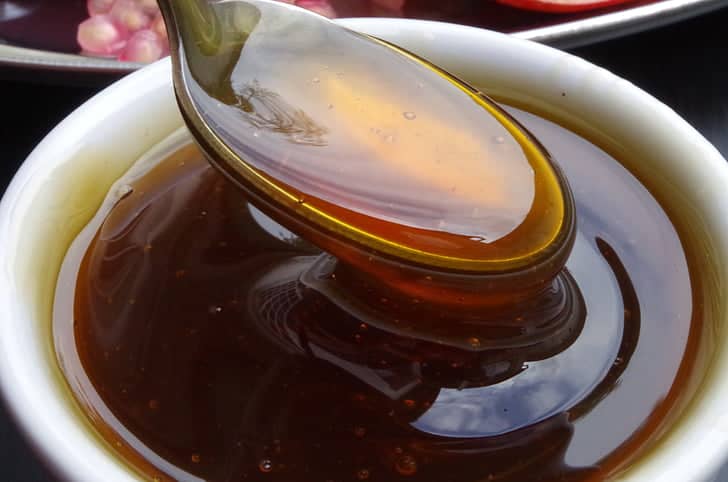
    Step 7: Confirm the Supplier Can Match Your Specific Use Case

    coconut sugar
    Coconut brown sugar in a wooden bowl. Tropical background

    Different buyers have different technical requirements, and not every certified exporter can serve every application equally well.

    A supplier who excels at granulated retail-pack coconut sugar may not have the capability for fine powder, custom packaging, or supplement-grade formulation.

    Before finalizing a supplier, confirm they can specifically meet your requirements — product form, particle size, moisture specification, packaging format, and annual volume.

    For a breakdown of the applications and technical requirements that different buyer types typically need, see our article on applications of coconut sugar in the food industry.

    For buyers requiring private label or OEM production — branded packaging under your own label — the evaluation criteria extend beyond product quality to include artwork capability, MOQ per SKU, packaging material options, and lead time for custom packaging production.

    Our guide on private label coconut sugar from Indonesia covers the specific evaluation criteria and questions for buyers in this segment.

    Complete Red Flag and Green Flag Reference

    Use this reference table when reviewing any supplier’s profile or quotation:

    Red Flags — Consider Disqualifying

    Red FlagWhy It Matters
    BRCGS certificate claimed but not found on brcdirectory.comStrongest disqualifying signal — certificate may be fabricated or expired
    Organic certification cannot be verified in certifying body databaseHigh risk of misrepresentation — do not proceed with organic orders
    Price more than 25% below current market rangePrice signals inability to deliver certified product at stated specification
    No ISO 17025-accredited third-party COA availableQuality claims are self-declared and unverifiable
    Facility address on certificate does not match supplier’s stated addressCertificate may belong to a different entity — serious fraud risk
    FDA registration cannot be verified (for US orders)Legal barrier to US market — shipment may be refused at entry
    Unwillingness to provide references from existing international buyersLack of verifiable export track record
    TC ‘will be provided later’ or ‘after shipment’Not compliant with organic certification requirements
    Evasive or slow responses to specific technical or documentation questionsOperational immaturity or deliberate obfuscation

    Green Flags — Positive Signals

    Green FlagWhy It Matters
    BRCGS certificate independently verified on brcdirectory.com, current and Grade AHighest credibility signal — independently audited annually
    Proactively provides documentation samples without being askedOperationally mature — this is standard practice, not an exceptional offer
    References from existing EU or US buyers who can be contactedVerified export track record in your target market
    COA from named ISO 17025-accredited laboratory, per lotQuality claims are independently verifiable
    Transparent on capacity, lead time, and minimum order quantities upfrontSupplier understands commercial realities and is not overpromising
    Encourages independent verification of all certificationsConfidence in their own compliance — not defensive about scrutiny
    Clear dispute resolution process described proactivelyProfessional approach to supply relationship management
    Factory photos, video, and facility audit reports available on requestGenuine manufacturer with physical production capability

    15 Questions to Ask Every Coconut Sugar Exporter Before Placing Your First Order

    Copy this list and use it as your standardized evaluation questionnaire for every new supplier:

    Certification & Compliance

    1. Can you provide your current BRCGS certificate, including grade, certifying body name, and certificate number, and confirm it can be verified on brcdirectory.com?

    2. Which organic certifications do you hold? For each, what is the certifying body, certificate number, and expiry date?

    3. Can you provide a sample Transaction Certificate from a previous organic shipment?

    4. Is your facility registered with the US FDA? What is your FDA Facility Registration Number?

    Production & Quality

    5. Do you own your production facility, or do you source from third-party manufacturers? If third party, can their certifications be independently verified?

    6. Can you provide COA results from ISO 17025-accredited laboratory for the last three production lots of the product I am ordering?

    7. What is your process if a lot does not meet agreed specifications? Have you had any quality disputes in the past 12 months, and how were they resolved?

    8.  Can you provide a video walkthrough of your production and packaging facility?

    Commercial & Logistics

    9.  What is your production capacity per month for the product I am ordering? Can you accommodate a full 20ft container order within the lead time you have quoted?

    10.  What packaging formats do you support? Can you accommodate custom labeling and artwork?

    11.  What Incoterms do you offer? What is your standard port of loading?

    12.  Can you provide a complete sample documentation package (invoice, packing list, COA, phytosanitary certificate, Certificate of Origin) from a previous shipment to a buyer in my target market?

    References & Track Record

    13.  Can you provide two or three references from existing buyers in the EU, USA, or Australia who are willing to be contacted?

    14.  How long have you been exporting coconut sugar? What are your top three destination markets by volume?

    15.  Have you had any failed BRCGS audits or certification suspensions in the past three years?

    Use this checklist to evaluate any supplier — including Global Coco Sugar
    We believe the best supply relationships start with full transparency. Every question on this list can be answered for Global Coco Sugar: our BRCGS Grade A certificate is verifiable on brcdirectory.com, our USDA and EU Organic certifications are in the public databases, our COAs come from ISO 17025-accredited laboratories, and we are happy to provide references from existing international buyers. We actively encourage independent verification of every claim we make.
    Request a Sample or Bulk Quotation >>>
    View Our Certifications & Company Profile >>>

    Conclusion: Make the Evaluation Process Non-Negotiable

    The time invested in properly evaluating a coconut sugar exporter from Indonesia before placing your first order is one of the highest-return activities in the entire sourcing process.

    A thorough evaluation — verification of certifications, documentation review, reference checks, and price benchmarking — typically takes two to three weeks.

    A problematic supplier relationship can take years to unwind and cost multiples of that in quality incidents, compliance failures, and reputational damage.

    Use the checklists, red flags, green flags, and 15 questions in this guide as your standard evaluation framework — not just for your first supplier, but every time you onboard a new source.

    Finding a reliable coconut sugar manufacturer in Indonesia takes time, but the market has excellent certified coconut sugar manufacturers if you know how to evaluate them. The work is in finding them and distinguishing them from the rest.

    Ready to Start the Evaluation Process with Global Coco Sugar?Global Coco Sugar is a BRCGS Food Safety Grade A certified manufacturer and exporter of organic and conventional coconut sugar from Indonesia. All certifications are independently verifiable. We provide complete sample documentation packages, reference buyers on request, and encourage factory visit or third-party audit as part of our supplier qualification process.
    Contact Our Export Team >>>
    View Our Certifications & Company Profile >>>
    Browse Our Coconut Sugar Product Range >>>
  • Coconut Sugar Export Price from Indonesia per Ton: 2026 Buyer’s Guide

    Coconut Sugar Export Price from Indonesia per Ton: 2026 Buyer’s Guide

    If you are evaluating the coconut sugar export from Indonesia price per ton for the first time — or benchmarking a current supplier’s pricing — you have probably noticed that published price references are almost nonexistent.

    Most suppliers in Indonesia do not publish prices. Most aggregator sites show outdated data.

    And the price you receive in a quotation can vary by 40-60% depending on factors most buyers are not even aware of.

    This guide addresses that gap directly. It covers current FOB price ranges for coconut sugar exports from Indonesia in 2026, the key factors that drive price differences between suppliers, how to calculate your true landed cost, and how to evaluate whether a quotation represents fair market value.

    Before diving into pricing, if you are still evaluating which form of coconut sugar fits your sourcing needs, view our coconut sugar product range and specifications — pricing varies significantly by product form, grade, and certification.

    For a broader overview of how to evaluate Indonesian suppliers beyond price, see our guide on finding a bulk coconut sugar supplier in Indonesia.

    Current Coconut Sugar Export Price Ranges from Indonesia (2026)

    coconut sugar export from Indonesia price per ton

    The table below reflects current FOB (Free on Board) price ranges from Indonesian exporters in 2026.

    These are market reference ranges — actual quotations will vary based on the factors discussed in the following sections.

    Product CategoryFOB Price Range (USD/MT)IncotermNotes
    Conventional coconut sugar — granulatedUSD 1,800 – 2,400 / MTFOB major Indonesian portNon-organic, HACCP certified minimum. Price varies by volume and packaging.
    Organic coconut sugar — granulated (USDA/EU)USD 2,400 – 3,200 / MTFOB major Indonesian portOrganic premium of 20-35% over conventional. Requires valid TC per shipment.
    Coconut sugar — fine powderUSD 2,000 – 2,800 / MTFOB major Indonesian portAdditional processing cost vs granulated. Shelf life considerations apply.
    Coconut sugar — organic fine powderUSD 2,800 – 3,600 / MTFOB major Indonesian portHighest price tier — combines organic and additional processing premium.
    Coconut nectar syrup (liquid)USD 1,600 – 2,200 / MTFOB major Indonesian portLiquid form — lower per-MT cost but higher freight volume. Brix 70-75.
    BRCGS-certified supplier premium+ USD 150 – 300 / MTApplied on top of abovePremium for BRCGS Grade A certified facility vs HACCP-only supplier.
    Private label / custom packaging premium+ USD 200 – 500 / MTApplied on top of aboveDepends on packaging complexity, artwork, and MOQ. Lower premium at scale.
    Important: These are FOB prices — not landed cost
    FOB price is the cost of the goods loaded onto the vessel at the Indonesian port. Your actual landed cost will be higher once you add: ocean freight, marine insurance, import duty (HS 1702.90), customs brokerage fees, and inland freight to your warehouse. For a 20ft container to Europe, expect to add approximately USD 2,000–3,500 to total shipping and handling costs above FOB. See the landed cost calculation section below for a full breakdown.

    What Drives the Price Difference Between Suppliers

    Coconut Sugar Export Price from Indonesia

    Two suppliers can quote prices that differ by 40-60% for what appears to be the same product.

    Understanding why this happens protects you from both overpaying and from accepting a price that is too low to be credible.

    1. Certification Level — The Single Biggest Price Driver

    Certification is the most significant factor separating price tiers in the Indonesian coconut sugar market.

    A supplier holding BRCGS Grade A certification has invested significantly more in food safety infrastructure, annual third-party audits, documentation systems, and trained personnel than one with HACCP only. This cost is reflected in the price — and it is a legitimate cost, not padding.

    For a full breakdown of what each certification level means and how to verify it independently, see our article on what certifications a coconut sugar supplier should have.

    For a specific deep dive into BRCGS Grade A and why it commands a price premium, our article on BRCGS certified coconut sugar suppliers from Indonesia explains what buyers are actually paying for.

    Certification TierTypical Price Premium vs BaselineMarkets This Unlocks
    HACCP only (minimum baseline)Baseline — no premiumInformal/spot market, some foodservice, non-retail B2B
    HACCP + ISO 22000+ 5-10% above HACCP baselineSome EU importers, mid-tier food manufacturers
    BRCGS Grade B or FSSC 22000+ 8-15% above HACCP baselineMost EU/US food manufacturers, regional retail
    BRCGS Grade A (current standard)+ 10-20% above HACCP baselineTesco, Aldi, Whole Foods, Costco, premium food mfg.
    BRCGS Grade A + Organic certified+ 30-50% above HACCP baselineEU/US premium organic retail, health food chains

    2. Organic vs Conventional — A 20-35% Premium That Is Non-Negotiable

    The organic premium exists for two concrete reasons: organic farming costs more (no synthetic inputs, smaller yields, certification audits at farm level) and the certification chain adds compliance cost at every stage.

    The premium is not negotiable because it reflects real costs — a supplier offering ‘organic’ product at conventional prices is either misrepresenting the certification status or cutting corners somewhere in the supply chain.

    For a detailed breakdown of what the organic certification process involves and what documentation buyers should receive per shipment, see our article on exporting organic coconut sugar from Indonesia.

    3. Volume — The Most Controllable Price Variable

    Unlike certification and organic status, volume is a variable that buyers can directly influence.

    Depending on order volume, the general structure for the coconut sugar export from Indonesia price per ton follows this pattern:

    Order VolumeTypical Price PositionNotes
    Sample (< 50 kg)No price relevance — sample cost onlySamples typically shipped at cost or FOC. Not indicative of commercial pricing.
    LCL (1–5 MT)10-20% above FCL pricingLess-than-container-load has higher per-unit freight cost. Use for market testing only.
    20ft FCL (14–16 MT net)Standard FCL pricing — reference pointThis is the benchmark for most price discussions. Most exporters’ standard quote basis.
    40ft FCL (28–32 MT net)3-8% below 20ft FCL pricingVolume discount at double container level. Meaningful for established buyers.
    Annual contract (3+ containers)8-15% below spot FCL pricingThe strongest lever for price reduction. Suppliers value supply predictability highly.

    4. Packaging Format — Often Underestimated by First-Time Buyers

    Packaging has a larger impact on per-MT price than most buyers expect. Standard 25kg kraft paper sacks are the baseline.

    Moving to retail-ready packaging (branded pouches, PET jars, glass jars) adds both material cost and labor cost, and reduces the net weight per container significantly — meaning you pay more per MT of actual product.

    For buyers considering retail-ready or custom-branded packaging, our article on private label coconut sugar from Indonesia explains the full cost structure including packaging options, MOQ thresholds, and how to calculate the true cost per retail unit.

    Packaging FormatTypical Premium vs 25kg Kraft SackNet Weight per 20ft FCL
    25kg kraft paper sack (standard)Baseline~14-16 MT net
    20kg carton box+3-6%~12-14 MT net
    1kg retail stand-up pouch (bulk carton)+ 15-25%~8-10 MT net (more packaging volume)
    500g retail pouch with custom branding+ 25-45%~6-8 MT net
    Custom glass jar (200-300g)+ 60-100%~3-5 MT net (glass weight + fragile packing)

    5. Production Lead Time and Seasonality

    Coconut sugar production in Indonesia is year-round, but sap yield — and therefore production costs — varies with weather patterns. During dry season peaks, tapping productivity is highest and prices tend to stabilize. During rainy season, productivity drops, farm-gate coconut sap prices rise, and some suppliers pass this through to export pricing.

    For buyers with flexibility on timing, booking orders 60-90 days in advance during stable production periods can yield better pricing than spot orders during constrained supply windows.

    6. Why 2026 Prices Are Structurally Higher Than 2023

    Between 2023 and 2025, farm-gate coconut prices in Indonesia increased by 60-80%, driven by stronger demand from China and tighter domestic supply.

    Processing costs — labor, energy, and certification compliance — also rose significantly over the same period.

    Understanding how coconut sugar is produced in Indonesia illustrates why farm-gate raw material cost directly drives coconut sugar export from Indonesia price per ton: coconut sap is the dominant input cost in coconut sugar production, and that cost has not returned to 2023 levels.

    Buyers who are benchmarking 2026 quotations against 2022-2023 reference prices are using an outdated baseline.

    How to Calculate Your True Landed Cost

    fob coconut sugar from indonesia

    The quoted coconut sugar export from Indonesia price per ton is where the conversation starts, but your true landed cost is what actually determines your margin.

    Here is a practical landed cost framework for a standard 20ft FCL of conventional granulated coconut sugar, FOB Tanjung Emas (Semarang), delivered to Rotterdam, Netherlands:

    Cost ComponentEstimated Range (USD)Notes
    FOB product cost (15 MT @ ~USD 2,100/MT)USD 31,500Conventional, BRCGS Grade A, 25kg sacks
    Ocean freight (Indonesia to Rotterdam)USD 2,200 – 3,50020ft FCL, varies by shipping line and season
    Marine insurance (0.3-0.5% of CIF value)USD 100 – 170Standard cargo insurance
    EU import duty (HS 1702.90)USD 0 – 2,400Check TARIC — GSP may reduce to 0% for Indonesia. EU Organic may qualify for preference.
    Customs brokerage & documentationUSD 300 – 600Customs agent fees at destination port
    Port handling & THC at destinationUSD 400 – 700Terminal handling charges vary by port
    Inland freight (port to warehouse)USD 300 – 800Depends on distance and destination country
    Total estimated landed costUSD 34,800 – 39,670Per 20ft FCL of ~15 MT net
    Landed cost per MTUSD 2,320 – 2,645All-in cost per metric ton at your warehouse

    For buyers new to importing from Indonesia, the documentation and regulatory steps that sit behind this cost calculation are as important as the numbers themselves.

    Our comprehensive guide on how to import coconut sugar from Indonesia covers HS codes, required documents per market, Incoterms explained, port options, and transit times — everything needed to convert a FOB quotation into a fully planned import.

    Price vs Value: Why the Cheapest Quotation Is Rarely the Right Choice

    Private Label Coconut Sugar Indonesia

    Coconut sugar is not a commodity product in the same sense as refined cane sugar.

    Two quotations at significantly different price points are almost never offering the same product — they differ in certification level, consistency, documentation quality, and the reliability of the supply relationship.

    Our article on coconut sugar vs cane sugar for food manufacturing addresses the cost-benefit calculation for food manufacturers who are evaluating whether the price premium over refined cane sugar is commercially justified.

    The same logic applies when comparing coconut sugar suppliers at different price tiers.

    When evaluating quotations, use this framework:

    • A quotation more than 25% below the market range warrants immediate investigation. The supplier is likely: uncertified or holding a lower certification tier than claimed, using substandard raw materials, or quoting without the ability to actually fulfill the order.
    • A quotation within the market range but with no certification documentation is a significant red flag. Do not proceed without verifying every certification claimed — see our certification verification guide.
    • A quotation above the market range is not automatically unjustified — it may reflect BRCGS Grade A certification, unannounced audit status, premium organic sourcing, or exceptional documentation and service quality. Ask for justification.
    • All comparable quotations should be evaluated on landed cost, not FOB price. A supplier offering USD 200/MT less on FOB but located at a port with higher freight costs may actually be more expensive all-in.
    Request a current price sheet from Global Coco Sugar
    We provide detailed quotations including FOB pricing, certification documentation overview, COA specifications, packaging options, and estimated freight guidance for your target destination — all in a single document. No obligation required for the first inquiry.
    Request a Bulk Price Quotation >>>
    View Product Range & Specifications >>>

    Price Considerations by Destination Market

    blonde coconut sugar

    The destination market significantly affects total landed cost through import duty rates and compliance requirements. Below is a summary of the key variables per major importing region:

    Destination MarketImport Duty (HS 1702.90)Key Cost DriverTypical Total Premium vs FOB
    European Union0-8% (check TARIC; GSP may apply)BRCGS + EU Organic mandatory for retail+15-25% on FOB (freight + duty)
    United States0-5.6% (check HTS; GSP status varies)BRCGS/SQF + USDA Organic for retail+12-22% on FOB (freight + duty)
    Australia / NZ0% (ASEAN-AUNZ FTA)Biosecurity compliance at port of entry+10-18% on FOB (freight only, low duty)
    Japan3-10% (check METI tariff schedule)JAS Organic required for organic claims+15-25% on FOB (freight + duty)
    Middle East / GCC5% GCC common external tariff typicallyHalal MUI certification mandatory+18-28% on FOB (freight + duty + Halal)
    United Kingdom (post-Brexit)0-8% (check UK Global Tariff)BRCGS still required by UK retail chains+14-22% on FOB (freight + duty)

    For buyers specifically targeting the EU market, duty rates under the EU’s Generalised Scheme of Preferences (GSP) for Indonesia can reduce import duty to 0% for qualifying products — but this requires a valid Certificate of Origin Form A or REX (Registered Exporter) statement from the supplier.

    Our article on exporting coconut sugar to Europe covers the full EU regulatory and commercial landscape including GSP eligibility, labeling requirements, and which retailers require which certifications.

    Conclusion: Use This Guide as Your Negotiation Baseline

    When determining the true coconut sugar export from Indonesia price per ton, remember that the market is not transparent by design — most suppliers prefer to quote individually rather than publish reference prices.

    This guide exists to level that information asymmetry for buyers.

    The price ranges here reflect genuine 2026 market conditions for certified, export-grade product from serious Indonesian suppliers.

    Use them as your reference point when evaluating quotations — not as a ceiling to push below, but as a baseline for understanding whether what you are being offered is credible, priced fairly, and backed by the certifications and documentation your business actually needs.

    Get a Current Price Sheet from Global Coco Sugar
    Global Coco Sugar is a BRCGS Grade A certified exporter of organic and conventional coconut sugar from Indonesia. We provide detailed quotations including: FOB pricing by product form and certification tier, packaging options and per-unit cost breakdown, estimated freight guidance for your target market, and complete certification documentation overview — all in a single response within 1 business day.
    Contact Our Export Team for a Price Sheet >>>
    View Product Range & Specifications >>>
    Our Certifications & Company Profile >>>
  • BRCGS Certified Coconut Sugar Supplier from Indonesia: What Every Buyer Needs to Know (2026)

    BRCGS Certified Coconut Sugar Supplier from Indonesia: What Every Buyer Needs to Know (2026)

    When a procurement manager at a European food retailer shortlists coconut sugar suppliers, one question typically eliminates more than half the candidates within the first five minutes: do you hold a current BRCGS Food Safety certification?

    BRCGS, the Brand Reputation Compliance Global Standards, has become the de facto food safety standard for supplier approval at Tesco, Aldi, Lidl, Carrefour, Whole Foods Market, Costco, and most major retail chains globally.

    For buyers looking for a BRCGS certified coconut sugar supplier from Indonesia, it is the single most important certification to verify before placing any order.

    At Global Coco Sugar, we hold BRCGS Food Safety Grade A certification alongside a full stack of international credentials. You can view our certified coconut products to see the full range available with complete certification coverage.

    This guide explains exactly what BRCGS certification means in the context of coconut sugar sourcing, why it matters to your business regardless of your market, how to verify a supplier’s certification status independently, and what questions to ask during vendor evaluation.

    What Is BRCGS Food Safety Certification and Why Does It Exist?

    BRCGS Certified Coconut Sugar Supplier

    BRCGS (formerly BRC Global Standards) is a food safety and quality certification standard originally developed by the British Retail Consortium in 1998.

    It was created in direct response to a problem that was emerging in global food supply chains: as sourcing went increasingly international, retail buyers had no reliable way to compare food safety management systems across suppliers in different countries.

    The standard has since become one of the most widely recognized under the Global Food Safety Initiative (GFSI) framework — alongside FSSC 22000, SQF, and IFS Food.

    Today, more than 30,000 facilities in 130 countries hold BRCGS certification across food, packaging, storage, and distribution categories.

    For buyers evaluating Indonesian coconut sugar suppliers, independently verifying BRCGS status is straightforward: the BRCGS Global Standards Directory allows public search by company name and country.

    Our own certifications and company profile page provides full details of our current certification, including grade, certifying body, and validity period.

    BRCGS GradeScore RangeWhat It Means for Buyers
    AAExceptional (highest)Zero or near-zero non-conformances during unannounced audit. Extremely rare — awarded to the top tier of global suppliers.
    A+Excellent (unannounced)Achieved on an unannounced audit — highest credibility, as supplier had no advance preparation time.
    AExcellentMinor non-conformances only. This is the standard required by most major EU and US retail chains.
    BGoodSome moderate non-conformances. Accepted by some buyers but not by premium retail (Tesco, Aldi, Whole Foods).
    CAcceptableMultiple significant non-conformances. Typically only accepted where no Grade A supplier is available.
    DNot certifiedFacility audited but failed to meet minimum requirements. Not a valid BRCGS certificate for most buyers.

    Critical buyer note: Always check the grade, not just the certificate

    Many suppliers claim ‘BRCGS certified’ without specifying their grade.

    A Grade C certificate and a Grade A certificate are both technically ‘BRCGS certified’, but they are not equivalent for supplier approval at major retailers.

    Always ask for the full certificate showing grade, certifying body, audit date, and expiry date.

    Then verify independently on the BRCGS Global Standards Directory at directory.brcgs.com.

    Why BRCGS Certification Matters Specifically for Coconut Sugar Buyers

    coconut sugar BRCGS Certification

    BRCGS is not a one-size-fits-all certification. Its relevance varies by where you are selling and to whom.

    Here is a market-by-market breakdown of why BRCGS matters for coconut sugar sourcing:

    European Union — Mandatory for Major Retail

    In the EU, BRCGS (Grade A or above) or an equivalent GFSI-recognized scheme (FSSC 22000, IFS Food) is a vendor approval requirement at virtually every major grocery chain.

    Tesco, Aldi, Lidl, Carrefour, Albert Heijn, and REWE all require GFSI certification from all food suppliers.

    Attempting to list a coconut sugar product at these retailers without a BRCGS certified coconut sugar supplier is not practically possible.

    For importers and distributors who are new to the EU market or evaluating Indonesian supply for the first time, our article on exporting coconut sugar to Europe covers the full regulatory and commercial landscape, including labeling requirements, organic certification for EU market, import duties, and port logistics.

    United States — Required by Natural and Premium Retailers

    In the US market, BRCGS is not a federal regulatory requirement, but it is a practical commercial requirement for listing at Whole Foods Market, Costco, Target, Sprouts, and most regional natural food chains.

    These retailers use BRCGS (or SQF, which is GFSI-equivalent) as a minimum baseline for their supplier qualification process. Without it, your supplier will fail the first stage of vendor onboarding.

    Foodservice and Food Manufacturing — Non-Negotiable at Scale

    For buyers sourcing coconut sugar as an ingredient for manufactured food products (bakery, beverages, confectionery, supplements), BRCGS certification is often a contractual requirement imposed by the brand owner’s own QA department.

    If the final product carries a premium or health-positioned brand, the brand’s quality team will typically audit the supply chain and reject any ingredient supplier without GFSI certification.

    For a breakdown of the food manufacturing segments that source coconut sugar in bulk, see our article on applications of coconut sugar in the food industry.

    The BRCGS + Organic Certification Combination: What EU Buyers Actually Require

    the best coconut sugar certification you should consider

    One of the most common points of confusion for first-time coconut sugar importers is the difference between food safety certification (BRCGS) and organic certification (USDA NOP, EU Organic).

    They are completely separate certification systems, and most serious buyers in the EU and USA require both simultaneously.

    CertificationWhat It CoversRequired ByVerifiable At
    BRCGS Food Safety Grade AFood safety management system, hygiene, traceability, pest control, recall proceduresEU/US major retailers, food manufacturersBRCGS Global Standards Directory (brcdirectory.com)
    EU Organic (EC 834/2007)Organic farming and processing standards for EU market organic label claimsEU retailers for ‘Organic’ label useOFIS EU Organic Database (ec.europa.eu)
    USDA NOP OrganicOrganic certification for US market organic label claimsUS retailers for ‘USDA Organic’ seal useUSDA NOP database (ams.usda.gov)
    HACCPHazard Analysis Critical Control Points — baseline food safety prerequisiteAll markets — minimum acceptable standardSupplier-held document — request copy
    Halal (MUI)Compliance with Islamic dietary lawMiddle East markets, Muslim demographicMajelis Ulama Indonesia registry
    KosherCompliance with Jewish dietary lawUS/EU specialty retail, Jewish communitiesCertifying body registry (e.g., OU, Kof-K)

    Global Coco Sugar holds all six certifications listed above simultaneously, making us one of the few Indonesian coconut sugar exporters with full coverage for EU, US, Middle East, and Japan markets in a single supply relationship.

    For buyers specifically evaluating our organic certification stack, see our article on exporting organic coconut sugar from Indonesia.

    For buyers who require Kosher certification, see our announcement that our coconut sugar is now Kosher certified, including the certifying body details.

    How to Independently Verify a Supplier’s BRCGS Certification Status

    Never rely solely on a certificate document provided by the supplier. Certificate forgery in the food ingredient supply chain is more common than the industry publicly acknowledges.

    Here is the correct verification process:

    1.     Go directly to the BRCGS Global Standards Directory at brcdirectory.com — this is the official public database maintained by BRCGS

    2.     Search by company name and country (Indonesia) — the result should show the facility name, site address, category, grade, certifying body, and certificate expiry date

    3.     Cross-reference the certificate number on the document the supplier provides with the directory listing — they must match exactly

    4.     Check the certificate expiry date — BRCGS certificates are valid for 12 months from the audit date; an expired certificate is not a valid certificate

    5.     Check the certifying body listed — it should be an accredited BRCGS-approved certification body (e.g., SGS, Bureau Veritas, Intertek, NSF, LRQA)

    6.     If the supplier claims Grade A+ (unannounced audit), verify that the audit type listed in the directory is indeed unannounced

    7.     For extra confidence: contact the certifying body directly and request confirmation of the certificate’s current status

    What to do if the supplier is not in the BRCGS directory

    If a supplier claims BRCGS certification but does not appear in the public directory, do not proceed without a direct explanation from BRCGS headquarters.

    Common legitimate reasons a facility may not appear include: very recent certification (database update lag of 1-5 business days) or a database error.

    Illegitimate reasons include: the certificate is fake, expired, or from a non-BRCGS-approved certifying body. In any case of doubt, contact BRCGS directly at info@brcgs.com before placing any order.

    Which Types of Coconut Sugar Buyers Most Need a BRCGS-Certified Supplier?

    BRCGS-Certified Supplier coconut sugar

    Not every coconut sugar buyer has the same certification requirements.

    Understanding where BRCGS certification is truly non-negotiable versus where it is preferred but not mandatory helps buyers prioritize their vendor qualification criteria.

    For buyers evaluating the broader landscape of Indonesian coconut sugar suppliers, including how to compare pricing, MOQ, and documentation standards, our guide on finding a bulk coconut sugar supplier in Indonesia provides a practical framework.

    Buyer TypeBRCGS Requirement LevelReason
    EU major retail (Tesco, Aldi, Lidl, Carrefour, REWE)Non-negotiable — Grade A minimumContractual requirement in vendor approval documentation
    US natural food retail (Whole Foods, Sprouts, Costco)Non-negotiable — BRCGS or SQF equivalentRetailer supplier code of conduct requires GFSI certification
    Food manufacturer (bakery, beverage, confectionery)Very strongly preferred — typically required by brand QABrand’s own quality policy cascades to ingredient suppliers
    Private label brand ownerStrongly preferred — required for premium positioningRetail buyers of private label products check ingredient supply chain
    Independent food importer / distributorPreferred but sometimes flexibleDepends on end retail destination; EU/US distribution requires it
    E-commerce / D2C brandPreferred — may not be audited at firstBecomes required as brand scales and approaches retail listing
    Foodservice / HoReCaPreferred but often not auditedLarge hotel and restaurant chains increasingly requiring GFSI
    Small artisan / local brandNot always required — market-dependentLocal/farmers market channels rarely require formal GFSI certification

    Beyond Coconut Sugar: What a BRCGS-Certified Indonesian Facility Can Supply

    BRCGS-Certified Indonesian

    A buyer who has qualified a BRCGS-certified coconut sugar supplier has also qualified that facility for a much broader range of products — all under the same food safety management system, the same certifications, and the same export documentation infrastructure.

    For buyers interested in understanding how the production facility operates — from raw material intake through processing and packaging — our article on how coconut sugar is produced in Indonesia provides a transparent, step-by-step account of the process.

    This is the kind of traceability documentation that BRCGS-compliant buyers expect to be able to access.

    Product CategoryBRCGS CoverageOrganic AvailablePrivate Label Available
    Coconut sugar — granulated (organic & conventional)YesYes (USDA + EU Organic)Yes — custom packaging & label
    Coconut sugar — fine powderYesYesYes
    Coconut sugar cubesYesYesYes
    Coconut nectar syrup (liquid sweetener)YesYesYes
    Desiccated coconut (fine, medium, coarse, flakes)YesAvailableYes
    Virgin coconut oil (cold-pressed)YesAvailableYes

    For buyers requiring contract manufacturing and private label services — including formulated coconut sugar blends, flavored variants, or supplement-grade products — our contract manufacturing program operates under the same BRCGS-certified facility and documentation framework.

    Conclusion: BRCGS Certification as the Foundation of a Reliable Supply Chain

    In the coconut sugar import market, the difference between a BRCGS-certified supplier and a non-certified supplier is not merely a paperwork difference.

    It is the difference between a facility that has demonstrated — to an independent, internationally accredited auditor, on an annual basis — that its food safety practices, traceability systems, hygiene standards, and recall procedures meet the requirements of the world’s most demanding retail buyers, and one that has not.

    For buyers targeting EU or US retail, food manufacturing ingredient supply, or any market where a serious food safety incident could destroy brand equity and trigger product recalls, sourcing from a BRCGS-certified supplier is not optional — it is the minimum standard of due diligence.

    Indonesia’s coconut sugar industry includes a small but well-established group of BRCGS-certified exporters.

    Working directly with one of them eliminates the need for intermediary brokers, reduces cost, and provides full supply chain transparency — the foundation that serious food businesses require.

    Partner with a BRCGS Grade A Certified Coconut Sugar Supplier

    Global Coco Sugar is a BRCGS Food Safety Grade A certified exporter of Indonesian coconut sugar and coconut derivative products.

    Our certification is verifiable in the BRCGS Global Standards Directory.

    We supply to food manufacturers, importers, and private label brands across the EU, USA, Australia, Japan, and the Middle East.

    Contact Our Export Compliance Team >>>

    View Our Full Product Range & Certifications >>>

    Company Profile & Certification Documentation >>>

  • Private Label Coconut Sugar Indonesia: The Complete OEM Guide for Brand Owners (2026)

    Private Label Coconut Sugar Indonesia: The Complete OEM Guide for Brand Owners (2026)

    The global coconut sugar market is growing at nearly 5% annually, and the category is increasingly dominated by branded, premium-positioned retail products rather than commodity bulk.

    For importers, distributors, and health food entrepreneurs, this creates a clear opportunity: launching your own private label coconut sugar brand, sourced from Indonesia and manufactured to your exact specifications.

    Choosing private label coconut sugar Indonesia means one thing in practice: you define the brand, the packaging, the target market, and the claims, and a certified Indonesian manufacturer produces, packages, and ships the product under your label.

    At Global Coco Sugar, our private label and contract manufacturing services cover coconut sugar in all its forms — granulated, powder, and liquid nectar — alongside other coconut derivative products, with no minimum order quantity for first-time brand partners.

    This guide covers everything a brand owner, importer, or distributor needs to know: what private label coconut sugar entails, how the production and customization process works, what certifications your manufacturer must hold, and how to evaluate whether a supplier is the right long-term partner for your brand.

    Why Private Label Coconut Sugar Is a Strong Brand Opportunity in 2026

    private label coconut sugar

    Before diving into the operational side, it is worth understanding why this is a particularly strong moment to launch a private label coconut sugar brand and what the competitive dynamics look like.

    Market SignalWhat It Means for Brand Owners
    Global coconut sugar market projected at USD 457.6M in 2025, growing to USD 600M by 2033Early market positioning now delivers compounding returns as the category scales
    Top-performing retail SKUs are branded products, not commodity bagsConsumers pay 2–4x more for an established brand vs. unbranded bulk at health food stores
    EU and US retail buyers increasingly require supplier BRCGS or FSSC 22000 certificationBarrier to entry is rising — certified supply chain is now a prerequisite, not a differentiator
    Clean label, organic, low-GI sweeteners outperform conventional in premium retailCoconut sugar’s natural profile is already aligned with the fastest-growing consumer segment
    Amazon and D2C health food channels are high-growth for specialty sweetenersPrivate label brands can enter without traditional retail infrastructure costs

    The window for establishing strong brand recognition in this category is still open, but it is narrowing as more brands enter the market.

    Brands that establish supply relationships and brand equity now will benefit from the loyalty that comes with being an early recognizable name in a growing natural sweetener category.

    Why Source Private Label Coconut Sugar Indonesia?

    private label coconut sugar from indonesia

    Indonesia is the world’s largest coconut sugar producer, accounting for more than 50% of global export volume, and the supply chain infrastructure is by far the most developed in the world for certified, export-grade product.

    Understanding how coconut sugar is produced in Indonesia reveals why: a deeply entrenched smallholder farming tradition, ideal tropical agroclimatic conditions, and a production process that has been refined over generations now sits alongside increasingly modern food safety infrastructure.

    AdvantageDetail
    Largest certified supply baseMore BRCGS, USDA Organic, and EU Organic certified suppliers than any other producing country
    Competitive pricing at volumeFactory-direct relationships offer 20-40% lower cost vs. sourcing through brokers or from the Philippines
    Full product range availabilityGranulated, fine powder, liquid nectar — all forms available from single-origin certified facilities
    Established export infrastructurePorts, freight forwarding, and documentation expertise for EU, USA, Australia, Middle East, Japan
    Farm-level traceabilityLeading suppliers offer full traceability from farmer cooperative to export container
    ESG story availabilitySmallholder farmer programs, organic farming, and sustainable practices are documentable for brand storytelling

    For private label brands targeting EU or North American health food markets, the origin story matters as much as the product itself.

    The narrative of exporting organic coconut sugar from Indonesia, direct from small-scale farmer cooperatives, certified organic, traceable, is exactly the kind of brand story that resonates with conscious consumers and earns premium shelf positioning.

    For buyers who need to document their environmental impact for ESG reporting or retail buyer requirements, our article on the sustainability of coconut sugar provides the data and context you need.

    When evaluating any Indonesian manufacturer for a private label partnership, always verify their certification portfolio independently.

    Our certifications and company profile page documents all current certifications held by Global Coco Sugar — BRCGS Food Safety Grade A (GFSI recognized), USDA Organic, EU Organic, HACCP, Halal MUI, and Kosher, which are the minimum required by most EU and US retail channels.

    What Coconut Sugar Products Can Be Private Labeled?

    Global Coco Sugar’s private label program covers the full range of coconut-derived sweetener products.

    To see complete technical specifications for each, view our full coconut product range.

    Below is a summary of what is available for private label production:

    ProductForm / GradeTypical Retail SizePrimary Market Application
    Coconut Sugar — OrganicGranulated, mesh 12-15 or 12-50250g, 300g, 500g, 1kg pouchesHealth food retail, organic specialty stores, D2C
    Coconut Sugar — ConventionalGranulated, mesh 12-50500g, 1kg, 2kg bagsNatural food retail, private label mass market
    Coconut Sugar — Fine PowderMilled 100-200 mesh250g, 500g pouchesHealth food, supplement, baking specialty
    Coconut Sugar CubesPressed cube, various sizes250g box / 20-cube gift packPremium gifting, specialty tea & coffee retail
    Coconut Nectar SyrupLiquid, Brix 70-75250ml, 500ml bottlesFoodservice, premium condiment retail, gifting
    Coconut Sugar SachetsGranulated, single-serve5g x 50 sachets / 200 sachetsHotel, airline, foodservice, gifting, subscription boxes
    Mixed Coconut BundleCurated 2-5 product setsGift box / hamper formatsGifting, premium retail bundles, brand awareness

    Understanding the end-use market for your private label product is critical for defining packaging format, serving size, and label claims.

    For a detailed breakdown of where coconut sugar is used across food manufacturing and consumer segments, see our article on applications of coconut sugar in the food industry.

    It covers bakery, beverages, confectionery, sauces, supplements, and more.

    The Private Label Process: From Brief to Delivered Product

    private label process coconut sugar

    Here is how the private label process works at Global Coco Sugar, from initial inquiry to first shipment arriving at your warehouse.

    Phase 1: Discovery and Specification

    •       Define your product: which form (granulated, powder, nectar), which grade (organic or conventional), and which certifications your label will claim

    •       Define your packaging: size, format, material (kraft pouch, stand-up zipper pouch, PET jar, cardboard box, sachet), language, and regulatory label requirements for your destination market

    •       Share your target market and annual volume estimate. This determines pricing tiers and lead time

    •       We provide a quotation covering product cost, packaging cost, and estimated freight (FOB or CIF)

    Phase 2: Sample Approval

    •       We produce a branded sample: 2–5 kg of your product in your custom packaging with your label artwork applied

    •       You evaluate: product quality, color, flavor, moisture, and packaging presentation

    •       Revision rounds if needed (typically 1–2 rounds for artwork; product specs are pre-agreed)

    •       You sign off on the approved sample — this becomes the production reference standard

    Phase 3: Production and Quality Control

    •       Production scheduled against agreed lead time (typically 3–6 weeks from sample approval to production complete, depending on packaging complexity)

    •       In-process quality control: moisture testing, color grading, weight verification per unit

    •       Final lot COA (Certificate of Analysis) from accredited laboratory issued per production batch

    •       Pre-shipment inspection available (third-party SGS/Bureau Veritas inspection on request)

    Phase 4: Documentation and Export

    •       Full export documentation package: Commercial Invoice, Packing List, Certificate of Origin, Phytosanitary Certificate, COA

    •       Organic TC (Transaction Certificate) issued per lot for organic-certified product

    •       FDA Prior Notice filed for US-bound shipments

    •       Booking with freight forwarder and container loading at port (Tanjung Emas, Semarang or Tanjung Priok, Jakarta)

    For buyers who are new to the import process, our comprehensive guide on how to import coconut sugar from Indonesia walks through every documentation requirement, HS code, and logistics step — specifically for EU, US, Australia, and Middle East markets.

    Packaging Options for Private Label Coconut Sugar

    packaging options for private label coconut sugar

    Packaging is where your brand identity lives on the shelf. Below is a summary of the packaging formats Global Coco Sugar supports for private label orders, along with key considerations for each.

    FormatAvailable SizesBest ForKey Notes
    Stand-up kraft paper pouch (zip-lock)250g, 500g, 1kgHealth food retail, D2C, AmazonMost popular for organic/natural positioning; sustainable material signal; requires moisture barrier lining
    Clear/window kraft pouch250g, 500gPremium specialty retail, giftingShows product visually; effective for granulated coconut sugar where color is a selling point
    PET jar (clear plastic)250g, 500g, 1kgMass retail, supermarketHigh shelf visibility; resealable; durable for shipping; less premium perception than kraft
    Glass jar200g, 300gPremium gifting, gourmet retailHighest perceived value; higher weight and freight cost; best for high-margin premium SKUs
    Cardboard box (inner bag)500g, 1kg, 2kgClub stores, foodservice, bulk retailCost-effective at volume; strong secondary packaging for protection
    Single-serve sachet5g, 8g, 10gHotel, airline, subscription boxHigh unit count per carton; packaging setup requires higher MOQ
    Bulk inner bag (for food manufacturers)5kg, 10kg, 25kgFood manufacturers, bakeriesNo consumer-facing label required; just buyer brand on outer carton

    For brand owners targeting food manufacturers and foodservice as their end customer (B2B private label), the product format decisions are different from retail consumer packaging.

    In this segment, buyers care primarily about technical performance and cost-per-unit, not retail aesthetics.

    Our technical comparison of coconut sugar vs cane sugar for food manufacturing is a useful reference when positioning your private label product to food industry buyers — particularly if you are helping them justify a switch from refined cane sugar.

    Certifications Your Private Label Supplier Must Hold

    the best coconut sugar certification you should consider

    This is the most critical due-diligence step for any brand owner. The certifications on your product label are only as valid as the certifications held by your manufacturer.

    Listing ‘USDA Organic’ on your packaging without a valid organic TC from a certified manufacturer exposes you to regulatory and reputational risk.

    Certification Requirements by Target Market

    • EU Market: EU Organic (if organic claim), BRCGS Food Safety Grade A or FSSC 22000 (required by Tesco, Carrefour, Aldi, Lidl, and most major retailers), Halal if targeting Middle East diaspora segment
    • USA Market: USDA Organic (if organic claim, with valid TC per shipment), FDA Facility Registration (mandatory for exporter), BRCGS or SQF (required by Whole Foods, Sprouts, Costco, Target)
    • Australia / NZ: ACO or equivalent organic certification, BRCGS or FSSC 22000 for major retail chains
    • Middle East / GCC: Halal MUI (accepted by most GCC countries), SFDA registration (Saudi Arabia), MOIAT notification (UAE)
    • Japan: JAS Organic certification (mandatory for organic label claims in Japan — standard USDA Organic is not sufficient)
    • Universal minimum: HACCP — this is the baseline food safety prerequisite that should be non-negotiable regardless of market

    How to Choose the Right Private Label Manufacturer in Indonesia

    Not all Indonesian coconut sugar manufacturers are equal, and the stakes of choosing the wrong one are high.

    A brand built on a supplier who cannot maintain batch consistency, hold their certifications, or meet lead times is a brand built on unstable ground. Here is what to evaluate:

    Non-Negotiable Criteria

    1. Current, verifiable BRCGS or FSSC 22000 certification — ask for the certificate and verify the grade and expiry date independently on the certifying body’s website
    2. Valid USDA Organic and/or EU Organic certification if you are making organic label claims — AND confirmation that they will issue a Transaction Certificate per shipment
    3. Demonstrated experience with your target market — can they provide references from existing private label clients in the EU, USA, or Australia?
    4. In-house or third-party COA capability — per-lot Certificate of Analysis from an ISO 17025-accredited laboratory should be standard, not optional
    5. FDA Facility Registration number (mandatory for US market) — verify it is current on the FDA website

    Strong Differentiators Between Suppliers

    •       Packaging flexibility — can they accommodate your exact artwork, material, size, and regulatory label requirements?

    •       No-MOQ sampling — suppliers who charge high sample fees or set high sample MOQs signal that they are not oriented toward brand partnership

    •       Dedicated export team — private label brands need a responsive contact who understands their market’s documentation requirements

    •       Batch consistency data — can they share COA results across multiple prior lots to demonstrate moisture, color, and sucrose consistency?

    •       Supply security — what is their production capacity, and do they have contingency sourcing from multiple farmer cooperatives?

    Red Flags to Watch For

    •       Claims of organic certification without a valid, current certificate number from an accredited certifying body

    •       Unwillingness to provide references from existing international clients

    •       Very low pricing that seems inconsistent with the cost of certified organic production — this is a signal of adulteration or uncertified product

    •       No per-lot COA, or COA from an unaccredited in-house lab only

    •       Long response times or vague answers to specific questions about packaging capabilities

    Why Global Coco Sugar for Your Private Label Brand

    Rather than a generic pitch, here is what distinguishes our private label program from other Indonesian coconut sugar manufacturers in concrete terms:

    FeatureGlobal Coco SugarTypical Competitor
    BRCGS CertificationGrade A (GFSI recognized) — verified annually by accredited certifying bodyHACCP only, or BRCGS without grade detail
    MOQ for Sample DevelopmentNo minimum — we support brand development at pilot scaleTypically 500kg–3MT minimum even for samples
    Organic CertificationUSDA + EU OrganicUsually one market only (USDA or EU, not both)
    COA StandardPer-lot COA from ISO 17025-accredited external laboratoryIn-house testing only, or COA on request
    Export DocumentationFull documentation package prepared in-house including Organic TC, Phytosanitary, COABuyer responsible for coordinating some documents
    Packaging FlexibilityKraft pouch, PET jar, glass jar, carton, sachet — all sizes, custom artworkLimited to 2-3 formats, minimum 3MT per SKU
    Markets ServedEU, USA, Australia, Japan, Middle East — simultaneous certification coverageTypically 1-2 markets
    Response TimeDedicated export team, English-language inquiries answered within 1 business dayVariable — often 3-7 days

    Conclusion: Building a Brand on Indonesia’s Best

    Private label coconut sugar Indonesia represents one of the most accessible and commercially viable entry points into the fast-growing natural sweetener category.

    The combination of a strong origin story, well-developed certification infrastructure, competitive factory-direct pricing, and consumer demand that is growing faster than supply creates favorable conditions for new brands entering this space in 2026.

    The brands that succeed in this category are not those with the lowest price.

    They are those with the most consistent quality, the strongest certification story, and the most compelling brand identity.

    All of those things start with choosing the right manufacturing partner.

    Start Your Private Label Project with Global Coco Sugar

    We are a BRCGS Food Safety Grade A certified, USDA Organic, EU Organic, Halal MUI, and Kosher certified manufacturer of private label coconut sugar from Indonesia.

    No minimum order quantity for sample development.

    Full documentation support for EU, USA, Australia, Japan, and Middle East markets. Dedicated English-language export team.

    Start Your Private Label Project >>>
    Explore Our Coconut Product Specifications >>>
    Learn More About Our Certifications & Facility >>>

Secret Link