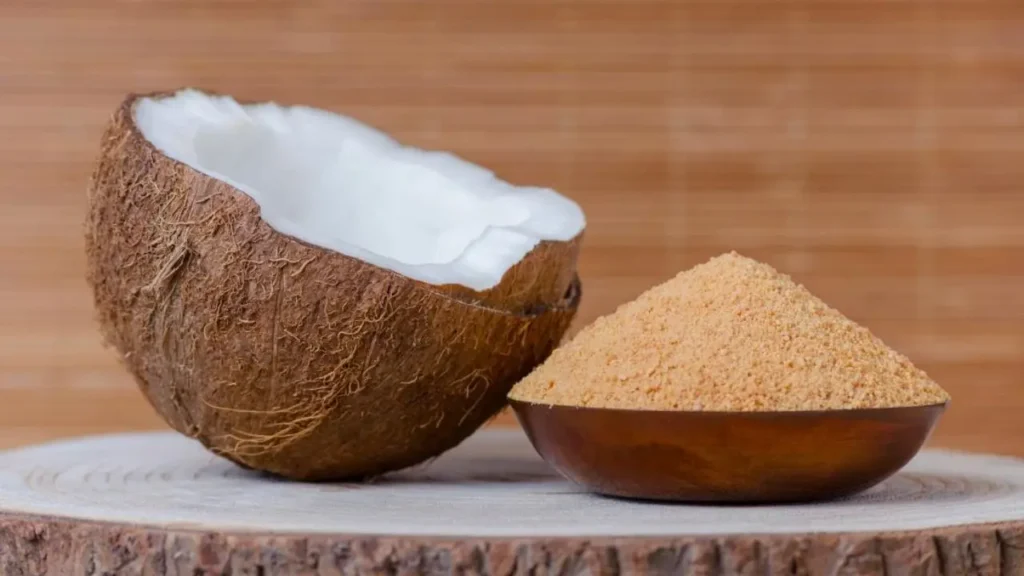
| Direct Answer: What Determines Coconut Sugar Price? Coconut sugar pricing is determined by eight interconnected factors: (1) farm gate cost — raw material from smallholder farmers, (2) production method and processing cost, (3) certification tier — conventional vs BRCGS vs organic, (4) grade and particle size, (5) order volume — LCL vs FCL vs annual contract, (6) packaging format, (7) seasonality and market conditions, and (8) supply chain traceability. Of these, certification tier and order volume have the largest single impact on price per kg. A buyer who understands these eight factors can negotiate more effectively, avoid overpaying, and identify when a quoted price is suspiciously low. |
Coconut sugar price quotes from Indonesian suppliers can vary by 40-60% for what appears to be the same product.
A buyer receiving three quotes for 'coconut sugar FOB Indonesia' might see prices ranging from USD 1.50/kg to USD 3.20/kg — and without understanding why, it is impossible to evaluate which quote represents genuine value versus a cut-corner offer.
This article explains every factor that goes into coconut sugar pricing — transparently, from the perspective of a certified Indonesian producer.
Browse our certified coconut sugar product range for current specifications.
Understanding how coconut sugar is produced from coconut palm flower sap provides the foundation for understanding why certain production choices create price differences.
Factor 1: Farm Gate Cost — The Starting Point of All Pricing
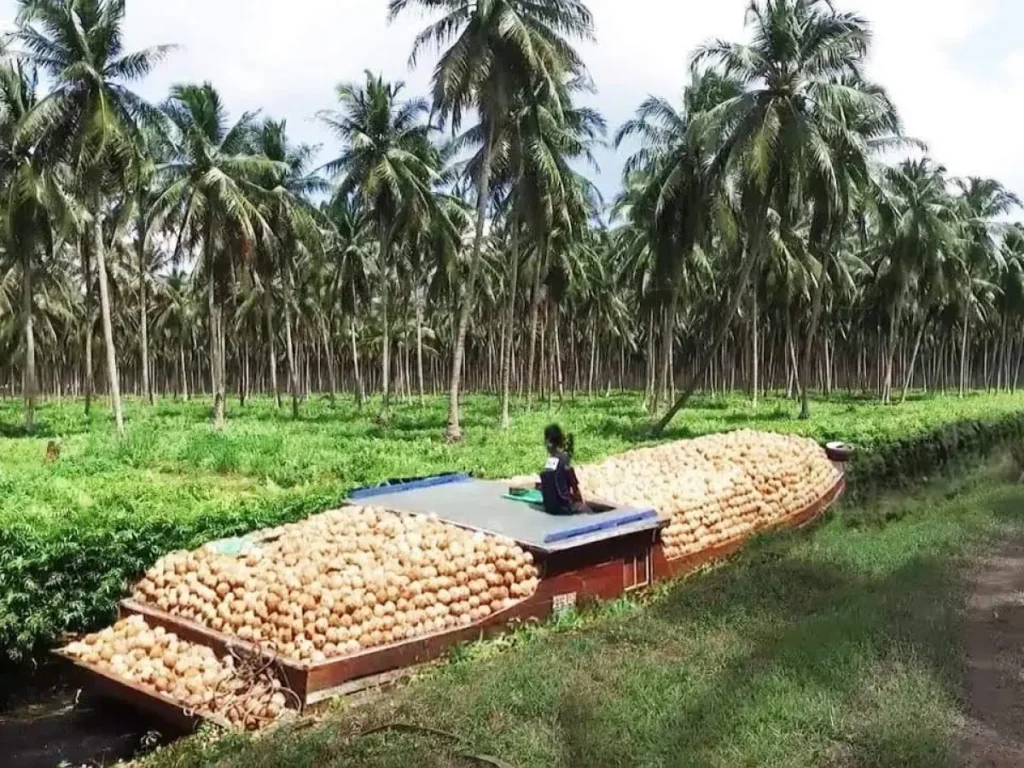
Every coconut sugar price starts with the cost of raw material — the coconut palm flower sap collected by smallholder farmers.
Farm gate cost is the price paid to farmers per liter of sap or per kg of granulated sugar before any processing, certification, or export costs are added.
| Farm Gate Component | Typical Cost Range | What Drives It |
| Sap collection labor (per kg final sugar) | USD 0.30-0.50/kg | Twice-daily palm tapping is entirely manual — labor cost is the largest farm-level input |
| Cooking and evaporation fuel | USD 0.10-0.20/kg | Traditional wood fuel vs LPG — organic farms typically use wood, affecting cost |
| Granulation and basic processing | USD 0.05-0.15/kg | Manual stirring during crystallization — still largely artisanal in Central Java |
| Farmer cooperative margin | USD 0.10-0.20/kg | Cooperative overhead, quality control, and profit margin at farm level |
| Total farm gate cost (approximate) | USD 0.55-1.05/kg | Starting point before any export processing, certification, or logistics |
| Why farm gate cost varies between suppliers Two suppliers can have very different farm gate costs based on: (1) direct sourcing from cooperatives is cheaper than sourcing through intermediary traders, (2) Central Java coconut palms produce higher sap yield per tree than some other regions, (3) organic farming cannot use synthetic yield-enhancing inputs, sometimes resulting in slightly higher per-kg cost. Suppliers who buy through multiple intermediary layers consistently have higher base costs. |
Factor 2: Processing and Production Method
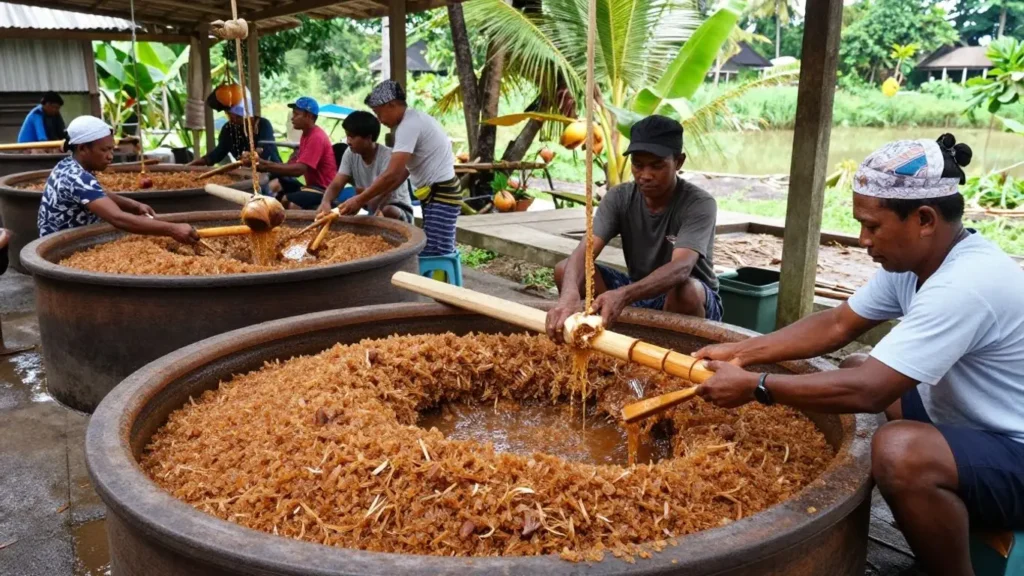
After farm gate, the sap undergoes processing at the production facility. The processing method and facility standards directly affect both cost and the certifications the product can claim.
| Processing Factor | Cost Impact | Quality Impact |
| Facility standard (cottage vs industrial) | Industrial: +USD 0.10-0.20/kg for capital depreciation | Industrial ensures consistency — COA values stable batch-to-batch |
| Stainless steel equipment | Higher capital cost — reflected in price | Food safety requirement for BRCGS — prevents contamination |
| Dedicated organic production line | +USD 0.15-0.30/kg vs shared line | Prevents cross-contamination — required for organic certification |
| Laboratory testing per batch | +USD 0.05-0.10/kg | ISO 17025-accredited lab COA — required by serious buyers |
| Moisture control and final drying | Energy cost — variable | Max 3% moisture = shelf stability and quality consistency |
| Sieving and particle size grading | +USD 0.03-0.08/kg per grade | Fine, medium, coarse grades — different processing complexity |
Factor 3: Certification Tier — The Biggest Single Price Driver

Certification is the factor that most dramatically separates coconut sugar price tiers.
A BRCGS certified coconut sugar supplier carries significant annual certification costs that are reflected in the product price — and for good reason.
Our guide on what certifications a coconut sugar supplier should have explains what each certification verifies and why it matters for buyers.
| Certification Tier | Annual Cert Cost (Supplier) | Price Premium vs Uncertified | What Buyer Gets |
| No certification (uncertified) | USD 0 | Baseline — lowest price | No third-party verification. High quality risk. Cannot supply major retailers. |
| HACCP only | USD 500-2,000 | +3-8% | Basic food safety system. Minimum for most B2B buyers. |
| BRCGS Food Safety Grade A | USD 5,000-15,000 | +15-25% | GFSI-recognized. Required for EU/US major retail vendor approval. |
| USDA NOP Organic (without BRCGS) | USD 3,000-8,000 | +20-35% | Supports organic label claims in US. May not satisfy retail vendor audit. |
| EU Organic (without BRCGS) | USD 3,000-8,000 | +20-35% | Supports EU organic label claims. Same retail audit limitation. |
| BRCGS + USDA Organic (dual) | USD 8,000-20,000 | +35-50% | Full compliance for US retail organic. Most comprehensive tier. |
| BRCGS + EU Organic + Halal (triple) | USD 10,000-25,000 | +40-60% | Maximum market access — EU, US, Middle East retail all covered. |
| The transparency paradox: lower price often means higher total cost Buyers who choose uncertified coconut sugar to save 20-30% on ingredient cost often discover the true cost is higher: failed vendor audits, product recalls, inability to make marketing claims, and operational cost of managing supplier quality without third-party verification. The certification premium is not markup — it is the cost of verified quality and market access. |
Factor 4: Grade and Particle Size
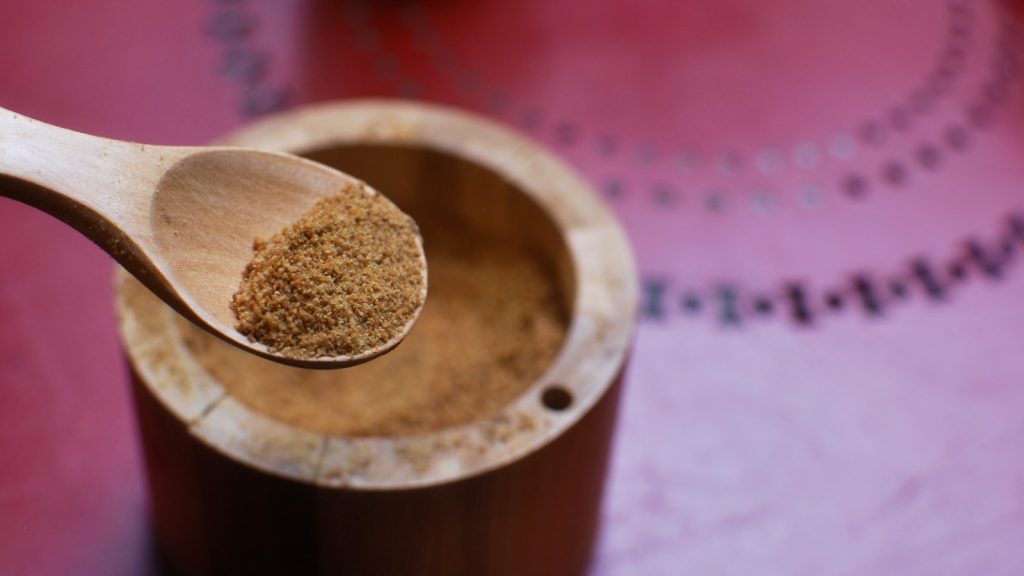
| Grade | Particle Size | Price vs Standard Medium | Primary Demand Driver |
| Extra Fine / Fine | < 1.0 mm | Baseline | Baking, coatings, chocolate — most common industrial grade |
| Medium | 1.0-3.0 mm | +0-5% | Granola, snack bars, general baking — widest application |
| Coarse | 3.0-6.0 mm | +5-10% | Premium granola, artisan bakery — additional sieving cost |
| Long Thread | 6.0-15 mm | +8-15% | Artisan confectionery — complex cutting process |
| Flakes / Chips | Wide flat | +10-20% | Premium toppings — specialized cutting equipment needed |
Factor 5: Order Volume — The Most Controllable Price Factor for Buyers
Of all factors that determine coconut sugar price, order volume is the one buyers have most direct control over.
The difference between LCL and FCL pricing is typically 20-40% per kg — making volume consolidation one of the most impactful cost-reduction levers available.
| Order Volume | Typical Premium vs FCL Price | Practical Notes |
| Sample (1-5 kg) | Not applicable — sample pricing | Typically shipped at cost or free. Essential step before commercial order. |
| LCL (50-499 kg) | +25-40% vs FCL per kg | Higher freight per kg. Suitable for trial orders only. |
| LCL (500-999 kg) | +15-25% vs FCL per kg | Practical entry for new buyers. Multiple 50 kg sacks in shared container. |
| 20ft FCL (~14-16 MT net) | Standard reference price (0%) | Most competitive tier. 50 kg PP sacks or jumbo bags standard. |
| 40ft FCL (~28-32 MT net) | -3-8% vs 20ft FCL | Volume discount. Best for established buyers with consistent demand. |
| Annual contract (3+ FCL) | -8-15% vs spot FCL | Best pricing. Supplier values production planning certainty. |
For current 2026 FOB price ranges per tier and certification level, see our regularly updated coconut sugar export price from Indonesia guide. Prices are updated every 2-3 months to reflect current market conditions.
Factor 6: Packaging Format and Labeling Requirements
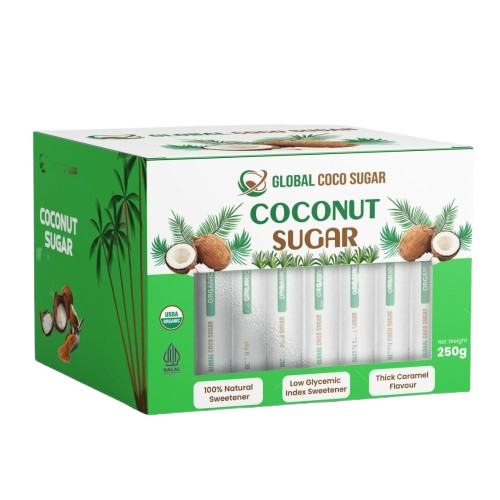
| Packaging Format | Cost vs Bulk Sack | Best For |
| 50 kg PP sack (standard export) | Baseline (0%) | Food manufacturers, bulk re-packers — most cost-efficient |
| 25 kg kraft paper bag | +5-10% | Premium positioning; cleaner handling at destination |
| Jumbo bag / FIBC (500-1,000 kg) | -3-8% | Very large volume industrial buyers — lowest per-kg packaging cost |
| 1 kg retail bag (plain) | +80-150% | Re-packers preparing for retail — packaging material + labor |
| Custom retail bag with label | +120-200% | Private label buyers — includes label printing, artwork compliance |
| 250-500g premium retail | +200-400% | D2C brands, gifting — smallest unit, highest per-kg packaging cost |
Custom packaging — including branded labels compliant with EU or US labeling requirements — adds design, printing, and compliance review costs not included in standard FOB pricing. Always specify exact packaging requirements in your RFQ.
Factor 7: Seasonality and Market Conditions
| Period | Typical Price Direction | Driver |
| January-March (Q1) | Higher demand — prices firm | EU and US buyers planning Q1 procurement; post-holiday restocking |
| April-June (Q2) | Moderate — prices stable to softening | Seasonal demand moderation; coconut sap yield increases in dry season |
| July-September (Q3) | Lower demand — best buying window | Northern hemisphere summer slowdown; ideal for forward purchasing |
| October-December (Q4) | Rising — prices increase toward year-end | Holiday season demand; buyers securing Q1 supply in advance |
| El Niño periods | Higher — supply constraint from drought | Reduced sap yield in drought-affected growing regions |
| Post-harvest peak (May-Aug in Java) | More supply — competitive pricing | Central Java dry season = peak coconut sap production period |
| Practical tip: July-September is often the best buying window Placing FCL orders for delivery in July-September often yields the most competitive FOB pricing. This coincides with peak production in Central Java, lower global demand from Northern Hemisphere buyers, and pre-Q4 inventory building by suppliers. Annual contract buyers who lock in pricing in Q2-Q3 typically secure the best annual rates. |
Factor 8: Supply Chain Transparency and Traceability
| Traceability Level | Price Premium | What Buyer Gets |
| No traceability (anonymous supply) | 0% (lowest price) | Cannot verify origin, farming practices, or sustainability |
| Supplier certification only (BRCGS, Organic) | +0% (included in cert premium) | Third-party verified facility and farming — standard for serious buyers |
| Cooperative-level traceability (named cooperative) | +3-8% | Origin traceable to named smallholder cooperative — supports ESG reporting |
| Farm-level GPS traceability | +8-15% | Individual farm coordinates — supports EUDR voluntary compliance, premium retail |
| Full chain of custody with blockchain/digital | +15-25% | Premium segment — complete digital audit trail from farm to export |
Pricing Red Flags: When a Quote Is Too Low or Too High
Understanding pricing factors makes it easier to identify quotes that don't add up. Our article on how to choose a reliable coconut sugar exporter from Indonesia covers the full supplier evaluation framework.
| Red Flag | What It May Indicate | How to Verify |
| Quote >25% below typical FOB | Uncertified product, adulterated quality, or misleading grade | Request COA from ISO 17025 lab; verify BRCGS at brcdirectory.com |
| Organic claimed but no TC offered | Organic claim not supported by certified lot documentation | Require TC before order confirmation; verify at ams.usda.gov/integrity |
| No COA, or COA from in-house lab only | Quality testing not done independently | Specify 'COA from ISO 17025-accredited external laboratory' in your PO |
| Price unchanged regardless of volume | Supplier is trader/broker, not manufacturer | Ask for factory visit or facility registration documents |
| Quote >30% above typical FOB | Trading markup or unexplained premium | Compare 2-3 certified supplier quotes; ask what drives the premium |
| Price varies wildly for same specification | RFQ ambiguity — suppliers quoting different products | Standardize RFQ: grade, moisture, certification, packaging, Incoterm |
How to Get Accurate, Comparable Quotes from Multiple Suppliers
- Product: 'Coconut sugar, granulated' — specify grade: fine, medium, or coarse
- Certification: 'BRCGS Grade A minimum; USDA NOP Organic [or EU Organic]' — state exactly which are required
- Moisture spec: 'Max 3.0% moisture content, verified by ISO 17025-accredited laboratory COA per production lot'
- Sulphite: 'Sulphite-free, SO2 negative — confirm in COA' if required for clean label
- Quantity: State exact quantity in MT and preferred packaging (50 kg PP sacks, jumbo bags, etc.)
- Incoterm: 'FOB [port name]' or 'CIF [destination port]' — determines which costs are included
- Delivery timeline: State required delivery window — rush orders cost more
For a complete breakdown of all costs between FOB Indonesia and your warehouse, see our coconut sugar import guide with landed cost calculation.
| Get a transparent, itemized quote from Global Coco Sugar Global Coco Sugar provides detailed FOB pricing within 1 business day for buyers who provide clear specifications. We itemize pricing by product tier, certification, grade, and volume — so you can see exactly what drives each price element. No hidden fees, no ambiguous quotes. Request a Quote with Full Pricing Breakdown >>> View Our Current Price List & Specifications >>> |
Conclusion: Price Transparency Is a Supplier Quality Signal
A coconut sugar supplier who can clearly explain every component of their pricing demonstrates the same transparency and documentation discipline that makes them a reliable long-term supply partner.
Suppliers who resist itemizing their pricing, or whose prices don't make sense when you apply the framework above, warrant additional due diligence before commercial commitment.
For buyers, understanding these eight factors transforms price negotiation from guesswork into a structured conversation.
You will know which factors are negotiable (volume, contract term, packaging simplification), which are not (certification costs, minimum quality standards), and which should immediately raise questions.
| Work with a supplier who shows its pricing work Global Coco Sugar provides transparent, itemized pricing for all inquiry tiers. View our current export pricing guide or contact our export team for a detailed quote with full specification breakdown. |
Frequently Asked Questions
Why do coconut sugar prices vary so much between suppliers?
Coconut sugar prices vary depending on product specifications, certifications, order volume, and packaging. To compare quotes accurately, buyers should ensure they are requesting the same quality standards and delivery terms from each supplier.
What is the typical price range for coconut sugar from Indonesia?
Prices vary based on certification, packaging, order volume, and market conditions. In general, organic and certified coconut sugar commands a higher price than conventional products, while larger orders typically receive more competitive pricing.
How does organic certification affect coconut sugar price?
Organic coconut sugar generally costs more than conventional products because of certification requirements, annual audits, and additional compliance throughout the supply chain. This premium reflects the added value of certified organic production.
Does a larger order always mean a lower price per kilogram?
In most cases, yes. Larger orders typically benefit from lower unit costs, improved freight efficiency, and better pricing compared to smaller shipments.
What is the best time of year to buy coconut sugar at the lowest price?
Pricing is influenced by harvest seasons, market demand, and global supply conditions. Buyers often secure the most competitive pricing by planning purchases in advance and negotiating long-term supply agreements.