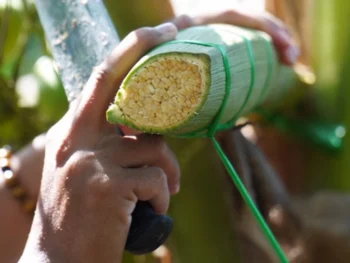
Coconut blossom nectar comes from the sap of coconut palm blossoms. Depending on how it is processed, it can be sold as liquid coconut nectar syrup or crystallized into coconut sugar. Because these terms are often used differently across markets, buyers and consumers need to understand the difference before comparing products.
This guide explains what coconut blossom nectar sugar means, how it differs from liquid coconut nectar and regular coconut sugar, and what to compare when evaluating taste, texture, solubility, appearance, packaging, and overall quality.
Quick Answer: What Is Coconut Blossom Nectar Sugar?
Coconut blossom nectar sugar usually refers to a crystallized sweetener made from the sap of coconut palm blossoms. It is closely related to coconut sugar or coconut palm sugar, while coconut nectar usually refers to the liquid syrup form.
The main differences between products usually come from processing method, moisture level, granule size, color, flavor intensity, solubility, packaging, and sourcing. For B2B buyers, the product form and documentation should always be confirmed before placing a bulk order.
What Is Coconut Blossom Nectar Sugar?
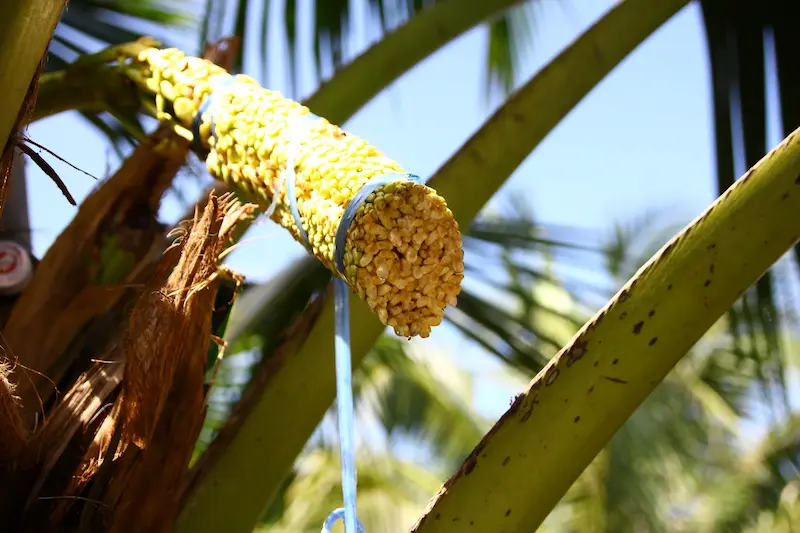
Coconut blossom nectar sugar is made by heating and dehydrating coconut palm sap until it becomes brown, caramel-colored crystals. It is still an added sugar, but it is often chosen for its caramel-like flavor, natural brown color, and use in baking, beverages, sauces, and food products.
The term can be confusing because some markets use coconut blossom nectar, coconut nectar, coconut palm sugar, coconut flower nectar, and coconut sugar in overlapping ways. In practice, the most important thing to confirm is whether the product is liquid syrup, granulated sugar, powdered sugar, or another processed form.
Coconut blossom nectar sugar should not be confused with liquid coconut nectar syrup. Both can come from coconut palm sap, but coconut nectar syrup remains liquid, while coconut sugar is crystallized into granules or powder.
Coconut Blossom Nectar vs Coconut Sugar vs Coconut Nectar Syrup
The table below can help clarify the most common terms used by brands, suppliers, and buyers.
| Term | Common Form | How It Is Used | Notes |
| Coconut blossom nectar | Usually liquid sap or syrup | Beverages, sauces, sweetener applications | Often used to describe liquid coconut nectar, but usage can vary by brand or market. |
| Coconut nectar syrup | Liquid syrup | Drinks, desserts, sauces, glazes | Higher moisture content and different handling from dry sugar. |
| Coconut sugar / coconut palm sugar | Granulated or powdered sugar | Baking, dry mixes, toppings, beverages, food manufacturing | Crystallized form made from coconut palm sap. |
| Coconut nectar sugar | Market term for crystallized coconut sap sweetener | Similar to coconut sugar | The term can vary, so buyers should check product form, granule size, moisture, and packaging. |
Why Coconut Nectar Sugar Products Can Taste Different
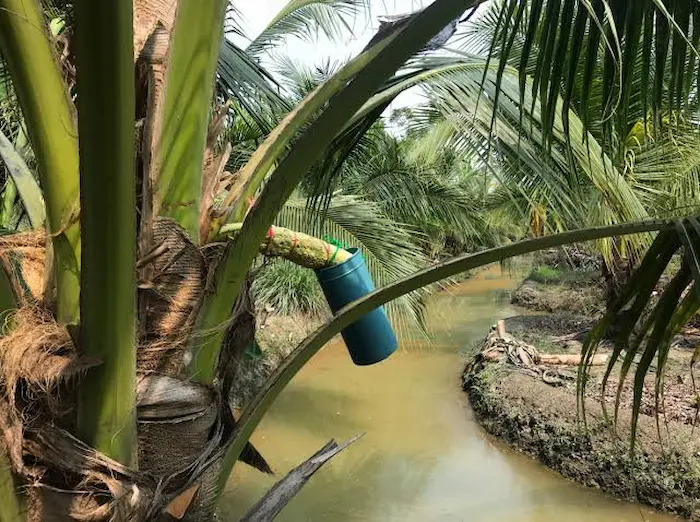
Coconut nectar sugar products may look similar at first glance, but their taste and performance can vary. Differences in sap quality, heating process, moisture level, drying method, granule size, and storage conditions can affect flavor, aroma, color, and solubility.
Research on coconut sugar production and quality also shows that raw sap condition and processing methods can influence the final product’s physicochemical and sensory characteristics.
Some products may taste deeper and more caramel-like, while others may be milder, drier, darker, or more molasses-like. These differences matter for home use, but they are even more important for food manufacturers that need consistent color, taste, texture, and batch performance.
How to Compare Coconut Nectar Sugar Products
Instead of comparing products only by brand name or price, it is more useful to evaluate practical quality factors. These criteria apply to retail buyers, product developers, importers, distributors, and private label teams.
- Flavor and aroma: Check sweetness level, caramel depth, smoky notes, earthy notes, aftertaste, and whether the flavor fits the intended recipe or product.
- Texture and granule size: Fine, medium, or coarse granules can behave differently in dry mixes, beverages, toppings, sauces, and bakery applications.
- Appearance and color: Coconut sugar can range from light golden brown to dark brown. Color consistency is important for finished product appearance.
- Solubility: Some products dissolve more easily in hot beverages, while others need more mixing. Cold-liquid solubility may be slower and should be tested when needed.
- Moisture and flowability: Moisture level can affect clumping, storage stability, handling, and production efficiency.
- Application fit: A product that works well for coffee may not be ideal for dry mixes, confectionery, bakery products, sauces, or powdered formulations.
- Packaging and shelf life: Retail pouches, bulk bags, and private label packaging should be reviewed based on storage, shipping, branding, and buyer requirements.
- Documentation: For B2B sourcing, product specification, COA, organic certificate, and export documents are often more important than taste alone.
Product Quality Comparison Checklist
Use this checklist when comparing coconut nectar sugar or coconut sugar products for recipe testing, retail selection, or bulk sourcing.
| Factor | What to Check | Why It Matters |
| Flavor intensity | Caramel-like, smoky, mild, earthy, or molasses-like notes | Affects beverages, bakery, sauces, snacks, and confectionery. |
| Granule size | Fine, medium, coarse, powdered, or inconsistent particles | Affects mixing, dissolving, texture, mouthfeel, and processing. |
| Moisture level | Dry, slightly moist, sticky, or clumpy | Affects flowability, storage, shelf life, and bulk handling. |
| Color | Light brown, golden brown, medium brown, or dark brown | Affects final product appearance and batch consistency. |
| Solubility | Hot liquid and cold liquid performance | Important for beverages, sauces, syrups, and liquid applications. |
| Packaging | Retail pouch, bulk bag, carton, custom packaging, or private label format | Important for retail, distribution, export, and private label buyers. |
| Documentation | Specification sheet, COA, organic certificate, and export readiness | Important for procurement, QA, compliance, and supplier approval. |
How to Interpret Brand and Product Differences
Retail brands may describe coconut nectar sugar or coconut palm sugar in different ways. Some emphasize strong caramel flavor, some focus on organic positioning, and others highlight everyday use in beverages, oatmeal, baking, or sauces.
These differences can be useful for consumers, but B2B buyers should be careful not to rely only on retail descriptions or subjective taste claims. For bulk sourcing, the same product category should be evaluated through samples, specification sheets, batch consistency, packaging options, and documentation.
Taste Summary and Best Uses
Coconut blossom nectar sugar is generally best suited for applications where a natural brown color and caramel-like sweetness are desirable. The right product depends on flavor intensity, texture, solubility, and product form.
| Use Case | Best Product Characteristic | Notes |
| Coffee and tea | Good solubility and smooth caramel-like flavor | Fine or medium granules may dissolve more easily in hot drinks. |
| Baking | Consistent granule size and deeper flavor | Works well in cookies, cakes, muffins, brownies, and spice-based recipes. |
| Sauces and glazes | Balanced sweetness and good heat performance | Dissolving behavior should be tested during formulation. |
| Dry mixes | Lower clumping risk and controlled moisture | Powdered or fine granulated forms may perform better. |
| Granola, snacks, and toppings | Consistent color and flavor | Batch consistency is important for finished product appearance. |
| Private label or retail products | Stable packaging, clear product form, and documentation | Buyers should confirm label claims, product specs, and supplier support. |
What B2B Buyers Should Check Before Ordering Coconut Nectar Sugar Products
For importers, distributors, food manufacturers, and private label buyers, comparing coconut nectar sugar products should go beyond taste. Buyers should also review product form, granule size, moisture level, color consistency, packaging, shelf life, certification scope, and documentation readiness.
If the product is crystallized coconut sugar, buyers can review organic coconut sugar specifications and request a coconut sugar COA before confirming bulk orders.
For broader coconut product sourcing, including coconut sugar and coconut nectar syrup, buyers can also explore our coconut products from Indonesia or contact our export team for product details.
If you are evaluating organic coconut sugar from Indonesia for food production, review product form, packaging options, specifications, sample requirements, and export documentation before placing a bulk order.
Need coconut sugar or coconut nectar product details for bulk sourcing? Contact our export team to request specifications, packaging options, samples, or a quotation.
The Verdict
Coconut blossom nectar sugar products can differ in flavor, texture, color, solubility, moisture, and packaging. These differences may seem small, but they can affect how the product performs in beverages, baking, sauces, dry mixes, snacks, and private label products.
For consumers, the best choice depends on taste preference and intended use. For B2B buyers, the better choice is the product that offers consistent specifications, reliable documentation, suitable packaging, and predictable performance in the final application.
Before choosing a supplier or product form, confirm whether the product is liquid coconut nectar syrup, granulated coconut sugar, powdered coconut sugar, or another coconut sap-based sweetener. This simple clarification helps avoid confusion and makes product comparison more accurate.
Frequently Asked Questions
Is coconut blossom nectar the same as coconut sugar?
Not always. Coconut blossom nectar often refers to liquid coconut sap or syrup, while coconut sugar usually refers to the crystallized granulated or powdered form. Some brands use the terms differently, so buyers should confirm product form before ordering.
Is coconut nectar liquid or granulated?
Coconut nectar is usually liquid, while coconut sugar is granulated or powdered. If a supplier uses the term coconut nectar sugar, ask whether they mean syrup, granules, powder, or another form.
What does coconut blossom nectar sugar taste like?
It usually has a caramel-like, earthy, and mildly smoky sweetness. The flavor can vary depending on processing, moisture, color, and product quality.
What should B2B buyers request before bulk orders?
Buyers should request product specifications, samples, COA, certification details, packaging information, shelf life, MOQ, lead time, and export documentation before confirming bulk supply.