Organic coconut sugar can be a strong ingredient option for food manufacturers, importers, distributors, and private label brands looking for a natural sweetener with a caramel-like profile. But before placing a bulk order, buyers should not evaluate the product only by price or product photos.
For B2B sourcing, product specifications help buyers understand whether the coconut sugar is suitable for their formulation, packaging system, storage condition, export documentation, and internal quality approval process.
This guide explains the key organic coconut sugar specifications food manufacturers should check before confirming a bulk order, including product form, moisture, mesh size, color, taste, shelf life, COA, certification, packaging, and batch consistency.
Quick Answer: What Specifications Should Buyers Check?
Before buying organic coconut sugar in bulk, buyers should check the product form, moisture content, mesh size or particle size, color, taste and aroma profile, shelf life, packaging format, COA, organic certification, and batch consistency.
These details help procurement teams compare suppliers more accurately and reduce the risk of receiving a product that does not match the intended application.
Food manufacturers should also confirm whether the supplier can provide updated documents such as a specification sheet, Certificate of Analysis, organic certificate, and shipment-level documentation when required.
Buyers can also review our organic coconut sugar supplier page for available product forms and packaging options.
Why Product Specifications Matter in Bulk Coconut Sugar Sourcing
In small retail purchases, slight differences in color, texture, or aroma may not create major problems. In food manufacturing, however, those differences can affect finished product appearance, dissolution, sweetness perception, blending performance, shelf life, and customer acceptance.
For procurement teams, specifications also help standardize supplier comparison. If one supplier offers granulated coconut sugar with a certain particle size and another supplier offers a finer powder, the two products may not perform the same way in bakery, beverage, dry blend, snack, or confectionery applications.
Clear specifications are also important for food safety and quality control. They allow buyers to align internal requirements with supplier documents, confirm whether the product is suitable for the target market, and prepare better questions before requesting a quotation or sample.
For broader formulation context, buyers can also read our guide on coconut sugar in the food industry.
Key Organic Coconut Sugar Specifications to Review
Product Form: Granule, Powder, or Cube
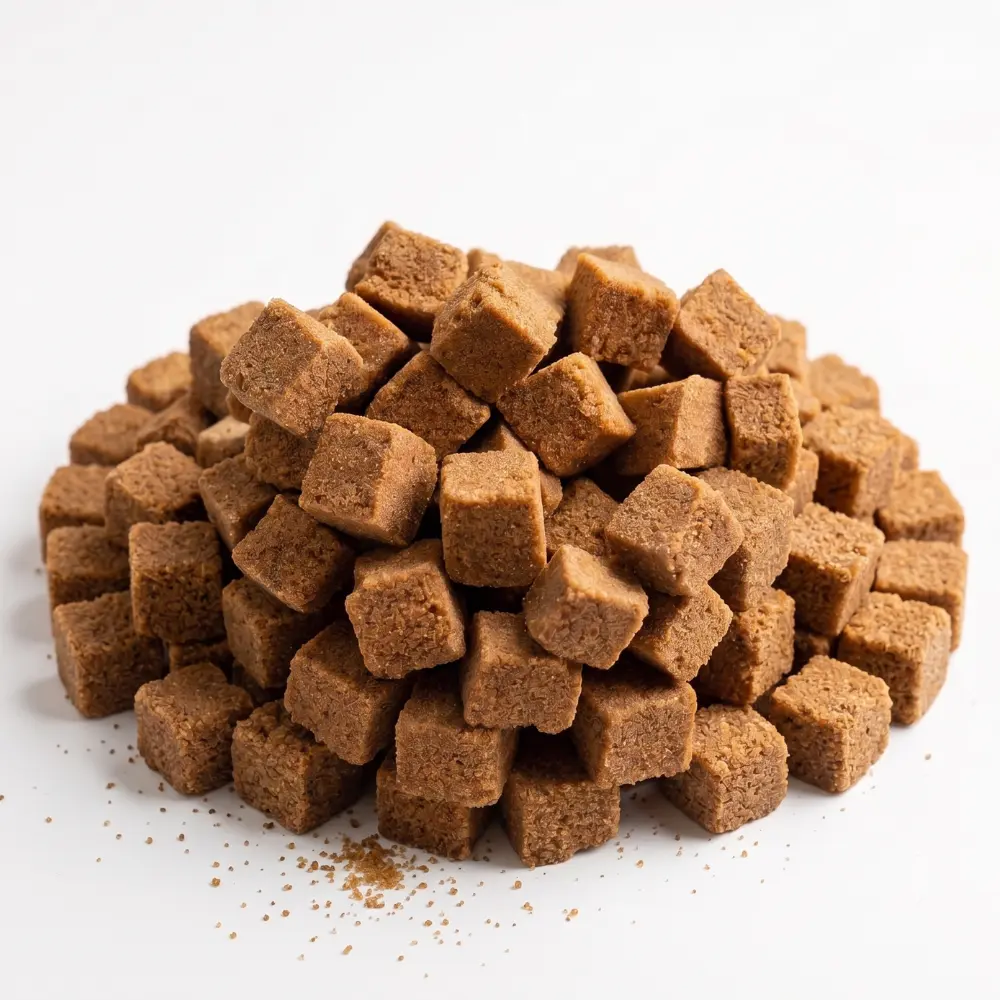
The first specification to check is product form. Organic coconut sugar may be supplied as granule, powder, or cube, depending on the supplier and buyer requirement. Each form has a different role in food manufacturing and packaging.
- Granulated coconut sugar is commonly used for bakery, cereal, granola, topping, dry blending, and general food manufacturing.
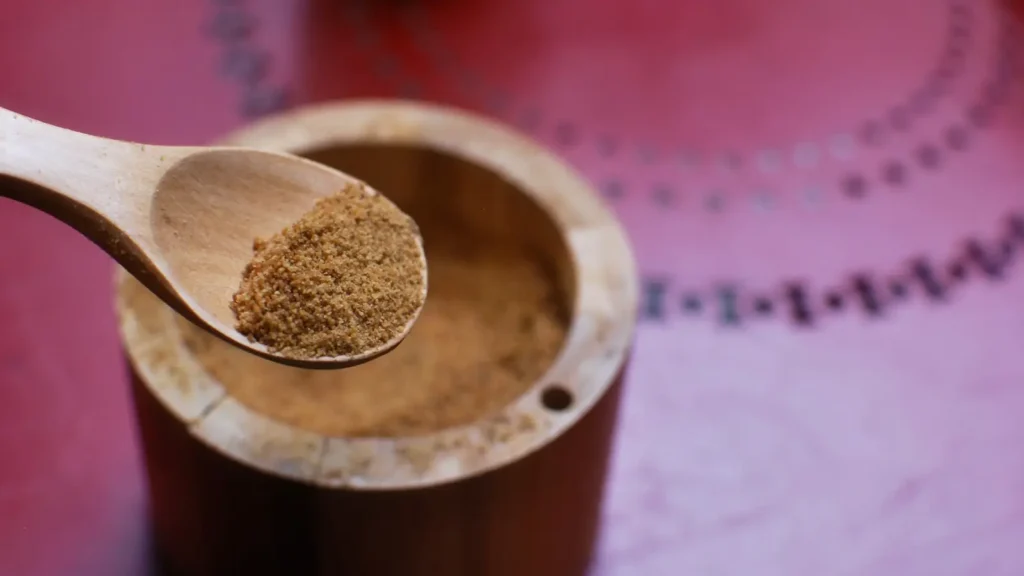
- Powdered coconut sugar can be more suitable for beverage premix, dry blends, instant products, and applications that require faster dispersion.
- Cube coconut sugar is more relevant for retail, horeca, gifting, premium presentation, or table-use formats.
Global Coco Sugar currently presents organic coconut sugar in granule, powder, and cube forms. Buyers should confirm the latest availability and specification sheet before placing a purchase order.
Color and Visual Consistency
Color matters because coconut sugar can influence the appearance of finished products. A darker sugar may be acceptable for chocolate, coffee, granola, cookies, and brown-colored beverages, but it may not be suitable for products that require a light or neutral appearance.
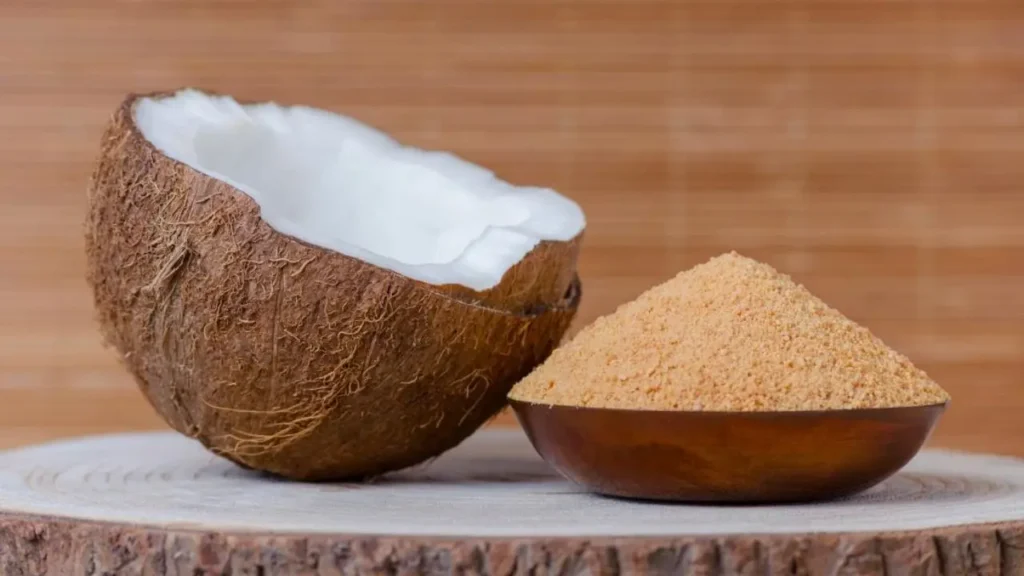
Global Coco Sugar currently lists the color of its organic coconut sugar as golden brown on its product page. For commercial production, buyers should still request samples and compare color consistency against their own product standard before scaling up.
Moisture Content
Moisture content is one of the most important parameters in coconut sugar sourcing. It can affect shelf life, clumping risk, flowability, storage stability, and packaging performance.
Lower moisture generally helps improve handling and storage stability, especially for dry ingredient applications. However, buyers should not assume that every supplier uses the same moisture specification. Always review the supplier specification sheet and COA.
Global Coco Sugar currently lists moisture as max 2% on its product page. This should be treated as current product page information, and buyers should request the latest specification sheet before confirming a bulk order.
Mesh Size / Particle Size
Mesh size or particle size affects how coconut sugar blends, dissolves, and behaves during processing. A coarser particle may work well in bakery toppings or granola, while a finer particle may be better for beverage powders, premixes, and smooth dry blends.
If your application requires fast dissolution or a smooth mouthfeel, particle size should be discussed early with the supplier. This is especially important for beverages, chocolate, confectionery, instant mixes, and powder-based products.
Global Coco Sugar currently lists mesh size as 18-50 on its product page. Buyers should confirm whether this range fits their application and request the latest technical document before ordering.
Taste and Aroma Profile
Organic coconut sugar is commonly valued for its natural sweet taste and caramel-like profile. This can work well in bakery, chocolate, coffee, snack, cereal, granola, and certain beverage applications.
However, flavor suitability should always be tested in the final formulation. A caramel profile may be attractive in brown or toasted products, but it may not fit every product category. Buyers should request samples and conduct internal sensory testing before placing a container or large-volume order.
Shelf Life and Storage Conditions
Shelf life is important for inventory planning, export shipping, distributor storage, and finished product production schedules. Buyers should check the declared shelf life, packaging type, recommended storage condition, and whether the product is sensitive to humidity.
Global Coco Sugar currently lists shelf life as 2 years on its product page. Actual shelf life handling should still be confirmed based on packaging, storage condition, destination market, and shipment plan.
Origin and Traceability
Origin and traceability are important for buyers that need supplier qualification, organic compliance, sustainability review, or product storytelling. For organic coconut sugar, buyers should confirm not only the country of origin but also whether the organic certificate scope covers the product and supply chain involved.
Global Coco Sugar positions its organic coconut sugar as sourced from Central Java, Indonesia. Buyers evaluating Indonesian coconut sugar should still request documentation that supports their own market requirements, especially if organic claims will be used on finished product labels.
Certificate of Analysis: What Should Be Included?
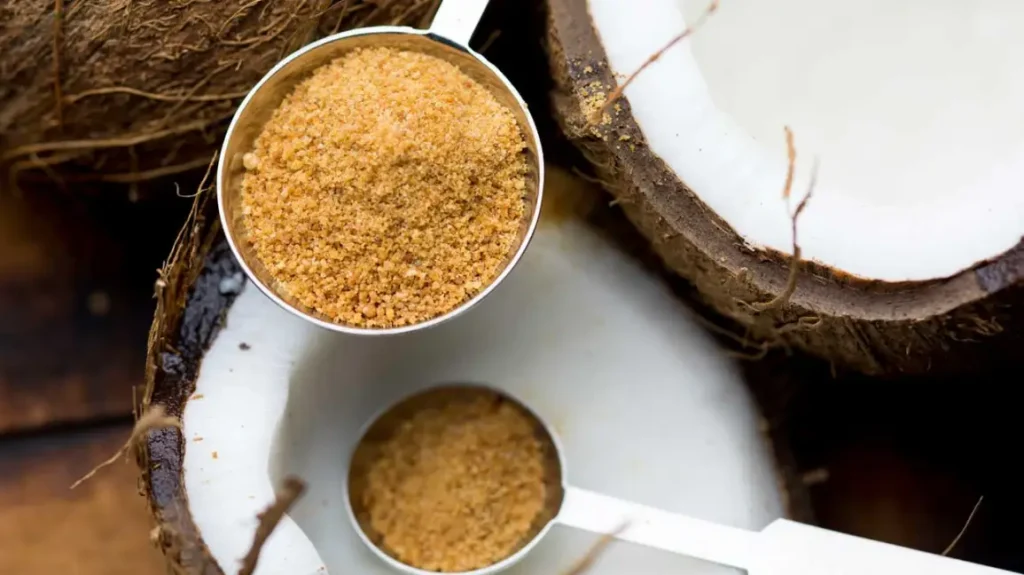
A Certificate of Analysis, or COA, is one of the most important documents in bulk coconut sugar sourcing. It helps buyers review quality parameters and confirm whether the batch or lot meets the required specification.
COA parameters may vary by supplier, buyer requirement, and testing scope. Buyers should request the latest COA for the specific batch or lot whenever possible.
A coconut sugar COA may include:
- Batch or lot number
- Date of analysis
- Product name and product form
- Moisture content
- Appearance, color, taste, or odor if included in the testing scope
- Microbiological parameters if required by the buyer
- Heavy metal testing if required by the buyer or destination market
- Test method or lab information
- Supplier or facility identification
Do not rely only on a generic or outdated COA for a large-volume order. If your company requires strict quality approval, request a batch-specific COA and compare it with the supplier specification sheet and sample results.
For food manufacturers, COA review is also part of supplier qualification. It helps R&D, QA, procurement, and regulatory teams decide whether the ingredient can move from sample review to commercial approval.
For a deeper document review, read our coconut sugar COA guide to understand how buyers can check batch number, test date, moisture, microbiology, heavy metals, and supplier or laboratory information.
Organic Certification and Transaction Certificate
For organic coconut sugar, certification should be verified carefully. Buyers should not rely only on logo images or general marketing statements. The certificate must be current, relevant to the product, and valid for the target market.
Depending on the destination market, buyers may need to check:
- USDA Organic certification for the United States market
- EU Organic certification for the European market
- JAS Organic certification for Japan
- Halal certification if required by the market or buyer
- Kosher certification if required by the buyer
- Food safety certification such as BRCGS, FSSC 22000, or HACCP if needed for vendor approval
The most important step is to confirm the certificate scope. A supplier may have an organic certificate, but buyers still need to verify whether the certificate covers the specific product, operator, processing facility, and packaging process involved.
For organic shipments, buyers may also need an organic Transaction Certificate. This document helps connect a specific shipment to the certified organic supply chain. Requirements can vary by market, certifier, buyer policy, and shipment type.
For USDA Organic claims, buyers can also use the USDA Organic INTEGRITY Database to check certified organic operations and review supplier certification details before confirming a bulk order.
For more details, review our organic coconut sugar certification checklist and our guide to choosing a BRCGS certified coconut sugar supplier.
Packaging Specifications for Bulk Buyers
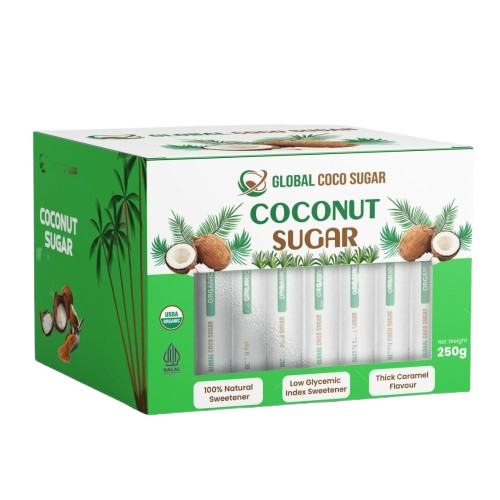
Packaging is not only a logistics detail. It can affect storage, shelf life, moisture protection, warehouse handling, labeling, customs clearance, and private label planning.
Before confirming a purchase order, buyers should ask the supplier about packaging options, packaging material, net weight, carton or sack dimensions, palletization, shipping marks, and whether custom or retail packaging is available.
Global Coco Sugar currently presents bulk packaging options such as 10 kg, 20 kg, 25 kg, and boxed formats, along with retail and custom packaging options on its product page. Packaging options should be confirmed based on order volume, product form, destination market, and buyer labeling requirements.
For larger sourcing plans, buyers can also review our guide on how to buy organic coconut sugar in bulk from Indonesia.
Specification Checklist Before Requesting a Quotation
Before requesting a quotation, procurement teams can use the checklist below to prepare clear questions for suppliers. This helps avoid comparing incomplete offers or receiving prices for products that do not match the intended application.
| Specification Area | What to Check | Why It Matters | Document to Request |
| Product form | Granule, powder, or cube | Affects application, processing, and packaging | Specification sheet |
| Moisture | Maximum moisture level | Supports shelf life, flowability, and clumping control | Specification sheet / COA |
| Mesh size | Particle size range | Affects blending, dissolution, and texture | Specification sheet |
| Color | Visual consistency | Influences finished product appearance | Specification sheet / sample |
| Taste and aroma | Natural sweet profile and sensory fit | Important for formulation approval | Sample / sensory review |
| Shelf life | Declared shelf life and storage condition | Supports inventory and export planning | Specification sheet |
| Packaging | Bulk, retail, or custom packaging | Affects logistics, storage, and labeling | Packaging specification |
| Certification | Organic and food safety certification | Needed for compliance and vendor approval | Certificate copy |
| COA | Batch-specific quality data | Helps procurement and QA verify product quality | COA |
| Origin | Country and sourcing region if available | Supports traceability and supplier review | Certificate / supplier statement |
Common Specification Mistakes Buyers Should Avoid
Many sourcing issues happen because buyers compare suppliers only by price or product name. Coconut sugar from different suppliers may have different moisture levels, particle sizes, packaging formats, documentation readiness, and batch consistency.
Common mistakes include:
- Requesting a price without specifying product form and packaging requirement
- Comparing granulated coconut sugar with powdered coconut sugar as if they are identical
- Not requesting the latest specification sheet before bulk order
- Using an old or generic COA for commercial approval
- Not checking organic certificate scope and expiry date
- Forgetting to ask whether an organic Transaction Certificate can be provided
- Skipping sample approval before a large-volume order
- Not confirming packaging suitability for storage and destination market requirements
- Not aligning supplier specifications with internal QA, R&D, and regulatory requirements
If you are screening suppliers for the first time, read our guide on coconut sugar supplier red flags before confirming an order.
How Global Coco Sugar Supports Specification Review

Global Coco Sugar supplies organic coconut sugar from Indonesia for B2B buyers such as importers, distributors, food manufacturers, procurement teams, and private label brands.
Our organic coconut sugar is currently presented in granule, powder, and cube forms, with product information such as golden brown color, max 2% moisture, mesh size 18-50, natural sweet taste, 2-year shelf life, and Indonesia origin listed on the product page. Buyers should request the latest specification sheet to confirm the current details before ordering.
For specification review, buyers can discuss:
- Required coconut sugar form for the target application
- Specification sheet and product details
- Packaging options for bulk, retail, or custom requirements
- COA or documentation needs based on buyer requirements
- Organic certification and export documentation discussion
- Quotation and sample discussion before bulk order
Need to review organic coconut sugar specifications before placing a bulk order? Contact Global Coco Sugar to request the latest product specification, packaging details, and quotation for your sourcing review.
Conclusion
Organic coconut sugar specifications are essential for food manufacturers and procurement teams that need consistent quality, reliable documentation, and suitable product performance before placing bulk orders.
Before choosing a supplier, buyers should review product form, moisture content, mesh size, color, taste and aroma, shelf life, COA, certification, packaging, origin, and batch consistency. These details help reduce sourcing risk and make supplier comparison more reliable.
A good supplier should be able to explain the product clearly, provide updated documentation, and support the buyer through sample review, quotation, and export preparation.
If you are evaluating organic coconut sugar for food manufacturing, distribution, or private label sourcing, contact our export team to discuss your specification requirements and bulk sourcing plan.
You can review our bulk organic coconut sugar from Indonesia and contact the export team for the latest specification sheet, packaging details, and quotation.
Frequently Asked Questions
What is an organic coconut sugar specification sheet?
An organic coconut sugar specification sheet is a technical document that describes important product details such as product form, moisture, mesh size, color, taste, shelf life, packaging, origin, and other quality parameters. Buyers use this document to decide whether the product fits their formulation, packaging, storage, and procurement requirements.
What moisture level should buyers check in coconut sugar?
Buyers should check the moisture level listed on the supplier specification sheet and COA. There is no single number that should be assumed for every supplier. Global Coco Sugar currently lists moisture as max 2% on its product page, but buyers should request the latest document before ordering.
Why does mesh size matter in coconut sugar?
Mesh size or particle size affects dissolution, blending, texture, and processing performance. Finer coconut sugar may be better for beverages, premixes, and dry blends, while granulated coconut sugar may be suitable for bakery, granola, cereal, and general food manufacturing applications.
Should buyers request COA before ordering bulk coconut sugar?
Yes. For bulk orders, buyers should request a COA, preferably for the specific batch or lot when available. The COA helps procurement and quality teams verify product parameters before approving shipment or commercial production.
What documents are needed for organic coconut sugar import?
Common documents may include organic certificate, specification sheet, COA, invoice, packing list, Certificate of Origin, phytosanitary certificate if required, and organic Transaction Certificate if the buyer needs shipment-level organic documentation. Requirements vary by destination market and buyer policy.
What packaging options are common for bulk coconut sugar?
Bulk coconut sugar may be supplied in sacks, cartons, or boxed packaging depending on supplier capability and buyer requirements. Some suppliers also offer retail or custom packaging. Global Coco Sugar currently presents bulk, retail, and custom packaging options on its organic coconut sugar product page.