| Quick Answer: How Does USDA Organic Certification Work for Indonesian Coconut Sugar? USDA Organic certification for Indonesian coconut sugar is issued under the National Organic Program (NOP) by a USDA-accredited certifying agent operating in Indonesia (such as Control Union, CCPB, or IMO). The certification covers the entire supply chain — from the coconut farm through the processing facility. For each commercial shipment, an additional Organic Transaction Certificate (TC) must be issued per production lot. US buyers making 'USDA Organic' label claims must verify: (1) the supplier's current NOP certificate on ams.usda.gov, and (2) the TC for each specific shipment lot before accepting delivery. |
For US buyers sourcing organic coconut sugar from Indonesia, the USDA National Organic Program (NOP) certification is both the most important quality credential and the most misunderstood.
Many buyers assume that a supplier's USDA Organic certificate is sufficient for making organic label claims on their finished product.
In reality, the organic certification chain for imported ingredients involves multiple layers — each with specific documentation requirements — and a gap at any layer can disqualify the organic claim on your finished product.
This guide explains the complete USDA NOP certification process for Indonesian coconut sugar — from farm audit through per-shipment Transaction Certificate — written from the perspective of a certified supplier who goes through this process every year and every shipment.
Browse our USDA Organic certified coconut sugar before reading further.
For a complete overview of all certifications relevant to coconut sugar sourcing — BRCGS, EU Organic, Halal, and more — our guide on what certifications a coconut sugar supplier should have provides the full picture.
What Is USDA NOP and Why Does It Matter for Coconut Sugar?
The USDA National Organic Program (NOP) is the federal regulatory framework that governs all organic food production, handling, and labeling in the United States.
Established under the Organic Foods Production Act of 1990, NOP sets the standards that must be met for any product sold in the US to carry the 'USDA Organic' label.
For imported food ingredients like Indonesian coconut sugar, NOP applies through two mechanisms: the certification of the foreign production and processing facility by a USDA-accredited certifying agent, and for organic label claims on finished US consumer products, the traceability of each ingredient lot back to a certified organic source.
| NOP Certification Level | What It Covers | Who Is Responsible |
| Farm certification | The coconut farms or farmer cooperatives supplying the sap must be certified organic — no prohibited substances used, conversion period completed | Indonesian farmer cooperative — certified by USDA-accredited agent |
| Processing facility certification | The facility that processes coconut sap into granulated sugar must hold NOP certification — dedicated organic processing lines or cleaning protocols | Indonesian processor/exporter — certified by USDA-accredited agent |
| Transaction Certificate per lot | Each specific production lot must have a TC linking it to the NOP certificate — this is per-shipment documentation | Indonesian exporter issues TC through certifying agent |
| US importer/handler (if applicable) | If the US buyer repackages, relabels, or processes the coconut sugar, they may also need NOP handler certification | US buyer — contact a USDA-accredited certifying agent in the US |
USDA-Accredited Certifying Bodies Active in Indonesia
USDA NOP certification is not issued directly by the USDA — it is issued by USDA-accredited certifying agents.
These are third-party organizations that the USDA has authorized to conduct organic certification audits and issue NOP certificates.
Several USDA-accredited certifying agents operate in Indonesia and regularly certify coconut sugar producers:
| Certifying Body | Based In | Active in Indonesia? | How to Verify |
| Control Union Certifications | Netherlands | Yes — major presence in Indonesia | Verify certificate at apps.controlunion.com |
| CCPB Srl | Italy | Yes — active in Southeast Asia | Verify at ccpb.it |
| IMO (Institute for Marketecology) | Switzerland | Yes — active in Indonesia | Verify at imo.ch |
| Ecocert | France | Yes — active in Asia Pacific | Verify at ecocert.com |
| BioAgriCert | Italy | Yes — active in Southeast Asia | Verify at bioagricert.org |
| Oregon Tilth (OTCO) | USA | Yes — certifies Indonesian exporters | Verify at tilth.org |
| How to verify a certifying body is USDA-accredited The USDA maintains a public database of all accredited certifying agents at ams.usda.gov/organic. Before accepting any USDA Organic certificate from an Indonesian supplier, verify that the certifying agent named on the certificate appears in this database with current accreditation status. A certificate from a non-accredited or lapsed certifying agent is not valid for USDA Organic claims. |
The USDA NOP Certification Process for Indonesian Coconut Sugar: 7 Steps

Understanding the certification process begins with understanding what is being certified — the production system itself.
Our article on how coconut sugar is produced in Indonesia explains the full production chain from sap tapping to granulation that the NOP audit inspects.
Step 1: Organic System Plan (OSP) Preparation
The Indonesian coconut sugar producer prepares an Organic System Plan — a detailed document describing every aspect of their production system: farm inputs, pest management practices, cleaning and sanitation protocols for equipment shared between organic and conventional production, record-keeping systems, and split production management (if conventional production also occurs at the same facility).
- Timeline: 1-3 months to prepare a comprehensive OSP for the first certification.
- Cost: Internal staff time — no direct fee at this stage.
- Key requirement: All inputs (fertilizers, pest controls) must be on the NOP National List of Allowed and Prohibited Substances.
Step 2: Application to USDA-Accredited Certifying Agent
The producer submits the OSP and application to a USDA-accredited certifying agent operating in Indonesia. The certifying agent reviews the OSP for completeness and schedules an initial inspection.
- Timeline: 2-4 weeks for application review.
- Cost: Application fee varies by certifying agent — typically USD 200-500 for initial application.
Step 3: On-Site Inspection
A trained NOP inspector visits the coconut farms, farmer cooperatives, and processing facility to verify that the actual production practices match the Organic System Plan.
The inspector reviews records, samples inputs if needed, interviews farmers and staff, and documents any non-compliances.
- Timeline: Scheduled within 2-3 months of application; inspection itself is typically 1-3 days.
- Cost: Inspector fee plus travel expenses — typically USD 800-2,000 depending on location and facility size.
- Critical check: Conversion period — coconut farms must have been managed organically (without prohibited substances) for at least 3 years before the first organic crop can be certified.
Step 4: Review and Certification Decision
The certifying agent's review committee evaluates the inspector's report and the OSP.
If no material non-compliances are found, or if identified non-compliances have been resolved, the certifying agent issues the NOP certificate.
- Timeline: 4-8 weeks from inspection to certificate issuance.
- Certificate contents: Producer name, operation address, certification scope (specific products certified), certifying agent name, certificate number, validity period (annual).
Step 5: Annual Renewal (Every Year)
USDA NOP certification is not permanent — it must be renewed annually. The producer submits an updated OSP, pays the annual fee, and undergoes an annual inspection.
Certification lapses immediately if renewal is not completed — buyers must verify certificate validity dates before every order.
- Timeline: Annual renewal process begins 2-3 months before certificate expiry.
- Cost: Annual certification fee — typically USD 1,000-5,000 depending on certifying agent, facility size, and scope.
- Buyer action: Verify the certificate expiry date before every purchase order. A certificate that expires between order placement and shipment arrival creates compliance risk.
Step 6: Organic Transaction Certificate (TC) per Production Lot
This is the step most buyers are unaware of — and the most common point of failure in organic ingredient compliance.
The NOP certificate covers the facility and its production system, but it does not automatically cover every lot of product shipped.
For each specific production lot that a buyer purchases as organic, an Organic Transaction Certificate (TC) must be issued.
- What is a TC: A document issued by the certifying agent that links a specific production lot (identified by lot number) to the NOP certificate and confirms that the specific lot was produced in compliance with NOP standards.
- When is it issued: Before container loading — the TC must be issued and provided to the buyer before the shipment departs. Do not accept 'TC to follow' after arrival.
- What to check: TC lot number must match exactly the lot number on the Certificate of Analysis (COA) and packing list. Any mismatch invalidates the organic status of that shipment.
- Who issues it: The Indonesian certifying agent — on request from the supplier per shipment.
Step 7: US Importer Documentation and FSVP
US importers receiving certified organic coconut sugar must maintain records that demonstrate the organic status of each lot received — including the supplier's NOP certificate copy, the TC per lot, and their own FSVP (Foreign Supplier Verification Program) documentation.
If the US buyer repackages or relabels the coconut sugar under their own brand as 'USDA Organic', they may additionally need their own NOP handler certificate from a US-based certifying agent.
How to Verify USDA Organic Certification Independently — Step by Step
Never accept a supplier's claim of USDA Organic certification without independent verification. Here is how to verify quickly and accurately:
- Go to the USDA Organic Integrity Database at apps.ams.usda.gov/integrity.
- Search by the operator name (the Indonesian supplier or producer name) OR the certifying agent name.
- Verify: (a) the certificate is 'Active' status, (b) the certificate number matches the document provided by the supplier, (c) the certified scope includes 'coconut sugar' or 'coconut palm sugar', (d) the certificate expiry date is beyond your expected shipment arrival date.
- Separately verify the certifying agent is USDA-accredited at ams.usda.gov/organic — confirm the agent's accreditation is current.
- For each shipment, verify the Transaction Certificate: TC lot number = COA lot number = packing list lot number. All three must match.
| Red flags that indicate an organic certification problem Certificate status 'Surrendered' or 'Suspended' — do not proceed. Certificate scope does not include coconut sugar specifically — verify the scope covers your product. Certifying agent cannot be found in USDA accreditation database — certificate may be from an unaccredited agent. TC lot number does not match COA — do not accept as organic for that shipment. Supplier says 'TC will follow after arrival' — insist on TC before departure or treat as conventional. |
USDA NOP vs EU Organic vs JAS: Key Differences for Coconut Sugar Buyers
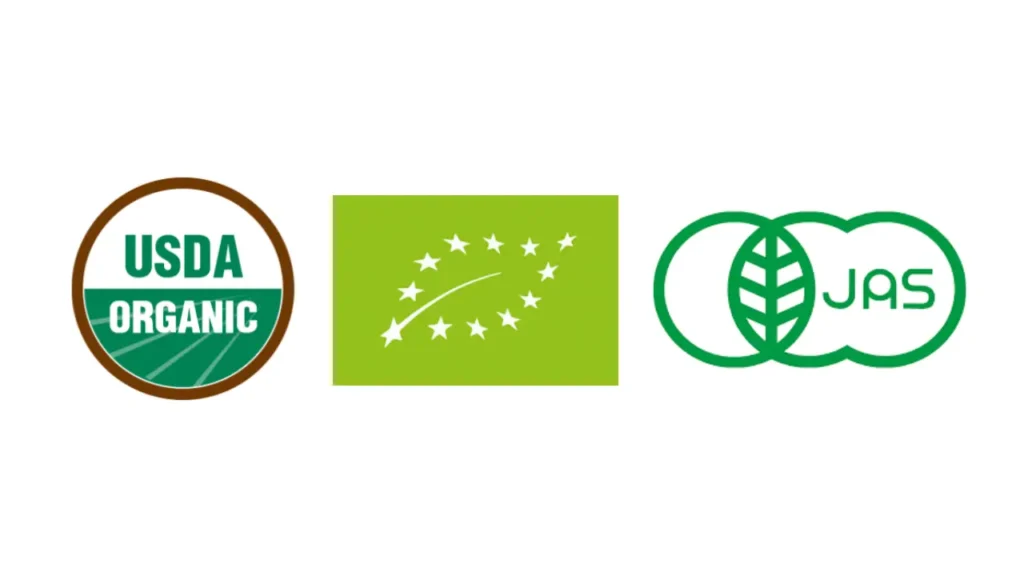
Many buyers who source for multiple markets need to understand how USDA NOP differs from EU Organic and JAS (Japan Agricultural Standards) organic certification — since a supplier's USDA NOP certificate does NOT automatically support EU or Japanese organic label claims. Our article on exporting organic coconut sugar from Indonesia covers the EU-specific documentation chain in detail.
| Factor | USDA NOP (USA) | EU Organic (EC 2018/848) | JAS Organic (Japan) |
| Governing body | USDA Agricultural Marketing Service | European Commission + EU Member State authorities | Japanese Ministry of Agriculture, Forestry and Fisheries (MAFF) |
| Certifying bodies in Indonesia | Control Union, CCPB, IMO, Ecocert, OTCO | Control Union, Skal, IMO, Ecocert, BioAgriCert | Japan Organic & Natural Foods Association (JONA), Organic Crop Improvement Association (OCIA) |
| Certificate validity | Annual renewal required | Annual renewal required | Annual renewal required |
| Per-shipment document | Transaction Certificate (TC) | Certificate of Inspection (CoI) via TRACES NT | Transaction Certificate equivalent |
| US buyer requirement | Verify NOP cert + TC per lot | N/A for US market | N/A for US market |
| EU buyer requirement | N/A for EU market | Verify EU Organic cert + register as organic operator + CoI per lot | N/A for EU market |
| USDA/EU equivalency | Partial equivalency arrangement exists | Partial equivalency with USDA NOP | No automatic equivalency with NOP or EU |
| Verification database | ams.usda.gov/integrity | OFIS database — ec.europa.eu | MAFF Japan — maff.go.jp |
| Important: USDA NOP and EU Organic are NOT interchangeable There is a partial equivalency arrangement between USDA NOP and EU Organic — meaning some certified operations can sell to both markets under one certificate. However, this equivalency is not automatic and has exceptions. A supplier's USDA NOP certificate does NOT automatically support EU organic label claims, and vice versa. Always confirm which specific certifications a supplier holds and for which markets. For US organic label claims, only USDA NOP certification applies. |
USDA Organic Certification Factors Buyers Should Understand
USDA Organic certified coconut sugar usually requires stronger documentation, traceability, and handling control than conventional coconut sugar.
For B2B buyers, the difference is not only about the product itself, but also about the certified supply chain, certificate scope, production handling, export documentation, and shipment requirements.
Because each buyer may have different market requirements, Global Coco Sugar does not use public organic premium ranges as a final pricing reference.
Buyers should request a formal quotation based on product type, certification scope, order volume, packaging, destination country, Incoterms, and required documents.
| Certification Factor | Who Is Usually Involved | What Buyers Should Confirm |
|---|---|---|
| Farm conversion and organic management | Farmer group, cooperative, or supplier | Whether the coconut sap source is included within the organic certification scope |
| Annual organic certification | Certified supplier and accredited certifying body | Certificate validity, certified operation name, product scope, and certifying body |
| Organic inspection and audit | Supplier and certifying body | Whether the production and handling process is covered by the certification |
| Transaction Certificate or export document | Supplier, certifying body, and buyer/importer if required | Whether shipment-level organic documentation is required for the target market |
| Organic product handling | Supplier, processor, warehouse, and exporter | Segregation, traceability, batch control, and contamination prevention |
| Importer or handler requirements | Buyer, importer, or local market representative | Whether the buyer needs additional organic handling or labeling compliance in the destination country |
| Organic quotation structure | Supplier and buyer | Product grade, order volume, packaging, certification scope, Incoterms, and required documents |
Organic certification can affect sourcing because certified products require verified supply chains, documentation control, audit readiness, and product traceability.
For buyers, the most important step is to confirm that the product, supplier, and shipment documentation match the requirements of the destination market.
Buyers who need current organic documentation can request the latest certificate, product specification, COA, packaging details, and quotation from the supplier before confirming an order.
Practical Checklist for US Buyers Sourcing USDA Organic Coconut Sugar from Indonesia
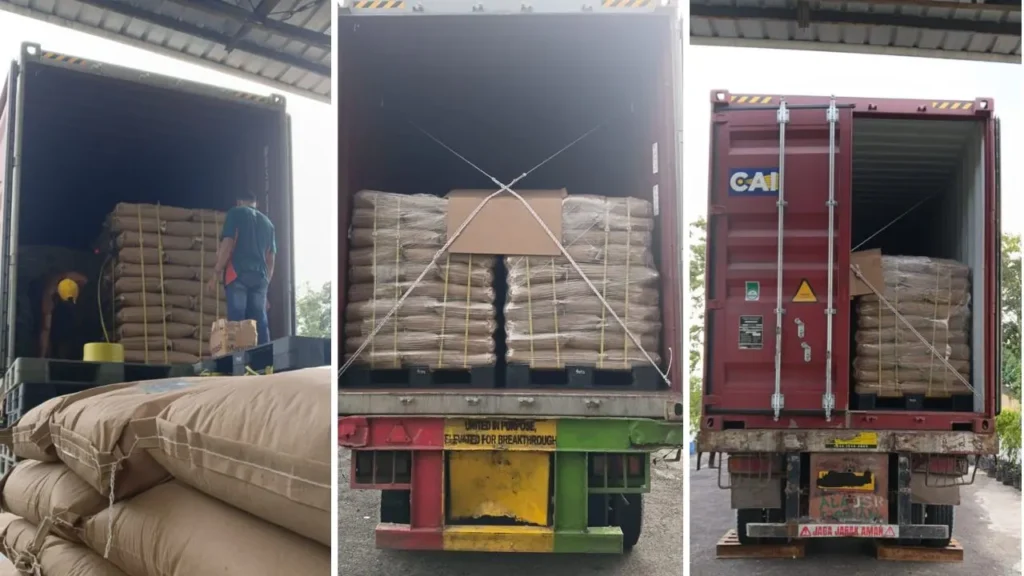
For the complete import documentation framework including FDA Prior Notice and phytosanitary requirements alongside organic documentation, see our guide on how to import coconut sugar from Indonesia. For the full supplier evaluation framework, see our article on how to choose a reliable coconut sugar exporter from Indonesia.
Before placing your first organic order:
- Verify NOP certificate on ams.usda.gov/integrity: Active status, correct scope (coconut sugar), certifying agent is USDA-accredited, expiry date beyond your planned delivery.
- Confirm TC process: Ask the supplier explicitly: 'Will you provide an Organic Transaction Certificate for each shipment lot before container loading?' If yes — confirm the certifying agent who issues it.
- Request TC sample: Ask for a sample TC from a previous shipment to verify the format and confirm lot number matching with COA and packing list.
- Assess your own NOP handler status: If you will repackage or relabel the coconut sugar as 'USDA Organic' in the US, contact a USDA-accredited certifying agent in your state to determine if you need handler certification.
- Build TC verification into your receiving process: Before accepting any organic shipment at your US warehouse, verify TC lot number = COA lot number = packing list lot number. This check takes 2 minutes and prevents expensive compliance failures.
For further guidance on evaluating and selecting a certified Indonesian coconut sugar supplier, our guide on bulk coconut sugar suppliers in Indonesia covers the full qualification process.
| Source USDA Organic certified coconut sugar from Indonesia with full documentation support Global Coco Sugar holds current USDA NOP certification for our coconut sugar, issued by a USDA-accredited certifying agent. We provide Organic Transaction Certificates per production lot before container loading, full NOP certificate documentation, and guidance for US buyers on the organic compliance process. Our certification is publicly verifiable on ams.usda.gov/integrity. Contact Our Organic Certification Team >>> View Our USDA Organic Certified Coconut Sugar >>> |
Conclusion: Organic Certification Is a Chain, Not a Certificate
The most important insight for US buyers sourcing USDA Organic certified coconut sugar from Indonesia is that organic certification is a chain of documentation — not a single certificate.
The chain runs from the coconut farm through the processing facility to each specific production lot, and a break at any point in that chain undermines the organic claim at the end.
The practical implication: build organic verification into your standard receiving process. Verify the NOP certificate is current before every order. Require the TC before container loading on every organic shipment. Match the TC lot number to the COA and packing list before accepting any organic shipment.
These steps take minutes and prevent compliance failures that can cost significantly more in time, money, and brand credibility.
| Work with a supplier who understands the full organic compliance chain Global Coco Sugar provides USDA NOP-certified organic coconut sugar with complete documentation: current NOP certificate (verifiable on ams.usda.gov/integrity), Organic Transaction Certificate per production lot before container loading, Certificate of Analysis from ISO 17025-accredited laboratory, and full export documentation support for US market compliance. Contact Our Organic Certification Team >>> View Our Certified Organic Coconut Sugar Range >>> Our Certifications & Company Profile >>> |
Frequently Asked Questions
How do I verify that an Indonesian coconut sugar supplier is USDA Organic certified?
You can verify a supplier's certification through the USDA Organic Integrity Database. Check that the certificate is active, covers coconut sugar, and has been issued by a USDA-accredited certifying agent. Buyers should also request a copy of the supplier's current organic certificate.
What is an Organic Transaction Certificate and why do I need one for every shipment?
An Organic Transaction Certificate (TC) confirms that a specific shipment or production lot complies with USDA Organic requirements. It provides traceability between the certified supplier and the product being purchased, helping support organic claims throughout the supply chain.
Does a USDA Organic certificate from an Indonesian supplier allow me to make organic label claims in the US?
It depends on how the product is marketed and handled. While a supplier's USDA Organic certification supports the organic status of the ingredient, additional certification requirements may apply if you repackage, relabel, or process the product in the United States.
How long does it take for an Indonesian supplier to obtain USDA Organic certification?
The certification process typically takes several months for eligible operations. If organic conversion requirements have not yet been completed, achieving full certification may take several years depending on the production system and compliance status.
What is the difference between USDA NOP and EU Organic certification for coconut sugar?
USDA NOP and EU Organic are separate certification systems with different regulatory requirements. Suppliers must hold the appropriate certification for the market they serve, as USDA Organic certification does not automatically qualify products for EU Organic claims, and vice versa.