Category: Certifications & Quality Standards

  • USDA Organic Certification for Indonesian Coconut Sugar: Complete Process Guide for Buyers (2026)

    USDA Organic Certification for Indonesian Coconut Sugar: Complete Process Guide for Buyers (2026)

    organic coconut sugar
    Quick Answer: How Does USDA Organic Certification Work for Indonesian Coconut Sugar?
    USDA Organic certification for Indonesian coconut sugar is issued under the National Organic Program (NOP) by a USDA-accredited certifying agent operating in Indonesia (such as Control Union, CCPB, or IMO). The certification covers the entire supply chain — from the coconut farm through the processing facility. For each commercial shipment, an additional Organic Transaction Certificate (TC) must be issued per production lot. US buyers making ‘USDA Organic’ label claims must verify: (1) the supplier’s current NOP certificate on ams.usda.gov, and (2) the TC for each specific shipment lot before accepting delivery.

    For US buyers sourcing organic coconut sugar from Indonesia, the USDA National Organic Program (NOP) certification is both the most important quality credential and the most misunderstood.

    Many buyers assume that a supplier’s USDA Organic certificate is sufficient for making organic label claims on their finished product.

    In reality, the organic certification chain for imported ingredients involves multiple layers — each with specific documentation requirements — and a gap at any layer can disqualify the organic claim on your finished product.

    This guide explains the complete USDA NOP certification process for Indonesian coconut sugar — from farm audit through per-shipment Transaction Certificate — written from the perspective of a certified supplier who goes through this process every year and every shipment.

    Browse our USDA Organic certified coconut sugar before reading further.

    For a complete overview of all certifications relevant to coconut sugar sourcing — BRCGS, EU Organic, Halal, and more — our guide on what certifications a coconut sugar supplier should have provides the full picture.

    What Is USDA NOP and Why Does It Matter for Coconut Sugar?
    usda organic coconut sugar

    The USDA National Organic Program (NOP) is the federal regulatory framework that governs all organic food production, handling, and labeling in the United States.

    Established under the Organic Foods Production Act of 1990, NOP sets the standards that must be met for any product sold in the US to carry the ‘USDA Organic’ label.

    For imported food ingredients like Indonesian coconut sugar, NOP applies through two mechanisms: the certification of the foreign production and processing facility by a USDA-accredited certifying agent, and for organic label claims on finished US consumer products, the traceability of each ingredient lot back to a certified organic source.

    NOP Certification LevelWhat It CoversWho Is Responsible
    Farm certificationThe coconut farms or farmer cooperatives supplying the sap must be certified organic — no prohibited substances used, conversion period completedIndonesian farmer cooperative — certified by USDA-accredited agent
    Processing facility certificationThe facility that processes coconut sap into granulated sugar must hold NOP certification — dedicated organic processing lines or cleaning protocolsIndonesian processor/exporter — certified by USDA-accredited agent
    Transaction Certificate per lotEach specific production lot must have a TC linking it to the NOP certificate — this is per-shipment documentationIndonesian exporter issues TC through certifying agent
    US importer/handler (if applicable)If the US buyer repackages, relabels, or processes the coconut sugar, they may also need NOP handler certificationUS buyer — contact a USDA-accredited certifying agent in the US

    USDA-Accredited Certifying Bodies Active in Indonesia

    USDA NOP certification is not issued directly by the USDA — it is issued by USDA-accredited certifying agents.

    These are third-party organizations that the USDA has authorized to conduct organic certification audits and issue NOP certificates.

    Several USDA-accredited certifying agents operate in Indonesia and regularly certify coconut sugar producers:

    Certifying BodyBased InActive in Indonesia?How to Verify
    Control Union CertificationsNetherlandsYes — major presence in IndonesiaVerify certificate at apps.controlunion.com
    CCPB SrlItalyYes — active in Southeast AsiaVerify at ccpb.it
    IMO (Institute for Marketecology)SwitzerlandYes — active in IndonesiaVerify at imo.ch
    EcocertFranceYes — active in Asia PacificVerify at ecocert.com
    BioAgriCertItalyYes — active in Southeast AsiaVerify at bioagricert.org
    Oregon Tilth (OTCO)USAYes — certifies Indonesian exportersVerify at tilth.org
    How to verify a certifying body is USDA-accredited
    The USDA maintains a public database of all accredited certifying agents at ams.usda.gov/organic. Before accepting any USDA Organic certificate from an Indonesian supplier, verify that the certifying agent named on the certificate appears in this database with current accreditation status. A certificate from a non-accredited or lapsed certifying agent is not valid for USDA Organic claims.

    The USDA NOP Certification Process for Indonesian Coconut Sugar: 7 Steps

    USDA organic coconut sugar

    Understanding the certification process begins with understanding what is being certified — the production system itself.

    Our article on how coconut sugar is produced in Indonesia explains the full production chain from sap tapping to granulation that the NOP audit inspects.

    Step 1: Organic System Plan (OSP) Preparation

    The Indonesian coconut sugar producer prepares an Organic System Plan — a detailed document describing every aspect of their production system: farm inputs, pest management practices, cleaning and sanitation protocols for equipment shared between organic and conventional production, record-keeping systems, and split production management (if conventional production also occurs at the same facility).

    • Timeline: 1-3 months to prepare a comprehensive OSP for the first certification.
    • Cost: Internal staff time — no direct fee at this stage.
    • Key requirement: All inputs (fertilizers, pest controls) must be on the NOP National List of Allowed and Prohibited Substances.

    Step 2: Application to USDA-Accredited Certifying Agent

    The producer submits the OSP and application to a USDA-accredited certifying agent operating in Indonesia. The certifying agent reviews the OSP for completeness and schedules an initial inspection.

    • Timeline: 2-4 weeks for application review.
    • Cost: Application fee varies by certifying agent — typically USD 200-500 for initial application.

    Step 3: On-Site Inspection

    A trained NOP inspector visits the coconut farms, farmer cooperatives, and processing facility to verify that the actual production practices match the Organic System Plan.

    The inspector reviews records, samples inputs if needed, interviews farmers and staff, and documents any non-compliances.

    • Timeline: Scheduled within 2-3 months of application; inspection itself is typically 1-3 days.
    • Cost: Inspector fee plus travel expenses — typically USD 800-2,000 depending on location and facility size.
    • Critical check: Conversion period — coconut farms must have been managed organically (without prohibited substances) for at least 3 years before the first organic crop can be certified.

    Step 4: Review and Certification Decision

    The certifying agent’s review committee evaluates the inspector’s report and the OSP.

    If no material non-compliances are found, or if identified non-compliances have been resolved, the certifying agent issues the NOP certificate.

    • Timeline: 4-8 weeks from inspection to certificate issuance.
    • Certificate contents: Producer name, operation address, certification scope (specific products certified), certifying agent name, certificate number, validity period (annual).

    Step 5: Annual Renewal (Every Year)

    USDA NOP certification is not permanent — it must be renewed annually. The producer submits an updated OSP, pays the annual fee, and undergoes an annual inspection.

    Certification lapses immediately if renewal is not completed — buyers must verify certificate validity dates before every order.

    • Timeline: Annual renewal process begins 2-3 months before certificate expiry.
    • Cost: Annual certification fee — typically USD 1,000-5,000 depending on certifying agent, facility size, and scope.
    • Buyer action: Verify the certificate expiry date before every purchase order. A certificate that expires between order placement and shipment arrival creates compliance risk.

    Step 6: Organic Transaction Certificate (TC) per Production Lot

    This is the step most buyers are unaware of — and the most common point of failure in organic ingredient compliance.

    The NOP certificate covers the facility and its production system, but it does not automatically cover every lot of product shipped.

    For each specific production lot that a buyer purchases as organic, an Organic Transaction Certificate (TC) must be issued.

    • What is a TC: A document issued by the certifying agent that links a specific production lot (identified by lot number) to the NOP certificate and confirms that the specific lot was produced in compliance with NOP standards.
    • When is it issued: Before container loading — the TC must be issued and provided to the buyer before the shipment departs. Do not accept ‘TC to follow’ after arrival.
    • What to check: TC lot number must match exactly the lot number on the Certificate of Analysis (COA) and packing list. Any mismatch invalidates the organic status of that shipment.
    • Who issues it: The Indonesian certifying agent — on request from the supplier per shipment.

    Step 7: US Importer Documentation and FSVP

    US importers receiving certified organic coconut sugar must maintain records that demonstrate the organic status of each lot received — including the supplier’s NOP certificate copy, the TC per lot, and their own FSVP (Foreign Supplier Verification Program) documentation.

    If the US buyer repackages or relabels the coconut sugar under their own brand as ‘USDA Organic’, they may additionally need their own NOP handler certificate from a US-based certifying agent.

    How to Verify USDA Organic Certification Independently — Step by Step
    How to Verify USDA Organic Certification Independently — Step by Step

    Never accept a supplier’s claim of USDA Organic certification without independent verification. Here is how to verify quickly and accurately:

    1. Go to the USDA Organic Integrity Database at apps.ams.usda.gov/integrity.
    2. Search by the operator name (the Indonesian supplier or producer name) OR the certifying agent name.
    3. Verify: (a) the certificate is ‘Active’ status, (b) the certificate number matches the document provided by the supplier, (c) the certified scope includes ‘coconut sugar’ or ‘coconut palm sugar’, (d) the certificate expiry date is beyond your expected shipment arrival date.
    4. Separately verify the certifying agent is USDA-accredited at ams.usda.gov/organic — confirm the agent’s accreditation is current.
    5. For each shipment, verify the Transaction Certificate: TC lot number = COA lot number = packing list lot number. All three must match.
    Red flags that indicate an organic certification problem
    Certificate status ‘Surrendered’ or ‘Suspended’ — do not proceed. Certificate scope does not include coconut sugar specifically — verify the scope covers your product. Certifying agent cannot be found in USDA accreditation database — certificate may be from an unaccredited agent. TC lot number does not match COA — do not accept as organic for that shipment. Supplier says ‘TC will follow after arrival’ — insist on TC before departure or treat as conventional.

    USDA NOP vs EU Organic vs JAS: Key Differences for Coconut Sugar Buyers
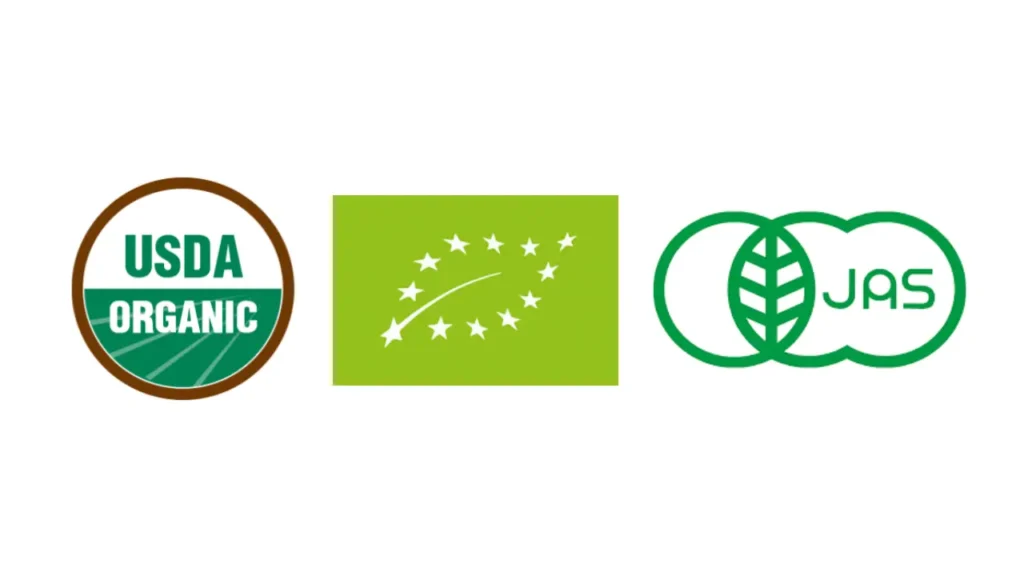
    USDA NOP vs EU Organic vs JAS

    Many buyers who source for multiple markets need to understand how USDA NOP differs from EU Organic and JAS (Japan Agricultural Standards) organic certification — since a supplier’s USDA NOP certificate does NOT automatically support EU or Japanese organic label claims. Our article on exporting organic coconut sugar from Indonesia covers the EU-specific documentation chain in detail.

    FactorUSDA NOP (USA)EU Organic (EC 2018/848)JAS Organic (Japan)
    Governing bodyUSDA Agricultural Marketing ServiceEuropean Commission + EU Member State authoritiesJapanese Ministry of Agriculture, Forestry and Fisheries (MAFF)
    Certifying bodies in IndonesiaControl Union, CCPB, IMO, Ecocert, OTCOControl Union, Skal, IMO, Ecocert, BioAgriCertJapan Organic & Natural Foods Association (JONA), Organic Crop Improvement Association (OCIA)
    Certificate validityAnnual renewal requiredAnnual renewal requiredAnnual renewal required
    Per-shipment documentTransaction Certificate (TC)Certificate of Inspection (CoI) via TRACES NTTransaction Certificate equivalent
    US buyer requirementVerify NOP cert + TC per lotN/A for US marketN/A for US market
    EU buyer requirementN/A for EU marketVerify EU Organic cert + register as organic operator + CoI per lotN/A for EU market
    USDA/EU equivalencyPartial equivalency arrangement existsPartial equivalency with USDA NOPNo automatic equivalency with NOP or EU
    Verification databaseams.usda.gov/integrityOFIS database — ec.europa.euMAFF Japan — maff.go.jp
    Important: USDA NOP and EU Organic are NOT interchangeable There is a partial equivalency arrangement between USDA NOP and EU Organic — meaning some certified operations can sell to both markets under one certificate. However, this equivalency is not automatic and has exceptions. A supplier’s USDA NOP certificate does NOT automatically support EU organic label claims, and vice versa. Always confirm which specific certifications a supplier holds and for which markets. For US organic label claims, only USDA NOP certification applies.

    The Organic Premium: What USDA Certification Costs and What Buyers Pay

    USDA Organic certified coconut sugar commands a significant premium over conventional product — reflecting the cost of certification, the stricter farming practices, and the smaller supply base. For current FOB pricing for both conventional and organic coconut sugar from Indonesia, see our coconut sugar export price from Indonesia guide.

    Cost ComponentWho Bears ItTypical Range
    Farm conversion period (3 years without certification income from those areas)Indonesian farmer cooperativeOpportunity cost — supported by premium pricing commitments from buyers
    Annual NOP certification fee (farm + processing facility)Indonesian supplierUSD 2,000-8,000 per year total — varies by certifying agent and scope
    Inspector fees and travel (annual inspection)Indonesian supplierUSD 1,000-3,000 per inspection cycle
    Transaction Certificate issuance fee (per shipment)Indonesian supplierUSD 50-200 per TC
    Organic premium to buyer (above conventional FOB price)US buyer pays to supplier25-40% above conventional — approximately USD 0.60-1.20/kg additional
    US importer NOP handler certification (if repackaging)US buyer (if applicable)USD 500-2,000 per year — varies by US certifying agent

    The organic premium exists because the cost structure is genuinely higher throughout the supply chain — and because the verified organic claim commands a retail price premium that buyers can capture. For US food brands selling certified organic products, the retail premium (typically 30-60% above non-organic equivalent) more than compensates for the ingredient cost premium.

    Practical Checklist for US Buyers Sourcing USDA Organic Coconut Sugar from Indonesia
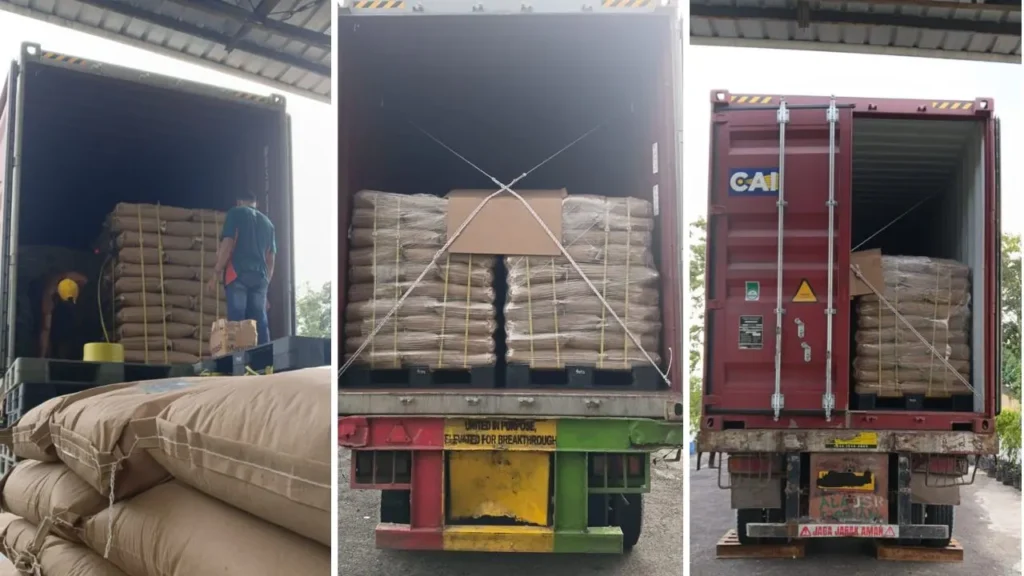
    Practical Checklist for US Buyers Sourcing USDA Organic Coconut Sugar from Indonesia

    For the complete import documentation framework including FDA Prior Notice and phytosanitary requirements alongside organic documentation, see our guide on how to import coconut sugar from Indonesia. For the full supplier evaluation framework, see our article on how to choose a reliable coconut sugar exporter from Indonesia.

    Before placing your first organic order:

    • Verify NOP certificate on ams.usda.gov/integrity: Active status, correct scope (coconut sugar), certifying agent is USDA-accredited, expiry date beyond your planned delivery.
    • Confirm TC process: Ask the supplier explicitly: ‘Will you provide an Organic Transaction Certificate for each shipment lot before container loading?’ If yes — confirm the certifying agent who issues it.
    • Request TC sample: Ask for a sample TC from a previous shipment to verify the format and confirm lot number matching with COA and packing list.
    • Assess your own NOP handler status: If you will repackage or relabel the coconut sugar as ‘USDA Organic’ in the US, contact a USDA-accredited certifying agent in your state to determine if you need handler certification.
    • Build TC verification into your receiving process: Before accepting any organic shipment at your US warehouse, verify TC lot number = COA lot number = packing list lot number. This check takes 2 minutes and prevents expensive compliance failures.

    For further guidance on evaluating and selecting a certified Indonesian coconut sugar supplier, our guide on bulk coconut sugar suppliers in Indonesia covers the full qualification process.

    Source USDA Organic certified coconut sugar from Indonesia with full documentation support
    Global Coco Sugar holds current USDA NOP certification for our coconut sugar, issued by a USDA-accredited certifying agent. We provide Organic Transaction Certificates per production lot before container loading, full NOP certificate documentation, and guidance for US buyers on the organic compliance process. Our certification is publicly verifiable on ams.usda.gov/integrity.
    Contact Our Organic Certification Team >>>
    View Our USDA Organic Certified Coconut Sugar >>>

    Conclusion: Organic Certification Is a Chain, Not a Certificate

    The most important insight for US buyers sourcing USDA Organic certified coconut sugar from Indonesia is that organic certification is a chain of documentation — not a single certificate.

    The chain runs from the coconut farm through the processing facility to each specific production lot, and a break at any point in that chain undermines the organic claim at the end.

    The practical implication: build organic verification into your standard receiving process. Verify the NOP certificate is current before every order. Require the TC before container loading on every organic shipment. Match the TC lot number to the COA and packing list before accepting any organic shipment.

    These steps take minutes and prevent compliance failures that can cost significantly more in time, money, and brand credibility.

    Work with a supplier who understands the full organic compliance chain
    Global Coco Sugar provides USDA NOP-certified organic coconut sugar with complete documentation: current NOP certificate (verifiable on ams.usda.gov/integrity), Organic Transaction Certificate per production lot before container loading, Certificate of Analysis from ISO 17025-accredited laboratory, and full export documentation support for US market compliance.
    Contact Our Organic Certification Team >>>
    View Our Certified Organic Coconut Sugar Range >>>
    Our Certifications & Company Profile >>>

    Frequently Asked Questions

    How do I verify that an Indonesian coconut sugar supplier is USDA Organic certified?

    You can verify a supplier’s certification through the USDA Organic Integrity Database. Check that the certificate is active, covers coconut sugar, and has been issued by a USDA-accredited certifying agent. Buyers should also request a copy of the supplier’s current organic certificate.

    What is an Organic Transaction Certificate and why do I need one for every shipment?

    An Organic Transaction Certificate (TC) confirms that a specific shipment or production lot complies with USDA Organic requirements. It provides traceability between the certified supplier and the product being purchased, helping support organic claims throughout the supply chain.

    Does a USDA Organic certificate from an Indonesian supplier allow me to make organic label claims in the US?

    It depends on how the product is marketed and handled. While a supplier’s USDA Organic certification supports the organic status of the ingredient, additional certification requirements may apply if you repackage, relabel, or process the product in the United States.

    How long does it take for an Indonesian supplier to obtain USDA Organic certification?

    The certification process typically takes several months for eligible operations. If organic conversion requirements have not yet been completed, achieving full certification may take several years depending on the production system and compliance status.

    What is the difference between USDA NOP and EU Organic certification for coconut sugar?

    USDA NOP and EU Organic are separate certification systems with different regulatory requirements. Suppliers must hold the appropriate certification for the market they serve, as USDA Organic certification does not automatically qualify products for EU Organic claims, and vice versa.
  • Why Buyers Choose Certified Organic Coconut Sugar from Indonesia: A Complete Guide (2026)

    Why Buyers Choose Certified Organic Coconut Sugar from Indonesia: A Complete Guide (2026)

    organic coconut sugar is the best choice

    The market for organic coconut sugar has grown significantly over the past five years — and so has the complexity of navigating it as a buyer.

    For many food manufacturers, organic coconut sugar is the best choice for clean-label formulation, but not all products labeled ‘organic’ are equally certified.

    Not all suppliers claiming organic status can provide the documentation that retail buyers, food manufacturers, and regulatory authorities actually require.

    And the price premium you pay for organic should come with a verifiable certification trail, not just a claim on a website.

    This guide explains exactly what certified organic coconut sugar means in practice — what certifications exist, why they matter differently by market, how to verify them independently, and what documentation you should receive per shipment.

    At Global Coco Sugar, our certified organic coconut sugar from Indonesia is available in granulated, fine powder, and cube formats with full USDA Organic and EU Organic certification.

    Understanding how coconut sugar is produced in Indonesia — from organic coconut palm flower sap tapping through evaporation and granulation — helps explain why the production process itself determines whether an organic certification is meaningful or nominal.

    Why Organic Coconut Sugar Is the Best Choice for Your Brand

    organic coconut sugar

    ‘Organic’ in the context of coconut sugar is not simply a marketing term — it describes a specific, audited set of farming and processing practices that are verified annually by an accredited third-party certification body. Here is what it actually means at each stage of the supply chain:

    StageConventional Coconut SugarCertified Organic Coconut Sugar
    Farming / TappingNo restriction on synthetic pesticides, fertilizers, or other chemical inputs at the coconut farmCertified organic farm — no synthetic inputs allowed. Annual inspection of farming practices by certifying body.
    Processing / FactoryStandard food safety practices (HACCP minimum)Processing facility must hold organic certificate — no contamination with non-organic materials, separate production lines or thorough cleaning verification
    DocumentationCertificate of Analysis (COA) per lotCOA per lot + Organic Transaction Certificate (TC) per shipment — linking specific lot to specific farm cycle
    TraceabilityFactory-level traceability minimumFarm-to-factory traceability — specific farmer groups or cooperatives documented in certification scope
    Price premiumBaseline pricingTypically 20–35% above conventional — reflects real cost of organic compliance at farm and factory level
    Third-party auditAnnual food safety audit (if BRCGS)Annual organic audit (farm + factory) by accredited certifying body, independent of food safety audit

    USDA Organic vs EU Organic: What Every Buyer Must Understand

    This is the most common point of confusion for buyers new to organic sourcing. USDA Organic and EU Organic are two separate certification systems — and they are not interchangeable.

    FeatureUSDA Organic (NOP)EU Organic (EC 834/2007 / EC 2018/848)
    Governing bodyUnited States Department of Agriculture (USDA)European Commission — implemented by EU member state control bodies
    Label claim enabled‘USDA Organic’ seal on US market productsEU organic logo + certifying body code on EU market products
    Market applicationRequired for organic label claims in the USARequired for organic label claims in the EU
    Certifying bodies (Indonesia)Control Union, LSPP, IMO, BioAgriCertControl Union, Skal, IMO, BioAgriCert
    Per-shipment document requiredOrganic Transaction Certificate (TC)Organic Transaction Certificate (TC) + Importer’s EU organic certificate
    Japan applicabilityNOT accepted for Japanese organic label claimsNOT accepted — JAS certification required separately for Japan
    Verification databaseams.usda.gov/organic — public searchOFIS database — ec.europa.eu/organic — public search
    Key differenceUS-centric — does not confer EU organic statusEU-centric — does not confer USDA organic status
    Critical point for buyers: you may need BOTH certificates
    If you are a brand owner selling organic coconut sugar in both the US and EU markets — or a distributor supplying both markets — your Indonesian supplier must hold both USDA NOP and EU Organic certifications simultaneously. A supplier holding only USDA Organic cannot legally support an EU organic label claim, and vice versa. Always confirm which specific certifications are held and whether both are current before placing any order that will carry organic label claims in multiple markets.

    How to Verify Organic Certification Before Placing Any Order

    organic coconut sugar certification
    Coconut brown sugar in a wooden bowl. Tropical background

    Organic certification verification should be your first action before any commercial discussion — not after.

    Our article on exporting organic coconut sugar from Indonesia provides a detailed walkthrough of the full certification process from the supplier’s perspective.

    For a comprehensive checklist of all certifications a coconut sugar supplier should hold — and exactly how to verify each one independently — see our guide on what certifications a coconut sugar supplier should have.

    Here is the specific organic verification protocol:

    1. Request the current organic certificate — specify that you need the current year’s certificate, not a copy from a previous cycle.
    2. Check the certifying body name. For USDA: must be a USDA-accredited certifying agent. For EU: must be an EU-accredited control body recognized under the EU Organic regulation.
    3. Verify the certificate number in the public database: USDA → ams.usda.gov/organic; EU → OFIS database at ec.europa.eu.
    4. Check the certificate scope — confirm that ‘coconut sugar’ (or the specific product form you are ordering) is explicitly listed in the scope. A certificate for ‘coconut products’ may not automatically cover granulated coconut sugar.
    5. Request a sample Transaction Certificate (TC) from a previous shipment — this is the per-lot document that links a specific production batch to the organic certification. Review the format and confirm the supplier routinely issues these.
    6. For your actual order, insist that the TC is issued before container loading, and that the lot number on the TC matches the COA and packing list exactly.
    The Transaction Certificate (TC): the most important document most buyers forget to request
    The annual organic certificate proves the facility is certified. The Transaction Certificate proves that the specific lot you are receiving was produced under organic conditions. These are two different documents — and you need both. A supplier who provides the annual certificate but cannot issue a TC per shipment is not operating within organic certification compliance. Never accept a generic organic certificate as proof that a specific shipment is organic.

    Beyond Organic: Why BRCGS Certification Matters for Organic Coconut Sugar Buyers

    BRCGS Certified Coconut Sugar Supplier from Indonesia

    Organic certification and food safety certification are two separate systems — and serious buyers for EU and US retail require both simultaneously.

    A supplier can hold USDA Organic without holding BRCGS Food Safety certification, and vice versa.

    For buyers supplying major retail chains (Tesco, Aldi, Whole Foods, Costco), BRCGS Grade A (or an equivalent GFSI-recognized standard) is a vendor approval requirement that sits alongside — not instead of — organic certification.

    Our dedicated article on BRCGS certified coconut sugar suppliers from Indonesia explains what BRCGS means, how to verify it, and why the combination of BRCGS + Organic certification represents the gold standard for serious buyers.

    Certification CombinationMarkets AccessibleSuitable For
    HACCP onlySpot market, some foodservice, informal B2BLow-risk, non-retail applications
    HACCP + OrganicSome EU/US importers — depends on buyer requirementsNatural food importers with less strict vendor requirements
    BRCGS Grade A onlyEU/US major retail — conventional positioningLarge food manufacturers, premium conventional retail
    BRCGS Grade A + USDA OrganicUS premium retail — Whole Foods, Sprouts, CostcoHealth food brands, US organic retail channel
    BRCGS Grade A + EU OrganicEU major retail — Tesco, Aldi, Carrefour, REWEEU organic retail, EU food manufacturers
    BRCGS Grade A + USDA + EU Organic (★)Both EU and US premium retail simultaneouslyMulti-market brand owners, global distributors — this is what Global Coco Sugar holds

    The Nutritional Advantages of Organic Coconut Sugar: What the Data Says

    The health profile of coconut sugar is one of the primary reasons buyers and brand owners choose it as an ingredient — and organic certification adds both regulatory credibility and consumer trust to those health claims.

    The most widely cited health advantage of coconut sugar is its relatively low glycemic index (GI) of 35-54, compared to white sugar (GI 60-65) and honey (GI 58-85).

    This lower GI is primarily due to the presence of inulin — a prebiotic fiber naturally occurring in coconut sap that slows glucose absorption.

    For a full scientific breakdown of coconut sugar GI, including why the value varies between 35 and 54 depending on processing method, and what this means for food label claims, see our detailed article on the glycemic index of coconut sugar.

    Nutritional FeatureCoconut Sugar (per 100g)White Sugar (per 100g)Relevance
    Glycemic Index35–54 (low to medium)60–65 (medium)Lower GI = slower blood sugar rise — supports ‘better-for-you’ positioning
    Calories~380 kcal~387 kcalSimilar — coconut sugar is not low-calorie
    Inulin (fiber)1–3% of carbohydrates0%Prebiotic fiber — contributes to lower GI, supports gut health claims
    Potassium~1,030 mg~2 mgTrace mineral — present in meaningful amounts vs refined sugar
    Iron~2.5 mg~0.05 mgTrace mineral — present at detectable levels
    Zinc~0.56 mg~0.01 mgTrace mineral — minor but measurable difference
    Processing levelMinimal — single ingredientHeavily refined — multiple chemical stagesSupports ‘natural’ and ‘clean label’ positioning

    Important context for label claims: the trace minerals in coconut sugar (potassium, iron, zinc) are present in amounts that are meaningful compared to refined white sugar, but they should not be presented as a significant nutritional source.

    Coconut sugar is not a vitamin or mineral supplement — it is a sweetener that happens to contain more naturally occurring minerals than refined alternatives.

    Certified Organic Coconut Sugar for Food Manufacturers and Brand Owners

    For food manufacturers and brand owners, the decision to use certified organic coconut sugar as an ingredient is as much a business decision as a product formulation decision.

    The premium pricing of organic coconut sugar is typically more than offset by the retail margin improvement that comes with organic and clean-label positioning.

    Our article on coconut sugar vs cane sugar for food manufacturing provides the full technical comparison — including how coconut sugar behaves under heat, its moisture dynamics, and substitution ratios by product category.

    For a breakdown of which food manufacturing applications benefit most from coconut sugar specifically, see our article on applications of coconut sugar in the food industry.

    Key Considerations for Food Manufacturers Sourcing Organic Coconut Sugar

    • Organic certification must cover your entire supply chain. If you are a food manufacturer in the EU making an organic label claim, your coconut sugar supplier must hold EU Organic certification, and you must hold your own organic processing certificate from an EU-recognized control body.
    • Batch consistency matters as much as certification. Request COA data from multiple consecutive production lots to verify that moisture content, color, and sucrose composition are consistent — not just from the sample lot.
    • Annual contract pricing significantly reduces the organic premium. Suppliers who can plan production in advance — based on your annual volume commitment — can offer 8-15% better pricing than spot orders, partially offsetting the organic premium.
    • Sampling before commitment is non-negotiable. Organic coconut sugar from different suppliers — and even from the same supplier across seasons — can vary in color, flavor intensity, and particle size. Always evaluate samples before finalizing a supplier.

    Why Indonesia Is the Right Source for Certified Organic Coconut Sugar

    Indonesia produces more than 50% of the world’s coconut sugar — and its certification infrastructure for organic export is the most developed of any producing country.

    Here is why buyers consistently choose Indonesia as their primary source:

    • Largest certified supply base. More USDA Organic and EU Organic certified coconut sugar facilities exist in Indonesia than in any other producing country, including the Philippines and Sri Lanka.
    • Established export documentation ecosystem. Indonesian exporters — particularly those who have been exporting to EU and US for years — are experienced with the full documentation chain: Transaction Certificates, phytosanitary certificates, certificates of origin, and COA from accredited laboratories.
    • Favorable agroclimatic conditions. Central Java — the primary coconut sugar production region — has the ideal climate for year-round coconut sap production, reducing seasonal supply constraints.
    • Competitive pricing vs other organic origins. Indonesian organic coconut sugar is typically 15-25% more price-competitive than equivalent certified product from the Philippines, given lower labor and production costs.
    • ESG and sustainability story. Smallholder farmer cooperatives, traditional artisanal production practices, and the relatively low environmental impact of coconut cultivation make Indonesian coconut sugar a strong story for sustainability-conscious brands.

    Global Coco Sugar holds BRCGS Food Safety Grade A, USDA Organic, EU Organic, HACCP, Halal MUI, Kosher, and JAS certification — all independently verifiable in their respective public databases.

    Our certifications and company profile page provides full documentation details including certifying body names, certificate numbers, and validity periods.

    Request organic coconut sugar samples with full certification documentation
    Global Coco Sugar provides 2-5 kg sample packages of organic and conventional coconut sugar — granulated and fine powder — for R&D and quality evaluation. Samples come with the current organic certificate, a sample Transaction Certificate format, and COA from our ISO 17025-accredited laboratory.
    Request a Sample with Organic TC Documentation >>>
    View Our Certified Organic Coconut Sugar Range >>>

    How to Source Certified Organic Coconut Sugar from Indonesia: Practical Steps

    how to source certified organic coconut sugar from indonesia

    The process of sourcing certified organic coconut sugar from Indonesia follows the same import framework as conventional sourcing, with additional documentation requirements at every stage.

    Our comprehensive guide on how to import coconut sugar from Indonesia covers the full documentation, HS codes, and logistics process for each destination market.

    For a systematic evaluation framework — including red flags, green flags, and 15 questions to ask any supplier — our article on how to choose a reliable coconut sugar exporter from Indonesia provides a complete due diligence checklist.

    The additional steps specific to organic sourcing:

    • Verify organic certification in the public database before any commercial discussion.
    • Confirm the specific product you are ordering is listed in the certificate scope — not just the facility.
    • Request a sample Transaction Certificate from a previous organic shipment to verify the format and process.
    • For EU buyers: confirm your own organic operator registration with an EU-recognized control body before placing the first order.
    • For US buyers: confirm the supplier’s USDA NOP certificate and confirm your own organic handler certificate if you will be repackaging or processing the product in the USA.
    • For annual contract buyers: negotiate a supply agreement that includes minimum TC documentation turnaround time and a quality dispute resolution clause.

    Conclusion: Organic Certification Is a Commitment, Not a Label

    Certified organic coconut sugar from Indonesia represents the convergence of three things that serious buyers increasingly require: a nutritionally superior sweetener alternative, a fully verifiable certification chain that supports regulatory compliance and label claims, and a supply source with the production capacity and documentation infrastructure to deliver at scale.

    The keyword here is ‘certified’ — not just ‘organic’. In a market where organic claims are easy to make and hard for buyers to verify without guidance, the suppliers who can provide independently verifiable USDA Organic and EU Organic certifications, per-shipment Transaction Certificates, and COAs from accredited laboratories represent a distinct tier above the rest.

    Source Certified Organic Coconut Sugar from a Verified Indonesian Supplier
    Global Coco Sugar holds USDA Organic, EU Organic, BRCGS Grade A, HACCP, Halal MUI, Kosher, and JAS certification — all verifiable in public databases. We supply certified organic coconut sugar in granulated, fine powder, and cube formats to food manufacturers and importers across the EU, USA, Australia, Middle East, and Japan. Samples with full organic TC documentation available on request.
    Contact Our Export Team >>>
    View Our Certified Organic Product Range >>>
    Our Certifications & Company Profile >>>
  • Organic Coconut Sugar Certification & Complete Supplier Checklist (2026)

    Organic Coconut Sugar Certification & Complete Supplier Checklist (2026)

    When verifying an Organic Coconut Sugar Certification for the first time, or switching to a new supplier, it always comes with the same critical question: how do you know the supplier you are considering is genuinely certified, and not just claiming to be?

    Certification fraud in the food ingredient supply chain is more common than most buyers realize.

    A supplier can print a certificate number on their website or quote sheet without holding a current, audited certification.

    The consequences for your business, from failed retail buyer audits to product recalls to loss of organic label rights, can be severe. 

    At Global Coco Sugar, all of our certified coconut products from Indonesia come with full, independently verifiable certification documentation, and this article will show you exactly how to verify any supplier’s claims yourself.

    This guide covers every certification a credible coconut sugar supplier should hold, explains what each one means in practice, specifies which markets require which certifications, and provides a step-by-step verification method for each.

    Use it as a checklist when evaluating any supplier, including us.

    Why Certifications Are Non-Negotiable — Not Just Nice to Have

    Organic Coconut Sugar Certification

    Ten years ago, price and delivery reliability were the primary evaluation criteria for most coconut sugar buyers. Today, certifications have moved to the top of the list. Three structural shifts have made them non-negotiable:

    Retail requirements have hardened

    Major EU and US grocery chains — Tesco, Aldi, Whole Foods, Costco — now mandate GFSI-recognized food safety certification (BRCGS, FSSC 22000, or SQF) as a baseline for all food suppliers. Without it, your supplier cannot pass the first stage of vendor onboarding at these retailers.

    Organic label compliance has legal teeth

    In the EU and USA, displaying an organic claim on a product label without a valid, current organic certification from your entire supply chain is a regulatory violation — not just a marketing problem. The certifying body, certificate number, and Transaction Certificate per shipment are all legally required.

    Independent verification is now easy

    Buyers can verify BRCGS status in seconds on brcdirectory.com, USDA organic certification on the USDA NOP database, and EU organic on the OFIS database. Suppliers who cannot be verified independently should be disqualified immediately.

    It is also worth understanding that certification starts before the factory. Understanding how coconut sugar is produced in Indonesia — from sap tapping through evaporation and granulation — helps buyers appreciate why certifications like BRCGS and HACCP must cover the entire production chain, not just the final packaging step.

    The 8 Certifications Every Serious Coconut Sugar Supplier Should Hold

    Organic Coconut Sugar Certification
    CertificationWhat It CoversPrimary MarketVerify At
    BRCGS Food Safety Grade AFood safety management, hygiene, traceability, recallEU & US major retail — non-negotiablebrcdirectory.com
    HACCPHazard identification & critical control pointsAll markets — absolute minimumSupplier document
    USDA OrganicOrganic compliance for US label claimsUSAams.usda.gov
    EU OrganicOrganic compliance for EU label claimsEuropean Unionec.europa.eu OFIS
    Halal MUIIslamic dietary law complianceMiddle East, SE Asiahalalmui.org
    KosherJewish dietary law complianceUSA/EU specialty, IsraelCertifying body registry
    JAS OrganicJapanese organic standardJapan onlyMAFF Japan
    FSSC 22000GFSI-recognized food safety alternative to BRCGSEU & US premium retailfssc22000.com

    Global Coco Sugar holds all of the above certifications simultaneously, making us one of very few Indonesian coconut sugar suppliers with full coverage for EU, USA, Middle East, and Japan in a single supply relationship.

    1. BRCGS Food Safety — The Most Important for EU and US Retail

    BRCGS Certified Coconut Sugar Supplier from Indonesia

    BRCGS is the most commercially significant certification for coconut sugar suppliers targeting European and North American markets.

    It determines whether your supplier can be considered by major retail chains, not just preferred, but considered at all.

    For a comprehensive explanation of BRCGS grades, how to verify status, and what questions to ask your supplier, our dedicated article on BRCGS certified coconut sugar suppliers covers the topic in full.

    Key points for buyers evaluating BRCGS:

    • Always check the grade. Grade A is the minimum required by most EU retail chains. Grade B may be accepted by some buyers. Grade C is insufficient for premium markets.
    • Check the audit type. Grade A+ means the audit was unannounced — the supplier had no advance preparation, making the certification more credible.
    • Verify the expiry date. BRCGS certificates are valid for 12 months. An expired certificate is not a valid certificate — verify on brcdirectory.com, not just from the supplier’s document.
    • Check the certifying body. Must be BRCGS-approved: SGS, Bureau Veritas, Intertek, LRQA, or NSF.

    For buyers supplying the EU market specifically, BRCGS is typically required alongside EU Organic. Our article on exporting coconut sugar to Europe details the full regulatory landscape for EU market entry, including which retailers require which certifications.

    2. Organic Coconut Sugar Certification — USDA, EU Organic, and JAS Explained

    Organic certification is the second most commonly required credential — and the most frequently misrepresented.

    For buyers sourcing for organic-positioned brands, our article on exporting organic coconut sugar from Indonesia explains the certification process, Transaction Certificates per shipment, and how to verify that the specific lot you receive is covered.

    The Transaction Certificate (TC) — what it is and why it is essential.
    A supplier’s annual organic certificate proves their facility is certified. The TC proves that the specific production lot you are receiving was produced under organic conditions. These are two different documents. Always request a TC for every organic shipment, not just a copy of the annual certificate. A supplier who cannot provide a TC for a specific lot should not be trusted with organic supply claims.

    Key differences between the three main organic standards:

    • USDA NOP: Required for ‘USDA Organic’ seal in the USA. Certifying bodies in Indonesia: Control Union, LSPP, IMO.
    • EU Organic (EC 834/2007): Required for EU organic logo. Annual farm/facility audit required. TC per shipment required.
    • JAS Organic (Japan): Entirely separate from USDA and EU — a USDA certificate does not transfer to Japan. Supplier must hold JAS-specific certification from a MAFF-accredited body.

    3. HACCP — The Non-Negotiable Baseline

    HACCP is the foundational food safety system every food supplier should hold, regardless of market. If a coconut sugar supplier cannot demonstrate a functioning HACCP system, disqualify them.

    Unlike BRCGS, HACCP can be self-declared — meaning a supplier can claim HACCP compliance without third-party audit.

    For EU and US retail supply, third-party verified HACCP as part of a BRCGS or FSSC 22000 system is strongly preferred.

    What to request: the HACCP plan, hazard analysis records, and CCP monitoring records for coconut sugar production.

    4. Halal Certification — Essential for Middle East Markets

    Halal certification confirms compliance with Islamic dietary law, covering raw materials, processing aids, and cross-contamination prevention. In Indonesia, the recognized certifying body is MUI (Majelis Ulama Indonesia), verifiable at halalmui.org.

    MarketRequirement Level
    Saudi Arabia (SFDA)Mandatory for most food categories
    UAE (MOIAT/ESMA)Required for most food products
    Other GCCGenerally required
    EU/US Muslim segment retailRequired for Halal-positioned products

    5. Kosher Certification — Growing Importance Beyond the Jewish Market

    Kosher certification has growing commercial relevance beyond its traditional market. Many food manufacturers use it as a proxy for ingredient purity and production hygiene.

    Our announcement that our coconut sugar is now Kosher certified explains the certifying body and scope.

    Particularly valuable for: US natural food retail brands, premium private label positioning, institutional buyers requiring Kosher options, and export to Israel.

    Supplier Certification Verification Checklist

    Supplier Certification Verification Checklist

    Step 1: Request the Full Certification Package 

    Ask for copies of all certificates — not just a list. Each certificate must show: certifying body, certificate number, scope (which products), grade (for BRCGS), audit date, and expiry date. For organic: also request a sample TC from a previous shipment.

    Step 2: Verify Each Certificate Independently

    • BRCGS → brcdirectory.com
    • USDA Organic → ams.usda.gov/organic
    • EU Organic → OFIS database ec.europa.eu
    • Halal MUI → halalmui.org
    • FSSC 22000 → fssc22000.com/certificate-database

    Step 3: Cross-Reference the Documents 

    Certificate number must match the public database exactly. Facility address must be the production facility — not a trading office. Scope must include the specific product you are ordering.

    Step 4: Request the COA for Your Specific Lot 

    For a complete overview of all import documentation requirements, our guide on how to import coconut sugar from Indonesia provides the full list per destination market.

    Certification Requirements for Private Label Brands

    If you are launching a private label brand, the label claims you make are only legally defensible if your manufacturer holds the corresponding certification and provides per-shipment documentation.

    Our private label coconut sugar program is built on our full certification stack — meaning private label partners automatically benefit from BRCGS, USDA Organic, EU Organic, Halal, Kosher, and JAS coverage.

    Verify our certifications before you contact us.
    We encourage every potential buyer to independently verify our BRCGS certification at brcdirectory.com, USDA Organic status at ams.usda.gov, and EU Organic at the OFIS database — before reaching out. Transparency is the foundation of a sustainable supply partnership.
    View Our Full Certification Documentation | Request a Sample with Full COA

    How to Choose Between Suppliers with Different Certification Profiles

    Coconut Sugar vs Cane Sugar

    Start by defining your non-negotiables based on your target market. For EU retail: BRCGS Grade A + EU Organic. For US retail: BRCGS or SQF + USDA Organic. For Middle East: Halal MUI. For Japan organic: JAS.

    Only evaluate suppliers who meet your non-negotiables — do not compromise in exchange for price.

    For a practical framework on evaluating suppliers beyond certifications — including MOQ, batch consistency, and documentation quality — our guide to finding a bulk coconut sugar supplier in Indonesia provides a comprehensive vendor evaluation checklist.

    Conclusion

    Before contacting any supplier, define your requirements regarding Organic Coconut Sugar Certification and other standards based on your target market.

    Use the verification methods in this guide to independently confirm every claim before committing to a purchase order.

    Suppliers who hold the right certifications, provide complete per-shipment documentation, and actively encourage independent verification are the ones worth building long-term supply relationships with.

    Contact Our Export Compliance Team >>>

    View Certifications & Company Profile >>>

    Browse Certified Coconut Products >>>

Secret Link