
For decades, cane sugar has been the default sweetener in food manufacturing, predictable, affordable, and technically well-understood.
But in 2026, food manufacturers across Europe, the United States, and Asia Pacific are being pushed in a new direction: clean-label reformulation, lower glycemic positioning, and sustainable sourcing.
Coconut sugar has emerged as one of the most credible natural sweetener alternatives for the food industry. But swapping sweeteners is not as simple as a 1:1 ingredient substitution.
There are real technical differences, in flavor, behavior under heat, moisture dynamics, and label compliance, that every R&D team and procurement manager needs to understand before making a formulation decision.
This guide breaks down the core differences in coconut sugar vs cane sugar for food manufacturing. No hype, no wellness blogs, just the technical and commercial data your team needs to make an informed decision.
What Is the Fundamental Difference Between the Two?
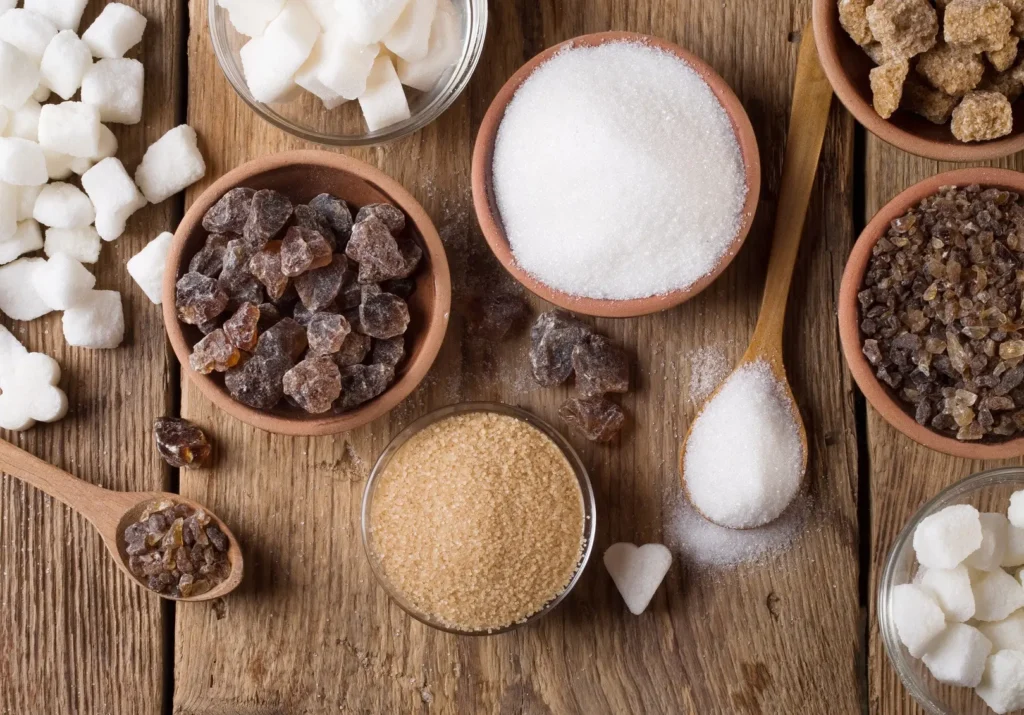
Both sugars are derived from plant sap, but from entirely different sources and with very different processing methods, which ultimately drives their technical properties.
| Parameter | Coconut Sugar | Cane Sugar (Refined) |
| Source | Sap from coconut palm flower (Cocos nucifera) | Juice from sugarcane stalks (Saccharum officinarum) |
| Processing Level | Minimal — sap is heated and crystallized | Heavily refined — multiple filtration and centrifuge stages |
| Primary Composition | Sucrose (~70-80%), fructose, glucose, inulin | Sucrose (99.9%) |
| Glycemic Index | 35-54 (varies by study) | 60-65 |
| Color | Light to dark brown | White (refined), off-white (raw) |
| Mineral Content | Potassium, iron, zinc, calcium (trace) | Negligible after refining |
| Typical Moisture | Max 3% (granulated) | Max 0.1% |
| Shelf Life | 18-24 months (properly stored) | Indefinite |
Understanding this table is step one. The most important takeaway: coconut sugar is not pure sucrose. The presence of fructose, glucose, and inulin fundamentally changes how it behaves in manufacturing — for better and for worse, depending on your application. You can read more about how coconut sugar is produced in Indonesia at our factory.
Technical Comparison: Coconut Sugar vs Cane Sugar for Food Manufacturing
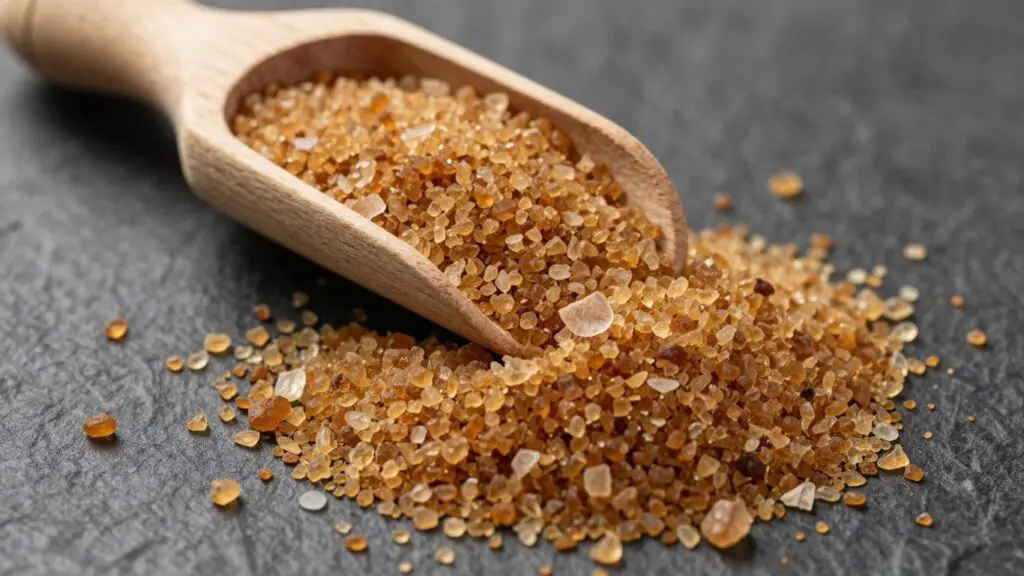
Let's go deeper than the basics. Here is how coconut sugar and cane sugar compare across the seven dimensions that actually matter in industrial food production.
1. Flavor Profile and Aroma
This is perhaps the most discussed difference — and for good reason. It is also the most misunderstood.
Cane sugar is essentially flavor-neutral, pure sucrose delivers clean sweetness without adding complexity. This is ideal for products where the original flavor profile (fruit, dairy, meat) must be preserved. Think fruit beverages, neutral baked goods, and dairy products.
Coconut sugar carries a distinctive flavor signature: caramel, butterscotch, with a subtle earthiness. This is not a defect — for the right product category, it is a feature. Granola bars, artisan chocolates, premium sauces, and craft baked goods actively benefit from this complexity. The flavor comes from trace amino acids and natural inulin in the coconut sap that interact differently with heat.
Practical implication: Do not assume coconut sugar is universally better or worse. The flavor addition requires a recipe evaluation specific to your product. For flavor-neutral applications (clear beverages, white confectionery), cane sugar remains superior. For applications where depth and warmth are desired, coconut sugar adds commercial value.
2. Thermal Behavior: Maillard Reaction and Caramelization
This is where the technical story gets interesting, and where most consumer-facing articles fail to go deep enough.The Maillard reaction is the non-enzymatic browning process that creates flavor and color in baked goods, roasted products, and cooked foods. It requires reducing sugars (glucose, fructose) plus amino acids at temperatures above 140°C.
Key Technical Insight:
Coconut sugar contains free glucose and fructose alongside sucrose. This means it is more reactive in the Maillard reaction than refined cane sugar (which is almost entirely sucrose — a disaccharide that must first hydrolyze to react). Products formulated with coconut sugar will often:
- Brown faster and at lower temperatures
- Develop richer, more complex flavors in baked applications
- Require adjustment of baking time and temperature (typically 5-15°C lower, 5-10 minutes shorter)
Caramelization point also differs: sucrose caramelizes at approximately 186°C, while fructose (present in coconut sugar) begins caramelizing at around 110°C. This wider reactivity window requires attention during process development but also opens opportunities for unique flavor development.
3. Moisture Dynamics and Hygroscopicity
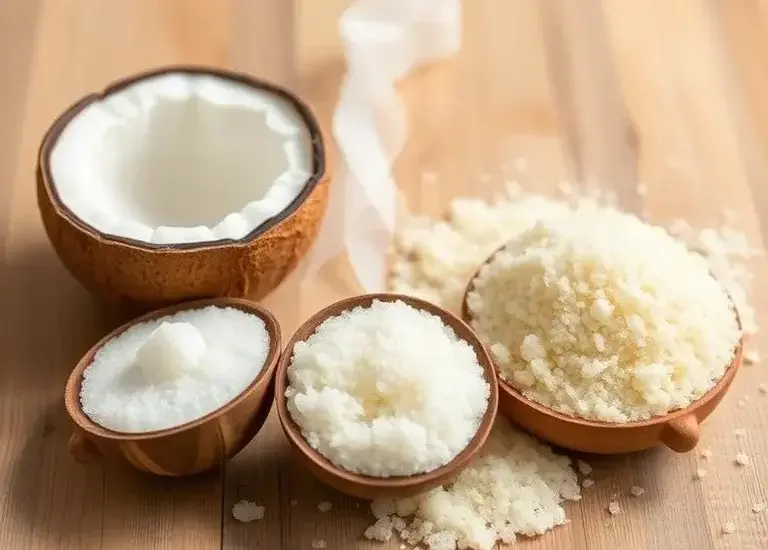
All sugars are hygroscopic — they absorb moisture from the environment. But fructose is significantly more hygroscopic than sucrose.
Since coconut sugar contains fructose (approximately 2-5% typically), it behaves differently in storage and processing compared to highly refined cane sugar.
| Condition | Coconut Sugar | Refined Cane Sugar |
| Moisture Absorption Rate | Higher — due to fructose content | Lower — sucrose is less hygroscopic |
| Caking Tendency | Higher in humid environments | Low (especially granulated white) |
| Required Packaging | Moisture-proof barrier packaging essential | Standard packaging acceptable |
| Storage Recommendation | Cool, dry — below 25°C, RH < 60% | Standard dry storage conditions |
| Impact on Shelf Life | Monitor moisture content — max 3% specification | Essentially indefinite when dry |
For manufacturers in humid climates or those producing shelf-stable products with long lead times, this difference is non-trivial. Sourcing coconut sugar with consistently low moisture content (specification: max 3%) from a certified supplier is critical. At Global Coco Sugar, our granulated coconut sugar meets a max 3% moisture specification, verified per batch with Certificate of Analysis documentation.
4. Substitution Ratio and Formula Adjustment
This is the most practical question for R&D teams: can I just swap coconut sugar 1:1 for cane sugar?
The short answer is: approximately yes for most applications, but with caveats. Always consult your supplier's exact coconut sugar specifications before locking in a formula.
| Application Type | Substitution Ratio | Key Adjustment Needed |
| Bakery (cookies, cakes) | 1:1 by weight | Reduce temperature by 5-10°C, watch browning |
| Granola and cereal bars | 1:1 by weight | Minimal adjustment needed — often superior results |
| Beverages (hot) | 1:1 by weight | Slight flavor note — evaluate with your base |
| Beverages (cold) | 1:1 by weight | Dissolves slightly slower — pre-dissolve recommended |
| Confectionery | 1:1 by weight | Color change significant — evaluate for final product |
| Sauces and marinades | 1:1 by weight | Flavor enhancement — often positive for savory profiles |
| Dairy (yogurt, ice cream) | 0.9:1 (slightly less) | Enhanced sweetness perception in cold applications |
Note: Coconut sugar is slightly less sweet than refined cane sugar on a gram-for-gram basis — generally perceived at about 85-90% relative sweetness. For applications where precise sweetness level matters, a slight upward adjustment (add 10%) may be needed, or pair with a complementary natural sweetener. For more detailed guidance on baking applications specifically, see our complete guide on baking with coconut sugar.
5. Color Impact on the Final Product
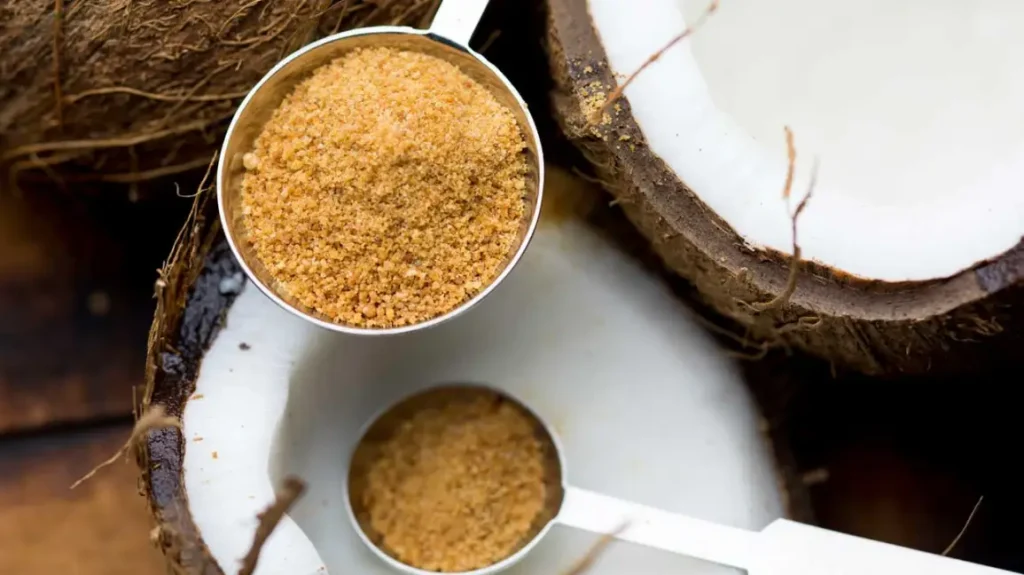
This is a critical consideration that is frequently underestimated during early reformulation stages.
Coconut sugar ranges from light amber to dark brown depending on grade, origin, and processing. When incorporated into a formulation, it will impart color, the intensity depends on concentration and the base color of your product.
- Light-colored products (white frosting, clear beverages, white bread): color impartation is significant and will likely require a product repositioning or alternative sweetener
- Mid-toned products (whole grain bread, granola, cookies): color integration is natural and often enhances premium perception
- Dark products (chocolate, dark sauces, coffee beverages): coconut sugar integrates seamlessly with no visible color difference
For brands actively embracing the 'natural' and 'artisan' positioning, the color shift from coconut sugar is not a problem, it is a feature that communicates authenticity to the consumer.
6. Label Compliance and Clean-Label Positioning
This is where the business case for coconut sugar strengthens significantly in 2025-2026. The global clean-label trend is no longer a niche — it is mainstream.
According to market data, the global coconut sugar market is projected to grow from USD 408.7 million in 2025 to USD 600 million by 2033 (CAGR ~4.9%), driven specifically by demand from food manufacturers reformulating with natural, minimally processed ingredients.
From a label compliance standpoint, coconut sugar offers clear advantages for manufacturers targeting specific market segments:
| Label Claim | Coconut Sugar | Refined Cane Sugar |
| Natural / Minimally Processed | Yes — single-ingredient, no refining agents | No — undergoes extensive chemical refining |
| Organic Certified | Available (USDA, EU Organic) | Available but less common in premium tier |
| Non-GMO | Inherently non-GMO | Typically non-GMO but requires verification |
| Vegan | Yes | Yes (refined cane may use bone char — check supplier) |
| Gluten-Free | Yes | Yes |
| Lower GI Claim | Possible (GI 35-54) — verify with nutritionist | Not applicable (GI 60-65) |
| Clean Label Score | High — recognized as whole food sweetener | Lower — 'sugar' is under consumer scrutiny |
Important caveat: for organic label claims on coconut sugar, ensure your supplier holds valid, current USDA Organic or EU Organic certification with traceable Transaction Certificates (TC) per shipment. At Global Coco Sugar, our organic coconut sugar is USDA and EU Organic certified, and we provide complete documentation per order. Learn more about our bulk organic coconut sugar specifications and available packaging.
7. Cost Comparison and Return on Investment
Let's address the most common objection directly: coconut sugar costs more than refined cane sugar. This is true, and it needs to be understood in context.
| Cost Factor | Reality |
| Typical Price Premium | Coconut sugar is priced approximately 3-5x higher per MT than refined white cane sugar on global markets |
| Organic Premium | Organic coconut sugar carries an additional 15-25% premium over conventional coconut sugar |
| Manufacturing Offset | Higher ingredient cost is typically offset by product repositioning — premium SKUs carry 40-80% higher retail margin |
| Volume Efficiency | At scale (container quantities), coconut sugar pricing becomes more competitive |
| ROI Realization | Brands that successfully reposition products with coconut sugar typically recover the cost premium within 6-12 months through improved margin mix |
The key commercial insight: coconut sugar is not a cost-parity ingredient swap, it is a margin-improvement strategy. Brands that have successfully incorporated coconut sugar are not trying to maintain the same retail price. They are repositioning products upward to capture the growing premium natural segment.
For procurement teams evaluating FOB pricing from Indonesia, feel free to . We supply in 20ft and 40ft container quantities with full documentation, including COA, phytosanitary certificate, and organic transaction certificates.
Which Products Are Best Suited for Coconut Sugar?
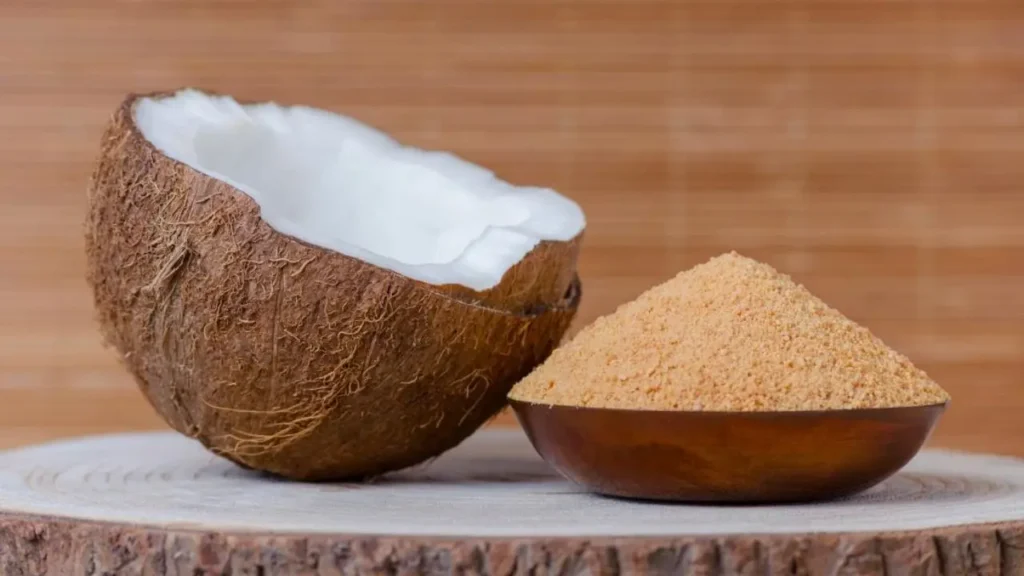
Based on the technical analysis above, here is a practical guide to product categories where coconut sugar delivers the strongest results versus where cane sugar remains the preferred choice:
Strongest Fit for Coconut Sugar
- Premium granola bars and energy snacks — the caramel note enhances flavor, the natural label supports the positioning
- Artisan and premium baked goods — cookies, brownies, banana bread — where depth of flavor is a feature
- Health-positioned beverages — oat drinks, plant-based milk alternatives, health teas — where 'natural sweetener' is a marketing asset
- Dark chocolate and cacao-based products — seamless color integration, flavor affinity
- Premium sauces, marinades, and condiments — savory applications where slight sweetness and umami depth are desired
- Functional foods and supplements in granule or powder form — label clarity is critical in this category
For a complete breakdown of food industry applications, see our dedicated article on the applications of coconut sugar in food industry.
Where Cane Sugar Remains Superior
- Crystal-clear beverages — any visible color from coconut sugar will affect product appearance
- White or lightly colored confectionery — meringues, white fondant, neutral hard candies
- High-precision confectionery where crystallization behavior must be exact
- Cost-parity commodity applications where the margin does not allow for premium ingredient sourcing
Frequently Asked Questions
Is coconut sugar a 1:1 replacement for cane sugar in industrial baking?
In most industrial baking applications, yes. Coconut sugar can typically replace cane sugar at a 1:1 ratio by weight. However, products may brown faster and develop a darker color, so minor adjustments to baking temperature and time may be required.
Does coconut sugar have a certified glycemic index (GI) value?
The most commonly cited GI value for coconut sugar is 35, although published studies have reported higher values. GI can vary depending on raw materials, processing methods, and product formulation. Businesses making GI-related claims should verify values through accredited laboratory testing.
What is the minimum order quantity (MOQ) for industrial coconut sugar from Indonesia?
Our minimum order quantity is 1 metric ton (1 MT). For larger purchases, full container load (FCL) orders typically offer more competitive pricing and shipping efficiency.
What certifications are required to import coconut sugar into Europe or the USA?
Requirements vary by market and product claims. Common certifications include Organic certification, food safety certifications such as BRCGS or FSSC 22000, a Certificate of Origin, and phytosanitary documentation. Importers should also verify the latest regulations in their target market.
How does coconut sugar perform in beverages versus bakery applications?
Coconut sugar performs well in both applications. In beverages, it adds a mild caramel flavor and dissolves easily in hot liquids. In bakery products, it provides natural sweetness and color, although slight adjustments to baking conditions may be needed due to faster browning.
Conclusion: Making the Right Decision for Your Product Line
The decision between coconut sugar vs cane sugar for food manufacturing is not binary.. It is a product-category and business-model decision as much as a technical one.
If your goal is cost-parity reformulation with no change in product positioning, refined cane sugar remains the more pragmatic choice. But if your goal is to move product lines upmarket, differentiate in a crowded natural food segment, meet clean-label demands from European or North American retail buyers, or support sustainability claims, coconut sugar from Indonesia is one of the most credible tools available in 2026.
The critical success factors are: sourcing from a certified supplier who can guarantee consistent moisture content, specification stability, and complete documentation per shipment; doing proper R&D on your specific formulation before scale-up; and building the switch into your product repositioning strategy, not just your ingredient list.
| Ready to Source Coconut Sugar for Your Manufacturing Operation? Global Coco Sugar is an Indonesian coconut products supplier certified by BRCGS Food Safety (GFSI recognized), USDA Organic, EU Organic, HACCP, Halal MUI, and Kosher. We supply bulk coconut sugar in granulated and powder forms to food manufacturers and importers across Europe, the USA, Australia, the Middle East, and Japan. Contact Our Export Team for a Bulk Quote >>> View Full Product Specifications >>> |


