Choosing the wrong coconut sugar manufacturers in Indonesia is a mistake that costs more than just money.
It can mean a failed retail buyer audit, a shipment that cannot clear customs due to missing documentation, an organic label claim that turns out to be unverifiable, or a supply relationship that collapses precisely when your production line depends on it.
The Indonesian coconut sugar export market has grown significantly over the past five years — and so has the number of suppliers claiming capabilities they cannot actually deliver.
This guide gives you a systematic framework for evaluating any exporter before committing to a purchase order.
Before diving in, if you are still deciding on the exact product specifications you need, view our coconut sugar product range to understand the options available.
For a broader overview of the supplier landscape in Indonesia, our article on finding a bulk coconut sugar supplier in Indonesia provides helpful context on how the market is structured.
Why Choosing the Right Exporter Is More Complex Than It Appears
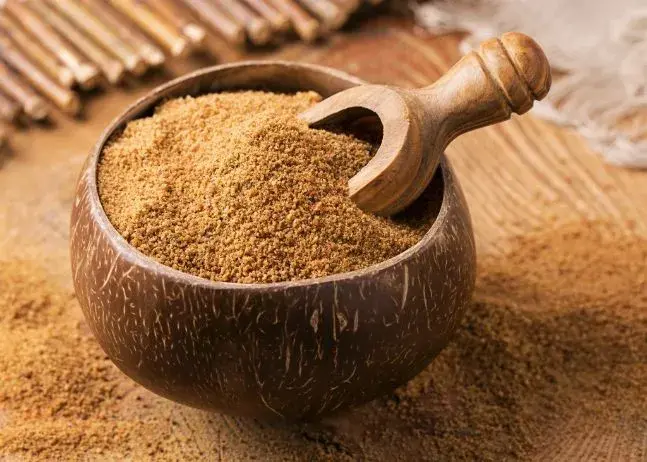
Most buyers start their search with two criteria: price and location. Both are reasonable starting points — but they are insufficient on their own. The market for coconut sugar manufacturers includes a wide spectrum of operators:
- An organic coconut sugar factory with direct farm sourcing, full documentation capability, and proven export track records to the EU, USA, and Japan.
- Processors without farm ownership who buy from multiple intermediaries — product quality and traceability are harder to guarantee.
- Trading companies and brokers who do not own production facilities and source from various manufacturers — pricing may be competitive but documentation and consistency can be unreliable.
- Exporters with outdated or misrepresented certifications — a certificate displayed on a website may be expired, cover a different product scope, or belong to a different entity.
Understanding which category a supplier falls into before you place an order is the most important due diligence step in the entire sourcing process. The sections below give you the tools to do exactly that.
Step 1: Verify Certifications Before Anything Else

Certification verification should be your first action — before evaluating price, before requesting a sample, and before any commercial discussion.
For a complete breakdown of which certifications matter for which markets and exactly how to verify each one independently, see our guide on what certifications a coconut sugar supplier should have.
Here is the minimum verification checklist:
- BRCGS Food Safety Grade A: Search the supplier by name on brcdirectory.com. Check grade, expiry date, certifying body, and scope. If the supplier claims BRCGS but cannot be found in the directory — or the certificate is expired — this is a disqualifying red flag. For a detailed guide on what BRCGS means and why it matters for EU and US buyers, see our article on BRCGS certified coconut sugar suppliers from Indonesia.
- USDA Organic / EU Organic: Verify on ams.usda.gov (USDA) or the OFIS database (EU). Then request a sample Transaction Certificate (TC) from a previous shipment — this proves the specific lot was covered under the certificate, not just the facility.
- Halal MUI: Verify on halalmui.org if you are supplying Middle East or Halal-segment buyers.
- Scope coverage: Read the certificate scope carefully. A facility certified for 'coconut products' may not have coconut sugar specifically listed. Always confirm the exact product is covered.
| The most common certification red flag in the Indonesian coconut sugar market A supplier provides a copy of their certification document directly, but the same certificate cannot be found in the certifying body's public database. This can indicate: the certificate is a fabrication, it belongs to a different entity or address, it has expired and been removed from the database, or the certifying body is not accredited by the standard body (e.g., a fake 'BRCGS-approved' body). Never rely solely on supplier-provided documents. Always verify independently in the public database. |
Step 2: Confirm They Actually Own a Production Facility
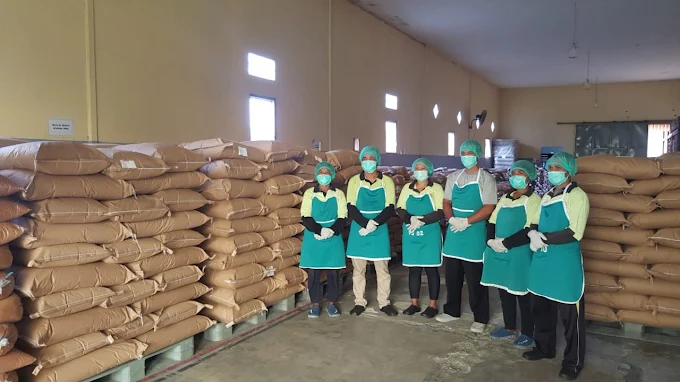
This is a step that surprises many first-time importers: a significant portion of Indonesian 'coconut sugar exporters' are trading companies rather than a direct coconut sugar supplier, meaning they do not own production facilities.
They source from various small manufacturers, aggregate, and export, which means they cannot guarantee consistent quality, traceability, or certification coverage at the production level.
Understanding how coconut sugar is produced in Indonesia will help you ask better questions when evaluating whether a supplier genuinely owns their production process.
How to confirm facility ownership:
- Ask for the full company name, facility address, and business registration number (SIUP/NIB in Indonesia). Cross-reference the address on the BRCGS certificate with the address they provide.
- Ask for photos and a video walkthrough of the production facility — specifically the granulation and packaging line. A genuine manufacturer will provide these without hesitation.
- Ask for the name of the certifying body that audits their facility, and contact the certifying body directly to confirm the audit scope.
- Check whether the export documentation (Certificate of Origin, phytosanitary certificate) lists the exporter as the manufacturer or as a trading entity.
| Brokers and trading companies are not inherently bad partners — but you need to know that is what you are dealing with. If a supplier is a trader, ask: Which specific manufacturer produces the product you are ordering? Can that manufacturer's certifications be verified independently? Is the TC issued by the certified manufacturer or by the trader? |
Step 3: Use Price as a Quality Signal, Not Just a Cost Factor
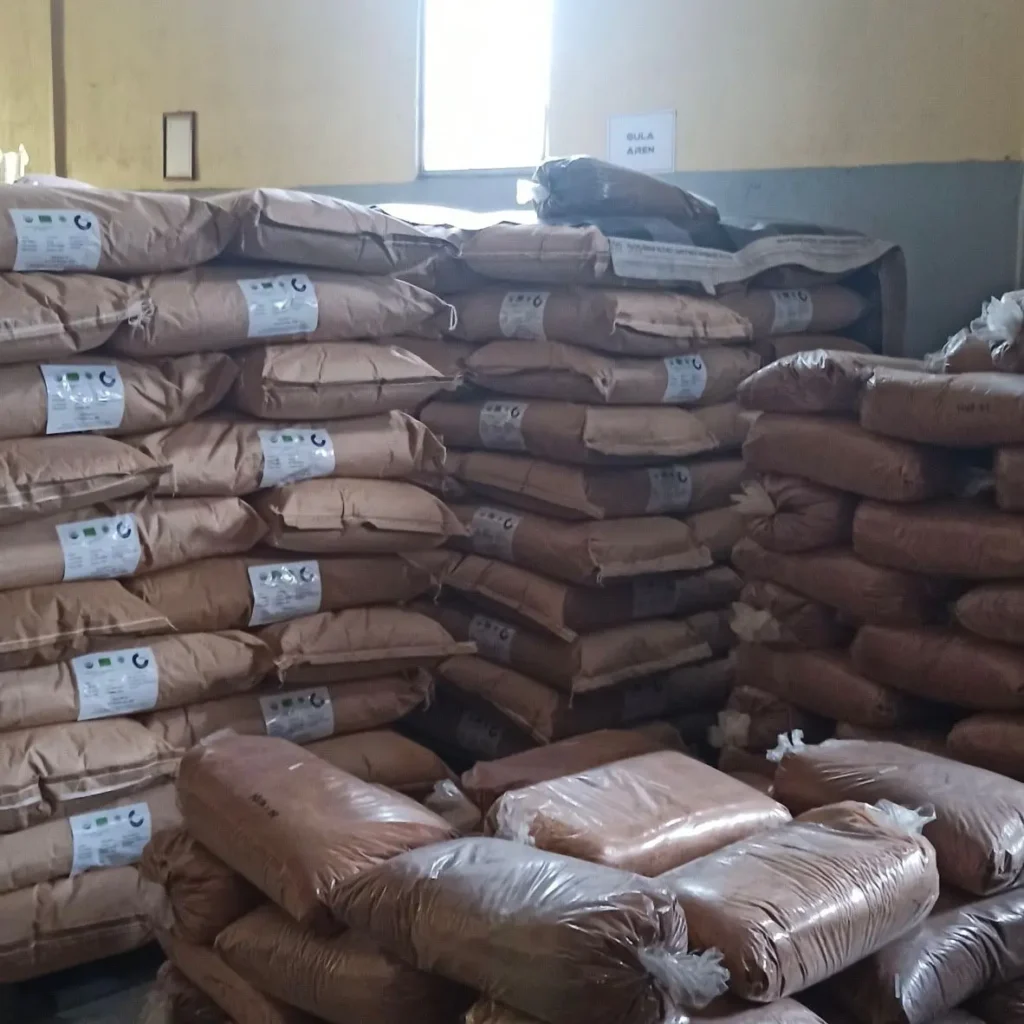
Price is one of the clearest signals of what a supplier can and cannot credibly deliver.
A quotation significantly below market range — without an explanation — almost always indicates a compromise somewhere: lower certification tier, substandard raw material, missing documentation, or inability to actually fulfill the order at volume.
Our guide on coconut sugar export prices from Indonesia per ton provides current 2026 FOB price ranges by product category and certification tier, which you can use as a reference when evaluating any quotation.
| Price Signal | What It Usually Means | Recommended Action |
| More than 25% below market range | Uncertified product, misrepresented specs, or broker unable to source at quoted price | Request full certification documentation before proceeding — or disqualify |
| Within market range, but no documentation offered proactively | Supplier may have certifications but weak documentation systems | Proceed with caution — insist on full documentation package before order |
| At or above market range with full certification documentation | Credible certified supplier with transparent pricing | Evaluate on other criteria (lead time, packaging, references) |
| Unusually consistent pricing across all volumes | Broker or aggregator without direct production control | Ask to visit facility or request third-party pre-shipment inspection |
Step 4: Evaluate Their Documentation Capability
The documentation package for a coconut sugar export shipment is extensive — and a supplier's ability to provide complete, accurate, timely documentation on every shipment is one of the clearest indicators of their operational professionalism.
Ask for a sample documentation package from a previous shipment before placing your first order.
A complete export documentation package should include: commercial invoice, packing list, bill of lading, certificate of origin (Form A for GSP, or REX statement), phytosanitary certificate from Indonesian Ministry of Agriculture (BARANTAN), Certificate of Analysis (COA) from an ISO 17025-accredited laboratory for the specific lot, and — for organic product — an Organic Transaction Certificate (TC) per lot.
For a full breakdown of required documentation by destination market (EU, USA, Australia, Middle East, Japan), see our comprehensive guide on how to import coconut sugar from Indonesia.
Specific documentation red flags to watch for:
- COA from an in-house laboratory only. Reputable exporters use ISO 17025-accredited third-party laboratories. An in-house COA with no accreditation reference should not be accepted as sole quality documentation.
- No phytosanitary certificate offered. This is a legally required document for most export markets. A supplier who does not routinely include this either has limited export experience or is cutting corners.
- Organic TC is 'pending' or 'will be provided after shipment'. The TC must be issued before or at the time of shipment, covering the specific lot. A supplier who cannot provide this simultaneously with the shipment is not operating within organic certification requirements.
- FDA registration number cannot be verified. For US-bound shipments, verify the supplier's FDA Facility Registration Number at accessdata.fda.gov. An unregistered facility cannot legally export food to the USA.
Step 5: Verify Organic Claims with Extra Scrutiny
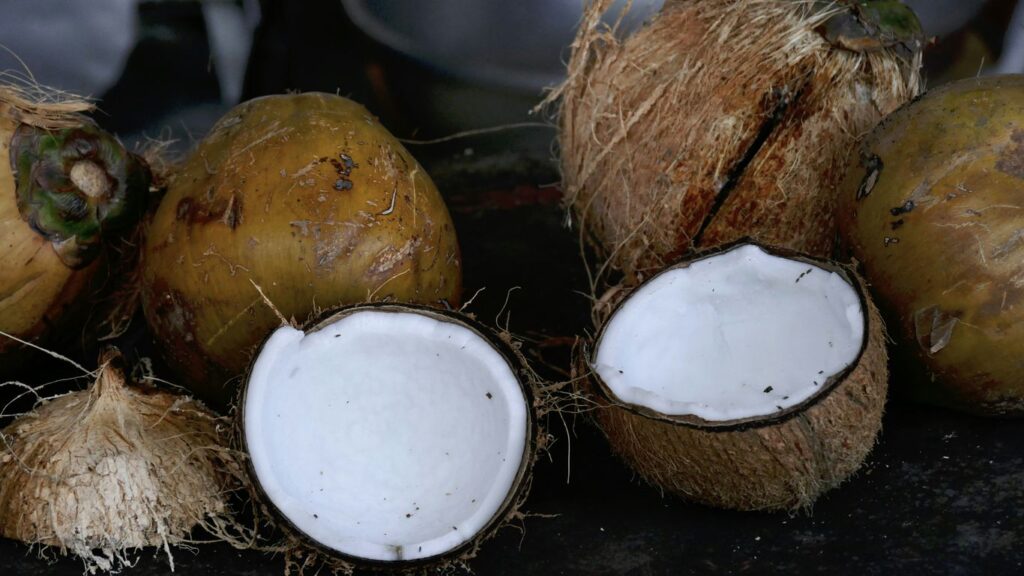
Organic certification fraud is more prevalent in the Indonesian food export market than the industry publicly acknowledges.
The combination of premium pricing and the complexity of verification creates incentives for misrepresentation at various points in the supply chain.
Our article on exporting organic coconut sugar from Indonesia explains the full certification chain — from farm to exporter — and what documentation buyers should receive per shipment.
The five-step organic verification protocol:
1. Request the current organic certificate — not a copy from a previous year. Check the certificate number, certifying body name, scope, and expiry date.
2. Verify the certificate number on the certifying body's public database (Control Union, IMO, LSPP, BioAgriCert — each has a searchable database).
3. Confirm the scope specifically covers 'coconut sugar' or the product you are ordering — not just 'coconut products' generically.
4. Request a sample TC from a previous shipment — review the format, the lot number references, and how it connects to the COA.
5. For your first actual order, insist that the TC is issued before container loading and that the lot number on the TC matches the lot number on the COA and packing list exactly.
Step 6: Request References from Existing International Buyers
A supplier's claimed export history is easy to fabricate. A list of verifiable references from existing international buyers is not. Ask for two to three references — specifically from buyers in your target market (EU, USA, or Australia) — and actually contact them.
What to ask reference buyers:
- Has the supplier consistently delivered on the agreed specifications — moisture content, color, particle size?
- Has documentation always been complete and timely for every shipment?
- Has the supplier responded professionally when problems arose — and how were disputes resolved?
- Is the annual BRCGS or food safety audit result consistent year over year?
- Would you continue working with this supplier for the next 12 months?
A credible, experienced exporter will provide references without hesitation. A supplier who becomes evasive when asked for references — or provides references that cannot be independently verified — should be treated with significant caution.
Step 7: Confirm the Supplier Can Match Your Specific Use Case
Different buyers have different technical requirements, and not every certified exporter can serve every application equally well.
A supplier who excels at granulated retail-pack coconut sugar may not have the capability for fine powder, custom packaging, or supplement-grade formulation.
Before finalizing a supplier, confirm they can specifically meet your requirements — product form, particle size, moisture specification, packaging format, and annual volume.
For a breakdown of the applications and technical requirements that different buyer types typically need, see our article on applications of coconut sugar in the food industry.
For buyers requiring private label or OEM production — branded packaging under your own label — the evaluation criteria extend beyond product quality to include artwork capability, MOQ per SKU, packaging material options, and lead time for custom packaging production.
Our guide on private label coconut sugar from Indonesia covers the specific evaluation criteria and questions for buyers in this segment.
Complete Red Flag and Green Flag Reference
Use this reference table when reviewing any supplier's profile or quotation:
Red Flags — Consider Disqualifying
| Red Flag | Why It Matters |
| BRCGS certificate claimed but not found on brcdirectory.com | Strongest disqualifying signal — certificate may be fabricated or expired |
| Organic certification cannot be verified in certifying body database | High risk of misrepresentation — do not proceed with organic orders |
| Price more than 25% below current market range | Price signals inability to deliver certified product at stated specification |
| No ISO 17025-accredited third-party COA available | Quality claims are self-declared and unverifiable |
| Facility address on certificate does not match supplier's stated address | Certificate may belong to a different entity — serious fraud risk |
| FDA registration cannot be verified (for US orders) | Legal barrier to US market — shipment may be refused at entry |
| Unwillingness to provide references from existing international buyers | Lack of verifiable export track record |
| TC 'will be provided later' or 'after shipment' | Not compliant with organic certification requirements |
| Evasive or slow responses to specific technical or documentation questions | Operational immaturity or deliberate obfuscation |
Green Flags — Positive Signals
| Green Flag | Why It Matters |
| BRCGS certificate independently verified on brcdirectory.com, current and Grade A | Highest credibility signal — independently audited annually |
| Proactively provides documentation samples without being asked | Operationally mature — this is standard practice, not an exceptional offer |
| References from existing EU or US buyers who can be contacted | Verified export track record in your target market |
| COA from named ISO 17025-accredited laboratory, per lot | Quality claims are independently verifiable |
| Transparent on capacity, lead time, and minimum order quantities upfront | Supplier understands commercial realities and is not overpromising |
| Encourages independent verification of all certifications | Confidence in their own compliance — not defensive about scrutiny |
| Clear dispute resolution process described proactively | Professional approach to supply relationship management |
| Factory photos, video, and facility audit reports available on request | Genuine manufacturer with physical production capability |
15 Questions to Ask Every Coconut Sugar Exporter Before Placing Your First Order
Copy this list and use it as your standardized evaluation questionnaire for every new supplier:
Certification & Compliance
1. Can you provide your current BRCGS certificate, including grade, certifying body name, and certificate number, and confirm it can be verified on brcdirectory.com?
2. Which organic certifications do you hold? For each, what is the certifying body, certificate number, and expiry date?
3. Can you provide a sample Transaction Certificate from a previous organic shipment?
4. Is your facility registered with the US FDA? What is your FDA Facility Registration Number?
Production & Quality
5. Do you own your production facility, or do you source from third-party manufacturers? If third party, can their certifications be independently verified?
6. Can you provide COA results from ISO 17025-accredited laboratory for the last three production lots of the product I am ordering?
7. What is your process if a lot does not meet agreed specifications? Have you had any quality disputes in the past 12 months, and how were they resolved?
8. Can you provide a video walkthrough of your production and packaging facility?
Commercial & Logistics
9. What is your production capacity per month for the product I am ordering? Can you accommodate a full 20ft container order within the lead time you have quoted?
10. What packaging formats do you support? Can you accommodate custom labeling and artwork?
11. What Incoterms do you offer? What is your standard port of loading?
12. Can you provide a complete sample documentation package (invoice, packing list, COA, phytosanitary certificate, Certificate of Origin) from a previous shipment to a buyer in my target market?
References & Track Record
13. Can you provide two or three references from existing buyers in the EU, USA, or Australia who are willing to be contacted?
14. How long have you been exporting coconut sugar? What are your top three destination markets by volume?
15. Have you had any failed BRCGS audits or certification suspensions in the past three years?
| Use this checklist to evaluate any supplier — including Global Coco Sugar We believe the best supply relationships start with full transparency. Every question on this list can be answered for Global Coco Sugar: our BRCGS Grade A certificate is verifiable on brcdirectory.com, our USDA and EU Organic certifications are in the public databases, our COAs come from ISO 17025-accredited laboratories, and we are happy to provide references from existing international buyers. We actively encourage independent verification of every claim we make. Request a Sample or Bulk Quotation >>> View Our Certifications & Company Profile >>> |
Conclusion: Make the Evaluation Process Non-Negotiable
The time invested in properly evaluating a coconut sugar exporter from Indonesia before placing your first order is one of the highest-return activities in the entire sourcing process.
A thorough evaluation — verification of certifications, documentation review, reference checks, and price benchmarking — typically takes two to three weeks.
A problematic supplier relationship can take years to unwind and cost multiples of that in quality incidents, compliance failures, and reputational damage.
Use the checklists, red flags, green flags, and 15 questions in this guide as your standard evaluation framework — not just for your first supplier, but every time you onboard a new source.
Finding a reliable coconut sugar manufacturer in Indonesia takes time, but the market has excellent certified coconut sugar manufacturers if you know how to evaluate them. The work is in finding them and distinguishing them from the rest.
| Ready to Start the Evaluation Process with Global Coco Sugar?Global Coco Sugar is a BRCGS Food Safety Grade A certified manufacturer and exporter of organic and conventional coconut sugar from Indonesia. All certifications are independently verifiable. We provide complete sample documentation packages, reference buyers on request, and encourage factory visit or third-party audit as part of our supplier qualification process. Contact Our Export Team >>> View Our Certifications & Company Profile >>> Browse Our Coconut Sugar Product Range >>> |