The global coconut sugar market is growing at nearly 5% annually, and the category is increasingly dominated by branded, premium-positioned retail products rather than commodity bulk.
For importers, distributors, and health food entrepreneurs, this creates a clear opportunity: launching your own private label coconut sugar brand, sourced from Indonesia and manufactured to your exact specifications.
Choosing private label coconut sugar Indonesia means one thing in practice: you define the brand, the packaging, the target market, and the claims, and a certified Indonesian manufacturer produces, packages, and ships the product under your label.
At Global Coco Sugar, our private label and contract manufacturing services cover coconut sugar in all its forms — granulated, powder, and liquid nectar — alongside other coconut derivative products, with no minimum order quantity for first-time brand partners.
This guide covers everything a brand owner, importer, or distributor needs to know: what private label coconut sugar entails, how the production and customization process works, what certifications your manufacturer must hold, and how to evaluate whether a supplier is the right long-term partner for your brand.
Why Private Label Coconut Sugar Is a Strong Brand Opportunity in 2026
Before diving into the operational side, it is worth understanding why this is a particularly strong moment to launch a private label coconut sugar brand and what the competitive dynamics look like.
| Market Signal | What It Means for Brand Owners |
| Global coconut sugar market projected at USD 457.6M in 2025, growing to USD 600M by 2033 | Early market positioning now delivers compounding returns as the category scales |
| Top-performing retail SKUs are branded products, not commodity bags | Consumers pay 2–4x more for an established brand vs. unbranded bulk at health food stores |
| EU and US retail buyers increasingly require supplier BRCGS or FSSC 22000 certification | Barrier to entry is rising — certified supply chain is now a prerequisite, not a differentiator |
| Clean label, organic, low-GI sweeteners outperform conventional in premium retail | Coconut sugar's natural profile is already aligned with the fastest-growing consumer segment |
| Amazon and D2C health food channels are high-growth for specialty sweeteners | Private label brands can enter without traditional retail infrastructure costs |
The window for establishing strong brand recognition in this category is still open, but it is narrowing as more brands enter the market.
Brands that establish supply relationships and brand equity now will benefit from the loyalty that comes with being an early recognizable name in a growing natural sweetener category.
Why Source Private Label Coconut Sugar Indonesia?
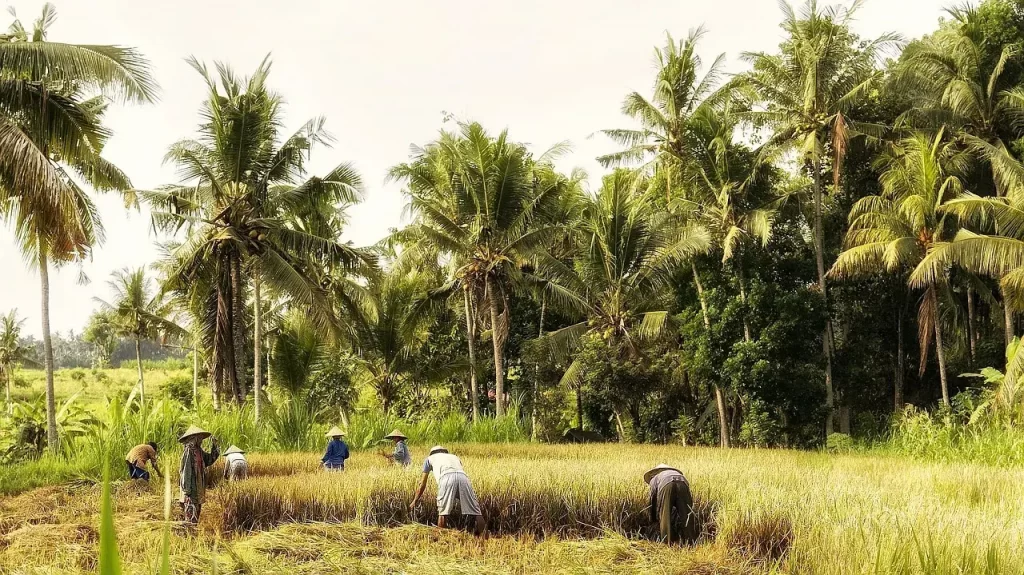
Indonesia is the world's largest coconut sugar producer, accounting for more than 50% of global export volume, and the supply chain infrastructure is by far the most developed in the world for certified, export-grade product.
Understanding how coconut sugar is produced in Indonesia reveals why: a deeply entrenched smallholder farming tradition, ideal tropical agroclimatic conditions, and a production process that has been refined over generations now sits alongside increasingly modern food safety infrastructure.
| Advantage | Detail |
| Largest certified supply base | More BRCGS, USDA Organic, and EU Organic certified suppliers than any other producing country |
| Competitive pricing at volume | Factory-direct relationships offer 20-40% lower cost vs. sourcing through brokers or from the Philippines |
| Full product range availability | Granulated, fine powder, liquid nectar — all forms available from single-origin certified facilities |
| Established export infrastructure | Ports, freight forwarding, and documentation expertise for EU, USA, Australia, Middle East, Japan |
| Farm-level traceability | Leading suppliers offer full traceability from farmer cooperative to export container |
| ESG story availability | Smallholder farmer programs, organic farming, and sustainable practices are documentable for brand storytelling |
For private label brands targeting EU or North American health food markets, the origin story matters as much as the product itself.
The narrative of exporting organic coconut sugar from Indonesia, direct from small-scale farmer cooperatives, certified organic, traceable, is exactly the kind of brand story that resonates with conscious consumers and earns premium shelf positioning.
For buyers who need to document their environmental impact for ESG reporting or retail buyer requirements, our article on the sustainability of coconut sugar provides the data and context you need.
When evaluating any Indonesian manufacturer for a private label partnership, always verify their certification portfolio independently.
Our certifications and company profile page documents all current certifications held by Global Coco Sugar — BRCGS Food Safety Grade A+ (GFSI recognized), USDA Organic, EU Organic, HACCP, Halal MUI, and Kosher, which are the minimum required by most EU and US retail channels.
What Coconut Sugar Products Can Be Private Labeled?
Global Coco Sugar's private label program covers the full range of coconut-derived sweetener products.
To see complete technical specifications for each, view our full coconut product range.
Below is a summary of what is available for private label production:
| Product | Form / Grade | Typical Retail Size | Primary Market Application |
| Coconut Sugar — Organic | Granulated, mesh 12-15 or 12-50 | 250g, 300g, 500g, 1kg pouches | Health food retail, organic specialty stores, D2C |
| Coconut Sugar — Conventional | Granulated, mesh 12-50 | 500g, 1kg, 2kg bags | Natural food retail, private label mass market |
| Coconut Sugar — Fine Powder | Milled 100-200 mesh | 250g, 500g pouches | Health food, supplement, baking specialty |
| Coconut Sugar Cubes | Pressed cube, various sizes | 250g box / 20-cube gift pack | Premium gifting, specialty tea & coffee retail |
| Coconut Nectar Syrup | Liquid, Brix 70-75 | 250ml, 500ml bottles | Foodservice, premium condiment retail, gifting |
| Coconut Sugar Sachets | Granulated, single-serve | 5g x 50 sachets / 200 sachets | Hotel, airline, foodservice, gifting, subscription boxes |
| Mixed Coconut Bundle | Curated 2-5 product sets | Gift box / hamper formats | Gifting, premium retail bundles, brand awareness |
Understanding the end-use market for your private label product is critical for defining packaging format, serving size, and label claims.
For a detailed breakdown of where coconut sugar is used across food manufacturing and consumer segments, see our article on applications of coconut sugar in the food industry.
It covers bakery, beverages, confectionery, sauces, supplements, and more.
The Private Label Process: From Brief to Delivered Product

Here is how the private label process works at Global Coco Sugar, from initial inquiry to first shipment arriving at your warehouse.
Phase 1: Discovery and Specification
• Define your product: which form (granulated, powder, nectar), which grade (organic or conventional), and which certifications your label will claim
• Define your packaging: size, format, material (kraft pouch, stand-up zipper pouch, PET jar, cardboard box, sachet), language, and regulatory label requirements for your destination market
• Share your target market and annual volume estimate. This determines pricing tiers and lead time
• We provide a quotation covering product cost, packaging cost, and estimated freight (FOB or CIF)
Phase 2: Sample Approval
• We produce a branded sample: 2–5 kg of your product in your custom packaging with your label artwork applied
• You evaluate: product quality, color, flavor, moisture, and packaging presentation
• Revision rounds if needed (typically 1–2 rounds for artwork; product specs are pre-agreed)
• You sign off on the approved sample — this becomes the production reference standard
Phase 3: Production and Quality Control
• Production scheduled against agreed lead time (typically 3–6 weeks from sample approval to production complete, depending on packaging complexity)
• In-process quality control: moisture testing, color grading, weight verification per unit
• Final lot COA (Certificate of Analysis) from accredited laboratory issued per production batch
• Pre-shipment inspection available (third-party SGS/Bureau Veritas inspection on request)
Phase 4: Documentation and Export
• Full export documentation package: Commercial Invoice, Packing List, Certificate of Origin, Phytosanitary Certificate, COA
• Organic TC (Transaction Certificate) issued per lot for organic-certified product
• FDA Prior Notice filed for US-bound shipments
• Booking with freight forwarder and container loading at port (Tanjung Emas, Semarang or Tanjung Priok, Jakarta)
For buyers who are new to the import process, our comprehensive guide on how to import coconut sugar from Indonesia walks through every documentation requirement, HS code, and logistics step — specifically for EU, US, Australia, and Middle East markets.
Packaging Options for Private Label Coconut Sugar

Packaging is where your brand identity lives on the shelf. Below is a summary of the packaging formats Global Coco Sugar supports for private label orders, along with key considerations for each.
| Format | Available Sizes | Best For | Key Notes |
| Stand-up kraft paper pouch (zip-lock) | 250g, 500g, 1kg | Health food retail, D2C, Amazon | Most popular for organic/natural positioning; sustainable material signal; requires moisture barrier lining |
| Clear/window kraft pouch | 250g, 500g | Premium specialty retail, gifting | Shows product visually; effective for granulated coconut sugar where color is a selling point |
| PET jar (clear plastic) | 250g, 500g, 1kg | Mass retail, supermarket | High shelf visibility; resealable; durable for shipping; less premium perception than kraft |
| Glass jar | 200g, 300g | Premium gifting, gourmet retail | Highest perceived value; higher weight and freight cost; best for high-margin premium SKUs |
| Cardboard box (inner bag) | 500g, 1kg, 2kg | Club stores, foodservice, bulk retail | Cost-effective at volume; strong secondary packaging for protection |
| Single-serve sachet | 5g, 8g, 10g | Hotel, airline, subscription box | High unit count per carton; packaging setup requires higher MOQ |
| Bulk inner bag (for food manufacturers) | 5kg, 10kg, 25kg | Food manufacturers, bakeries | No consumer-facing label required; just buyer brand on outer carton |
For brand owners targeting food manufacturers and foodservice as their end customer (B2B private label), the product format decisions are different from retail consumer packaging.
In this segment, buyers care primarily about technical performance and cost-per-unit, not retail aesthetics.
Our technical comparison of coconut sugar vs cane sugar for food manufacturing is a useful reference when positioning your private label product to food industry buyers — particularly if you are helping them justify a switch from refined cane sugar.
Certifications Your Private Label Supplier Must Hold

This is the most critical due-diligence step for any brand owner. The certifications on your product label are only as valid as the certifications held by your manufacturer.
Listing 'USDA Organic' on your packaging without a valid organic TC from a certified manufacturer exposes you to regulatory and reputational risk.
Certification Requirements by Target Market
- EU Market: EU Organic (if organic claim), BRCGS Food Safety Grade A or FSSC 22000 (required by Tesco, Carrefour, Aldi, Lidl, and most major retailers), Halal if targeting Middle East diaspora segment
- USA Market: USDA Organic (if organic claim, with valid TC per shipment), FDA Facility Registration (mandatory for exporter), BRCGS or SQF (required by Whole Foods, Sprouts, Costco, Target)
- Australia / NZ: ACO or equivalent organic certification, BRCGS or FSSC 22000 for major retail chains
- Middle East / GCC: Halal MUI (accepted by most GCC countries), SFDA registration (Saudi Arabia), MOIAT notification (UAE)
- Japan: JAS Organic certification (mandatory for organic label claims in Japan — standard USDA Organic is not sufficient)
- Universal minimum: HACCP — this is the baseline food safety prerequisite that should be non-negotiable regardless of market
How to Choose the Right Private Label Manufacturer in Indonesia
Not all Indonesian coconut sugar manufacturers are equal, and the stakes of choosing the wrong one are high.
A brand built on a supplier who cannot maintain batch consistency, hold their certifications, or meet lead times is a brand built on unstable ground. Here is what to evaluate:
Non-Negotiable Criteria
- Current, verifiable BRCGS or FSSC 22000 certification — ask for the certificate and verify the grade and expiry date independently on the certifying body's website
- Valid USDA Organic and/or EU Organic certification if you are making organic label claims — AND confirmation that they will issue a Transaction Certificate per shipment
- Demonstrated experience with your target market — can they provide references from existing private label clients in the EU, USA, or Australia?
- In-house or third-party COA capability — per-lot Certificate of Analysis from an ISO 17025-accredited laboratory should be standard, not optional
- FDA Facility Registration number (mandatory for US market) — verify it is current on the FDA website
Strong Differentiators Between Suppliers
• Packaging flexibility — can they accommodate your exact artwork, material, size, and regulatory label requirements?
• No-MOQ sampling — suppliers who charge high sample fees or set high sample MOQs signal that they are not oriented toward brand partnership
• Dedicated export team — private label brands need a responsive contact who understands their market's documentation requirements
• Batch consistency data — can they share COA results across multiple prior lots to demonstrate moisture, color, and sucrose consistency?
• Supply security — what is their production capacity, and do they have contingency sourcing from multiple farmer cooperatives?
Red Flags to Watch For
• Claims of organic certification without a valid, current certificate number from an accredited certifying body
• Unwillingness to provide references from existing international clients
• Very low pricing that seems inconsistent with the cost of certified organic production — this is a signal of adulteration or uncertified product
• No per-lot COA, or COA from an unaccredited in-house lab only
• Long response times or vague answers to specific questions about packaging capabilities
Why Global Coco Sugar for Your Private Label Brand
Rather than a generic pitch, here is what distinguishes our private label program from other Indonesian coconut sugar manufacturers in concrete terms:
| Feature | Global Coco Sugar | Typical Competitor |
| BRCGS Certification | Grade A+ (GFSI recognized) — verified annually by accredited certifying body | HACCP only, or BRCGS without grade detail |
| MOQ for Sample Development | No minimum — we support brand development at pilot scale | Typically 500kg–3MT minimum even for samples |
| Organic Certification | USDA + EU Organic | Usually one market only (USDA or EU, not both) |
| COA Standard | Per-lot COA from ISO 17025-accredited external laboratory | In-house testing only, or COA on request |
| Export Documentation | Full documentation package prepared in-house including Organic TC, Phytosanitary, COA | Buyer responsible for coordinating some documents |
| Packaging Flexibility | Kraft pouch, PET jar, glass jar, carton, sachet — all sizes, custom artwork | Limited to 2-3 formats, minimum 3MT per SKU |
| Markets Served | EU, USA, Australia, Japan, Middle East — simultaneous certification coverage | Typically 1-2 markets |
| Response Time | Dedicated export team, English-language inquiries answered within 1 business day | Variable — often 3-7 days |
Conclusion: Building a Brand on Indonesia's Best
Private label coconut sugar Indonesia represents one of the most accessible and commercially viable entry points into the fast-growing natural sweetener category.
The combination of a strong origin story, well-developed certification infrastructure, competitive factory-direct pricing, and consumer demand that is growing faster than supply creates favorable conditions for new brands entering this space in 2026.
The brands that succeed in this category are not those with the lowest price.
They are those with the most consistent quality, the strongest certification story, and the most compelling brand identity.
All of those things start with choosing the right manufacturing partner.
Start Your Private Label Project with Global Coco Sugar
We are a BRCGS Food Safety Grade A+ certified, USDA Organic, EU Organic, Halal MUI, and Kosher certified manufacturer of private label coconut sugar from Indonesia.
No minimum order quantity for sample development.
Full documentation support for EU, USA, Australia, Japan, and Middle East markets. Dedicated English-language export team.
Start Your Private Label Project >>>
Explore Our Coconut Product Specifications >>>
Learn More About Our Certifications & Facility >>>