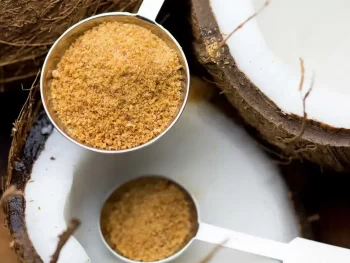
As the world seeks healthier, more sustainable alternatives to highly processed sweeteners, coconut sugar has emerged as a frontrunner.
Made from the sap of coconut palm blossoms, coconut sugar is minimally processed, rich in trace nutrients, and carries a lower glycemic index than refined white sugar.
But beyond its nutritional appeal, coconut sugar production offers an often-overlooked benefit: it’s one of the most sustainable sweeteners available today.
In this article, we explore the environmental, social, and economic sustainability of coconut sugar—from how it’s harvested, to its impact on farming communities and the planet.
What Is Coconut Sugar?
Coconut sugar is derived from the sap of coconut palm flower buds. Farmers climb the trees, slice the flower stems, and collect the sap into bamboo or clay containers.
The sap is then gently boiled and evaporated until it crystallizes into granules.
Unlike cane sugar, which undergoes industrial processing and refinement, coconut sugar retains natural nutrients such as iron, potassium, zinc, calcium, and inulin, a prebiotic fiber.
But its production process also requires minimal intervention, making it uniquely eco-friendly.
For a detailed step-by-step breakdown of the production process, see our guide: How Coconut Sugar Is Made →
→ Read more about the cultural heritage behind coconut sugar production: Coconut Brown Sugar and Its Cultural Importance in Southeast Asia →
1. Environmentally Friendly Farming

No Need for Deforestation
Coconut sugar is harvested from existing coconut palm trees, which are not cut down or destroyed in the process. Unlike other agricultural commodities—like soy, palm oil, or even cane sugar—that can drive deforestation, coconut sugar production thrives on sustainably managed coconut farms.
The same trees can produce both coconuts and sap, offering dual yields and encouraging farmers to keep trees standing longer. This promotes long-term land use stability and protects vital ecosystems, especially in tropical countries like Indonesia, the Philippines, and Sri Lanka.
Low Water and Land Use
Compared to sugarcane and sugar beet crops, which require significant irrigation and land area, coconut palms are highly efficient. They require less water, and because coconut sugar doesn’t demand the destruction of the coconut, the land remains fertile and productive for years.
According to the Food and Agriculture Organization (FAO), coconut palm trees produce more sugar per acre than sugarcane while using less water and fewer resources.
Biodiversity Preservation
Coconut sugar production does not involve the use of pesticides or synthetic fertilizers. The coconut palm’s natural resilience allows it to coexist with other flora and fauna, supporting local biodiversity. In fact, many coconut plantations act as agroforestry systems, combining coconuts with bananas, cacao, coffee, and other crops.
This polyculture approach enriches the soil, reduces pests naturally, and creates a more resilient and regenerative farming system.
2. Empowering Local Communities
Coconut sugar production is not only environmentally sustainable—it’s also economically empowering, particularly for rural communities.
Smallholder Farming Model
Most coconut sugar is produced by smallholder farmers who tap the sap using traditional methods passed down through generations. In countries like Indonesia, more than 80% of coconut sugar comes from family farms.
These small-scale operations require low capital investment and no expensive machinery, making coconut sugar an accessible livelihood for many rural households.
Job Creation and Skill Preservation

The harvesting and boiling process requires manual skill, creating jobs at every stage—from sap collection to sugar crystallization and packaging. For many communities, especially women and elders, this work is both a source of income and a means of preserving traditional knowledge.
By supporting coconut sugar, consumers help sustain cultural practices and rural economies that might otherwise be displaced by industrial farming.
Fair Trade and Cooperative Models
Several coconut sugar brands partner with farmer cooperatives and operate under Fair Trade certifications, ensuring ethical labor practices, fair wages, and reinvestment in community development.
Fair Trade premiums often go toward education, healthcare, and infrastructure improvements in farming villages, further reinforcing the long-term sustainability of the industry.
3. Minimal Processing, Minimal Impact
Coconut sugar’s production process is refreshingly simple:
- Sap collection using bamboo or natural containers
- Slow boiling over wood or biomass fires
- Drying and crystallization without chemicals
- Packaging using recyclable or compostable materials (in many ethical brands)
This process:
- Emits low carbon emissions
- Requires no chemical refining
- Uses local materials and fuels
Compared to the energy- and water-intensive processes used to produce white sugar, coconut sugar leaves a much smaller carbon and environmental footprint.
4. Health-Conscious, Planet-Friendly Sweetener

Coconut sugar aligns with the growing demand for natural, low-impact foods. It appeals to health-conscious consumers who want sweeteners that are:
- Less processed
- Nutrient-rich
- Plant-based and vegan
- Free of additives and bleaching agents
At the same time, it checks the boxes for environmental and ethical standards—making it one of the few sweeteners that satisfy both wellness and sustainability goals.
5. Challenges and Room for Growth
While coconut sugar offers many advantages, it’s important to recognize potential challenges in scaling up sustainably:
Limited Supply
Coconut sugar is still a niche product, and global production is limited compared to cane or beet sugar. As demand grows, there’s pressure to increase yields, which could risk overharvesting sap and reducing coconut fruit production if not managed responsibly.
Balancing Coconut Fruit vs. Sap Production
A single tree cannot produce both high volumes of coconuts and sugar sap simultaneously. Farmers must choose how to manage their crops, and poorly planned incentives may encourage sap tapping at the expense of coconut fruit harvesting.
Sustainable balance is key—one that supports both local food systems and sugar demand.
Certification and Transparency
Not all coconut sugar brands are equal. Consumers should look for USDA Organic, Fair Trade, and non-GMO labels and support companies that provide transparent sourcing information.
More investment is needed in traceable supply chains, farmer education, and fair-trade partnerships to maintain long-term sustainability as the industry grows.
Conclusion: A Sweet Solution for a Sustainable Future
Coconut sugar represents more than just a healthier sweetener—it’s a model for how food can be produced responsibly, support communities, and protect the planet.
Its low-impact farming, minimal processing, and fair-trade potential make it one of the most sustainable sugars on the market today.
For consumers seeking alternatives to processed sugars and unsustainable sweeteners, coconut sugar offers a guilt-free way to enjoy sweetness—while contributing to a healthier world.
When sourced from ethical brands and harvested by empowered farmers, coconut sugar truly lives up to its promise:
a sweetener rooted in tradition, community, and sustainability.
Frequently Asked Questions
Is coconut sugar more sustainable than white sugar?
Yes. Coconut sugar requires less water, no deforestation, and minimal chemical processing compared to cane sugar. Coconut palms also produce dual yields — both sap for sugar and coconuts — making them more resource-efficient per acre than sugarcane.
Is coconut sugar production ethical?
Most coconut sugar is produced by smallholder farmers using traditional methods, making it one of the most community-driven sweeteners available. Many brands also operate under Fair Trade certifications, ensuring fair wages and reinvestment in farming communities.
Is coconut sugar organic?
Coconut sugar can be certified organic when produced without synthetic pesticides or fertilizers — which most traditional coconut farms already practice naturally. Look for USDA Organic or EU Organic certification when sourcing for food manufacturing.