When a procurement manager at a European food retailer shortlists coconut sugar suppliers, one question typically eliminates more than half the candidates within the first five minutes: do you hold a current BRCGS Food Safety certification?
BRCGS, the Brand Reputation Compliance Global Standards, has become the de facto food safety standard for supplier approval at Tesco, Aldi, Lidl, Carrefour, Whole Foods Market, Costco, and most major retail chains globally.
For buyers looking for a BRCGS certified coconut sugar supplier from Indonesia, it is the single most important certification to verify before placing any order.
At Global Coco Sugar, we hold BRCGS Food Safety Grade A+ certification alongside a full stack of international credentials. You can view our certified coconut products to see the full range available with complete certification coverage.
This guide explains exactly what BRCGS certification means in the context of coconut sugar sourcing, why it matters to your business regardless of your market, how to verify a supplier’s certification status independently, and what questions to ask during vendor evaluation.
What Is BRCGS Food Safety Certification and Why Does It Exist?
BRCGS (formerly BRC Global Standards) is a food safety and quality certification standard originally developed by the British Retail Consortium in 1998.
It was created in direct response to a problem that was emerging in global food supply chains: as sourcing went increasingly international, retail buyers had no reliable way to compare food safety management systems across suppliers in different countries.
The standard has since become one of the most widely recognized under the Global Food Safety Initiative (GFSI) framework — alongside FSSC 22000, SQF, and IFS Food.
Today, more than 30,000 facilities in 130 countries hold BRCGS certification across food, packaging, storage, and distribution categories.
For buyers evaluating Indonesian coconut sugar suppliers, independently verifying BRCGS status is straightforward: the BRCGS Global Standards Directory allows public search by company name and country.
Our own certifications and company profile page provides full details of our current certification, including grade, certifying body, and validity period.
BRCGS Grade
Score Range
What It Means for Buyers
AA
Exceptional (highest)
Zero or near-zero non-conformances during unannounced audit. Extremely rare — awarded to the top tier of global suppliers.
A+
Excellent (unannounced)
Achieved on an unannounced audit — highest credibility, as supplier had no advance preparation time.
A
Excellent
Minor non-conformances only. This is the standard required by most major EU and US retail chains.
B
Good
Some moderate non-conformances. Accepted by some buyers but not by premium retail (Tesco, Aldi, Whole Foods).
C
Acceptable
Multiple significant non-conformances. Typically only accepted where no Grade A supplier is available.
D
Not certified
Facility audited but failed to meet minimum requirements. Not a valid BRCGS certificate for most buyers.
Critical buyer note: Always check the grade, not just the certificate
Many suppliers claim ‘BRCGS certified’ without specifying their grade.
A Grade C certificate and a Grade A certificate are both technically ‘BRCGS certified’, but they are not equivalent for supplier approval at major retailers.
Always ask for the full certificate showing grade, certifying body, audit date, and expiry date.
Then verify independently on the BRCGS Global Standards Directory at directory.brcgs.com.
Why BRCGS Certification Matters Specifically for Coconut Sugar Buyers
BRCGS is not a one-size-fits-all certification. Its relevance varies by where you are selling and to whom.
Here is a market-by-market breakdown of why BRCGS matters for coconut sugar sourcing:
European Union — Mandatory for Major Retail
In the EU, BRCGS (Grade A or above) or an equivalent GFSI-recognized scheme (FSSC 22000, IFS Food) is a vendor approval requirement at virtually every major grocery chain.
Tesco, Aldi, Lidl, Carrefour, Albert Heijn, and REWE all require GFSI certification from all food suppliers.
Attempting to list a coconut sugar product at these retailers without a BRCGS certified coconut sugar supplier is not practically possible.
For importers and distributors who are new to the EU market or evaluating Indonesian supply for the first time, our article on exporting coconut sugar to Europe covers the full regulatory and commercial landscape, including labeling requirements, organic certification for EU market, import duties, and port logistics.
United States — Required by Natural and Premium Retailers
In the US market, BRCGS is not a federal regulatory requirement, but it is a practical commercial requirement for listing at Whole Foods Market, Costco, Target, Sprouts, and most regional natural food chains.
These retailers use BRCGS (or SQF, which is GFSI-equivalent) as a minimum baseline for their supplier qualification process. Without it, your supplier will fail the first stage of vendor onboarding.
Foodservice and Food Manufacturing — Non-Negotiable at Scale
For buyers sourcing coconut sugar as an ingredient for manufactured food products (bakery, beverages, confectionery, supplements), BRCGS certification is often a contractual requirement imposed by the brand owner’s own QA department.
If the final product carries a premium or health-positioned brand, the brand’s quality team will typically audit the supply chain and reject any ingredient supplier without GFSI certification.
The BRCGS + Organic Certification Combination: What EU Buyers Actually Require
One of the most common points of confusion for first-time coconut sugar importers is the difference between food safety certification (BRCGS) and organic certification (USDA NOP, EU Organic).
They are completely separate certification systems, and most serious buyers in the EU and USA require both simultaneously.
Certification
What It Covers
Required By
Verifiable At
BRCGS Food Safety Grade A
Food safety management system, hygiene, traceability, pest control, recall procedures
EU/US major retailers, food manufacturers
BRCGS Global Standards Directory (brcdirectory.com)
EU Organic (EC 834/2007)
Organic farming and processing standards for EU market organic label claims
EU retailers for ‘Organic’ label use
OFIS EU Organic Database (ec.europa.eu)
USDA NOP Organic
Organic certification for US market organic label claims
US retailers for ‘USDA Organic’ seal use
USDA NOP database (ams.usda.gov)
HACCP
Hazard Analysis Critical Control Points — baseline food safety prerequisite
All markets — minimum acceptable standard
Supplier-held document — request copy
Halal (MUI)
Compliance with Islamic dietary law
Middle East markets, Muslim demographic
Majelis Ulama Indonesia registry
Kosher
Compliance with Jewish dietary law
US/EU specialty retail, Jewish communities
Certifying body registry (e.g., OU, Kof-K)
Global Coco Sugar holds all six certifications listed above simultaneously, making us one of the few Indonesian coconut sugar exporters with full coverage for EU, US, Middle East, and Japan markets in a single supply relationship.
For buyers who require Kosher certification, see our announcement that our coconut sugar is now Kosher certified, including the certifying body details.
How to Independently Verify a Supplier’s BRCGS Certification Status
Never rely solely on a certificate document provided by the supplier. Certificate forgery in the food ingredient supply chain is more common than the industry publicly acknowledges.
Here is the correct verification process:
1. Go directly to the BRCGS Global Standards Directory at brcdirectory.com — this is the official public database maintained by BRCGS
2. Search by company name and country (Indonesia) — the result should show the facility name, site address, category, grade, certifying body, and certificate expiry date
3. Cross-reference the certificate number on the document the supplier provides with the directory listing — they must match exactly
4. Check the certificate expiry date — BRCGS certificates are valid for 12 months from the audit date; an expired certificate is not a valid certificate
5. Check the certifying body listed — it should be an accredited BRCGS-approved certification body (e.g., SGS, Bureau Veritas, Intertek, NSF, LRQA)
6. If the supplier claims Grade A+ (unannounced audit), verify that the audit type listed in the directory is indeed unannounced
7. For extra confidence: contact the certifying body directly and request confirmation of the certificate’s current status
What to do if the supplier is not in the BRCGS directory
If a supplier claims BRCGS certification but does not appear in the public directory, do not proceed without a direct explanation from BRCGS headquarters.
Common legitimate reasons a facility may not appear include: very recent certification (database update lag of 1-5 business days) or a database error.
Illegitimate reasons include: the certificate is fake, expired, or from a non-BRCGS-approved certifying body. In any case of doubt, contact BRCGS directly at info@brcgs.com before placing any order.
Which Types of Coconut Sugar Buyers Most Need a BRCGS-Certified Supplier?
Not every coconut sugar buyer has the same certification requirements.
Understanding where BRCGS certification is truly non-negotiable versus where it is preferred but not mandatory helps buyers prioritize their vendor qualification criteria.
For buyers evaluating the broader landscape of Indonesian coconut sugar suppliers, including how to compare pricing, MOQ, and documentation standards, our guide on finding a bulk coconut sugar supplier in Indonesia provides a practical framework.
Buyer Type
BRCGS Requirement Level
Reason
EU major retail (Tesco, Aldi, Lidl, Carrefour, REWE)
Non-negotiable — Grade A minimum
Contractual requirement in vendor approval documentation
US natural food retail (Whole Foods, Sprouts, Costco)
Non-negotiable — BRCGS or SQF equivalent
Retailer supplier code of conduct requires GFSI certification
Beyond Coconut Sugar: What a BRCGS-Certified Indonesian Facility Can Supply
A buyer who has qualified a BRCGS-certified coconut sugar supplier has also qualified that facility for a much broader range of products — all under the same food safety management system, the same certifications, and the same export documentation infrastructure.
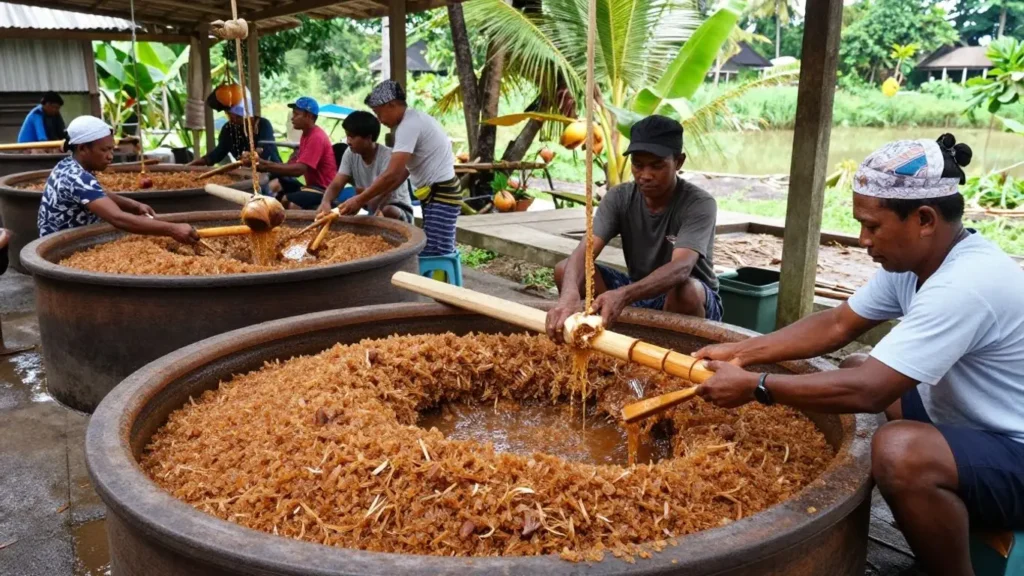
For buyers interested in understanding how the production facility operates — from raw material intake through processing and packaging — our article on how coconut sugar is produced in Indonesia provides a transparent, step-by-step account of the process.
This is the kind of traceability documentation that BRCGS-compliant buyers expect to be able to access.
For buyers requiring contract manufacturing and private label services — including formulated coconut sugar blends, flavored variants, or supplement-grade products — our contract manufacturing program operates under the same BRCGS-certified facility and documentation framework.
Conclusion: BRCGS Certification as the Foundation of a Reliable Supply Chain
In the coconut sugar import market, the difference between a BRCGS-certified supplier and a non-certified supplier is not merely a paperwork difference.
It is the difference between a facility that has demonstrated — to an independent, internationally accredited auditor, on an annual basis — that its food safety practices, traceability systems, hygiene standards, and recall procedures meet the requirements of the world’s most demanding retail buyers, and one that has not.
For buyers targeting EU or US retail, food manufacturing ingredient supply, or any market where a serious food safety incident could destroy brand equity and trigger product recalls, sourcing from a BRCGS-certified supplier is not optional — it is the minimum standard of due diligence.
Indonesia’s coconut sugar industry includes a small but well-established group of BRCGS-certified exporters.
Working directly with one of them eliminates the need for intermediary brokers, reduces cost, and provides full supply chain transparency — the foundation that serious food businesses require.
Partner with a BRCGS Grade A Certified Coconut Sugar Supplier
Global Coco Sugar is a BRCGS Food Safety Grade A certified exporter of Indonesian coconut sugar and coconut derivative products.
Our certification is verifiable in the BRCGS Global Standards Directory.
We supply to food manufacturers, importers, and private label brands across the EU, USA, Australia, Japan, and the Middle East.
Organic coconut sugar can be a strong ingredient option for food manufacturers, importers, distributors, and private label brands looking for a natural sweetener with a caramel-like profile. But before placing a bulk order, buyers should not evaluate the product only by price or product photos.
For B2B sourcing, product specifications help buyers understand whether the coconut sugar is suitable for their formulation, packaging system, storage condition, export documentation, and internal quality approval process.
This guide explains the key organic coconut sugar specifications food manufacturers should check before confirming a bulk order, including product form, moisture, mesh size, color, taste, shelf life, COA, certification, packaging, and batch consistency.
Quick Answer: What Specifications Should Buyers Check?
Before buying organic coconut sugar in bulk, buyers should check the product form, moisture content, mesh size or particle size, color, taste and aroma profile, shelf life, packaging format, COA, organic certification, and batch consistency.
These details help procurement teams compare suppliers more accurately and reduce the risk of receiving a product that does not match the intended application.
Food manufacturers should also confirm whether the supplier can provide updated documents such as a specification sheet, Certificate of Analysis, organic certificate, and shipment-level documentation when required.
Why Product Specifications Matter in Bulk Coconut Sugar Sourcing
In small retail purchases, slight differences in color, texture, or aroma may not create major problems. In food manufacturing, however, those differences can affect finished product appearance, dissolution, sweetness perception, blending performance, shelf life, and customer acceptance.
For procurement teams, specifications also help standardize supplier comparison. If one supplier offers granulated coconut sugar with a certain particle size and another supplier offers a finer powder, the two products may not perform the same way in bakery, beverage, dry blend, snack, or confectionery applications.
Clear specifications are also important for food safety and quality control. They allow buyers to align internal requirements with supplier documents, confirm whether the product is suitable for the target market, and prepare better questions before requesting a quotation or sample.
Key Organic Coconut Sugar Specifications to Review
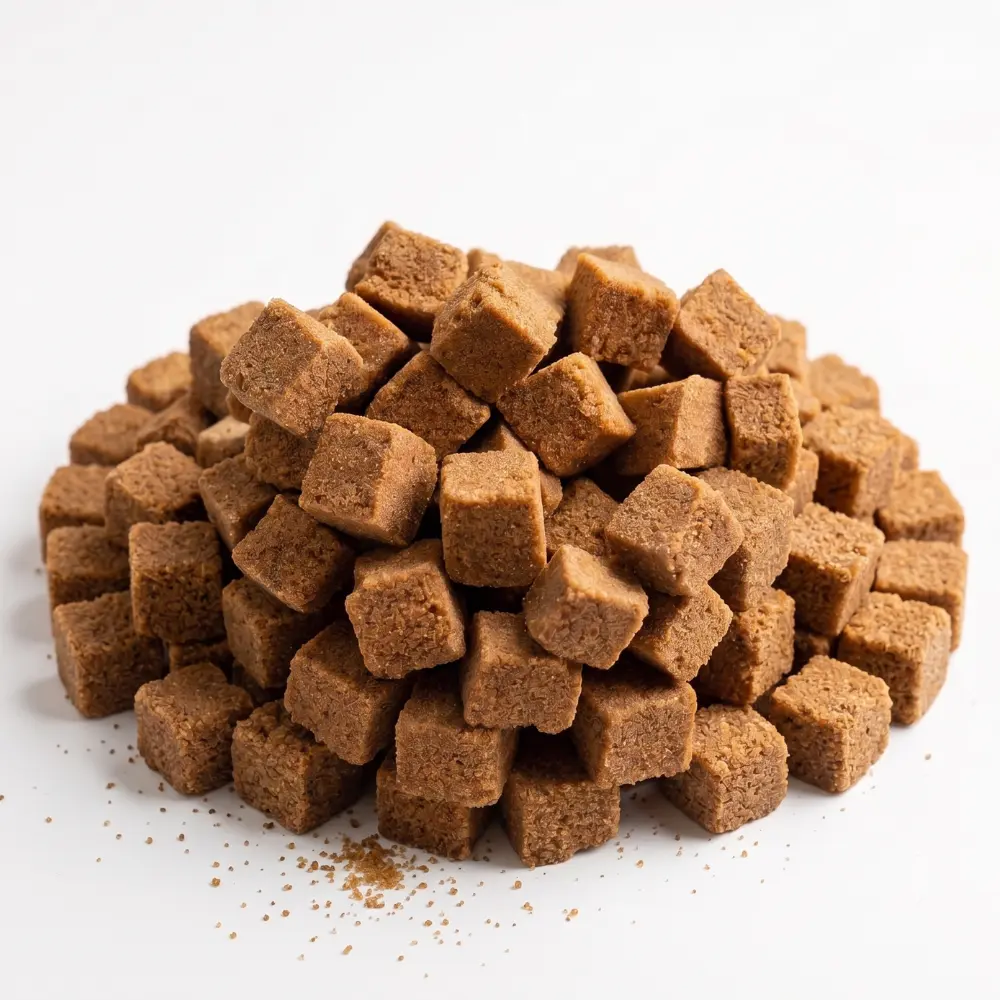
Organic Coconut Sugar Cube
Product Form: Granule, Powder, or Cube
The first specification to check is product form. Organic coconut sugar may be supplied as granule, powder, or cube, depending on the supplier and buyer requirement. Each form has a different role in food manufacturing and packaging.
Granulated coconut sugar is commonly used for bakery, cereal, granola, topping, dry blending, and general food manufacturing.
Powdered coconut sugar can be more suitable for beverage premix, dry blends, instant products, and applications that require faster dispersion.
Cube coconut sugar is more relevant for retail, horeca, gifting, premium presentation, or table-use formats.
Color matters because coconut sugar can influence the appearance of finished products. A darker sugar may be acceptable for chocolate, coffee, granola, cookies, and brown-colored beverages, but it may not be suitable for products that require a light or neutral appearance.
Global Coco Sugar currently lists the color of its organic coconut sugar as golden brown on its product page. For commercial production, buyers should still request samples and compare color consistency against their own product standard before scaling up.
Moisture Content
Moisture content is one of the most important parameters in coconut sugar sourcing. It can affect shelf life, clumping risk, flowability, storage stability, and packaging performance.
Lower moisture generally helps improve handling and storage stability, especially for dry ingredient applications. However, buyers should not assume that every supplier uses the same moisture specification. Always review the supplier specification sheet and COA.
Global Coco Sugar currently lists moisture as max 2% on its product page. This should be treated as current product page information, and buyers should request the latest specification sheet before confirming a bulk order.
Mesh Size / Particle Size
Mesh size or particle size affects how coconut sugar blends, dissolves, and behaves during processing. A coarser particle may work well in bakery toppings or granola, while a finer particle may be better for beverage powders, premixes, and smooth dry blends.
If your application requires fast dissolution or a smooth mouthfeel, particle size should be discussed early with the supplier. This is especially important for beverages, chocolate, confectionery, instant mixes, and powder-based products.
Global Coco Sugar currently lists mesh size as 18-50 on its product page. Buyers should confirm whether this range fits their application and request the latest technical document before ordering.
Taste and Aroma Profile
Organic coconut sugar is commonly valued for its natural sweet taste and caramel-like profile. This can work well in bakery, chocolate, coffee, snack, cereal, granola, and certain beverage applications.
However, flavor suitability should always be tested in the final formulation. A caramel profile may be attractive in brown or toasted products, but it may not fit every product category. Buyers should request samples and conduct internal sensory testing before placing a container or large-volume order.
Shelf Life and Storage Conditions
Shelf life is important for inventory planning, export shipping, distributor storage, and finished product production schedules. Buyers should check the declared shelf life, packaging type, recommended storage condition, and whether the product is sensitive to humidity.
Global Coco Sugar currently lists shelf life as 2 years on its product page. Actual shelf life handling should still be confirmed based on packaging, storage condition, destination market, and shipment plan.
Origin and Traceability
Origin and traceability are important for buyers that need supplier qualification, organic compliance, sustainability review, or product storytelling. For organic coconut sugar, buyers should confirm not only the country of origin but also whether the organic certificate scope covers the product and supply chain involved.
Global Coco Sugar positions its organic coconut sugar as sourced from Central Java, Indonesia. Buyers evaluating Indonesian coconut sugar should still request documentation that supports their own market requirements, especially if organic claims will be used on finished product labels.
Certificate of Analysis: What Should Be Included?
A Certificate of Analysis, or COA, is one of the most important documents in bulk coconut sugar sourcing. It helps buyers review quality parameters and confirm whether the batch or lot meets the required specification.
COA parameters may vary by supplier, buyer requirement, and testing scope. Buyers should request the latest COA for the specific batch or lot whenever possible.
A coconut sugar COA may include:
Batch or lot number
Date of analysis
Product name and product form
Moisture content
Appearance, color, taste, or odor if included in the testing scope
Microbiological parameters if required by the buyer
Heavy metal testing if required by the buyer or destination market
Test method or lab information
Supplier or facility identification
Do not rely only on a generic or outdated COA for a large-volume order. If your company requires strict quality approval, request a batch-specific COA and compare it with the supplier specification sheet and sample results.
For food manufacturers, COA review is also part of supplier qualification. It helps R&D, QA, procurement, and regulatory teams decide whether the ingredient can move from sample review to commercial approval.
For a deeper document review, read our coconut sugar COA guide to understand how buyers can check batch number, test date, moisture, microbiology, heavy metals, and supplier or laboratory information.
Organic Certification and Transaction Certificate
For organic coconut sugar, certification should be verified carefully. Buyers should not rely only on logo images or general marketing statements. The certificate must be current, relevant to the product, and valid for the target market.
Depending on the destination market, buyers may need to check:
USDA Organic certification for the United States market
EU Organic certification for the European market
JAS Organic certification for Japan
Halal certification if required by the market or buyer
Kosher certification if required by the buyer
Food safety certification such as BRCGS, FSSC 22000, or HACCP if needed for vendor approval
The most important step is to confirm the certificate scope. A supplier may have an organic certificate, but buyers still need to verify whether the certificate covers the specific product, operator, processing facility, and packaging process involved.
For organic shipments, buyers may also need an organic Transaction Certificate. This document helps connect a specific shipment to the certified organic supply chain. Requirements can vary by market, certifier, buyer policy, and shipment type.
For USDA Organic claims, buyers can also use the USDA Organic INTEGRITY Database to check certified organic operations and review supplier certification details before confirming a bulk order.
Packaging is not only a logistics detail. It can affect storage, shelf life, moisture protection, warehouse handling, labeling, customs clearance, and private label planning.
Before confirming a purchase order, buyers should ask the supplier about packaging options, packaging material, net weight, carton or sack dimensions, palletization, shipping marks, and whether custom or retail packaging is available.
Global Coco Sugar currently presents bulk packaging options such as 10 kg, 20 kg, 25 kg, and boxed formats, along with retail and custom packaging options on its product page. Packaging options should be confirmed based on order volume, product form, destination market, and buyer labeling requirements.
Specification Checklist Before Requesting a Quotation
Before requesting a quotation, procurement teams can use the checklist below to prepare clear questions for suppliers. This helps avoid comparing incomplete offers or receiving prices for products that do not match the intended application.
Specification Area
What to Check
Why It Matters
Document to Request
Product form
Granule, powder, or cube
Affects application, processing, and packaging
Specification sheet
Moisture
Maximum moisture level
Supports shelf life, flowability, and clumping control
Specification sheet / COA
Mesh size
Particle size range
Affects blending, dissolution, and texture
Specification sheet
Color
Visual consistency
Influences finished product appearance
Specification sheet / sample
Taste and aroma
Natural sweet profile and sensory fit
Important for formulation approval
Sample / sensory review
Shelf life
Declared shelf life and storage condition
Supports inventory and export planning
Specification sheet
Packaging
Bulk, retail, or custom packaging
Affects logistics, storage, and labeling
Packaging specification
Certification
Organic and food safety certification
Needed for compliance and vendor approval
Certificate copy
COA
Batch-specific quality data
Helps procurement and QA verify product quality
COA
Origin
Country and sourcing region if available
Supports traceability and supplier review
Certificate / supplier statement
Common Specification Mistakes Buyers Should Avoid
Many sourcing issues happen because buyers compare suppliers only by price or product name. Coconut sugar from different suppliers may have different moisture levels, particle sizes, packaging formats, documentation readiness, and batch consistency.
Common mistakes include:
Requesting a price without specifying product form and packaging requirement
Comparing granulated coconut sugar with powdered coconut sugar as if they are identical
Not requesting the latest specification sheet before bulk order
Using an old or generic COA for commercial approval
Not checking organic certificate scope and expiry date
Forgetting to ask whether an organic Transaction Certificate can be provided
Skipping sample approval before a large-volume order
Not confirming packaging suitability for storage and destination market requirements
Not aligning supplier specifications with internal QA, R&D, and regulatory requirements
If you are screening suppliers for the first time, read our guide on coconut sugar supplier red flags before confirming an order.
How Global Coco Sugar Supports Specification Review
Global Coco Sugar Manufacturer
Global Coco Sugar supplies organic coconut sugar from Indonesia for B2B buyers such as importers, distributors, food manufacturers, procurement teams, and private label brands.
Our organic coconut sugar is currently presented in granule, powder, and cube forms, with product information such as golden brown color, max 2% moisture, mesh size 18-50, natural sweet taste, 2-year shelf life, and Indonesia origin listed on the product page. Buyers should request the latest specification sheet to confirm the current details before ordering.
For specification review, buyers can discuss:
Required coconut sugar form for the target application
Specification sheet and product details
Packaging options for bulk, retail, or custom requirements
COA or documentation needs based on buyer requirements
Organic certification and export documentation discussion
Quotation and sample discussion before bulk order
Need to review organic coconut sugar specifications before placing a bulk order? Contact Global Coco Sugar to request the latest product specification, packaging details, and quotation for your sourcing review.
Conclusion
Organic coconut sugar specifications are essential for food manufacturers and procurement teams that need consistent quality, reliable documentation, and suitable product performance before placing bulk orders.
Before choosing a supplier, buyers should review product form, moisture content, mesh size, color, taste and aroma, shelf life, COA, certification, packaging, origin, and batch consistency. These details help reduce sourcing risk and make supplier comparison more reliable.
A good supplier should be able to explain the product clearly, provide updated documentation, and support the buyer through sample review, quotation, and export preparation.
If you are evaluating organic coconut sugar for food manufacturing, distribution, or private label sourcing, contact our export team to discuss your specification requirements and bulk sourcing plan.
What is an organic coconut sugar specification sheet?
An organic coconut sugar specification sheet is a technical document that describes important product details such as product form, moisture, mesh size, color, taste, shelf life, packaging, origin, and other quality parameters. Buyers use this document to decide whether the product fits their formulation, packaging, storage, and procurement requirements.
What moisture level should buyers check in coconut sugar?
Buyers should check the moisture level listed on the supplier specification sheet and COA. There is no single number that should be assumed for every supplier. Global Coco Sugar currently lists moisture as max 2% on its product page, but buyers should request the latest document before ordering.
Why does mesh size matter in coconut sugar?
Mesh size or particle size affects dissolution, blending, texture, and processing performance. Finer coconut sugar may be better for beverages, premixes, and dry blends, while granulated coconut sugar may be suitable for bakery, granola, cereal, and general food manufacturing applications.
Should buyers request COA before ordering bulk coconut sugar?
Yes. For bulk orders, buyers should request a COA, preferably for the specific batch or lot when available. The COA helps procurement and quality teams verify product parameters before approving shipment or commercial production.
What documents are needed for organic coconut sugar import?
Common documents may include organic certificate, specification sheet, COA, invoice, packing list, Certificate of Origin, phytosanitary certificate if required, and organic Transaction Certificate if the buyer needs shipment-level organic documentation. Requirements vary by destination market and buyer policy.
What packaging options are common for bulk coconut sugar?
Bulk coconut sugar may be supplied in sacks, cartons, or boxed packaging depending on supplier capability and buyer requirements. Some suppliers also offer retail or custom packaging. Global Coco Sugar currently presents bulk, retail, and custom packaging options on its organic coconut sugar product page.
Indonesia is one of the most important sourcing origins for coconut sugar, especially for importers, distributors, food manufacturers, private label brands, and procurement teams looking for organic, bulk, and export-ready supply.
But choosing the right supplier is not just about finding the lowest price. B2B buyers need to evaluate certification scope, product specifications, documentation readiness, MOQ, packaging options, traceability, communication quality, and export capability.
This guide lists coconut sugar suppliers in Indonesia that buyers can evaluate in 2026. Global Coco Sugar is listed first because this article is published by Global Coco Sugar, but every supplier in this list should still be verified independently before placing an order.
For buyers who are still defining their product specifications, you can also review our organic coconut sugar supplier page to understand available product forms, packaging options, and general B2B sourcing details.
Indonesia has a strong coconut sugar supply ecosystem, especially in regions such as Central Java, Banyumas, Purbalingga, and surrounding areas where coconut palm tapping and coconut sugar production are widely established.
From a raw material perspective, Indonesia has one of the strongest coconut bases in the world. FAOSTAT tracks “coconuts, in shell” as a primary crop category, and FAO’s historical coconut sector data has consistently identified Indonesia as one of the major coconut-producing countries in Asia.
More recent FAO-derived market data also estimates Indonesia’s coconut production at around 17.97 million metric tons in 2023, ranking the country #1 globally for fresh coconut production.
For B2B buyers, this matters because a strong coconut origin can support broader supplier availability, product specialization, and long-term sourcing options.
Indonesia’s position is also supported by an established coconut-processing ecosystem, not only for coconut sugar but also for coconut oil, coconut water, coconut milk, desiccated coconut, coconut nectar, and other coconut derivatives.
For coconut sugar specifically, market demand is supported by food and beverage manufacturers looking for natural sweetener alternatives; CBI, the Centre for the Promotion of Imports from developing countries, notes increasing demand for coconut sugar in the European food market, while market research sources also highlight growing use of coconut sugar in food and beverage applications.
For B2B buyers, Indonesia is attractive because the supplier base includes different sourcing models:
Certified organic coconut sugar producers
Conventional coconut sugar suppliers
Bulk ingredient suppliers for food manufacturing
Private label and OEM partners
Coconut product exporters offering coconut sugar, coconut nectar, desiccated coconut, VCO, and other coconut derivatives
However, supplier quality can vary significantly. Some companies have strong documentation and certification systems, while others may only act as traders or brokers. That is why supplier verification is essential before confirming a commercial order.
This list is based on publicly available information from supplier websites, product pages, company profiles, and related official sources available at the time of review.
The list is not a final ranking from best to worst. It is a practical starting point for B2B buyers who want to compare potential suppliers and prepare a supplier shortlist.
Each supplier included here has some public presence that can be checked, such as an official website, company page, product listing, or public company profile.
Priority is given to companies that publicly mention coconut sugar, organic coconut sugar, coconut palm sugar, coconut nectar, or related coconut sweetener products.
When a supplier publicly mentions certifications or documents, those points are included as “publicly stated” information. Buyers should still request current certificate copies, certificate numbers, expiry dates, and product-specific documentation before ordering.
For B2B sourcing, export readiness matters. Buyers should check whether the supplier can support bulk orders, export documents, container shipment, private label requirements, or international buyer communication.
Global Coco Sugar is an Indonesian coconut product supplier with organic coconut sugar as one of its main B2B product focuses.
For buyers looking specifically for organic coconut sugar from Indonesia, GCS offers coconut sugar in granule, powder, and cube forms, with product information such as golden brown color, max 2% moisture, mesh size 18-50, natural sweet taste, two-year shelf life, and Indonesia origin listed on the product page.
For B2B buyers, the most important point is not only the product itself, but the ability to support procurement screening. Global Coco Sugar’s public pages show positioning around BRCGS Food Safety, HACCP, USDA Organic, EU Organic, JAS, Halal, and Kosher certifications, while the organic coconut sugar product page also presents bulk, retail, and custom packaging options.
From a buyer’s perspective, GCS is relevant for several sourcing scenarios:
Importers looking for Indonesian organic coconut sugar
Distributors sourcing bulk coconut sugar for regional markets
Food manufacturers using coconut sugar in bakery, beverage, chocolate, coffee, healthy food, confectionery, and related applications
Private label buyers that need packaging and documentation discussion
Procurement teams that need specifications, certification details, and export documentation before vendor approval
Global Coco Sugar can be positioned as a supplier to evaluate when documentation, food safety standards, product forms, and export readiness are part of the sourcing requirement.
Buyers should still request the latest certificate copies, COA, specification sheet, MOQ confirmation, packaging details, and shipment documents before confirming an order.
For buyers comparing multiple suppliers, GCS can support the qualification process through product specification review, quotation discussion, and documentation request.
Best for: importers, distributors, food manufacturers, private label buyers, and procurement teams looking for certified organic coconut sugar from Indonesia.
What buyers should verify: current certificate validity, certificate scope, COA, organic transaction certificate if needed, MOQ, packaging options, lead time, Incoterms, and export document readiness.
PT Coco Sugar Indonesia, also known through the Coco Sugar® brand, presents itself as an organic coconut sugar producer based in Purwokerto, Central Java.
Its website publicly lists certifications and standards such as FSSC 22000, Fairtrade, Organic, JAS Organic, EU Organic, USDA Organic, Non-GMO, FDA, Kosher, Halal, Vegan, and Paleo.
The company’s website also explains its process from nectar harvesting, granulation, internal control system, drying, and packing in an FSSC 22000 certified central processing unit.
For B2B buyers, this makes the company worth evaluating if food safety systems, organic positioning, and process transparency are important.
Best for: buyers looking for an established organic coconut sugar producer with public certification information.
What buyers should verify: current certificate copies, product-specific certification scope, MOQ, packaging, documentation package, and whether the supplier can support the buyer’s target market requirements.
CoconutSugar.pro publicly identifies the company behind the website as PT Coco Total Sugar Indonesia and positions itself as a wholesale coconut sugar manufacturer from Indonesia.
The website mentions bulk organic coconut palm sugar, factory-direct supply, USDA Organic, EU Organic, FSSC 22000, BRCGS Grade A, Kosher, Halal MUI, and FDA Registered claims.
It also mentions export packaging options such as kraft paper sacks, corrugated cartons, and private label retail pouches.
The site also lists factory statistics such as years of experience, shipments, countries served, and monthly capacity.
These can be useful screening points, but buyers should verify capacity claims, certificate numbers, company registration, and shipment references directly before relying on them for procurement decisions.
Best for: bulk importers, distributors, and private label buyers evaluating factory-direct coconut sugar supply.
What buyers should verify: company documents, certificate scope, factory location, current capacity, export references, COA, and lot-based documentation.
PT Javelo Terra Lestari, through Natural Coco Sugar, describes itself as a direct manufacturer specializing in organic coconut sugar.
The website mentions its own processing facility in Banyumas, Central Java, and sourcing from farmers across Banyumas and Kebumen. It also states a dedicated production capacity for Organic TC orders.
This supplier may be relevant for organic buyers who need traceability discussion and Transaction Certificate handling.
However, buyers should still request current organic certificates, TC process details, COA, and export documentation before placing an order.
Best for: organic coconut sugar buyers, importers, and procurement teams that need direct-manufacturer discussion.
What buyers should verify: organic certification, TC process, MOQ, lead time, export documents, and product specification.
CV Hasil Barokah Mandiri, also known as HBM Corp, presents itself as an organic coconut sugar producer based in Kudus, Central Java.
Its website mentions partnership with more than 2,000 farmers and states that its products are certified for global export with BRC, HACCP, and FDA standards.
HBM Corp may be relevant for buyers that want to evaluate farmer-based sourcing, organic coconut sugar production, and food safety claims.
As with all suppliers, certification validity and product-specific coverage should be confirmed before ordering.
Best for: importers and distributors evaluating organic coconut sugar producers from Central Java.
What buyers should verify: current BRC/HACCP/FDA documentation, organic certificate scope, COA, MOQ, packaging, and export process.
Dilpa Coconut presents itself as a coconut sugar supplier from Indonesia focused on organic coconut sugar, custom bulk, and private label packaging.
Its website mentions organic coconut sugar, consistency, sustainability, and includes public visual signals related to Fair Trade Organic Coconut Sugar and BRCGS-certified coconut sugar.
The company may be worth evaluating for buyers who prioritize packaging flexibility or private label discussions.
Since public information appears relatively concise, buyers should request company documents, certification proof, packaging details, and product specifications before moving forward.
Best for: private label buyers, bulk buyers, and brands looking for organic coconut sugar packaging discussion.
What buyers should verify: company registration, certificate validity, packaging capability, MOQ, COA, and export documents.
CV Bonafide Anugerah Sentosa, also known as BASFOOD, presents itself as an Indonesian coconut product exporter and organic coconut palm sugar producer.
Its website mentions organic and conventional coconut palm sugar, OEM private label, packaging customization, and additional coconut products such as coconut nectar syrup, arenga palm sugar, desiccated coconut, virgin coconut oil, and RBD coconut oil.
The company also publicly states EU and USDA-NOP organic certification, Halal, HACCP, and GACC registration.
These are useful buyer-screening points, but importers should still verify certificate scope and current validity directly with the supplier.
Best for: buyers looking for OEM/private label coconut sugar and multi-product coconut sourcing.
What buyers should verify: organic certificate number, certificate scope, GACC status, HACCP documentation, MOQ, private label requirements, and export documentation.
PT Bumiloka Abadi Nusantara positions itself as an organic coconut sugar supplier and manufacturer in Indonesia for bulk wholesale, worldwide export, and custom private label solutions. Its public page also mentions Low GI certified organic coconut sugar.
This supplier may be relevant for buyers interested in bulk and private label sourcing. Because some claims are strong, buyers should request supporting documents and verify certification status before using the claims on packaging or marketing materials.
Best for: bulk buyers, private label brands, and food industry buyers evaluating organic coconut sugar suppliers.
What buyers should verify: Low GI documentation, organic certification, COA, export documents, MOQ, lead time, and private label packaging capability.
CV Gulain Indonesia presents itself as an Indonesian commodity trade and export company.
Its official website lists granulated coconut sugar as one of its products, with publicly stated specifications such as natural brown to dark brown color, mesh 8–16, moisture 1.61%, shelf life 24 months, and retail or bulk PP bag packaging.
The company profile on Inaexport, a platform under Indonesia’s Ministry of Trade export ecosystem, also lists Gulain Indonesia as an exporter of coconut and sugarcane derivatives, including organic coconut sugar in three different forms.
The same profile mentions OEM private label availability and custom packaging options.
Because Gulain Indonesia appears to operate more as a commodity exporter and trading company rather than a coconut sugar-only manufacturer, B2B buyers should verify current product availability, certificate scope, production source, COA, MOQ, packaging options, and export documentation directly before ordering.
Best for: buyers evaluating Indonesian commodity exporters that publicly list coconut sugar and private label/custom packaging options.
What buyers should verify: current coconut sugar availability, organic certification scope, COA, MOQ, product form, production source, packaging, Incoterms, export port, and shipment documents.
PT Intrafood Singabera Indonesia, through the Singabera brand, presents itself as a manufacturer of ginger drinks, organic coconut sugar, coconut nectar, and premium Indonesian tea and herbal infusion.
Its website publicly shows certification and audit signals including FSSC 22000, SMETA, Organic, Kosher, and Halal.
Singabera may be more relevant for buyers looking at branded natural food products, retail-ready products, or distributor opportunities rather than purely bulk industrial coconut sugar.
However, the company can still be included as a supplier to evaluate because it publicly lists organic coconut sugar and coconut nectar among its products.
Best for: distributors, retail buyers, natural food buyers, and brands evaluating Indonesian natural sweetener products.
What buyers should verify: B2B bulk availability, private label availability, MOQ, export documents, product specification, and certificate scope.
Request a product specification sheet that includes:
Product form: granule, powder, cube, block, or syrup
Moisture level
Mesh size or particle size
Color range
Taste and aroma profile
Shelf life
Packaging format
Storage condition
Country of origin
For food manufacturers, specifications matter because coconut sugar can behave differently in bakery, beverage, confectionery, chocolate, coffee, snack, and healthy food applications.
BRCGS, FSSC 22000, HACCP, or other food safety certification
FDA registration if shipping to the United States
If organic claims will be used on product labels, do not rely only on a general organic certificate. Ask whether the supplier can provide an organic Transaction Certificate for the shipment.
A Certificate of Analysis helps buyers review product quality parameters. Ideally, buyers should request COA per batch or per lot, especially for repeat orders and food manufacturing use.
For buyers that need stronger supplier screening, documentation should be reviewed together with samples before confirming bulk shipment.
MOQ can vary depending on the supplier, product type, packaging, and whether the order is for bulk, retail packaging, or private label. Always confirm:
Global Coco Sugar may be considered by B2B buyers who are looking for organic coconut sugar from Indonesia and need supplier support beyond basic product availability.
GCS is especially relevant when the buyer needs to review:
Organic coconut sugar in granule, powder, and cube forms
Bulk, retail, or custom packaging options
Product specification for food manufacturing applications
Certification and documentation discussion
Export-ready coconut products from Indonesia
A supplier that can support importer, distributor, food manufacturer, and private label buyer needs
Global Coco Sugar’s organic coconut sugar page lists applications such as bakery, beverage, chocolate, coffee, skincare, healthy food, and confectionery.
This makes the product suitable for different B2B use cases, but buyers should still confirm the final specification based on their formulation, target market, and packaging requirements.
For buyers comparing suppliers, GCS can be used as a reference point for what to ask during procurement: current certification documents, COA, specification sheet, packaging format, MOQ, lead time, and export documents.
If you are currently building a supplier shortlist, you can contact our export team to request product specifications, packaging details, and quotation information for your sourcing review.
Finding the right coconut sugar supplier in Indonesia requires more than comparing websites or price offers. For B2B buyers, the strongest suppliers are usually the ones that can provide clear product specifications, valid certification documents, COA, packaging options, export documents, and reliable communication during the procurement process.
The suppliers listed above can be used as a starting point for your 2026 supplier shortlist. However, every supplier should be verified directly before placing an order, especially if your business needs organic claims, private label packaging, food safety compliance, or shipment-level documentation.
If you are evaluating Indonesian coconut sugar suppliers for bulk, organic, or private label needs, Global Coco Sugar can support your sourcing review with product specification, packaging information, and quotation discussion.
Who are the top coconut sugar suppliers in Indonesia?
Several Indonesian companies publicly present themselves as coconut sugar suppliers, manufacturers, exporters, or organic coconut sugar producers. This guide includes suppliers such as Global Coco Sugar, PT Coco Sugar Indonesia, PT Coco Total Sugar Indonesia, PT Javelo Terra Lestari, CV Hasil Barokah Mandiri, Dilpa Coconut, CV Bonafide Anugerah Sentosa, PT Bumiloka Abadi Nusantara, CV Gulain Indonesia, and PT Intrafood Singabera Indonesia. Buyers should verify each supplier independently before ordering.
How do I verify a coconut sugar supplier in Indonesia?
Ask for company documents, current certification copies, product specification sheet, COA, sample availability, MOQ, packaging details, export documents, and buyer references if available. For organic orders, request the organic certificate and confirm whether the supplier can provide a Transaction Certificate for the specific shipment.
What certifications should a coconut sugar supplier have?
The required certifications depend on your market. Common documents include USDA Organic, EU Organic, JAS Organic, Halal, Kosher, BRCGS, FSSC 22000, HACCP, and FDA registration for the United States. Always verify the certificate number, expiry date, certifying body, and product scope.
What documents should I request before importing coconut sugar?
Common documents include commercial invoice, packing list, bill of lading, Certificate of Origin, phytosanitary certificate, COA, organic Transaction Certificate if applicable, and relevant food safety or organic certificates. Destination market requirements may vary.
What is the typical MOQ for bulk coconut sugar from Indonesia?
MOQ varies by supplier, product form, packaging type, and whether the order is bulk, retail, or private label. Some suppliers may accept trial orders, while others may prioritize pallet, container, or metric-ton level orders. Always confirm the current MOQ directly with the supplier.
Should I choose a manufacturer, exporter, or trading company?
A manufacturer may offer stronger production control, while an exporter or trading company may offer broader product range or sourcing flexibility. The right choice depends on your volume, documentation needs, quality control process, and target market. In all cases, verify documents and samples before placing a bulk order.
Is organic coconut sugar from Indonesia suitable for private label brands?
Yes, organic coconut sugar from Indonesia can be suitable for private label brands if the supplier can support packaging, labeling, certification scope, COA, export documents, and sample approval. Buyers should confirm whether the organic certificate covers the product, facility, and packaging process required for the target market.
Direct Answer: What Determines Coconut Sugar Price? Coconut sugar pricing is determined by eight interconnected factors: (1) farm gate cost — raw material from smallholder farmers, (2) production method and processing cost, (3) certification tier — conventional vs BRCGS vs organic, (4) grade and particle size, (5) order volume — LCL vs FCL vs annual contract, (6) packaging format, (7) seasonality and market conditions, and (8) supply chain traceability. Of these, certification tier and order volume have the largest single impact on price per kg. A buyer who understands these eight factors can negotiate more effectively, avoid overpaying, and identify when a quoted price is suspiciously low.
Coconut sugar price quotes from Indonesian suppliers can vary by 40-60% for what appears to be the same product.
A buyer receiving three quotes for ‘coconut sugar FOB Indonesia’ might see prices ranging from USD 1.50/kg to USD 3.20/kg — and without understanding why, it is impossible to evaluate which quote represents genuine value versus a cut-corner offer.
This article explains every factor that goes into coconut sugar pricing — transparently, from the perspective of a certified Indonesian producer.
Factor 1: Farm Gate Cost — The Starting Point of All Pricing
Every coconut sugar price starts with the cost of raw material — the coconut palm flower sap collected by smallholder farmers.
Farm gate cost is the price paid to farmers per liter of sap or per kg of granulated sugar before any processing, certification, or export costs are added.
Farm Gate Component
Typical Cost Range
What Drives It
Sap collection labor (per kg final sugar)
USD 0.30-0.50/kg
Twice-daily palm tapping is entirely manual — labor cost is the largest farm-level input
Cooking and evaporation fuel
USD 0.10-0.20/kg
Traditional wood fuel vs LPG — organic farms typically use wood, affecting cost
Granulation and basic processing
USD 0.05-0.15/kg
Manual stirring during crystallization — still largely artisanal in Central Java
Farmer cooperative margin
USD 0.10-0.20/kg
Cooperative overhead, quality control, and profit margin at farm level
Total farm gate cost (approximate)
USD 0.55-1.05/kg
Starting point before any export processing, certification, or logistics
Why farm gate cost varies between suppliers Two suppliers can have very different farm gate costs based on: (1) direct sourcing from cooperatives is cheaper than sourcing through intermediary traders, (2) Central Java coconut palms produce higher sap yield per tree than some other regions, (3) organic farming cannot use synthetic yield-enhancing inputs, sometimes resulting in slightly higher per-kg cost. Suppliers who buy through multiple intermediary layers consistently have higher base costs.
Factor 2: Processing and Production Method
After farm gate, the sap undergoes processing at the production facility. The processing method and facility standards directly affect both cost and the certifications the product can claim.
Processing Factor
Cost Impact
Quality Impact
Facility standard (cottage vs industrial)
Industrial: +USD 0.10-0.20/kg for capital depreciation
Industrial ensures consistency — COA values stable batch-to-batch
Stainless steel equipment
Higher capital cost — reflected in price
Food safety requirement for BRCGS — prevents contamination
Dedicated organic production line
+USD 0.15-0.30/kg vs shared line
Prevents cross-contamination — required for organic certification
Laboratory testing per batch
+USD 0.05-0.10/kg
ISO 17025-accredited lab COA — required by serious buyers
Moisture control and final drying
Energy cost — variable
Max 3% moisture = shelf stability and quality consistency
Sieving and particle size grading
+USD 0.03-0.08/kg per grade
Fine, medium, coarse grades — different processing complexity
Factor 3: Certification Tier — The Biggest Single Price Driver
Certification is the factor that most dramatically separates coconut sugar price tiers.
No third-party verification. High quality risk. Cannot supply major retailers.
HACCP only
USD 500-2,000
+3-8%
Basic food safety system. Minimum for most B2B buyers.
BRCGS Food Safety Grade A
USD 5,000-15,000
+15-25%
GFSI-recognized. Required for EU/US major retail vendor approval.
USDA NOP Organic (without BRCGS)
USD 3,000-8,000
+20-35%
Supports organic label claims in US. May not satisfy retail vendor audit.
EU Organic (without BRCGS)
USD 3,000-8,000
+20-35%
Supports EU organic label claims. Same retail audit limitation.
BRCGS + USDA Organic (dual)
USD 8,000-20,000
+35-50%
Full compliance for US retail organic. Most comprehensive tier.
BRCGS + EU Organic + Halal (triple)
USD 10,000-25,000
+40-60%
Maximum market access — EU, US, Middle East retail all covered.
The transparency paradox: lower price often means higher total cost Buyers who choose uncertified coconut sugar to save 20-30% on ingredient cost often discover the true cost is higher: failed vendor audits, product recalls, inability to make marketing claims, and operational cost of managing supplier quality without third-party verification. The certification premium is not markup — it is the cost of verified quality and market access.
Factor 4: Grade and Particle Size
Grade
Particle Size
Price vs Standard Medium
Primary Demand Driver
Extra Fine / Fine
< 1.0 mm
Baseline
Baking, coatings, chocolate — most common industrial grade
Medium
1.0-3.0 mm
+0-5%
Granola, snack bars, general baking — widest application
Factor 5: Order Volume — The Most Controllable Price Factor for Buyers
Of all factors that determine coconut sugar price, order volume is the one buyers have most direct control over.
The difference between LCL and FCL pricing is typically 20-40% per kg — making volume consolidation one of the most impactful cost-reduction levers available.
Order Volume
Typical Premium vs FCL Price
Practical Notes
Sample (1-5 kg)
Not applicable — sample pricing
Typically shipped at cost or free. Essential step before commercial order.
LCL (50-499 kg)
+25-40% vs FCL per kg
Higher freight per kg. Suitable for trial orders only.
LCL (500-999 kg)
+15-25% vs FCL per kg
Practical entry for new buyers. Multiple 50 kg sacks in shared container.
20ft FCL (~14-16 MT net)
Standard reference price (0%)
Most competitive tier. 50 kg PP sacks or jumbo bags standard.
40ft FCL (~28-32 MT net)
-3-8% vs 20ft FCL
Volume discount. Best for established buyers with consistent demand.
Annual contract (3+ FCL)
-8-15% vs spot FCL
Best pricing. Supplier values production planning certainty.
For current 2026 FOB price ranges per tier and certification level, see our regularly updated coconut sugar export price from Indonesia guide. Prices are updated every 2-3 months to reflect current market conditions.
Factor 6: Packaging Format and Labeling Requirements
Packaging Format
Cost vs Bulk Sack
Best For
50 kg PP sack (standard export)
Baseline (0%)
Food manufacturers, bulk re-packers — most cost-efficient
25 kg kraft paper bag
+5-10%
Premium positioning; cleaner handling at destination
Jumbo bag / FIBC (500-1,000 kg)
-3-8%
Very large volume industrial buyers — lowest per-kg packaging cost
1 kg retail bag (plain)
+80-150%
Re-packers preparing for retail — packaging material + labor
Custom retail bag with label
+120-200%
Private label buyers — includes label printing, artwork compliance
250-500g premium retail
+200-400%
D2C brands, gifting — smallest unit, highest per-kg packaging cost
Custom packaging — including branded labels compliant with EU or US labeling requirements — adds design, printing, and compliance review costs not included in standard FOB pricing. Always specify exact packaging requirements in your RFQ.
Factor 7: Seasonality and Market Conditions
Period
Typical Price Direction
Driver
January-March (Q1)
Higher demand — prices firm
EU and US buyers planning Q1 procurement; post-holiday restocking
April-June (Q2)
Moderate — prices stable to softening
Seasonal demand moderation; coconut sap yield increases in dry season
July-September (Q3)
Lower demand — best buying window
Northern hemisphere summer slowdown; ideal for forward purchasing
October-December (Q4)
Rising — prices increase toward year-end
Holiday season demand; buyers securing Q1 supply in advance
El Niño periods
Higher — supply constraint from drought
Reduced sap yield in drought-affected growing regions
Post-harvest peak (May-Aug in Java)
More supply — competitive pricing
Central Java dry season = peak coconut sap production period
Practical tip: July-September is often the best buying window Placing FCL orders for delivery in July-September often yields the most competitive FOB pricing. This coincides with peak production in Central Java, lower global demand from Northern Hemisphere buyers, and pre-Q4 inventory building by suppliers. Annual contract buyers who lock in pricing in Q2-Q3 typically secure the best annual rates.
Factor 8: Supply Chain Transparency and Traceability
Traceability Level
Price Premium
What Buyer Gets
No traceability (anonymous supply)
0% (lowest price)
Cannot verify origin, farming practices, or sustainability
Supplier certification only (BRCGS, Organic)
+0% (included in cert premium)
Third-party verified facility and farming — standard for serious buyers
Get a transparent, itemized quote from Global Coco Sugar Global Coco Sugar provides detailed FOB pricing within 1 business day for buyers who provide clear specifications. We itemize pricing by product tier, certification, grade, and volume — so you can see exactly what drives each price element. No hidden fees, no ambiguous quotes. Request a Quote with Full Pricing Breakdown >>> View Our Current Price List & Specifications >>>
Conclusion: Price Transparency Is a Supplier Quality Signal
A coconut sugar supplier who can clearly explain every component of their pricing demonstrates the same transparency and documentation discipline that makes them a reliable long-term supply partner.
Suppliers who resist itemizing their pricing, or whose prices don’t make sense when you apply the framework above, warrant additional due diligence before commercial commitment.
For buyers, understanding these eight factors transforms price negotiation from guesswork into a structured conversation.
You will know which factors are negotiable (volume, contract term, packaging simplification), which are not (certification costs, minimum quality standards), and which should immediately raise questions.
Work with a supplier who shows its pricing work Global Coco Sugar provides transparent, itemized pricing for all inquiry tiers. View our current export pricing guide or contact our export team for a detailed quote with full specification breakdown.
Frequently Asked Questions
Why do coconut sugar prices vary so much between suppliers?
Coconut sugar prices vary depending on product specifications, certifications, order volume, and packaging. To compare quotes accurately, buyers should ensure they are requesting the same quality standards and delivery terms from each supplier.
What is the typical price range for coconut sugar from Indonesia?
Prices vary based on certification, packaging, order volume, and market conditions. In general, organic and certified coconut sugar commands a higher price than conventional products, while larger orders typically receive more competitive pricing.
How does organic certification affect coconut sugar price?
Organic coconut sugar generally costs more than conventional products because of certification requirements, annual audits, and additional compliance throughout the supply chain. This premium reflects the added value of certified organic production.
Does a larger order always mean a lower price per kilogram?
In most cases, yes. Larger orders typically benefit from lower unit costs, improved freight efficiency, and better pricing compared to smaller shipments.
What is the best time of year to buy coconut sugar at the lowest price?
Pricing is influenced by harvest seasons, market demand, and global supply conditions. Buyers often secure the most competitive pricing by planning purchases in advance and negotiating long-term supply agreements.
Key Data: European Coconut Sugar Market at a Glance Market size (2025): USD 113.59 million Projected size (2034): USD 191.86 million CAGR (2026-2034): 5.99% Largest markets: Germany, Netherlands, France, United Kingdom, Scandinavia Fastest growing segment: Organic certified — growing at 8-12% vs 5-6% for conventional Primary growth drivers: Clean label food movement, organic retail expansion, EU Organic regulation compliance, low-GI sweetener demand
Europe is the largest and most sophisticated market for certified organic coconut sugar globally — and in 2026, it is also the fastest-evolving.
Driven by accelerating clean label mandates from major retailers, the EU’s expanding organic food regulation framework, growing consumer demand for low-glycemic natural sweeteners, and the sustainability reporting requirements pushing food brands to verify their ingredient supply chains, the European coconut sugar market is entering a structural growth phase that extends well beyond a consumer wellness trend.
This market analysis is written from the perspective of a certified Indonesian coconut sugar exporter — giving us direct visibility into what European buyers are requesting, how procurement requirements are changing, and where the most significant market opportunities lie for 2026.
Organic retail continues double-digit growth in Germany and Scandinavia
2030
~USD 150M (projected)
~5.9%
CSRD reporting drives further ingredient transparency requirements
2034
USD 191.86M (projected)
~5.99% CAGR
Mainstream ingredient in EU premium food manufacturing
Why 5.99% CAGR is significant for an ingredient market A 5.99% compound annual growth rate for a food ingredient market in Europe is well above the general food market growth rate (typically 2-3%). It reflects structural demand expansion — not just price inflation. For suppliers and importers, this means the European coconut sugar market is growing in volume terms, not just value terms. The doubling of market value from ~USD 100M to ~USD 191M over 10 years implies consistent new buyer entry, category expansion, and deeper penetration into mainstream food manufacturing beyond the specialty health food segment where coconut sugar began.
5 Key Growth Drivers Shaping the European Coconut Sugar Market in 2026
Driver 1: Clean Label Mandate from European Retailers
The single most powerful driver of European coconut sugar demand growth is the clean label mandate from major EU retail chains.
Retailers including Tesco, Aldi, Lidl, Rewe, Carrefour, and Albert Heijn have progressively tightened their own-label ingredient standards — requiring recognizable, minimally processed ingredients and eliminating artificial sweeteners, colors, and preservatives from tier-1 supplier specifications.
Coconut sugar’s positioning as a single-ingredient, unrefined, natural sweetener with a recognizable name meets these clean label requirements in a way that processed sweeteners (high-fructose corn syrup, glucose-fructose syrup, dextrose) do not.
As EU retailers continue to reformulate their own-label products toward clean label standards, coconut sugar is replacing conventional sweeteners in bakery, confectionery, beverages, and breakfast category products.
Driver 2: Organic Food Retail Expansion — Especially in Germany and Scandinavia
Germany is Europe’s largest organic food market — and growing. The German organic food market reached approximately EUR 16 billion in 2025, with the organic ingredient procurement chain expanding accordingly.
German organic food brands (Alnatura, dm Bio, Rewe Bio, Lidl Bioland) have all expanded their coconut-sweetened product ranges in recent years, driven by consumer demand and retailer own-label organic commitments.
Scandinavia (Sweden, Norway, Denmark, Finland) shows the highest per-capita organic food spending in the EU, with Swedish and Norwegian consumers spending 3-4x the EU average on organic products.
These markets represent premium-priced, high-growth demand for certified organic Indonesian coconut sugar that commands the highest FOB prices of any European market.
Driver 3: Low-GI and Diabetic-Conscious Consumer Segment
The growing European consumer awareness of glycemic index — driven by diabetes prevalence (approximately 59 million Europeans have diabetes, IDF 2023) and metabolic health consciousness — is creating sustained demand for low-GI sweetener alternatives.
Coconut sugar’s GI of approximately 35 (vs white sugar’s GI of 65) positions it as the most accessible, natural low-GI granulated sweetener for food manufacturers.
EU food manufacturers targeting the diabetic-conscious and metabolic health segments are incorporating coconut sugar into products that support ‘lower GI ingredient’ positioning.
This segment is growing alongside the broader health food movement and is expected to be a sustained demand driver through 2030.
Driver 4: EU Sustainability Regulations Increasing Supply Chain Transparency Pressure
The EU Corporate Sustainability Reporting Directive (CSRD) and the EU Deforestation Regulation (EUDR) are creating new supply chain transparency requirements that indirectly favor traceable, certified coconut sugar from Indonesian smallholder cooperatives over anonymous commodity sweeteners.
Under CSRD (applicable from 2024-2026 depending on company size), EU food companies must report on the social and environmental impacts of their supply chains.
Ingredient sourcing from certified organic, smallholder-supported Indonesian coconut farms provides verifiable, documentable sustainability metrics that support CSRD reporting — a concrete commercial advantage over ingredients with opaque supply chains.
Driver 5: Functional Food and Beverage Innovation
The European functional food and beverage market — protein bars, health snacks, adaptogenic beverages, sports nutrition, plant-based products — has been one of the fastest-growing segments in EU food retail since 2020.
Coconut sugar’s combination of natural origin, clean label status, caramel flavor (which masks bitter notes in protein concentrates and adaptogens), and low-GI positioning makes it an ingredient of choice for product developers in this segment.
The breadth of applications where coconut sugar delivers commercial and technical value is expanding beyond traditional bakery and confectionery.
Health food D2C brands, Amazon EU, organic food subscription boxes
The organic premium segment is the key growth engine The most important structural shift in the EU coconut sugar market in 2026 is the accelerating dominance of organic certified product. Organic coconut sugar is growing at 8-12% vs 3-5% for conventional — a gap that is widening, not narrowing. For Indonesian suppliers without EU Organic certification, market access is increasingly constrained as EU retailers and food manufacturers specify organic. For buyers, this means: (1) the organic premium is commercially justified by the market growth differential, and (2) suppliers without EU Organic certification will face increasing difficulty accessing the fastest-growing segments.
EU Regulatory Context: What’s Changing in 2026 and Why It Matters
Higher standard for organic certification — some previously certified suppliers lost certification; supply consolidated to fully compliant producers
BRCGS Version 9
2023
Updated food safety standard — raises bar for BRCGS Grade A certification; some non-compliant suppliers exited EU market
CSRD (Corporate Sustainability Reporting)
2024-2026 phased
Large EU food companies must report on supply chain sustainability — drives demand for traceable, certified coconut sugar with documented smallholder sourcing
EU Deforestation Regulation (EUDR)
2025-2026 (delayed enforcement)
Coconut sugar not currently on mandatory list — but creates due diligence culture that benefits traceable Indonesian supply
EU Farm to Fork Strategy targets
Ongoing — 2030 target
Target: 25% of EU farmland organic by 2030 — drives organic ingredient demand across all food categories
Front-of-pack nutrition labeling
Under development
If enacted, low-GI positioning of coconut sugar may support favorable front-of-pack scoring vs high-GI sweeteners
What European Buyers Are Requiring from Indonesian Coconut Sugar Suppliers in 2026
Based on our direct experience with European buyers across Germany, Netherlands, France, UK, and Scandinavia, the following requirements have either become mandatory or are emerging as strong preferences in 2026:
CSRD-reporting companies; B Corp brands; sustainability-committed retailers
Non-GMO verification
Standard expectation
Most EU food brands and retailers
Sulphite-free specification
Strong preference — increasing
Clean label EU brands; allergen-management food manufacturers
ISO 17025-accredited COA per lot
Mandatory for serious buyers
All food manufacturers and major retailers
REX registration (EU GSP preference)
Best practice for price competitiveness
EU importers who want to minimize import duty via GSP preference
Coconut Sugar Pricing Trends in the European Market 2026
For current FOB pricing from Indonesia that underpins EU landed cost calculations, see our coconut sugar export price from Indonesia guide. The following reflects landed price trends at EU destination markets.
The key pricing dynamic for 2026: the premium between organic and conventional is holding steady at 20-35% rather than compressing, despite increased organic supply from Indonesia.
This reflects continued organic demand growth outpacing certified supply growth — a favorable environment for certified suppliers to maintain pricing discipline.
Market Opportunities for Indonesian Coconut Sugar Suppliers in Europe 2026
Germany organic private label: The highest-value opportunity in the EU — German organic retailers (dm, Rewe Bio, Alnatura) are actively expanding their own-label organic sweetener ranges. Suppliers with EU Organic certification, BRCGS Grade A, and German-language label compliance capability are preferred.
UK functional food brands: The UK health food market — protein bars, functional snacks, adaptogenic beverages — is growing rapidly and coconut sugar’s clean label credentials, caramel flavor (masking bitter notes), and low-GI positioning are ideal for this segment.
Nordic premium retail: Scandinavia’s willingness to pay the highest retail prices for premium ingredients makes it the most margin-favorable EU market for certified organic Indonesian coconut sugar. Swedish and Norwegian retailers command retail premiums that support FOB prices 15-25% above Germany.
Polish and Baltic food manufacturers: The fastest-growing coconut sugar market by percentage growth — driven by rapid health food awareness increase and competitive pricing. Entry-level BRCGS-certified conventional coconut sugar is the priority product for this market.
EU e-commerce and D2C: The fastest-growing channel by percentage — Amazon EU, health food subscription boxes, direct-to-consumer organic brands. This channel accepts higher per-kg prices than bulk food manufacturing but requires EU-compliant retail packaging and labeling.
Supply the growing European coconut sugar market from Indonesia Global Coco Sugar is a BRCGS Food Safety Grade A and EU Organic certified coconut sugar exporter from Central Java, Indonesia. REX registered for EU GSP preference. Transaction Certificates per lot for organic shipments. Sulphite-free certified. Full EU import documentation support including EUR.1 and phytosanitary certificates. Currently supplying buyers across Germany, Netherlands, France, UK, and Scandinavia. Contact Our European Export Team >>> View Our Certified Coconut Sugar Range >>>
Conclusion: Europe in 2026 — A Structural Growth Market, Not Just a Trend
The European coconut sugar market’s 5.99% projected CAGR through 2034 is not a trend forecast — it is a structural growth projection driven by regulatory, retail, and consumer forces that are reinforcing rather than reversing.
The clean label mandate from EU retailers, the expansion of EU organic retail, the sustainability reporting requirements under CSRD, and the functional food innovation pipeline all point to sustained, multi-year demand growth.
For Indonesian coconut sugar suppliers, the European market in 2026 rewards certification depth over volume.
BRCGS Grade A + EU Organic certification + traceability documentation + sulphite-free specification is the minimum credential package for serious engagement with EU buyers.
Suppliers who have built this certification infrastructure are positioned for the market’s growth; those who have not face increasingly constrained market access as buyer standards continue to rise.
Position your brand in the growing European coconut sugar market Global Coco Sugar supplies EU-compliant certified organic and conventional coconut sugar from Indonesia to buyers across Germany, Netherlands, France, UK, and Scandinavia. BRCGS Grade A + EU Organic + REX + sulphite-free certified. Full EU documentation support. Contact us to discuss your 2026 supply requirements. Contact Our European Export Team >>> View Our EU-Compliant Coconut Sugar Range >>> Our Certifications & Company Profile >>>
Frequently Asked Questions
How big is the European coconut sugar market?
The European coconut sugar market is valued at over USD 100 million and is projected to continue growing through the coming years. Germany is the largest market, followed by countries such as the Netherlands, France, the UK, and Scandinavia.
What is driving coconut sugar demand growth in Europe?
European demand is being driven by growing interest in clean-label ingredients, organic foods, natural sweeteners, and sustainable sourcing. Food manufacturers are also increasingly seeking alternatives to refined sugar that align with consumer wellness and sustainability trends.
Which EU countries have the highest coconut sugar demand?
Germany is the largest coconut sugar market in Europe, supported by its strong organic food sector. Other important markets include the Netherlands, France, Scandinavia, and the United Kingdom.
What certifications do European buyers require from Indonesian coconut sugar suppliers?
European buyers commonly require certifications such as BRCGS Food Safety, EU Organic (when applicable), and batch-specific Certificates of Analysis (COA). Supply chain traceability and compliance with EU food safety requirements are also increasingly important.
Is the European coconut sugar market growing faster than the global market?
European market growth is generally in line with global coconut sugar demand. However, Europe has a stronger focus on premium, certified, and organic products, making it one of the most attractive markets for high-quality coconut sugar suppliers.
For food manufacturers and ingredient distributors navigating coconut sugar wholesale Europe, establishing a compliant, traceable, and direct supply chain from Indonesia is critical to securing market share in 2026.
German health food distributors, Dutch commodity importers, French organic food brands, and UK natural food retailers collectively represent a significant share of global coconut sugar import volume — and they impose the most stringent certification and documentation requirements of any market in the world.
This guide is written specifically for European wholesale buyers — importers, distributors, food manufacturers, and private label brands — who want to source coconut sugar directly from certified Indonesian suppliers rather than through European commodity traders or distributors.
For broader context on the Indonesian supplier landscape, our guide on finding a bulk coconut sugar supplier in Indonesia provides the full evaluation framework.
Why the European Market Has Different Requirements from the Rest of the World
Buyers in the USA, Australia, or the Middle East face significant certification requirements when sourcing coconut sugar.
European buyers face all of those requirements plus additional layers of regulatory complexity that make the EU the most demanding — and most commercially rewarding — market in the world for certified coconut sugar suppliers.
Requirement
EU Specific?
Detail
BRCGS Food Safety Grade A
Strongly preferred
Required by Tesco, Aldi, Lidl, Carrefour, REWE, Albert Heijn for vendor approval. Non-negotiable for major retail.
EU Organic certification
EU-specific
EC 834/2007 / EC 2018/848. USDA Organic is NOT sufficient for EU organic label claims. Separate EU Organic certificate required.
Organic Transaction Certificate (TC)
EU-specific process
Required per shipment lot. EU importer must register with an EU control body. Supplier must issue TC before container loading.
EU importer organic registration
EU-specific
The EU buyer must also hold organic operator status from an EU-recognized control body to make organic claims on products sold in the EU.
TARIC customs classification
EU-specific
HS 1702.90.95 for coconut sugar. Standard duty rate 8% but Indonesia qualifies for GSP preference — can reduce to 0%.
EU food labeling compliance
EU-specific
Regulation 1169/2011 — full ingredient declaration, allergen listing, net weight in metric, country of origin.
Phytosanitary certificate
Required all markets
Issued by Indonesian Ministry of Agriculture (BARANTAN). Required for all plant-based food imports into the EU.
Halal certification
Not EU-required
Required for specific channels (halal food retail, Muslim demographic products). MUI Indonesia is widely accepted.
For a complete breakdown of how to verify each certification independently — including the public databases for BRCGS, EU Organic, and USDA Organic — our guide on what certifications a coconut sugar supplier should have covers the full verification process.
The European Coconut Sugar Market: Key Importing Countries and Channels
Europe’s coconut sugar import market is not uniform — different countries have different channel structures, different dominant retailers, and different certification requirements that influence how Indonesian suppliers need to position themselves.
Natural food distributors, direct food manufacturers
REWE, Aldi, Lidl, dm-drogerie markt
Very High — largest EU organic market
Netherlands
Commodity importers (Rotterdam hub), distributors
Albert Heijn, Jumbo, Ekoplaza
High — major transit/distribution hub for EU
France
Organic food distributors, food manufacturers
Carrefour, Monoprix, Biocoop
High — strong organic retail network
United Kingdom
Direct importers, health food distributors
Tesco, Waitrose, Holland & Barrett
Very High — premium health food market
Scandinavia
Regional distributors, organic food chains
ICA, Coop, Rimi
Very High — high per-capita organic spending
Poland/Czech
Food manufacturers, regional distributors
Lidl, Biedronka, Albert
Growing — price-sensitive but quality-aware
Italy/Spain
Food manufacturers, gourmet distributors
Carrefour, Esselunga, Mercadona
Moderate — growing health food segment
The Netherlands: Why Rotterdam matters for every EU coconut sugar buyer Rotterdam is the largest port in Europe and the primary entry point for Indonesian coconut sugar into the EU. Several major European commodity traders — including BATA Food, which stores Indonesian coconut sugar in its Netherlands warehouse — use Rotterdam as their distribution hub for the entire EU market. For EU buyers evaluating whether to source directly from Indonesia or from a European distributor, Rotterdam’s role in the supply chain is a key consideration: direct sourcing from Indonesia via Rotterdam typically costs 15-30% less than purchasing from a European distributor, but requires more logistical setup for first-time importers.
What EU Wholesale Buyers Need from Their Indonesian Coconut Sugar Supplier
Based on the requirements of EU importers, food manufacturers, and retail buyers, here is the minimum qualification checklist for an Indonesian coconut sugar supplier to be commercially viable for the European market:
Non-Negotiable Certification Requirements
BRCGS Food Safety Grade A (minimum): Verifiable on brcdirectory.com. This is the gateway certification for any supplier seeking to serve major EU retail chains. Suppliers without BRCGS cannot pass vendor onboarding at Tesco, Aldi, Lidl, Carrefour, or REWE.
EU Organic certification (for organic product): Issued under EC 834/2007 or EC 2018/848 by an EU-accredited control body operating in Indonesia — Control Union, Skal, IMO, or BioAgriCert. Verifiable on the OFIS EU organic database.
Organic Transaction Certificate per shipment lot: The TC connects a specific production lot to the organic certificate. Required before container loading. The lot number on the TC must match the COA and packing list exactly.
Certificate of Analysis from ISO 17025-accredited laboratory: Per production lot. Parameters: moisture, fat, FFA (for desiccated coconut), microbiological counts including Salmonella, pesticide residue (for organic claims), heavy metals.
Documentation Package per Shipment
Commercial invoice (with HS code 1702.90.95 for coconut sugar)
Packing list
Bill of lading
Phytosanitary certificate (BARANTAN — Indonesian Ministry of Agriculture)
Certificate of Origin (Form A for GSP preference, or REX Registered Exporter statement)
Certificate of Analysis — ISO 17025 accredited laboratory
EU Organic Transaction Certificate per lot (organic product only)
EUR.1 movement certificate (if applicable for certain FTA preferences)
For a complete documentation guide per destination market — including specific EU country requirements, HS codes, and how to claim GSP duty preference — our article on how to import coconut sugar from Indonesia covers the full process.
EU Import Duties for Indonesian Coconut Sugar: GSP and TARIC Explained
Understanding EU import duties is essential for calculating landed cost accurately.
The good news for EU buyers sourcing from Indonesia: Indonesia qualifies for EU GSP (Generalised Scheme of Preferences), which can significantly reduce import duties compared to the standard TARIC rate.
Tariff Scenario
HS Code
Duty Rate
Condition
Standard TARIC rate (no preference)
1702.90.95
8%
Applied if no preferential origin proof provided
EU GSP preference — Indonesia (Standard)
1702.90.95
3.2%
Requires Form A (certificate of origin) or REX statement from Indonesian exporter
EU GSP preference — Indonesia (Enhanced SPG)
1702.90.95
0–1.6%
If specific conditions met — verify current TARIC schedule
EU-ASEAN FTA (if applicable)
1702.90.95
To be verified
Check current EUSFTA status — not yet fully in force as of 2026
How to claim GSP preference — practical steps for EU importers To claim GSP duty preference for Indonesian coconut sugar, you need: (1) a REX (Registered Exporter) statement of origin on the invoice or a separate Form A certificate of origin from the Indonesian supplier, (2) the supplier must be registered in the REX database, and (3) the goods must meet the EU rules of origin requirements for Indonesia. Always verify the current GSP rates on the EU TARIC database before finalizing your landed cost calculation, as rates are subject to annual review.
Pricing for Coconut Sugar Wholesale Europe: FOB, CIF Rotterdam, and Landed Cost
For EU buyers, the relevant pricing reference is not just FOB Indonesia — it is the fully landed cost at your EU warehouse.
Here is a practical landed cost calculation for a standard 20ft FCL of BRCGS-certified organic coconut sugar, FOB Tanjung Emas (Semarang), delivered to Rotterdam:
Cost Component
Estimated Range (EUR)
Notes
FOB product cost (15 MT @ ~EUR 2,300/MT organic)
EUR 34,500
BRCGS Grade A, EU Organic, 25kg kraft sacks
Ocean freight (Indonesia → Rotterdam)
EUR 2,000 – 3,200
20ft FCL — varies by shipping line and season
Marine insurance (0.3% of CIF value)
EUR 100 – 120
Standard cargo insurance
EU import duty (HS 1702.90.95 — GSP rate ~3.2%)
EUR 1,180
Based on CIF value ~EUR 37,000. Check current GSP rate.
Customs brokerage & port handling
EUR 400 – 700
Licensed customs agent at Rotterdam
Inland freight Rotterdam → warehouse
EUR 300 – 600
Depends on destination within EU
Total estimated landed cost
EUR 38,480 – 40,300
Per 20ft FCL of ~15 MT net
Landed cost per MT
EUR 2,565 – 2,687
All-in cost per metric ton at EU warehouse
Landed cost per kg
EUR 2.57 – 2.69/kg
Reference for wholesale pricing to EU buyers
Comparison: direct from Indonesia vs buying from EU distributor European commodity traders and distributors — such as BATA Food (Netherlands) who store coconut sugar in Rotterdam — typically sell to EU buyers at EUR 3.20-4.50/kg for organic coconut sugar, already customs-cleared and stored locally. Direct sourcing from Indonesia costs approximately EUR 2.57-2.69/kg landed — a saving of EUR 0.50-1.80/kg. For a 20ft FCL of 15 MT, this is a EUR 7,500-27,000 saving per container. The trade-off: direct sourcing requires more setup time (supplier qualification, freight forwarder relationship, import customs process) and longer lead times. For buyers placing 3+ FCL orders per year, direct sourcing economics are compelling.
Request a wholesale price quotation for EU delivery Global Coco Sugar provides FOB pricing within 1 business day for EU buyers — including BRCGS certificate verification details, EU Organic certificate documentation, REX statement availability for GSP preference, and estimated freight guidance for Rotterdam or Hamburg. No obligation for the first inquiry. Request a Wholesale Quote for European Delivery >>> View Our Certified Coconut Sugar Range >>>
EU Organic Coconut Sugar: What European Importers Must Know
The EU Organic certification framework is more complex for importers than for US buyers — because the EU requires not just certification from the Indonesian supplier, but also active registration from the EU importer with an EU-recognized organic control body.
The key steps specific to EU organic imports that differ from US organic imports:
The Indonesian supplier must hold EU Organic certification (not just USDA Organic) from an EU-accredited control body operating in Indonesia.
The EU importer must register with an organic control body in their EU member state and obtain their own organic operator certificate.
The EU importer must notify the relevant EU competent authority before importing — typically through the TRACES NT system.
Each shipment must be accompanied by an EU Organic Transaction Certificate (TC) issued by the certifying body — prior to loading, not after arrival.
The EU importer must receive and verify the TC against the shipment COA and packing list before goods can be sold as organic in the EU.
These requirements explain why some EU buyers choose to source through European distributors who have already navigated this process — but also why direct sourcers who establish this infrastructure gain a significant cost advantage over the long term.
Private Label Coconut Sugar for European Retail Brands
For European brand owners — natural food brands, health food retailers operating their own label lines, or e-commerce operators — private label coconut sugar from Indonesia is one of the most commercially attractive ingredient sourcing options available.
Our private label coconut sugar program covers all product forms (granulated, fine powder, cubes, coconut nectar) with EU Organic certified options and full BRCGS compliance.
Key considerations for EU private label buyers:
EU Organic label claims require the EU buyer’s own organic operator certificate — not just the supplier’s certification. Verify this with an EU organic control body in your country before designing packaging with organic claims.
EU food labeling (Regulation 1169/2011) requires: product name, net quantity in metric units, ‘best before’ date, name and address of EU food business operator, country of origin (‘Product of Indonesia’), and storage conditions.
BRCGS certification from the Indonesian supplier is typically required by major EU retailers for any branded food product — even if your product is sold under your own label rather than in bulk.
Minimum order quantities for private label vary by packaging format — typically 500 kg to 1 MT for custom-label products, lower than for bulk commodity orders.
Sourcing Direct from Indonesia vs Buying from a European Distributor: How to Decide
One of the most common questions from buyers navigating coconut sugar wholesale Europe is whether to source directly from Indonesian suppliers or to buy from European distributors who import and warehouse Indonesian coconut sugar locally.
Here is a structured comparison:
Factor
Direct from Indonesia
Via European Distributor (e.g. BATA Food, Nutrada)
Buyers placing 3+ FCL/year; private label; specific spec requirements
Buyers needing small volumes, fast delivery, or testing before FCL commitment
How to Start Sourcing Coconut Sugar from Indonesia as a European Buyer
For EU buyers who are ready to establish a direct supply relationship with an Indonesian certified supplier, the evaluation process follows the same framework as for any market — with additional EU-specific documentation and certification steps.
Verify the supplier holds EU Organic certification — not just USDA Organic. Check on the EU OFIS organic database (ec.europa.eu/organic).
Confirm the supplier is registered in the REX (Registered Exporter) database for GSP preference claims — search at rex.trade.ec.europa.eu.
Register your own company as an organic operator with an EU control body in your member state (if importing organic for sale under organic claims).
Set up a TRACES NT account (European Commission traceability system) for organic import notifications.
Engage a licensed customs broker experienced with Southeast Asian food imports at your entry port (Rotterdam, Hamburg, Antwerp).
Request a test shipment (LCL, 1-2 MT) before committing to full FCL volumes — verify document quality and product consistency.
Conclusion: The EU Market Rewards Certified Suppliers — and Informed Buyers
The market for coconut sugar wholesale Europe is the most demanding and the most commercially rewarding in the world.
The combination of stringent certification requirements, sophisticated consumer demand for organic and clean-label products, and willingness to pay premium prices for verified, traceable supply makes Europe the market where Indonesian certified coconut sugar suppliers — and the European buyers who source directly from them — create the most mutual value.
For European importers, the key insight is straightforward: the cost of establishing a direct supply relationship with a BRCGS and EU Organic certified Indonesian supplier — including the setup time, freight forwarder relationships, and organic operator registration — is a one-time investment that pays back on the very first container through lower per-kg costs, higher traceability, and direct access to certified supply.
Start your European wholesale supply relationship with Global Coco Sugar Global Coco Sugar holds BRCGS Food Safety Grade A, EU Organic, USDA Organic, HACCP, Halal MUI, and Kosher certification — all independently verifiable. We are REX-registered for EU GSP preference claims. We supply organic and conventional coconut sugar to European importers, food manufacturers, and private label brands across Germany, Netherlands, France, UK, and Scandinavia. Request a Wholesale Quote for European Delivery >>> View Our Certified Coconut Sugar Range >>> Our Certifications & Company Profile >>>
Choosing the wrong coconut sugar manufacturers in Indonesia is a mistake that costs more than just money.
It can mean a failed retail buyer audit, a shipment that cannot clear customs due to missing documentation, an organic label claim that turns out to be unverifiable, or a supply relationship that collapses precisely when your production line depends on it.
The Indonesian coconut sugar export market has grown significantly over the past five years — and so has the number of suppliers claiming capabilities they cannot actually deliver.
This guide gives you a systematic framework for evaluating any exporter before committing to a purchase order.
Before diving in, if you are still deciding on the exact product specifications you need, view our coconut sugar product range to understand the options available.
For a broader overview of the supplier landscape in Indonesia, our article on finding a bulk coconut sugar supplier in Indonesia provides helpful context on how the market is structured.
Why Choosing the Right Exporter Is More Complex Than It Appears
Most buyers start their search with two criteria: price and location. Both are reasonable starting points — but they are insufficient on their own. The market for coconut sugar manufacturers includes a wide spectrum of operators:
An organic coconut sugar factory with direct farm sourcing, full documentation capability, and proven export track records to the EU, USA, and Japan.
Processors without farm ownership who buy from multiple intermediaries — product quality and traceability are harder to guarantee.
Trading companies and brokers who do not own production facilities and source from various manufacturers — pricing may be competitive but documentation and consistency can be unreliable.
Exporters with outdated or misrepresented certifications — a certificate displayed on a website may be expired, cover a different product scope, or belong to a different entity.
Understanding which category a supplier falls into before you place an order is the most important due diligence step in the entire sourcing process. The sections below give you the tools to do exactly that.
Step 1: Verify Certifications Before Anything Else
Certification verification should be your first action — before evaluating price, before requesting a sample, and before any commercial discussion.
BRCGS Food Safety Grade A: Search the supplier by name on brcdirectory.com. Check grade, expiry date, certifying body, and scope. If the supplier claims BRCGS but cannot be found in the directory — or the certificate is expired — this is a disqualifying red flag. For a detailed guide on what BRCGS means and why it matters for EU and US buyers, see our article on BRCGS certified coconut sugar suppliers from Indonesia.
USDA Organic / EU Organic: Verify on ams.usda.gov (USDA) or the OFIS database (EU). Then request a sample Transaction Certificate (TC) from a previous shipment — this proves the specific lot was covered under the certificate, not just the facility.
Halal MUI: Verify on halalmui.org if you are supplying Middle East or Halal-segment buyers.
Scope coverage: Read the certificate scope carefully. A facility certified for ‘coconut products’ may not have coconut sugar specifically listed. Always confirm the exact product is covered.
The most common certification red flag in the Indonesian coconut sugar market A supplier provides a copy of their certification document directly, but the same certificate cannot be found in the certifying body’s public database. This can indicate: the certificate is a fabrication, it belongs to a different entity or address, it has expired and been removed from the database, or the certifying body is not accredited by the standard body (e.g., a fake ‘BRCGS-approved’ body). Never rely solely on supplier-provided documents. Always verify independently in the public database.
Step 2: Confirm They Actually Own a Production Facility
This is a step that surprises many first-time importers: a significant portion of Indonesian ‘coconut sugar exporters’ are trading companies rather than a direct coconut sugar supplier, meaning they do not own production facilities.
They source from various small manufacturers, aggregate, and export, which means they cannot guarantee consistent quality, traceability, or certification coverage at the production level.
Ask for the full company name, facility address, and business registration number (SIUP/NIB in Indonesia). Cross-reference the address on the BRCGS certificate with the address they provide.
Ask for photos and a video walkthrough of the production facility — specifically the granulation and packaging line. A genuine manufacturer will provide these without hesitation.
Ask for the name of the certifying body that audits their facility, and contact the certifying body directly to confirm the audit scope.
Check whether the export documentation (Certificate of Origin, phytosanitary certificate) lists the exporter as the manufacturer or as a trading entity.
Brokers and trading companies are not inherently bad partners — but you need to know that is what you are dealing with. If a supplier is a trader, ask: Which specific manufacturer produces the product you are ordering? Can that manufacturer’s certifications be verified independently? Is the TC issued by the certified manufacturer or by the trader?
Step 3: Use Price as a Quality Signal, Not Just a Cost Factor
Price is one of the clearest signals of what a supplier can and cannot credibly deliver.
A quotation significantly below market range — without an explanation — almost always indicates a compromise somewhere: lower certification tier, substandard raw material, missing documentation, or inability to actually fulfill the order at volume.
Our guide on coconut sugar export prices from Indonesia per ton provides current 2026 FOB price ranges by product category and certification tier, which you can use as a reference when evaluating any quotation.
Price Signal
What It Usually Means
Recommended Action
More than 25% below market range
Uncertified product, misrepresented specs, or broker unable to source at quoted price
Request full certification documentation before proceeding — or disqualify
Within market range, but no documentation offered proactively
Supplier may have certifications but weak documentation systems
Proceed with caution — insist on full documentation package before order
At or above market range with full certification documentation
Credible certified supplier with transparent pricing
Evaluate on other criteria (lead time, packaging, references)
Unusually consistent pricing across all volumes
Broker or aggregator without direct production control
Ask to visit facility or request third-party pre-shipment inspection
Step 4: Evaluate Their Documentation Capability
The documentation package for a coconut sugar export shipment is extensive — and a supplier’s ability to provide complete, accurate, timely documentation on every shipment is one of the clearest indicators of their operational professionalism.
Ask for a sample documentation package from a previous shipment before placing your first order.
A complete export documentation package should include: commercial invoice, packing list, bill of lading, certificate of origin (Form A for GSP, or REX statement), phytosanitary certificate from Indonesian Ministry of Agriculture (BARANTAN), Certificate of Analysis (COA) from an ISO 17025-accredited laboratory for the specific lot, and — for organic product — an Organic Transaction Certificate (TC) per lot.
For a full breakdown of required documentation by destination market (EU, USA, Australia, Middle East, Japan), see our comprehensive guide on how to import coconut sugar from Indonesia.
Specific documentation red flags to watch for:
COA from an in-house laboratory only. Reputable exporters use ISO 17025-accredited third-party laboratories. An in-house COA with no accreditation reference should not be accepted as sole quality documentation.
No phytosanitary certificate offered. This is a legally required document for most export markets. A supplier who does not routinely include this either has limited export experience or is cutting corners.
Organic TC is ‘pending’ or ‘will be provided after shipment’. The TC must be issued before or at the time of shipment, covering the specific lot. A supplier who cannot provide this simultaneously with the shipment is not operating within organic certification requirements.
FDA registration number cannot be verified. For US-bound shipments, verify the supplier’s FDA Facility Registration Number at accessdata.fda.gov. An unregistered facility cannot legally export food to the USA.
Step 5: Verify Organic Claims with Extra Scrutiny
Organic certification fraud is more prevalent in the Indonesian food export market than the industry publicly acknowledges.
The combination of premium pricing and the complexity of verification creates incentives for misrepresentation at various points in the supply chain.
Our article on exporting organic coconut sugar from Indonesia explains the full certification chain — from farm to exporter — and what documentation buyers should receive per shipment.
The five-step organic verification protocol:
1. Request the current organic certificate — not a copy from a previous year. Check the certificate number, certifying body name, scope, and expiry date.
2. Verify the certificate number on the certifying body’s public database (Control Union, IMO, LSPP, BioAgriCert — each has a searchable database).
3. Confirm the scope specifically covers ‘coconut sugar’ or the product you are ordering — not just ‘coconut products’ generically.
4. Request a sample TC from a previous shipment — review the format, the lot number references, and how it connects to the COA.
5. For your first actual order, insist that the TC is issued before container loading and that the lot number on the TC matches the lot number on the COA and packing list exactly.
Step 6: Request References from Existing International Buyers
A supplier’s claimed export history is easy to fabricate. A list of verifiable references from existing international buyers is not. Ask for two to three references — specifically from buyers in your target market (EU, USA, or Australia) — and actually contact them.
What to ask reference buyers:
Has the supplier consistently delivered on the agreed specifications — moisture content, color, particle size?
Has documentation always been complete and timely for every shipment?
Has the supplier responded professionally when problems arose — and how were disputes resolved?
Is the annual BRCGS or food safety audit result consistent year over year?
Would you continue working with this supplier for the next 12 months?
A credible, experienced exporter will provide references without hesitation. A supplier who becomes evasive when asked for references — or provides references that cannot be independently verified — should be treated with significant caution.
Step 7: Confirm the Supplier Can Match Your Specific Use Case
Coconut brown sugar in a wooden bowl. Tropical background
Different buyers have different technical requirements, and not every certified exporter can serve every application equally well.
A supplier who excels at granulated retail-pack coconut sugar may not have the capability for fine powder, custom packaging, or supplement-grade formulation.
Before finalizing a supplier, confirm they can specifically meet your requirements — product form, particle size, moisture specification, packaging format, and annual volume.
For buyers requiring private label or OEM production — branded packaging under your own label — the evaluation criteria extend beyond product quality to include artwork capability, MOQ per SKU, packaging material options, and lead time for custom packaging production.
Use this reference table when reviewing any supplier’s profile or quotation:
Red Flags — Consider Disqualifying
Red Flag
Why It Matters
BRCGS certificate claimed but not found on brcdirectory.com
Strongest disqualifying signal — certificate may be fabricated or expired
Organic certification cannot be verified in certifying body database
High risk of misrepresentation — do not proceed with organic orders
Price more than 25% below current market range
Price signals inability to deliver certified product at stated specification
No ISO 17025-accredited third-party COA available
Quality claims are self-declared and unverifiable
Facility address on certificate does not match supplier’s stated address
Certificate may belong to a different entity — serious fraud risk
FDA registration cannot be verified (for US orders)
Legal barrier to US market — shipment may be refused at entry
Unwillingness to provide references from existing international buyers
Lack of verifiable export track record
TC ‘will be provided later’ or ‘after shipment’
Not compliant with organic certification requirements
Evasive or slow responses to specific technical or documentation questions
Operational immaturity or deliberate obfuscation
Green Flags — Positive Signals
Green Flag
Why It Matters
BRCGS certificate independently verified on brcdirectory.com, current and Grade A
Highest credibility signal — independently audited annually
Proactively provides documentation samples without being asked
Operationally mature — this is standard practice, not an exceptional offer
References from existing EU or US buyers who can be contacted
Verified export track record in your target market
COA from named ISO 17025-accredited laboratory, per lot
Quality claims are independently verifiable
Transparent on capacity, lead time, and minimum order quantities upfront
Supplier understands commercial realities and is not overpromising
Encourages independent verification of all certifications
Confidence in their own compliance — not defensive about scrutiny
Clear dispute resolution process described proactively
Professional approach to supply relationship management
Factory photos, video, and facility audit reports available on request
Genuine manufacturer with physical production capability
15 Questions to Ask Every Coconut Sugar Exporter Before Placing Your First Order
Copy this list and use it as your standardized evaluation questionnaire for every new supplier:
Certification & Compliance
1. Can you provide your current BRCGS certificate, including grade, certifying body name, and certificate number, and confirm it can be verified on brcdirectory.com?
2. Which organic certifications do you hold? For each, what is the certifying body, certificate number, and expiry date?
3. Can you provide a sample Transaction Certificate from a previous organic shipment?
4. Is your facility registered with the US FDA? What is your FDA Facility Registration Number?
Production & Quality
5. Do you own your production facility, or do you source from third-party manufacturers? If third party, can their certifications be independently verified?
6. Can you provide COA results from ISO 17025-accredited laboratory for the last three production lots of the product I am ordering?
7. What is your process if a lot does not meet agreed specifications? Have you had any quality disputes in the past 12 months, and how were they resolved?
8. Can you provide a video walkthrough of your production and packaging facility?
Commercial & Logistics
9. What is your production capacity per month for the product I am ordering? Can you accommodate a full 20ft container order within the lead time you have quoted?
10. What packaging formats do you support? Can you accommodate custom labeling and artwork?
11. What Incoterms do you offer? What is your standard port of loading?
12. Can you provide a complete sample documentation package (invoice, packing list, COA, phytosanitary certificate, Certificate of Origin) from a previous shipment to a buyer in my target market?
References & Track Record
13. Can you provide two or three references from existing buyers in the EU, USA, or Australia who are willing to be contacted?
14. How long have you been exporting coconut sugar? What are your top three destination markets by volume?
15. Have you had any failed BRCGS audits or certification suspensions in the past three years?
Use this checklist to evaluate any supplier — including Global Coco Sugar We believe the best supply relationships start with full transparency. Every question on this list can be answered for Global Coco Sugar: our BRCGS Grade A certificate is verifiable on brcdirectory.com, our USDA and EU Organic certifications are in the public databases, our COAs come from ISO 17025-accredited laboratories, and we are happy to provide references from existing international buyers. We actively encourage independent verification of every claim we make. Request a Sample or Bulk Quotation >>> View Our Certifications & Company Profile >>>
Conclusion: Make the Evaluation Process Non-Negotiable
The time invested in properly evaluating a coconut sugar exporter from Indonesia before placing your first order is one of the highest-return activities in the entire sourcing process.
A thorough evaluation — verification of certifications, documentation review, reference checks, and price benchmarking — typically takes two to three weeks.
A problematic supplier relationship can take years to unwind and cost multiples of that in quality incidents, compliance failures, and reputational damage.
Use the checklists, red flags, green flags, and 15 questions in this guide as your standard evaluation framework — not just for your first supplier, but every time you onboard a new source.
Finding a reliable coconut sugar manufacturer in Indonesia takes time, but the market has excellent certified coconut sugar manufacturers if you know how to evaluate them. The work is in finding them and distinguishing them from the rest.
Ready to Start the Evaluation Process with Global Coco Sugar?Global Coco Sugar is a BRCGS Food Safety Grade A certified manufacturer and exporter of organic and conventional coconut sugar from Indonesia. All certifications are independently verifiable. We provide complete sample documentation packages, reference buyers on request, and encourage factory visit or third-party audit as part of our supplier qualification process. Contact Our Export Team >>> View Our Certifications & Company Profile >>> Browse Our Coconut Sugar Product Range >>>
The global coconut sugar market is growing at nearly 5% annually, and the category is increasingly dominated by branded, premium-positioned retail products rather than commodity bulk.
For importers, distributors, and health food entrepreneurs, this creates a clear opportunity: launching your own private label coconut sugar brand, sourced from Indonesia and manufactured to your exact specifications.
Choosing private label coconut sugar Indonesia means one thing in practice: you define the brand, the packaging, the target market, and the claims, and a certified Indonesian manufacturer produces, packages, and ships the product under your label.
At Global Coco Sugar, our private label and contract manufacturing services cover coconut sugar in all its forms — granulated, powder, and liquid nectar — alongside other coconut derivative products, with no minimum order quantity for first-time brand partners.
This guide covers everything a brand owner, importer, or distributor needs to know: what private label coconut sugar entails, how the production and customization process works, what certifications your manufacturer must hold, and how to evaluate whether a supplier is the right long-term partner for your brand.
Why Private Label Coconut Sugar Is a Strong Brand Opportunity in 2026
Before diving into the operational side, it is worth understanding why this is a particularly strong moment to launch a private label coconut sugar brand and what the competitive dynamics look like.
Market Signal
What It Means for Brand Owners
Global coconut sugar market projected at USD 457.6M in 2025, growing to USD 600M by 2033
Early market positioning now delivers compounding returns as the category scales
Top-performing retail SKUs are branded products, not commodity bags
Consumers pay 2–4x more for an established brand vs. unbranded bulk at health food stores
EU and US retail buyers increasingly require supplier BRCGS or FSSC 22000 certification
Barrier to entry is rising — certified supply chain is now a prerequisite, not a differentiator
Clean label, organic, low-GI sweeteners outperform conventional in premium retail
Coconut sugar’s natural profile is already aligned with the fastest-growing consumer segment
Amazon and D2C health food channels are high-growth for specialty sweeteners
Private label brands can enter without traditional retail infrastructure costs
The window for establishing strong brand recognition in this category is still open, but it is narrowing as more brands enter the market.
Brands that establish supply relationships and brand equity now will benefit from the loyalty that comes with being an early recognizable name in a growing natural sweetener category.
Why Source Private Label Coconut Sugar Indonesia?
Indonesia is the world’s largest coconut sugar producer, accounting for more than 50% of global export volume, and the supply chain infrastructure is by far the most developed in the world for certified, export-grade product.
Understanding how coconut sugar is produced in Indonesia reveals why: a deeply entrenched smallholder farming tradition, ideal tropical agroclimatic conditions, and a production process that has been refined over generations now sits alongside increasingly modern food safety infrastructure.
Advantage
Detail
Largest certified supply base
More BRCGS, USDA Organic, and EU Organic certified suppliers than any other producing country
Competitive pricing at volume
Factory-direct relationships offer 20-40% lower cost vs. sourcing through brokers or from the Philippines
Full product range availability
Granulated, fine powder, liquid nectar — all forms available from single-origin certified facilities
Established export infrastructure
Ports, freight forwarding, and documentation expertise for EU, USA, Australia, Middle East, Japan
Farm-level traceability
Leading suppliers offer full traceability from farmer cooperative to export container
ESG story availability
Smallholder farmer programs, organic farming, and sustainable practices are documentable for brand storytelling
For private label brands targeting EU or North American health food markets, the origin story matters as much as the product itself.
The narrative of exporting organic coconut sugar from Indonesia, direct from small-scale farmer cooperatives, certified organic, traceable, is exactly the kind of brand story that resonates with conscious consumers and earns premium shelf positioning.
For buyers who need to document their environmental impact for ESG reporting or retail buyer requirements, our article on the sustainability of coconut sugar provides the data and context you need.
When evaluating any Indonesian manufacturer for a private label partnership, always verify their certification portfolio independently.
Our certifications and company profile page documents all current certifications held by Global Coco Sugar — BRCGS Food Safety Grade A+ (GFSI recognized), USDA Organic, EU Organic, HACCP, Halal MUI, and Kosher, which are the minimum required by most EU and US retail channels.
What Coconut Sugar Products Can Be Private Labeled?
Global Coco Sugar’s private label program covers the full range of coconut-derived sweetener products.
It covers bakery, beverages, confectionery, sauces, supplements, and more.
The Private Label Process: From Brief to Delivered Product
Here is how the private label process works at Global Coco Sugar, from initial inquiry to first shipment arriving at your warehouse.
Phase 1: Discovery and Specification
• Define your product: which form (granulated, powder, nectar), which grade (organic or conventional), and which certifications your label will claim
• Define your packaging: size, format, material (kraft pouch, stand-up zipper pouch, PET jar, cardboard box, sachet), language, and regulatory label requirements for your destination market
• Share your target market and annual volume estimate. This determines pricing tiers and lead time
• We provide a quotation covering product cost, packaging cost, and estimated freight (FOB or CIF)
Phase 2: Sample Approval
• We produce a branded sample: 2–5 kg of your product in your custom packaging with your label artwork applied
• You evaluate: product quality, color, flavor, moisture, and packaging presentation
• Revision rounds if needed (typically 1–2 rounds for artwork; product specs are pre-agreed)
• You sign off on the approved sample — this becomes the production reference standard
Phase 3: Production and Quality Control
• Production scheduled against agreed lead time (typically 3–6 weeks from sample approval to production complete, depending on packaging complexity)
• In-process quality control: moisture testing, color grading, weight verification per unit
• Final lot COA (Certificate of Analysis) from accredited laboratory issued per production batch
• Pre-shipment inspection available (third-party SGS/Bureau Veritas inspection on request)
Phase 4: Documentation and Export
• Full export documentation package: Commercial Invoice, Packing List, Certificate of Origin, Phytosanitary Certificate, COA
• Organic TC (Transaction Certificate) issued per lot for organic-certified product
• FDA Prior Notice filed for US-bound shipments
• Booking with freight forwarder and container loading at port (Tanjung Emas, Semarang or Tanjung Priok, Jakarta)
For buyers who are new to the import process, our comprehensive guide on how to import coconut sugar from Indonesia walks through every documentation requirement, HS code, and logistics step — specifically for EU, US, Australia, and Middle East markets.
Packaging Options for Private Label Coconut Sugar
Packaging is where your brand identity lives on the shelf. Below is a summary of the packaging formats Global Coco Sugar supports for private label orders, along with key considerations for each.
Format
Available Sizes
Best For
Key Notes
Stand-up kraft paper pouch (zip-lock)
250g, 500g, 1kg
Health food retail, D2C, Amazon
Most popular for organic/natural positioning; sustainable material signal; requires moisture barrier lining
Clear/window kraft pouch
250g, 500g
Premium specialty retail, gifting
Shows product visually; effective for granulated coconut sugar where color is a selling point
PET jar (clear plastic)
250g, 500g, 1kg
Mass retail, supermarket
High shelf visibility; resealable; durable for shipping; less premium perception than kraft
Glass jar
200g, 300g
Premium gifting, gourmet retail
Highest perceived value; higher weight and freight cost; best for high-margin premium SKUs
Cardboard box (inner bag)
500g, 1kg, 2kg
Club stores, foodservice, bulk retail
Cost-effective at volume; strong secondary packaging for protection
Single-serve sachet
5g, 8g, 10g
Hotel, airline, subscription box
High unit count per carton; packaging setup requires higher MOQ
Bulk inner bag (for food manufacturers)
5kg, 10kg, 25kg
Food manufacturers, bakeries
No consumer-facing label required; just buyer brand on outer carton
For brand owners targeting food manufacturers and foodservice as their end customer (B2B private label), the product format decisions are different from retail consumer packaging.
In this segment, buyers care primarily about technical performance and cost-per-unit, not retail aesthetics.
Our technical comparison of coconut sugar vs cane sugar for food manufacturing is a useful reference when positioning your private label product to food industry buyers — particularly if you are helping them justify a switch from refined cane sugar.
Certifications Your Private Label Supplier Must Hold
This is the most critical due-diligence step for any brand owner. The certifications on your product label are only as valid as the certifications held by your manufacturer.
Listing ‘USDA Organic’ on your packaging without a valid organic TC from a certified manufacturer exposes you to regulatory and reputational risk.
Certification Requirements by Target Market
EU Market: EU Organic (if organic claim), BRCGS Food Safety Grade A or FSSC 22000 (required by Tesco, Carrefour, Aldi, Lidl, and most major retailers), Halal if targeting Middle East diaspora segment
USA Market: USDA Organic (if organic claim, with valid TC per shipment), FDA Facility Registration (mandatory for exporter), BRCGS or SQF (required by Whole Foods, Sprouts, Costco, Target)
Australia / NZ: ACO or equivalent organic certification, BRCGS or FSSC 22000 for major retail chains
Middle East / GCC: Halal MUI (accepted by most GCC countries), SFDA registration (Saudi Arabia), MOIAT notification (UAE)
Japan: JAS Organic certification (mandatory for organic label claims in Japan — standard USDA Organic is not sufficient)
Universal minimum: HACCP — this is the baseline food safety prerequisite that should be non-negotiable regardless of market
How to Choose the Right Private Label Manufacturer in Indonesia
Not all Indonesian coconut sugar manufacturers are equal, and the stakes of choosing the wrong one are high.
A brand built on a supplier who cannot maintain batch consistency, hold their certifications, or meet lead times is a brand built on unstable ground. Here is what to evaluate:
Non-Negotiable Criteria
Current, verifiable BRCGS or FSSC 22000 certification — ask for the certificate and verify the grade and expiry date independently on the certifying body’s website
Valid USDA Organic and/or EU Organic certification if you are making organic label claims — AND confirmation that they will issue a Transaction Certificate per shipment
Demonstrated experience with your target market — can they provide references from existing private label clients in the EU, USA, or Australia?
In-house or third-party COA capability — per-lot Certificate of Analysis from an ISO 17025-accredited laboratory should be standard, not optional
• Packaging flexibility — can they accommodate your exact artwork, material, size, and regulatory label requirements?
• No-MOQ sampling — suppliers who charge high sample fees or set high sample MOQs signal that they are not oriented toward brand partnership
• Dedicated export team — private label brands need a responsive contact who understands their market’s documentation requirements
• Batch consistency data — can they share COA results across multiple prior lots to demonstrate moisture, color, and sucrose consistency?
• Supply security — what is their production capacity, and do they have contingency sourcing from multiple farmer cooperatives?
Red Flags to Watch For
• Claims of organic certification without a valid, current certificate number from an accredited certifying body
• Unwillingness to provide references from existing international clients
• Very low pricing that seems inconsistent with the cost of certified organic production — this is a signal of adulteration or uncertified product
• No per-lot COA, or COA from an unaccredited in-house lab only
• Long response times or vague answers to specific questions about packaging capabilities
Why Global Coco Sugar for Your Private Label Brand
Rather than a generic pitch, here is what distinguishes our private label program from other Indonesian coconut sugar manufacturers in concrete terms:
Feature
Global Coco Sugar
Typical Competitor
BRCGS Certification
Grade A+ (GFSI recognized) — verified annually by accredited certifying body
HACCP only, or BRCGS without grade detail
MOQ for Sample Development
No minimum — we support brand development at pilot scale
Typically 500kg–3MT minimum even for samples
Organic Certification
USDA + EU Organic
Usually one market only (USDA or EU, not both)
COA Standard
Per-lot COA from ISO 17025-accredited external laboratory
In-house testing only, or COA on request
Export Documentation
Full documentation package prepared in-house including Organic TC, Phytosanitary, COA
Buyer responsible for coordinating some documents
Packaging Flexibility
Kraft pouch, PET jar, glass jar, carton, sachet — all sizes, custom artwork
Limited to 2-3 formats, minimum 3MT per SKU
Markets Served
EU, USA, Australia, Japan, Middle East — simultaneous certification coverage
Typically 1-2 markets
Response Time
Dedicated export team, English-language inquiries answered within 1 business day
Variable — often 3-7 days
Conclusion: Building a Brand on Indonesia’s Best
Private label coconut sugar Indonesia represents one of the most accessible and commercially viable entry points into the fast-growing natural sweetener category.
The combination of a strong origin story, well-developed certification infrastructure, competitive factory-direct pricing, and consumer demand that is growing faster than supply creates favorable conditions for new brands entering this space in 2026.
The brands that succeed in this category are not those with the lowest price.
They are those with the most consistent quality, the strongest certification story, and the most compelling brand identity.
All of those things start with choosing the right manufacturing partner.
Start Your Private Label Project with Global Coco Sugar
We are a BRCGS Food Safety Grade A+ certified, USDA Organic, EU Organic, Halal MUI, and Kosher certified manufacturer of private label coconut sugar from Indonesia.
No minimum order quantity for sample development.
Full documentation support for EU, USA, Australia, Japan, and Middle East markets. Dedicated English-language export team.
Indonesia is the world’s largest producer of coconut sugar, accounting for more than 50% of global export volume.
For importers in Europe, the United States, Australia, the Middle East, and Japan, sourcing directly from Indonesia offers significant advantages: lower cost per metric ton, access to certified organic products, and direct traceability from farm to shipment.
But for buyers who are new to sourcing from Southeast Asia, the process can seem complex. What documents do you need? Which HS code applies? What certifications should your supplier hold?
If you are wondering how to import coconut sugar from Indonesia, this guide answers all of those questions in a single, practical reference. Whether you are importing for the first time or switching from a broker to a direct supplier, this guide covers the full process.
Before diving in, if you are not yet familiar with the product range, take a moment to browse the coconut products we export, including granulated coconut sugar, coconut sugar powder, coconut nectar syrup, desiccated coconut, and virgin coconut oil.
Why Import Coconut Sugar Directly from Indonesia?
Indonesia’s dominance in coconut sugar production is not a coincidence.
The country has ideal agroclimatic conditions, year-round tropical heat, high humidity, and a deeply established smallholder farming tradition.
Understanding how coconut sugar is produced helps explain why Indonesian products consistently meet international food safety standards: production is artisanal yet scalable, and the country’s export infrastructure for certified organic ingredients is among the most developed in Asia.
Why Indonesia
Details
Largest producer globally
50%+ of world coconut sugar exports originate from Indonesia
Widest certification coverage
BRCGS, USDA Organic, EU Organic, FSSC 22000, Halal, Kosher available from certified exporters
Competitive pricing
Lower cost base vs. Philippines and Sri Lanka for equivalent certified product
Volume scalability
Full container (FCL) orders of 14-20 MT routinely fulfilled; multi-container annual contracts common
Direct traceability
Farm-to-factory traceability increasingly available from ISO/BRCGS-certified suppliers
Government support
Indonesian Ministry of Trade actively supports coconut export through trade missions and facility upgrades
The 6-Step Import Process: From First Contact to Customs Clearance
Here is a practical walkthrough of the full import process, covering every stage from initial product research to receiving your first shipment.
Step 1: Understand the Product and Define Your Specifications
Start by clearly defining what you are sourcing. Coconut sugar is not a single, uniform product. It comes in multiple grades and forms that have different technical properties and applications.
USDA / EU Organic — higher price, full certification chain
Natural / health food brands
Conventional
Non-organic — competitive pricing, volume orders
Food manufacturing, private label
Key specifications to define before contacting suppliers: moisture content (max 3%), color grade, particle size (mesh), organic or conventional, packaging format (25kg paper sack, 20kg carton, or custom), and annual volume estimate. Having these ready will dramatically speed up the supplier quotation process.
Step 2: Identify the Correct HS Code for Your Country
Getting the HS code right is essential. It determines your import duty rate, whether import licenses are required, and which regulatory standards apply to your shipment.
Classification
Details
HS Code (International)
1702.90 — Other sugars (coconut sugar is classified here as it is not sucrose-dominant cane or beet sugar)
Full description
Chapter 17: Sugars and sugar confectionery / Heading 1702: Other sugars in solid form
Note
Some countries use sub-classifications at the 8 or 10-digit level. Verify with your customs broker for your specific import market.
EU import duty
Check the EU TARIC database — duty rates for 1702.90 vary by whether organic certification applies
US import duty
Verify with US CBP Schedule B — organic-certified Indonesian coconut sugar may qualify for preferential treatment under GSP (verify current GSP status)
Australia / NZ
HS 1702.90 applies — DFAT’s FTA Tariff Finder can confirm duty rates under ASEAN-Australia-NZ FTA
Before submitting customs documentation, confirm the HS code with your freight forwarder or customs broker in the destination country — they will have the most current duty rates and import requirement list.
When you are ready to evaluate product specifications, you can view product specifications on our product page to prepare your inquiry.
Step 3: Prepare and Request the Required Import Documents
This is where many first-time importers get delayed. Having a complete documentation checklist prepared in advance — and confirming that your supplier can provide each document before you commit — prevents clearance problems at the destination port.
Document
Who Issues It
Purpose
Notes
Commercial Invoice
Exporter (supplier)
Declares value, quantity, buyer/seller details
Must match Bill of Lading exactly
Packing List
Exporter
Details weight, dimensions, number of packages
Required by customs in all markets
Bill of Lading (B/L)
Shipping line
Proof of shipment and contract of carriage
Original B/L required to collect cargo at destination
Certificate of Origin (CoO)
Indonesian Chamber of Commerce (KADIN) or Ministry of Trade
Proves Indonesian origin for duty preference eligibility
Form D (for ASEAN FTA), Form A (for GSP), or general CoO
Phytosanitary Certificate
Indonesian Ministry of Agriculture (BARANTAN)
Certifies product is free of pests and plant diseases
EU buyers often require ISO 17025-accredited lab; request per-lot COA
Health Certificate
Indonesian Health Ministry or BPOM
Confirms product is safe and compliant for human consumption
Required by Middle East, some Asian markets; check destination requirements
Organic Transaction Certificate (TC)
Certifying body (e.g., Control Union, LSPP, IMO)
Validates organic claim for each specific shipment
REQUIRED if making organic claims on label — must match lot number
BRCGS / FSSC 22000 Certificate
Certifying body (e.g., SGS, Bureau Veritas)
Supplier’s food safety management system certification
Required by EU retail chains (Tesco, Carrefour, Aldi); GFSI-recognized
FDA Facility Registration Number
US FDA (registered by exporter)
Mandatory for all food exporters shipping to the United States
Verify supplier’s registration is active — renewal required biennially
Important: Prior Notice Requirement for USA
All food shipments entering the United States must have Prior Notice submitted to FDA before arrival, minimum 2 hours before arrival by road, 4 hours by air, 8 hours by sea. This is the importer’s responsibility. Work with a licensed US Customs Broker to ensure this is filed on time for each shipment.
Step 4: Verify Supplier Certifications and Food Safety Standards
This step is where many importers, especially those working with brokers rather than direct suppliers, encounter problems.
Not all coconut sugar exporters from Indonesia hold the same certifications, and a supplier’s claim of being ‘organic certified’ must be verified against an actual, current certification document.
Minimum Certifications to Require from Any Coconut Sugar Supplier (EU/US market)
BRCGS Food Safety Grade A or AA: or FSSC 22000 / SQF. These are GFSI-recognized and required by most European retail chains and major US food companies.
HACCP certification: baseline food safety requirement; should be a given for any serious exporter.
USDA Organic + EU Organic certification (if ordering organic): verify both certificate number and expiry date. Request the current valid certificate, not just a photo.
Organic Transaction Certificate (TC) per lot: issued per shipment; verifies the specific batch you are receiving is certified organic.
Halal MUI and/or Kosher: required for Middle East markets and certain US/EU specialty retail segments.
ISO 22000: additional food safety management standard; valued by pharmaceutical-grade food buyers.
For buyers targeting ESG-conscious retail channels, sustainability practices of the supplier are increasingly scrutinized.
Our article on the sustainability of coconut sugar provides context on farming practices and carbon footprint considerations that European and North American buyers frequently request during vendor qualification.
Labeling requirements for imported coconut sugar vary significantly by market. Getting this wrong at the packaging stage means costly relabeling or rejection at customs.
Below is a market-by-market summary of the most important labeling points.
Market
Key Labeling Requirements
European Union
Language: Must include labeling in official language(s) of destination EU member state. Organic: Must carry EU organic logo + certifying body + certificate number. Net weight in metric units. Country of origin: ‘Product of Indonesia’ required. Allergen declaration: N/A for plain coconut sugar, but verify if packed with shared equipment.
United States
FDA nutrition facts panel required (serving size, calories, total sugars, added sugars per FDA guidelines updated 2024). Country of origin statement. Organic: USDA organic seal if certified. Weight in dual units (oz and g). Ingredient list: ‘Organic coconut palm sugar’ or ‘Coconut sugar’. Importer name and address required on label.
Australia / NZ
FSANZ Food Standards Code compliance. Nutrition information panel in FSANZ format (per 100g and per serve). Country of origin: Australian mandatory food origin labeling (MFOL) requires specific statements for imports. Organic: ACO or equivalent Australian organic certifier recognized.
Middle East / Gulf (GCC)
Halal certification from accredited body (ESMA recognized). Arabic language labeling required. Expiry date in Hijri or Gregorian calendar (both preferred). SFDA (Saudi) or MOIAT (UAE) registration may be required depending on product category.
Japan
JAS Organic certification required for organic claims (confirm supplier holds JAS). Japanese language labeling required if consumer-facing. Net weight in grams. Importer’s name and address required. Country of origin in Japanese required.
For bulk B2B buyers (food manufacturers, private label brands) who will be repackaging or relabeling the product themselves, confirm with your supplier that they can ship with your custom packaging or in bulk packaging for your own filling line.
Step 6: Select the Right Supplier and Structure Your First Order
Choosing the right supplier is the single most important decision in the import process.
For a detailed guide on evaluating and comparing Indonesian coconut sugar exporters, see our article on finding a bulk coconut sugar supplier in Indonesia, which covers red flags, green flags, and questions to ask every potential vendor.
Supplier Evaluation Checklist: 10 Questions to Ask Before Placing Your First Order
Can you provide a current BRCGS or FSSC 22000 certificate (with grade and expiry date)?
Do you hold current USDA Organic and EU Organic certifications? Can you provide the certifying body name and certificate number?
What is your minimum order quantity (MOQ) for first orders? What is the pricing structure for container quantities?
Can you provide a Certificate of Analysis from an ISO 17025-accredited laboratory for the specific lot I will receive?
What is your lead time from purchase order to container loading at the port?
What Incoterms do you offer? (FOB Tanjung Priok / Semarang / Surabaya is most common, confirm port and Incoterm)
Can you provide references from existing buyers in my target market (EU / USA / Australia)?
Do you offer samples before commitment to a full container order?
What is your process for handling quality disputes or out-of-spec shipments?
Are you registered with the US FDA? What is your FDA facility registration number?
At Global Coco Sugar, we supply organic and conventional coconut sugar, desiccated coconut, coconut nectar syrup, and virgin coconut oil to buyers in 30+ countries.
We hold BRCGS Food Safety certification (Grade A), USDA Organic, EU Organic, HACCP, Halal MUI, Kosher, and JAS certification. Contact our export team to request a quotation, product specifications, or a sample shipment.
Shipping Terms, Incoterms, and Logistics Overview
Once you have selected your supplier and confirmed your order, the next step is agreeing on shipping terms. Here is what to know:
Incoterm
Meaning
Who Handles Freight & Insurance
Best For
FOB (Free on Board)
Supplier delivers to named Indonesian port; buyer handles freight from there
Buyer (from Indonesian port)
Experienced importers with own freight forwarder relationships
CIF (Cost Insurance Freight)
Supplier arranges and pays freight + insurance to destination port; buyer handles customs clearance
Supplier (to destination port)
New importers; simplifies logistics but less cost control
EXW (Ex Works)
Buyer collects from supplier’s factory
Buyer (everything from factory gate)
Rare for Indonesia — not recommended for new buyers
DDP (Delivered Duty Paid)
Supplier handles all logistics including destination customs — buyer receives at door
Supplier (full chain)
Highest convenience; premium price; check if supplier offers this
Container Type
Approx. Net Capacity (coconut sugar)
Typical Use
20ft FCL (Full Container Load)
14–16 MT net (25kg sacks with pallets)
Standard first orders; most common
40ft FCL
28–32 MT net
High-volume repeat orders
LCL (Less than Container Load)
1–5 MT — consolidated with other shipments
First samples or small trial orders — higher per-unit freight cost
Most Indonesian coconut sugar is exported through three main ports: Tanjung Priok (Jakarta), Tanjung Emas (Semarang, Central Java — closest to coconut sugar production areas), and Tanjung Perak (Surabaya, East Java). Transit times to Europe are typically 25–35 days; to the US West Coast, 20–28 days; to the US East Coast, 30–40 days; to Australia, 10–16 days.
5 Common Mistakes First-Time Importers Make and How to Avoid Them
Not verifying certifications before ordering. A supplier’s claim of ‘organic certified’ is meaningless without the actual current certificate. Always request the document with certifying body name, certificate number, and expiry date. Then verify it independently on the certifying body’s website.
Skipping the sample stage. Always request a 2–5 kg sample before committing to a container order. Test moisture content, color, flavor, and particle size against your specifications. Reputable suppliers will provide samples at no charge or at cost.
Underestimating documentation lead time. Some documents (phytosanitary certificates, organic TCs) must be issued close to the shipment date. Plan for 1–2 weeks of documentation preparation after the goods are ready. Build this into your delivery schedule.
Using the wrong Incoterm for your risk profile. New importers often underestimate the complexity of FOB. You become responsible for freight and insurance from the Indonesian port. If you are importing for the first time, CIF gives you more certainty on total landed cost.
Not accounting for import duties in your cost calculation. Calculate total landed cost before committing: FOB price + ocean freight + insurance + import duty (HS 1702.90 rates vary by market) + customs brokerage fee + inland freight to your warehouse. A 5–10% duty can significantly affect your margin calculation.
Ready to Start Your First Import Order?
Global Coco Sugar is a BRCGS-certified Indonesian exporter of organic and conventional coconut sugar. We handle full documentation support — COA, phytosanitary certificate, organic TC, and Certificate of Origin — for every shipment.
Coconut sugar is commonly classified under HS Code 1702.90 (Other sugars in solid form). The exact code may vary by destination country, so importers should verify the classification with local customs authorities or a customs broker.
What is the minimum order quantity (MOQ) for direct import from Indonesia?
The minimum order quantity typically starts at 1 metric ton (MT). However, full container load (FCL) orders usually provide the most competitive pricing and freight efficiency.
Is USDA Organic certification available for coconut sugar from Indonesia?
Yes. Many Indonesian coconut sugar exporters hold USDA Organic certification. Buyers should verify that the certification is valid, current, and covers the specific product being purchased.
Do I need an import license to import coconut sugar into the EU or USA?
In most cases, no special import license is required beyond standard food importer registration and customs documentation. Importers should always confirm current requirements with local authorities or a licensed customs broker.
How do I evaluate whether a coconut sugar supplier from Indonesia is legitimate?
Review the supplier’s certifications, export experience, and product documentation. It is also advisable to request samples, verify certifications independently, and conduct supplier due diligence before placing large orders.
Can coconut sugar replace cane sugar in my food manufacturing process?
In many applications, yes. Coconut sugar can often replace cane sugar with minor formulation adjustments to account for differences in sweetness, browning behavior, and moisture absorption.
What are the most important applications for imported coconut sugar?
Coconut sugar is widely used in bakery products, beverages, confectionery, snack bars, sauces, dairy alternatives, and functional foods. Its natural positioning and caramel flavor make it popular across multiple food categories.
Conclusion: How to Import Coconut Sugar from Indonesia Successfully
Understanding how to import coconut sugar from Indonesia is a straightforward process when you know what to prepare. The key success factors are: working with a supplier who holds current, verifiable certifications; having your documentation checklist ready before shipment; using the correct HS code and Incoterms for your market; and building in sufficient lead time for documentation preparation.
The global coconut sugar market is growing and importers who establish direct supplier relationships in Indonesia now are positioning themselves ahead of competitors still relying on brokers or aggregators. Direct sourcing means better price transparency, tighter quality control, and the ability to make organic or sustainability claims with full traceability.
Start Importing Coconut Sugar from Global Coco Sugar
We are a BRCGS Food Safety certified (Grade A), USDA Organic, EU Organic, Halal MUI, Kosher, and JAS certified exporter of Indonesian coconut products. We support buyers through the full process from sample request to documentation to shipment with a dedicated export team available for English-language inquiries.
Indonesia is widely recognized as one of the world’s leading coconut-producing countries. With its tropical climate, fertile soil, and millions of coconut trees spread across the archipelago, the country has developed a strong coconut processing industry that serves international markets. Food manufacturers across the world rely on consistent and high-quality coconut ingredients, which is why many companies search for a dependable desiccated coconut supplier that can meet global demand.
Working with a trusted desiccated coconut supplier offers many advantages for businesses in the food sector. Manufacturers require stable supply chains, strict quality control, and products that meet international food safety standards. Indonesia has become a strategic sourcing destination because suppliers in the country have access to abundant raw coconuts and modern processing facilities. According to global coconut production statistics from the Food and Agriculture Organization (FAO), Southeast Asia produces a large portion of the world’s coconuts, which helps ensure reliable availability for export markets.
A professional desiccated coconut supplier typically offers several product variations to suit different manufacturing requirements. These include high fat desiccated coconut for richer food products and low fat desiccated coconut for lighter formulations. These options make coconut ingredients suitable for a wide range of applications, especially in the growing desiccated coconut bakery sector.
Reliable Supply and Consistent Quality
One of the main reasons businesses partner with an Indonesian desiccated coconut supplier is the reliability of raw material availability. With large coconut plantations across the country, suppliers are able to maintain a steady flow of fresh coconuts for processing. This consistent supply allows food manufacturers to plan production schedules without worrying about ingredient shortages.
Quality control also plays a crucial role in the coconut processing industry. A reputable desiccated coconut supplier carefully selects mature coconuts and processes them using modern equipment to ensure product safety and uniformity. Proper drying techniques help maintain the natural flavor and aroma while reducing moisture levels to extend shelf life.
Many exporters also follow international food safety systems such as HACCP food safety standards to ensure that coconut products meet strict global requirements. By working with an experienced desiccated coconut supplier, businesses can receive ingredients that are safe, hygienic, and suitable for international markets.
High Fat Desiccated Coconut for Richer Flavor
Food manufacturers that produce premium desserts and confectionery often prefer high fat desiccated coconut because of its rich taste and soft texture. This product retains most of the natural oil from fresh coconut meat, giving it a stronger coconut flavor compared to reduced-fat alternatives.
Many recipes in the desiccated coconut bakery sector rely on this ingredient to enhance the taste of cakes, pastries, and coconut cookies. The natural oil content of high fat desiccated coconut helps create a moist texture in baked goods, which is especially important for premium desserts.
The nutritional characteristics of coconut also contribute to its popularity. Data from USDA FoodData Central shows that coconut contains natural fats that provide energy and enhance food flavor. Because of these properties, many food brands include high fat desiccated coconut in their product formulations.
Low Fat Desiccated Coconut for Modern Food Trends
While high-fat coconut ingredients remain popular, there is also growing interest in lighter food products. As consumers become more health conscious, manufacturers are increasingly using low fat desiccated coconut in various recipes.
This product is produced by partially removing coconut oil during the processing stage. The result is low fat desiccated coconut that retains the characteristic coconut flavor while containing less oil. This makes it suitable for cereals, snack bars, and other light food products.
Food manufacturers value ingredient consistency, which is why they prefer working with a reliable supplier that can maintain stable product specifications. By choosing a professional partner, companies can ensure that low fat desiccated coconut meets the required quality standards for industrial production.
Growing Demand in the Bakery Industry
The global desiccated coconut bakery market continues to expand as coconut-flavored products gain popularity among consumers. Bakeries and confectionery companies use coconut ingredients to add flavor, texture, and visual appeal to their products.
In many recipes, both high-oil and reduced-oil coconut ingredients are used depending on the desired product characteristics. Rich pastries often incorporate oil-rich coconut for enhanced flavor, while lighter baked goods may rely on low fat desiccated coconut to maintain a balanced texture.
Industry insights from the International Coconut Community indicate that coconut-based ingredients are becoming increasingly important in global food manufacturing. This rising demand encourages many food companies to secure long-term partnerships with dependable suppliers.
For businesses looking to explore coconut products and related insights, resources available on the Global Coco Sugar article page provide useful information about coconut-derived ingredients and their applications in the food industry.
Choosing the Right Supplier for Your Business
Selecting the right sourcing partner is essential for food manufacturers that rely on coconut ingredients. A reputable supplier should provide clear product specifications, including moisture levels, particle size, and fat content. These factors help manufacturers maintain consistent quality in their finished products.
Companies should also evaluate production capacity, certifications, and export experience before choosing a supplier. Businesses that work with experienced exporters benefit from efficient logistics, secure packaging, and reliable delivery schedules.
Indonesia continues to be a key hub for coconut processing and export. With abundant raw materials and modern facilities, the country offers excellent opportunities for companies searching for a dependable sourcing partner. By working with an experienced Indonesian supplier, food manufacturers can secure high-quality coconut ingredients for a wide range of food applications, including products in the growing desiccated coconut bakery sector. 🥥📈