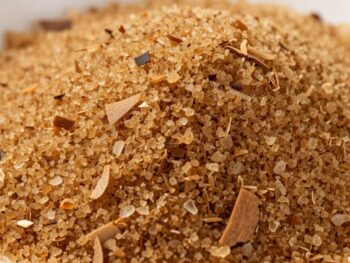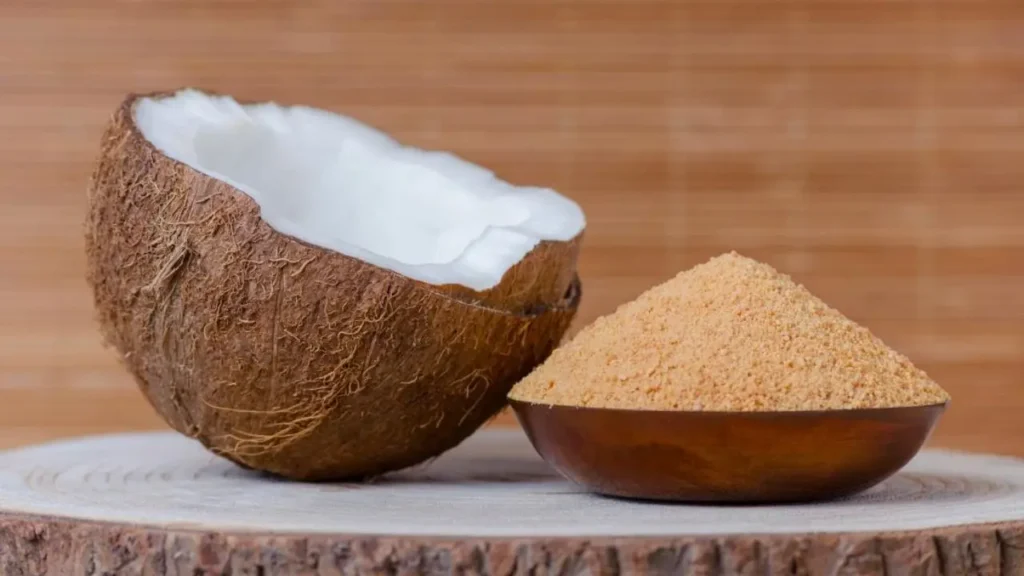
| Quick Answer: No — coconut sugar is not keto-friendly. Despite its lower glycemic index (GI 35–54), coconut sugar contains 12–15g net carbs per tablespoon, which is far too high for a ketogenic diet that limits total net carbs to 20–50g per day. Even a small amount can disrupt ketosis. |
Coconut sugar has earned a reputation as a "healthier" sweetener — lower glycemic index, trace minerals, less processed than white sugar.
It's a staple in paleo kitchens and a favorite among health-conscious bakers.
So it's natural to wonder: if coconut sugar is healthier, does that make it keto-friendly too?
The answer is no — and understanding why requires a quick look at what actually kicks you out of ketosis.
It's not the glycemic index. It's the carbohydrate count. In this guide, we break down the numbers, clarify the common GI misconception, and give you the best keto-friendly sweetener alternatives to use in your recipes instead.
→ Want the full GI breakdown? See our dedicated article: coconut sugar glycemic index guide
The Short Answer: Coconut Sugar Is Not Keto-Friendly
Coconut sugar is not keto-friendly.
A single tablespoon contains approximately 12–15 grams of net carbohydrates — nearly equivalent to plain white sugar.
On a standard ketogenic diet, the total daily net carb limit is between 20 and 50 grams.
One tablespoon of coconut sugar alone uses up 25–75% of that entire daily allowance.
The confusion stems from coconut sugar's low glycemic index (GI 35–54).
A low GI means the sugar is absorbed more slowly — but it does not mean the sugar contains fewer carbohydrates.
On keto, what matters is net carb count, not GI.
Coconut sugar's carb content is nearly identical to white sugar: roughly 4g per teaspoon, 12–15g per tablespoon.
Why a Lower Glycemic Index Does Not Mean Keto-Friendly
This is the most common misconception about coconut sugar and keto — and it's worth addressing directly.
The Ketogenic Diet Runs on Net Carbs, Not GI
The ketogenic diet achieves its effects by severely restricting carbohydrate intake, forcing the body into ketosis — a metabolic state where fat becomes the primary energy source instead of glucose.
To maintain ketosis, most protocols require keeping net carbohydrate intake between 20 and 50 grams per day.
Net carbs = total carbohydrates − dietary fiber − sugar alcohols (for certain types).
Coconut sugar contains approximately 4g net carbs per teaspoon. This is nearly identical to white sugar (4g per teaspoon) and brown sugar (4.5g per teaspoon).
The inulin fiber in coconut sugar does reduce its glycemic impact slightly, but the total carbohydrate load — the number that matters for ketosis — remains essentially the same.
GI Measures Speed, Not Amount
Glycemic index measures how quickly carbohydrates raise blood glucose — not how many carbohydrates a food contains.
A food with GI 35 and a food with GI 65 can have exactly the same number of carbs per serving; the lower-GI food just raises blood sugar more slowly.
For a person without diabetes choosing between natural sweeteners, lower GI is a meaningful advantage.
For someone maintaining ketosis, the total carb count is what triggers or prevents the metabolic shift — and both high-GI and low-GI sugars will break ketosis if consumed in normal amounts.
→ Read more: full guide to the glycemic index of coconut sugar — including why GI 35 still matters outside of keto contexts.
Coconut Sugar Nutrition Facts: The Carb Numbers
Here is a complete nutritional breakdown of coconut sugar:
| Metric | Per Teaspoon (4g) | Per Tablespoon (13g) | Per 100g |
| Calories | 15–16 kcal | 48–50 kcal | 375 kcal |
| Total Carbohydrates | 4g | 12–13g | 97g |
| Net Carbs | ~4g | ~12–13g | ~95g |
| Dietary Fiber | < 0.1g | < 0.3g | ~0.5g |
| Sugars | ~4g | ~12g | ~94g |
| Sucrose | ~3.2g | ~10g | ~79g |
| Fat | 0g | 0g | 0g |
| Protein | 0g | 0g | 0g |
| Inulin (fiber) | ~0.04g | ~0.12g | ~1–3g |
Coconut Sugar vs White Sugar vs Brown Sugar: Keto Comparison
| Sweetener | Net Carbs/tsp | GI | Keto-Friendly? | Notes |
| Coconut sugar | ~4g | 35–54 | ❌ No | Lower GI but same carb load |
| White sugar | ~4g | 58–65 | ❌ No | Standard reference |
| Brown sugar | ~4.5g | ~64 | ❌ No | Minimal nutritional difference |
| Honey | ~5.7g | 58–85 | ❌ No | Higher carbs than sugar |
| Maple syrup | ~3.5g | ~54 | ❌ No | Similar to coconut sugar |
| Erythritol | ~0g (net) | 0 | ✅ Yes | Sugar alcohol; minimal metabolic impact |
| Monk fruit sweetener | 0g | 0 | ✅ Yes | Zero calorie, zero carb |
| Stevia (pure) | 0g | 0 | ✅ Yes | Zero calorie, zero carb |
| Allulose | ~0g (net) | 0 | ✅ Yes | Rare sugar; minimal insulin response |
Will Coconut Sugar Kick You Out of Ketosis?

Yes — a normal serving of coconut sugar will likely disrupt ketosis for most people.
Here's why: ketosis is maintained when liver glycogen stays depleted, which happens only when daily net carbs remain consistently low (typically under 50g, and often under 20–30g for strict keto).
A single tablespoon of coconut sugar adds 12–15g net carbs. For someone on a strict 20g daily limit, that's 60–75% of their entire day's carbohydrate budget in one ingredient.
What About Just a Tiny Pinch?
Very small amounts — a quarter teaspoon in a large recipe serving multiple people — may not individually push you over your daily carb limit.
In that case, the per-serving carb contribution could be under 0.5g and unlikely to disrupt ketosis on its own.
However, this requires strict tracking and assumes no other carb sources in the meal.
For most people following keto, the practical advice is simple: the risk is not worth it when zero-carb alternatives work just as well.
If you are in a flexible low-carb pattern (rather than strict keto), occasional very small amounts may be acceptable — but regular use will consistently raise daily carb totals.
Best Keto-Friendly Sweetener Alternatives to Coconut Sugar
The good news: several natural sweeteners deliver sweetness with zero or near-zero net carbs, and some work remarkably well as 1:1 coconut sugar substitutes in baking and cooking.
Here are the four best options:
1. Erythritol
Erythritol is a sugar alcohol that occurs naturally in small amounts in some fruits.
It provides about 70% of the sweetness of sugar with essentially zero net carbs — the body absorbs it but does not metabolize it, so it does not raise blood glucose or insulin levels.
- Net carbs: ~0g per serving (not counted toward keto totals)
- Sweetness vs sugar: ~70% as sweet (use 1.3x the amount of sugar called for)
- Best for: baking, coffee, sauces
- Texture note: can create a slight cooling sensation in large amounts; this reduces when blended with other sweeteners
2. Monk Fruit Sweetener
Extracted from monk fruit (Luo Han Guo), monk fruit sweetener is 150–200x sweeter than sugar.
It contains zero calories and zero net carbs, with a clean sweet taste that most people find very close to sugar. It does not have the cooling effect of erythritol.
- Net carbs: 0g
- Sweetness vs sugar: 150–200x (use in tiny amounts, or use a monk fruit blend product)
- Best for: beverages, light baking, sauces
- Note: pure monk fruit is expensive; monk fruit + erythritol blends offer better value and performance
3. Stevia
Stevia is a plant-derived sweetener extracted from the leaves of Stevia rebaudiana.
It is 200–300x sweeter than sugar, calorie-free, and has no impact on blood glucose or ketosis.
Pure stevia (without added maltodextrin or dextrose fillers) is fully keto-compatible.
- Net carbs: 0g (pure stevia or stevia liquid drops)
- Sweetness vs sugar: 200–300x (use sparingly)
- Best for: beverages, yogurt, light desserts
- Watch for: some stevia products contain fillers (maltodextrin) that add carbs — check labels
4. Allulose
Allulose is a rare sugar that occurs naturally in figs, raisins, and wheat in tiny amounts.
It has the same chemical formula as fructose but is metabolized completely differently — the body absorbs but does not convert it to energy, resulting in near-zero caloric and glycemic impact.
It is the closest natural substitute to coconut sugar in terms of baking behavior.
- Net carbs: ~0g (FDA has approved allulose to be excluded from total/added sugar counts)
- Sweetness vs sugar: ~70% as sweet
- Best for: baking (caramelizes like real sugar), sauces, coffee
- Note: newer on the market; may be harder to find and more expensive than erythritol
Keto Sweetener Substitution Chart (replacing 1 tablespoon coconut sugar):
| Keto Sweetener | Amount to Use | Net Carbs | Best Application |
| Erythritol (granulated) | 1.3 tbsp | ~0g | Baking, coffee, sauces |
| Monk fruit + erythritol blend | 1 tbsp (1:1 blend) | ~0g | All-purpose |
| Stevia liquid (pure) | 6–8 drops | 0g | Beverages, yogurt |
| Allulose | 1.25 tbsp | ~0g | Baking (best caramelization) |
Keto-Friendly Coconut Products You Can Use
While coconut sugar is off the table for keto, several other coconut-derived products are genuinely keto-compatible and worth having in your kitchen:
| Coconut Product | Net Carbs | Keto Status | Best Use |
| Coconut oil | 0g | ✅ Excellent | Cooking, fat bombs, MCT source |
| Full-fat coconut milk (canned) | ~1–2g per ¼ cup | ✅ Good | Curries, sauces, keto desserts |
| Coconut cream | ~2–3g per ¼ cup | ✅ Good (use sparingly) | Whipped toppings, desserts |
| Unsweetened desiccated coconut | ~2g per oz | ✅ Good | Keto baking, granola, toppings |
| Coconut flour | ~6g per ¼ cup (high fiber) | ✅ Moderate | Low-carb baking (use with care) |
| Coconut milk powder (unsweetened) | ~2g per tbsp | ✅ Good | Beverages, baking, sauces |
| Coconut sugar | ~12–15g per tbsp | ❌ Not keto | Avoid or use trace amounts with tracking |
→ Sourcing coconut ingredients in bulk? See our full range of coconut products from Indonesia
Is Coconut Sugar Paleo-Friendly? (Yes — But That's Different from Keto)
Yes — coconut sugar is widely accepted in paleo diets. The paleo approach allows natural, minimally processed sweeteners from whole food sources, which coconut sugar qualifies as. Many paleo recipes use it freely.
This is an important distinction: paleo-friendly does not equal keto-friendly.
The paleo diet does not restrict carbohydrates as severely as keto — it focuses on food quality and origin, not macronutrient ratios.
Coconut sugar is a natural, traditionally produced sweetener that fits paleo logic perfectly. On keto, its carb count disqualifies it regardless of its natural origin.
Keto Recipes Using Coconut Products (Without Coconut Sugar)

These keto-friendly recipes use coconut products at their best — with keto-approved sweeteners replacing coconut sugar wherever needed:
RECIPE 1
Keto Coconut Yogurt with Berries
- 2 cups full-fat canned coconut milk
- 1 probiotic capsule
- 1 tsp vanilla extract
- 1 tbsp powdered erythritol or monk fruit sweetener
- ½ cup mixed berries (strawberries, raspberries — lower-carb choices)
- 1 tbsp unsweetened desiccated coconut flakes
Incubate coconut milk with a probiotic capsule per package directions. Chill, stir in vanilla and sweetener. Top with berries and coconut flakes. Net carbs per serving: ~4–6g.
RECIPE 2
Coconut Flour Chicken Tenders
- 1 lb chicken tenders
- ½ cup coconut flour
- ¾ cup unsweetened desiccated coconut
- 1 tsp garlic powder, 1 tsp onion powder, ½ tsp salt
- 2 eggs, beaten
- 2 tbsp coconut oil for cooking
Dredge chicken in egg, then coat with coconut flour-desiccated coconut mixture. Cook in coconut oil over medium-high heat, 3 minutes per side. Net carbs per serving: ~3g.
RECIPE 3
Keto Coconut Macaroons
- 3 cups unsweetened desiccated coconut
- ½ cup coconut flour
- ½ cup powdered erythritol (replaces coconut sugar from original recipe)
- ½ tsp sea salt
- 4 egg whites
- 1 tsp vanilla extract
- ½ cup 85%+ dark chocolate, roughly chopped (optional)
Mix all ingredients. Shape into rounds on a lined baking sheet. Bake at 325°F (160°C) for 18–20 minutes until golden. Net carbs per macaroon: ~2g.
The Bottom Line
Coconut sugar is a genuinely better sweetener than white sugar in many contexts: lower glycemic index, trace minerals, more natural processing.
For paleo, for general health-conscious eating, for reducing refined sugar intake — it is a solid choice.
But for keto, the carb count is the deciding factor, and coconut sugar's 12–15g net carbs per tablespoon makes it incompatible with maintaining ketosis.
The GI advantage, while real, is irrelevant in a diet governed by net carb limits rather than glycemic response.
If you're on keto and want the caramel-like flavor of coconut sugar in your recipes, an erythritol blend or a monk fruit + allulose combination will get you very close — with zero impact on your ketosis.
→ For non-keto applications, explore our coconut sugar products and specifications — available in bulk for food manufacturers and retailers.