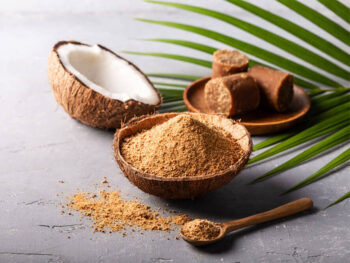
The best desiccated coconut is not simply the driest, finest, or highest-fat product.
The right choice depends on the intended application and whether the product meets a clearly defined specification for moisture, oil content, particle size, sensory quality, food safety, and documentation.
For a food manufacturer, importer, or procurement team, “premium” is less useful than measurable criteria.
A fine high-oil grade may work well for one formulation, while another application may intentionally require a reduced-fat grade, a larger cut, or a different sensory profile.
This guide explains the seven quality factors that matter most when evaluating desiccated coconut and how to match those factors to the product you are developing.
Quick Checklist: What Makes Good Desiccated Coconut?
Before comparing brands or suppliers, check whether the product meets the specification required for your application.
A practical first review should cover the following points:
| Factor | What to Check | Why It Matters |
| Moisture | Meets the agreed product specification; Codex CXS 177-1991 lists 4% m/m for products within its scope. | Affects storage behavior, flowability, texture, and product stability. |
| Oil content | Appropriate oil-content category for the intended application. | Influences composition, mouthfeel, flavor perception, and formulation. |
| Particle size / grade | Fine, medium, coarse, long thread, flakes, or another specified cut. | Changes visual appearance, texture, distribution, and processing behavior. |
| Sensory & physical condition | Clean appearance, expected coconut aroma/flavor, no obvious foreign matter or off-notes. | Helps confirm material condition and fit with the finished product. |
| Food safety | Relevant microbiological specification and verified production controls. | Critical for industrial food manufacturing and market compliance. |
| Documentation | Current specification, batch COA where applicable, certification scope, packaging and storage information. | Allows buyers to verify claims instead of relying on marketing terms. |
| Consistency | Comparable performance across approved batches and shipments. | Reduces formulation variation and production disruption. |
What Is Desiccated Coconut?

Desiccated coconut is dried coconut kernel that has been prepared, comminuted or shredded, dried, and classified into a specified size.
Different commercial grades can have different particle sizes and oil-content categories, so the product name alone does not tell a buyer whether a particular grade is right for a formulation.
For a broader guide to definitions, grades, cooking uses, rehydration, and related coconut forms, see our complete guide to cooking with desiccated coconut.
7 Quality Factors to Check Before Buying Desiccated Coconut
1. Moisture Content
Moisture is an important quality specification because it affects flowability, texture, storage behavior, and the way the ingredient performs during processing.
However, lower moisture does not automatically mean a higher grade.
The Codex Standard for Desiccated Coconut (CXS 177-1991) lists a moisture requirement of 4% m/m for products within its scope.
A supplier may manufacture to a tighter internal or customer specification, but that tighter number should be treated as a product-specific requirement rather than a universal definition of “premium.”
For procurement, ask: What is the moisture specification? How is it verified? Is the same limit shown on the current specification and batch documentation?
2. Oil Content
Oil content should be matched to the intended product, not used as a universal quality score.
Higher-oil desiccated coconut may provide a richer composition and different mouthfeel, while reduced-fat desiccated coconut is a legitimate product category for applications that require a different composition.
Codex CXS 177-1991 recognizes both an oil-content category of at least 60% m/m and a reduced-fat category of at least 35% but below 60% m/m, depending on the product type.
This is why a lower-oil product should not automatically be described as inferior.
For procurement, ask: Which oil-content category does the product belong to, and does that specification match the sensory and formulation target?
3. Particle Size and Grade
Particle size is an application decision, not a quality ranking.
Fine, medium, coarse, long-thread, and flake formats can all be high-quality products when they meet the agreed specification.
| Format / Grade | Typical Use | What the Buyer Should Evaluate |
| Fine | Cakes, cookies, confectionery, chocolate fillings, coatings | Even distribution, mouthfeel, absorption, visual presence |
| Medium | Granola, snack bars, general bakery, fillings | Visible texture, chew, distribution |
| Coarse / long thread | Decorative bakery, premium toppings, texture-forward products | Visual impact, bite, handling during production |
| Flakes | Toppings, snack mixes, decorative applications | Piece integrity, appearance, toasting behavior |
The important question is not “Which grade is the most premium?” but “Which grade produces the target texture and appearance in the finished product?”
For commercial grade and sourcing information, see our bulk desiccated coconut from Indonesia guide.
4. Color, Aroma, Flavor, and Physical Condition
A buyer should evaluate whether the material matches the agreed sensory and physical specification.
Check for expected coconut aroma and flavor, reasonably uniform appearance, and the absence of obvious foreign matter, unusual discoloration, off-odors, or storage-related defects.
Color alone should not be used as the only quality measure. Appearance can vary with raw material, processing, grade, and product specification.
The most useful reference is an agreed specification or approved sample rather than a generic rule such as “whiter is always better.”
For B2B approval, ask: Does the shipment match the agreed sensory profile and approved sample?
5. Microbiological and Food-Safety Specifications
For food manufacturing, microbiological compliance and production controls matter more than marketing terms such as “premium” or “export quality.”
Buyers should review the microbiological specification appropriate to their market and application, together with the supplier’s food-safety system and batch documentation.
Codex CXS 177-1991 also points to relevant food-hygiene principles for desiccated coconut.
In practice, the exact microbiological limits required by a buyer may depend on the destination market, customer specification, and intended use.
For procurement, ask: Which microbiological parameters are tested, what limits apply to the supplied product, and how are the results documented?
6. Certifications and Documentation
Certifications should be evaluated according to the buyer’s market and product requirements.
Food-safety certification, organic certification, Halal, Kosher, and market-specific documentation serve different purposes and should not be treated as interchangeable quality labels.
Before approval, verify that any certificate is current, authentic, and actually covers the relevant facility, product, process, or scope.
For organic or other claim-sensitive programs, confirm that the certification matches the market in which the finished product will be sold.
A practical document pack may include:
- Current product specification sheet.
- Batch Certificate of Analysis (COA), where applicable.
- Relevant food-safety and product-certification documents.
- Ingredient and additive declaration.
- Packaging and storage information.
- Traceability or lot information required by the buyer’s quality system.
7. Batch Consistency and Supplier Quality Control
A specification is useful only if the supplier can reproduce it consistently.
For food manufacturers, variation in moisture, particle size, sensory profile, or other agreed parameters can affect processing and finished-product consistency.
For new suppliers or new grades, request a representative sample and evaluate it under the real manufacturing process whenever possible.
For higher-volume programs, buyers may also review consistency across multiple lots before expanding order volume.
For procurement, ask: Can the supplier provide repeatable specifications, batch documentation, and a clear process for handling out-of-specification material?
The Best Desiccated Coconut Depends on the Application

There is no single grade that is best for every food product. The correct starting point depends on what the coconut needs to do in the formulation.
| Application | Typical Priority | Practical Starting Point |
| Cakes & cookies | Even distribution and controlled bite | Fine or medium, then confirm through formulation testing |
| Chocolate fillings | Smooth incorporation and controlled texture | Fine |
| Granola & snack bars | Visible coconut and texture | Medium or coarse |
| Decorative toppings | Visual impact and piece integrity | Long thread or flakes |
| Confectionery | Texture, sensory profile, and oil-content fit | Fine or medium depending on the product |
| Industrial formulations | Repeatable specification and process performance | Grade selected from formulation requirements, not marketing labels |
The “best” desiccated coconut is therefore the product that fits the formulation and consistently passes the buyer’s quality specification.
What About the “Best Desiccated Coconut Brand”?

There is no universal best brand for every application. A retail baker, a confectionery manufacturer, and an importer buying full-container quantities may all need different specifications.
Instead of choosing by brand name alone, compare measurable criteria: product specification, documentation, food-safety controls, batch consistency, particle size, oil content, moisture, packaging, and whether the product has been tested successfully in your application.
B2B Buyer Checklist Before Approving a Desiccated Coconut
- Define the required application and target texture before asking for a grade.
- Request the current product specification rather than relying on terms such as “premium.”
- Confirm moisture, oil-content category, particle size, and relevant sensory requirements.
- Review the microbiological specification and applicable food-safety controls.
- Check the scope and validity of certifications required for your market.
- Request a representative sample for formulation or production testing.
- Confirm packaging, storage conditions, shelf-life documentation, and logistics requirements.
- Request a batch COA or other quality documentation when required by your quality system.
If you are sourcing commercially, our bulk desiccated coconut from Indonesia guide covers grades, sourcing considerations, packaging, and buying information in more detail.
Choose Desiccated Coconut by Specification, Not Marketing Labels
The best desiccated coconut is the product that matches the intended application, meets an agreed specification, and performs consistently from batch to batch.
Lower moisture, finer particles, or higher oil content should not be treated as universal quality rankings without considering the product being manufactured.
For B2B buyers, focus on measurable requirements: moisture, oil-content category, particle size, sensory profile, food-safety specifications, documentation, packaging, and repeatable supply.
A representative sample and current specification are more useful than a generic “premium” label.
To discuss desiccated coconut grades, current specifications, documentation, samples, or bulk supply from Indonesia, review our bulk desiccated coconut sourcing guide or contact the Global Coco Sugar team for current information.
Frequently Asked Questions
What makes desiccated coconut high quality?
High-quality desiccated coconut is best judged against a defined specification. Buyers should review moisture, oil-content category, particle size, sensory quality, food-safety parameters, documentation, and batch consistency rather than rely on marketing terms alone.
How much moisture should desiccated coconut contain?
Codex CXS 177-1991 lists a moisture requirement of 4% m/m for products within its scope. A commercial supplier may manufacture to a tighter specification, so the buyer should use the agreed product specification and current batch documentation as the decision point.
Is high-fat desiccated coconut always better?
No. Higher-oil and reduced-fat desiccated coconut can both be legitimate product types. The correct oil-content category depends on the formulation and target product.
Which desiccated coconut grade is best for baking?
Fine or medium grades are common starting points for baking because they distribute easily through doughs and batters, but the best grade depends on the desired texture, appearance, and processing behavior.
What is the best desiccated coconut brand?
There is no universal best brand for every application. Compare the product specification, food-safety documentation, batch consistency, grade, and actual performance in your formulation rather than relying on brand name alone.
What documents should B2B buyers request?
Typical documents include a current product specification, relevant certificates, ingredient and additive declaration, packaging and storage information, and a batch COA where applicable to the buyer’s quality system.
Should I choose fine or extra-fine desiccated coconut?
Choose based on the intended texture and manufacturing process. A finer particle size is not automatically higher quality; it is simply better suited to applications that need smoother incorporation or less visible coconut pieces.