
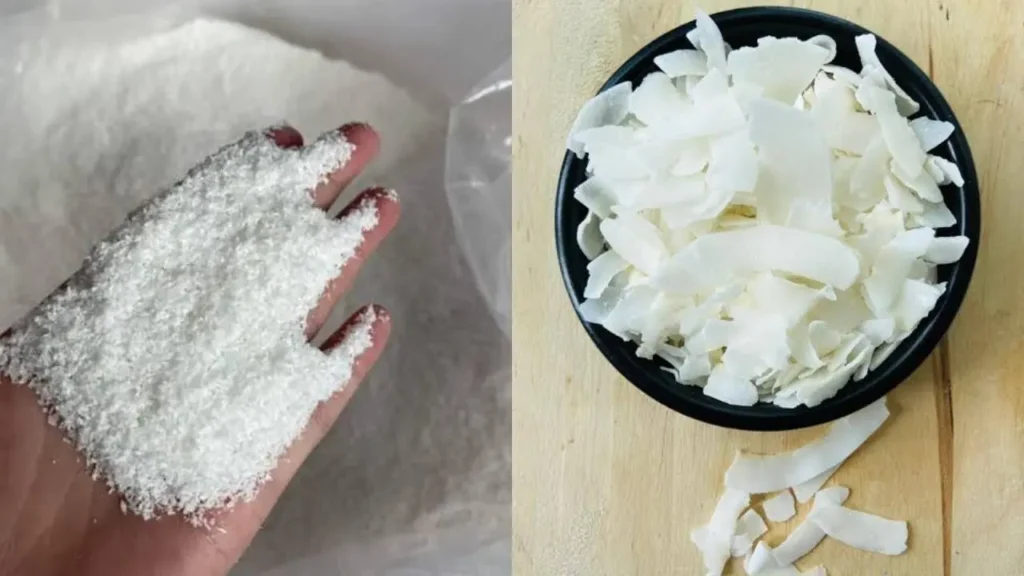
Desiccated coconut and coconut flakes both come from dried coconut meat, but they are not the same. The main differences are size, texture, moisture, sweetness, recipe use, and how they perform in food production.
Coconut flakes are usually larger, wider, and better for toppings or visible texture. Desiccated coconut is smaller, drier, and better for mixing into doughs, batters, fillings, coatings, and commercial food products.
This guide compares desiccated coconut vs coconut flakes so home cooks, bakers, food manufacturers, private label buyers, and procurement teams can choose the right coconut ingredient for their application.
Quick Answer: Are Desiccated Coconut and Coconut Flakes the Same?
No, desiccated coconut and coconut flakes are not the same. Coconut flakes are usually larger, wider, and slightly chewier, while desiccated coconut is smaller, drier, and more finely grated.
Coconut flakes work well as toppings, garnishes, and visible texture in recipes. Desiccated coconut is usually better for baking, coatings, fillings, doughs, confectionery, and recipes that need coconut to blend more evenly into the mixture.
For commercial sourcing, buyers should check cut size, moisture, fat content, sweetness, packaging, shelf life, and product specification before choosing one format.
Desiccated Coconut vs Coconut Flakes: Quick Comparison
| Factor | Coconut Flakes | Desiccated Coconut |
| Size | Larger, wider pieces | Fine, medium, or coarse grated coconut |
| Texture | Chewy, flaky, and sometimes crisp when toasted | Dry, light, and finely shredded or grated |
| Moisture | Usually higher than desiccated coconut | Usually lower and more shelf-stable |
| Common use | Toppings, garnishes, granola, trail mix, decoration | Baking, coatings, fillings, doughs, confectionery |
| Flavor impact | More visible coconut bite and texture | More evenly distributed coconut flavor |
| Sweetened options | Often sold sweetened or unsweetened | Commonly unsweetened for industrial use |
| B2B checks | Size, moisture, sweetness, packaging | Grade, moisture, fat content, microbiology, COA |
What Are Coconut Flakes?
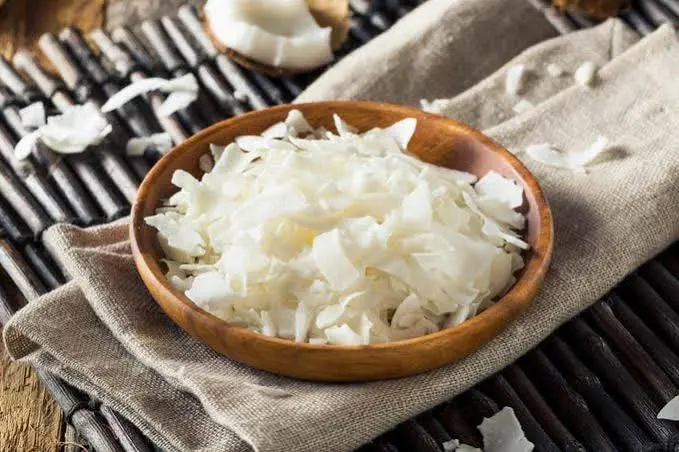
Coconut flakes are large, thin pieces of coconut meat made by shaving or slicing the white flesh of mature coconuts. They are then dried to reduce moisture.
Depending on the product, coconut flakes may be sweetened or unsweetened, toasted or untoasted.
Because coconut flakes are larger than desiccated coconut, they create more visible texture in finished products.
They are commonly used for topping smoothie bowls, oatmeal, yogurt, cakes, cookies, granola, trail mix, salads, and desserts.
For food brands, coconut flakes can be useful when the final product needs a clear coconut appearance, a chewy bite, or a decorative topping.
What Is Desiccated Coconut?

Desiccated coconut is dried coconut meat that has been grated, shredded, or milled into smaller particles. It is usually finer and drier than coconut flakes.
Desiccated coconut can come in different cut sizes such as fine, medium, coarse, or specialty cuts, depending on the supplier and intended application.
Because of its smaller size, desiccated coconut blends more easily into batters, doughs, coatings, fillings, and confectionery products.
It is widely used by commercial bakeries, biscuit manufacturers, snack producers, chocolate and confectionery brands, and private label food manufacturers.
If your team needs coconut that can blend into a formula rather than sit on top of it, desiccated coconut is usually the better choice.
7 Key Differences Between Desiccated Coconut and Coconut Flakes
1. Size and Cut
Coconut flakes are larger and wider. They often look like thin chips or shaved coconut pieces. Desiccated coconut is smaller and more finely grated. This difference affects how each ingredient looks and performs in a recipe.
If the product needs visible coconut pieces, coconut flakes are usually better. If the product needs even coconut distribution, desiccated coconut is usually more practical.
2. Texture and Mouthfeel
Coconut flakes provide more chew, bite, and visual texture. When toasted, they can become crisp and aromatic. Desiccated coconut has a finer, drier mouthfeel and blends into food more easily.
This matters in baking and food manufacturing. A cookie, snack bar, filling, or coating can change noticeably if a formula uses flakes instead of desiccated coconut.
3. Moisture and Shelf Life
Desiccated coconut is usually drier than coconut flakes. Lower moisture can help improve shelf stability, but exact moisture level depends on the supplier specification, product type, packaging, and storage condition.
Coconut flakes may retain more texture and bite, but they should still be stored properly in a cool, dry place. For bulk purchasing, buyers should request moisture information and storage recommendations from the supplier.
4. Flavor Distribution
Both products provide coconut flavor, but they distribute flavor differently. Coconut flakes create noticeable coconut bites in specific parts of the product. Desiccated coconut spreads coconut flavor more evenly throughout doughs, batters, fillings, coatings, and mixtures.
For product development, the right choice depends on whether the brand wants visible coconut texture or more uniform coconut flavor.
5. Best Recipe Uses
Coconut flakes are best for toppings, garnishes, granola, trail mix, smoothie bowls, baked decoration, and recipes where visual coconut pieces are important.
Desiccated coconut is best for cakes, cookies, biscuits, macaroons, energy balls, fillings, coatings, snack bars, confectionery, and bakery products where coconut needs to blend into the formula. For more application ideas, read our guide to cooking with desiccated coconut.
6. Sweetened vs Unsweetened Options
Coconut flakes are often available in both sweetened and unsweetened forms. Desiccated coconut is commonly sold unsweetened, especially for commercial baking, confectionery, and food manufacturing.
This matters because sweetened coconut can change sugar level, browning, texture, moisture, and final taste. If you are comparing sweetened products, see our guide to sweetened desiccated coconut.
7. Commercial Sourcing Requirements
For B2B buyers, the product name alone is not enough. Two suppliers may use similar terms but provide different cut sizes, moisture levels, fat content, sweetness, packaging, shelf life, and quality standards.
Before confirming a bulk order, buyers should review product specifications, samples, COA availability, microbiological standards, certification scope, export documents, MOQ, packaging format, and shelf life.
Can You Substitute Coconut Flakes for Desiccated Coconut?
Yes, you can sometimes substitute coconut flakes for desiccated coconut, but the texture will change. Coconut flakes are larger and more visible, so they may not blend smoothly into batters, doughs, coatings, or fillings.
If a recipe needs desiccated coconut but you only have coconut flakes, pulse the flakes briefly in a food processor until they become smaller. If the flakes are sweetened, reduce other sweeteners in the recipe.
If a recipe needs coconut flakes but you only have desiccated coconut, the result will be less chewy and less visually textured. Lightly toasting desiccated coconut can improve aroma and texture, but it will not fully replace the larger flake shape.
For commercial production, substitutions should always be tested first because particle size, moisture, sweetness, and fat content can affect texture, shelf life, and product consistency.
Sweetened vs Unsweetened Coconut: Why It Matters
Sweetened and unsweetened coconut products can behave differently in recipes. Sweetened coconut may add sugar, moisture, chewiness, and stronger browning. Unsweetened coconut gives manufacturers more control over sweetness and formulation.
For home baking, checking the label may be enough. For B2B sourcing, buyers should request a product specification that clearly states whether the coconut is sweetened or unsweetened, along with moisture, fat content, particle size, and packaging details.
This is especially important for bakery, confectionery, snack, cereal, granola, and private label products where sugar level and texture consistency matter.
What About Shredded Coconut, Flaked Coconut, and Desiccated Coconut?
In some markets, terms like shredded coconut, flaked coconut, coconut flakes, and desiccated coconut can overlap. However, they usually refer to different cut sizes and textures.
Shredded coconut is usually longer and thinner than desiccated coconut. Coconut flakes are wider and larger. Desiccated coconut is typically finer, drier, and more suitable for mixing into food products.
Because naming can vary by supplier and country, B2B buyers should rely on product specifications, cut size, moisture, fat content, sweetness, and sample approval instead of product names alone.
Nutrition Comparison: Keep It Product-Specific
Both coconut flakes and desiccated coconut contain coconut fat and fiber, but nutrition values vary depending on cut size, moisture, sweetness, toasting, and brand formulation. Sweetened coconut products may also contain added sugar.
For accurate nutrition values, consumers should check the product label. Food brands and B2B buyers should review supplier specifications or request nutrition data based on the exact product being sourced.
For general food composition reference, buyers can also compare ingredient data through USDA FoodData Central.
Avoid assuming that coconut flakes and desiccated coconut have identical nutrition values unless they come from the same supplier, same formulation, and same serving basis.
What B2B Buyers Should Check Before Sourcing Coconut Flakes or Desiccated Coconut
For bakeries, confectionery brands, snack manufacturers, private label buyers, and procurement teams, the choice between coconut flakes and desiccated coconut should be based on product application.
Coconut flakes are better for visible texture and toppings, while desiccated coconut is usually better for mixing into doughs, batters, coatings, fillings, and industrial food production.
Before sourcing in bulk, buyers should verify cut size, moisture, fat content, sweetness, color, aroma, microbiological standards, packaging, shelf life, certification scope, COA availability, MOQ, and export documentation.
If your team is evaluating bulk desiccated coconut from Indonesia, review product specifications and request samples before confirming the right grade or cut size. Buyers can also explore broader coconut products from Indonesia for related coconut ingredients.
Need desiccated coconut, coconut flakes, or coconut-based ingredients for bakery, confectionery, snack, or private label applications? Contact our export team to request specifications, samples, packaging details, or a quotation.
Final Thoughts
Desiccated coconut and coconut flakes come from the same fruit, but they are designed for different uses. Coconut flakes are larger and better for visible texture, toppings, and decoration. Desiccated coconut is smaller, drier, and better for baking, fillings, coatings, and commercial food production.
For home recipes, the right choice depends on texture and final appearance. For B2B sourcing, the right choice depends on product specification, consistency, packaging, certification scope, COA availability, and sample approval.
Understanding these differences helps buyers choose the coconut ingredient that fits the final product, whether for bakery, confectionery, snacks, toppings, private label, or other coconut-based food applications.
FAQ About Desiccated Coconut vs Coconut Flakes
Are desiccated coconut and coconut flakes the same?
No. Desiccated coconut is usually smaller, drier, and more finely grated, while coconut flakes are larger and wider.
What is the difference between desiccated coconut and coconut flakes?
The main differences are size, texture, moisture, and use. Desiccated coconut blends into recipes, while coconut flakes work better as toppings or visible texture.
Can I use coconut flakes instead of desiccated coconut?
Yes, but the texture will change. For better results, pulse coconut flakes in a food processor before using them in place of desiccated coconut. If the flakes are sweetened, adjust the recipe sweetness.
Can I use desiccated coconut instead of coconut flakes?
Yes, but the result will be finer and less visually textured. Desiccated coconut can work in some recipes, but it will not create the same large coconut pieces as flakes.
Is desiccated coconut sweetened or unsweetened?
Desiccated coconut is commonly sold unsweetened, especially for baking and commercial food production. However, buyers should always check the product label or supplier specification.
Are coconut flakes the same as shredded coconut?
Not always. Coconut flakes are usually wider and larger, while shredded coconut is usually thinner and longer. Naming can vary by country, brand, and supplier.
Which is better for baking, desiccated coconut or coconut flakes?
Desiccated coconut is usually better for mixing into batters, doughs, fillings, and coatings. Coconut flakes are better when you want visible texture, topping, or decoration.


