
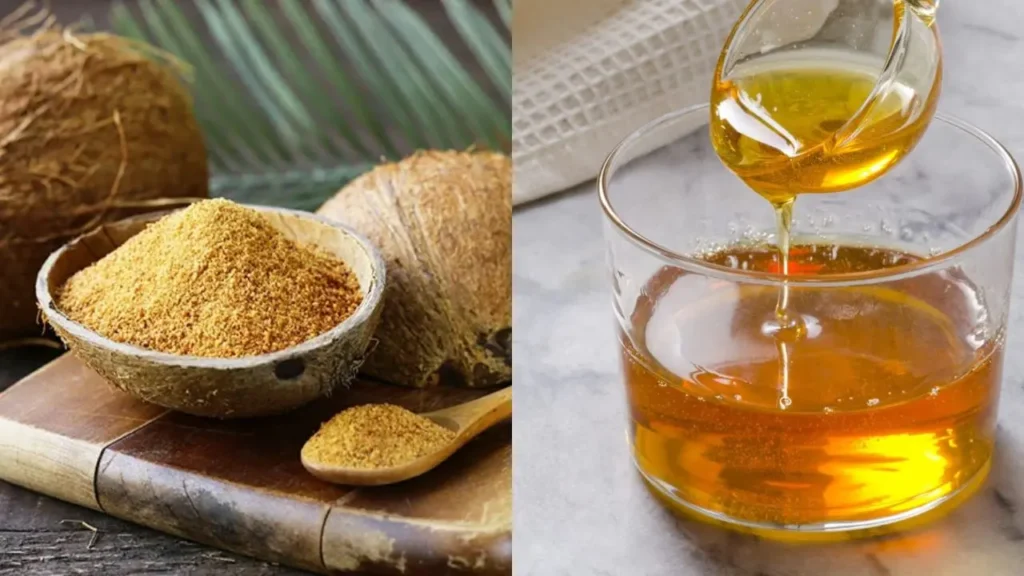
| Direct Answer: Coconut Sugar vs Agave Nectar for Food Manufacturing Coconut sugar and agave nectar serve different functional roles in food manufacturing and are often not direct substitutes. Coconut sugar is a granulated dry sweetener (GI ~35, ~92% carbs, primarily sucrose) that behaves like brown sugar — ideal for bakery, confectionery, and snack applications requiring dry sweetener functionality. Agave nectar is a liquid sweetener (GI ~15-30, ~75-85% fructose) — ideal for beverages, sauces, dressings, and no-bake applications where liquid sweetener is compatible. The critical technical difference is fructose content: agave's very high fructose (75-85%) creates faster Maillard browning, potential fructose-related health concerns for consumers, and different crystallization behavior than coconut sugar's primarily sucrose composition. Neither is universally 'better' — the choice depends entirely on your application, form requirement, and label positioning strategy. |
In the natural sweetener category, coconut sugar and agave nectar are two of the most commonly used alternatives to refined white sugar and high-fructose corn syrup in food manufacturing.
Both support 'refined sugar-free', 'natural sweetener', and 'clean label' positioning. Both have been commercially established for over a decade.
But they are functionally very different ingredients — and choosing the wrong one for your application can mean reformulation costs, texture failures, and label claim complications that are expensive to fix after production.
This technical comparison is written for food technologists, product developers, and procurement managers — not for consumer health decisions.
It covers the functional chemistry, application suitability, formulation adjustments, supply chain considerations, and label claim implications of each sweetener.
Browse our certified coconut sugar for food manufacturers for specifications.
Origins and Basic Composition
| Coconut Sugar | Agave Nectar | |
| Source | Sap from coconut palm flower buds (Cocos nucifera) — Indonesia, Philippines | Blue agave plant (Agave tequilana) — primarily Mexico |
| Physical form | Granulated dry solid — behaves like brown sugar | Viscous liquid syrup — behaves like honey or maple syrup |
| Primary sugar | ~70-80% sucrose + ~3-9% fructose/glucose | ~75-85% fructose + ~15-25% glucose (highly fructose-dominant) |
| GI (Glycemic Index) | ~35 (Low) — due to inulin fiber content | ~15-30 (Very Low) — due to dominant fructose content |
| Calories per 100g | ~375 kcal | ~310 kcal |
| Water content | Max 3% (granulated) | ~20-25% (liquid form) |
| Brix | Not applicable — solid | ~75-80 Brix (standard food grade) |
| Relative sweetness vs sugar | ~85-95% as sweet as white sugar | ~125-150% as sweet — can use less volume |
| Processing level | Minimal — evaporation and crystallization only | Moderate — hydrolysis of inulin to fructose required |
| Primary origin country | Indonesia (~70% of global supply) | Mexico (~90%+ of global supply) |
| The fructose issue — what food manufacturers need to know Agave nectar's very high fructose content (75-85%) is its primary differentiating characteristic — and the most important one for food manufacturers to understand. Fructose has a lower GI than sucrose (hence agave's very low GI), but it is metabolized differently: primarily in the liver rather than cells, and without triggering insulin response. At high intakes, fructose is associated with non-alcoholic fatty liver disease (NAFLD) and metabolic issues — which is why the 'healthy' reputation of agave has been significantly revised by nutritionists and food scientists since the early 2010s. For food label positioning, this means agave's 'low GI' benefit may be challenged by health-informed consumers who are aware of the fructose concern. Coconut sugar's lower fructose content and primarily sucrose composition avoids this specific controversy. |
Coconut Sugar vs Agave Nectar: Functional Properties for Food Manufacturing
| Technical Property | Coconut Sugar | Agave Nectar | Manufacturing Implication |
| Physical state | Granulated solid | Viscous liquid | Different equipment, mixing protocols, and moisture balance requirements |
| Dissolution | Complete — dissolves fully in water/batters | Already liquid — no dissolution step needed | Agave integrates faster in wet formulations; coconut sugar needs adequate liquid |
| Maillard reaction (browning) | Enhanced vs white sugar — caramelizes at slightly lower temp | Enhanced vs white sugar — fructose Maillard-reacts faster and at lower temperature | Both brown faster than sucrose — reduce baking temperature 5-10°C for both |
| Hygroscopicity | Moderate — lower than brown sugar | High — fructose is more hygroscopic than sucrose | Agave-sweetened products absorb moisture faster — shelf life implications |
| Crystallization | Crystallizes normally — can be powdered | Does NOT crystallize at typical formulation concentrations — remains liquid | Coconut sugar for set confectionery; agave for chews, gummies, liquid applications |
| Viscosity contribution | None — granulated | Significant — increases batter/sauce viscosity | Agave affects texture/flow — factor into rheology specifications |
| pH in solution | 5.5-6.5 (mildly acidic) | ~5.0-6.0 (mildly acidic) | Similar pH — compatible with most food systems |
| Water activity impact | Raises aw minimally at use levels | Can lower aw — fructose's hygroscopicity | Agave may extend moist product shelf life in some applications |
| Fermentability | Fully fermentable (sucrose, fructose, glucose) | Fully fermentable — very fast fermentation due to fructose | Both work for fermented products; agave ferments faster — adjust culture protocols |
Glycemic Index Deep Dive: Low GI Positioning Implications
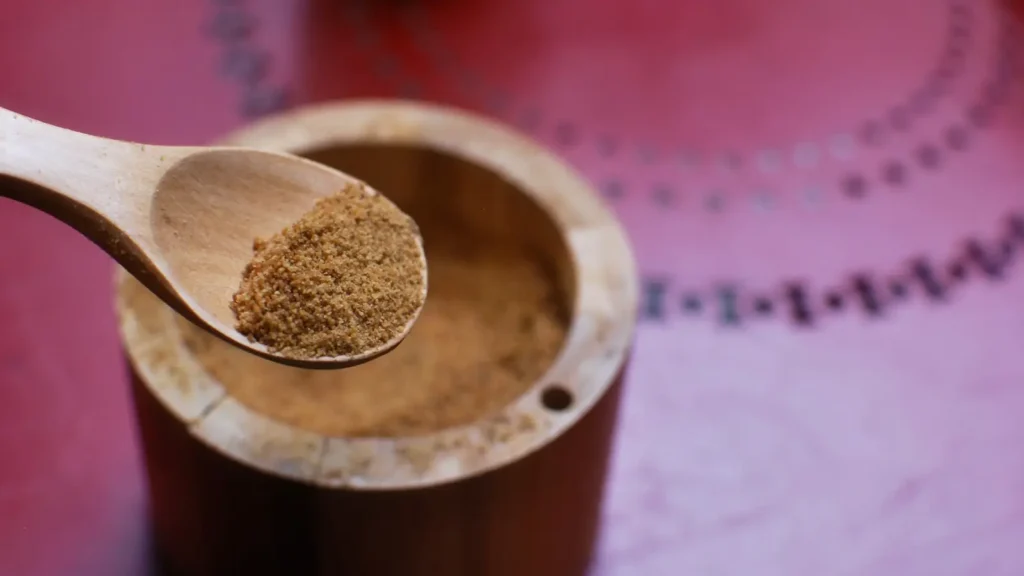
Both sweeteners are positioned as 'low GI' alternatives — but the mechanism and implication are different.
For a complete scientific breakdown of coconut sugar's GI and what it means for food label claims in EU and US markets, see our dedicated article on the glycemic index of coconut sugar.
| GI Factor | Coconut Sugar (GI ~35) | Agave Nectar (GI ~15-30) |
| GI mechanism | Inulin fiber slows glucose absorption in small intestine | Dominant fructose does not trigger insulin — processed primarily by liver |
| Blood glucose response | Slower, lower peak than sucrose — genuinely lower GI | Very low blood glucose peak — but fructose goes to liver, not cells |
| Metabolic concern | Minimal at typical serving sizes | High fructose intake linked to NAFLD, metabolic syndrome at high intake |
| Consumer perception (2026) | Generally positive — widely accepted 'natural low-GI' | More contested — health-informed consumers aware of fructose concern |
| Label claim strength | Strong — GI 35, inulin-based, well-documented | Lower GI number but increasingly questioned by nutritionists |
| Diabetic positioning | Appropriate with moderation disclaimer | Appropriate for blood glucose but metabolic concerns apply |
| ISO 26642:2010 testing | Required for finished product low-GI claim | Required for finished product low-GI claim |
Application-by-Application Guide: Which to Use Where
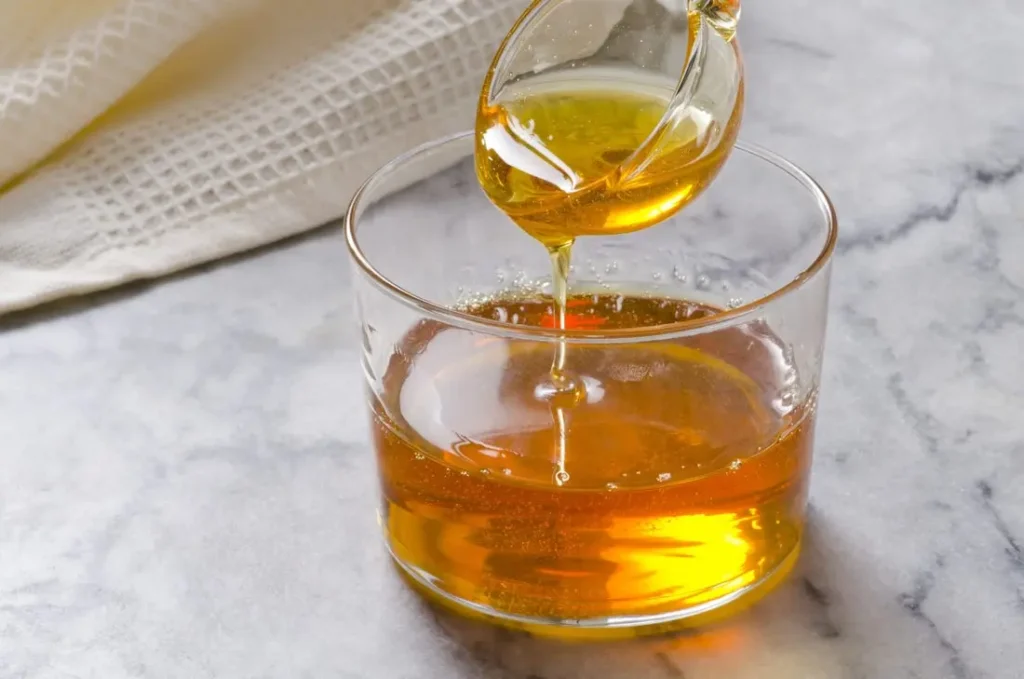
This is the most practical section for product developers — a direct recommendation per food manufacturing application category:
Bakery — Cakes, Muffins, Cookies, Quick Breads
| Factor | Coconut Sugar | Agave Nectar |
| Functionality | Behaves like brown sugar — creams with butter, dissolves in batter | Adds liquid — requires moisture balance adjustment |
| Substitution ratio | 1:1 vs white/brown sugar by weight | ¾ cup agave per 1 cup sugar; reduce other liquids by 3-4 tbsp |
| Color impact | Noticeably darker — golden-brown to dark brown crumb | Darker than white sugar — similar to coconut sugar effect |
| Oven temperature | Reduce 5-10°C vs white sugar (faster caramelization) | Reduce 10-15°C vs white sugar (fructose browns faster) |
| Texture | Slightly denser, chewy, caramel notes | Moister, denser due to liquid form and hygroscopic fructose |
| Verdict for bakery | PREFERRED — more versatile, easier process control | Usable but requires more formulation adjustment |
Beverages — RTD, Syrups, Coffee/Tea Additives
| Factor | Coconut Sugar | Agave Nectar |
| Dissolution in cold liquid | Dissolves with stirring — may be slow in very cold | Dissolves instantly — already liquid |
| Dissolution in hot liquid | Dissolves fully within 30-60 seconds | Instant — simply stir |
| Flavor contribution | Caramel notes — detectable in light-flavored beverages | Milder, more neutral sweetness |
| Brix control in syrups | Requires dissolution step — less precise | Direct measurement — easier Brix control |
| Fermentation (kombucha) | Fully fermentable — consistent results | Very fast fermentation due to fructose — adjust culture protocols |
| Verdict for beverages | Good for dark beverages (coffee, chai); less ideal for clear/light | PREFERRED for most beverage applications — faster, cleaner |
Confectionery — Chocolate, Gummies, Caramels, Chews
| Factor | Coconut Sugar | Agave Nectar |
| Crystallization | Will crystallize — suitable for set confectionery | Does NOT crystallize — suitable for soft/chewy confectionery |
| Caramel production | Caramelizes at lower temp — excellent caramel development | Fructose caramelizes very fast — precise temperature control needed |
| Chocolate applications | Fine grade for ganache, truffle filling | Liquid form for ganache — adds moisture |
| Gummies and chews | Not suitable — crystallization creates texture issues | PREFERRED — non-crystallizing liquid ideal for chewy texture |
| Hard confectionery | Challenging — lower caramelization temperature | Not suitable — does not set into hard candy structure |
| Verdict for confectionery | PREFERRED for chocolate, caramel, set confectionery | PREFERRED for gummies, chews, liquid-based confectionery |
Sauces, Dressings, Glazes, Marinades
| Factor | Coconut Sugar | Agave Nectar |
| Dissolution | Needs dissolving in the sauce liquid | Already liquid — instant integration |
| Flavor | Caramel note adds depth to BBQ, teriyaki, dark sauces | Neutral sweet — works in delicate dressings without flavor intrusion |
| Coating/glazing | Excellent caramelization on protein surfaces | Very good — fructose caramelizes at lower temperature for beautiful glaze |
| Emulsification | Does not affect emulsification | Does not affect emulsification |
| Verdict for sauces | PREFERRED for flavor-forward, dark sauces and glazes | PREFERRED for light dressings, neutral-flavored sauces |
Snack Bars, Granola, Energy Products
| Factor | Coconut Sugar | Agave Nectar |
| Binding function | Limited — granulated sugar provides some structure | EXCELLENT — liquid agave is a primary binder in many bar formulations |
| Cluster formation (granola) | Good — slight caramelization creates clusters | Very good — sticky liquid creates tight clusters |
| Moisture retention | Moderate — lower hygroscopicity than honey | Higher — fructose retains moisture, extending soft texture |
| Shelf stability | Good at < 3% moisture | Requires careful aw management — hygroscopic fructose |
| Verdict for bars/granola | PREFERRED for crispy texture, loose granola | PREFERRED for chewy bars, tight granola clusters, soft texture |
Label Claims: What Each Sweetener Supports
| Label Claim | Coconut Sugar | Agave Nectar | Notes |
| Refined sugar-free | ✅ Yes | ✅ Yes | Both are unrefined — legitimately claimed |
| Natural sweetener | ✅ Yes | ✅ Yes | Both qualify — consumer-recognized single ingredients |
| Low GI ingredient | ✅ Yes (GI ~35) | ✅ Yes (GI ~15-30) | Finished product must be tested per ISO 26642 for EU/AU GI claims |
| Organic | ✅ Available — USDA NOP, EU Organic | ✅ Available — USDA NOP from certified Mexican suppliers | Both organically certifiable — verify supplier certification |
| Vegan | ✅ Yes | ✅ Yes | Both plant-derived |
| Clean label | ✅ Strong — single ingredient, recognized name | ✅ Strong — single ingredient, recognized name | Both perform well on clean label scoring |
| No added sugar (FDA) | ❌ No — still a caloric sweetener | ❌ No — still a caloric sweetener | Neither qualifies as 'no added sugar' |
| Diabetic-friendly (product claim) | ⚠️ With caveats | ⚠️ With caveats — fructose concern adds complexity | Both require careful regulatory review before making diabetic claims |
| Prebiotic | ✅ Yes — contains inulin fiber | ✅ Yes — agave contains inulin (though mostly converted in processing) | Coconut sugar's inulin is more intact than agave's processed form |
Supply Chain and Commercial Considerations

For food manufacturers, sourcing reliability and certification infrastructure are as important as functional properties.
Our guide on what certifications a coconut sugar supplier should have and our article on BRCGS certified coconut sugar suppliers from Indonesia cover the verification process for coconut sugar.
For organic documentation requirements, see our guide on exporting organic coconut sugar from Indonesia.
| Commercial Factor | Coconut Sugar | Agave Nectar |
| Primary origin | Indonesia — stable, large-scale supply | Mexico — well-established but more geographically concentrated |
| Global supply volume | ~500,000 MT annual production estimate | ~100,000-150,000 MT annual estimate |
| BRCGS certified suppliers | Multiple Grade A certified Indonesian exporters | Limited BRCGS certified agave suppliers |
| USDA Organic availability | Widely available — established certification infrastructure | Available — some certified Mexican suppliers |
| EU Organic availability | Widely available | More limited than US organic |
| Price stability | Relatively stable — established commodity | More volatile — agave plant takes 7-10 years to mature |
| MOQ (FCL volume) | ~14-16 MT (20ft FCL) — widely available | Typically smaller volume, often in IBC tanks or drums |
| Shelf life | 18-24 months (granulated, sealed) | 24-36 months (syrup, sealed) |
| Supply disruption risk | Low — multiple Indonesian suppliers | Moderate — agave supply constrained by 7-10 year plant growth cycle |
| Price trend 2026 | Stable to slight increase | Moderate increase — supply pressure from tequila industry competition |
For current pricing and MOQ information for coconut sugar, see our bulk coconut sugar supplier Indonesia guide.
When Food Brands Use Both Together
Many food brands use coconut sugar and agave nectar simultaneously in the same product — each contributing a different functional role.
This is not a compromise; it is often the optimal formulation strategy:
- Granola bars: Coconut sugar for caramel flavor and crunchy texture elements; agave nectar as the primary binder holding the bar structure together.
- Beverages with visible sweetener sources: Agave in the liquid base (instant dissolution, neutral flavor); coconut sugar as a rim decoration or added-grain visual element.
- Baked goods with caramel filling: Coconut sugar in the baked component (dry formulation); agave in the caramel filling (non-crystallizing liquid).
- Protein bars: Coconut sugar for flavor complexity and caramel notes that mask protein off-notes; agave for binding and moisture retention.
- Label claim stacking: 'Sweetened with coconut sugar and agave nectar' — two recognized natural sweeteners that together support full clean label, refined sugar-free, and natural positioning.
For the complete range of food industry applications where coconut sugar delivers the strongest technical and commercial results, our article on applications of coconut sugar in the food industry covers all major product categories.
For a comparison between coconut sugar and its liquid form (coconut nectar), see our article on coconut nectar syrup vs other natural sweeteners.
| Source certified coconut sugar for your commercial formulation Global Coco Sugar supplies BRCGS Food Safety Grade A certified organic and conventional coconut sugar from Indonesia — in fine, medium, and coarse grades with full COA from ISO 17025-accredited laboratories. Technical data sheets and R&D samples available for food manufacturer evaluation. Contact Our Food Industry Sales Team >>> View Our Coconut Sugar Product Range & Specifications >>> |
Conclusion: Complementary Tools, Not Direct Competitors
Coconut sugar and agave nectar are not competing for the same formulation role — they are complementary ingredients that each excel in different applications.
The decision framework is straightforward: for applications requiring dry sweetener functionality (bakery, confectionery), coconut sugar is the more versatile and technically reliable choice.
For applications requiring liquid sweetener functionality (beverages, binding in bars, no-bake applications), agave nectar's liquid form and non-crystallizing properties make it the better choice.
The health positioning story has evolved for both sweeteners. Coconut sugar's low-GI story (based on inulin fiber slowing glucose absorption) remains largely intact.
Agave's low-GI story (based on dominant fructose) has become more complicated as the metabolic effects of high fructose intake have been better documented.
For food brands with health-conscious consumers who research ingredients, coconut sugar's clean nutritional story may be a lower-risk positioning choice than agave's increasingly scrutinized fructose content.
Frequently Asked Questions
Can you substitute agave nectar for coconut sugar in food manufacturing?
Not directly. Agave nectar is a liquid sweetener, while coconut sugar is granulated. Recipe adjustments are needed to account for moisture content, sweetness, and browning, so formulation testing is recommended before large-scale production.
Which has a lower glycemic index: coconut sugar or agave nectar?
Agave nectar generally has a lower glycemic index than coconut sugar because it contains more fructose. However, a lower GI does not necessarily make it a healthier choice, and any GI claims should be based on testing of the finished product.
Which is better for bakery applications: coconut sugar or agave nectar?
Coconut sugar is generally better suited for baking because it behaves similarly to brown sugar and requires fewer formulation adjustments. Agave nectar is often preferred for products where a liquid sweetener and added moisture are beneficial.
Why does agave nectar have such a low glycemic index?
Agave nectar's low glycemic index is mainly due to its high fructose content, which affects blood glucose differently from sucrose. While this lowers its GI, overall nutritional value should be considered alongside other dietary factors.
Is organic agave nectar available?
Yes. USDA Organic agave nectar is available from certified suppliers. However, compared with organic coconut sugar, certified organic agave generally has a more limited global supply and fewer sourcing options.


