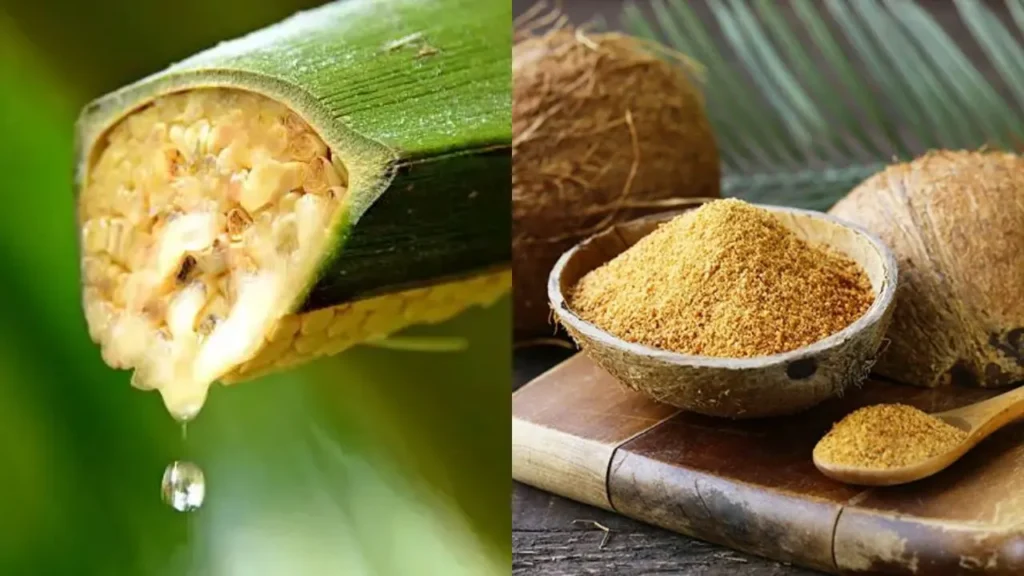
| Quick Answer: What Is the Difference Between Coconut Nectar and Coconut Sugar? Both come from the same source — the sap of coconut palm flower buds — but processing stops at different stages. Coconut nectar is a liquid syrup (Brix 70-75) produced by gently evaporating the sap without crystallization. Coconut sugar is produced by evaporating the sap further until it crystallizes into granules. Coconut nectar has a slightly lower GI (~35), more intense caramel flavor, and suits liquid applications. Coconut sugar is granulated, easier to measure, more widely available, and better for baking applications that require a dry sweetener. |
When evaluating coconut nectar vs coconut sugar, you will find they are two of the most commonly confused natural sweeteners — and for good reason.
They come from the same tree, the same part of the tree, and the same raw material.
The difference lies in what happens after the sap is collected, and those differences matter practically for how each sweetener performs in cooking, baking, beverages, and food manufacturing.
At Global Coco Sugar, we produce and export both coconut sugar and coconut nectar syrup from Indonesia — which gives us a uniquely direct perspective on their differences.
Browse our coconut sugar and coconut nectar product range before reading further.
And to understand the shared foundation — the coconut palm flower sap tapping process that both products begin with — our article on how coconut sugar is produced in Indonesia explains the full production chain.
The Same Origin, Different Journeys: How Both Are Made
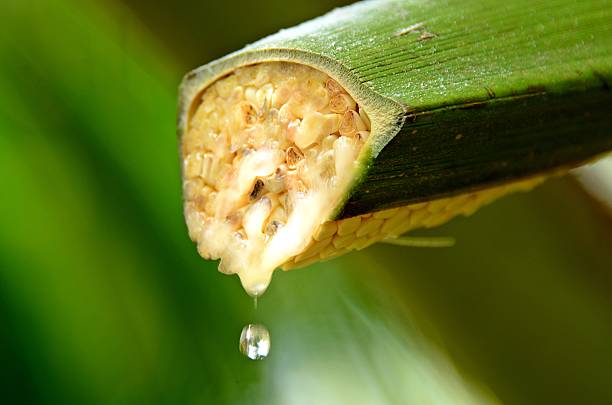
Understanding why coconut nectar and coconut sugar are different starts with understanding that they begin identically — and diverge only in the final processing stage.
Step 1: Shared Origin (Identical for Both Products)
- Coconut farmers make careful incisions in the flower bud stalks of coconut palms (Cocos nucifera).
- Fresh sap flows naturally from the incisions and is collected in bamboo containers or food-grade vessels twice daily.
- The fresh sap has a natural Brix of approximately 15-17 — mildly sweet, slightly cloudy, with a fresh floral aroma.
- This fresh sap must be processed quickly — left unprocessed, it begins to ferment within hours.
Step 2: Where the Paths Diverge
| Processing Stage | Coconut Nectar | Coconut Sugar |
| Heat application | Gentle heating at low temperature (~60-80°C) | Higher temperature heating — up to 100°C+ |
| Evaporation target | Partial evaporation — stopped at Brix 70-75 (liquid) | Full evaporation — until water is almost completely removed |
| Crystallization | Does not crystallize — remains liquid | Sugars crystallize as water evaporates — forms solid mass |
| Post-evaporation | Filtered, filled into jars/drums as liquid syrup | Solid mass stirred to break into granules — packed as granulated sugar |
| Final moisture | ~25-30% moisture (liquid form) | Max 3% moisture (granulated form) |
| Final Brix | 70-75 Brix | Not applicable — granulated product |
| Processing complexity | Lower — fewer process steps | Higher — requires additional crystallization and granulation steps |
| Why coconut nectar is sometimes called 'coconut sugar syrup' or 'coconut palm syrup' Because both products come from the same raw material and the same initial process, coconut nectar is sometimes marketed under different names: coconut sugar syrup, coconut palm syrup, coconut sap syrup, or raw coconut nectar. These are all the same product — liquid coconut sweetener that has been partially evaporated but not crystallized. For purchase orders and import documentation, always specify 'coconut nectar syrup' and the Brix specification (typically 70-75 Brix) to avoid confusion with other coconut-derived liquid products. |
Complete Comparison: Coconut Nectar vs Coconut Sugar — 12 Key Differences
| Parameter | Coconut Nectar Syrup | Coconut Sugar (Granulated) |
| Physical form | Thick, viscous liquid — honey-like consistency | Granulated crystals — brown sugar-like appearance |
| Color | Dark amber to dark brown | Golden brown to dark brown |
| Flavor profile | Rich caramel, butterscotch, slight earthiness — more intense than coconut sugar | Caramel, butterscotch — similar but slightly less intense in liquid applications |
| Glycemic Index (GI) | ~35 (low GI) | ~35-54 (low to medium — varies by study) |
| Calories per 100g | ~280-300 kcal | ~370-380 kcal |
| Sugar content | ~70-75g per 100g (at Brix 70-75) | ~90-95g per 100g |
| Inulin (prebiotic fiber) | Present — similar to coconut sugar | Present — 1-3% of carbohydrates |
| Moisture content | ~25-30% | Max 3% |
| Shelf life (unopened) | 12-18 months (cool, dry conditions) | 18-24 months (cool, dry conditions) |
| Shelf life (opened) | 3-6 months refrigerated | 6-12 months in airtight container at room temperature |
| MOQ (bulk commercial) | 500 kg | 1 MT (1,000 kg) |
| Price position | Slightly higher per kg — lower MOQ | Lower per kg at equivalent volume — higher MOQ |
Taste and Flavor: Is There a Real Difference?
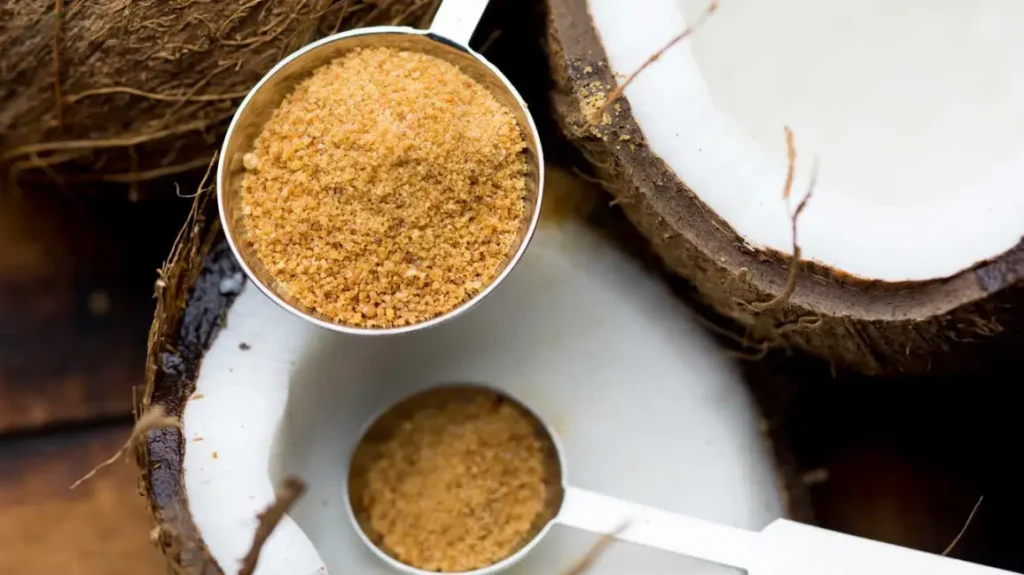
In any coconut nectar vs coconut sugar taste comparison, both share the same fundamental flavor profile — the caramel-butterscotch character developed from the natural sugars in coconut palm sap through the Maillard reaction during heating.
However, there are subtle but detectable differences:
- Coconut nectar is more intensely flavored. The liquid form concentrates the flavor compounds more immediately on contact with the palate. A teaspoon of coconut nectar in coffee delivers a more pronounced caramel hit than a teaspoon of granulated coconut sugar dissolved in the same coffee.
- Coconut sugar has a cleaner, drier sweetness. Because the crystallization process further concentrates and transforms the flavor compounds, granulated coconut sugar has a slightly 'cleaner' sweetness with less of the earthy undertones present in coconut nectar.
- Both are less sweet than white sugar by volume. Coconut nectar's sweetness is diluted by its water content (25-30% moisture); coconut sugar's coarser crystals dissolve slightly more slowly than refined white sugar. Both deliver sweetness that most people describe as 'gentler' and 'more complex' than white sugar.
- Coconut nectar's flavor survives heat better. In baked applications, the caramel notes of coconut nectar integrate with the Maillard reaction of baking to produce very rich, deep flavors — often preferred in brownies, dense cakes, and sauces.
When to Use Coconut Nectar vs Coconut Sugar: Application Guide
| Application | Better Choice | Reason |
| Coffee and tea | Coconut nectar | Dissolves instantly without heating — no need to stir until dissolved. Direct flavor delivery. |
| Smoothies and cold beverages | Coconut nectar | Liquid form blends seamlessly. Coconut sugar in cold liquid may not fully dissolve. |
| Salad dressings and sauces | Coconut nectar | Liquid sweetener emulsifies better with oil-based dressings. No undissolved grains. |
| Glazes and marinades | Coconut nectar | Liquid form coats surfaces more evenly. Creates beautiful caramelized glaze on proteins and vegetables. |
| Cake and muffin batter | Coconut sugar | Granulated form creams with butter properly. Coconut nectar adds extra moisture that can affect structure. |
| Cookies | Coconut sugar | Granulated sugar needed for proper cookie spread and texture. Nectar would make dough too wet. |
| Granola | Either | Coconut sugar for clusters; coconut nectar for a stickier, more caramelized cluster effect. |
| No-bake energy balls | Coconut nectar | Acts as a natural binder alongside nut butter or dates. Better binding than granulated sugar. |
| Measuring precision | Coconut sugar | Granulated sugar is easier to measure consistently by volume or weight than a viscous liquid. |
| Kombucha fermentation | Coconut nectar | Liquid sweetener dissolves completely in brewing liquid without heating. |
| Frosting and icing | Coconut sugar (powdered) | Coconut nectar in frosting can make it too liquid. Powder coconut sugar in blender first. |
| Fermented products | Either | Both work — coconut nectar may ferment slightly faster due to higher free moisture. |
Nutritional Comparison: Is One Healthier Than the Other?
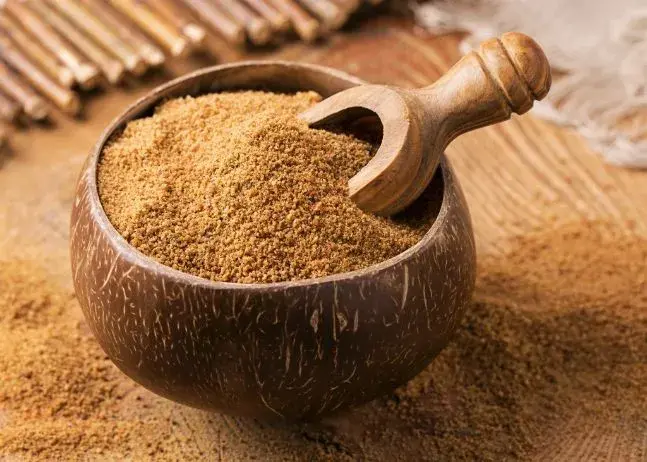
When looking at the nutrition of coconut nectar vs coconut sugar, both share similar nutritional profiles — they come from the same raw material.
The glycemic index of coconut sugar is approximately 35, and coconut nectar's GI is similarly low (approximately 35) — both significantly lower than white sugar (GI ~65) due to the naturally occurring inulin fiber content of coconut palm sap.
| Nutrient (per 100g) | Coconut Nectar Syrup (Brix 70-75) | Coconut Sugar (Granulated) |
| Calories | ~280-300 kcal | ~370-380 kcal |
| Total carbohydrates | ~70-75g | ~90-95g |
| Sucrose | ~60-70% of carbs | ~75-80% of carbs |
| Inulin fiber | ~1-2% | ~1-3% |
| Potassium | ~900-1,000 mg | ~1,030 mg |
| Iron | ~2.0-2.5 mg | ~2.5 mg |
| Zinc | ~0.4-0.5 mg | ~0.56 mg |
| Magnesium | ~25-28 mg | ~29 mg |
| Glycemic Index | ~35 | ~35-54 |
| Processing level | Minimal — single ingredient | Minimal — single ingredient |
| Why coconut nectar has fewer calories per 100g than coconut sugar Coconut nectar has approximately 280-300 kcal per 100g vs coconut sugar's 370-380 kcal per 100g. This is because coconut nectar contains 25-30% water — the caloric content is diluted by the moisture. When comparing caloric content on a dry matter basis, both products are very similar. For practical use: a tablespoon (12g) of coconut nectar has approximately 34-36 kcal; a tablespoon (12g) of granulated coconut sugar has approximately 45 kcal. |
For Food Manufacturers: Choosing Between Coconut Nectar and Coconut Sugar
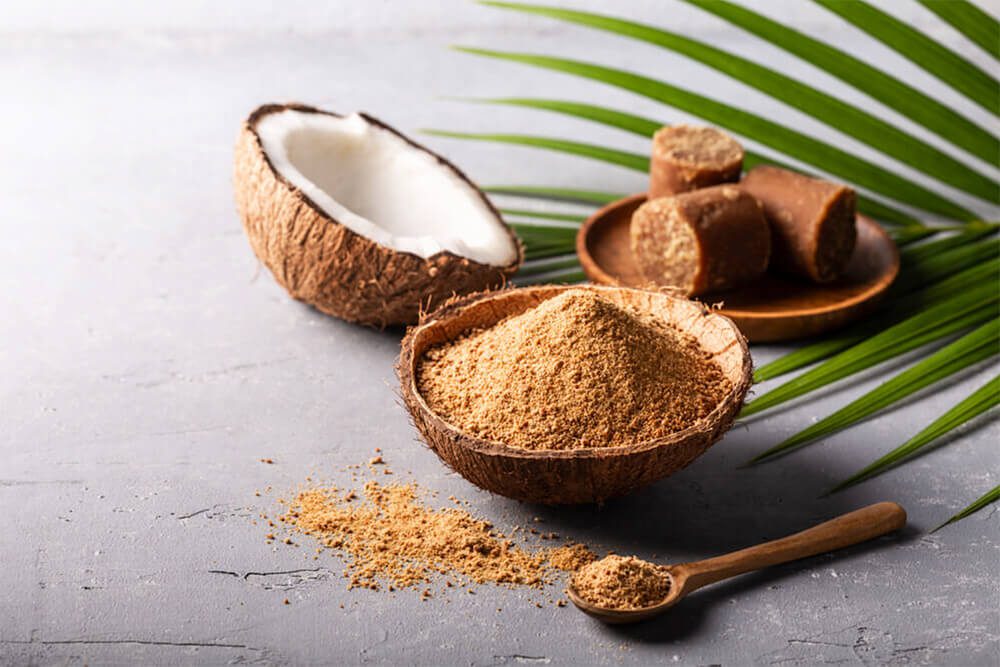
For food manufacturers, the choice between coconut nectar and coconut sugar is largely determined by the product format and processing requirements.
Our article on applications of coconut sugar and coconut nectar in the food industry covers the full range of commercial applications.
For a detailed comparison of coconut nectar against honey, maple syrup, and agave from a food manufacturing perspective, see our article on coconut nectar syrup vs other natural sweeteners.
| Product Category | Recommended Form | Technical Rationale |
| Beverages (RTD, syrups, tonics) | Coconut nectar | Dissolves without heating; consistent Brix easy to specify; natural claim supported |
| Bakery (cakes, muffins, cookies) | Coconut sugar | Granulated form needed for creaming and structure; predictable moisture balance |
| Confectionery glazes and coatings | Coconut nectar | Flows evenly; caramelizes at controlled temperature; adhesion to product surface |
| Snack bars and granola | Either or both | Coconut sugar for crunch; coconut nectar for binding — combination often used |
| Fermented products (kombucha, kefir) | Coconut nectar | Fully soluble; consistent sugar availability for fermentation cultures |
| Sauces, dressings, marinades | Coconut nectar | Liquid form integrates easily; no dissolution step required in production |
| Plant-based products | Either | Both support 'natural', 'plant-based', 'refined sugar-free' label claims |
| Source both coconut nectar and coconut sugar from a single certified supplier Global Coco Sugar is a BRCGS Food Safety Grade A certified supplier of both organic coconut nectar syrup and organic coconut sugar from Indonesia. Sourcing both from a single supplier simplifies certification documentation, logistics, and supplier qualification. Samples of both products available for R&D evaluation. Request Samples or a Bulk Quote >>> View Our Coconut Sugar and Nectar Product Range >>> |
Conclusion: Different Tools for Different Sweetening Jobs
Coconut nectar and coconut sugar are not competing products — they are complementary tools that happen to share a raw material.
The choice between them is a function of what you are making, not which product is 'better.'
For beverages, sauces, and glazes — coconut nectar.
For baking and dry applications — coconut sugar.
For a brand that wants both a liquid and a granulated natural sweetener with consistent certification documentation and a single-origin story — both, from the same Indonesian supplier.
Frequently Asked Questions
What is the difference between coconut nectar and coconut sugar?
Both products are made from coconut palm flower sap but undergo different processing. Coconut nectar is a liquid syrup produced through partial evaporation, while coconut sugar is fully evaporated until it crystallizes into granules. As a result, they are used in different food and beverage applications.
Is coconut nectar the same as coconut sugar?
No. Coconut nectar is a liquid sweetener, while coconut sugar is a granulated sweetener. Although they share the same source material, they differ in texture, moisture content, and typical uses in cooking and food manufacturing.
Which has a lower glycemic index: coconut nectar or coconut sugar?
Both coconut nectar and coconut sugar are generally reported to have a low glycemic index compared to refined sugar. While some studies suggest slight differences, both are commonly used as lower-GI alternatives to conventional sweeteners.
Can I substitute coconut nectar for coconut sugar in baking?
Yes, but recipe adjustments are usually required. Because coconut nectar is a liquid sweetener, you may need to reduce other liquids in the recipe and slightly adjust baking conditions to achieve the desired texture.
Which is better for cooking: coconut nectar or coconut sugar?
It depends on the application. Coconut nectar works well in beverages, sauces, dressings, and glazes, while coconut sugar is generally preferred for baking and recipes that require a dry sweetener.