Coconut smoothies have become one of the most popular healthy drinks for good reason: they combine the natural richness of coconut with whatever fruits, greens, or protein you need, delivering both great taste and real nutritional benefits in a single glass.
But what exactly makes a coconut smoothie good for you? And which coconut products — coconut milk, coconut water, coconut oil, or coconut sugar — should you be using, and when?
Here's the complete answer.
8 Benefits of Coconut Smoothies

1. Quick, Sustained Energy from MCTs
Coconut milk and coconut oil are rich in medium-chain triglycerides (MCTs) — a type of saturated fat that the body digests differently from long-chain fatty acids.
MCTs are absorbed directly into the bloodstream and transported to the liver, where they can be quickly converted into energy.
This makes a coconut smoothie an effective natural energy source, particularly before or after physical activity, without the blood sugar spike that comes from high-sugar drinks.
→ See: benefits of coconut oil and VCO for energy metabolism
2. Hydration and Electrolyte Replenishment
Coconut water is one of the best natural sources of electrolytes — potassium, sodium, and magnesium — that the body loses through sweat.
Adding coconut water to your smoothie provides hydration support that goes beyond plain water, making coconut smoothies an excellent post-workout recovery drink.
Unlike commercial sports drinks, coconut water is naturally low in calories and free from artificial additives.
3. Digestive Health Support
Shredded or desiccated coconut is a significant source of dietary fiber — approximately 4–9g per ounce, depending on the type. Dietary fiber supports regular bowel movements, feeds beneficial gut bacteria, and helps prevent constipation. Including desiccated coconut in your smoothie is one of the easiest ways to boost daily fiber intake without drastically changing texture or flavor.
→ See: desiccated coconut uses and benefits
4. Longer-Lasting Satiety
The combination of MCTs and dietary fiber in a coconut smoothie creates a strong satiety effect — you feel full longer than you would from a juice or low-fat smoothie.
The fat content slows gastric emptying, and the fiber expands in the digestive system, both contributing to reduced hunger between meals.
This makes coconut smoothies a practical option for managing portion control and reducing mid-morning or afternoon snacking.
5. Immune System Support
Coconut contains lauric acid — a fatty acid that the body converts to monolaurin, a compound with demonstrated antimicrobial properties in laboratory studies.
Combined with the vitamin C found in fruits commonly added to coconut smoothies (mango, pineapple, kiwi), a coconut smoothie can provide meaningful immune support as part of a balanced diet.
Vitamin C is essential for white blood cell production and acts as an antioxidant protecting cells from oxidative damage.
6. Skin and Hair Health
Coconut oil and coconut milk are rich in vitamin E, an antioxidant that supports skin cell repair and protection from UV-induced oxidative stress.
The healthy fats in coconut also support the absorption of fat-soluble vitamins (A, D, E, K) from other ingredients in your smoothie — vitamins that are crucial for skin elasticity, hair strength, and nail health.
7. Heart Health Minerals
Coconut water and coconut milk both contribute potassium and magnesium — two minerals that play key roles in regulating blood pressure and supporting cardiovascular function.
Potassium helps counteract the blood-pressure-raising effects of sodium, while magnesium supports muscle relaxation and normal heart rhythm.
8. A Naturally Lower-GI Way to Sweeten Your Smoothie
Most smoothie recipes call for honey, maple syrup, or agave as a sweetener — but coconut sugar is a less-processed alternative that adds a mild caramel sweetness with a lower glycemic index (GI 35–54) compared to white sugar or honey.
Because coconut sugar is granulated, it blends smoothly into liquids and doesn't require heating before adding to your smoothie.
A teaspoon or two in a coconut milk-based smoothie adds sweetness with less blood sugar impact than conventional sweeteners.
→ See our coconut sugar glycemic index guide and comparison with other sweeteners
Which Coconut Product Should You Use in Your Smoothie?
| Coconut Product | Best For | Flavor Contribution | Key Nutritional Benefit |
| Coconut milk (full-fat) | Creamy base, dairy-free smoothies | Rich, creamy, strong coconut flavor | MCTs, healthy fats, vitamin E |
| Coconut milk (light) | Lower-calorie option | Milder, thinner texture | Fewer calories than full-fat |
| Coconut water | Post-workout, light base | Subtle, refreshing, slightly sweet | Electrolytes: potassium, sodium, magnesium |
| Coconut oil | MCT boost, fat-soluble vitamin absorption | Neutral to mild coconut | MCTs, quick energy |
| Desiccated coconut | Added texture, fiber boost | Mild coconut, nutty | Dietary fiber, healthy fats |
| Coconut sugar | Natural low-GI sweetener | Mild caramel, butterscotch | GI 35–54, trace minerals, inulin |
| Coconut cream | Extra-thick smoothie bowls | Very rich, intense coconut | Highest fat content, very creamy |
How Much Coconut to Use in a Smoothie
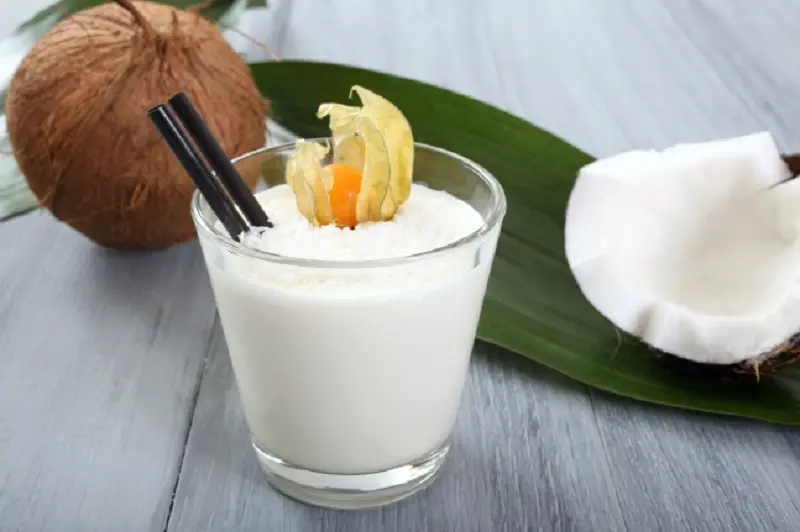
- Coconut milk: ½ to 1 cup (120–240ml) as the base liquid — enough for a creamy, full-bodied smoothie without being too heavy
- Coconut water: 1 cup (240ml) as a light, hydrating base — or mixed half-and-half with coconut milk for balance
- Coconut oil: 1 teaspoon to 1 tablespoon — enough to contribute MCTs and improve fat-soluble vitamin absorption without making the smoothie oily
- Desiccated coconut: 2 to 4 tablespoons — adds texture and fiber; blend thoroughly to avoid gritty consistency
- Coconut sugar: 1 to 2 teaspoons as sweetener — start with 1 tsp and adjust to taste
- Coconut cream: ¼ cup (60ml) for extra richness — works best in smoothie bowls rather than drinkable smoothies
Coconut Smoothie Recipes

The GCS Signature Coconut Smoothie (with Coconut Sugar)
Serves 1 | Prep time: 5 minutes
Ingredients:
- 1 cup (240ml) full-fat coconut milk
- ½ cup (120ml) coconut water
- 1 frozen banana
- ½ cup (75g) frozen mango chunks
- 1 tablespoon desiccated coconut (plus extra for garnish)
- 1 teaspoon coconut sugar
- ¼ teaspoon vanilla extract
- Pinch of sea salt
- Ice cubes (optional, for extra thickness)
Method: Blend all ingredients until smooth. Taste and adjust sweetness with an additional ½ teaspoon coconut sugar if needed. Pour into a glass, garnish with desiccated coconut flakes, and serve immediately.
Nutrition per serving (approx.): 320 kcal | 6g fiber | 28g healthy fats | electrolytes from coconut water.
→ Ingredients used in this recipe: our organic desiccated coconut and coconut sugar products
Tropical Coconut Smoothie
Blend 1 cup coconut milk, ½ cup frozen pineapple, ½ cup frozen mango, ½ banana, and 1 tsp coconut sugar until smooth.
The natural sweetness of tropical fruits pairs perfectly with the creamy coconut base, while the coconut sugar adds depth without refined sweetness.
Green Coconut Smoothie
Blend 1 cup coconut water, 1 cup fresh spinach, ½ avocado, 1 frozen banana, juice of ½ lime, and 1 tsp coconut sugar.
The coconut water provides hydrating electrolytes while the avocado adds creaminess and healthy fats — and the coconut sugar balances the earthiness of the spinach with a subtle caramel note.
Post-Workout Coconut Protein Smoothie
Blend 1 cup coconut milk, 1 scoop vanilla protein powder, 1 frozen banana, 1 tablespoon coconut oil, 1 tablespoon desiccated coconut, and 1 teaspoon coconut sugar.
The coconut oil adds quick-release MCT energy, while the protein powder supports muscle recovery.
Coconut sugar provides a small energy boost without the crash of high-GI sweeteners.
Chocolate Coconut Smoothie
Blend 1 cup full-fat coconut milk, 1 frozen banana, 1 tablespoon unsweetened cocoa powder, 1 tablespoon almond or peanut butter, 1 teaspoon coconut sugar, and a pinch of sea salt.
This indulgent but nutritious combination delivers MCTs, healthy fats, antioxidants from cocoa, and protein from the nut butter.
Coconut Smoothie Bowl
For a thicker, spoonable smoothie bowl: blend ½ cup coconut cream, 1 frozen banana, ½ cup frozen mango, and 2 teaspoons coconut sugar until very thick.
Pour into a bowl and top with sliced fresh fruit, desiccated coconut, granola, and a drizzle of coconut nectar for extra sweetness.
→ About coconut nectar as a natural sweetener alternative
The Bottom Line
Coconut smoothies earn their place as a genuinely nutritious drink — not just a trend.
The MCTs in coconut milk and oil, electrolytes in coconut water, fiber in desiccated coconut, and trace minerals across all coconut products combine to make a smoothie that delivers real nutritional benefits alongside great flavor.
The key is in the coconut product you choose: coconut water for hydration, coconut milk for richness and MCTs, desiccated coconut for fiber, coconut oil for a focused energy boost, and coconut sugar as a lower-GI natural sweetener that complements tropical flavors particularly well.
→ For the coconut ingredients that go into these smoothies, explore our full range of organic coconut products
Frequently Asked Questions
Is a coconut smoothie good for you?
Yes — coconut smoothies provide MCTs for quick energy, dietary fiber for digestive health, electrolytes from coconut water, and essential minerals like potassium and magnesium. The exact benefits depend on which coconut products and additional ingredients you use. Like any food, the health impact also depends on portion size and overall diet quality.
What are the benefits of a coconut smoothie?
The main benefits of coconut smoothies include: sustained energy from MCTs in coconut milk or oil, electrolyte replenishment from coconut water, digestive fiber from desiccated coconut, satiety from healthy fats, immune support from lauric acid and vitamin C, and essential minerals (potassium, magnesium) for heart health.
Is coconut smoothie good for weight loss?
Coconut smoothies can support weight management due to their high satiety factor — the MCTs and fiber help you feel full longer, reducing calorie intake between meals. However, full-fat coconut milk is calorie-dense, so portion control matters. A smoothie made with coconut water (lower calorie) rather than full-fat coconut milk is more appropriate for calorie-restricted diets.
Can I put coconut oil in a smoothie?
Yes. 1 teaspoon to 1 tablespoon of coconut oil is a common addition to smoothies. It contributes MCTs for energy and helps absorb fat-soluble vitamins (A, D, E, K) from other ingredients. Use cold-pressed or virgin coconut oil for the best flavor. Blend thoroughly as oil tends to separate if blended too briefly.
What can I use to sweeten a coconut smoothie naturally?
Natural sweetener options for coconut smoothies include coconut sugar (mild caramel flavor, lower GI 35–54), ripe banana (natural sweetness and creaminess), dates, honey, maple syrup, or coconut nectar. Coconut sugar is particularly complementary to coconut-based smoothies as it adds depth without overpowering the tropical flavors.
Can I use coconut water instead of coconut milk in a smoothie?
Yes — coconut water makes a much lighter, lower-calorie smoothie base compared to coconut milk. Coconut water is better for hydration and electrolyte replenishment; coconut milk is better for creaminess and MCT content. Many recipes combine both for a balance of lightness and richness.
Is coconut smoothie keto-friendly?
Full-fat coconut milk is keto-friendly (low in carbs, high in fat). A keto coconut smoothie would use full-fat coconut milk, coconut oil, and a zero-carb sweetener like erythritol or stevia — avoiding high-carb additions like banana or mango. Coconut sugar is not keto-friendly due to its carbohydrate content.