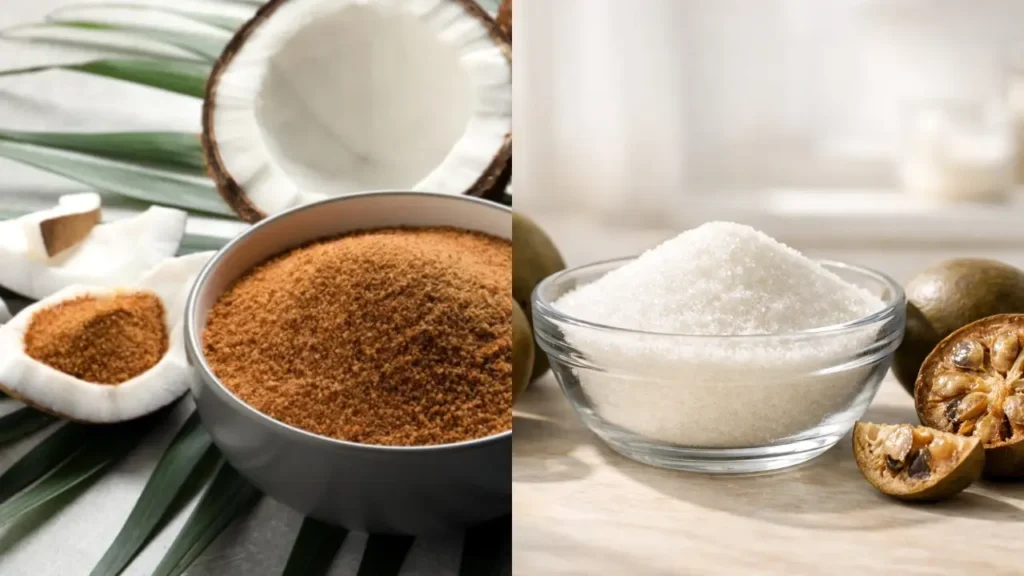
Coconut sugar and monk fruit can both sweeten foods, but they do different jobs. Coconut sugar is a granulated sugar made from coconut palm blossom sap, valued for its caramel-like flavor. Monk fruit extract is a highly concentrated sweetener, so a little can deliver substantial sweetness without the same amount of sugar.
The practical difference is this: coconut sugar contributes sweetness, bulk, color, and flavor to recipes, while pure monk fruit extract mainly contributes sweetness. If you are choosing between them for baking, beverages, or a lower-sugar diet, the product form matters as much as the ingredient name.
What Is the Difference Between Coconut Sugar and Monk Fruit?
What Is Coconut Sugar?
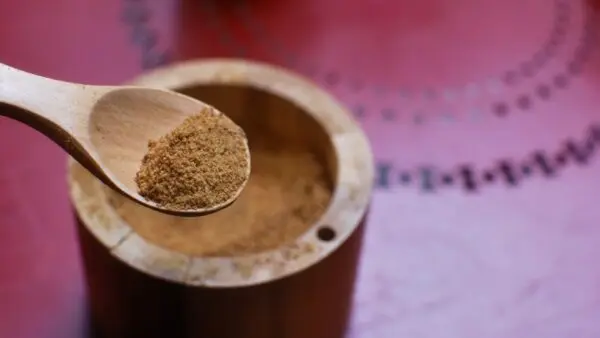
Coconut sugar is produced by collecting sap from coconut palm blossoms and heating it until the liquid concentrates and crystallizes. The resulting granules resemble brown sugar in appearance and have a mild, toffee-like taste. It is still a sugar-containing ingredient, with calories and carbohydrates comparable to other granulated sugars.
What Is Monk Fruit Sweetener?
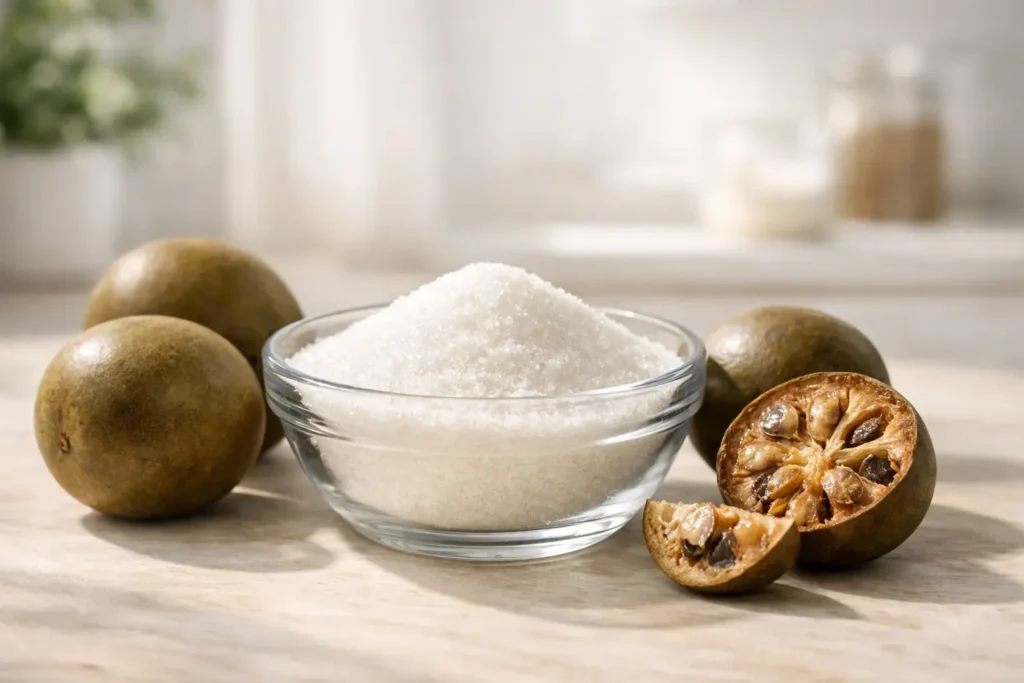
Monk fruit, also called luo han guo, is a fruit native to southern China. Its sweet compounds are called mogrosides. The U.S. Food and Drug Administration (FDA) reports that monk fruit extracts may be 100 to 250 times sweeter than table sugar, depending on their mogroside content.
Importantly, “monk fruit sweetener” on a retail label may mean pure concentrated extract or a baking blend containing erythritol, allulose, or other ingredients. Those blends can behave very differently from pure extract, so always check the ingredient list.
Coconut Sugar vs Monk Fruit: Quick Comparison
| Feature | Coconut sugar | Pure monk fruit extract |
|---|---|---|
| Source | Concentrated coconut palm blossom sap | Extract of monk fruit; sweetness from mogrosides |
| Calories & carbs | Contains sugar, calories, and carbohydrates | Negligible at typical usage amounts; blends vary |
| Sweetness | Used in quantities similar to regular sugar | Very concentrated; much less is needed |
| Taste | Caramel-like, mildly toffee-like | Sweetness profile varies by extract; may linger |
| Baking structure | Adds bulk, affects moisture and browning | Does not replace sugar bulk by itself |
| Best fit | Flavor-forward baking, granola, sauces | Reducing added sugar; drinks and selected formulations |
Note: Many products sold as “monk fruit sugar” are blends, not pure monk fruit extract. Their calories, carbohydrate content, volume, and substitution ratios depend on the other ingredients.
Coconut Sugar vs Monk Fruit: Calories and Blood Sugar Impact
Coconut sugar remains an added sugar. Even though it is made from coconut palm sap and can contain traces of minerals, it should not be treated as a low-calorie or sugar-free alternative. Cleveland Clinic’s explanation of coconut sugar notes that its calorie content is broadly similar to cane sugar and that the trace nutrients do not make it a meaningful source of vitamins or minerals.
Pure monk fruit extract contributes little to no calories in the tiny quantities normally used. High-intensity sweeteners also generally do not raise blood glucose in the way that sugar does, as described by the FDA. However, a commercially packaged monk fruit blend may contain additional ingredients that change the finished product’s nutrition profile.
For people monitoring glucose intake, the key distinction is simple: coconut sugar supplies digestible sugar; pure monk fruit extract is a high-intensity sweetener. Individual dietary needs and medical decisions should be discussed with a qualified healthcare professional rather than based on a single sweetener comparison.
Taste and Sweetness: How Do They Compare?
Coconut sugar has a rounded, caramel-like taste that can complement chocolate, coffee, oats, cinnamon, and baked goods. Its tan-to-brown color can also deepen the appearance of batters, fillings, and sauces.
Monk fruit is more neutral in color when used as a refined extract, but the perceived taste depends on the formulation and concentration. Some people notice a lingering sweetness or an aftertaste, and products combined with sugar alcohols can have a different mouthfeel. Neither sweetener is automatically “better tasting”: the right choice depends on the recipe and the flavor you want to create.
Coconut Sugar vs Monk Fruit for Baking: Which Works Better?
Coconut Sugar for Flavor, Browning, and Texture
In baking, sugar does more than make food sweet. It can help retain moisture, support browning, and affect tenderness and structure. King Arthur Baking explains these functions in its guide to different types of sugars. Coconut sugar can deliver many of the functions of a granulated sugar while adding its own distinctive flavor and darker hue.
For cookies, muffins, brownies, and cinnamon fillings, coconut sugar is often easier to work with than a tiny dose of concentrated sweetener. Still, it does not produce exactly the same result as white or moist brown sugar in every recipe. Granule size, moisture content, and mixing technique can change the finished texture. For practical examples, see our guide to baking with coconut sugar.
Monk Fruit for Reduced-Sugar Baking
Pure monk fruit extract can deliver sweetness with very little added volume. That is useful when lowering sugar is the priority, but less helpful when a recipe relies on sugar for creaming, spreading, browning, or moisture retention. Removing sugar without replacing those functions can change the texture of the final product.
A monk fruit baking blend may be formulated to measure more like sugar, but “cup-for-cup” claims apply only to that specific product. Look at its bulking ingredients and baking instructions instead of assuming all monk fruit products behave alike.
Which Works Better for Your Recipe?
Choose coconut sugar when you want granulated sweetness, a richer flavor, and a brown-sugar-style ingredient for a traditional recipe. Consider a suitable monk fruit blend when lowering added sugar is your primary goal and the blend has been designed for the application. For commercial production, bench tests are essential before changing a sweetener system.
Can You Substitute Monk Fruit for Coconut Sugar?
Not with one universal conversion ratio. Pure monk fruit extract is far more concentrated than coconut sugar, so substituting it cup for cup would not work. A retail monk fruit blend labeled “1:1 sugar replacement” may be closer in measuring volume, but its texture, flavor, and behavior depend on ingredients such as erythritol or allulose.
Start by checking the conversion chart on the exact product package. For baking, compare the finished batter, browning, tenderness, and sweetness rather than relying on taste alone. If you are replacing one conventional granulated sugar with another, our coconut sugar substitution guide explains why baking ratios and recipe adjustments need attention.
Which Sweetener Should You Choose?
For consumers seeking to reduce added sugar and calorie intake, pure monk fruit extract or a well-chosen blend may be more appropriate. For bakers seeking caramel notes and the functional contribution of granulated sugar, coconut sugar can be the more natural fit from a recipe-development perspective. Neither option makes an entire food automatically healthy.
Food manufacturers should evaluate sweetener options against flavor targets, recipe solids, processing conditions, labeling, and cost. A coconut sugar ingredient specification and a monk fruit blend label provide different types of information; both should be reviewed before reformulating a product.
Explore Organic Coconut Sugar from Indonesia
If your recipe or product formulation calls for a granulated sweetener with a caramel-like profile, explore organic coconut sugar from Global Coco Sugar. For importers, distributors, and food manufacturers assessing bulk supply, specifications, packaging, and documentation, contact the Global Coco Sugar export team to discuss your requirements.
Frequently Asked Questions
Is monk fruit healthier than coconut sugar?
If the goal is to reduce added sugar and calories, pure monk fruit extract usually has an advantage. Coconut sugar still contributes calories and carbohydrates. Healthfulness also depends on the overall diet and the specific product formulation.
Does coconut sugar raise blood sugar more than monk fruit?
Coconut sugar contains digestible sugar, whereas pure monk fruit extract is a high-intensity sweetener that generally does not raise blood sugar levels. Always check whether a monk fruit product contains other ingredients.
Can I replace coconut sugar with monk fruit in baking?
Possibly, but use the instructions for the specific monk fruit product. Pure extract cannot replace the bulk and structure provided by a cup of granulated coconut sugar.
Does coconut sugar taste like monk fruit?
No. Coconut sugar typically adds caramel-like notes, while monk fruit provides intense sweetness without the same brown-sugar character. Taste also varies between monk fruit blends.