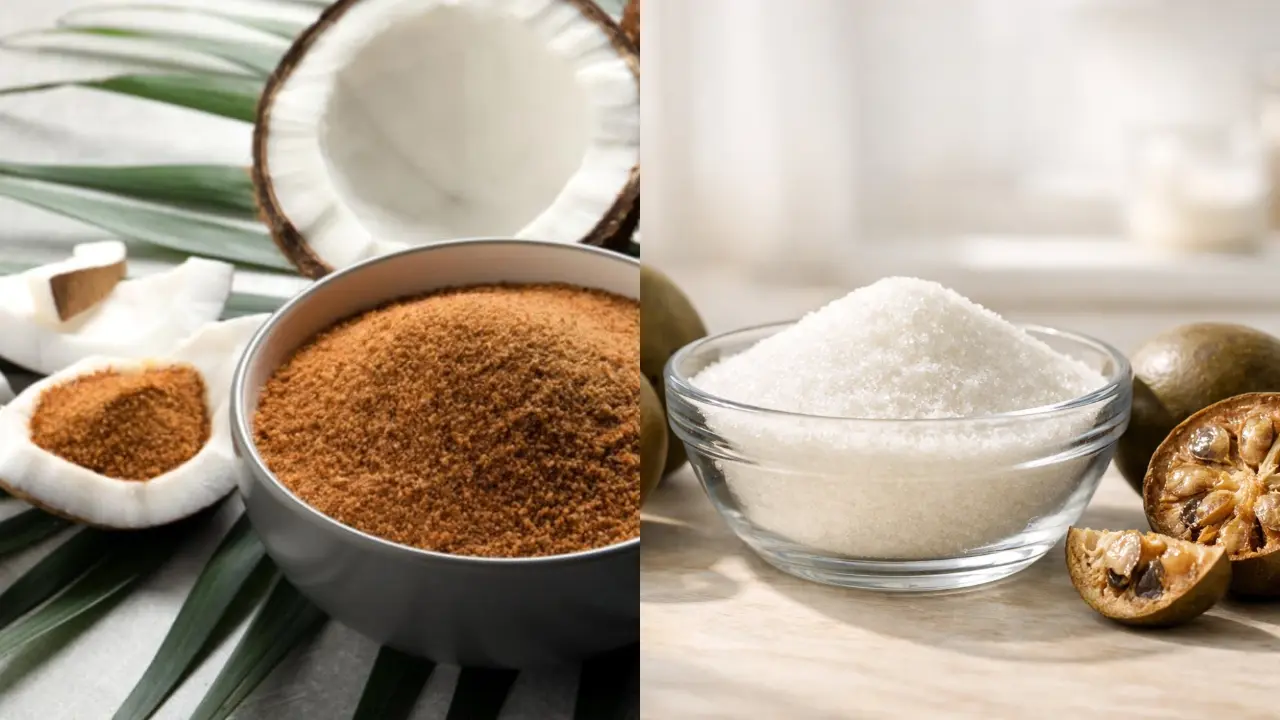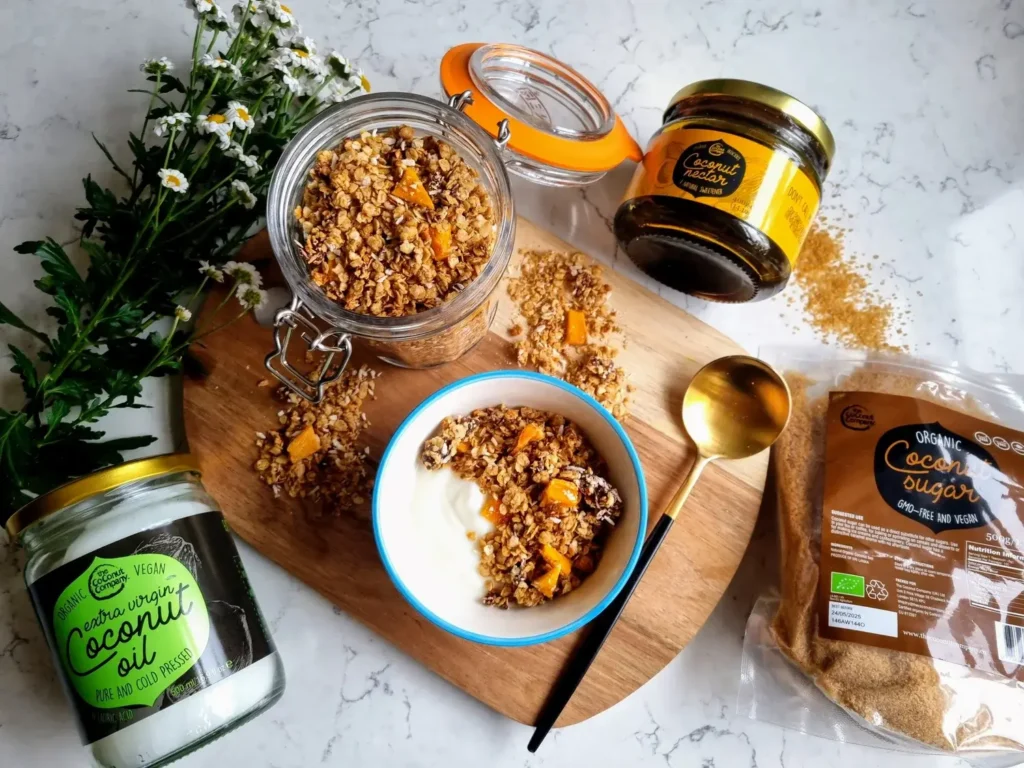
Coconut sugar vs allulose is more than a comparison of calories. Coconut sugar is made from coconut palm flower sap and contributes sugar, color, and caramel-like flavor.
Allulose is a low-calorie rare sugar with a milder taste and different effects on browning, moisture, and texture.
Both can work in foods and desserts, but neither is a universal replacement for the other.
Here are seven practical differences to consider before choosing a sweetener for your recipe or food product.
What Is the Difference Between Coconut Sugar and Allulose?
What Is Coconut Sugar?
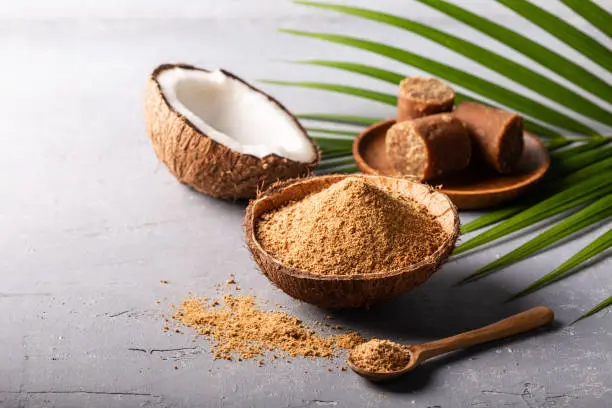
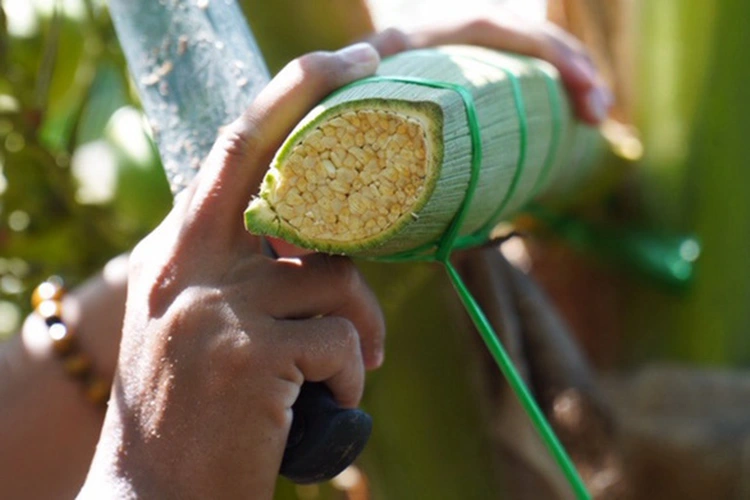
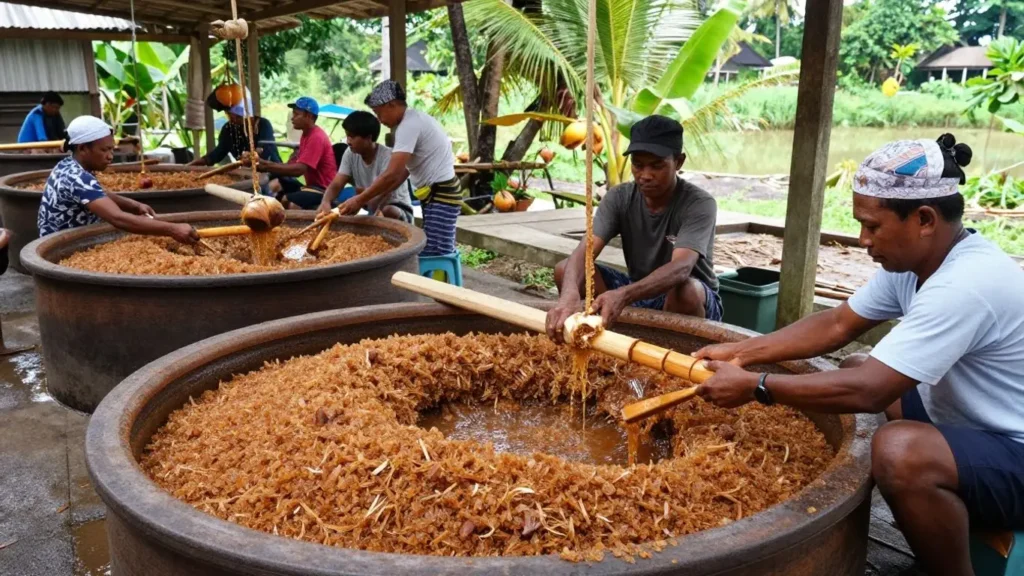
Coconut sugar is produced by collecting sap from the flowers of the coconut palm (Cocos nucifera), then evaporating water until the sap forms sugar crystals.
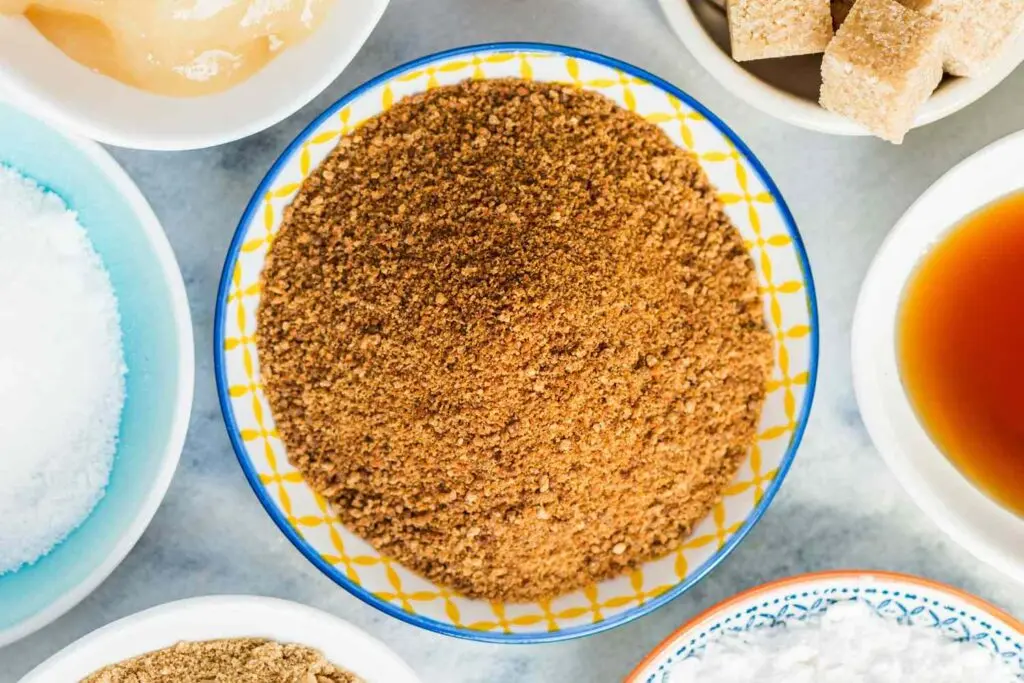
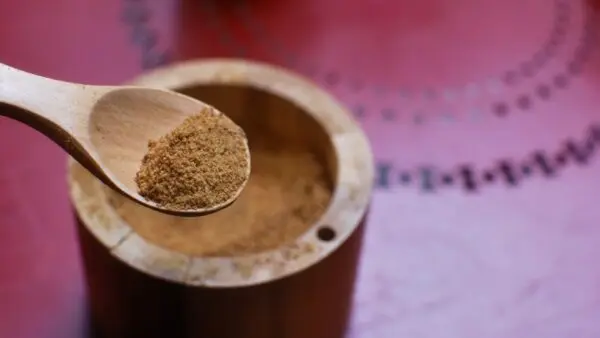
It is commonly sold as golden-brown granules and has warm caramel or toasted notes.
Despite its plant origin, coconut sugar remains an added sugar that contributes calories and digestible carbohydrates.
What Is Allulose?
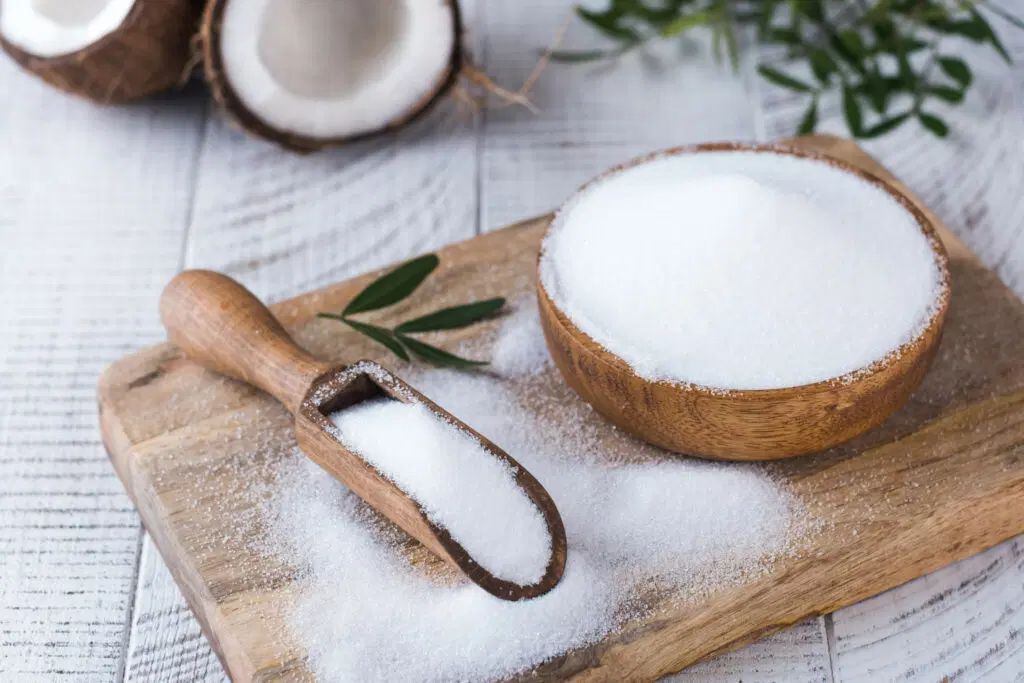
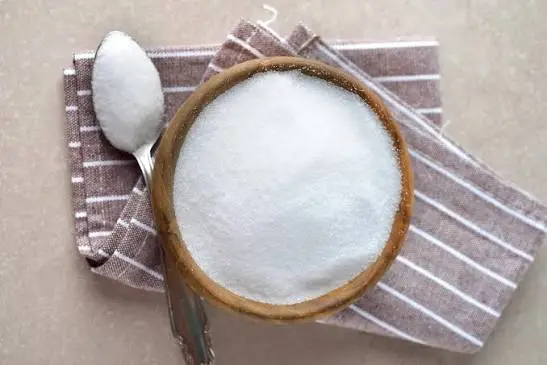
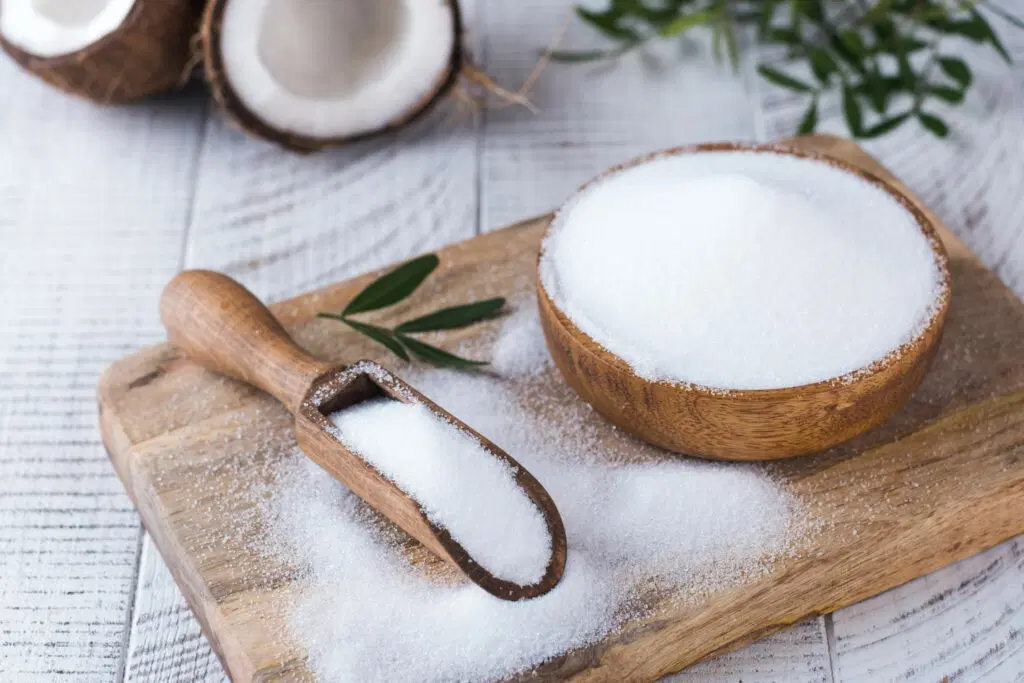
Allulose, also called D-allulose or D-psicose, is a rare sugar found naturally in small amounts in certain foods.
Commercial allulose can be produced by enzymatically converting other sugars and purifying the result.
It resembles granulated sugar but is only about 70% as sweet as sucrose. Importantly, allulose is not a sugar alcohol such as erythritol.
Coconut Sugar vs Allulose: Quick Comparison
| Feature | Coconut Sugar | Allulose |
| Origin | Coconut palm flower sap | Rare sugar; commercially converted from other sugars |
| Calories | Broadly similar to conventional sugar | 0.4 kcal/g used for US nutrition labeling |
| Sweetness | Broadly comparable to sugar; varies | About 70% as sweet as sucrose |
| Taste | Caramel-like, toasted notes | Milder, more neutral sweetness |
| Blood glucose | Contains digestible sugars | Typically a much smaller direct response |
| Browning | Adds color and browning | Can brown relatively quickly |
| Baking function | Sweetness, bulk, flavor, texture | Sweetness, bulk, browning, moisture effects |
Note: Pure allulose and sweetener blends containing allulose, stevia, or monk fruit may perform differently. Always check the ingredients and formulation guidance.
Coconut Sugar vs Allulose: 7 Key Differences
1. Source and Production
Coconut sugar begins as coconut palm sap. Producers concentrate it with heat, then form granules or powder.
Its appearance and flavor depend on the sap and processing conditions.
Allulose is a distinct sugar molecule that is generally produced commercially through controlled conversion and purification.
A less processed origin does not automatically make one option healthier; their nutritional and functional characteristics are what matter.
2. Calories and Sugar Content
Coconut sugar supplies calories and added sugar much like conventional table sugar.
Any trace minerals present do not make it a low-calorie sweetener. Allulose is metabolized differently and has a substantially lower energy contribution.
For US Nutrition Facts calculations, the FDA permits a factor of 0.4 calories per gram for allulose, rather than the 4 calories per gram commonly used for traditional sugars.
Allulose must still be counted in total carbohydrate on US labels, even though FDA guidance allows it to be excluded from the declared Total Sugars and Added Sugars. A dessert made with allulose can still contain significant calories from fats, flour, or other ingredients.
3. Blood Sugar Impact
Because coconut sugar contains digestible sugars, it can raise blood glucose.
Claims that every coconut sugar product has a particular low glycemic index should be treated cautiously; values reported for specific products should not be generalized.
Allulose typically produces a much smaller direct glucose and insulin response than conventional sugar, but it is not a diabetes treatment.
For people managing blood sugar, portion size and the complete food matter. The sweetener alone does not determine whether a product fits an individual dietary plan.
4. Taste and Sweetness
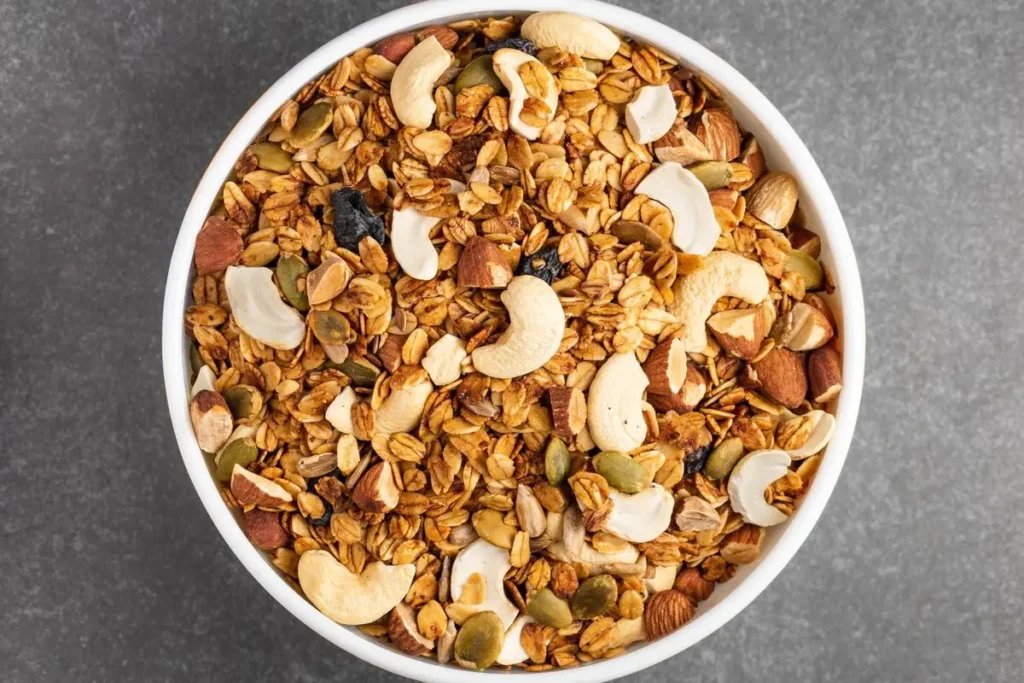
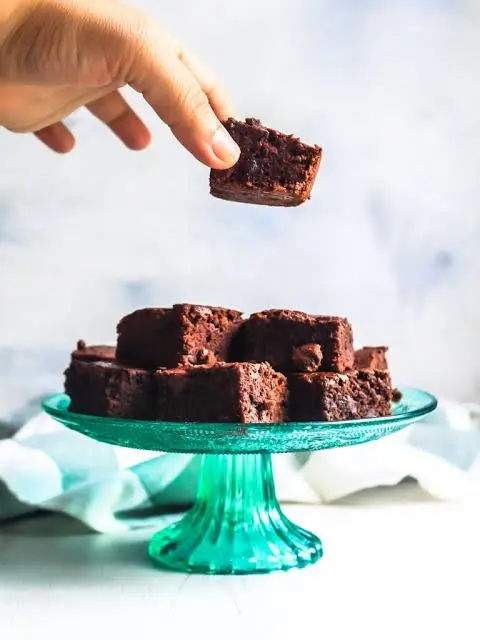
Coconut sugar offers caramel-like notes that complement coffee, chocolate, cinnamon, oats, and baked desserts. Those flavors can be welcome in brownies or granola but may change the taste of light vanilla recipes.
Allulose is more neutral and generally tastes closer to plain sugar, though it is less sweet by weight. NOW Foods describes allulose as about 70% as sweet as sucrose.
Neither ingredient wins on taste alone: coconut sugar suits flavor-forward recipes, while allulose may be preferred where a lighter sweetness profile is desired.
5. Browning and Caramelization
Both ingredients can create color, but they do not brown in precisely the same way. Coconut sugar already has a brown color and contributes to the flavor and appearance of baked products.
Allulose is a reducing sugar that can participate actively in browning reactions and can caramelize under suitable conditions.
In one published cupcake study, samples made with allulose developed a browner color than those made with sucrose under the tested baking conditions.
That result is recipe-specific, not proof that allulose always browns faster in every food.
For cookies, cakes, and glazes, watch oven temperature and color development rather than assuming a conventional sugar recipe will behave identically.
6. Moisture, Texture, and Crystallization
Sugar affects more than sweetness: it influences water availability, spread, crumb, and storage texture.
Coconut sugar provides granulated bulk and can contribute to structure and moisture behavior, although it may perform differently from white or brown sugar.
Allulose also provides bulk, but its solubility, water interactions, and crystallization behavior differ from sucrose.
In practical baking, switching between the two may change cookie spread, cake structure, or sauce thickness. Test the texture after cooling and, for products sold commercially, after storage.
Our guide to baking with coconut sugar covers additional considerations for granulated sugar in recipes.
7. Substitution and Conversion
Can you substitute allulose for coconut sugar? In some recipes, yes, but there is no universal conversion that preserves sweetness, browning, and texture.
Pure allulose is less sweet than sucrose, while coconut sugar is commonly used at amounts similar to ordinary granulated sugar.
Adding more allulose solely to match sweetness can also change water balance and browning.
For home baking, follow a tested allulose recipe where possible, or experiment with a small batch.
For commercial formulations, evaluate sweetness, color, viscosity, moisture, and shelf-life before scaling up. See our coconut sugar substitution guide for broader sugar-replacement considerations.
Which Sweetener Works Better for Baking, Drinks, and Desserts?
The best option depends on what you want the ingredient to do, not just how sweet it tastes. Consider these starting points:
| Application | Practical choice |
| Cookies and cakes | Coconut sugar for caramel notes; allulose for lower-sugar recipes with adjusted browning and structure. |
| Coffee and drinks | Coconut sugar adds warm flavor; allulose offers a more neutral sweetness. |
| Sauces and syrups | Both may work, but test sweetness, heating, and final consistency. |
| Confectionery | Check crystallization, water activity, texture, and shelf-life requirements. |
What Should Food Manufacturers Consider When Choosing Coconut Sugar or Allulose?
For food manufacturers and ingredient buyers, selection starts with a formulation brief.
Compare sweetness intensity, flavor, particle size, moisture, solubility, browning, finished-product stability, and nutritional labeling.
Request a product specification and relevant quality documentation for the actual ingredient being purchased; characteristics may vary by supplier and grade.
Regulatory status also depends on the destination market. FDA provides specific US labeling guidance for allulose.
In a 2025 EFSA novel-food assessment , the panel concluded that the safety of D-allulose could not be established from the submitted data because important information was missing.
This does not establish that allulose is harmful, but it does mean international manufacturers should verify current market requirements rather than assume rules are identical everywhere.
For flavor-driven applications, buyers can review organic coconut sugar from Indonesia and request specifications suited to their intended use.
Explore Organic Coconut Sugar from Indonesia
Coconut sugar and allulose serve different purposes. If your recipe or food product calls for granulated sweetness with a distinctive caramel-like profile, explore Global Coco Sugar’s organic coconut sugar.
Importers, distributors, and food manufacturers can contact our export team to discuss product specifications, packaging options, and available documentation.
Frequently Asked Questions
Is allulose healthier than coconut sugar?
Allulose provides substantially fewer calories and usually has less direct effect on blood glucose. Coconut sugar provides added sugar and calories but contributes a caramel-like flavor. “Healthier” depends on individual needs, serving size, and the full diet, not one ingredient alone.
Can allulose replace coconut sugar in baking?
Sometimes. Expect adjustments because allulose is less sweet and can brown, retain moisture, and affect texture differently. Use a tested formulation or begin with small trials instead of relying on a universal 1:1 swap.
Does allulose caramelize like coconut sugar?
Allulose can caramelize and participate in browning reactions. Its browning rate and final color can differ from conventional sugars, depending on the recipe, pH, temperature, and baking time.
Is coconut sugar keto-friendly compared with allulose?
Coconut sugar contains digestible sugars and is generally difficult to fit into very-low-carbohydrate diets in meaningful amounts. Allulose is often considered in low-sugar formulations, but check the product and your dietary requirements.