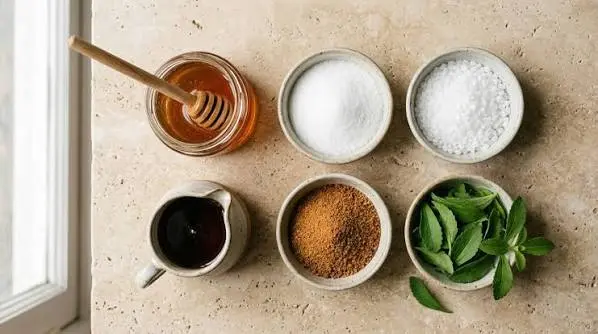
Coconut sugar and erythritol both sweeten foods, but they are not interchangeable ingredients. Coconut sugar is a granulated sugar made from coconut palm flower sap.
Erythritol is a sugar alcohol used in lower-sugar formulations. They differ in calories, flavor, sweetness, baking behavior, and how the body processes them.
The better choice depends on your goal. Coconut sugar brings caramel-like flavor and familiar sugar functionality; erythritol can reduce added sugar in a suitable formulation, but may change taste and texture.
Here are seven differences worth knowing before you substitute one for the other.
What Is the Difference Between Coconut Sugar and Erythritol?
What Is Coconut Sugar?
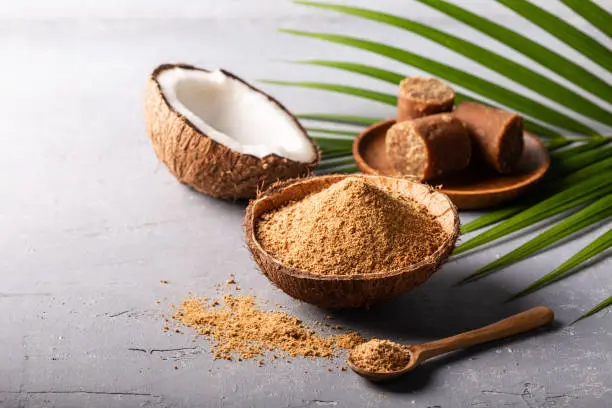
Coconut sugar comes from the sap of coconut palm blossoms.
Producers concentrate the sap through heating until it crystallizes into brown granules. Its toffee-like notes make it useful in cookies, beverages, granola, sauces, and other products where flavor matters.
Despite its plant origin, coconut sugar still contains digestible sugars and contributes calories.
What Is Erythritol?
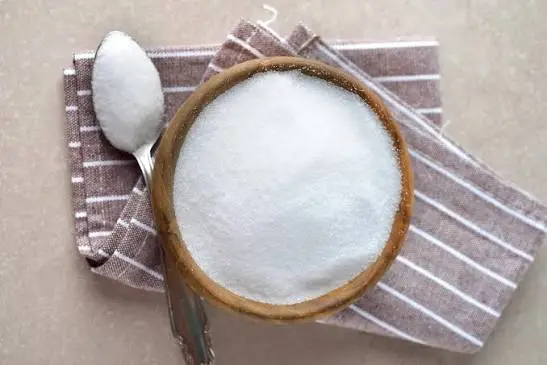
Erythritol is a polyol, or sugar alcohol. Commercial erythritol is generally produced by fermenting a carbohydrate source, then purifying and crystallizing the result.
It provides about 60–70% of the sweetness of sucrose and is used in reduced-sugar foods. Unlike concentrated monk fruit extract, erythritol also supplies physical bulk in a recipe.
Coconut Sugar vs Erythritol: Quick Comparison
| Feature | Coconut Sugar | Erythritol |
| Source | Coconut palm flower sap | Fermentation-derived sugar alcohol |
| Calories | Contains calories, similar to ordinary sugar | 0 kcal/g factor for US labeling |
| Sweetness | Broadly comparable to table sugar in practical use | About 60–70% as sweet as sucrose |
| Flavor | Caramel-like, lightly toasted | Cleaner sweetness; can feel cooling |
| Blood glucose | Contains sugars that raise blood glucose | Little direct effect in available studies |
| Baking behavior | Adds sweetness, color, bulk and browning | Adds bulk, but browns differently |
| Best fit | Flavor-forward baking and food products | Suitable reduced-sugar formulations |
Note: Erythritol baking blends containing monk fruit, stevia, or other ingredients may behave differently from pure erythritol.
Coconut Sugar vs Erythritol: 7 Key Differences
1. Source and Production
Coconut sugar begins as flower sap from the coconut palm (Cocos nucifera).
Water is evaporated from the collected sap until sugar crystals form. Its brown color and flavor come from the raw material and processing conditions.
Erythritol is chemically different: it is produced commercially using fermentation followed by separation and crystallization.
Both ingredients may be sold as granules, but they come from different ingredient categories and have different functions in a finished food.
2. Calories and Carbohydrates
Coconut sugar contains added sugars and calories broadly comparable to those in regular sugar. Small amounts of naturally occurring minerals do not make it a low-calorie ingredient.
Erythritol, by contrast, is assigned 0 calories per gram under US nutrition-labeling rules.
That distinction matters if a formulation aims to lower added sugar. Still, an erythritol-sweetened brownie or drink is not necessarily low in calories: flour, fats, chocolate, and other ingredients contribute energy, and commercial sweetener blends can have different nutrition values.
3. Blood Sugar and Glycemic Impact
Coconut sugar contains digestible carbohydrate and can increase blood glucose.
Claims that its glycemic index is always much lower than white sugar should be treated cautiously because published figures vary and do not apply to every product.
Erythritol generally has little direct effect on blood glucose; the FDA explains how sugar alcohols differ from ordinary sugar.
Neither ingredient should be judged by a single GI number. Serving size, other ingredients, and individual dietary needs still matter.
People managing diabetes should follow advice tailored to their overall carbohydrate intake rather than treating coconut sugar as a diabetes-friendly substitute.
4. Taste and Sweetness
Coconut sugar has a warm, caramel-like profile that can complement chocolate, coffee, oats, cinnamon, and nut-based desserts. Its natural brown color may also deepen the color of lighter batters or beverages.
Erythritol has a more neutral sweetness and is less sweet gram for gram. At some concentrations, it creates a noticeable cooling sensation in the mouth.
That can be welcome in mints but less desirable in chocolate fillings or soft cookies. The result also depends on particle size and other ingredients in the sweetener blend.
5. Baking Performance and Texture
In baking, sugar does more than add sweetness. Coconut sugar can contribute volume, color, moisture behavior, and browning, while its caramel notes shape the flavor.
It may not behave exactly like white or moist brown sugar in every recipe, but its function is familiar to many bakers. See our practical guide to baking with coconut sugar.
Erythritol is a bulk sweetener, not just a high-intensity sweetener. However, it dissolves and recrystallizes differently from sucrose, provides a cooling effect, and does not caramelize or participate in browning in the same way.
The American Society of Baking’s erythritol guide outlines these formulation differences.
For cookies and cakes, replacing the sugar without testing may change spread, crumb, color, and mouthfeel. In commercial production, compare finished products after cooling and storage, not only when they come out of the oven.
6. Substitution and Conversion
Can you substitute erythritol for coconut sugar? Sometimes, but there is no universal 1:1 conversion that reproduces sweetness and texture.
Pure erythritol is less sweet than coconut sugar, and adding more to compensate may increase cooling sensation or crystallization. Cup-for-cup retail blends must be evaluated using their own directions, since they can contain other sweeteners.
For a recipe change, start with the exact ingredient specification and test a small batch. Check sweetness, browning, moisture, and the texture after one day.
Our coconut sugar substitution guide explains other practical recipe adjustments, although its white-sugar ratios should not be applied directly to erythritol.
7. Digestive Tolerance and Safety Considerations
Some people experience digestive discomfort with large amounts of erythritol. In its 2023 safety re-evaluation, EFSA identified diarrhea as a relevant effect and set an acceptable daily intake of 0.5 g per kilogram of body weight to protect against laxative effects. Tolerance varies, and the amount consumed matters.
Research on cardiovascular effects is less settled. A 2024 Cleveland Clinic study involving 20 healthy volunteers found short-term increases in platelet activity after erythritol intake.
This finding raises a question for further investigation; it does not establish that eating erythritol causes heart attacks or strokes. EFSA’s review did not find a demonstrated causal relationship between dietary erythritol and cardiovascular disease.
Coconut sugar is not a risk-free alternative simply because it is made from a plant: frequent high intakes of added sugar have their own well-established nutritional drawbacks.
The evidence supports a balanced, purpose-specific choice rather than labeling either sweetener universally healthier.
Which Sweetener Is Better for Your Needs?
| Your Priority | What to Consider |
| Lower added sugar or calories | Erythritol may suit a properly designed formulation. |
| Caramel-like flavor | Coconut sugar is a natural fit for flavor-forward recipes. |
| Familiar browning in baking | Coconut sugar contributes typical sugar functionality. |
| Reduced-sugar cookies or cakes | Test erythritol or an appropriate blend; texture may differ. |
| Chocolate or fillings | Evaluate cooling sensation, crystallization and mouthfeel. |
If you are comparing additional options, our article on coconut sugar vs monk fruit explains why pure high-intensity monk fruit extract behaves differently from erythritol-based baking blends.
Coconut Sugar vs Erythritol for Food Manufacturers
For food manufacturers and product developers, sweetener choice is a formulation decision.
Evaluate sweetness intensity, flavor, particle size, moisture, solubility, browning, texture, labeling requirements, and batch consistency.
Request ingredient specifications and quality documentation, and test the finished product under actual processing and storage conditions.
Buyers seeking flavor-forward applications can review organic coconut sugar from Indonesia supplied by Global Coco Sugar.
Product suitability, packaging, and available documents should be checked against the specific application rather than assumed from broad sweetener comparisons.
Explore Organic Coconut Sugar from Indonesia
Coconut sugar and erythritol offer different benefits rather than a single clear winner.
If your food application calls for a granulated sugar with a distinctive caramel-like profile, explore Global Coco Sugar’s organic coconut sugar.
For bulk sourcing, available product specifications, or a quotation, contact our export team.
Frequently Asked Questions
Is erythritol healthier than coconut sugar?
Erythritol contributes substantially fewer calories and little direct blood glucose impact, while coconut sugar contains added sugar. However, digestive tolerance and unresolved research questions matter. Overall health depends on more than one ingredient.
Does erythritol taste like coconut sugar?
Not exactly. Coconut sugar adds caramel and toasted notes; erythritol tastes more neutral and can produce a cooling sensation. The difference is often noticeable in chocolate, frosting, and baked goods.
Can erythritol replace coconut sugar in baking?
It can be used in some recipes, but direct replacement may change sweetness, browning, moisture, and texture. Use the specific product’s guidance and test a small batch before scaling up.
Is coconut sugar better than erythritol for cookies?
Choose coconut sugar if caramel flavor and traditional sugar-style browning are important. Erythritol can work in reduced-sugar cookie formulations, but the recipe may need adjustments to manage texture and cooling effects.