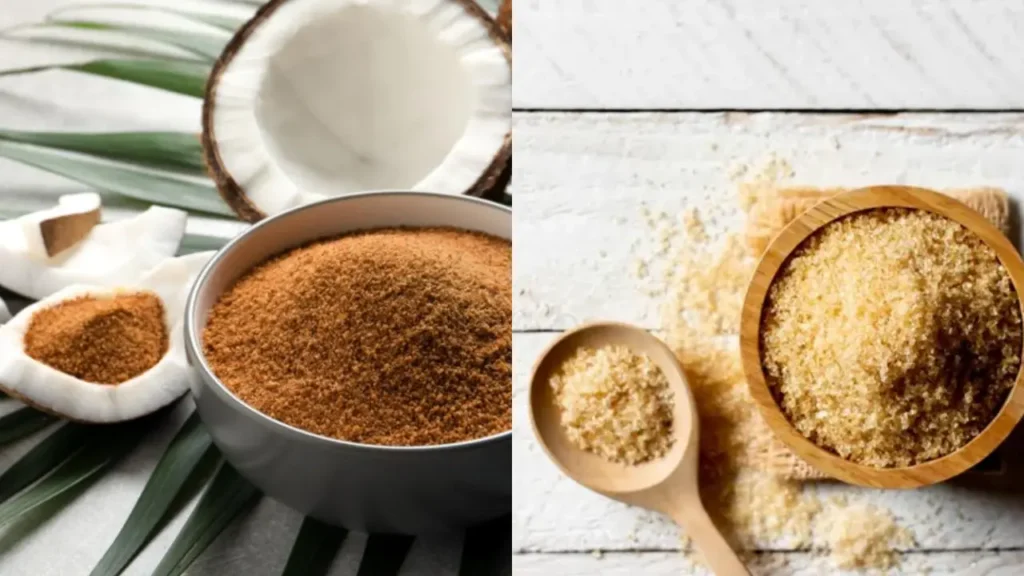
Coconut sugar and maple sugar are both granulated sweeteners made from plant sap, but they come from different sources and bring distinct flavors to food.
Coconut sugar has warm caramel and toffee notes, while maple sugar offers a recognizable maple aroma.
Both supply sugar and calories, so the choice often comes down to flavor, texture, and the recipe you are making.
This coconut sugar vs maple sugar guide focuses on the dry, granulated ingredients rather than liquid maple syrup.
Understanding that distinction makes it easier to compare nutrition and substitute one for the other in baking.
What Is the Difference Between Coconut Sugar and Maple Sugar?
What Is Coconut Sugar?
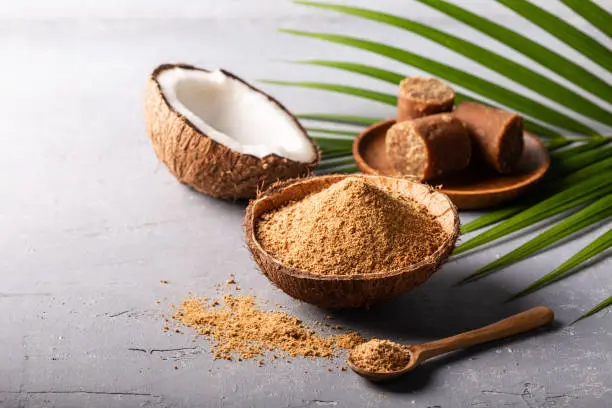
Coconut sugar is made from the sap collected from coconut palm blossoms. Heating removes water, and the concentrated sap is processed into granules. The resulting sugar typically has a golden-to-deep-brown color and a caramel-like taste.
What Is Maple Sugar?
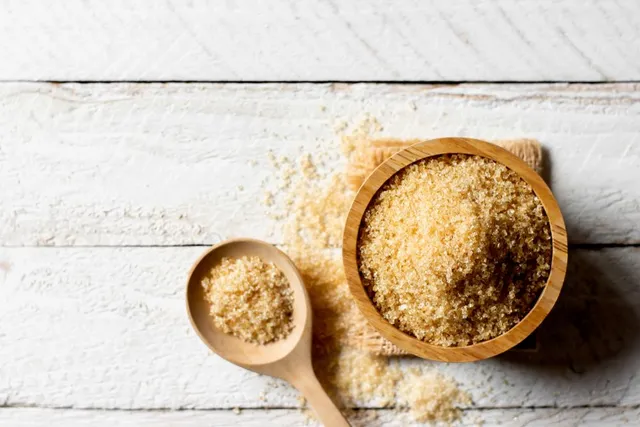
Maple sugar is made from maple tree sap that has first been concentrated into syrup.
As described by the Cornell Maple Program, further heating and stirring allow the concentrated syrup to crystallize into a solid sugar. It can then be prepared in granulated form.
Is Maple Sugar the Same as Maple Syrup?
No. Maple syrup is a liquid, while granulated maple sugar contains much less water. Replacing a dry sugar with syrup changes the liquid balance of a recipe.
For the liquid-sweetener comparison, see our guide to coconut sugar compared with maple syrup and honey.
Coconut Sugar vs Maple Sugar: Quick Comparison
| Feature | Coconut Sugar | Maple Sugar |
|---|---|---|
| Source | Coconut palm flower sap | Maple tree sap |
| Physical form | Granules or powder | Granules or powder |
| Flavor | Caramel, toasted, toffee-like | Distinctive maple flavor |
| Typical color | Golden to dark brown | Often light golden to brown |
| Calories | Comparable to regular sugar | Comparable to regular sugar |
| Main sugar | Predominantly sucrose | Predominantly sucrose |
| Blood sugar impact | Contains digestible sugars | Contains digestible sugars |
| Baking uses | Brownies, cookies, granola | Maple cookies, cakes, shortbread |
These characteristics describe typical pure products. Color, granule size, moisture, and composition can vary with the producer and processing method.
Coconut Sugar vs Maple Sugar: 7 Key Differences
1. Botanical Source and Production
The first distinction is the plant and the way its sap is collected. Coconut sugar begins with sap tapped from coconut palm flower stalks, whereas maple sugar begins with sap tapped from maple trees.
Both production methods concentrate the natural sugars by removing water. Maple sugar, however, is generally made by further concentrating maple syrup.
The botanical origin and heating conditions help shape the finished flavor and color. Neither source alone establishes that a product is more sustainable.
2. Taste and Sweetness
Coconut sugar brings a warm, toasted sweetness that pairs particularly well with cocoa, cinnamon, coffee, and nuts. Despite its name, it does not usually taste like coconut flesh.
Maple sugar has a more recognizable maple character, making it appealing in oatmeal, pecan desserts, and maple-flavored cookies.
Both offer broadly similar sweetness to conventional sugar, but their aromas can change how sweet a finished recipe seems. If a recipe depends on a clear maple flavor, coconut sugar will not reproduce it exactly.
3. Calories and Nutritional Content
Neither ingredient is a low-calorie sugar substitute. Both are concentrated sources of carbohydrates and can contain small amounts of minerals, but amounts vary and are not a reason to consume more sugar.
Compare Nutrition Facts labels using equal weights rather than different spoon sizes.
For U.S. labeling, the FDA guidance on added sugars explains that sugars used to sweeten foods, including those derived from natural sources, count as added sugars.
Choosing between the two generally offers no substantial calorie-saving advantage.
4. Blood Sugar and Glycemic Impact
Both coconut sugar and maple sugar contain digestible carbohydrates that can raise blood glucose. The glycemic response depends on the product, the amount consumed, and the rest of the meal.
There is not enough consistent comparative evidence to claim that coconut sugar always has a lower glycemic index than granulated maple sugar.
Published values for maple syrup should not be used as if they apply to maple sugar. People managing blood sugar should consider total carbohydrate intake and individual dietary guidance.
5. Color, Texture, and Moisture
Coconut sugar can deepen the color of a pale cake batter or glaze because of its naturally brown appearance.
Maple sugar is often lighter, although the actual shade depends on the starting syrup and production process.
Crystal size and moisture also matter: coarse granules may dissolve more slowly, while finer particles can disperse more evenly. In recipes involving creaming or crisp textures, differences in granulation may affect the result.
Compare the actual ingredients rather than assuming one sugar always makes softer or crispier cookies.
6. Baking and Culinary Applications
As dry sugars, both contribute sweetness and bulk and can influence browning, moisture retention, and structure.
Coconut sugar is useful when caramel notes complement the recipe, such as chocolate brownies or spiced muffins.
Maple sugar suits recipes in which maple aroma is part of the intended flavor. Both can be stirred into drinks or used in granola.
For practical tips on incorporating a caramel-flavored granulated sweetener into a recipe, explore our guide to baking with coconut sugar.
7. Substitution and Conversion Ratio
King Arthur Baking’s guide to sugar substitutions recommends coconut sugar as an alternative to maple sugar by weight or volume.
For example, if a recipe calls for 100 grams of granulated maple sugar, try 100 grams of granulated coconut sugar as a starting point. Weighing is preferable when granule sizes differ.
In reverse, equal weights can also be a reasonable trial, but check the flavor, spread, color, and texture before scaling up. This ratio does not apply to liquid maple syrup, and identical baking results are not guaranteed.
Which Sweetener Works Better for Different Recipes?
Choose the sugar that supports the intended flavor and physical requirements of your recipe. Both can be useful, but some applications make their differences more noticeable.
| Application | Practical choice |
|---|---|
| Chocolate brownies | Coconut sugar for warm caramel depth. |
| Maple shortbread | Maple sugar when its signature aroma is central. |
| Granola and energy bars | Either; compare flavor and how the mixture binds. |
| Coffee and tea | Coconut sugar for toasted notes, maple sugar for maple aroma. |
| Spiced cakes and cookies | Either; check color, sweetness, and texture. |
| Maple confectionery | Maple sugar when authentic maple flavor is the goal. |
If you are unfamiliar with either ingredient, try a small batch first. Keep other ingredients unchanged during the first trial so you can evaluate how the sugar swap affects the result.
Coconut Sugar vs Maple Sugar for Food Manufacturers
For commercial formulations, ingredient selection goes beyond sweetness.
Procurement and product development teams should compare moisture, particle size, color tolerance, sensory profile, and batch consistency.
These characteristics can affect blending, dosing, appearance, and processing behavior in bakery, snack, and confectionery products.
Maple sugar may be preferred when maple flavor is central to a product’s identity. Coconut sugar offers a complementary caramel-like profile for breakfast cereals, snack bars, chocolate, and baked goods.
Global Coco Sugar supplies organic coconut sugar from Indonesia for bulk ingredient requirements.
Buyers can review available specifications, request relevant quality documentation, and evaluate samples in their own formulations before committing to a larger order.
Explore Organic Coconut Sugar from Indonesia
Coconut sugar and maple sugar each bring a distinctive flavor to food. For manufacturers, importers, and distributors seeking a granulated sweetener with caramel-like characteristics, Global Coco Sugar offers organic coconut sugar for commercial sourcing.
Contact our export team to discuss product specifications, sample requests, and bulk quotations.
Frequently Asked Questions
Is maple sugar healthier than coconut sugar?
Neither is automatically healthier. Both provide calories and digestible sugars. Any nutritional differences should be evaluated using comparable serving weights, and overall added sugar intake matters more than the source alone.
Can I substitute coconut sugar for maple sugar?
Yes, in many recipes that use dry granulated sugar. An equal-weight substitution is a useful starting point. Check the finished flavor, color, and texture, especially if maple aroma is important to the recipe.
Does coconut sugar taste like maple sugar?
Not exactly. Coconut sugar tends to taste like caramel or toffee, while maple sugar carries the characteristic flavor of maple. Both can complement nuts, spices, and baked goods.
Is maple sugar the same as maple syrup?
No. Maple sugar is made by concentrating and crystallizing maple syrup. Its dry form contains less water, so swapping syrup for granulated sugar requires consideration of the recipe’s liquid balance.