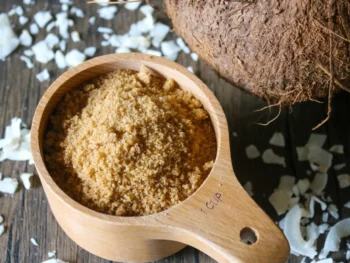
Coconuts are among the most versatile fruits in the tropical world, with uses spanning from cooking and cosmetics to construction and fuel. Among the many products derived from coconuts, desiccated coconut holds a special place in global cuisines. It’s that finely grated, dried form of coconut meat you find in cakes, curries, granola, and snack bars. But behind this common pantry item lies a fascinating world of botany, culture, industry, and science.
In this article, we’ll explore intriguing facts about desiccated coconut, including its processing techniques, regional production, culinary uses, and more.
1. What Is Desiccated Coconut?
Desiccated coconut is made by shredding or grating the white inner flesh (kernel) of mature coconuts and then drying it to a moisture content of less than 3%. This results in a product that is dry, shelf-stable, and rich in coconut flavor.
Depending on the fineness of the grind, desiccated coconut may be labeled as:
- Fine
- Medium
- Coarse
Unlike coconut flour or coconut milk, desiccated coconut retains much of the original fat and flavor of the fresh coconut.
2. The Origin of the Coconut
Coconuts (Cocos nucifera) are believed to have originated in Southeast Asia and the islands of the Pacific. Archaeological and botanical evidence shows coconuts have been cultivated and traded for over 3,000 years. However, because coconuts float and are salt-tolerant, they have naturally spread across tropical coastlines worldwide.
Interesting fact: The word "coconut" comes from the Portuguese and Spanish word coco, meaning "head" or "skull," referring to the three holes on the coconut shell that resemble a face.
3. Processing Desiccated Coconut

Creating desiccated coconut involves several key steps:
a. Selection and Dehusking
Mature coconuts—about 11–13 months old—are harvested. At this stage, the kernel is firm and full of oil. The outer husk is removed to expose the hard shell.
b. Cracking and Paring
The shell is cracked open, and the white kernel is extracted. The brown skin (testa) is then removed in a process called paring to ensure the final product is white.
c. Washing and Blanching
The kernel is washed and blanched in hot water to kill microbes and reduce enzymatic activity.
d. Shredding
The clean coconut meat is grated into desired sizes—fine, medium, or coarse.
e. Drying
The shredded coconut is dried in hot air dryers (either continuous band dryers or batch tray dryers) at around 60–80°C until moisture drops below 3%.
f. Sieving and Packing
The dried coconut is sieved to ensure uniform size and then packed in moisture-proof containers to maintain freshness.
4. Global Production Regions
Desiccated coconut is primarily produced in tropical countries, where coconut palms grow in abundance. The top producers include:
- Philippines – The world’s leading exporter of desiccated coconut.
- Indonesia – Second only to the Philippines, Indonesia has vast coconut plantations.
- Sri Lanka – Known for high-quality, organic coconut products.
- India – Especially the southern states like Kerala, Tamil Nadu, and Karnataka.
- Vietnam, Thailand, and Papua New Guinea – Also emerging players in the market.
These countries benefit from year-round warm temperatures, ample rainfall, and well-drained sandy soils—ideal for coconut cultivation.
5. Culinary Uses Around the World

Desiccated coconut is widely used in both sweet and savory dishes. Here’s how different cultures incorporate it into their cuisines:
- India: Used in coconut chutneys, barfis, curries, and spice blends like Kerala-style thoran.
- Southeast Asia: Found in desserts like kueh and bubur, and as a topping for sticky rice.
- Europe & North America: Popular in cakes (e.g., Lamingtons), macaroons, and granola.
- Middle East: Used in sweets like coconut halva and nut-studded confections.
Due to its long shelf life, desiccated coconut is especially valued in baking, where it adds both texture and tropical flavor.
6. Nutritional Facts
Desiccated coconut is an energy-dense food rich in healthy fats, especially medium-chain triglycerides (MCTs). Here’s a typical nutritional profile per 100 grams:
- Calories: 660–700 kcal
- Fat: 60–65 g (mainly saturated)
- Carbohydrates: 20–25 g
- Fiber: 15–20 g
- Protein: 6–8 g
It’s also a source of minerals like iron, manganese, copper, and selenium.
Note: While nutritious, desiccated coconut is calorie-dense and should be consumed in moderation.
7. Interesting Trivia and Fun Facts
- Floating Germinators: Coconuts can float across oceans and still germinate when they wash ashore—nature’s built-in dispersal mechanism!
- Shelf Life: Properly dried and stored desiccated coconut can last up to 12 months without refrigeration.
- Organic Boom: Demand for organic and unsweetened desiccated coconut is on the rise, especially in Europe and North America.
- Sweetened vs. Unsweetened: Many commercial varieties are sweetened and sometimes contain preservatives like sulfur dioxide. Health-conscious consumers often prefer unsweetened, additive-free versions.
- Zero Waste Crop: Every part of the coconut is used—from water and meat to husk, shell, and even the trunk of the palm tree.
8. Desiccated vs. Other Coconut Products

It’s easy to get confused between desiccated coconut and other coconut-based ingredients. Here’s a quick comparison:
| Product | Description | Moisture | Common Uses |
|---|---|---|---|
| Desiccated Coconut | Dried, grated kernel | <3% | Baking, curries, snacks |
| Coconut Flour | Defatted, ground coconut | <5% | Gluten-free baking |
| Coconut Flakes/Chips | Large, dried pieces of coconut meat | <5% | Toppings, cereals, trail mix |
| Coconut Powder | Spray-dried coconut milk | ~5% | Instant coconut milk |
9. Sustainability and Ethical Production
Sustainability is a growing concern in the coconut industry. Issues like fair labor, deforestation, and monoculture agriculture are under scrutiny. Fortunately, many desiccated coconut producers are now:
- Certifying with Fair Trade and Organic labels
- Promoting agroforestry and intercropping
- Supporting farmer cooperatives
Consumers can support sustainable practices by choosing products with third-party certifications like USDA Organic, Fair Trade, or Rainforest Alliance.
10. Storage Tips for Desiccated Coconut
To maximize shelf life and flavor:
- Store in an airtight container away from heat, moisture, and direct sunlight.
- Refrigerate or freeze for longer storage (especially for large quantities).
- Avoid contamination by using dry utensils when scooping from the container.
Rancid coconut will smell off or soapy—if in doubt, toss it out.
Conclusion
Desiccated coconut is far more than just a baking ingredient—it's a product steeped in history, tropical culture, and modern industry. From its careful processing methods to its global culinary applications, desiccated coconut reflects the ingenuity of using every part of nature’s offerings. Whether you’re a food lover, baker, or just curious about where your ingredients come from, desiccated coconut has a story worth exploring—one that's both flavorful and fascinating.