Virgin coconut oil has a commonly cited smoke point of approximately 350°F (177°C).
That makes it suitable for many controlled low- to moderate-heat cooking applications, including sautéing, baking, sauces, and pan cooking.
However, virgin coconut oil is not automatically the best choice for sustained high-temperature frying.
Refined coconut oil generally has a higher smoke point and a more neutral flavor, so it can be a better fit when higher process temperatures are required.
Virgin coconut oil is often chosen when a natural coconut aroma, unrefined positioning, or minimally processed ingredient is part of the desired product.
The key is to match the oil to the actual cooking process instead of assuming that one type of coconut oil is best for every temperature.
What Is the Smoke Point of Virgin Coconut Oil?

The smoke point of virgin or unrefined coconut oil is commonly cited at about 350°F (177°C).
Smoke point is the temperature at which an oil begins producing visible smoke and starts degrading more rapidly.
Oklahoma State University lists virgin coconut oil at about 350°F (177°C) and refined coconut oil at about 400°F (204°C). See its coconut oil quality and utilization guidance for the reference values.
These numbers are useful reference points rather than an exact operating limit for every product.
Actual behavior can vary with refining, free-fatty-acid level, impurities, storage history, and the specific oil being used.
Is Virgin Coconut Oil Good for High-Heat Cooking?
It depends on what “high heat” means in the actual process.
Virgin coconut oil can perform well when the oil temperature remains comfortably below its smoke point, but it is less suitable when the process requires prolonged exposure to higher frying temperatures.
| Cooking Method | VCO Suitability | Practical Consideration |
| Low-heat cooking | Good fit | Well below the typical smoke-point range. |
| Sautéing | Usually suitable | Keep the temperature controlled and avoid visible smoking. |
| Baking | Usually suitable | Useful when coconut flavor fits the formulation; oven temperature does not equal the oil’s internal temperature. |
| Pan frying | Can be suitable | Best when heat is controlled rather than prolonged at very high temperature. |
| High-temperature stir-frying | Depends on process temperature | Very hot wok conditions can approach or exceed the comfortable range for VCO. |
| Sustained deep or industrial frying | Usually not the first choice | Refined coconut oil or another frying oil with a higher smoke point may be more suitable. |
For commercial production, do not select an oil only from a general smoke-point chart.
Confirm the actual process temperature, desired flavor, product specification, and supplier documentation.
Smoke Point vs Oxidative Stability: They Are Not the Same Thing
Smoke point and oxidative stability describe different properties. Smoke point indicates when an oil begins to smoke visibly under heat.
Oxidative stability describes how resistant the oil is to oxidative deterioration over time or during heating.
Coconut oil contains a high proportion of saturated fatty acids, which contributes to relatively strong resistance to oxidation.
That does not mean virgin coconut oil can be heated indefinitely or that its smoke point is higher than refined coconut oil.
In practical terms, VCO can have useful heat stability while still beginning to smoke at a lower temperature than a refined coconut oil. Both properties matter, but they should not be treated as the same measurement.
Virgin vs Refined Coconut Oil for Cooking
Virgin and refined coconut oil start from the same crop, but processing changes their aroma, flavor, and heat-use profile.
| Factor | Virgin Coconut Oil (VCO) | Refined / RBD Coconut Oil |
| Processing | Unrefined; produced from fresh coconut material without chemical refining, bleaching, or deodorizing. | Refined, bleached, and deodorized. |
| Aroma | Natural coconut aroma. | Neutral or very mild. |
| Flavor impact | Adds coconut character. | Designed for a more neutral sensory profile. |
| Typical smoke-point reference | About 350°F / 177°C. | About 400°F / 204°C; product-specific values may vary. |
| Best fit | Flavor-focused cooking and controlled low-to-moderate heat applications. | Higher-heat use and formulations requiring neutral flavor. |
| Buyer check | Extraction method, sensory profile, FFA, peroxide value, specification, COA. | Refining method, sensory neutrality, FFA, peroxide value, specification, COA. |
For a deeper comparison of processing, flavor, and commercial use, read our RBD vs Virgin Coconut Oil comparison guide.
When Virgin Coconut Oil Works Well for Cooking
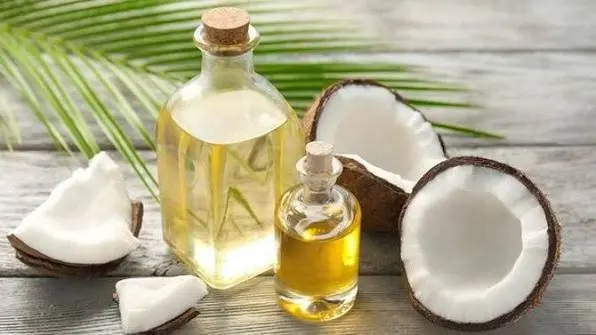
Sautéing and Controlled Pan Cooking
VCO can work well for sautéing vegetables, aromatics, and other foods when the pan temperature is controlled and the oil is not allowed to smoke.
Its coconut aroma can become part of the finished flavor profile.
Baking
Virgin coconut oil can be used as a fat ingredient in cakes, cookies, bars, fillings, and other baked products.
The important consideration is not only oven temperature, but how the oil functions inside the food matrix and whether the coconut flavor suits the recipe.
Curries, Sauces, and Coconut-Based Foods
VCO is a natural fit when coconut aroma complements the food, such as curries, sauces, fillings, and tropical-flavor formulations.
Products Where Natural Coconut Positioning Matters
For brands that want an unrefined coconut ingredient with characteristic aroma, VCO may fit the positioning better than a neutral refined oil.
For everyday cooking ideas and broader use cases, see our guide to cooking with virgin coconut oil.
When Refined Coconut Oil May Be a Better Choice
Refined coconut oil may be more appropriate when a process requires a higher sustained cooking temperature, a neutral aroma, or minimal coconut flavor.
- Higher-temperature frying where additional smoke-point margin is useful.
- Products where coconut aroma would interfere with the intended flavor profile.
- Industrial formulations that need a more neutral and consistent sensory profile.
- Applications where the buyer specifically requires an RBD coconut oil specification.
This does not make refined coconut oil universally better. It means VCO and RBD coconut oil serve different processing and product-development needs.
A Short Nutrition Note
Cooking performance and nutritional suitability are separate questions.
Coconut oil is high in saturated fat, so the decision to use it in a diet should not be based only on smoke point or heat stability.
For nutrition context, see the Harvard T.H. Chan School of Public Health overview of coconut oil. This article focuses on cooking performance and ingredient selection rather than making health-benefit claims.
Choosing Coconut Oil for Food Manufacturing
For food manufacturers, the best choice between VCO and refined coconut oil depends on process conditions and product positioning rather than a simple “best oil” label.
| Buyer Question | Why It Matters |
| What is the actual processing temperature? | Determines whether VCO provides enough smoke-point margin or whether RBD is a better fit. |
| Is natural coconut aroma desirable? | VCO retains characteristic coconut aroma; RBD is more neutral. |
| What sensory profile is required? | Flavor consistency matters in bakery, snacks, sauces, confectionery, and private-label products. |
| What quality parameters are specified? | FFA, peroxide value, moisture, sensory profile, and other agreed parameters should be checked against the current specification. |
| Is a COA required for batch approval? | A current COA helps procurement and QA teams verify the supplied batch against agreed requirements. |
| What packaging and storage conditions apply? | Oil quality depends partly on protection from heat, light, air, and unsuitable storage conditions. |
If you are comparing extraction methods, read our cold-pressed vs expeller-pressed vs centrifugal coconut oil guide.
For commercial sourcing, review our Virgin Coconut Oil supplier page for current product specifications, packaging options, certification information, COA availability, and export documentation.
Conclusion
Virgin coconut oil has a commonly cited smoke point of about 350°F (177°C), so it can be a useful cooking oil when the process stays within a controlled temperature range and coconut flavor is desirable.
For sustained higher-temperature cooking or products that require a neutral flavor, refined coconut oil may be the better fit.
For B2B buyers, the decision should be based on process temperature, sensory target, product specification, quality documentation, and the intended application—not on a blanket claim that one coconut oil is best for every use.
Need VCO for food manufacturing, private label, distribution, or export? Explore our Virgin Coconut Oil from Indonesia or contact the Global Coco Sugar team to request current specifications, COA, packaging options, and quotation information.
Frequently Asked Questions
What is the smoke point of virgin coconut oil?
Virgin or unrefined coconut oil is commonly cited at about 350°F (177°C). Treat this as a reference value rather than a precise limit for every product, because processing and oil quality can affect heat behavior.
Is virgin coconut oil good for high-heat cooking?
It can work for many controlled cooking applications, but it is not the first choice for every high-temperature process. For sustained higher-temperature frying, refined coconut oil or another suitable frying oil may provide more smoke-point margin.
What is the smoke point of refined coconut oil?
A commonly cited reference is around 400°F (204°C), which is higher than virgin coconut oil. Product-specific values can vary with refining and quality.
Is virgin or refined coconut oil better for frying?
It depends on temperature and flavor requirements. Refined coconut oil is generally a better fit for higher-heat or neutral-flavor applications, while VCO is useful when coconut aroma and unrefined positioning are desired.
Does coconut oil become unhealthy when heated?
All cooking oils can degrade when overheated. The practical approach is to use an oil within an appropriate temperature range and avoid prolonged smoking. Nutritional suitability is a separate question from cooking performance.