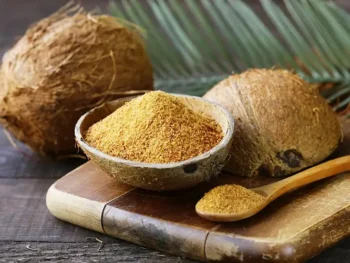
Indonesia is the world's largest producer of coconut sugar, accounting for more than 50% of global export volume.
For importers in Europe, the United States, Australia, the Middle East, and Japan, sourcing directly from Indonesia offers significant advantages: lower cost per metric ton, access to certified organic products, and direct traceability from farm to shipment.
But for buyers who are new to sourcing from Southeast Asia, the process can seem complex. What documents do you need? Which HS code applies? What certifications should your supplier hold?
If you are wondering how to import coconut sugar from Indonesia, this guide answers all of those questions in a single, practical reference. Whether you are importing for the first time or switching from a broker to a direct supplier, this guide covers the full process.
Before diving in, if you are not yet familiar with the product range, take a moment to browse the coconut products we export, including granulated coconut sugar, coconut sugar powder, coconut nectar syrup, desiccated coconut, and virgin coconut oil.
Why Import Coconut Sugar Directly from Indonesia?
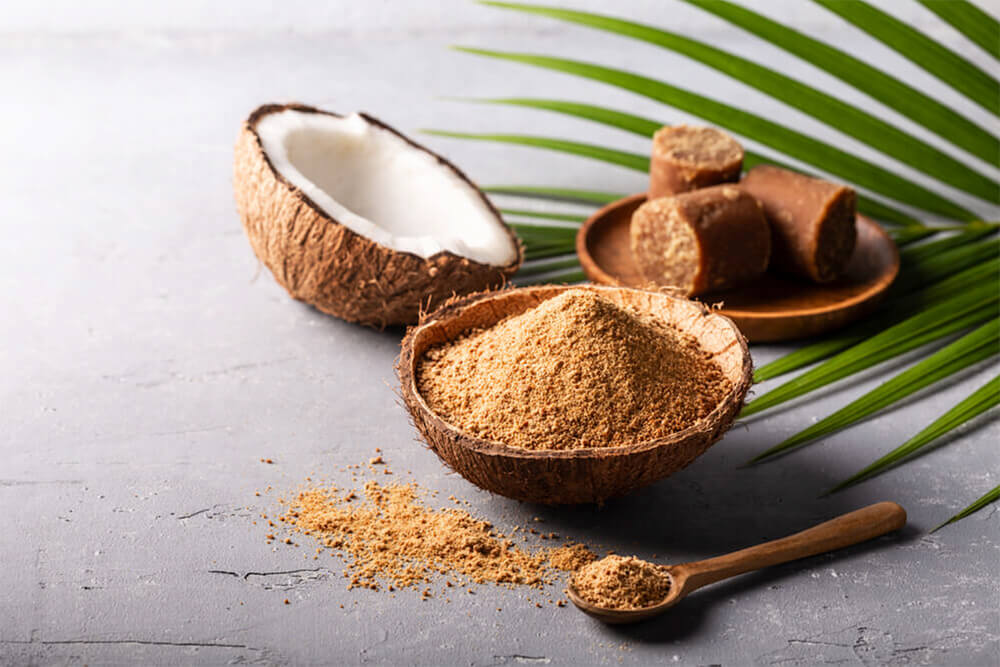
Indonesia's dominance in coconut sugar production is not a coincidence.
The country has ideal agroclimatic conditions, year-round tropical heat, high humidity, and a deeply established smallholder farming tradition.
Understanding how coconut sugar is produced helps explain why Indonesian products consistently meet international food safety standards: production is artisanal yet scalable, and the country's export infrastructure for certified organic ingredients is among the most developed in Asia.
| Why Indonesia | Details |
| Largest producer globally | 50%+ of world coconut sugar exports originate from Indonesia |
| Widest certification coverage | BRCGS, USDA Organic, EU Organic, FSSC 22000, Halal, Kosher available from certified exporters |
| Competitive pricing | Lower cost base vs. Philippines and Sri Lanka for equivalent certified product |
| Volume scalability | Full container (FCL) orders of 14-20 MT routinely fulfilled; multi-container annual contracts common |
| Direct traceability | Farm-to-factory traceability increasingly available from ISO/BRCGS-certified suppliers |
| Government support | Indonesian Ministry of Trade actively supports coconut export through trade missions and facility upgrades |
The 6-Step Import Process: From First Contact to Customs Clearance
Here is a practical walkthrough of the full import process, covering every stage from initial product research to receiving your first shipment.
Step 1: Understand the Product and Define Your Specifications
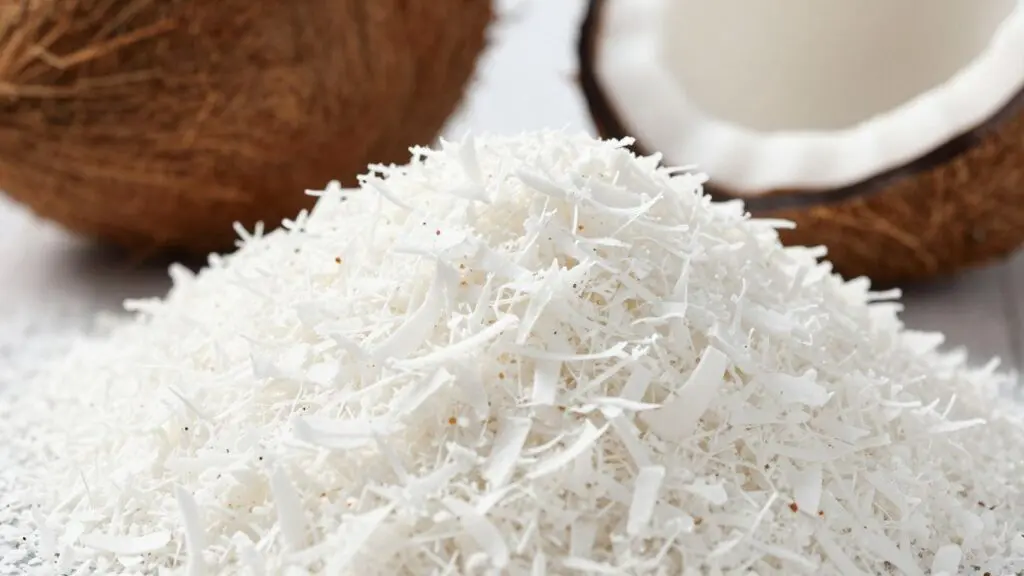
Start by clearly defining what you are sourcing. Coconut sugar is not a single, uniform product. It comes in multiple grades and forms that have different technical properties and applications.
If you are not yet fully familiar with the product, our article on what is coconut sugar and why global buyers prefer it provides a solid foundation.
| Form | Description | Typical Application |
| Granulated (standard) | Crystalline, mesh 12-15 or 12-50, brown to amber | Bakery, granola, table sugar replacement |
| Fine powder | Milled granulated, 100-200 mesh | Food formulation, beverages, supplements |
| Coconut nectar syrup | Liquid form, Brix 70-75 | Sauces, beverages, sweetener syrup |
| Organic certified | USDA / EU Organic — higher price, full certification chain | Natural / health food brands |
| Conventional | Non-organic — competitive pricing, volume orders | Food manufacturing, private label |
Key specifications to define before contacting suppliers: moisture content (max 3%), color grade, particle size (mesh), organic or conventional, packaging format (25kg paper sack, 20kg carton, or custom), and annual volume estimate. Having these ready will dramatically speed up the supplier quotation process.
Step 2: Identify the Correct HS Code for Your Country
Getting the HS code right is essential. It determines your import duty rate, whether import licenses are required, and which regulatory standards apply to your shipment.
| Classification | Details |
| HS Code (International) | 1702.90 — Other sugars (coconut sugar is classified here as it is not sucrose-dominant cane or beet sugar) |
| Full description | Chapter 17: Sugars and sugar confectionery / Heading 1702: Other sugars in solid form |
| Note | Some countries use sub-classifications at the 8 or 10-digit level. Verify with your customs broker for your specific import market. |
| EU import duty | Check the EU TARIC database — duty rates for 1702.90 vary by whether organic certification applies |
| US import duty | Verify with US CBP Schedule B — organic-certified Indonesian coconut sugar may qualify for preferential treatment under GSP (verify current GSP status) |
| Australia / NZ | HS 1702.90 applies — DFAT's FTA Tariff Finder can confirm duty rates under ASEAN-Australia-NZ FTA |
Before submitting customs documentation, confirm the HS code with your freight forwarder or customs broker in the destination country — they will have the most current duty rates and import requirement list.
When you are ready to evaluate product specifications, you can view product specifications on our product page to prepare your inquiry.
Step 3: Prepare and Request the Required Import Documents
This is where many first-time importers get delayed. Having a complete documentation checklist prepared in advance — and confirming that your supplier can provide each document before you commit — prevents clearance problems at the destination port.
| Document | Who Issues It | Purpose | Notes |
| Commercial Invoice | Exporter (supplier) | Declares value, quantity, buyer/seller details | Must match Bill of Lading exactly |
| Packing List | Exporter | Details weight, dimensions, number of packages | Required by customs in all markets |
| Bill of Lading (B/L) | Shipping line | Proof of shipment and contract of carriage | Original B/L required to collect cargo at destination |
| Certificate of Origin (CoO) | Indonesian Chamber of Commerce (KADIN) or Ministry of Trade | Proves Indonesian origin for duty preference eligibility | Form D (for ASEAN FTA), Form A (for GSP), or general CoO |
| Phytosanitary Certificate | Indonesian Ministry of Agriculture (BARANTAN) | Certifies product is free of pests and plant diseases | Required by EU, USA, Australia, and most markets |
| Certificate of Analysis (COA) | Accredited lab (or supplier's in-house lab, third-party verified) | Confirms moisture, sucrose content, microbiological standards | EU buyers often require ISO 17025-accredited lab; request per-lot COA |
| Health Certificate | Indonesian Health Ministry or BPOM | Confirms product is safe and compliant for human consumption | Required by Middle East, some Asian markets; check destination requirements |
| Organic Transaction Certificate (TC) | Certifying body (e.g., Control Union, LSPP, IMO) | Validates organic claim for each specific shipment | REQUIRED if making organic claims on label — must match lot number |
| BRCGS / FSSC 22000 Certificate | Certifying body (e.g., SGS, Bureau Veritas) | Supplier's food safety management system certification | Required by EU retail chains (Tesco, Carrefour, Aldi); GFSI-recognized |
| FDA Facility Registration Number | US FDA (registered by exporter) | Mandatory for all food exporters shipping to the United States | Verify supplier's registration is active — renewal required biennially |
Important: Prior Notice Requirement for USA
All food shipments entering the United States must have Prior Notice submitted to FDA before arrival, minimum 2 hours before arrival by road, 4 hours by air, 8 hours by sea. This is the importer's responsibility. Work with a licensed US Customs Broker to ensure this is filed on time for each shipment.
Step 4: Verify Supplier Certifications and Food Safety Standards

This step is where many importers, especially those working with brokers rather than direct suppliers, encounter problems.
Not all coconut sugar exporters from Indonesia hold the same certifications, and a supplier's claim of being 'organic certified' must be verified against an actual, current certification document.
Always verify certifications and quality documentation directly with the supplier before placing any order.
Minimum Certifications to Require from Any Coconut Sugar Supplier (EU/US market)
- BRCGS Food Safety Grade A or AA: or FSSC 22000 / SQF. These are GFSI-recognized and required by most European retail chains and major US food companies.
- HACCP certification: baseline food safety requirement; should be a given for any serious exporter.
- USDA Organic + EU Organic certification (if ordering organic): verify both certificate number and expiry date. Request the current valid certificate, not just a photo.
- Organic Transaction Certificate (TC) per lot: issued per shipment; verifies the specific batch you are receiving is certified organic.
- Halal MUI and/or Kosher: required for Middle East markets and certain US/EU specialty retail segments.
- ISO 22000: additional food safety management standard; valued by pharmaceutical-grade food buyers.
For buyers targeting ESG-conscious retail channels, sustainability practices of the supplier are increasingly scrutinized.
Our article on the sustainability of coconut sugar provides context on farming practices and carbon footprint considerations that European and North American buyers frequently request during vendor qualification.
Step 5: Understand Destination Market Labeling Requirements
Labeling requirements for imported coconut sugar vary significantly by market. Getting this wrong at the packaging stage means costly relabeling or rejection at customs.
Below is a market-by-market summary of the most important labeling points.
| Market | Key Labeling Requirements |
| European Union | Language: Must include labeling in official language(s) of destination EU member state. Organic: Must carry EU organic logo + certifying body + certificate number. Net weight in metric units. Country of origin: 'Product of Indonesia' required. Allergen declaration: N/A for plain coconut sugar, but verify if packed with shared equipment. |
| United States | FDA nutrition facts panel required (serving size, calories, total sugars, added sugars per FDA guidelines updated 2024). Country of origin statement. Organic: USDA organic seal if certified. Weight in dual units (oz and g). Ingredient list: 'Organic coconut palm sugar' or 'Coconut sugar'. Importer name and address required on label. |
| Australia / NZ | FSANZ Food Standards Code compliance. Nutrition information panel in FSANZ format (per 100g and per serve). Country of origin: Australian mandatory food origin labeling (MFOL) requires specific statements for imports. Organic: ACO or equivalent Australian organic certifier recognized. |
| Middle East / Gulf (GCC) | Halal certification from accredited body (ESMA recognized). Arabic language labeling required. Expiry date in Hijri or Gregorian calendar (both preferred). SFDA (Saudi) or MOIAT (UAE) registration may be required depending on product category. |
| Japan | JAS Organic certification required for organic claims (confirm supplier holds JAS). Japanese language labeling required if consumer-facing. Net weight in grams. Importer's name and address required. Country of origin in Japanese required. |
For bulk B2B buyers (food manufacturers, private label brands) who will be repackaging or relabeling the product themselves, confirm with your supplier that they can ship with your custom packaging or in bulk packaging for your own filling line.
Global Coco Sugar offers custom packaging and contract manufacturing for food supplements, including private-label coconut sugar products.
Step 6: Select the Right Supplier and Structure Your First Order
Choosing the right supplier is the single most important decision in the import process.
For a detailed guide on evaluating and comparing Indonesian coconut sugar exporters, see our article on finding a bulk coconut sugar supplier in Indonesia, which covers red flags, green flags, and questions to ask every potential vendor.
Supplier Evaluation Checklist: 10 Questions to Ask Before Placing Your First Order
- Can you provide a current BRCGS or FSSC 22000 certificate (with grade and expiry date)?
- Do you hold current USDA Organic and EU Organic certifications? Can you provide the certifying body name and certificate number?
- What is your minimum order quantity (MOQ) for first orders? What is the pricing structure for container quantities?
- Can you provide a Certificate of Analysis from an ISO 17025-accredited laboratory for the specific lot I will receive?
- What is your lead time from purchase order to container loading at the port?
- What Incoterms do you offer? (FOB Tanjung Priok / Semarang / Surabaya is most common, confirm port and Incoterm)
- Can you provide references from existing buyers in my target market (EU / USA / Australia)?
- Do you offer samples before commitment to a full container order?
- What is your process for handling quality disputes or out-of-spec shipments?
- Are you registered with the US FDA? What is your FDA facility registration number?
At Global Coco Sugar, we supply organic and conventional coconut sugar, desiccated coconut, coconut nectar syrup, and virgin coconut oil to buyers in 30+ countries.
We hold BRCGS Food Safety certification (Grade A), USDA Organic, EU Organic, HACCP, Halal MUI, Kosher, and JAS certification. Contact our export team to request a quotation, product specifications, or a sample shipment.
Shipping Terms, Incoterms, and Logistics Overview
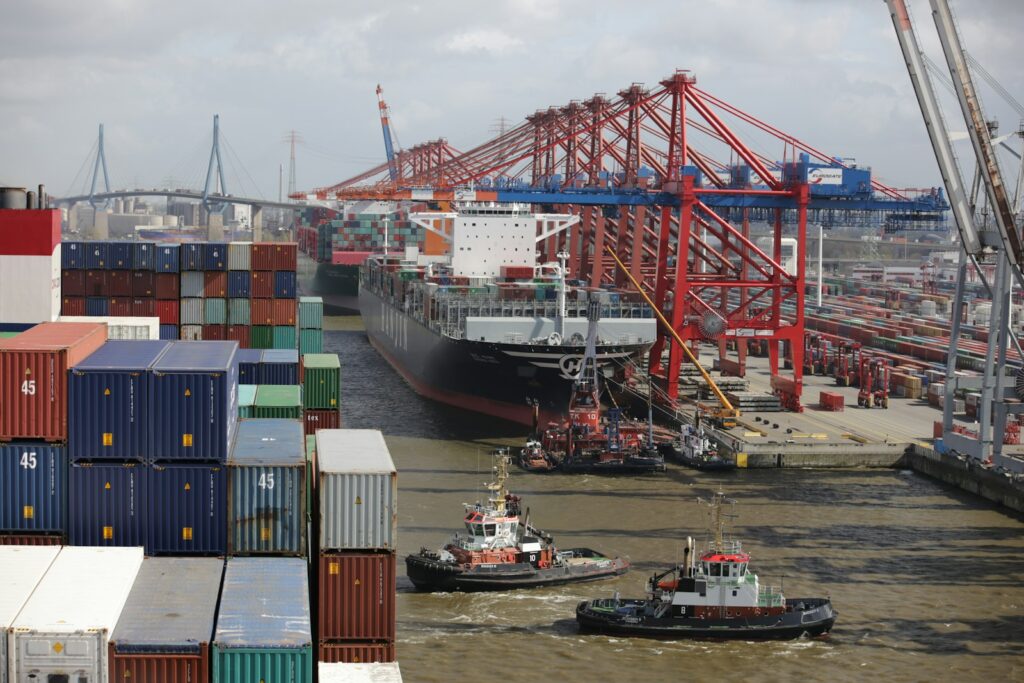
Once you have selected your supplier and confirmed your order, the next step is agreeing on shipping terms. Here is what to know:
| Incoterm | Meaning | Who Handles Freight & Insurance | Best For |
| FOB (Free on Board) | Supplier delivers to named Indonesian port; buyer handles freight from there | Buyer (from Indonesian port) | Experienced importers with own freight forwarder relationships |
| CIF (Cost Insurance Freight) | Supplier arranges and pays freight + insurance to destination port; buyer handles customs clearance | Supplier (to destination port) | New importers; simplifies logistics but less cost control |
| EXW (Ex Works) | Buyer collects from supplier's factory | Buyer (everything from factory gate) | Rare for Indonesia — not recommended for new buyers |
| DDP (Delivered Duty Paid) | Supplier handles all logistics including destination customs — buyer receives at door | Supplier (full chain) | Highest convenience; premium price; check if supplier offers this |
| Container Type | Approx. Net Capacity (coconut sugar) | Typical Use |
| 20ft FCL (Full Container Load) | 14–16 MT net (25kg sacks with pallets) | Standard first orders; most common |
| 40ft FCL | 28–32 MT net | High-volume repeat orders |
| LCL (Less than Container Load) | 1–5 MT — consolidated with other shipments | First samples or small trial orders — higher per-unit freight cost |
Most Indonesian coconut sugar is exported through three main ports: Tanjung Priok (Jakarta), Tanjung Emas (Semarang, Central Java — closest to coconut sugar production areas), and Tanjung Perak (Surabaya, East Java). Transit times to Europe are typically 25–35 days; to the US West Coast, 20–28 days; to the US East Coast, 30–40 days; to Australia, 10–16 days.
5 Common Mistakes First-Time Importers Make and How to Avoid Them
- Not verifying certifications before ordering. A supplier's claim of 'organic certified' is meaningless without the actual current certificate. Always request the document with certifying body name, certificate number, and expiry date. Then verify it independently on the certifying body's website.
- Skipping the sample stage. Always request a 2–5 kg sample before committing to a container order. Test moisture content, color, flavor, and particle size against your specifications. Reputable suppliers will provide samples at no charge or at cost.
- Underestimating documentation lead time. Some documents (phytosanitary certificates, organic TCs) must be issued close to the shipment date. Plan for 1–2 weeks of documentation preparation after the goods are ready. Build this into your delivery schedule.
- Using the wrong Incoterm for your risk profile. New importers often underestimate the complexity of FOB. You become responsible for freight and insurance from the Indonesian port. If you are importing for the first time, CIF gives you more certainty on total landed cost.
- Not accounting for import duties in your cost calculation. Calculate total landed cost before committing: FOB price + ocean freight + insurance + import duty (HS 1702.90 rates vary by market) + customs brokerage fee + inland freight to your warehouse. A 5–10% duty can significantly affect your margin calculation.
| Ready to Start Your First Import Order? Global Coco Sugar is a BRCGS-certified Indonesian exporter of organic and conventional coconut sugar. We handle full documentation support — COA, phytosanitary certificate, organic TC, and Certificate of Origin — for every shipment. Request a Bulk Quote or Free Sample Here >>> Browse Our Full Product Range >>> |
Frequently Asked Questions
What is the HS code for coconut sugar?
Coconut sugar is commonly classified under HS Code 1702.90 (Other sugars in solid form). The exact code may vary by destination country, so importers should verify the classification with local customs authorities or a customs broker.
What is the minimum order quantity (MOQ) for direct import from Indonesia?
The minimum order quantity typically starts at 1 metric ton (MT). However, full container load (FCL) orders usually provide the most competitive pricing and freight efficiency.
Is USDA Organic certification available for coconut sugar from Indonesia?
Yes. Many Indonesian coconut sugar exporters hold USDA Organic certification. Buyers should verify that the certification is valid, current, and covers the specific product being purchased.
Do I need an import license to import coconut sugar into the EU or USA?
In most cases, no special import license is required beyond standard food importer registration and customs documentation. Importers should always confirm current requirements with local authorities or a licensed customs broker.
How do I evaluate whether a coconut sugar supplier from Indonesia is legitimate?
Review the supplier's certifications, export experience, and product documentation. It is also advisable to request samples, verify certifications independently, and conduct supplier due diligence before placing large orders.
Can coconut sugar replace cane sugar in my food manufacturing process?
In many applications, yes. Coconut sugar can often replace cane sugar with minor formulation adjustments to account for differences in sweetness, browning behavior, and moisture absorption.
What are the most important applications for imported coconut sugar?
Coconut sugar is widely used in bakery products, beverages, confectionery, snack bars, sauces, dairy alternatives, and functional foods. Its natural positioning and caramel flavor make it popular across multiple food categories.
Conclusion: How to Import Coconut Sugar from Indonesia Successfully
Understanding how to import coconut sugar from Indonesia is a straightforward process when you know what to prepare. The key success factors are: working with a supplier who holds current, verifiable certifications; having your documentation checklist ready before shipment; using the correct HS code and Incoterms for your market; and building in sufficient lead time for documentation preparation.
The global coconut sugar market is growing and importers who establish direct supplier relationships in Indonesia now are positioning themselves ahead of competitors still relying on brokers or aggregators. Direct sourcing means better price transparency, tighter quality control, and the ability to make organic or sustainability claims with full traceability.
Start Importing Coconut Sugar from Global Coco Sugar

We are a BRCGS Food Safety certified (Grade A), USDA Organic, EU Organic, Halal MUI, Kosher, and JAS certified exporter of Indonesian coconut products. We support buyers through the full process from sample request to documentation to shipment with a dedicated export team available for English-language inquiries.