Coconut sugar export price from Indonesia can vary from one buyer requirement to another.
The final quotation is affected by product type, grade, organic certification, packaging format, order volume, destination country, Incoterms, freight conditions, and required export documents.
Because export pricing changes with these variables, Global Coco Sugar does not use fixed public price ranges as a final reference for bulk coconut sugar orders.
Instead, buyers should request a formal quotation based on their exact product specifications, order volume, packaging needs, certification scope, and delivery terms.
This guide explains what affects coconut sugar export pricing from Indonesia, what information buyers should prepare before asking for a quote, and how to request a clear offer for organic coconut sugar and other coconut-based sweeteners.
Quick Answer: How Is Coconut Sugar Export Pricing Calculated?
Coconut sugar export pricing is calculated from the product specification, production requirements, certification scope, packaging format, order volume, Incoterms, and shipment destination.
A buyer requesting organic coconut sugar in retail-ready packaging will not receive the same quotation structure as a buyer requesting bulk granulated coconut sugar for food manufacturing.
For accurate pricing, buyers should share the product form, target certification, expected order volume, packaging preference, destination port or country, and preferred delivery term.
This helps the supplier prepare a quotation that reflects the actual sourcing and export requirements instead of a generic public estimate.
Why Global Coco Sugar Does Not Use Fixed Public Pricing

Public price ranges can be misleading in B2B export because they rarely reflect the full buying requirement.
Two buyers may search for coconut sugar export price from Indonesia, but one may need organic granulated coconut sugar in bulk bags while another may need fine powder, private label packaging, additional certification documents, or a different shipment term.
For this reason, Global Coco Sugar treats public pricing information as incomplete.
The most accurate way to understand current pricing is to request a formal quotation from the sales team with clear product, volume, packaging, certification, and destination details.
This approach helps buyers avoid outdated price assumptions and gives procurement teams a more reliable basis for comparing suppliers.
Main Factors That Affect Coconut Sugar Export Price
The following factors usually influence coconut sugar export quotations from Indonesia. These are not fixed price ranges, but practical variables that buyers should confirm before comparing offers.
| Quotation Factor | Why It Affects Pricing | What Buyers Should Confirm |
| Product type | Granulated coconut sugar, fine powder, cubes, syrup, and other product forms require different processing and handling. | Product form, application, target market, and quality requirements. |
| Organic or conventional grade | Organic supply requires valid certification scope, traceability, and documentation review. | USDA Organic, EU Organic, or other required certification documents. |
| Order volume | Trial orders, recurring orders, LCL shipments, FCL shipments, and annual supply plans require different production and export planning. | Estimated order volume, forecast, shipment frequency, and loading preference. |
| Packaging format | Bulk bags, cartons, drums, retail packs, and private label formats affect production planning and materials. | Packaging size, material, labeling needs, palletization, and destination rules. |
| Incoterms and delivery term | FOB, CIF, CNF, DAP, and other terms include different responsibilities and cost components. | Preferred quotation term, destination port, and buyer or seller responsibilities. |
| Destination country | Freight routes, documentation, import rules, and delivery expectations vary by market. | Country, port, importer requirements, and required import documents. |
| Documentation requirements | Certificates, COA, transaction documents, and export paperwork can affect approval and shipment preparation. | Current certificate scope, COA request, product specification, and export documents. |
Product Type and Grade: Organic, Conventional, Powder, Cubes, and Syrup
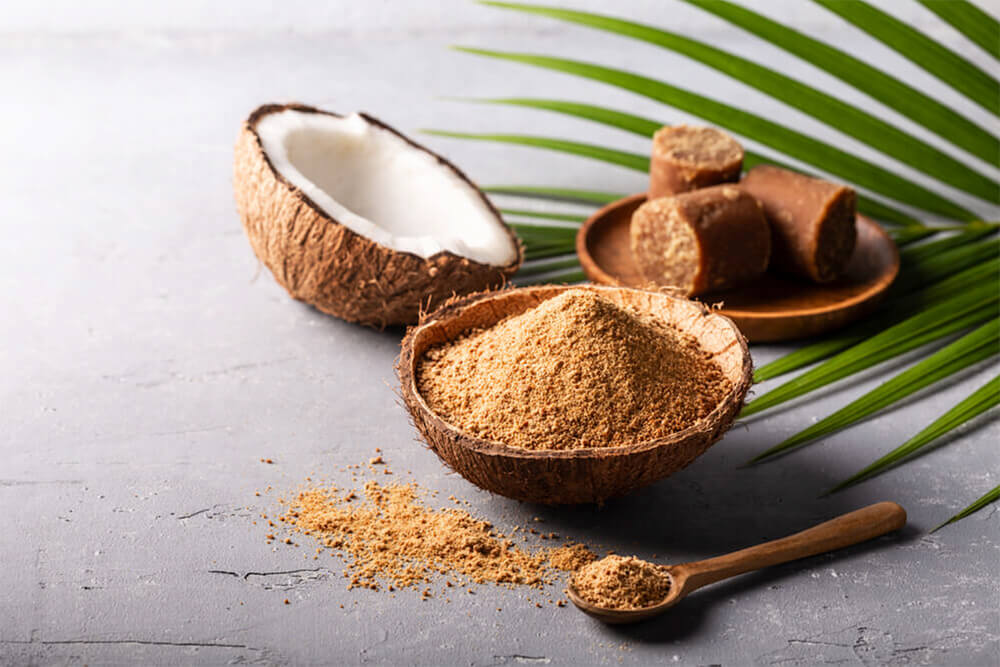
Coconut sugar export quotations should always be based on the exact product type.
Granulated coconut sugar is commonly used in food manufacturing, bakery, confectionery, seasoning, retail, and private label products.
Fine powder may be preferred for beverage mixes, instant products, dry blends, and formulations that need better dispersion.
For buyers focused on certified sourcing, organic coconut sugar should be evaluated based on certificate scope, specification, color, moisture, packaging, shelf life, COA availability, and export documentation.
Buyers who need liquid applications may also compare coconut sugar with coconut nectar syrup, but the quotation structure will differ because the product form, packaging, and handling requirements are different.
| Product Form | Common B2B Applications | Buyer Checks Before Quotation |
| Granulated coconut sugar | Bakery, confectionery, retail packs, seasoning, dry food applications. | Grade, color, moisture, packaging, certification, COA availability. |
| Fine powder coconut sugar | Beverage mixes, dry blends, supplements, sauces, bakery formulations. | Mesh size, flowability, moisture, anti-caking needs, packaging. |
| Coconut sugar cubes | Retail, HoReCa, gifting, specialty food products. | Cube size, packaging format, carton design, production lead time. |
| Coconut nectar syrup | Beverages, sauces, condiments, toppings, private label formulations. | Brix, pH, viscosity, packaging, shelf life, COA. |
| Private label coconut sugar | Retail brands, specialty stores, e-commerce, foodservice packs. | Packaging design, label compliance, carton, MOQ, market requirements. |
MOQ, Packaging, and Order Volume Considerations
MOQ and order volume can affect quotation structure because they influence production planning, packaging preparation, export documentation, and shipment arrangement.
Buyers should avoid comparing quotations only by product name.
A trial order, recurring monthly order, and full container shipment may require different planning even when the product is similar.
For new buyers, it is usually better to confirm product specification, sample approval, packaging option, and documentation readiness before moving into a larger commercial shipment.
| Order Planning Stage | Best For | What Buyers Should Prepare |
| Sample request | Initial product evaluation, R&D, QA review, and supplier screening. | Application, product form, target market, and required documents. |
| Trial order | Small commercial validation before scaling procurement. | Packaging option, test volume, delivery term, and destination details. |
| Regular bulk order | Food manufacturers, distributors, private label buyers, and recurring buyers. | Forecast, specification, certification scope, packaging, and shipment plan. |
| FCL shipment | Buyers with stable demand and larger procurement planning. | Container planning, loading preference, packaging mix, and export documents. |
| Annual or forecast-based supply | Brands and distributors that need recurring shipments and stable supplier coordination. | Volume forecast, shipment schedule, quality agreement, and document requirements. |
FOB, CIF, and Incoterms: Why Quotation Terms Matter

A coconut sugar quotation can look different depending on the agreed delivery term. FOB, CIF, CNF, DAP, and other Incoterms determine which cost components and responsibilities are included in the offer.
For example, an FOB quotation usually focuses on the product and export port arrangement, while CIF or other destination-based terms may include additional logistics components. Buyers should confirm the agreed Incoterms rules before comparing quotations from different suppliers.
To avoid misunderstanding, buyers should ask whether the quote includes freight, insurance, export handling, import duties, customs brokerage, inland delivery, or other destination-related costs.
Organic Certification and Documentation Factors

Organic coconut sugar buyers should verify more than the product name.
The quotation and supplier approval process should include certificate scope, validity, product coverage, transaction documentation, and buyer-specific market requirements.
For buyers targeting the United States, supplier or operation details may be cross-checked through the USDA Organic INTEGRITY Database, depending on the certification body and scope.
For EU organic imports, buyers should also confirm whether an electronic Certificate of Inspection is required before the shipment is arranged.
If your team needs a deeper explanation of certification requirements, review our guide to organic coconut sugar certification before finalizing supplier approval.
How to Request an Accurate Coconut Sugar Export Quotation
The most efficient way to get a reliable coconut sugar quotation is to send a complete requirement from the beginning.
This reduces back-and-forth communication and helps the sales team prepare a quote that matches your intended product, packaging, documentation, and shipment needs.
- Product type: granulated coconut sugar, fine powder, cubes, syrup, or private label product.
- Grade requirement: organic, conventional, specific color, moisture, mesh size, or other specification.
- Order volume: sample request, trial order, recurring bulk order, or container shipment.
- Packaging preference: bulk bag, carton, drum, retail pack, private label, or buyer-specified packaging.
- Certification needs: organic, Kosher, Halal, BRCGS, or other required documents.
- Destination details: country, port, delivery term, and importer requirements.
- Requested documents: product specification, COA, certification documents, MSDS if needed, and export paperwork.
Buyers who are still comparing suppliers can also read our guide to choosing a bulk coconut sugar supplier in Indonesia before requesting a quotation.
Documents Buyers Should Prepare Before Requesting Price
For export orders, pricing is often connected to documentation readiness.
Buyers should confirm the documents required by their internal QA team, importer, distributor, or destination country before asking for a final quotation.
| Document or Detail | Why It Matters |
| Product specification | Defines product type, grade, moisture, color, mesh size, packaging, and application fit. |
| COA request | Helps buyers check batch or lot quality parameters before shipment approval. |
| Organic certificate or transaction document | Supports organic market access and buyer compliance review. |
| Kosher, Halal, or food safety certificates | May be required for retail, food manufacturing, or religious dietary markets. |
| Packaging requirement | Affects production planning, label preparation, palletization, and shipment arrangement. |
| Destination and Incoterms | Determines which logistics and responsibility components should be included in the quote. |
For a broader export process overview, see our guide on how to import coconut sugar from Indonesia.
Request a Coconut Sugar Export Quotation from Global Coco Sugar
Global Coco Sugar supports international buyers with coconut sugar and coconut-based sweeteners for food manufacturing, retail, distribution, private label, bakery, confectionery, beverage, and specialty food applications.
If your team needs current pricing, do not rely on public price ranges or outdated market references.
Request a formal quotation based on your exact product type, certification requirements, packaging, volume, destination, and delivery terms.
Need current coconut sugar export pricing from Indonesia? Contact our export team to request product specifications, samples, MOQ details, packaging options, certification documents, and a quotation based on your order requirements.
Final Thoughts
Coconut sugar export price from Indonesia is not determined by one public number. It depends on the buyer requirement, product form, certification scope, packaging, order volume, Incoterms, and destination market.
For serious procurement decisions, a formal quotation is more reliable than a general public price reference.
If you are sourcing organic coconut sugar or coconut-based sweeteners for commercial use, prepare your product specification and documentation requirements first.
This helps the supplier respond with a clearer quote and supports a smoother export process.
FAQ About Coconut Sugar Export Price from Indonesia
What affects coconut sugar export price from Indonesia?
Product type, grade, certification scope, order volume, packaging, destination country, Incoterms, freight conditions, and documentation requirements can all affect the final quotation.
Why does Global Coco Sugar not publish fixed coconut sugar prices?
Fixed public prices can become outdated and may not match each buyer requirement. A formal quotation is more accurate because it reflects the requested product specification, volume, packaging, certification scope, and delivery terms.
Is organic coconut sugar priced the same as conventional coconut sugar?
Not always. Organic coconut sugar requires certification scope, traceability, and documentation review, so the quotation structure can differ from conventional coconut sugar.
Can I get an FOB quotation for coconut sugar from Indonesia?
Yes. Buyers can request FOB or other quotation terms depending on their procurement process. The sales team will need product details, volume, packaging, destination information, and document requirements.
What information should I send before requesting a price?
Send the product type, required grade, order volume, packaging preference, destination country, preferred Incoterms, certification needs, and any required documents such as COA or organic certificates.
Can I request samples before placing a bulk order?
Yes. Buyers can request samples for evaluation before confirming larger orders. Sample approval is recommended for food manufacturers, private label buyers, and procurement teams that need consistency in flavor, color, texture, and specification.
Does packaging affect the final quotation?
Yes. Bulk bags, cartons, drums, retail packaging, and private label packaging require different materials and production planning. Buyers should confirm packaging requirements before requesting a final quotation.
How can I get the current coconut sugar export price?
The best way is to request a formal quotation from Global Coco Sugar with your product, volume, packaging, certification, destination, and delivery requirements.