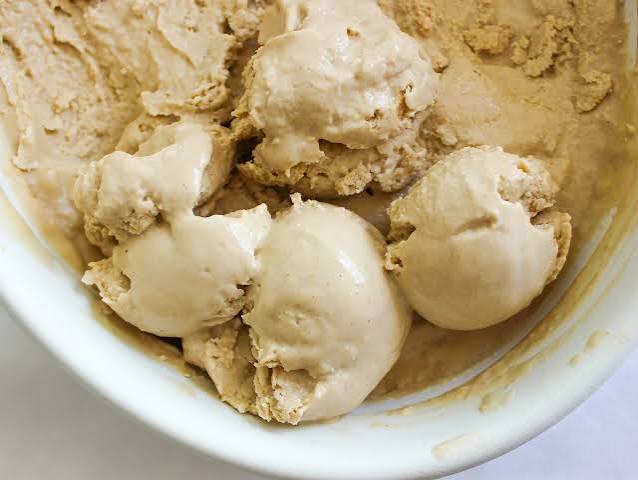
This coconut sugar ice cream recipe starts with a vanilla-and-cream base sweetened with coconut sugar instead of white sugar. Its gentle caramel-like flavor works well on its own or with simple toppings.
Below, you will find one ingredient list, a standard ice cream maker method, and a freezer-based alternative for kitchens without a machine. For more dessert inspiration, browse our coconut sugar dessert ideas.
Coconut Sugar Ice Cream at a Glance
Active prep: about 15 minutes | Base chilling: at least 4 hours
Ice cream maker: approximately 20–30 minutes churning, then 2–3 hours freezing
Without a machine: approximately 4–6 hours freezing with periodic stirring
Estimated yield: about 6–8 half-cup servings | Equipment: saucepan, whisk, bowl, airtight container; ice cream maker optional
Ingredients for Coconut Sugar Ice Cream
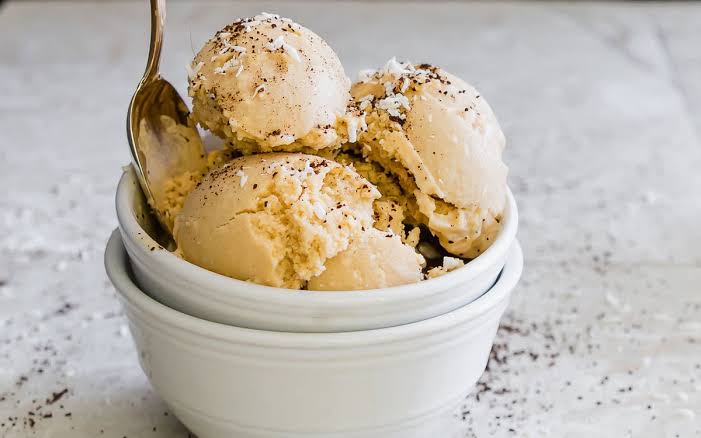
This egg-free vanilla base uses five everyday ingredients. Measure the coconut sugar by weight when possible because granule size can affect how much fits into a measuring cup.
• 1¼ cups (300 ml) whole milk, divided
• 1¾ cups (420 ml) cold heavy cream
• ⅔ cup (about 105 g) organic coconut sugar
• 2 teaspoons vanilla extract
• ⅛ teaspoon fine sea salt
Use unsweetened dairy products. Coconut sugar is the only added sweetener in this starting formula. Coconut sugar has its own flavor and color, so the finished ice cream will not look exactly like white vanilla ice cream.
How to Make Homemade Coconut Sugar Ice Cream
Step 1: Dissolve the Coconut Sugar
Pour ½ cup (120 ml) of the milk into a small saucepan and add the coconut sugar and salt. Warm over low heat, stirring for about 2–4 minutes until the granules are dissolved or nearly dissolved. Do not bring the mixture to a rolling boil. If a few coarse particles remain, strain the liquid before chilling.
Step 2: Prepare and Chill the Ice Cream Base
Take the saucepan off the heat. Whisk in the remaining ¾ cup (180 ml) milk, the cold heavy cream, and vanilla. Transfer to a covered container and refrigerate until thoroughly cold, at least 4 hours or overnight. A cold base freezes more efficiently and gives you better control over its texture.
Step 3: Churn with an Ice Cream Maker
Prepare your machine according to its manual; if it uses a freezer bowl, freeze the bowl fully beforehand. Pour in the chilled base and churn until it resembles thick soft-serve ice cream, usually 20–30 minutes depending on the model. For an equipment-based example, see Cuisinart's vanilla ice cream with coconut sugar.
Step 4: No-Churn Alternative Without a Machine
Pour the same well-chilled base into a shallow, freezer-safe metal pan. Freeze for about 45 minutes, then whisk or scrape thoroughly to break up the ice forming around the edges. Repeat every 30–45 minutes for roughly 4–6 hours, until thick and mostly frozen.
If you have a suitable food processor, briefly blending the partially frozen mixture once may help smooth out ice crystals. This method generally produces a denser, icier result than churning, so treat it as an alternative rather than an identical substitute.
Step 5: Freeze Until Scoopable
Transfer churned ice cream to a shallow airtight container, press a piece of parchment against the surface if desired, and freeze for approximately 2–3 hours to firm up. For the no-churn batch, smooth the mixture into its container after the final stir and let it set. If hard straight from the freezer, leave it at room temperature briefly before scooping.
Tips for Creamy Coconut Sugar Ice Cream
Dissolve the sugar first. Undissolved crystals can feel grainy in a frozen dessert, so warm only enough milk to dissolve the coconut sugar and chill the base fully before freezing. Do not significantly reduce the sweetener without testing: sugar affects not only sweetness but also how hard ice cream freezes.
Use full-fat dairy for this recipe and avoid overfilling your ice cream maker. In its guide to homemade ice cream texture, King Arthur Baking explains how fat, sugar, and air influence ice crystal formation and scoopability.
If your batch is icy, check whether the base was thoroughly cold and whether the no-churn mixture was stirred often enough. A very hard batch may simply need a short resting period before serving.
Why Use Coconut Sugar in Ice Cream?
Coconut sugar adds a mellow toffee-like note that complements vanilla and dairy. Its brown color also gives the ice cream a light tan or caramel appearance. Dissolving the sugar in warm milk before cooling helps distribute its flavor evenly through the base.
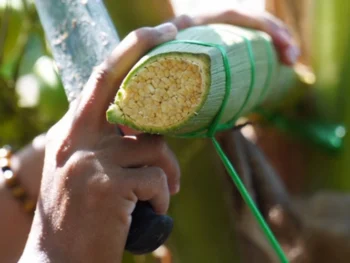
If you are exploring the ingredient beyond desserts, learn more about organic coconut sugar from Indonesia supplied by Global Coco Sugar. Coconut sugar is still an added sugar, so this recipe should not be presented as sugar-free, low-calorie, or automatically suitable for people managing blood glucose.
Easy Coconut Sugar Ice Cream Variations
• Chocolate: For a chocolate version, whisk in a small amount of unsweetened cocoa while the milk is warm. Cocoa changes the solids balance, so the amount should be tested before publishing a firm variation.
• Coffee: Dissolve a little instant espresso powder in the warm milk, starting with a small amount so the coffee does not overpower the coconut sugar.
• Toasted coconut: Fold in cooled toasted coconut flakes near the end of churning, or sprinkle them over each scoop just before serving.
How to Store Homemade Coconut Sugar Ice Cream
Keep the ice cream in a tightly sealed freezer-safe container at a steady freezer temperature. A shallow container helps it freeze evenly, and covering the surface can limit ice crystal buildup.
For the best eating quality, enjoy it relatively soon after making it; repeated warming and refreezing can make the texture icy. If the ice cream becomes very firm, rest the container on the counter for a few minutes before scooping rather than repeatedly thawing the entire batch.
Explore Organic Coconut Sugar from Indonesia
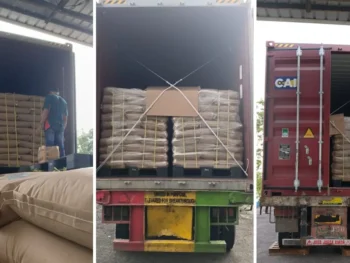
Want to explore this sweetener for your next recipe or product concept? Global Coco Sugar offers organic coconut sugar for international buyers.
Food manufacturers and frozen dessert brands can review coconut sugar applications in food manufacturing or contact our export team to discuss specifications, bulk packaging, samples, and quotation requirements.
Frequently Asked Questions
Can I make coconut sugar ice cream without an ice cream maker?
Yes. The freeze-and-stir method above uses a shallow pan and regular mixing to interrupt ice crystal formation. Expect a denser result than ice cream made with a machine.
Does coconut sugar make ice cream taste like coconut?
Not strongly. Coconut sugar generally has a warm caramel-like flavor rather than the pronounced taste of coconut milk or shredded coconut.
Why is my coconut sugar ice cream icy or grainy?
Possible causes include sugar granules that never fully dissolved, a warm base, slow freezing, or insufficient mixing during the no-churn method. Start by checking dissolution and chilling.
Can I replace white sugar with coconut sugar in ice cream?
You can experiment with a replacement, but the flavor, color, hardness, and sweetness may change. Use a tested formula or begin with a small batch rather than assuming every recipe will behave identically.