Some of the world's most prized food ingredients have histories that span centuries before their modern commercial form was established. Coconut blossom sugar is one of them.
Long before it appeared on health food store shelves in Berlin, New York, or Tokyo, coconut blossom sugar was being produced by smallholder farmers in the tropical islands of Southeast Asia using techniques passed down through generations — techniques that, in many cases, have changed very little in 300 years.
This article traces the full history of coconut blossom sugar — from its origins in 8th-century Southeast Asia through its spread along ancient trade routes, its rediscovery by health-conscious Western consumers, and its emergence as a globally certified export commodity.
Understanding this history also illuminates why how coconut sugar is produced in Indonesia remains a largely artisanal, labor-intensive process — and why that is a feature, not a limitation, for buyers who value traceability and authenticity.
The Origins of Coconut Blossom Sugar: Southeast Asia, 8th Century
The roots of coconut blossom sugar production reach back more than a thousand years in Southeast Asia.
The coconut palm — Cocos nucifera — has been cultivated throughout the tropical regions of Indonesia, the Philippines, Thailand, Sri Lanka, and India for thousands of years, valued not only for its fruit but for every part of the tree.
The discovery that the sap flowing from the coconut palm's flower buds could be collected, heated, and transformed into a dense, sweet substance was a foundational moment in the culinary history of the region.
Historical texts from the 8th and 9th centuries reference coconut palm sugar as both a food ingredient and a medicinal substance — used in traditional Ayurvedic medicine in South Asia and in traditional Javanese and Balinese healing practices in what is now Indonesia.
The production method — making careful incisions in the flower bud stalks of the coconut palm, collecting the sap in bamboo containers, and slowly heating it over open fires to evaporate the water — is one of the oldest documented food production techniques in the region.
In Java and Bali, this practice was so integral to daily life that it became embedded in local ceremonies, community rituals, and the rhythms of agricultural society.
| What makes coconut blossom sugar historically distinct from other palm sugars It is important to distinguish coconut blossom sugar (from Cocos nucifera — the coconut palm) from other palm sugars produced in the same region — particularly Arenga sugar (from the Arenga pinnata palm) and date palm sugar. While all are produced by tapping and evaporating palm sap, coconut blossom sugar has a distinct flavor profile, nutritional composition, and production geography. The term 'coconut palm sugar' or 'coconut blossom sugar' specifically refers to sugar from the coconut palm — and this distinction matters for modern certification and labeling purposes. |
Cultural Significance: Coconut Sugar in the Heart of Indonesian Society

In Indonesia — and particularly in Java and Bali, which remain the heartland of coconut sugar production today — coconut sugar has never been merely an ingredient. It has been woven into the social and spiritual fabric of communities for centuries.
The process of producing coconut sugar in traditional Indonesian villages is communal by nature.
A family that owns a grove of coconut palms will typically have one or more members who specialize in the daily ritual of tapping — climbing the palm twice daily, at dawn and in the afternoon, to collect the fresh sap before fermentation begins.
The sap is collected in bamboo tubes or clay pots, brought down from the palms, and transferred immediately to the cooking area where it will be heated and reduced.
This daily rhythm — climbing, collecting, cooking, shaping — has defined the working life of coconut sugar farmers in Central Java for generations.
The names of specific palm sugar producing villages in Banyumas, Purwokerto, and Kebumen have been synonymous with quality coconut sugar for centuries.
Buyers traveling to Indonesia to evaluate suppliers often find that the production methods they observe in 2026 are strikingly similar to those depicted in Dutch colonial-era illustrations from the 18th century.
The Global Spread: From Trade Routes to European Discovery

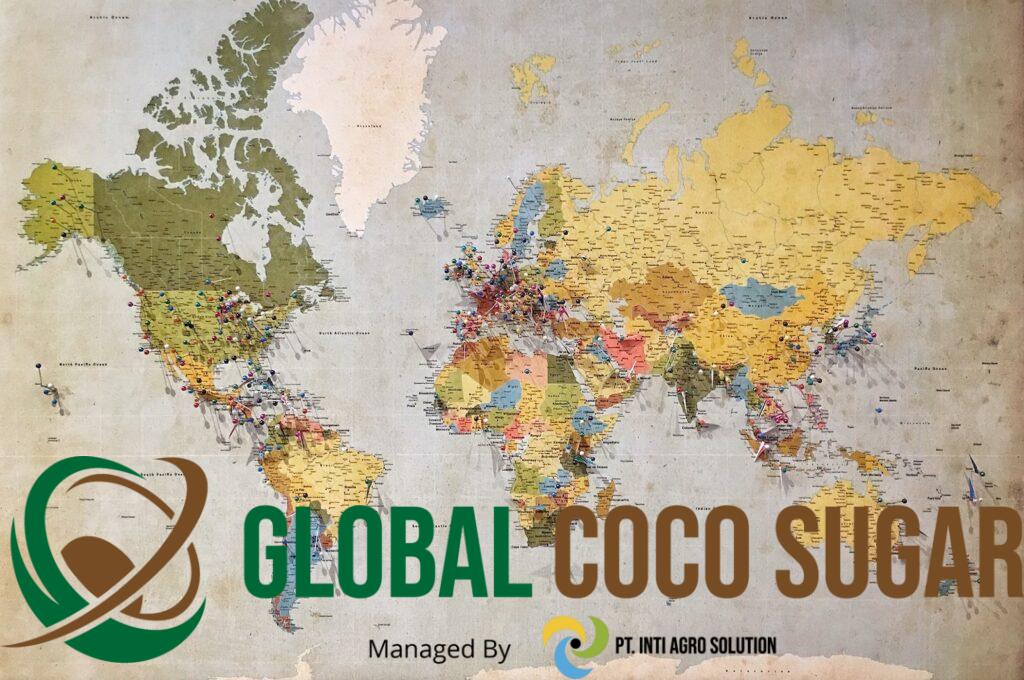
Coconut sugar's journey beyond Southeast Asia began through the ancient maritime trade networks that connected the Indonesian archipelago to India, Arabia, China, and eventually Europe.
Indonesian sailors and traders carried coconut products — including dried coconut sugar in pressed cakes — along the spice trade routes that made the islands of Maluku and Java famous to the world.
Arab traders who controlled much of the Indian Ocean trade between the 8th and 15th centuries were among the earliest to bring coconut products to the Middle East and North Africa, where they were valued as both luxury goods and medicinal substances.
The distinctively rich, caramel-like flavor of coconut sugar made it prized as a confectionery ingredient in the courts of Persia and the Mughal Empire.
The arrival of European colonial powers in Southeast Asia in the 16th century brought a new audience for coconut sugar.
Dutch administrators and naturalists in the Dutch East Indies (present-day Indonesia) documented coconut sugar production extensively in the 17th and 18th centuries — recognizing its commercial potential for the European sugar market, which was then dominated entirely by cane sugar from the Caribbean and Brazil.
Dutch East India Company (VOC) records from the 18th century reference coconut palm sugar as a local commodity of significant value, though cane sugar's industrial scale made commercial coconut sugar export impractical at the time.
The Modern Revival: From Traditional Staple to Global Health Ingredient
The late 20th century brought a structural shift in consumer attitudes toward sweeteners in Western markets.
The growing awareness of the health consequences of refined sugar — rapid blood glucose spikes, empty calories, industrial processing — created demand for alternatives that offered sweetness alongside some nutritional value and a more 'natural' production story. Coconut sugar fit this demand almost perfectly.
Its low glycemic index of approximately 35 — significantly lower than white sugar's GI of 60-65 — was one of the first characteristics that attracted the attention of health-focused nutritionists and food writers in the early 2000s.
The global health food movement that gained momentum through the 2000s and 2010s created an export market for coconut sugar that had never previously existed at scale.
Indonesian and Filipino producers who had been selling coconut sugar domestically — typically in pressed cake form for local culinary use — suddenly found themselves receiving inquiries from importers in Germany, the United States, Australia, and Japan looking for granulated coconut sugar in food-grade export packaging.
This demand surge drove rapid development of the Indonesian coconut sugar export industry.
Production facilities that had operated at village scale for centuries began investing in modernization: stainless steel processing equipment, food-grade packaging lines, laboratory testing infrastructure, and — critically — third-party food safety and organic certifications that international buyers required.
The traditional craft of coconut sugar making was being formalized into a globally compliant export commodity.
From Tradition to Global Export: How Indonesian Heritage Became a Certified Product
The most significant transformation in the history of coconut blossom sugar happened in the decade between 2010 and 2020: the formalization of the traditional production knowledge into globally recognized certification frameworks.
A sweetener that had been produced by the same methods for 300 years now needed to comply with the BRCGS Food Safety standard, USDA Organic regulations, and EU Organic certification requirements — all while maintaining the artisanal production practices that made it authentic.
Understanding why buyers choose certified organic coconut sugar from Indonesia illuminates why this transition was commercially transformative.
And understanding what it means for a supplier to be BRCGS certified explains why not all of Indonesia's hundreds of coconut sugar producers have been able to make this transition.
The producers who successfully navigated this transition — building food safety management systems, investing in third-party organic certification, establishing traceability from specific farmer cooperatives through to export documentation — became the certified suppliers that international buyers increasingly required.
Global Coco Sugar is among this group: a company that combines the deep production knowledge of Indonesian coconut sugar heritage with the certification infrastructure that EU and US buyers require.
Today, our coconut blossom sugar is produced in certified facilities in Central Java — the same region that has been the heartland of Indonesian coconut sugar production for centuries.
The farmers who supply our raw coconut sap are working in a tradition that connects directly to the 8th-century origins of this ingredient.
The BRCGS Grade A certificate and USDA Organic certification are the modern layer on top of that tradition — not a replacement for it.
Coconut Blossom Sugar in the Modern Food Industry
The historical journey of coconut blossom sugar has brought it to a position that its 8th-century producers could not have imagined: a globally traded, internationally certified food ingredient used in premium bakery products, health food brands, functional beverages, and clean-label confectionery across more than 60 countries.
Our technical article on coconut sugar vs cane sugar for food manufacturing covers the specific characteristics that make coconut blossom sugar commercially distinct from its competitors — Maillard reaction behavior, hygroscopicity, substitution ratios, and label claim implications.
For a breakdown of the specific food industry applications where coconut sugar delivers the strongest results, see our article on applications of coconut sugar in the food industry.
| Era | Key Development | Market Impact |
| 8th–15th century | Traditional production established in Java, Bali, Philippines. Used in local cuisine and medicine. | Local/regional trade only |
| 16th–18th century | Dutch and Portuguese colonial documentation. Spread via Indian Ocean trade routes. | Limited European awareness |
| 19th century | Industrial cane sugar dominates globally. Coconut sugar remains a local staple in Southeast Asia. | No export market |
| 1980s–2000s | Health food movement begins. Low GI research published. First Western awareness of coconut sugar. | Niche health food interest |
| 2010–2015 | Paleo diet trend, clean label movement. Coconut sugar enters mainstream health food retail in US and EU. | First significant export volumes |
| 2015–2020 | BRCGS certification adopted by leading Indonesian producers. USDA/EU Organic certified supply established. | Retail-ready certified supply |
| 2020–present | Coconut sugar becomes standard B2B ingredient. Major food manufacturers sourcing certified organic. | Mainstream B2B ingredient market |
Why Indonesia Leads Global Coconut Blossom Sugar Production
Indonesia's dominance in global coconut blossom sugar production is not accidental — it is the product of geographic, agricultural, and cultural factors that took centuries to develop:
- Ideal agroclimatic conditions. Central Java's combination of tropical humidity, consistent rainfall, volcanic soil fertility, and elevation creates ideal conditions for coconut palms — and specifically for the high-yield, high-quality flower sap production that determines coconut sugar output per tree.
- Depth of traditional knowledge. Nowhere else in the world has the craft of coconut sugar production been practiced at scale for as long and as continuously as in Java and Bali. This depth of artisanal knowledge — knowing which palms to tap, at what frequency, at what time of day, in what weather conditions — cannot be acquired quickly. It is inherited.
- Largest certified supply base. More BRCGS-certified, USDA Organic-certified, and EU Organic-certified coconut sugar producers exist in Indonesia than in any other country. The Philippines, Sri Lanka, and Thailand produce coconut sugar, but none has the same depth of certified export infrastructure.
- Production scale with artisanal quality. Indonesia can supply commercial-scale export volumes — multiple containers per month — while maintaining the artisanal production practices that give coconut blossom sugar its distinctive character. This combination of scale and authenticity is rare in the food ingredient world.
| Source coconut blossom sugar directly from its country of origin Global Coco Sugar sources coconut blossom sugar from certified smallholder farmer cooperatives in Central Java — the same region that has produced this ingredient for centuries. BRCGS Grade A certified. USDA Organic and EU Organic available. Full traceability from farm to export documentation. Request a Sample or Bulk Quote >>> View Our Coconut Blossom Sugar Range >>> |
Sourcing Coconut Blossom Sugar Today: What History Tells Buyers
For buyers evaluating coconut blossom sugar as an ingredient or a trading commodity, the history of this product carries practical implications:
- Traceability matters because the tradition matters. Coconut blossom sugar's value proposition is built on its authentic origin story. Buyers who can trace their supply to specific farmer cooperatives in named Indonesian regions have a more defensible provenance story than buyers sourcing through anonymous intermediaries.
- The best producers are also the most certified. In the coconut sugar industry, the suppliers who invested most heavily in traditional production quality were also the ones best positioned to pursue BRCGS and organic certification. Quality and certification are correlated — not in tension.
- Indonesia's 300-year advantage is real. New entrant countries to coconut sugar production — Vietnam, Cambodia — cannot replicate the depth of traditional knowledge, the established farmer cooperative networks, or the certified export infrastructure that Indonesian producers have built over centuries.
For buyers ready to begin the sourcing process, our guide to finding a bulk coconut sugar supplier in Indonesia provides a complete evaluation framework.
For current pricing reference, our article on coconut sugar export price from Indonesia per ton covers 2026 FOB price ranges by grade and certification tier.
Conclusion: 300 Years of Tradition, Ready for Your Supply Chain
The history of coconut blossom sugar is, in essence, the history of one of humanity's oldest functional foods — a sweetener that was valued for its unique flavor, its nutritional properties, and its cultural significance centuries before Western science could explain the mechanisms behind any of those qualities.
Today, that 300-year tradition is available to global buyers in its most commercially complete form: BRCGS-certified, USDA and EU Organic certified, fully traceable from Indonesian smallholder farms through to export documentation, at commercial volumes and with the consistency that modern food manufacturing requires.
The story of coconut blossom sugar is also the story of Indonesia — a country whose agricultural heritage has quietly fed the world for centuries, and whose certified export industry is now capable of doing so transparently, compliantly, and at scale.
| Partner with a supplier who carries 300 years of tradition into every shipment Global Coco Sugar sources coconut blossom sugar from certified smallholder cooperatives in Central Java — connecting centuries of traditional production knowledge with BRCGS Grade A food safety certification, USDA and EU Organic compliance, and the full export documentation infrastructure that global buyers require. Contact Our Export Team >>> View Our Coconut Blossom Sugar Range >>> Our Certifications & Company Profile >>> |