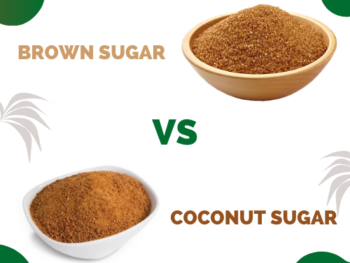
| The Direct Answer Coconut sugar is better than white sugar or brown sugar for people with diabetes — but 'better' does not mean 'safe in large quantities.' Its glycemic index of approximately 35 (vs white sugar's GI 65) means a slower blood glucose rise per serving. Its inulin fiber content further slows glucose absorption. However, coconut sugar is still 70-80% sucrose and will raise blood sugar. The American Diabetes Association recommends limiting all added sugars. If you choose to use coconut sugar, do so in small amounts (1-2 teaspoons), not as a daily staple, and always monitor your blood glucose response. |
For people managing diabetes, the question of sweeteners is never simple.
Every food that contains carbohydrates affects blood glucose — the difference lies in how quickly, to what degree, and with what accompanying nutritional context.
Coconut sugar has been widely promoted as a 'diabetic-friendly' alternative to white sugar.
This article examines that claim honestly, from the perspective of both the science and the practical realities of diabetes management.
We will be transparent about what coconut sugar is and what it is not — because as a supplier of certified organic coconut sugar from Indonesia, our credibility depends on accuracy, not marketing exaggeration.
Understanding how coconut sugar is produced from coconut palm flower sap through minimal processing helps explain why its nutritional profile differs from refined sugar — and why those differences matter for people with diabetes.
What Is Coconut Sugar?
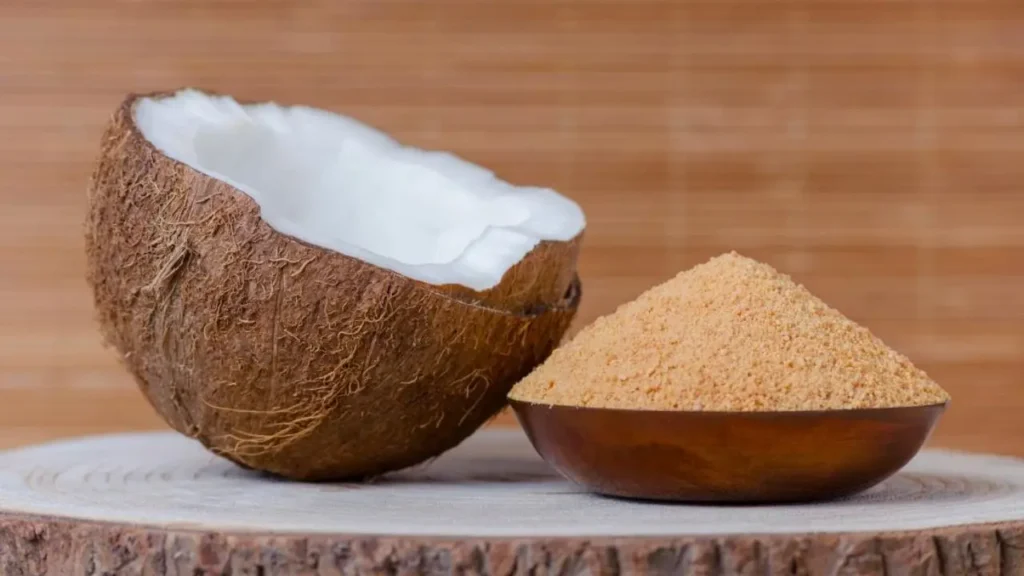
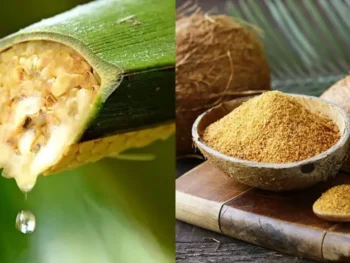
Coconut sugar is produced from the sap of coconut palm flower buds (Cocos nucifera).
The sap is collected twice daily, gently heated to evaporate moisture, and granulated — a process involving no refining, bleaching, or chemical additives.
This minimal processing means coconut sugar retains naturally occurring compounds from the original sap that refined white sugar has completely lost.
The nutritionally meaningful components retained in coconut sugar include:
- Inulin fiber: A prebiotic dietary fiber (1-3% of carbohydrates) that slows glucose absorption in the small intestine — the primary reason for coconut sugar's lower glycemic index.
- Trace minerals: Potassium (~1,030mg/100g), iron (~2.5mg/100g), zinc (~0.56mg/100g), magnesium (~29mg/100g) — present in meaningful amounts compared to refined sugar, but not in therapeutic quantities.
- Polyphenols and antioxidants: Small amounts of phytochemicals from the original plant sap — not clinically significant but absent from refined sugar.
- Complex sucrose composition: Approximately 70-80% sucrose, with remaining fructose, glucose, and the inulin fiber — a more complex carbohydrate profile than refined sugar's near-100% sucrose.
Glycemic Index and Glycemic Load: The Two Numbers That Matter Most

The glycemic index (GI) measures how quickly a food raises blood glucose on a scale of 0-100, relative to pure glucose.
Coconut sugar's GI of approximately 35 is significantly lower than white sugar (GI ~65), brown sugar (GI ~64), and honey (GI 58-85).
For a complete scientific breakdown of why coconut sugar's GI varies between 35-54 across different studies and what this means for food label claims, see our detailed article on the glycemic index of coconut sugar.
| Sweetener | Glycemic Index (GI) | GI Category | Notes |
| Coconut sugar | ~35 | Low | Due to inulin content slowing glucose absorption |
| Maple syrup | ~54 | Low-Medium | Primarily sucrose |
| Honey | 58-85 | Medium-High | Wide range — depends on floral source |
| Brown sugar | ~64 | Medium | Refined white sugar + molasses |
| White sugar (sucrose) | ~65 | Medium | Standard reference sweetener |
| Stevia (pure extract) | 0 | None | Non-nutritive — does not raise blood sugar |
| Erythritol | 0-1 | None | Sugar alcohol — minimally absorbed |
| Monk fruit extract | 0 | None | Non-nutritive — does not raise blood sugar |
Glycemic Load: The More Relevant Number for Practical Use
While GI tells you how fast a food raises blood sugar, glycemic load (GL) tells you how much it raises blood sugar based on actual serving size.
This is more relevant for practical diabetes management:
| Serving Size | Coconut Sugar (g) | Carbohydrates (g) | Glycemic Load (GL) | Classification |
| 1 teaspoon | 4g | ~3.8g | GL ~1.3 | Very Low |
| 2 teaspoons | 8g | ~7.6g | GL ~2.7 | Low |
| 1 tablespoon | 12g | ~11.4g | GL ~4.0 | Low |
| 2 tablespoons | 24g | ~22.8g | GL ~8.0 | Moderate |
| What this glycemic load data means in practice A glycemic load of 1-2 teaspoons of coconut sugar in a cup of coffee or tea (GL ~1.3-2.7) is very low — unlikely to cause a significant blood sugar spike for most people with well-managed diabetes. The concern arises when coconut sugar is used in larger quantities — in baking, cooking, or as a regular daily addition to multiple meals. It is the total daily carbohydrate load that matters for diabetes management, not any individual food in isolation. |
Coconut Sugar vs Other Sweetener Options for People with Diabetes
People with diabetes evaluating sweetener options typically consider several alternatives. Here is an honest comparison:
| Sweetener | Effect on Blood Sugar | Pros for Diabetics | Cons for Diabetics | Verdict |
| Coconut sugar | Raises blood sugar — slower than white/brown sugar | Lower GI (35), inulin fiber, natural/unrefined | Still raises blood sugar; same calories as sugar; moderation required | Better than white/brown sugar; still requires moderation |
| Stevia | Does not raise blood sugar | Zero calories, zero GI, FDA GRAS status | Aftertaste some find unpleasant; some products contain fillers | Excellent choice for diabetics — best zero-GI natural option |
| Erythritol | Minimal effect — mostly unabsorbed | ~0 GI, 0.24 kcal/g, doesn't cause digestive issues at moderate doses | Not as sweet as sugar (70% sweetness) — need more | Excellent choice — well tolerated at normal cooking amounts |
| Monk fruit extract | Does not raise blood sugar | Zero calories, zero GI, no aftertaste for most | Expensive; less widely available | Excellent choice — premium price but best sensory profile |
| Brown sugar | Raises blood sugar — similar speed to white sugar | Familiar taste | GI 64 — nearly same as white sugar; refined product | No advantage over white sugar for diabetics |
| White sugar | Raises blood sugar rapidly | Low cost, widely available | GI 65 — high glycemic response; no nutritional value | Worst option for diabetics among common sweeteners |
| Honey | Raises blood sugar — speed varies by type | Contains antioxidants; slightly lower GI than sugar (some varieties) | GI 58-85; high in calories; still raises blood sugar | Marginally better than white sugar; not ideal for diabetes |
For a more detailed comparison of coconut sugar specifically against brown sugar across nutritional profile, processing, and baking behavior, see our article on coconut sugar vs brown sugar health benefits.
What Medical Organizations and Experts Say About Coconut Sugar for Diabetics

It is important to review what established medical and diabetes organizations actually say — as opposed to what health food marketing implies:
- American Diabetes Association (ADA): Recommends limiting all added sugars, whether refined or natural. Does not specifically endorse coconut sugar as a diabetic-friendly sweetener. Recommends non-nutritive sweeteners (stevia, erythritol, monk fruit, sucralose) as the lowest-impact option for people managing blood glucose.
- Diabetes UK: States that 'natural' sugars such as coconut sugar, honey, and maple syrup have no special benefit for people with diabetes — they all contain sugar that raises blood glucose, and all should be limited.
- Philippine Coconut Authority (PCA): The original research body that published the GI 35 figure for coconut sugar, in the Philippine Journal of Crop Science. This is the most cited primary source for coconut sugar's GI claims.
- Registered dietitians: Generally acknowledge coconut sugar's lower GI as a genuine advantage over white sugar, but consistently emphasize that it is not a 'free' food for people with diabetes and should be used in small quantities.
| The honest position: coconut sugar is a better sweetener, not a diabetes treatment As a coconut sugar producer, we want to be clear: coconut sugar is not a diabetes treatment, not a safe unlimited sweetener for diabetics, and not a substitute for medical advice. It is a minimally processed natural sweetener with a lower GI than refined sugar — which makes it a better choice when sweetening is genuinely necessary, but not a reason to consume more sweetener than you otherwise would. Anyone managing diabetes should work with their healthcare provider on overall dietary strategy, of which sweetener choice is a small component. |
Practical Guidelines: How to Use Coconut Sugar If You Have Diabetes
If your healthcare provider has not restricted all added sugars, and you choose to use coconut sugar as part of a balanced diet, here are evidence-informed practical guidelines:
| Guideline | Recommendation | Rationale |
| Daily limit | 1-2 teaspoons (4-8g) maximum if blood sugar is well-managed | Glycemic load of 1-2 tsp is very low (GL 1.3-2.7); larger amounts increase risk |
| Monitoring | Test blood glucose 2 hours after consuming coconut sugar | Individual response varies — verify your own glycemic response before assuming low GI applies to you personally |
| Meal timing | Avoid adding to meals that are already high in carbohydrates | Cumulative carbohydrate load matters more than individual food GI in practice |
| Preparation method | Prefer cooler-temperature preparations (coffee, tea, no-bake) | High baking temperatures may degrade inulin — slightly raising effective GI of finished product |
| Product selection | Choose minimally processed, traditional-method coconut sugar | Higher inulin content (and thus lower effective GI) in less industrially processed product |
| Label reading | Check for 'organic' and verify country of origin (Indonesia preferred) | Indonesian coconut sugar from traditional Central Java producers has more consistent inulin content |
| Not a substitute | Do not replace prescribed medications or insulin with dietary changes alone | Dietary modification is complementary to, not a replacement for, medical diabetes management |
For home bakers who want to enjoy coconut sugar in moderation — our coconut sugar cookie recipe demonstrates how to use coconut sugar effectively in baking with specific tips for managing texture and sweetness level.
Using coconut sugar in occasional baking treats is a reasonable application for people who manage diabetes with dietary moderation rather than strict sugar elimination.
For Food Manufacturers: Formulating Products for Diabetic-Conscious Consumers
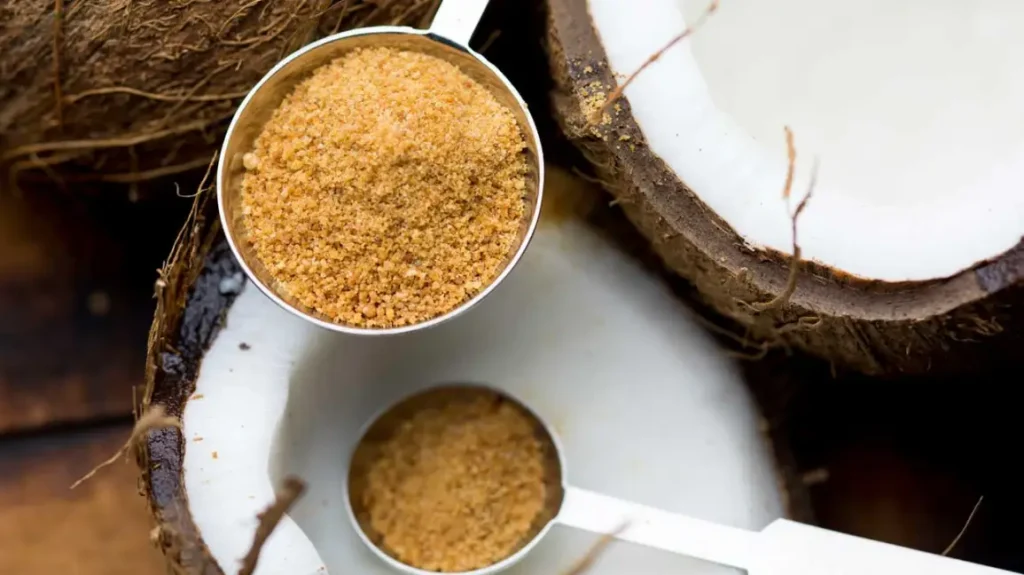
The 'diabetic-friendly' and 'low GI' positioning of coconut sugar is commercially valuable for food brands in the health food, organic, and clean label segments.
However, label claims must be accurate: a 'low GI' claim on a finished food product requires testing of the complete formulation (not just the ingredient), and regulatory compliance varies by market.
Our article on applications of coconut sugar in the food industry covers formulation considerations, and our article on why buyers choose certified organic coconut sugar covers the certification framework relevant to health-positioned product lines.
Key compliance notes for food manufacturers:
- EU: 'Low GI' claims are regulated under Regulation (EC) No 1924/2006 — requires testing of finished product under ISO 26642:2010.
- USA: No FDA-approved 'low GI' nutrient content claim — GI statements are used as voluntary marketing with supporting data.
- 'Refined sugar-free' or 'no refined sugar': coconut sugar qualifies — it is unrefined. White sugar or brown sugar do not qualify.
- 'Natural sweetener': coconut sugar qualifies. Brown sugar does not (it is refined white sugar with added molasses).
What About Coconut Nectar? The Liquid Form for Diabetic-Conscious Consumers
Coconut nectar syrup — the liquid form of coconut sweetener produced from the same coconut palm flower sap — shares a similar glycemic index (~35) and nutritional profile to coconut sugar.
For diabetic-conscious consumers who prefer liquid sweeteners for beverages and sauces, coconut nectar offers the same low-GI advantage in a format that dissolves without heating.
For a comparison of coconut nectar against honey, maple syrup, and agave from a glycemic perspective, see our article on coconut nectar syrup vs other natural sweeteners.
Conclusion: A Better Choice, Not a Free Pass
The honest answer to 'is coconut sugar good for diabetics' is: it is better than white and brown sugar — meaningfully so, based on its glycemic index of 35 and inulin fiber content — but it is not a diabetes-safe sweetener that can be consumed without limits or monitoring.
For people who need to sweeten foods and want the lowest possible blood glucose impact, zero-calorie sweeteners (stevia, erythritol, monk fruit) are the medically preferred options.
For people who prefer natural, minimally processed sweeteners and are managing diabetes with dietary moderation, coconut sugar in small quantities (1-2 teaspoons) is a reasonable choice — provided blood glucose is monitored and overall carbohydrate intake is managed.
As coconut sugar producers, we believe the most valuable thing we can do for consumers with diabetes is give them accurate, honest information — not exaggerate our product's benefits.
Make your sweetener decision based on your specific health situation, in consultation with your healthcare provider.
| For food brands: certified organic coconut sugar for health-positioned products If you are a food manufacturer developing products for health-conscious or diabetic-aware consumers, Global Coco Sugar supplies BRCGS certified organic coconut sugar from Indonesia with full COA documentation. Where to buy coconut sugar in bulk from Indonesia covers pricing, MOQ, and sourcing details. Contact Our Export Team >>> |