| Quick Answer When evaluating coconut sugar vs brown sugar, coconut sugar is healthier in three specific ways: lower glycemic index (GI 35 vs GI 64), minimal processing (it is a genuine single-ingredient natural sweetener), and slightly higher trace mineral content. Brown sugar is simply white refined sugar with molasses added back — it is not a natural sweetener. However, both are still sugars that should be consumed in moderation. Neither is a 'health food.' The practical difference matters more for specific contexts: baking, blood sugar management, clean label food production, and sustainability. |
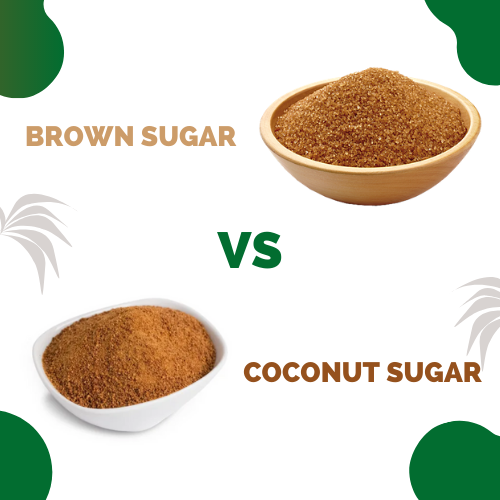
Coconut sugar and brown sugar look similar, have comparable sweetness levels, and are often used interchangeably in recipes.
But they are fundamentally different products with meaningfully different health profiles, production processes, and effects on the body.
Understanding these differences goes beyond the simple 'which is healthier' question — it helps you make better decisions in baking, daily sweetener use, and food product formulation.
This article covers the complete science-backed comparison — production method, nutritional data, glycemic index, health implications, baking behavior, sustainability, and an honest verdict.
At Global Coco Sugar, we produce certified organic coconut sugar from Indonesia and believe in transparent, evidence-based communication about what our product actually is — and what it is not.
Understanding how coconut sugar is produced in Indonesia from coconut palm flower sap to granulated crystals helps clarify exactly why it differs so fundamentally from refined brown sugar.
What Is Coconut Sugar? What Is Brown Sugar? The Production Difference Matters
Coconut Sugar: A Single-Ingredient Natural Sweetener
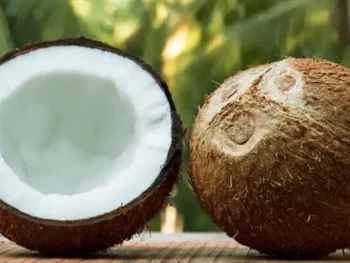
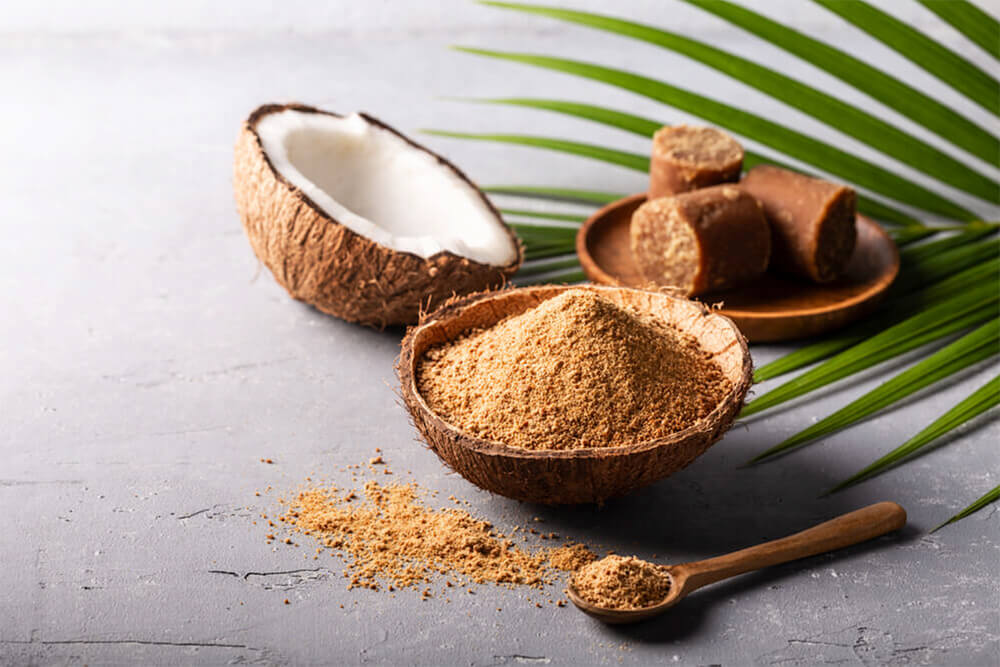
Coconut sugar — also called coconut palm sugar or coconut blossom sugar — is produced by collecting the sap that flows from the flower buds of the coconut palm (Cocos nucifera).
Farmers make careful incisions in the flower bud stalks twice daily, collecting the fresh sap in bamboo containers.
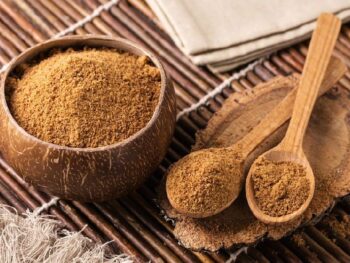
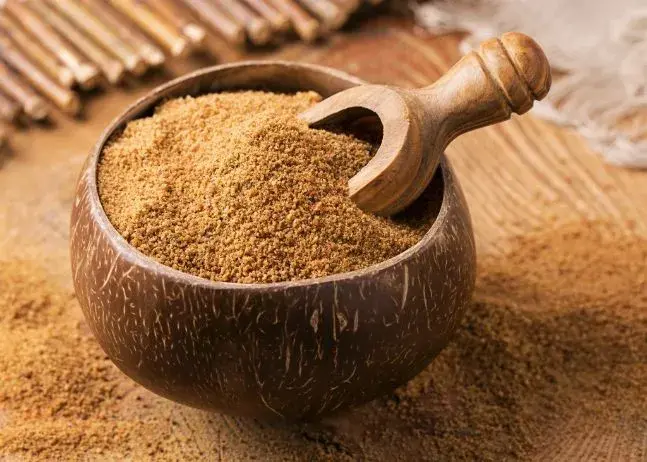
The sap is then gently heated to evaporate excess moisture, and the concentrated liquid crystallizes into the small, golden-brown granules we recognize as coconut sugar.
The entire process involves a single ingredient — coconut palm flower sap — and minimal processing: no refining, no bleaching, no chemical agents.
The result retains the naturally occurring minerals, trace amino acids, and inulin fiber present in the original sap.
This minimal processing is why coconut sugar can legitimately claim 'natural' and 'unrefined' status on food labels.
Brown Sugar: White Refined Sugar with Molasses Added Back

This is the most important fact that most coconut sugar vs brown sugar articles fail to state clearly: brown sugar is not a natural sweetener.
It is refined white sugar — which has been completely stripped of all naturally occurring compounds including minerals, fiber, and moisture — with molasses added back in a controlled proportion.
Light brown sugar contains approximately 3.5% molasses. Dark brown sugar contains approximately 6.5% molasses.
The molasses gives brown sugar its color, its moist texture, and a slightly richer flavor compared to white sugar — but it does not restore the nutritional complexity of the original sugarcane plant.
Brown sugar is nutritionally almost identical to white sugar. The trace minerals present in brown sugar come from the molasses — and they are present in quantities too small to have meaningful nutritional impact.
| Why this production difference matters for health claims When a food label says 'made with brown sugar,' it means 'made with refined white sugar plus added molasses.' When a food label says 'made with coconut sugar,' it means 'made with minimally processed coconut palm sap.' These are not equivalently natural ingredients — and for consumers and food brands concerned with clean label formulation, this distinction is significant. |
Nutritional Comparison: Coconut Sugar vs Brown Sugar per 100g
| Nutrient | Coconut Sugar (per 100g) | Brown Sugar (per 100g) | Notes |
| Calories | ~380 kcal | ~380 kcal | Nearly identical — both are calorie-dense sweeteners |
| Total carbohydrates | ~95g | ~98g | Very similar — both are primarily carbohydrate |
| Sucrose | ~70-80% | ~97% | Coconut sugar has more complex carbohydrate composition |
| Fructose | ~3-9% | ~0.2% | Coconut sugar has more free fructose from natural sap composition |
| Glucose | ~3-9% | ~0.2% | Similar small amounts of free glucose |
| Inulin (fiber) | 1-3% of carbs | 0% | Coconut sugar's prebiotic fiber — contributes to lower GI |
| Potassium | ~1,030 mg | ~133 mg | Coconut sugar has ~8x more potassium |
| Calcium | ~40 mg | ~85 mg | Brown sugar slightly higher calcium from molasses |
| Iron | ~2.5 mg | ~1.2 mg | Coconut sugar ~2x higher iron |
| Zinc | ~0.56 mg | ~0.03 mg | Coconut sugar significantly higher zinc |
| Magnesium | ~29 mg | ~9 mg | Coconut sugar ~3x higher magnesium |
| Glycemic Index (GI) | 35 (low GI) | 64 (medium GI) | Most clinically significant difference |
| Processing level | Minimal — single ingredient | Highly refined + additive (molasses) | Key clean label distinction |
| Important context: trace minerals are present but not transformative Coconut sugar contains more trace minerals than brown sugar — and the difference is real. But it is important to be honest: the quantities are too small to be a meaningful nutritional source in a normal diet. You would need to consume many tablespoons of coconut sugar daily to get significant mineral intake — and at that level, the sugar itself becomes the health concern. The mineral advantage of coconut sugar over brown sugar is real, but it should not be the primary reason to choose it. The GI difference and processing difference are the more clinically meaningful distinctions. |
Glycemic Index: The Most Important Health Difference

The glycemic index (GI) measures how quickly a carbohydrate-containing food raises blood glucose levels on a scale of 0-100.
Coconut sugar has a GI of approximately 35 — firmly in the low GI range. Brown sugar has a GI of approximately 64 — in the medium GI range.
This is the single most clinically meaningful health difference between the two sweeteners.
For a deep dive into the science behind coconut sugar's GI, why the value ranges between 35-54 across different studies, and what this means for food label claims, our detailed article on the glycemic index of coconut sugar covers everything you need to know.
| GI Category | GI Range | Coconut Sugar | Brown Sugar | White Sugar |
| Low GI | 0–55 | ✅ GI ~35 | — | — |
| Medium GI | 56–69 | — | ✅ GI ~64 | — |
| High GI | 70–100 | — | — | ✅ GI ~65 |
Why coconut sugar has a lower GI: the inulin explanation
Coconut sugar's lower GI is not mysterious — it is explained by its inulin content.
Inulin is a prebiotic dietary fiber naturally present in coconut palm flower sap that survives the minimal processing of coconut sugar production.
Inulin slows the digestion and absorption of sugars in the small intestine — meaning blood glucose rises more gradually and to a lower peak after consuming coconut sugar compared to brown or white sugar.
Inulin content in coconut sugar typically ranges from 1-3% of total carbohydrates, depending on the specific production batch, origin, and processing temperature.
Higher processing temperatures can degrade inulin — one reason why minimally processed, low-temperature coconut sugar from traditional Indonesian producers typically shows lower GI values than more industrially processed product.
What lower GI means in practice
- For people managing blood sugar: coconut sugar causes a slower, more gradual blood glucose rise — relevant for reducing post-meal blood sugar spikes.
- For sustained energy: lower GI sweeteners are associated with more stable energy levels and reduced mid-afternoon energy crashes.
- For people with diabetes: coconut sugar should still be consumed in moderation — it is not a 'safe' sweetener for people with diabetes, simply a less aggressive one. Always consult a healthcare professional for diabetes dietary management.
- For general health: the practical difference in daily use (1-2 teaspoons in coffee, for example) is minor. The GI advantage is more meaningful when coconut sugar replaces brown sugar in significant quantities in food manufacturing.
Health Benefits: Coconut Sugar vs Brown Sugar — An Honest Assessment
Health Benefits of Coconut Sugar
- Lower glycemic index (GI 35): The most evidence-backed health advantage. Slower blood sugar rise vs brown sugar (GI 64) and white sugar (GI 65). Supported by Philippine Coconut Authority research published in the Philippine Journal of Crop Science.
- Prebiotic inulin content: Inulin acts as prebiotic fiber — feeding beneficial gut bacteria (Lactobacillus and Bifidobacterium species). At the concentrations present in coconut sugar, this is a minor but genuine benefit absent from brown sugar.
- Trace minerals: Meaningfully higher levels of potassium, iron, zinc, and magnesium compared to brown sugar. Relevant as a contribution to total mineral intake in context of a varied diet.
- Minimal processing / no additives: Single-ingredient product with no refining, bleaching, or chemical processing agents. For consumers concerned with food additives and processing, this is a genuine advantage.
- Clean label compatibility: Can be declared as 'coconut sugar' on food labels — a single, recognizable ingredient. This is increasingly valuable for food brands positioning in natural and clean label segments.
Health Benefits of Brown Sugar
- Minimal molasses-derived minerals: Slightly higher calcium than coconut sugar due to molasses content — but at amounts that are nutritionally negligible in typical consumption.
- Moisture-retaining properties in baking: Not a health benefit per se, but brown sugar's hygroscopic properties (ability to attract and retain moisture) can produce baked goods with a softer texture — relevant for certain therapeutic or dietary-modified baking applications.
- Traditional digestive use: Some traditional medicine systems use brown sugar (jaggery-adjacent products) in herbal preparations for mild digestive support. This is anecdotal and not supported by clinical evidence for commercially produced brown sugar.
| The honest verdict: coconut sugar wins on health, but 'winning' is relative Coconut sugar has meaningfully better health credentials than brown sugar: lower GI, more trace minerals, minimal processing, and prebiotic inulin content. These are real, not marketing claims. However, coconut sugar is still approximately 95% carbohydrate and 380 kcal per 100g — essentially the same as brown sugar. 'Healthier' does not mean 'healthy in large quantities.' The health advantages of coconut sugar are most meaningful when it replaces brown or white sugar in significant quantities — not when consuming identical small amounts. |
Baking with Coconut Sugar vs Brown Sugar: Substitution Guide

For home bakers and food manufacturers, the practical baking comparison is as important as the nutritional one.
Coconut sugar and brown sugar behave differently in baking — understanding why helps you substitute successfully.
| Baking Factor | Brown Sugar | Coconut Sugar | Practical Implication |
| GI / sweetness level | Higher GI — sharper sweetness | Lower GI — gentler sweetness | Coconut sugar cookies and cakes taste slightly less sweet — adjust quantity if needed |
| Moisture retention | High — molasses is hygroscopic | Lower — less hygroscopic | Coconut sugar baked goods may be slightly drier — add 1-2 tsp extra liquid if texture seems dry |
| Caramelization | ~160°C standard | Slightly lower due to fructose | Coconut sugar edges brown faster — reduce oven temp by 5-10°C or watch carefully |
| Maillard reaction | Moderate | More pronounced | Deeper, more complex flavor development in coconut sugar baked goods |
| Color of finished product | Medium golden-brown | Darker golden-brown to dark brown | Products made with coconut sugar will be visibly darker — factor into product appearance |
| Crystal size | Fine — dissolves quickly | Slightly coarser | Coconut sugar may require longer creaming time — 3-4 minutes vs 2 for brown sugar |
| Flavor contribution | Mild toffee / molasses | Rich caramel / butterscotch | Coconut sugar adds more flavor complexity — desirable in most applications |
Substitution ratio: how to replace brown sugar with coconut sugar
Coconut sugar can replace brown sugar at a 1:1 ratio by volume or weight in most recipes. This works well for:
- Cookies — the most successful application (see our coconut sugar cookie recipe for a tested formula with specific tips for the best chewy texture)
- Cakes and muffins — slight color darkening is expected but acceptable
- Granola and cereal bars — excellent match, caramel notes enhance
- Coffee and tea — direct 1:1 substitution, flavor upgrade
- Savory glazes and marinades — deeper caramel note is an advantage
Recipes that need adjustment when substituting:
- Light-colored cakes (vanilla, white cake) — the darker color from coconut sugar may not be visually acceptable
- Recipes requiring very precise moisture balance — add 1 tsp extra liquid per cup of coconut sugar to compensate for lower hygroscopicity
- Frostings and icings — coarser crystals may not dissolve fully in cold applications; use fine-grind coconut sugar or powder first
For Food Manufacturers: What the Coconut Sugar vs Brown Sugar Difference Means for Your Products
For food manufacturers and R&D professionals, the coconut sugar vs brown sugar comparison has implications beyond consumer health — it affects label claims, product positioning, and formulation decisions.
Our technical article on coconut sugar vs cane sugar for food manufacturing covers the full technical comparison including Maillard reaction behavior, hygroscopicity, and substitution ratios by product category.
For a breakdown of the specific food applications where coconut sugar delivers the strongest commercial and technical results, see our article on applications of coconut sugar in the food industry.
| Commercial Consideration | Brown Sugar | Coconut Sugar |
| Label declaration | 'Brown sugar' or 'cane sugar' — consumers increasingly aware it is refined | 'Coconut sugar' — single recognizable ingredient, natural positioning |
| 'Natural' claim | Cannot be claimed — it is refined white sugar with added molasses | Can be legitimately claimed — minimally processed, no additives |
| 'Refined sugar-free' claim | Does not qualify — brown sugar is refined | Qualifies — coconut sugar is unrefined |
| 'Low GI' product positioning | Does not support low GI claims (GI 64) | Supports low GI ingredient positioning (GI 35) — verify at finished product level |
| Clean label compatibility | Increasingly scrutinized by clean label consumers | Clean label compatible — natural, single ingredient, recognizable |
| Price premium | Commodity ingredient — low cost | Premium ingredient — 2-4x cost of brown sugar — must be captured in retail pricing |
| Target product category | Conventional baked goods, confectionery, sauces | Premium, health-positioned, organic, clean label, natural food segments |
Sustainability: Coconut Sugar vs Brown Sugar Environmental Footprint
Sustainability is an increasingly important purchase criterion — particularly for EU and US food brands that must satisfy retailer sustainability requirements.
Our article on why buyers choose certified organic coconut sugar covers the organic certification framework that validates sustainable coconut sugar production.
| Environmental Factor | Brown Sugar (Sugarcane) | Coconut Sugar |
| Water usage | Very high — sugarcane is one of the most water-intensive crops globally | Low — coconut palms require relatively little water, primarily rain-fed in Indonesia |
| Land use | Monoculture — large-scale sugarcane plantations displace biodiversity | Low-intensity — coconut palms grow in biodiverse agroforestry systems |
| Soil impact | Heavy pesticide and fertilizer use; soil degradation common in intensive cultivation | Minimal inputs in traditional Indonesian production — organic farming compatible |
| Carbon footprint | High — industrial refining requires significant energy input | Low — minimal processing, no industrial refining |
| Farmer livelihood | Large commercial operations; smallholder access limited | Primarily smallholder farmer production in Indonesia — supports rural livelihoods |
| Biodiversity impact | Negative — monoculture displacement of native ecosystems | Positive — coconut palms can coexist with diverse crop and natural ecosystem |
The sustainability advantage of coconut sugar over brown sugar is genuine and significant — not just marketing language.
Traditional Indonesian coconut sugar production by smallholder farmers in Central Java is a model of low-input, biodiverse, farmer-supportive agriculture that is the opposite of industrial sugarcane refining.
What About Coconut Nectar? The Liquid Alternative to Both
If you are evaluating natural sweetener alternatives and comparing coconut sugar to brown sugar, it is worth also considering coconut nectar syrup — the liquid form of coconut sweetener made from the same coconut palm flower sap.
Coconut nectar has a similar GI to coconut sugar (approximately 35), the same clean-label and natural credentials, but is better suited to liquid applications like beverages, sauces, and dressings where a granulated sweetener would need to be dissolved.
For a detailed comparison of coconut nectar against honey, maple syrup, and agave nectar — including GI, caloric content, and applications — see our article on coconut nectar syrup vs other natural sweeteners.
| For food manufacturers: source coconut sugar directly from certified Indonesian producers Global Coco Sugar is a BRCGS Food Safety Grade A certified manufacturer of organic and conventional coconut sugar from Indonesia. If you are a food brand evaluating coconut sugar as a brown sugar replacement in your formulation, we provide 2-5 kg samples with full COA from ISO 17025-accredited laboratory for R&D evaluation. Request a Sample for R&D Evaluation >>> View Our Coconut Sugar Product Range >>> |
The Verdict: When to Choose Coconut Sugar, When to Choose Brown Sugar
| Choose Coconut Sugar when... | Choose Brown Sugar when... |
| You want a genuinely natural, unrefined sweetener with clean label credentials | Cost is the primary consideration — brown sugar is significantly cheaper per kg |
| You are managing blood sugar and want a lower GI sweetener | You need maximum moisture retention in baked goods (chewy cookies, dense brownies) |
| You are formulating a 'refined sugar-free', 'natural', or 'clean label' food product | Precise light coloring is required — vanilla cakes, white frostings, pale confectionery |
| You value the deeper caramel flavor in your baking or beverage | The molasses flavor specifically is desired in the recipe |
| Sustainability and smallholder farmer support matter to your purchasing | You are using sugar in large quantities where the price premium is not commercially viable |
| Source certified coconut sugar from the world's leading producing country Global Coco Sugar supplies BRCGS certified organic coconut sugar from Central Java, Indonesia — available in granulated and fine powder formats for food manufacturers, health food brands, and bulk buyers. For wholesale pricing and sourcing information, see our guide on where to buy coconut sugar in bulk from Indonesia. Contact Our Export Team >>> |