
The glycemic index of coconut sugar is one of the most cited — and most misunderstood — facts about this sweetener. You will find claims ranging from GI 35 to GI 54 across different sources, with varying levels of scientific backing.
For health-conscious consumers, the difference may seem minor.
For food manufacturers making label claims, importers conducting due diligence, or buyers evaluating suppliers, the nuances matter considerably.
This article covers everything you need to know about the glycemic index of coconut sugar — what GI is, what coconut sugar's GI actually is and why it varies, how GI differs between organic and conventional product, and what the GI data means if you are a food manufacturer evaluating coconut sugar as an ingredient.
For an overview of coconut sugar as a product — its origin, forms, and why it is increasingly preferred by global buyers — see our article on what is coconut sugar and why global buyers prefer it.
For information about sourcing our bulk coconut sugar from Indonesia with verified specifications including GI data per batch, see our product range.
What Is the Glycemic Index — A Brief Primer
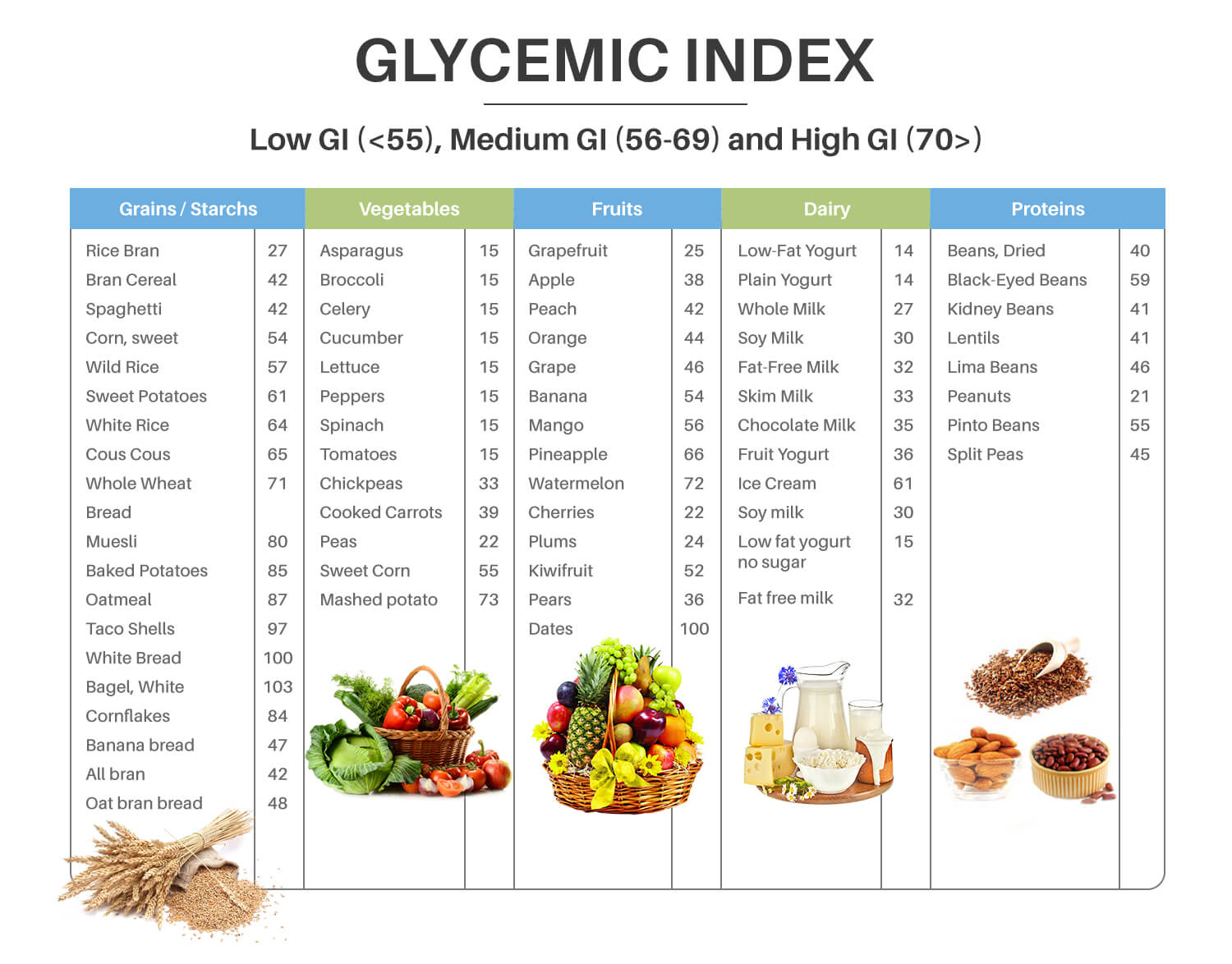
The glycemic index is a numerical scale (0-100) that measures how quickly a carbohydrate-containing food raises blood glucose levels relative to pure glucose (GI = 100). Foods are classified as low GI (55 or below), medium GI (56-69), or high GI (70 and above).
For a more detailed explanation of how GI is measured and why it matters for everyday nutrition decisions, see our dedicated article on what the glycemic index is and why it matters.
| GI Category | GI Range | Examples | Blood Sugar Response |
| Low GI | 55 or below | Coconut sugar (35-54), lentils (32), oats (55) | Slow, gradual rise — sustained energy |
| Medium GI | 56 – 69 | Brown rice (64), raisins (64), pita bread (68) | Moderate rise — some fluctuation |
| High GI | 70 and above | White bread (75), white rice (73), glucose (100) | Rapid spike — followed by drop |
What Is the Glycemic Index of Coconut Sugar?

The most frequently cited GI value for coconut sugar is 35, based on a study conducted by the Philippine Coconut Authority (PCA) published in the Philippine Journal of Crop Science.
This places coconut sugar firmly in the low-GI category — lower than white sugar (GI 60-65), brown sugar (GI ~64), honey (GI 58-85), and maple syrup (GI ~54).
However, GI values for coconut sugar reported across different studies range from 35 to 54. This variability is not an error — it reflects genuine differences in the product being tested. Understanding why this variation exists is critical for making accurate claims.
Why GI Values for Coconut Sugar Vary Between 35 and 54
- Sucrose-to-fructose-to-glucose ratio: Coconut sugar is approximately 70-80% sucrose, with remaining fructose, glucose, and inulin. Variations in this ratio between batches and origins directly affect GI.
- Inulin content: Inulin is a prebiotic dietary fiber that slows glucose absorption in the digestive tract — reducing GI. Inulin content in coconut sugar varies by growing region, season, and processing method, typically ranging from 1% to 3% of total carbohydrates.
- Processing method and temperature: Higher processing temperatures and longer evaporation times can reduce inulin content, which raises the effective GI of the final product. Minimally processed, low-temperature coconut sugar retains more inulin.
- Moisture content: Higher moisture content can affect the concentration of GI-active carbohydrates per gram. Standard specification (max 3% moisture) ensures consistency.
- GI testing protocol: GI values are human-subject measurements with inherent variability. Different study populations, testing protocols, and reference standards can yield different results for the same product.
| For label claims regarding the glycemic index of coconut sugar: which value should you use? If you are making a 'low GI' label claim on a product containing coconut sugar, work with an accredited laboratory to test your finished product formulation — not the raw ingredient. The GI of a finished food product is affected by all other ingredients, processing, and the food matrix. A GI claim on a finished product should be based on testing of that specific formulation, not just the GI of the coconut sugar ingredient alone. At Global Coco Sugar, we provide Certificate of Analysis (COA) per batch that includes carbohydrate composition data as a foundation for your laboratory formulation testing. |
Coconut Sugar GI Compared to Common Sweeteners
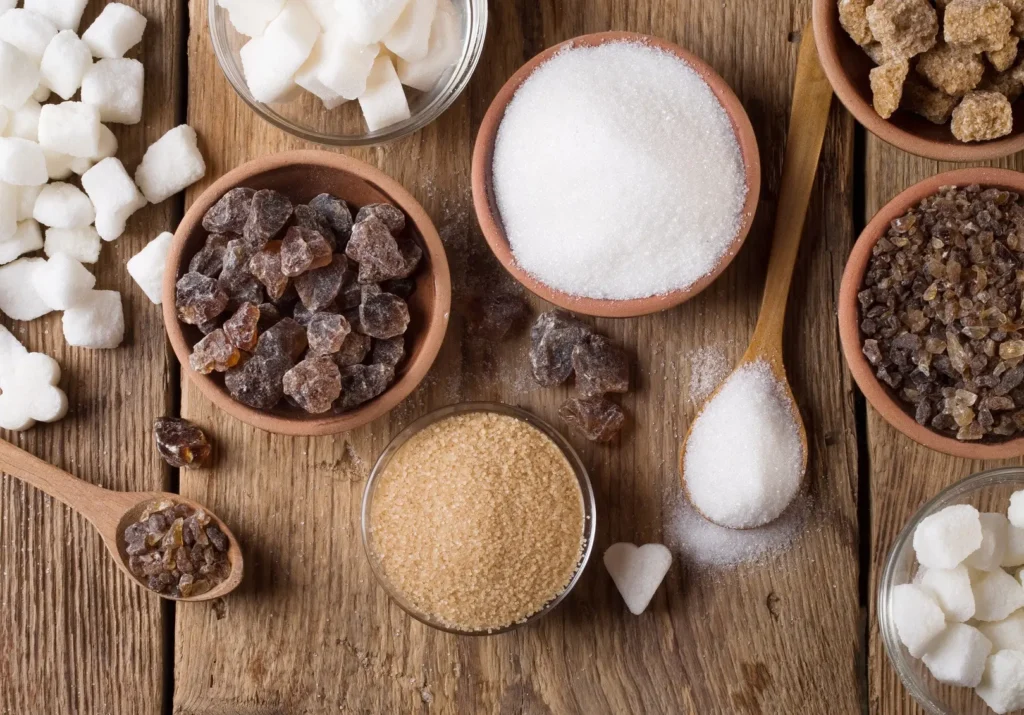
Here is how coconut sugar positions against the most commonly used sweeteners in food manufacturing and consumer use:
| Sweetener | Glycemic Index (approximate) | GI Category | Notes |
| Coconut sugar | 35 – 54 | Low to Medium | Varies by origin, processing, inulin content |
| Coconut nectar syrup | 35 | Low | Liquid form — similar GI profile to granulated |
| Agave nectar | 15 – 30 | Low | High fructose content — lower GI but metabolic concerns |
| Honey | 58 – 85 | Medium to High | Wide range depending on type and floral source |
| Maple syrup | ~54 | Low to Medium | Primarily sucrose with some minerals |
| White sugar (sucrose) | 60 – 65 | Medium | Pure sucrose — standard reference for comparison |
| Brown sugar | ~64 | Medium | White sugar + molasses — minimal nutritional difference |
| Palm sugar | 35 – 41 | Low | Similar profile to coconut sugar — origin-dependent |
| High fructose corn syrup | 58 – 73 | Medium to High | Widely used in processed food — rising consumer scrutiny |
| Stevia (pure extract) | 0 | None | Non-caloric — different functional profile |
For a detailed comparison of coconut nectar specifically — including GI, caloric profile, and mineral content relative to honey, maple syrup, and agave — see our article on coconut nectar syrup vs other sweeteners.
Why GI Varies by Production Method — A Supplier Perspective
This is an aspect of coconut sugar GI that very few articles address — and it is directly relevant to buyers who are sourcing for a specific GI claim.
The GI of coconut sugar is not fixed by the plant source alone: it is significantly influenced by how the sugar is processed.
Understanding how coconut sugar is produced in Indonesia — from sap tapping to evaporation to granulation — explains why production method matters for GI consistency.
| Production Variable | Effect on GI | Practical Implication for Buyers |
| Low-temperature evaporation (traditional) | Preserves inulin → lower GI (closer to 35) | Seek suppliers using traditional open-pan or controlled low-heat processing |
| High-temperature industrial processing | Degrades inulin → higher GI (closer to 54) | Ask for inulin content data in COA if GI is critical to your label claim |
| Organic certified production | Generally preserves more inulin — no chemical aids | Organic certification correlates with more careful processing practices |
| Fine powder vs granulated | Powder may have slightly higher GI — faster dissolution | If GI is a key claim, specify granulated and request batch GI data |
| Moisture content (max 3% specification) | Consistent moisture = consistent carbohydrate concentration = consistent GI | Always request COA with moisture data — inconsistent moisture signals inconsistent quality |
Glycemic Index of Coconut Sugar: What Food Manufacturers Need to Know

If you are a food manufacturer or R&D professional evaluating coconut sugar as an ingredient, the GI discussion has different implications than it does for individual consumers. Here is what specifically applies to your context:
1. GI as a Sourcing Criterion
If your product formulation requires coconut sugar with a specific GI profile — for example, to support a 'low GI' claim on your finished product — you need to specify this in your supplier requirements.
Ask for: inulin content data in the COA (typically expressed as % of total carbohydrates), production method documentation, and ideally GI testing on a reference batch from the specific supplier's production.
2. GI Interaction with Other Ingredients
When coconut sugar is used as an ingredient in a manufactured food product, the GI of the finished product is influenced by all other ingredients — particularly fat, protein, and fiber content, which slow glucose absorption.
Our article on coconut sugar vs cane sugar for food manufacturing covers the full technical comparison including how coconut sugar behaves under heat (Maillard reaction), moisture dynamics, and substitution ratios by application type — which is directly relevant to formulation decisions that also affect the GI of your finished product.
3. GI and Food Label Claims
In the EU, 'low glycemic' claims on food products are regulated under Regulation (EC) No 1924/2006.
A 'low GI' claim requires the food to have a GI of 55 or less and must be based on the GI of the finished product as tested under ISO 26642:2010.
Simply using coconut sugar as an ingredient does not automatically qualify a product for a low GI claim. The claim must be substantiated by testing of the complete formulation by an accredited laboratory.
In the USA, 'low glycemic' is not an FDA-approved nutrient content claim — it is used as a voluntary marketing statement and should be supported by testing data to avoid potential regulatory scrutiny.
4. Applications Where Coconut Sugar's Low GI Is Most Relevant
Coconut sugar's low GI positioning is most commercially powerful in product categories where 'natural', 'clean label', and 'better-for-you' positioning commands premium retail pricing.
For a full breakdown of the food manufacturing applications where coconut sugar delivers the strongest commercial and technical results — and where cane sugar may still be the better choice — see our article on applications of coconut sugar in the food industry.
| Sourcing coconut sugar with consistent GI profile for your formulation? Global Coco Sugar provides Certificate of Analysis (COA) per batch from an ISO 17025-accredited laboratory, including carbohydrate composition data. We can discuss specific production method requirements — low-temperature processing, organic certification, inulin content targets — for buyers who need GI consistency for label claim support. Request a Sample with Full COA >>> View Our Coconut Sugar Product Range >>> |
The Health Context: What the glycemic index of coconut sugar actually means in practice
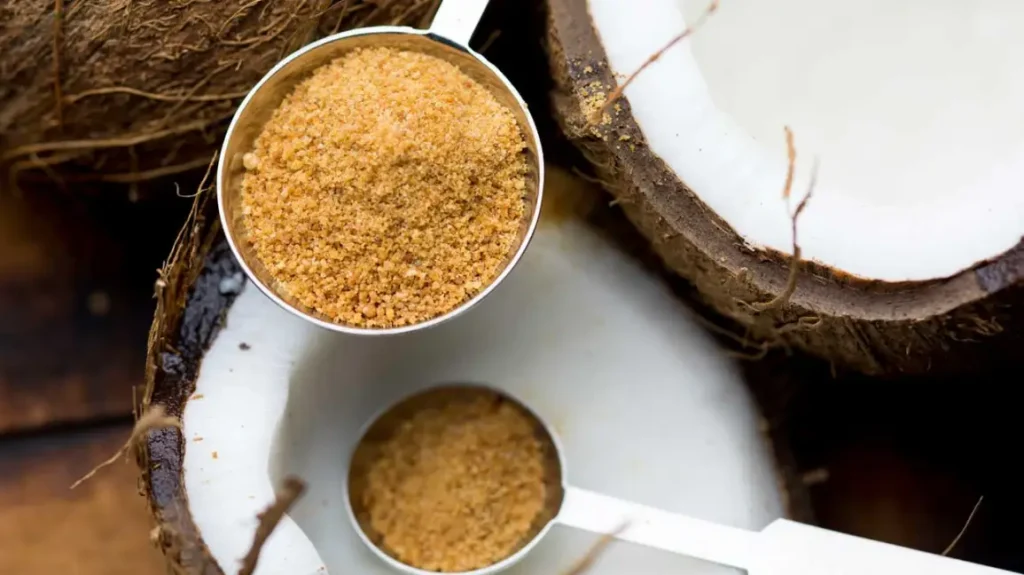
For consumers evaluating coconut sugar as part of a health-conscious diet, it is important to understand what the GI number does — and does not — mean in practice.
What the Low GI of Coconut Sugar Means
- Coconut sugar causes a slower, more gradual rise in blood glucose compared to white sugar (GI 60-65) or honey (GI 58-85) when consumed in the same quantity.
- The lower GI is primarily due to inulin content — a prebiotic fiber that slows glucose absorption in the small intestine.
- For most people, choosing a lower-GI sweetener can contribute to more stable energy levels and reduced post-meal blood sugar peaks.
What the Low GI of Coconut Sugar Does Not Mean
Coconut sugar is still approximately 70-80% sucrose. When consumed, sucrose breaks down into glucose and fructose — both of which raise blood sugar levels. The low GI reflects the speed of this rise, not its absence.
For people with diabetes or insulin resistance, coconut sugar should still be used in moderation and in consultation with a healthcare professional.
For a more detailed discussion of coconut sugar in the context of diabetes management, see our article on whether coconut sugar is suitable for diabetics.
- Coconut sugar is not calorie-free or low-calorie — it has approximately the same caloric density as white sugar (~380 kcal per 100g).
- The trace minerals in coconut sugar (potassium, zinc, iron, calcium) are present in very small amounts — meaningful as part of a varied diet, not as a primary nutritional source.
- 'Low GI' does not automatically mean 'diabetic safe' — always advise consultation with a healthcare professional for individuals managing blood glucose conditions.
Conclusion: GI as One Factor in a Complete Coconut Sugar Evaluation
The glycemic index of coconut sugar — at 35 to 54 depending on the source and testing protocol — places it comfortably in the low to low-medium GI range, making it a genuinely preferable choice compared to refined white sugar, honey, and most other common sweeteners from a blood glucose management perspective.
For consumers, this means coconut sugar causes a slower, more gradual blood sugar rise — a meaningful benefit when choosing between sweetener options, though not a reason to consume it without moderation.
For food manufacturers and buyers, GI is one data point in a larger evaluation that includes carbohydrate composition, inulin content, processing method, certification status, batch consistency, and label claim compliance.
The most reliable approach is batch-specific COA data from an ISO 17025-accredited laboratory, combined with finished product GI testing if making a label claim.
| Source Coconut Sugar with Consistent GI Profile from a Certified Supplier Global Coco Sugar is a BRCGS Food Safety Grade A certified exporter of organic and conventional coconut sugar from Indonesia. We provide batch-specific COA from ISO 17025-accredited laboratories including carbohydrate composition data. Available in granulated and fine powder forms, 25kg sacks or custom packaging for food manufacturing and private label applications. Contact Our Export Team >>> View Our Coconut Sugar Specifications >>> |


