In recent years, China has seen a growing demand for healthier, natural, and low-glycemic sweeteners. As consumers become more health-conscious, natural coconut sugar has emerged as a promising alternative to refined sugar in China’s food and beverage market.
Coconut sugar is derived from the sap of the coconut palm flower. It is minimally processed, retains essential minerals such as potassium, zinc, and iron, and has a lower glycemic index than white sugar. Its caramel-like flavor and natural origin make it a favored ingredient in organic and functional food products.
Market Opportunity in China
China’s middle class is expanding rapidly, and so is the demand for premium and health-oriented food products. With increasing rates of diabetes and obesity, Chinese consumers are turning toward sugar alternatives. Coconut sugar, already gaining popularity in North America and Europe, is now finding space in China’s niche health food sector.
Several trends support the growth of coconut sugar exports to China:
Health and wellness boom: More consumers seek low-GI and nutrient-rich sweeteners.
Clean label trend: Shoppers prefer products with natural, easy-to-understand ingredients.
Vegan and plant-based diets: Coconut sugar is plant-based and fits well in vegan recipes.
E-commerce growth: Cross-border platforms like Tmall Global and JD Worldwide provide direct access to health-conscious buyers.
Exporting to China: Considerations
Countries like Indonesia, the Philippines, and Sri Lanka—major producers of coconut sugar—are well-positioned to supply the Chinese market. However, exporters must consider several factors:
Certification: Organic and food safety certifications are essential to gain consumer trust and meet regulatory standards.
Labeling: Products must comply with China’s food labeling laws, including Chinese-language packaging and clear nutritional information.
Market education: Since coconut sugar is still a new product for many Chinese consumers, branding and education are key to success.
Challenges
Despite its potential, coconut sugar remains a premium product in China. Its higher cost compared to regular sugar can limit mass-market appeal. Furthermore, local awareness remains low, and educating consumers takes time and investment.
The Future Outlook of Natural Coconut Sugar
As China continues to emphasize healthier living and natural ingredients, coconut sugar is poised for steady growth. Exporters who focus on product quality, clear health messaging, and strong local partnerships can tap into one of the largest and most dynamic consumer markets in the world.
In recent years, China has witnessed a significant transformation in consumer behavior, with an increasing emphasis on health-conscious choices and clean eating. Among the various natural alternatives gaining popularity, natural coconut sugar has emerged as a preferred sweetener, aligning with the nation’s growing awareness of nutrition and sustainability
Health Benefits and Nutritional Value of Natural Coconut Sugar
Natural coconut sugar, derived from the sap of coconut palm trees, is minimally processed, retaining essential nutrients such as iron, zinc, calcium, potassium, and antioxidants. Unlike refined sugars, it has a lower glycemic index, making it a favorable option for individuals aiming to manage blood sugar levels and reduce the risk of diabetes.
Rising Demand and Market Growth
The demand for natural coconut sugar in China has been steadily increasing. According to market research, the coconut-based beverage market in China surged from 10.3 billion yuan in 2017 to 14.4 billion yuan in 2021, with projections estimating it to reach 22.4 billion yuan by 2026. This growth is attributed to the rising health awareness among consumers and the popularity of natural, additive-free products.
Integration into Food and Beverage Products
Leading beverage companies in China have recognized the potential of coconut-based ingredients. For instance, FreeNow, a Hangzhou-based coconut beverage provider, introduced coconut milk into coffee and tea products, experiencing a 100% sales growth in both 2021 and 2022. Similarly, Luckin Coffee’s raw coconut latte gained immense popularity, selling over 100 million cups within a year of its launch. These products not only cater to the demand for healthier options but also appeal to consumers seeking innovative and flavorful beverages.
Sustainability and Ethical Sourcing
Natural coconut sugar aligns with the global trend toward sustainable and ethical sourcing. The production of coconut sugar has a lower environmental impact compared to traditional sugar production, as coconut trees require fewer resources and have a smaller carbon footprint. This aspect resonates with environmentally conscious consumers in China, further driving the demand for coconut sugar.
Challenges and Future Outlook of Natural Coconut Sugar
Despite its benefits, the adoption of natural coconut sugar faces challenges such as higher production costs and limited domestic supply. However, with increasing imports from Southeast Asia and advancements in processing technologies, these challenges are being addressed. The future of natural coconut sugar in China looks promising, with expectations of continued growth driven by consumer demand for healthier and sustainable alternatives.
In conclusion, the shift toward clean eating in China has paved the way for natural coconut sugar to gain prominence as a healthier, sustainable, and flavorful sweetener. As consumers continue to prioritize health and environmental considerations, natural coconut sugar is poised to become a staple in the Chinese market.
Coconut sugar has quickly gone from niche to mainstream in China’s fast-growing health food market. Once a tropical sweetener known only to nutritionists and organic food lovers, natural coconut sugar is now flooding supermarket shelves and topping online search trends. So what’s behind this sudden craze?
1. Alternative to Refined Sugar
Chinese consumers are becoming more informed about the risks of consuming too much refined sugar—obesity, diabetes, and heart disease. In contrast, coconut sugar has a lower glycemic index (GI), meaning it causes a slower rise in blood sugar levels. While it’s not calorie-free, it’s considered a smarter sweetener for those aiming to reduce blood sugar spikes.
2. Popular Among Parents and Kids
Parents are a big driver of the coconut sugar boom. Many are swapping out white sugar for coconut sugar in kids’ snacks, drinks, and baked goods. The belief is that even though it’s still sugar, it’s minimally processed and free of chemical additives, making it a better choice for growing children.
3. Suitable for Modern Lifestyles
In today’s busy urban life, health and convenience go hand in hand. Coconut sugar is easy to use—it can be substituted 1:1 for white sugar in recipes, making it a favorite among home bakers and smoothie drinkers. With more young people embracing home cooking and DIY health food, coconut sugar fits naturally into the trend.
4. Strong Branding and Packaging Appeal
Coconut sugar also wins on the visual front. Imported brands and premium domestic labels are packaging it in sleek jars and minimalist designs, attracting millennials and Gen Z consumers who care about lifestyle aesthetics. Many products are also marketed as organic, vegan, and sustainable, further boosting their appeal.
5. Boosted by Celebrity Endorsements
Influencers, chefs, and even a few celebrities have endorsed coconut sugar as a guilt-free indulgence. It’s commonly featured in detox programs, low-carb meal plans, and plant-based recipes. As a result, it’s not just a sweetener—it’s part of a wellness identity.
Conclusion
Natural coconut sugar’s rise in China shows no signs of slowing down. As health awareness grows and the demand for sustainable, natural alternatives continues to climb, coconut sugar has found a perfect cultural and consumer moment. While not a miracle product, its combination of health appeal, usability, and trendiness makes it clear why everyone seems to be rushing to buy it.
In an era where health consciousness and sustainability are driving consumer choices, natural sweetener are rapidly gaining favor over synthetic and high-calorie sugar alternatives. Among the various options in the market, coconut sugar has emerged as a prominent contender. Derived from the sap of coconut palm flower buds, this unrefined sweetener is valued for its lower glycemic index and rich nutrient profile. As global demand for natural sweeteners continues to surge, the future outlook for coconut sugar appears promising—marked by opportunities for expansion, innovation, and sustainable development.
The Rise of Natural Sweeteners
The global health and wellness movement has caused a dramatic shift in consumer behavior, particularly in dietary choices. Rising awareness of the health risks associated with excessive refined sugar intake—such as obesity, type 2 diabetes, and cardiovascular diseases—has prompted individuals to seek healthier alternatives. Natural sweeteners like stevia, monk fruit, honey, maple syrup, and coconut sugar are increasingly being used as substitutes due to their perceived health benefits and cleaner labels.
The natural sweetener market is expected to grow significantly in the coming years. According to various market reports, the global natural sweeteners market is projected to reach over USD 3 billion by 2030, growing at a compound annual growth rate (CAGR) of 5–7%. Within this expanding market, coconut sugar is positioned as a strong player due to its nutritional value, sustainability, and versatility.
What Makes Coconut Sugar Unique?
Coconut sugar is produced by boiling the sap collected from the cut flower buds of the coconut palm tree (Cocos nucifera). Unlike refined white sugar, coconut sugar undergoes minimal processing and retains some of the original nutrients found in the sap. These include small amounts of iron, zinc, calcium, and potassium, as well as antioxidants and a fiber called inulin, which may help slow glucose absorption.
One of the most appealing aspects of coconut sugar is its lower glycemic index (GI). While table sugar has a GI of around 65, coconut sugar is often cited with a GI of around 35, making it a preferred option for those aiming to manage blood sugar levels—though this claim is still subject to debate in the scientific community.
Market Drivers for Coconut Sugar Growth
Several key trends and factors are driving the growth and favorable outlook of the coconut sugar market:
1. Health and Wellness Trends
As consumers become more health-conscious, they increasingly look for “natural,” “organic,” and “unrefined” alternatives in their food and beverage choices. Coconut sugar ticks all these boxes. Its label-friendly, minimally processed nature aligns with clean eating and whole-food movements, making it an attractive option for both manufacturers and consumers.
2. Growing Demand for Plant-Based and Vegan Products
The rise in plant-based diets is boosting demand for ingredients that are natural and ethically produced. Since coconut sugar is plant-derived and vegan-friendly, it fits well within the framework of plant-based lifestyle choices. Additionally, its caramel-like flavor and similar texture to brown sugar make it a popular ingredient in plant-based recipes.
3. Sustainability and Environmental Concerns
Coconut sugar production is considered environmentally friendly. Coconut palms produce more sugar per acre than sugar cane and require less water and fewer inputs. Moreover, the trees can continue to produce sap for over 20 years, offering a sustainable livelihood for smallholder farmers. This environmental advantage contributes to coconut sugar’s appeal in markets with strong interest in ethical sourcing and sustainability.
4. Expansion of Organic and Specialty Foods Market
Coconut sugar is often marketed as an organic, specialty ingredient in health food stores and premium grocery outlets. As the organic food market continues to grow, so too does the potential for coconut sugar. Additionally, the demand from gluten-free, paleo, and diabetic-friendly product segments further widens its market potential.
Regional Market Insights
Asia-Pacific
The Asia-Pacific region, particularly countries like Indonesia, the Philippines, and Thailand, is both the leading producer and a growing consumer of coconut sugar. These countries have centuries-old traditions of using palm-based sweeteners, and they are now increasingly tapping into global markets through exports.
North America and Europe
These regions are witnessing substantial growth in demand for coconut sugar due to heightened health awareness, demand for natural and plant-based products, and the popularity of clean-label food items. Retailers and food manufacturers in the U.S., Canada, the U.K., Germany, and France are incorporating coconut sugar into product lines ranging from baked goods to beverages.
Challenges and Constraints
Despite its favorable market position, coconut sugar faces several challenges:
1. Higher Production Costs
Compared to traditional sugar, coconut sugar is labor-intensive to produce and yields less output per tree. This results in higher prices, which can be a barrier to widespread adoption, especially in price-sensitive markets.
2. Supply Chain Limitations
Coconut sugar production is largely dependent on smallholder farmers. Variability in climate, labor availability, and inconsistent quality control can disrupt supply chains. For the market to grow, there needs to be investment in infrastructure, farmer training, and standardization.
3. Regulatory Hurdles and Labeling
In some countries, regulatory classifications and labeling restrictions may limit how coconut sugar can be marketed. For instance, questions around its glycemic index, sugar content, and nutritional claims need to be backed by standardized scientific data to avoid misleading consumers.
Innovations and Future Opportunities
To capitalize on the growing demand, several innovations and developments are emerging in the coconut sugar space:
– Product Diversification
Beyond its use as a table sweetener, coconut sugar is being integrated into energy bars, dairy alternatives, cereals, sauces, and snacks. Innovations like coconut sugar syrups, granules infused with spices, and flavored versions are also gaining popularity.
– Blending with Other Natural Sweeteners
Some companies are creating hybrid products by blending coconut sugar with stevia or monk fruit to balance taste and reduce caloric content. These blends aim to appeal to consumers looking for lower-calorie sweetening solutions without sacrificing flavor.
– Sustainable Certifications
Certifications such as Fair Trade, USDA Organic, and Non-GMO Project Verified are being increasingly adopted by coconut sugar producers. These certifications help build consumer trust and allow access to premium markets.
– Technological Advancements in Processing
Improved processing techniques can enhance the efficiency and scale of coconut sugar production. Investments in low-heat dehydration and better sap collection methods can improve product consistency, shelf life, and nutritional retention.
Conclusion
Coconut sugar is well-positioned to thrive amid the growing demand for natural, sustainable sweeteners. Its unique combination of nutritional benefits, eco-friendly production, and alignment with health and wellness trends gives it a strong competitive edge in the evolving global market. While challenges around cost, scalability, and regulatory frameworks exist, innovations in processing, supply chain improvements, and consumer education are paving the way for its broader adoption. As health-conscious consumers continue to seek better alternatives to refined sugars, the future outlook for coconut sugar is not only sweet—but sustainably so.
In recent years, there has been a noticeable shift in consumer preferences toward more natural and less processed alternatives in the world of sweeteners. Among these emerging stars is coconut nectar, a syrupy, caramel-colored sweetener derived from the sap of coconut blossoms. Once a niche product, coconut nectar is now gaining mainstream recognition as a healthier and more sustainable substitute for traditional sweeteners like agave syrup, honey, and maple syrup.
But what is fueling the rise of coconut nectar? How does it compare nutritionally and functionally with other popular sweeteners? Let’s take a deeper look at what makes coconut nectar stand out in the world of natural sugars.
What is Coconut Nectar?
Coconut nectar is made by tapping the flower buds of the coconut tree. The nectar is collected as sap and gently heated at low temperatures to reduce it into a thick, sweet syrup. Unlike refined sugars, coconut nectar is minimally processed, preserving a variety of nutrients and naturally occurring enzymes.
It is not to be confused with coconut sugar, although both originate from the same sap. The key difference lies in the processing—coconut sugar is further reduced to a granulated form, while coconut nectar remains in liquid form, similar in texture to honey or agave.
Why is Coconut Nectar Gaining Popularity?
1. Lower Glycemic Index
One of the most significant health benefits of coconut nectar is its low glycemic index (GI), estimated to be around 35. This means it causes a slower and steadier rise in blood sugar compared to high-GI sweeteners like refined sugar (GI ~65) and even agave (GI ~55–60).
For individuals managing blood sugar levels, such as those with diabetes or prediabetes, coconut nectar presents a potentially safer alternative. Its low GI makes it less likely to cause energy spikes and crashes—a common complaint with high-sugar diets.
2. Nutrient-Rich Profile
Unlike many processed sweeteners, coconut nectar retains trace amounts of vitamins and minerals. These include:
Iron
Zinc
Magnesium
Potassium
B Vitamins
While it’s not a significant source of any one nutrient, its composition is richer than that of highly refined sugars or syrups. These micro-nutrients contribute to its reputation as a “better-for-you” sweetener, especially when used in moderation.
3. Natural and Vegan-Friendly
Coconut nectar is vegan by nature, unlike honey, which is produced by bees and often avoided by vegans. It is also free of artificial additives, making it appealing to those on clean eating, paleo, or plant-based diets.
Coconut Nectar vs. Other Natural Sweeteners
Coconut Nectar vs. Agave Syrup
Agave syrup was once the darling of the natural sweetener world, but its popularity has waned due to its very high fructose content—sometimes higher than high-fructose corn syrup (HFCS). Excess fructose has been linked to insulin resistance, fatty liver disease, and increased fat storage.
In contrast, coconut nectar contains less fructose and more complex sugars like inulin, a type of prebiotic fiber that supports gut health. While agave has a smooth, neutral flavor, coconut nectar has a more robust, caramel-like taste, making it ideal for baking or drizzling over breakfast dishes.
Coconut Nectar vs. Honey
Honey is widely appreciated for its antimicrobial properties and antioxidants. However, it can also have a high glycemic index (ranging from 45 to 64) depending on the floral source and processing. Additionally, honey is not suitable for vegans, and its quality can vary significantly due to adulteration in the commercial market.
Coconut nectar, while not as antioxidant-rich as raw honey, offers a vegan and more consistent alternative. It also has a smoother impact on blood sugar and a more distinctive taste.
Coconut Nectar vs. Maple Syrup
Maple syrup is another natural sweetener known for its antioxidant content and rich flavor. Like coconut nectar, it’s less processed and contains trace minerals. However, maple syrup typically has a higher glycemic index (around 54) and may spike blood sugar more rapidly.
Flavor-wise, maple syrup has a woody, earthy sweetness, whereas coconut nectar delivers a more toasted, buttery taste—especially useful in recipes requiring a deeper caramel flavor.
Sustainability Matters
Beyond health considerations, coconut nectar is also gaining traction for its sustainable production. Coconut trees can produce sap for up to 20 years, and harvesting does not harm the tree. The production requires no deforestation, irrigation, or synthetic fertilizers, making it an environmentally friendly choice.
In contrast, agave plants take up to 7 years to mature and die after harvesting. Honey production, though natural, raises concerns about ethical beekeeping and its impact on bee populations. Coconut nectar’s low ecological footprint and renewable harvesting cycle add to its appeal for eco-conscious consumers.
Culinary Versatility
Coconut nectar is incredibly versatile in the kitchen. Its thick consistency and bold, slightly tangy-sweet flavor make it a suitable substitute for:
Honey in teas and smoothies
Maple syrup on pancakes or waffles
Agave in raw desserts
Molasses or corn syrup in baking
It also works well in savory applications, such as glazes, marinades, and salad dressings. As a liquid sweetener, it’s easy to incorporate into sauces and beverages without the graininess of crystalline sugar.
Things to Consider
While coconut nectar is a better choice nutritionally than many refined sugars, it is still a source of calories and sugar. Overconsumption can contribute to the same issues as other sweeteners, including weight gain and metabolic problems.
Here are a few tips for healthy use:
Use in moderation, even if it’s natural.
Choose pure, organic coconut nectar without added sugars or preservatives.
Consider your dietary needs—if managing diabetes or insulin resistance, consult a health professional before making it a staple.
Conclusion: A Sweetener for the Conscious Consumer
Coconut nectar is more than a trend—it’s a response to growing demand for healthier, sustainable, and ethical food choices. As more consumers become label-savvy and aware of the downsides of excessive fructose and processed sugars, alternatives like coconut nectar are stepping into the spotlight.
Its low glycemic impact, nutrient content, and natural sourcing give it a competitive edge over traditional sweeteners like agave, honey, and maple syrup. Whether you’re baking, blending, or just sweetening your coffee, coconut nectar offers a flavorful, guilt-reduced option that aligns with a holistic, health-forward lifestyle.
So the next time you reach for a sweetener, consider trying coconut nectar—not just for its taste, but for what it represents: a smarter, sweeter way to enjoy life.
In the ever-evolving world of nutrition and wellness, where consumers are constantly seeking healthier alternatives to traditional ingredients, coconut sugar has emerged as a standout. Once a niche sweetener found mainly in Southeast Asian kitchens, this natural sugar has now earned a place on the shelves of health food stores, trendy cafés, and conscious pantries across the globe.
The shift is driven by a rising awareness of the health implications of refined sugar consumption and a growing desire to embrace natural, less-processed options. Coconut sugar, prized for its lower glycemic index and rich mineral content, is quickly becoming the sweetener of choice for many health-conscious consumers.
What Is Coconut Sugar?
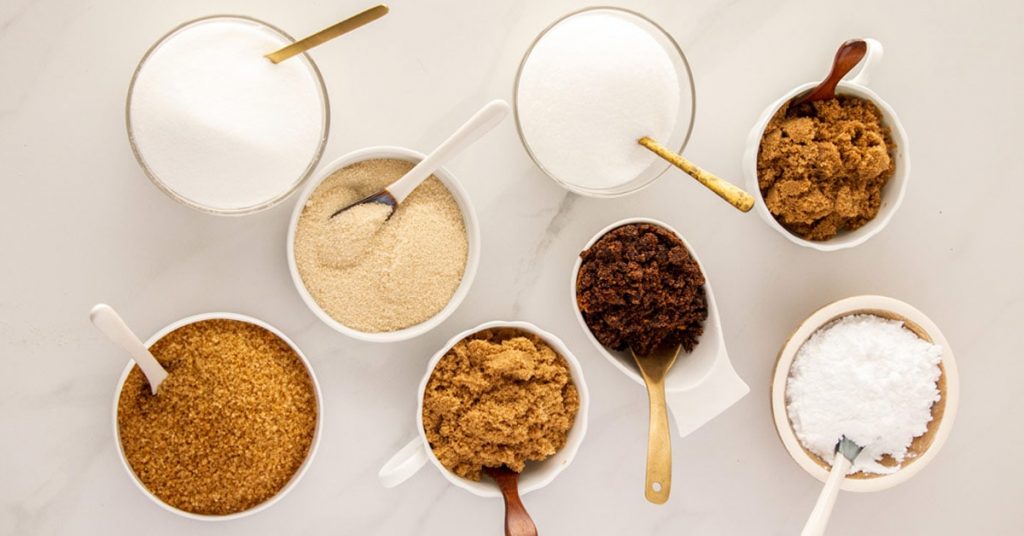
Coconut sugar is derived from the sap of the flower buds of the coconut palm tree (Cocos nucifera). The sap is collected, then heated to evaporate its water content, resulting in a caramel-colored, granulated sugar that resembles brown sugar in texture and appearance.
Unlike table sugar, which undergoes heavy processing and chemical treatment, coconut sugar is minimally processed, retaining more of its natural nutrients. It’s considered a natural sweetener, and is often touted as an environmentally friendly and sustainable product.
Nutritional Profile: How Does It Compare?
One of the key reasons behind coconut sugar’s popularity is its nutritional edge over refined white sugar. While it is still a form of sugar and should be consumed in moderation, it comes with some distinct advantages:
1. Lower Glycemic Index (GI)
Coconut sugar has a glycemic index of around 35, compared to white sugar’s GI of about 60–65. The glycemic index measures how quickly a food raises blood sugar levels. A lower GI means slower absorption and less dramatic spikes in blood glucose, making it more favorable for people with pre-diabetes, diabetes, or those managing their blood sugar.
2. Retains Trace Nutrients
Because coconut sugar is less processed, it retains small amounts of:
Iron
Zinc
Calcium
Potassium
Antioxidants
These minerals support bodily functions like energy metabolism and immune system health. While not a major source of these nutrients, every bit adds up—especially in contrast to refined sugar, which is nutritionally empty.
3. Inulin Content
Coconut sugar contains inulin, a type of dietary fiber that acts as a prebiotic, supporting gut health by feeding beneficial bacteria in the digestive tract. Inulin may also contribute to the lower glycemic impact of coconut sugar.
Why Health-Conscious Consumers Are Making the Switch
As more people adopt whole food diets and move away from highly refined ingredients, coconut sugar fits into a broader movement that prioritizes:
Natural ingredients
Sustainable sourcing
Low-glycemic foods
Plant-based diets
Here are some key reasons why coconut sugar resonates with today’s mindful consumers:
✅ A “Clean Label” Sweetener
Shoppers are increasingly reading ingredient labels, preferring foods without additives, preservatives, or chemicals. Coconut sugar’s single-ingredient status—often labeled as just “100% coconut sugar”—makes it highly appealing.
✅ Vegan and Plant-Based Friendly
Unlike bone-char filtered white sugar, coconut sugar is vegan-friendly and free from animal byproducts, making it suitable for plant-based lifestyles.
✅ Sustainable and Eco-Friendly
Coconut palms are incredibly sustainable crops. They:
This makes coconut sugar a more environmentally conscious choice compared to cane sugar, which is often associated with intensive farming and soil degradation.
✅ Versatile in Cooking and Baking
Health-conscious home cooks and professional bakers love coconut sugar for its rich, caramel-like flavor, which enhances:
Baked goods (cookies, cakes, muffins)
Coffee and teas
Sauces and marinades
Smoothies and oatmeal
It behaves similarly to brown sugar in recipes, making it an easy substitute.
Market Trends and Consumer Demand
The global coconut sugar market has seen significant growth over the past decade. According to industry analysts, the market is projected to continue expanding due to:
Rising rates of diabetes and obesity, fueling demand for low-GI foods
Increased health awareness, especially among Millennials and Gen Z
Expanding interest in natural and functional foods
In countries like the United States, Australia, and Germany, coconut sugar is appearing in an increasing number of packaged health products—from protein bars to kombucha. Many clean-label food brands now choose coconut sugar over cane sugar or corn syrup for its functional benefits and consumer appeal.
Health Professionals Weigh In
While coconut sugar has its benefits, nutritionists advise moderation. After all, it is still a form of sugar and contains nearly the same number of calories as regular sugar (around 15–20 calories per teaspoon). Dietitians recommend:
Using it as a step-down strategy for those transitioning away from refined sugar
Pairing it with fiber-rich meals to stabilize blood sugar
Treating it as a “better choice,” not a “free pass”
Still, many health professionals prefer coconut sugar over other sweeteners due to its natural origin and lower blood sugar impact.
Challenges and Considerations
While coconut sugar offers many benefits, it is not without drawbacks:
❗ Higher Cost
Coconut sugar is significantly more expensive than white sugar or even brown sugar, due to more labor-intensive production and limited geographic cultivation.
❗ Availability and Accessibility
In some areas, coconut sugar may still be hard to find or only available in specialty stores. However, online retail and growing demand are quickly solving this issue.
❗ Misconceptions
Some consumers mistakenly believe coconut sugar is completely “healthy” or non-fattening. Health educators emphasize the importance of realistic expectations and balanced consumption.
Looking Ahead: A Sweet Future?
As the health food movement continues to evolve, coconut sugar seems poised for a lasting place in the kitchens of health-conscious eaters. Its combination of:
Nutritional edge
Environmental sustainability
Natural appeal
Culinary versatility
makes it a compelling alternative to refined sugar and artificial sweeteners.
Consumers are not just looking for sweeteners—they’re looking for stories, values, and impact. Coconut sugar tells a story of tradition, sustainability, and mindful indulgence, which perfectly aligns with the values of today’s modern wellness culture.
Final Thoughts
Coconut sugar’s rise in popularity is more than just a health trend—it reflects a broader cultural shift toward conscious consumption. For individuals seeking a more natural lifestyle without giving up sweetness entirely, coconut sugar offers a satisfying compromise: better for the body, better for the planet, and rich in flavor.
As with any sugar, moderation is key. But when chosen wisely and used thoughtfully, coconut sugar offers a sweet spot between indulgence and intention.
Coconut crystals sugar is made from the sap of the coconut palm tree (Cocos nucifera), a plant that has been cultivated in Southeast Asia for thousands of years. The coconut palm is often referred to as the “tree of life” because nearly every part of it can be used for some purpose, from the fruit and water to the leaves and trunks. The sugar, which is extracted from the flower buds of the coconut tree, has been used in Southeast Asian cuisine and traditional medicine for centuries.
The practice of making coconut sugar likely originated in tropical regions where the coconut palm is abundant, including Indonesia, the Philippines, and Malaysia. These regions have a long history of coconut cultivation, and the process of tapping the tree for its sap is believed to have been developed by local communities over generations. Coconut sugar was initially used as a sweetener in local diets but also had religious and ceremonial significance, often used in offerings or as part of traditional feasts.
While it has been produced in Southeast Asia for centuries, coconut sugar has seen a resurgence in global popularity in recent years, primarily due to its reputation as a healthier, more sustainable alternative to refined white sugar. This growing demand has sparked interest in the history and production methods of coconut sugar, leading to a deeper appreciation for its role in Southeast Asian agricultural practices.
The Importance of Coconut Crystals Sugar in Southeast Asian Culture
In Southeast Asia, coconut sugar has been more than just a sweetener; it’s an integral part of local cultures and economies. Many rural communities in countries like Indonesia, the Philippines, and Thailand rely on the production of coconut sugar as a primary source of income. The production of coconut sugar also supports traditional agricultural practices and is seen as a sustainable farming model. Since the coconut palm tree grows in tropical climates and requires minimal water or pesticides, it is well-suited for the ecological conditions of Southeast Asia.
Coconut sugar is also tied to social customs and festivals in many Southeast Asian countries. In the Philippines, for instance, sugar made from the sap of the coconut tree is used in various traditional desserts such as suman (a type of sticky rice) and kakanin (a family of sweet rice-based delicacies). The sugar is also used in ceremonial dishes during local religious events, further embedding it in the social fabric of the region.
Production Methods of Coconut Sugar
The process of producing coconut sap is intricate and labor-intensive, with methods passed down from generation to generation. The main steps involved in coconut sugar production are tapping, boiling, and crystallizing the sap. These methods may vary slightly from one country to another, but the core principles remain the same.
1. Tapping the Coconut Tree
The first and most crucial step in producing coconut sugar is tapping the sap from the coconut palm. This process is typically done by skilled laborers known as “tappers” or “tapping workers.” The coconut tree is tapped in the early morning or late afternoon when the sap is at its most abundant.
To tap the tree, the tappers make a small incision into the flower buds of the coconut flower sap. This incision allows the sap, known as “toddy” or “tuba,” to flow out. The sap is collected in containers, usually made of bamboo or plastic, and must be collected within a few hours before it ferments. If left too long, the sap will turn alcoholic, which would make it unsuitable for sugar production.
2. Boiling the Sap
Once the sap is collected, it is immediately transported to a boiling station. The next step in the process is to boil the sap to remove excess moisture. This is done in large, shallow woks or pans, usually over an open flame. The sap is boiled for several hours, during which time the water content evaporates, leaving behind a thick, syrup-like substance.
This boiling process is critical, as it not only concentrates the sugars but also imparts the caramel-like flavor that is characteristic of blossom coconut flower. The longer the sap is boiled, the more concentrated the sugar becomes. At this stage, the liquid is still in a semi-liquid form and has a syrupy consistency.
3. Crystallization
After the sap has been boiled down to a thick syrup, the next step is to allow it to cool and crystallize. In some traditional production methods, the syrup is poured into molds and left to harden into solid blocks or cakes. In other methods, it may be cooled into a granular form similar to brown sugar.
The crystallization process requires careful timing, as the syrup must cool at just the right rate to form small, uniform sugar crystals. In some cases, a small amount of natural starch or lime is added to help the crystallization process, although many artisanal producers rely on traditional techniques to achieve the desired texture.
4. Packaging and Distribution
Once the coconut sugar has solidified, it is packaged for sale. Depending on the region, coconut sugar may be sold in blocks, cakes, or granulated form. The sugar is typically packaged in eco-friendly containers, such as bamboo baskets or bags made from natural fibers, reflecting the sustainable nature of the product.
In many rural areas, coconut sugar is sold directly to consumers in local markets or through village cooperatives. However, with the global rise in demand for organic and natural products, coconut sugar has found its way into international markets, where it is often marketed as a healthier alternative to refined sugar.
Sustainability and Health Benefits of Coconut Sugar
Coconut sap has gained popularity in recent years not only because of its taste and versatility but also due to its perceived health benefits and sustainability.
1. Nutritional Benefits
One of the main reasons coconut sugar is seen as a healthier alternative to refined sugar is its lower glycemic index (GI). While white sugar has a high GI, leading to rapid spikes in blood sugar levels, coconut sugar is considered to have a lower GI, which means it causes a slower, more gradual increase in blood sugar. This makes coconut sugar a better option for individuals with diabetes or those looking to maintain stable energy levels.
Coconut flower sap also retains some of the nutrients found in the blossom coconut flower, such as iron, zinc, calcium, and potassium. Additionally, it contains inulin, a type of dietary fiber that may support gut health and help regulate blood sugar levels. While it is still a form of sugar and should be consumed in moderation, many health-conscious individuals view coconut sugar as a more nutritious option than refined white sugar.
2. Environmental Sustainability
From an environmental perspective, coconut sugar production is considered more sustainable than other forms of sugar production. Coconut sap are highly resilient, requiring minimal water and pesticides, and can grow in a variety of soil types. They also have a relatively low carbon footprint compared to crops like sugar cane, which require extensive water and fertilizer inputs.
Furthermore, coconut trees have a long lifespan and can produce sap for up to 20 years, making them a long-term, renewable resource. This sustainability factor has made blossom coconut flower an attractive option for both consumers and producers who are concerned about the environmental impact of their food choices.
Summary
Blossom coconut flower has a rich history rooted in the agricultural traditions of Southeast Asia. From its origins as a humble local sweetener to its rise as a global health food phenomenon, coconut sap has proven to be both a culturally significant and environmentally sustainable product. The traditional methods of tapping, boiling, and crystallizing the sap showcase the deep knowledge and craftsmanship passed down through generations of Southeast Asian communities.
As the world continues to seek alternatives to refined sugars, coconut flower sap offers a compelling solution that combines health benefits with sustainability. Its role in the economies and cultures of Southeast Asia underscores the importance of preserving these traditional methods while adapting to modern demands. In the end, blossom coconut flower not only provides a natural, nutritious sweetener but also highlights the deep connection between people, land, and sustainable farming practices.
Komunitas Bisa Ekspor is an export-import community with the largest digital platform in Indonesia, with 280 thousand active members. Member of Komunitas Bisa Ekspor come from various backgrounds, ranging from students, entrepreneurs, private employees, etc. This community offers complete solutions for export businesses starting from looking partners with suppliers, buyers, as well as connecting newbies in the field of export-import with experts in that field.
Komunitas Bisa Ekspor also regularly invites experts in the export-import field to share and transfer knowledge for newbies in the export-import sector.
Global Coco Sugar at Komunitas Bisa Ekspor Event
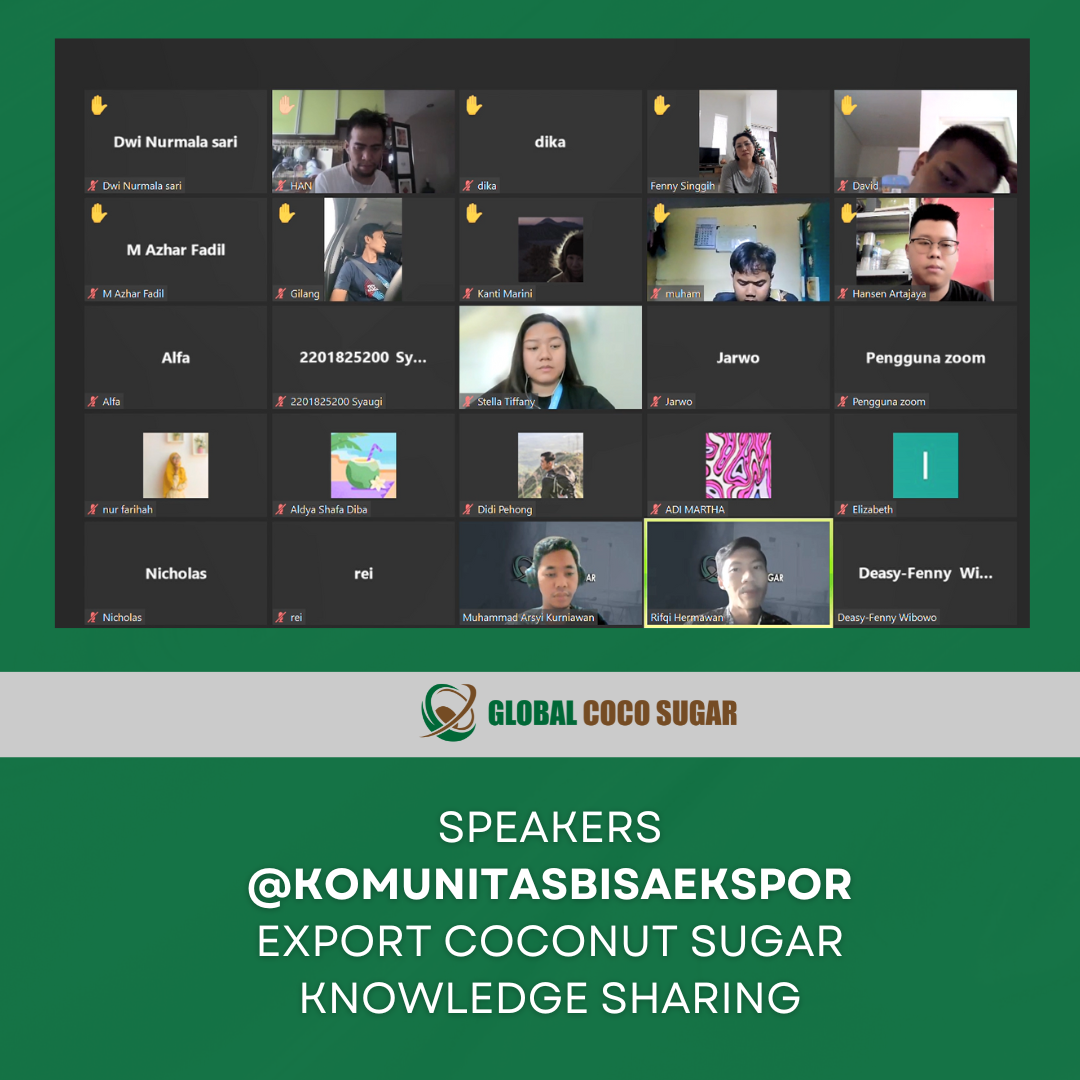
Global Coco Sugar Become Speakers at Komunitas Bisa Ekspor Event
We are Global Coco Sugar, directly selected by the Export Exportable Community to fill in the events they are holding and conduct sharing sessions on tips and tricks on export-import of coconut products in front of hundreds of members of Komunitas Bisa Ekspor
Global Coco Sugar sent our 2 best teams namely Mr. Arsy and Mr. Rifqi to do the sharing. The sharing event ran smoothly and it is hoped that the material presented by the Global Coco Sugar team will help to grow interest and strengthen the mentality of newbie exporters in Indonesia. We also hope that in the future Indonesia can have an important role in the international export-import industry.
The Global coco sugar session provided material for the initial process of preparing mentally, how to find overseas buyers, product requirements in each country, and the challenges young exporters must face. Even though it was difficult at the start, we always ensured that if their export-import business was running, it would get lighter and lighter and in the end they young exporters could be successful in the export-import world.
How to Start an Export Business?
How to start an export business
Mr. Muhammad Arsyi as the Global Coco Sugar team who provided material at the Export Can Community event said that the import-export business is not difficult, because basically there is no difficult business, it’s just consistency against fear and laziness that is actually difficult. Mr. Arsyi also said that young exporters should not feel insecure or afraid because they are still young. Arsyi said that now is the time for young people to work and be able to exceed their previous parents with facilities that are easy and fast.
Meanwhile Mr. Rifqi always emphasizes caution in every transaction with clients. Because sometimes because they don’t care about the client too much, exporters are not careful about export-import licensing. Mr. Rifqi also always emphasizes that Indonesia is a country that should be able to become a developed country through exports, because Indonesia is a country that has a lot of good quality natural products.
Indonesian Export Business Potential in 2020-2023
Indonesian Export Potential in 2023
Besides that, if we look further, the value of Indonesia’s exports in the last 2 years has always increased even though it is in the midst of the Covid-19 pandemic. Indonesia’s export value has grown by around 30 – 50% in the last two years. Therefore, Indonesia’s export-import industry is on a positive trend because in addition to export values growing quite large, Indonesia has also been found to have many young exporters starting their businesses. It is hoped that Indonesia can continue to develop and take an important role in international trade
For information, According to Indonesian Statistic Agency, the value of Indonesia’s exports in 2022 will reach US$244.14 billion and it is projected that in 2023 it will continue to rise. Therefore this is a momentum for new exporters or Indonesian entrepreneurs to develop their business to an international level
At the end of the material sharing, the global coco sugar team emphasized that despite the issue of a recession in 2023, Indonesia is likely to be able to escape the recession by optimizing its export capabilities. So it is hoped that Indonesia will escape from recession in 2023 and beyond.
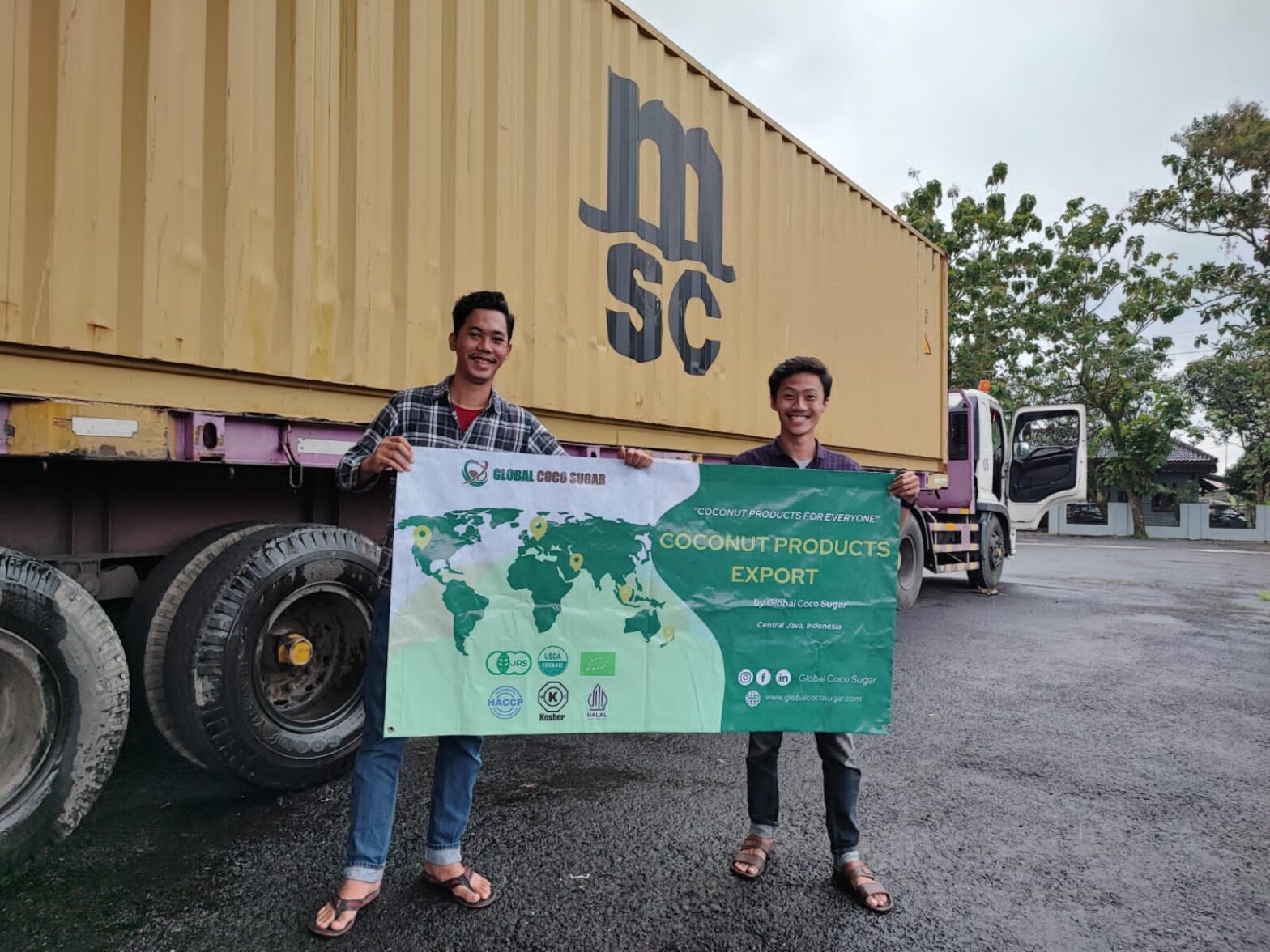
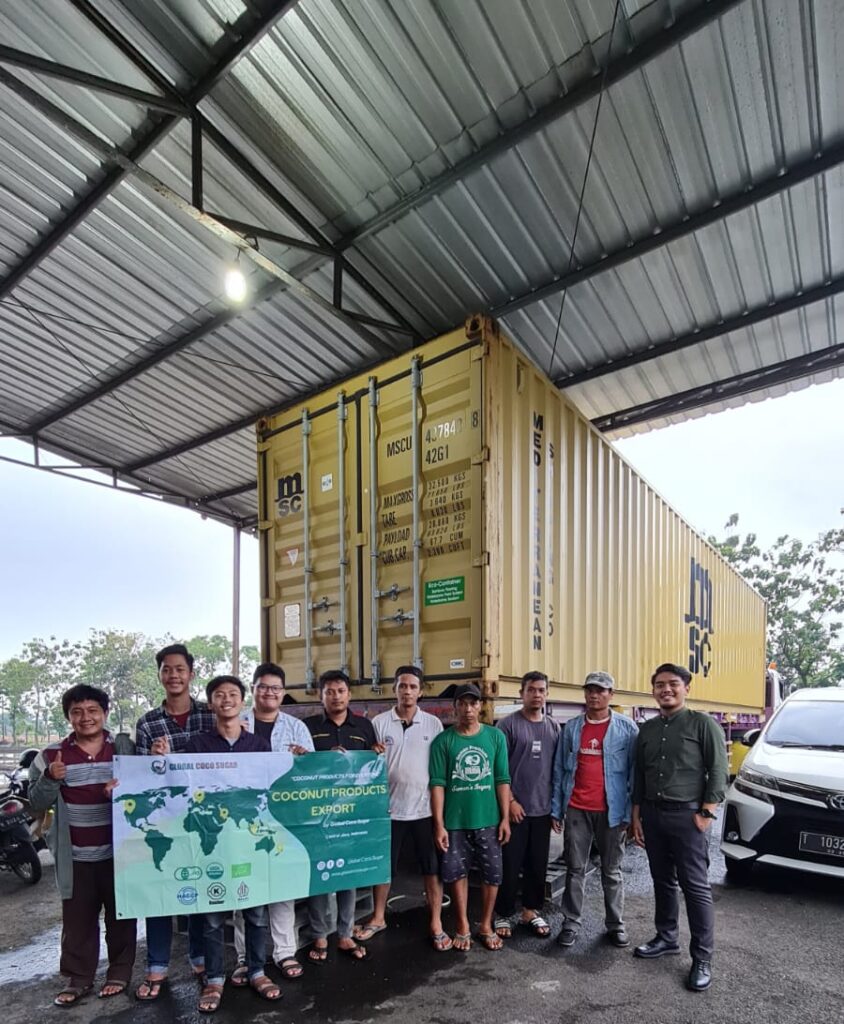
Many surveys have proven that coconut sugar in the USA is the most popular natural sweetener. This was proven by Global Coco Sugar by exporting 19 Tons of coconut sugar to the USA. The coconut sugar variant sent by Global Coco Sugar is a variant of organic powdered coconut sugar
This huge transaction value had a direct or indirect impact on the Purbalingga area, where the Global Coco Sugar coconut sugar factory was established. The social impact caused is enormous, from the farmers who are global partners for coco sugar, our factory employees, as well as those related to shipping and licensing who have received a very positive impact from this shipment. As well as the indirect impact for the Indonesian state to fight the global recession issue that will be present in 2023.
How Is The Trend of Coconut Sugar in The USA and North America
Stuffing Container
According to the Global Coco Sugar marketing team represented by Mr. Arsyi Kurniawan, this delivery is the beginning of the market development that will be carried out by Global Coco Sugar during 2023, even though in the midst of the Ukrainian-Russian war, and the post-pandemic economic effects, Global Coco Sugar will continue to strive to expand, especially to the United States of America and Canada in year 2023. Arsyi also believes that the USA is an excellent market for coconut sugar, because many food industries are slowly starting to switch to using healthier sweeteners, and one of the healthiest sweeteners is coconut sugar.
Why Coconut Sugar Becoming Favourite Natural Sweetener in The USA
Coconut sugar itself is a healthy sweetener with the advantage of having a low glycemic index, which is 35, while the white sugar that we often use daily has a glycemic index of 65. So you can say that coconut sugar is a very good alternative sweetener. compared to white sugar. Besides that, coconut sugar also has a distinctive taste like caramel, so it can be said that almost everyone likes the taste of caramel. Coconut sugar also tends to be cheaper than other natural sweeteners such as honey, dates or stevia.
Expanding Coconut Sugar Market In The USA, Is it Promising?
Global Coco Sugar Team
Mr. Arsyi also added that the need for coconut sugar as an alternative sweetener in the USA is increasing every year, this is due to the increasing awareness of healthy food in the USA, therefore the USA and Canada will become the main targets of Global Coco Sugar in 2023.
Mr. Rifqi Hermawan as the global logistics team for coco sugar also commented on the delivery of coconut sugar to the USA this time. He said that the main challenge for shipping this time was the unpredictable ship schedule from Indonesia to the USA. However Rifqi also added that logistics costs this year were the lowest since Covid-19 hit at the end of 2019. So Mr. Rifqi hopes that the downward trend in global logistics prices will spur the amount of exports made by Global Coco Sugar.
It is undeniable that sea logistics globally has experienced a negative trend since the Covid-19 Pandemic hit, the difficulty of ship schedules has had an impact on the high price of sea logistics. But recently sea logistics costs have started to change to normal since the covid-19 pandemic
What Can Coconut Sugar Be Used For?
For information, coconut sugar is usually used as a natural sweetener such as cakes, breads, desserts, chocolate, and various other sweet foods. But besides that, coconut sugar can also be used as an ingredient in cosmetic products. This can happen because the mineral content in coconut sugar is very good for the skin, so many cosmetic companies have started to try coconut sugar as a mixed ingredient for their products. Usually coconut sugar is used in scrub products because it has a fairly rough texture but does not hurt the skin.
Global Coco Sugar’s flagship product, now our coconut sugar Kosher Certified. If you don’t know the function of kosher certification, then we will explain it to you. Certification is an important thing in the process of producing goods, by holding certain certifications, it can prove that the way our company produces products is in accordance with international standards. With certain certifications, buyers will certainly be much more confident in the quality of the products that our company offers. Therefore, to increase the trust of our clients and buyers, we are constantly carrying out a certification process to standardize our products to a better level.
The following are product certifications that we already have:
Coconut Sugar Kosher
Coconut Sugar Kosher Certified
Kosher or kosyer is a term in Jewish food law. Kosher itself means “worthy”. So it can be said that if the product is certified kosher, then the followers of the Jewish religion need not doubt the feasibility of the food product. Some of the regulations in kosher law are prohibitions to consume pork, shellfish, most insects, a mixture of beef and milk, and regulate the procedure for slaughtering mammals or poultry. Besides that, there are also certain laws for agricultural products, whether these agricultural products can be said to be “Kosher” or not.
Coconut Sugar Halal Indonesia Logo
Coconut Sugar Halal Certified
If you looking for coconut sugar halal certified, you came to the right place, our coconut sugar already halal certified. Halal is a legal term for food in Islam. This law comes from the holy book of Islam, namely the Al-Quran. There are several similarities between Halal and Kosher, namely the prohibition of eating pork and the existence of certain rituals for slaughtering animals. Even though they have similarities, in fact Kosher and Halal are not the same, so there are some Halal foods that cannot be said to be Kosher, and vice versa, Kosher food is not necessarily Halal. But fortunately, products from Global Coco Sugar, are already certified Halal and Kosher.
Coconut Sugar HACCP Logo
Coconut Sugar HACCP (Hazard Analysis Critical Control Point) Certified
HACCP or Hazard Analysis Critical Control Point is a food safety assurance certification through a system that is designed in a systematic and integrated manner. This certificate guarantees that the food production process is safe from the danger of contamination of the production of goods from biological, chemical, or physical factors. So it can be said that by having a HACCP certificate, food production can be said to be safe for consumption because it is not contaminated with hazardous materials
BPOM / Indonesian FDA Logo
BPOM / Indonesian FDA
The BPOM certification or the Indonesian Food and Drug Supervisory Agency aims to indicate that our products are guaranteed by the agency. Therefore, our products can be declared safe for consumption and do not endanger the health of the people who consume them. And by having this BPOM certification, our products can legally be sold in retail.
Eu Organic Logo
Coconut Sugar Organic Certified
The Coconut Sugar that we produce already has organic certificates for USDA Organic,EU Organic (European Organic), and JAS Organic (Japan Agricultural Standard). By having organic certification, our products can be categorized as organic food internationally, which will affect the quality of our products. By having an organic certificate, indirectly our products can be said to be chemically safer, so that the products we produce are free from Genetic Modified Organisms / Non-GMO. In addition, with our production process that is in accordance with international organic standards, the products we produce are healthier for the body because the production process can be said to be “natural” and in accordance with organic standards.
Besides that, our coconut sugar is also gluten free, so those of you who have gluten allergens don’t have to worry about trying our coconut sugar. Although we do not yet have a gluten free certificate, we routinely conduct lab tests on our products to ensure that our products are always free of allergens, especially gluten allergens.
That’s the certification that Global Coco Sugar has as of 2022. With so many food product certifications that we have now, we don’t get complacent, we will continue to develop the quality of our products and also increase our product certifications so that our products can follow international standards and can said to be the best quality product.