Coconut sugar is often discussed as a natural sweetener for diet-friendly products, but it does not fit every diet in the same way.
It is generally more compatible with Paleo-style and plant-based diets than with strict ketogenic diets.
For keto, the main issue is carbohydrate content. For Paleo, the discussion is more about ingredient origin, processing level, and how much sugar is used.
For food brands and B2B buyers, the safest approach is to review the final product formula, serving size, nutrition facts, certification requirements, and label claims before positioning coconut sugar as keto, Paleo, low-carb, or vegan-friendly.
Quick Answer: Is Coconut Sugar Keto or Paleo Friendly?
Coconut sugar is generally not keto-friendly for strict ketogenic diets because it still contains carbohydrates and sugar.
In very small amounts, it may be used only if the total product formulation and net carbs per serving still fit the intended low-carb or keto target.
A very-low-carbohydrate ketogenic diet is often discussed around 20-50 grams of carbohydrates per day, which is why sugar-based sweeteners should be handled carefully in keto products.
Coconut sugar is more commonly considered Paleo-friendly because it comes from coconut palm sap and is less refined than white sugar.
However, Paleo-friendly does not mean unlimited. Coconut sugar is still sugar, so serving size, frequency of use, and the final product formula still matter.
Coconut Sugar Diet Compatibility at a Glance
Use this table as a practical starting point. The final answer may depend on the diet standard, serving size, recipe, product formulation, and local labeling rules.
| Diet / Claim | Is Coconut Sugar Suitable? | Notes |
| Keto | Usually no | Still contains carbohydrates and sugar, so it is not suitable for strict keto. |
| Low-carb | Limited | May fit only in very small amounts depending on total daily carbohydrates and serving size. |
| Paleo | Generally yes, in moderation | Less refined and coconut-based, but still sugar. |
| Vegan | Generally yes | Plant-based and not honey-derived. |
| Sugar-free | No | Coconut sugar is still sugar. |
| Diabetic-friendly | Do not claim without verified support | Blood sugar or glycemic claims need verified product data and compliance review. |
| Clean-label products | Possible | Depends on ingredient list, serving size, certification, and product positioning. |
Is Coconut Sugar Keto-Friendly?

No, coconut sugar is generally not considered keto-friendly for strict ketogenic diets. Even though it is less refined than white sugar, coconut sugar is still a carbohydrate-based sweetener and can count toward daily carb intake.
This matters because strict keto diets usually rely on very low carbohydrate intake to support ketosis.
For individual consumers, coconut sugar should not be treated as a regular keto sweetener.
For food brands, a tiny amount may only be considered if the final product’s total net carbs per serving still match the intended claim and market rules.
For a more detailed keto-focused explanation, read our guide on is coconut sugar keto-friendly.
Is Coconut Sugar Paleo-Friendly?

Coconut sugar is generally more compatible with Paleo-style diets than with keto diets.
It comes from coconut palm sap and is less refined than white sugar, which makes it attractive for some Paleo recipes and clean-label products.
However, Paleo-friendly does not mean unlimited. Coconut sugar is still sugar, so consumers and product developers should consider serving size, frequency of use, and final nutrition profile.
Some Paleo certification standards list coconut sugar, coconut sap, and coconut nectar among accepted sweetener options, but brands still need to review the full certification standard before making certified Paleo claims.
Is Coconut Sugar Low-Carb?
Coconut sugar is not a zero-carb or sugar-free sweetener. It may be used in small amounts by people following moderate low-carb diets, but it is usually not the first choice for strict low-carb or ketogenic diets.
For commercial products, the key question is not whether coconut sugar sounds natural.
The key question is whether the final serving size, total carbohydrates, and nutrition facts support the intended claim.
Is Coconut Sugar Vegan-Friendly?
Coconut sugar is generally vegan-friendly because it is made from coconut palm sap and does not come from bees or dairy.
This can make it a possible alternative to honey in plant-based products.
The Vegan Society explains that a vegan diet avoids animal foods including dairy, eggs, and honey.
Still, food brands should verify ingredient declaration, processing aids, supplier documentation, and market-specific requirements if they want to use vegan claims on packaging.
For a more specific discussion, read our guide on whether coconut sugar is vegan and keto-friendly.
Can Food Brands Use Coconut Sugar in Keto, Paleo, or Low-Carb Products?
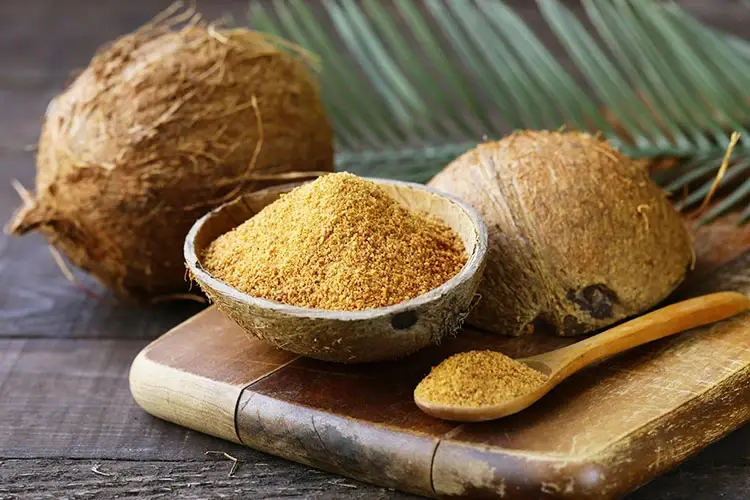
Food brands can use coconut sugar in some diet-positioned products, but the claim must match the final formulation.
Coconut sugar may support Paleo-style, vegan-friendly, natural sweetener, or clean-label positioning.
However, it should not automatically be used for keto, sugar-free, diabetic-friendly, or low-carb claims.
For keto or low-carb products, total carbohydrates and serving size matter more than the ingredient name.
For Paleo products, brands should check whether the final product meets the intended certification or retailer requirements.
For vegan products, brands should verify ingredient declaration and supplier documentation.
For nutrition labeling context, the FDA explains how added sugars appear on the Nutrition Facts label, including guidance related to single-ingredient sugars and syrups.
What B2B Buyers Should Verify Before Sourcing Coconut Sugar
For food manufacturers, snack brands, bakery producers, beverage brands, private label buyers, and procurement teams, coconut sugar sourcing should be based on more than diet trends.
Buyers should verify product specifications, moisture, mesh size, color, product form, packaging, shelf life, certification scope, COA availability, MOQ, and export documentation.
If your team is evaluating organic coconut sugar from Indonesia, review the organic coconut sugar specifications and request a coconut sugar COA before confirming a bulk order.
Need organic coconut sugar for clean-label, Paleo-style, bakery, snack, or beverage applications?
Contact our export team to request specifications, samples, packaging details, or a quotation.
Conclusion: Is Coconut Sugar Keto or Paleo Friendly?
Coconut sugar is not a standard keto-friendly sweetener because it contains carbohydrates and sugar.
It may only fit low-carb or keto-positioned products in very small amounts when the final serving size and nutrition facts support the claim.
For Paleo-style and vegan-friendly products, coconut sugar can be a more suitable option because it is coconut-based, plant-derived, and less refined than white sugar.
Even so, it should still be used in moderation and supported by proper product documentation.
For B2B buyers, the safest approach is to evaluate coconut sugar based on specification, certification scope, COA, packaging, MOQ, export readiness, and claim compliance before placing a bulk order or using diet-related positioning on packaging.
FAQ About Coconut Sugar, Keto, and Paleo Diets
Is coconut sugar keto?
No. Coconut sugar is generally not keto-friendly because it contains carbohydrates and sugar. It is not the same as zero-carb sweeteners such as stevia, monk fruit, or erythritol.
Is coconut sugar Paleo?
Coconut sugar is generally considered more Paleo-compatible than refined white sugar because it comes from coconut palm sap and is less refined. However, it is still sugar and should be used in moderation.
Is coconut sugar low-carb?
Coconut sugar is not a zero-carb sweetener. It may fit only in small amounts for moderate low-carb diets, depending on total daily carbohydrate intake and serving size.
Can coconut sugar be used in keto products?
Only with caution. A very small amount may be used for flavor in a product formulation, but the final net carbs per serving must support the intended keto or low-carb claim.
Is coconut sugar sugar-free?
No. Coconut sugar is not sugar-free. It is still a sweetener that contributes sugar and carbohydrates.
Is coconut sugar vegan?
Coconut sugar is generally vegan-friendly because it is made from coconut palm sap and does not come from bees or dairy. However, product claims should still be supported by supplier documentation.