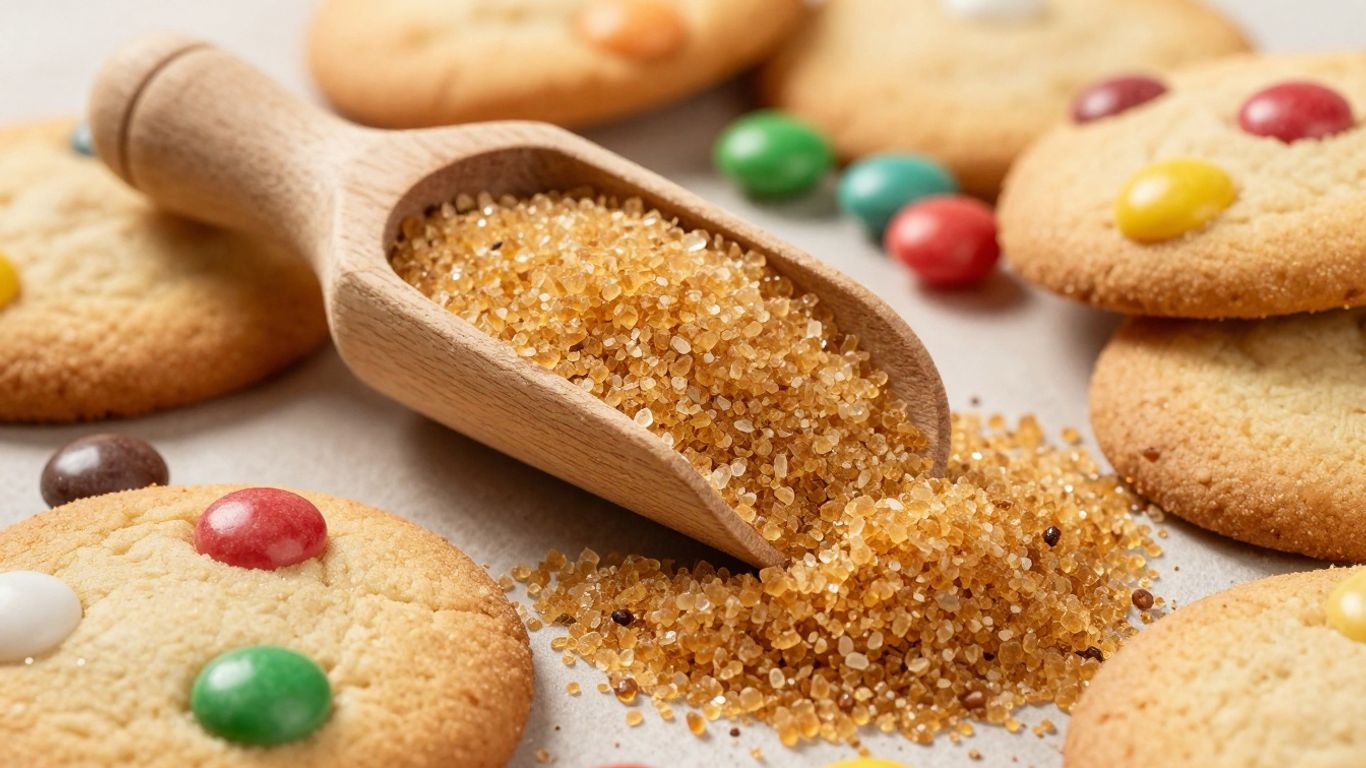
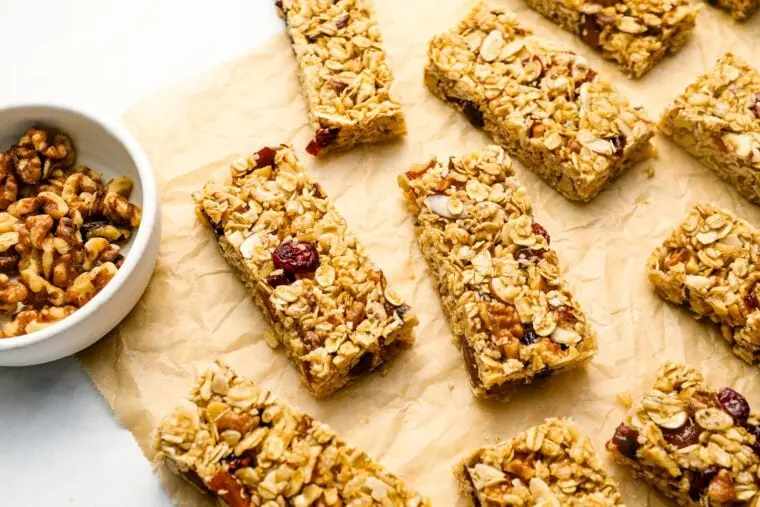
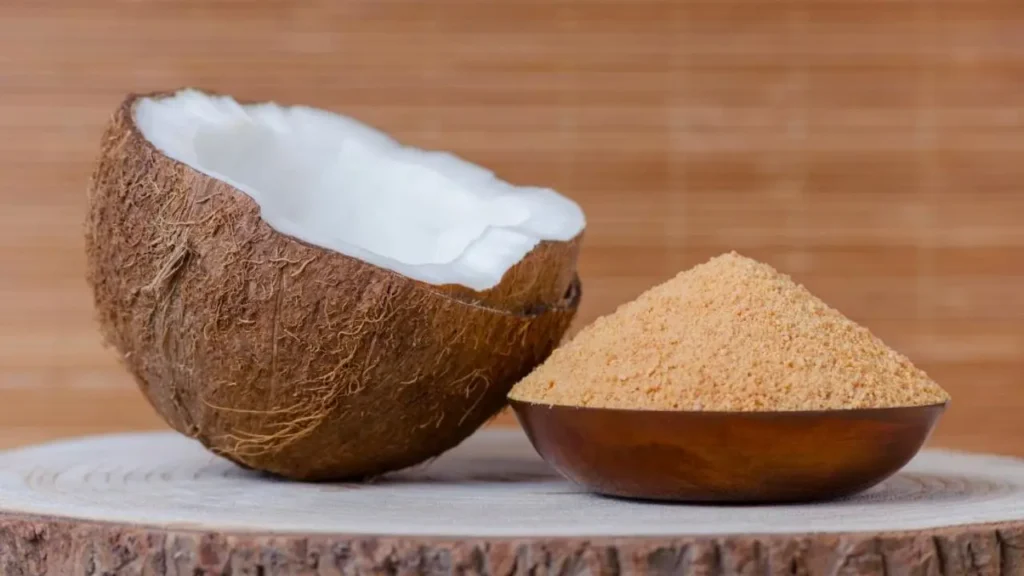
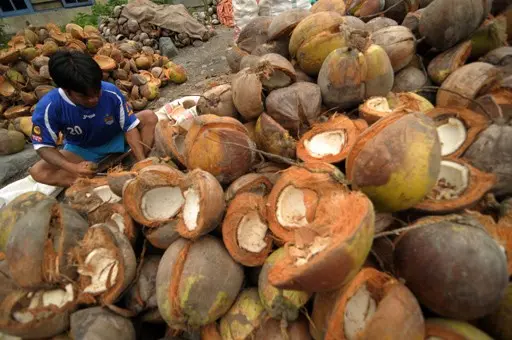
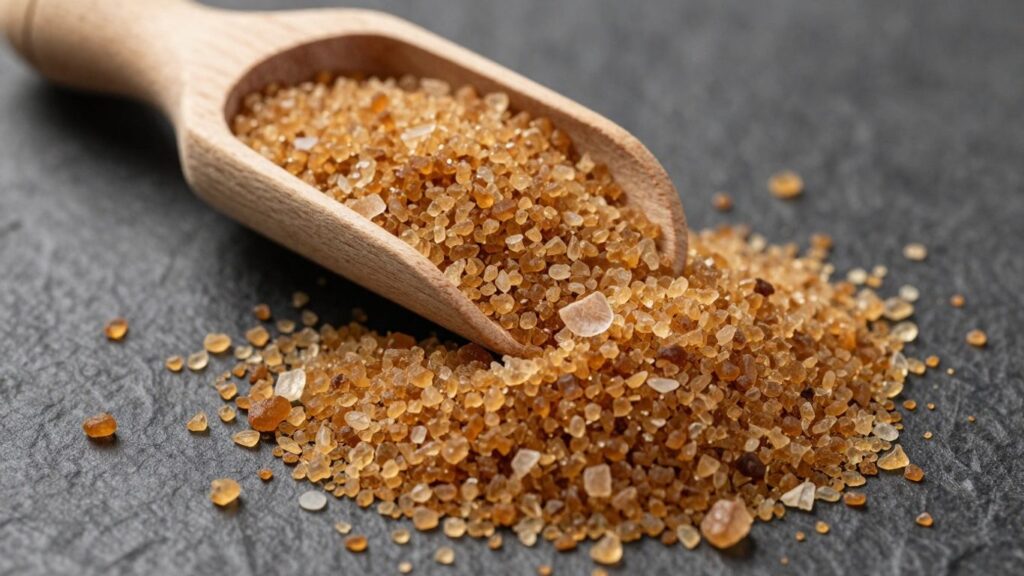
Tag: coconut sugar from indonesia

  • How Is Coconut Nectar Made? From Coconut Sap to Syrup

    How Is Coconut Nectar Made? From Coconut Sap to Syrup

    coconut nectar

    Coconut nectar is made from the sap collected from coconut flower blossoms.

    The fresh sap is filtered and carefully heated to remove water, concentrating its natural sugars until it becomes a thick syrup.

    The nectar is then cooled, checked for consistency, and packed for storage or further use.

    The raw material is coconut flower sap—not coconut water from inside the fruit.

    The production process is closely related to coconut sugar production, but coconut nectar remains in liquid syrup form instead of being concentrated further until crystals form.

    How Is Coconut Nectar Made? Quick Answer

    In simple terms, coconut nectar production follows six main stages:

    • Prepare a suitable coconut flower cluster.
    • Tap the blossom so fresh sap can flow.
    • Collect the sap and move it to processing promptly.
    • Filter the fresh sap.
    • Heat and concentrate the sap until it reaches a syrup-like consistency.
    • Cool, check the finished nectar against the required specification, and package it.

    The most important part of the process is control.

    Changes in collection, filtration, heating, and concentration can influence the syrup’s color, flavor, viscosity, and consistency from batch to batch.

    Where Does Coconut Nectar Come From?
    Where Does Coconut Nectar Come From

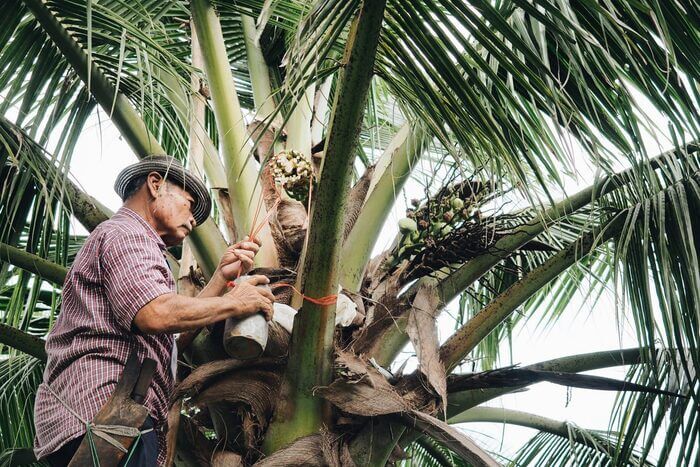
    Coconut nectar starts with coconut sap, a naturally sweet liquid collected from the unopened flower clusters of the coconut palm (Cocos nucifera).

    It is different from coconut water, which is the liquid found inside the coconut fruit.

    For a deeper explanation of the raw material, tapping process, and other products made from coconut sap, read our guide to coconut sap.

    The Coconut Nectar Production Process

    how is coconut nectar made, how to heat the coconut nectar, coconut nectar for your healthy

    1. Selecting and Preparing the Coconut Flower

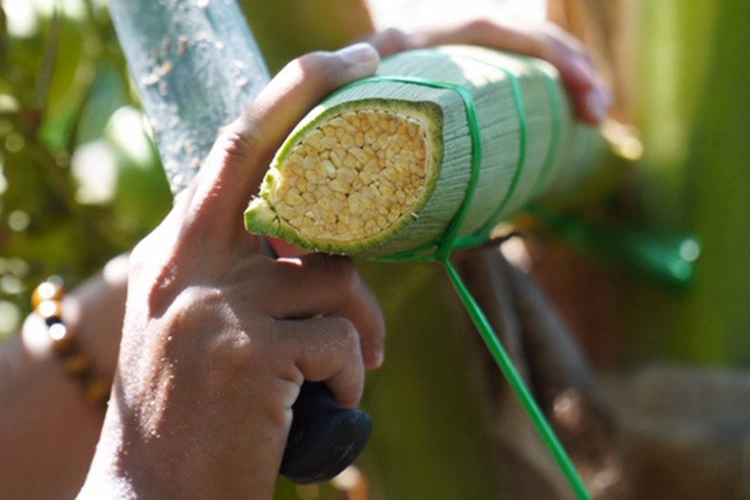
    Production begins with a suitable coconut palm flower cluster, also called an inflorescence.

    Before sap collection starts, the flower stalk is prepared so it can release sap consistently during tapping.

    Good raw-material handling starts at this stage.

    A clean collection setup and careful preparation help reduce unnecessary contamination before the sap reaches the processing area.

    2. Tapping the Coconut Blossom

    A small cut is made at the prepared flower stalk so the sap can flow into a collection container.

    The tapping process requires regular attention because the collection point must remain clean and the flow must be maintained without unnecessary damage to the plant.

    For commercial production, the objective is not simply to collect as much sap as possible.

    Consistent handling matters because the condition of the fresh sap affects the next processing steps.

    3. Collecting Fresh Coconut Sap

    Fresh coconut sap is collected regularly and transferred for processing.

    Because sap is a sugar-rich liquid, it can begin to change if it is left for too long before processing.

    For this reason, producers need controlled collection and handling practices that limit unwanted fermentation and keep the incoming raw material as consistent as possible.

    4. Filtering the Sap

    Before concentration, the collected sap is filtered to remove visible debris or foreign material picked up during collection.

    This is a simple but important step because the syrup becomes more concentrated later in the process.

    Filtration also prepares the sap for a more controlled heating stage and helps producers maintain a cleaner, more consistent finished product.

    5. Heating and Concentrating the Sap

    The filtered sap is heated so part of its water content evaporates.

    As water is removed, the liquid becomes progressively thicker and its sweetness and flavor become more concentrated.

    Process control matters here.

    Research on coconut sap processing has shown that different evaporation methods and processing temperatures can affect production time, color, and the physicochemical characteristics of the resulting syrup.

    Excessive or inconsistent heating can therefore change the color and characteristics of the syrup, while insufficient concentration can leave a product that is thinner than the intended specification.

    Producers monitor the syrup until it reaches the desired concentration and consistency.

    This is also the point where coconut nectar and coconut sugar begin to separate as products: for nectar, processing stops while the product is still a pourable syrup.

    For coconut sugar, concentration continues further and the material is worked toward crystallization.

    6. Cooling, Quality Checks, and Packaging

    Once the target syrup consistency is reached, the coconut nectar is cooled under controlled conditions.

    The finished product can then be checked against the supplier’s specification before packaging.

    For B2B supply, this stage is important because buyers need more than an attractive syrup.

    They need a product that can be supplied with consistent characteristics, suitable packaging, and the documentation required for their procurement or quality-control process.

    What Does Coconut Nectar Look and Taste Like?
    coconut nectar substitute

    Finished coconut nectar is typically a thick amber-to-brown syrup with a caramel-like sweetness.

    Depending on the raw sap and the degree of concentration, the flavor may also have mild floral, toasted, or earthy notes.

    Its viscosity, color, and flavor can vary between suppliers and production batches, which is why industrial buyers should evaluate a product specification and, when possible, a sample before committing to commercial volume.

    Coconut Nectar Production: What Matters for B2B Buyers

    For food manufacturers, importers, distributors, and procurement teams, understanding how coconut nectar is made is useful because production variables can affect how the ingredient performs in a formulation.

    Buyer CheckWhy It MattersWhat to Request
    Concentration / soluble solidsInfluences sweetness, viscosity, and formulation consistency.Current product specification or batch COA.
    Color and flavor profileCan affect the appearance and sensory profile of the finished product.Sample, specification, and agreed quality range.
    Moisture / water contentAffects concentration, handling, and product stability.Specification and relevant batch test result.
    Microbiological qualityImportant for food-safety and buyer quality systems.Relevant microbiological parameters and COA where applicable.
    PackagingNeeds to protect the syrup during storage and international shipment.Available bulk formats and food-contact packaging details.
    Certifications and documentsRequirements differ by market, buyer, and end use.Only documents and certifications that are current and within scope.

    The exact parameters should be confirmed with the supplier rather than assumed from a generic article.

    For commercial evaluation, request the current specification, available COA, packaging information, and any certification documents relevant to your market.

    Coconut Nectar vs Coconut Sugar: How the Process Differs

    Coconut nectar and coconut sugar start from the same basic raw material—coconut flower sap—but the processing endpoint is different.

    FactorCoconut NectarCoconut Sugar
    Starting materialFresh coconut flower sapFresh coconut flower sap
    Main processing goalConcentrate the sap into a liquid syrupConcentrate further and form sugar crystals
    Final formPourable syrupGranulated or crystalline sugar
    Formulation impactAdds sweetness plus liquid to a recipeFunctions more like a dry granulated sweetener

    For manufacturers, that difference matters because replacing a dry sugar with a liquid sweetener changes the moisture balance and processing behavior of a formulation.

    Source Coconut Nectar Syrup from Indonesia

    If you are evaluating coconut nectar for food manufacturing, distribution, or private-label supply, review the current organic coconut nectar syrup sourcing page for product and procurement information.

    For specifications, samples, packaging, or quotation requirements, contact the Global Coco Sugar export team and confirm the latest documentation for your intended market and application.

    Frequently Asked Questions

    What is coconut nectar made of?

    Coconut nectar is made from sap collected from coconut flower blossoms. The sap is filtered and concentrated by heating until it becomes a thick syrup.

    Is coconut nectar the same as coconut sap?

    No. Coconut sap is the fresh raw liquid collected from the flower. Coconut nectar is the processed syrup made by filtering and concentrating that sap.

    Is coconut nectar the same as coconut sugar?

    No. Both start from coconut flower sap, but coconut nectar remains a liquid syrup. Coconut sugar is concentrated further and processed into a dry, crystalline or granulated form.

    Does coconut nectar taste like coconut?

    Not strongly. Coconut nectar is generally known for caramel-like sweetness with mild floral, toasted, or earthy notes rather than the flavor of coconut flesh.

    Is coconut nectar heated during production?

    Yes. Heating is used to remove water from the fresh sap and concentrate it into syrup. The exact process conditions depend on the producer and the target product specification.

    What should a B2B buyer check before sourcing coconut nectar?

    Review the current product specification, concentration or soluble-solids target, color and flavor expectations, relevant quality tests, packaging, available COA, and any certifications required for your market.

  • Is Coconut Sugar Keto or Paleo Friendly?

    Is Coconut Sugar Keto or Paleo Friendly?

    Is Coconut Sugar Keto or Paleo Friendly

    Coconut sugar is often discussed as a natural sweetener for diet-friendly products, but it does not fit every diet in the same way.

    It is generally more compatible with Paleo-style and plant-based diets than with strict ketogenic diets.

    For keto, the main issue is carbohydrate content. For Paleo, the discussion is more about ingredient origin, processing level, and how much sugar is used.

    For food brands and B2B buyers, the safest approach is to review the final product formula, serving size, nutrition facts, certification requirements, and label claims before positioning coconut sugar as keto, Paleo, low-carb, or vegan-friendly.

    Quick Answer: Is Coconut Sugar Keto or Paleo Friendly?

    Coconut sugar is generally not keto-friendly for strict ketogenic diets because it still contains carbohydrates and sugar.

    In very small amounts, it may be used only if the total product formulation and net carbs per serving still fit the intended low-carb or keto target.

    A very-low-carbohydrate ketogenic diet is often discussed around 20-50 grams of carbohydrates per day, which is why sugar-based sweeteners should be handled carefully in keto products.

    Coconut sugar is more commonly considered Paleo-friendly because it comes from coconut palm sap and is less refined than white sugar.

    However, Paleo-friendly does not mean unlimited. Coconut sugar is still sugar, so serving size, frequency of use, and the final product formula still matter.

    Coconut Sugar Diet Compatibility at a Glance

    Use this table as a practical starting point. The final answer may depend on the diet standard, serving size, recipe, product formulation, and local labeling rules.

    Diet / ClaimIs Coconut Sugar Suitable?Notes
    KetoUsually noStill contains carbohydrates and sugar, so it is not suitable for strict keto.
    Low-carbLimitedMay fit only in very small amounts depending on total daily carbohydrates and serving size.
    PaleoGenerally yes, in moderationLess refined and coconut-based, but still sugar.
    VeganGenerally yesPlant-based and not honey-derived.
    Sugar-freeNoCoconut sugar is still sugar.
    Diabetic-friendlyDo not claim without verified supportBlood sugar or glycemic claims need verified product data and compliance review.
    Clean-label productsPossibleDepends on ingredient list, serving size, certification, and product positioning.

    Is Coconut Sugar Keto-Friendly?

    Is Coconut Sugar Vegan and Keto-Friendly

    No, coconut sugar is generally not considered keto-friendly for strict ketogenic diets. Even though it is less refined than white sugar, coconut sugar is still a carbohydrate-based sweetener and can count toward daily carb intake.

    This matters because strict keto diets usually rely on very low carbohydrate intake to support ketosis.

    For individual consumers, coconut sugar should not be treated as a regular keto sweetener.

    For food brands, a tiny amount may only be considered if the final product’s total net carbs per serving still match the intended claim and market rules.

    For a more detailed keto-focused explanation, read our guide on is coconut sugar keto-friendly.

    Is Coconut Sugar Paleo-Friendly?

    Is Coconut Sugar Paleo-Friendly?

    Coconut sugar is generally more compatible with Paleo-style diets than with keto diets.

    It comes from coconut palm sap and is less refined than white sugar, which makes it attractive for some Paleo recipes and clean-label products.

    However, Paleo-friendly does not mean unlimited. Coconut sugar is still sugar, so consumers and product developers should consider serving size, frequency of use, and final nutrition profile.

    Some Paleo certification standards list coconut sugar, coconut sap, and coconut nectar among accepted sweetener options, but brands still need to review the full certification standard before making certified Paleo claims.

    Is Coconut Sugar Low-Carb?

    Coconut sugar is not a zero-carb or sugar-free sweetener. It may be used in small amounts by people following moderate low-carb diets, but it is usually not the first choice for strict low-carb or ketogenic diets.

    For commercial products, the key question is not whether coconut sugar sounds natural.

    The key question is whether the final serving size, total carbohydrates, and nutrition facts support the intended claim.

    Is Coconut Sugar Vegan-Friendly?

    Coconut sugar is generally vegan-friendly because it is made from coconut palm sap and does not come from bees or dairy.

    This can make it a possible alternative to honey in plant-based products.

    The Vegan Society explains that a vegan diet avoids animal foods including dairy, eggs, and honey.

    Still, food brands should verify ingredient declaration, processing aids, supplier documentation, and market-specific requirements if they want to use vegan claims on packaging.

    For a more specific discussion, read our guide on whether coconut sugar is vegan and keto-friendly.

    Can Food Brands Use Coconut Sugar in Keto, Paleo, or Low-Carb Products?

    Is Coconut Sugar Keto or Paleo Friendly

    Food brands can use coconut sugar in some diet-positioned products, but the claim must match the final formulation.

    Coconut sugar may support Paleo-style, vegan-friendly, natural sweetener, or clean-label positioning.

    However, it should not automatically be used for keto, sugar-free, diabetic-friendly, or low-carb claims.

    For keto or low-carb products, total carbohydrates and serving size matter more than the ingredient name.

    For Paleo products, brands should check whether the final product meets the intended certification or retailer requirements.

    For vegan products, brands should verify ingredient declaration and supplier documentation.

    For nutrition labeling context, the FDA explains how added sugars appear on the Nutrition Facts label, including guidance related to single-ingredient sugars and syrups.

    What B2B Buyers Should Verify Before Sourcing Coconut Sugar

    For food manufacturers, snack brands, bakery producers, beverage brands, private label buyers, and procurement teams, coconut sugar sourcing should be based on more than diet trends.

    Buyers should verify product specifications, moisture, mesh size, color, product form, packaging, shelf life, certification scope, COA availability, MOQ, and export documentation.

    If your team is evaluating organic coconut sugar from Indonesia, review the organic coconut sugar specifications and request a coconut sugar COA before confirming a bulk order.

    Need organic coconut sugar for clean-label, Paleo-style, bakery, snack, or beverage applications?

    Contact our export team to request specifications, samples, packaging details, or a quotation.

    Conclusion: Is Coconut Sugar Keto or Paleo Friendly?

    Coconut sugar is not a standard keto-friendly sweetener because it contains carbohydrates and sugar.

    It may only fit low-carb or keto-positioned products in very small amounts when the final serving size and nutrition facts support the claim.

    For Paleo-style and vegan-friendly products, coconut sugar can be a more suitable option because it is coconut-based, plant-derived, and less refined than white sugar.

    Even so, it should still be used in moderation and supported by proper product documentation.

    For B2B buyers, the safest approach is to evaluate coconut sugar based on specification, certification scope, COA, packaging, MOQ, export readiness, and claim compliance before placing a bulk order or using diet-related positioning on packaging.

    FAQ About Coconut Sugar, Keto, and Paleo Diets

    Is coconut sugar keto?

    No. Coconut sugar is generally not keto-friendly because it contains carbohydrates and sugar. It is not the same as zero-carb sweeteners such as stevia, monk fruit, or erythritol.

    Is coconut sugar Paleo?

    Coconut sugar is generally considered more Paleo-compatible than refined white sugar because it comes from coconut palm sap and is less refined. However, it is still sugar and should be used in moderation.

    Is coconut sugar low-carb?

    Coconut sugar is not a zero-carb sweetener. It may fit only in small amounts for moderate low-carb diets, depending on total daily carbohydrate intake and serving size.

    Can coconut sugar be used in keto products?

    Only with caution. A very small amount may be used for flavor in a product formulation, but the final net carbs per serving must support the intended keto or low-carb claim.

    Is coconut sugar sugar-free?

    No. Coconut sugar is not sugar-free. It is still a sweetener that contributes sugar and carbohydrates.

    Is coconut sugar vegan?

    Coconut sugar is generally vegan-friendly because it is made from coconut palm sap and does not come from bees or dairy. However, product claims should still be supported by supplier documentation.

  • Global Coco Sugar Achieves BRCGS Grade A+ Certification

    Global Coco Sugar Achieves BRCGS Grade A+ Certification

    BRCGS Grade A+ certification

    Global Coco Sugar is proud to announce that we have achieved BRCGS Food Safety Grade A+.

    This milestone reflects our continued commitment to food safety, product quality, traceability, and consistent operational practices across our coconut sugar supply activities.

    As a coconut sugar supplier from Indonesia, we understand that international buyers evaluate more than product taste and format.

    You also need confidence in the systems, documentation, and daily controls that support reliable sourcing.

    Achieving Grade A+ strengthens that confidence for importers, distributors, food manufacturers, private-label businesses, procurement teams, and quality teams evaluating our supply capabilities.

    Company Update: Global Coco Sugar has achieved BRCGS Food Safety Grade A+ following an unannounced audit. This achievement supports our ongoing commitment to food safety, quality, and reliable organic coconut sugar supply for international B2B buyers.

    What Is the BRCGS Food Safety Standard?

    The BRCGS Global Standard Food Safety provides a framework for food and food-ingredient manufacturing, processing, and packing sites to manage product safety, integrity, legality, quality, and related operational controls.

    The standard is used internationally and is accepted by many global brands and retailers as part of their supplier-assurance requirements.

    For procurement and quality teams, BRCGS certification can support an initial supplier evaluation.

    However, certification is only one part of the sourcing decision.

    Product specifications, batch documentation, packaging, origin, supply capability, and destination-market requirements should also be reviewed.

    For a more detailed buyer-focused explanation, read our guide to choosing a BRCGS-certified coconut sugar supplier.

    What Does BRCGS Grade A+ Mean?

    BRCGS Grade A+ certification

    The “+” indicates that the grade was achieved through an unannounced BRCGS audit.

    Under this audit approach, the site does not receive the exact audit date in advance.

    Food-safety procedures and operational controls therefore need to function consistently during normal day-to-day activities, not only when a scheduled audit is approaching.

    BRCGS Grade A+ at a Glance
    Grade A+ means the certified site achieved a Grade A result through an unannounced BRCGS audit. The “+” identifies the unannounced audit format; it does not mean that A+ ranks above AA or AA+.

    For Global Coco Sugar, this Grade A+ result reflects an independent assessment of the certified site and its defined scope.

    It should not be interpreted as a guarantee that every product is automatically suitable for every application or destination market.

    Buyers should still evaluate the relevant product, documents, specifications, and regulatory requirements for their intended use.

    What This Achievement Means for You

    When you evaluate a coconut sugar supplier, food-safety certification can provide additional confidence in the systems supporting production and supply.

    Our Grade A+ achievement demonstrates that the certified operation was assessed through an unannounced audit and received a strong result under the BRCGS grading system.

    You can use this certification milestone as one part of your supplier-qualification process.

    Depending on your business and market, you may also need to review product specifications, available certificates, packaging options, sample availability, supply quantities, lead times, and other documentation required by your procurement or quality team.

    To review our main product offering, explore our organic coconut sugar from Indonesia.

    Food manufacturers can also review common coconut sugar applications in the food industry before discussing product requirements with our team.

    A Milestone Made Possible by Our Team

    Global Coco Sugar Achieves BRCGS Grade A+ Certification

    This achievement was made possible by the commitment of our production, quality assurance, food-safety, documentation, and operational teams.

    Meeting a recognised food-safety standard requires consistent daily practices, clear responsibilities, accurate records, and cooperation across different functions.

    We appreciate the people behind this milestone and the attention they bring to their work each day.

    Their contribution supports our ability to serve international buyers with greater confidence and to continue improving the systems behind our coconut sugar supply.

    Our Continued Commitment to Food Safety and Quality

    global coco sugar ships certified coconut products to the USA and Europe

    Achieving BRCGS Food Safety Grade A+ is an important milestone, but certification is not the end of the process.

    Maintaining strong food-safety and quality practices requires continued attention, training, documentation, verification, and improvement.

    We will continue working to maintain consistent operational controls, support traceability, strengthen quality practices, and respond to the evolving requirements of international buyers.

    Our goal is to provide clear product information and a reliable sourcing process while continuing to improve how we serve our business partners.

    Source Organic Coconut Sugar from Indonesia

    Global Coco Sugar supplies organic coconut sugar from Indonesia for importers, distributors, food manufacturers, and private-label requirements.

    You can review available product forms, specifications, packaging information, certification documents, sample availability, and bulk supply requirements with our export team.

    BRCGS Food Safety certification and organic certification serve different purposes.

    Buyers assessing both food-safety and organic credentials can review our organic coconut sugar certification guide and request the documentation relevant to their sourcing requirements.

    Discuss Your Coconut Sugar Requirements

    You can contact our export team to discuss your required product form, target specifications, packaging, documentation, sample needs, estimated volume, and quotation.

    Contact Global Coco Sugar to start a sourcing discussion based on your business requirements.

    Learn More About BRCGS Food Safety

    To learn more about the purpose and international use of the standard, visit the official BRCGS Food Safety website.

    Frequently Asked Questions

    What does BRCGS Grade A+ mean?

    The “+” shows that the grade was awarded following an unannounced audit. The site did not receive the exact audit date in advance, so the audit assessed food-safety and operational practices under normal day-to-day conditions.

    Does BRCGS Grade A+ mean coconut sugar is organic?

    No. BRCGS Food Safety and organic certification are separate systems with different purposes. Buyers should review the relevant organic certificates and product documentation in addition to the BRCGS certification information.

    Can buyers request certification and product documents?

    You can contact our team to discuss the certification and product documents available for your supplier evaluation, together with product specifications, packaging, samples, bulk quantities, and quotation requirements.

  • Is Coconut Sugar Good for Coffee? Taste, Syrup, and Drink Tips

    Is Coconut Sugar Good for Coffee? Taste, Syrup, and Drink Tips

    is coconut sugar good for coffee

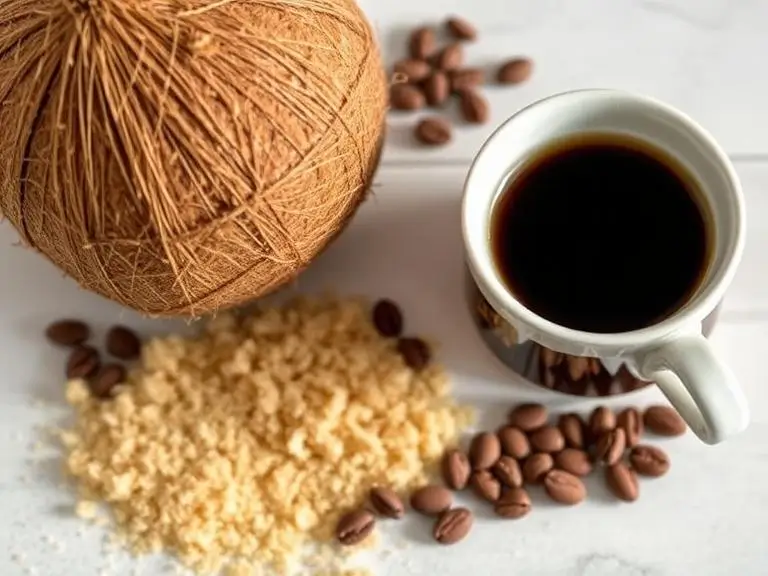
    Coconut sugar can be used in coffee drinks to add a deeper caramel-like sweetness and a mild smoky note. It works especially well in hot coffee, milk coffee, lattes, and some iced coffee drinks when it is dissolved properly.

    In this guide, coconut sugar syrup means a simple coffee syrup made by dissolving coconut sugar in water.

    It is different from dry granulated coconut sugar and also different from liquid coconut nectar syrup.

    This article explains whether coconut sugar is good for coffee, how it tastes, how to use it in hot and iced drinks, and what beverage brands should consider before using it in coffee-based products.

    Quick Answer: Is Coconut Sugar Good for Coffee?

    Yes, coconut sugar can be good for coffee if you like a deeper caramel-like sweetness instead of a plain white sugar taste. It pairs well with hot coffee, milk coffee, lattes, and spice-based drinks.

    However, coconut sugar may dissolve more slowly in cold drinks. For iced coffee, cold brew, or ready-to-drink beverages, it is usually better to dissolve coconut sugar first in hot water or prepare it as a simple coconut sugar syrup before mixing.

    What Is Coconut Sugar Syrup for Coffee?

    What Is Coconut Sugar Syrup for Coffee?

    Coconut sugar syrup for coffee is usually made by dissolving coconut sugar in water until it becomes a liquid sweetener.

    This makes it easier to mix into iced coffee, cold brew, lattes, milk coffee, and other coffee drinks where dry sugar may not dissolve smoothly.

    Granulated coconut sugar is dry and crystalline, while coconut sugar syrup is a liquid preparation made for easier mixing.

    Coconut nectar syrup is another related product, but it is not always the same as a syrup made from crystallized coconut sugar.

    For commercial sourcing, buyers should always confirm whether a supplier offers granulated coconut sugar, powdered coconut sugar, coconut nectar syrup, or a custom syrup formulation.

    Why Coconut Sugar Works Well in Coffee Drinks

    What Is Coconut Sugar Syrup for Coffee?

    Coconut sugar works well in coffee because its caramel-like flavor can balance coffee bitterness without creating an overly sharp sweetness. Compared with white sugar, it gives coffee a warmer taste, darker color, and slightly richer aroma.

    For more detail about coconut sugar taste, you can read our flavor guide before testing it in drinks or recipes.

    Key reasons people use coconut sugar in coffee include:

    • Caramel-like flavor that pairs well with roasted coffee notes
    • Deeper sweetness than plain white sugar
    • Good fit for milk coffee, lattes, and spice-based drinks
    • Can be made into simple syrup for iced coffee or cold brew
    • Natural brown color that works well in artisanal coffee drinks

    5 Ways to Use Coconut Sugar in Coffee Drinks

    For hot coffee, add coconut sugar directly to the cup while the coffee is still warm, then stir until dissolved. Start with 1-2 teaspoons per cup and adjust based on taste.

    For iced coffee, coconut sugar may not dissolve as easily. To avoid a grainy texture, dissolve coconut sugar in a small amount of hot water first, then add it to iced coffee, cold brew, or milk-based drinks.

    Coffee DrinkBest Way to Use Coconut SugarNotes
    Hot black coffeeAdd directly and stirWorks best while the coffee is still hot.
    Milk coffee / latteDissolve first, then mix with milk and coffeeGives warmer caramel-like sweetness.
    Iced coffeeUse coconut sugar syrupHelps avoid undissolved granules.
    Cold brewUse syrup, not dry granulesCold liquid makes dissolving harder.
    Spiced coffeeMix with cinnamon, cocoa, or vanillaWorks well with deeper flavor profiles.

    How to Make Coconut Sugar Simple Syrup for Iced Coffee

    How to Make Coconut Sugar Simple Syrup for Iced Coffee

    A simple syrup can make coconut sugar easier to use in iced coffee and cold drinks. This is useful because dry sugar crystals may not dissolve well in cold liquid.

    For a basic homemade version, combine equal parts coconut sugar and water in a small pan. Warm the mixture gently and stir until the sugar dissolves. Let it cool before adding it to iced coffee, cold brew, lattes, or milk-based drinks.

    For commercial beverage production, this homemade method should only be treated as a trial concept. Brands should test solubility, flavor stability, color impact, shelf life, packaging, and food safety requirements before scaling any syrup-based formulation.

    Simple Coconut Sugar Coffee Recipe

    Use this simple recipe as a starting point for home preparation or small test batches.

    Ingredients

    • 1 cup freshly brewed coffee or espresso-based coffee
    • 1-2 teaspoons coconut sugar, adjusted to taste
    • Milk or non-dairy milk, optional
    • Cinnamon, cocoa powder, or vanilla, optional

    Instructions

    1. Brew your coffee using your preferred method.
    2. Add coconut sugar while the coffee is still hot.
    3. Stir until the sugar dissolves completely.
    4. Add milk, non-dairy milk, cinnamon, cocoa, or vanilla if desired.
    5. Taste and adjust sweetness gradually rather than adding too much at once.

    Tips

    • Use hot coffee if you want coconut sugar to dissolve more easily.
    • Use simple syrup for iced coffee or cold brew.
    • Store unused coconut sugar in an airtight container to help reduce clumping.
    • Start with a small amount because coconut sugar has a deeper flavor than white sugar.

    What Beverage Brands Should Consider Before Using Coconut Sugar

    For coffee brands, beverage manufacturers, cafes, and private label buyers, coconut sugar is not only about sweetness.

    Product form, solubility, flavor consistency, color, moisture level, packaging, and batch documentation can affect how it performs in coffee drinks.

    Granulated coconut sugar may work well for hot coffee, bakery cafe products, dry mixes, and topping applications.

    For iced coffee, cold brew, ready-to-drink beverages, or syrup-based products, buyers may need to test solubility or prepare a coconut sugar syrup formulation first.

    Before confirming a bulk order, buyers can review organic coconut sugar specifications and request a coconut sugar COA to check moisture, color, particle size, and batch information.

    If you are evaluating organic coconut sugar from Indonesia for coffee drinks or beverage products, Global Coco Sugar can help you discuss product form, packaging options, sample requests, and quotation requirements.

    Need coconut sugar for coffee drinks or beverage production? Contact our export team to request specifications, samples, packaging details, or a quotation.

    Conclusion

    Coconut sugar can be a good option for coffee if you want a warmer, caramel-like sweetness and a deeper flavor than white sugar.

    It works especially well in hot coffee, milk coffee, lattes, and spice-based drinks.

    For iced coffee and cold brew, it is usually better to dissolve coconut sugar first or prepare it as a simple syrup.

    For beverage brands and private label buyers, product form, solubility, moisture, flavor consistency, packaging, and documentation should be reviewed before using coconut sugar in larger production.

    Frequently Asked Questions

    Can you put coconut sugar directly in coffee?

    Yes. Coconut sugar can be added directly to hot coffee and stirred until dissolved. It works better in hot coffee than cold coffee because heat helps dissolve the crystals.

    Does coconut sugar dissolve in iced coffee?

    Coconut sugar can dissolve slowly in iced coffee. For a smoother drink, dissolve it in hot water first or use coconut sugar syrup before mixing it into cold coffee.

    Is coconut sugar syrup the same as coconut nectar syrup?

    Not always. Coconut sugar syrup for coffee can be made by dissolving crystallized coconut sugar in water. Coconut nectar syrup usually refers to a liquid sweetener made from coconut palm sap that has not been crystallized into dry sugar.

    Does coconut sugar make coffee healthier?

    Coconut sugar is still sugar, so it should not be treated as a health solution. Under the FDA’s guidance on added sugars, sugars and syrups used or packaged as sweeteners contribute to added sugar intake. Its main value in coffee is flavor, color, and formulation performance rather than a guaranteed health benefit.

  • Coconut Sugar in the Food Industry: 12 Applications, Technical Specifications & Formulation Guide (2026)

    Coconut Sugar in the Food Industry: 12 Applications, Technical Specifications & Formulation Guide (2026)

    Coconut Sugar in the Food Industry

    The application of coconut sugar in the food industry has evolved from a niche health food trend into a mainstream requirement for commercial food manufacturing — driven by clean label demand, low-GI positioning, and the growing market for minimally processed sweeteners.

    For food technologists, product developers, and procurement teams evaluating coconut sugar for commercial formulations, this guide provides the technical information needed to assess suitability: functional properties, application-specific dosage guidance, substitution ratios, and label claim implications.

    Global Coco Sugar supplies certified coconut sugar for food manufacturers from Indonesia.

    The technical properties discussed in this guide reflect our production specifications.

    Understanding how coconut sugar is produced from coconut palm flower sap explains why its functional behavior in food formulation differs from refined cane sugar — and why those differences create both opportunities and formulation challenges.

    Technical Specifications for Coconut Sugar in the Food Industry

    Before examining specific applications, food technologists need to understand the key physical and chemical properties that determine coconut sugar’s behavior in formulation:

    PropertySpecificationFormulation Implication
    Moisture contentMax 3% (granulated)Low moisture = good flow properties, stable shelf life, no caking under dry storage
    Particle size (standard)0.5–3.0 mm (medium grade)Similar to demerara sugar — dissolves completely in aqueous systems with mild agitation
    Sucrose content~70-80% of carbohydratesPrimary sweetness driver — similar to cane sugar but with more complex flavor matrix
    Fructose/glucose~3-9% free sugarsContributes to Maillard reaction and caramelization at slightly lower temperatures than pure sucrose
    Inulin fiber~1-3% of carbohydratesLowers effective GI; may act as mild prebiotic; minimal impact on texture at typical use levels
    Glycemic Index~35 (low GI)Supports ‘low GI ingredient’ positioning; finished product GI must be tested separately
    Water activity~0.45-0.55 (dry granulated)Shelf stable — does not support microbial growth at this aw when properly packaged
    Maillard reactionMore pronounced than refined sugarProducts brown faster and at slightly lower temperature — monitor baking temperature
    HygroscopicityModerate — lower than brown sugarDoes not clump as readily as brown sugar in humidity; slightly drier finished products
    pH in solution (10%)5.5–6.5Mildly acidic — compatible with most food systems; may affect acid-sensitive color systems
    Color (ICUMSA)Typically IU 5,000–15,000Dark — affects finished product color significantly; verify against product color standards
    Relative sweetness~85-95% of refined white sugar (sucrose)Formulations may need up to 10% more coconut sugar by weight to match white sugar sweetness

    12 Food Industry Applications: Technical Guidance Per Category

    Coconut Sugar in the Food Industry

    For a detailed technical comparison of coconut sugar versus cane sugar across specific formulation parameters — including water activity effects, hygroscopicity, shelf life implications, and regulatory label claim considerations — see our dedicated article on coconut sugar vs cane sugar for food manufacturing.

    1. Bakery — Cookies, Biscuits, and Crackers

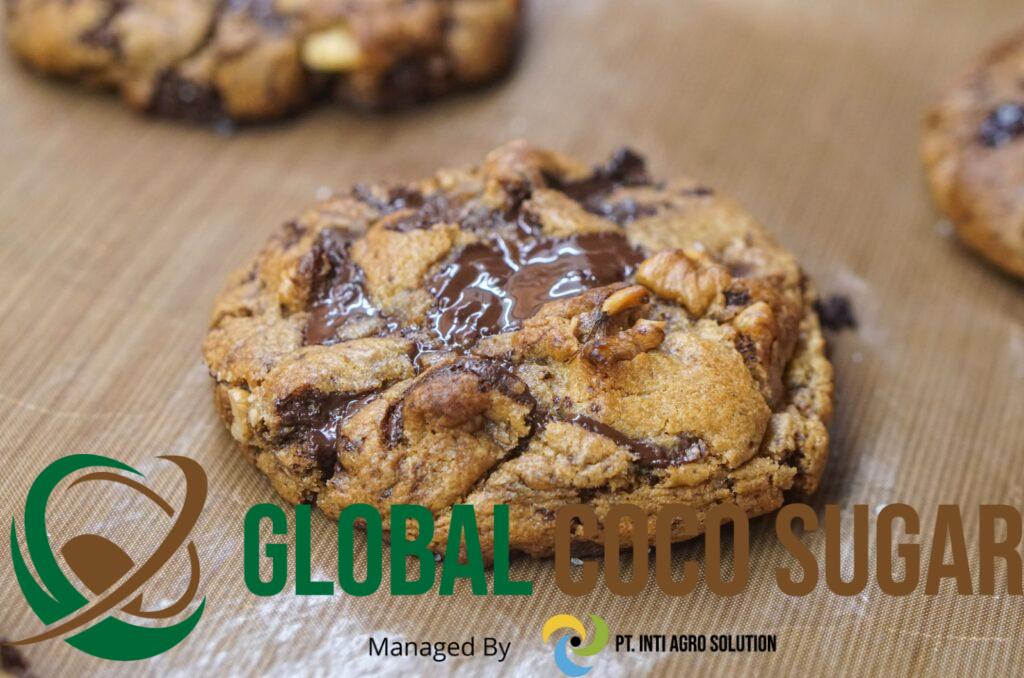
    coconut sugar in cookie
    ParameterSpecification
    Typical use level50-100% replacement of white or brown sugar at 1:1 by weight
    Expected color changeNoticeably darker golden-brown to dark brown — test against color standard before scale-up
    Temperature adjustmentReduce oven temperature by 5-10°C — coconut sugar caramelizes at lower temperature
    Texture impactSlightly denser texture, chewy center, faster edge browning — valued in premium cookie positioning
    Moisture adjustmentNo adjustment needed at 1:1 substitution for most recipes; add 1-2% extra moisture for formulas requiring high chewiness
    Label claim enabled‘Refined sugar-free’, ‘natural sweetener’, ‘unrefined’, ‘made with coconut sugar’

    2. Cakes, Muffins, and Quick Breads

    coconut sugar in cakes and muffin
    ParameterSpecification
    Typical use level1:1 weight replacement for white or brown sugar
    Color impactCrumb will be medium to dark brown — not suitable for white or very light-colored cakes
    Creaming behaviorRequires 15-30% longer creaming time vs refined sugar due to coarser particle size — factor into production cycle time
    Leavening adjustmentNo change to baking powder or soda quantities at direct 1:1 substitution
    Shelf lifeSimilar to conventional versions — moisture retention is slightly lower than brown sugar versions; add 1-2% more fat or liquid if shelf life moisture retention is critical
    Dosage for premium positioningPartial substitution (30-50%) allows color and flavor benefits while maintaining lighter crumb color

    3. Confectionery — Chocolate, Truffles, and Ganache

    ParameterSpecification
    Typical use level10-40% of total sugar content in chocolate and ganache formulations
    Flavor synergyCaramel-butterscotch notes complement dark and milk chocolate — reduces need for added caramel flavoring
    Particle size requirementFine grade (< 1mm) recommended for smooth confectionery — standard medium grade may create slight graininess in ganache
    Melting behaviorMelts at slightly lower temperature than refined sugar — adjust tempering protocol if coconut sugar is added to chocolate before tempering
    Color impactDark chocolate: minimal visible change. Milk chocolate: slightly darker. White chocolate: visibly darker — evaluate against product standard
    Labeling opportunity‘Sweetened with coconut sugar’, ‘refined sugar-free chocolate’ — strong clean label positioning in premium chocolate segment

    4. Granola, Cereal Bars, and Snack Products

    coconut sugar in granola
    ParameterSpecification
    Typical use level5-15% of total formulation weight — often combined with coconut nectar syrup as binder
    FunctionSweetening + cluster formation (when combined with liquid binder) + caramel flavor development during baking
    Toasting behaviorExcellent toasted color and flavor development — coconut sugar enhances Maillard browning in granola clusters
    Temperature adjustmentReduce oven temperature by 5°C; increase stirring frequency — coconut sugar clusters can over-caramelize at high temperatures
    TextureProduces slightly drier clusters than honey-based granola — adjust oil and liquid binder ratio if moist cluster texture is required
    Clean label valueMajor growth segment — granola consumers actively seek ‘refined sugar-free’ and ‘natural sweetener’ claims; coconut sugar supports both

    5. Beverages — Hot, Cold, and Ready-to-Drink

    ParameterSpecification
    DissolutionDissolves completely in hot liquids (>60°C) within 30 seconds with mild agitation; in cold liquids, allow 60-90 seconds stirring
    Typical use levelCoffee/tea syrups: 50-70 Brix solutions standard; RTD beverages: 5-12% of total liquid weight for sweetness at coconut sugar’s ~85-95% relative sweetness
    Flavor contributionAdds caramel undertones — value-add in coffee, tea, plant-based beverages. May be detectable in clear/light beverages — evaluate sensory panel before launch
    Color impactAmber-brown tint in solution — not suitable for clear beverages; excellent for coffee, tea, plant milk, and brown-colored beverage applications
    pH stabilityStable in solution at pH 4.0-8.0 — compatible with most beverage formulation ranges
    Fermentation (kombucha)Suitable as fermentation feedstock — fully available for yeast/bacteria metabolism; consistent Brix for fermentation control

    6. Dairy and Plant-Based Dairy Alternatives

    ParameterSpecification
    Typical use levelYogurt: 3-8% of total weight; ice cream: 8-15% of formulation; plant-based milk: 1-3% for light sweetening
    Flavor pairingExcellent with vanilla, caramel, chocolate, coffee, and chai flavors; requires evaluation with berry and citrus profiles (caramel note may conflict)
    Color impactProduces light tan to medium brown color in dairy products — not suitable for white-colored yogurt or vanilla ice cream if visual whiteness is required
    MouthfeelSlightly fuller mouthfeel than refined sugar in dairy applications — often perceived positively as ‘richer’ texture
    Plant-based positioningStrong clean label alignment with oat milk, almond milk, and coconut-based products — coconut sugar origin story is natural extension of coconut product lines
    Freeze-thaw stabilitySimilar behavior to brown sugar in frozen applications — no specific adjustment needed

    7. Sauces, Marinades, and Condiments

    ParameterSpecification
    Typical use levelSweet sauces (BBQ, teriyaki): 10-30% of total weight; vinaigrettes: 3-8%; Asian-style condiments: 5-15%
    DissolutionDissolves readily in aqueous sauce systems at room temperature with mild agitation
    Flavor synergyNatural affinity with soy sauce (umami + caramel), ginger, garlic, and citrus — reduces need for added caramel color in brown sauces
    Caramelization for glazesExcellent for oven and grill glazes — caramelizes at lower temperature, producing beautiful amber-brown color at moderate heat
    Maillard in cookingAccelerates browning when applied to protein surfaces before cooking — desirable for most grilled and roasted applications
    Label claim‘Sweetened with coconut sugar’, ‘no refined sugar’, ‘natural ingredients’ — aligns with clean label condiment positioning

    8. Breakfast Cereals and Porridge Products

    ParameterSpecification
    Typical use levelCoated cereals: 8-20% of final product weight; instant porridge premix: 5-15%
    Application methodDry blending with grain base; hot coating process; spray application in solution form
    Flavor profile benefitCaramel-butterscotch note enhances perception of sweetness — allows reduction in actual sweetener quantity by 5-10% vs equivalent white sugar
    ColorGolden-brown coating color — aligns with ‘whole grain’, ‘natural’, and ‘toasted’ visual positioning
    Texture after bakingProvides slight caramelized crunch — consumer-preferred in premium cereal positioning
    Clean label alignment‘Sweetened with coconut sugar only’, ‘refined sugar-free’ — growing demand in premium breakfast category

    9. Protein and Functional Food Products

    ParameterSpecification
    Typical use levelProtein bars: 5-15%; functional powder blends: 3-8%; meal replacement shakes: 5-10%
    Low GI positioningGI ~35 supports ‘low GI’ ingredient claim — enables finished product low GI positioning (verify at finished product level per ISO 26642:2010)
    Protein interactionCoconut sugar’s reducing sugars can participate in Maillard reaction with proteins — relevant for shelf life and color in high-protein baked bars
    Clean label advantageRecognized, single-ingredient sweetener — supports clean label positioning increasingly demanded in health and sports nutrition segment
    PalatabilityCaramel notes mask bitter notes common in protein concentrates and plant-based proteins — often reduces need for masking agents
    Regulatory (US)‘Low GI’ claims require finished product testing per FDA guidance — coconut sugar ingredient GI does not automatically confer low GI status to finished product

    10. Fermented Products — Kombucha and Kefir

    ParameterSpecification
    Typical use levelKombucha: 5-10% of total brew volume for primary fermentation; adjusted per SCOBY culture requirements
    FermentabilityFully fermentable — sucrose, fructose, and glucose all available for SCOBY and bacteria metabolism
    Residual flavorPost-fermentation, some caramel notes may persist — evaluate final flavor profile; generally positive in kombucha and tea-based kefir
    Color in finished productSlightly darker brew color than white sugar ferments — may affect final visual appearance; evaluate against product color standard
    Brix consistencyCritical for fermentation control — always verify Brix in COA per lot to ensure consistent fermentation conditions across production batches
    Organic applicationUSDA NOP certified coconut sugar supports ‘certified organic’ kombucha formulations — Transaction Certificate per lot required

    11. Baby Food and Toddler Products (With Important Caveats)

    ParameterSpecification
    Regulatory statusNo specific restriction on coconut sugar in baby food under US FDA or EU regulations — check destination market regulations
    WHO/UNICEF guidanceWHO recommends no added sugars in foods for children under 2 — verify positioning carefully before using in infant food category
    Inulin considerationCoconut sugar’s inulin content may cause digestive discomfort in very young children at high doses — keep use levels minimal if applicable
    Flavor contributionMild caramel note — generally well-received in toddler product flavor development
    Clean label positioning‘Naturally sweetened with coconut sugar’ — resonates with health-conscious parent segment in toddler food category
    RecommendationConsult regulatory specialist before launching coconut sugar-containing products in infant or baby food category in any market

    12. Premium and Artisan Products — Craft Chocolate, Artisan Bakery, and Specialty Confectionery

    ParameterSpecification
    Market positioningSingle-origin coconut sugar from Java, Indonesia — provenance story adds premium positioning value beyond ingredient functionality
    Typical segmentBean-to-bar chocolate, craft bakery, artisan confectionery, premium gift food, D2C health food brands
    Origin story valueIndonesian smallholder farmer heritage, traditional production methods — resonates with premium consumer market increasingly interested in ingredient provenance
    Certification combinationUSDA Organic + BRCGS + traceable origin = maximum premium positioning and retail vendor compliance simultaneously
    Price acceptancePremium segments accept 25-40% ingredient cost premium over conventional sugar — margin preserved through retail pricing
    Private label optionCustom grade, packaging, and origin documentation available for brand-specific formulation requirements

    Label Claims Enabled by Coconut Sugar: What You Can and Cannot Say

    For a complete breakdown of the science behind coconut sugar’s glycemic index and what it means for label claims, see our article on the glycemic index of coconut sugar.

    For the full certification checklist relevant to food manufacturer vendor compliance, see what certifications a coconut sugar supplier should have.

    Label ClaimAllowed?ConditionsMarket Specific Notes
    ‘Refined sugar-free’✅ YesCoconut sugar is unrefined — legitimately claimedNo specific regulatory definition — generally accepted as marketing claim in US, EU, AU
    ‘Natural sweetener’✅ YesMinimal processing, single ingredientFDA has no formal definition of ‘natural’ for sweeteners — broadly accepted
    ‘Made with coconut sugar’✅ YesCoconut sugar is the named sweetener in formulaStandard ingredient claim — no regulatory barrier
    ‘No refined sugar’✅ YesIf no refined sugar (white, brown) is present in formulationVerify all other ingredients — avoid claim if other refined sugars present
    ‘Low GI’ (product)⚠️ ConditionalRequires finished product GI testing per ISO 26642:2010 — coconut sugar ingredient GI does not automatically conferUS: no FDA-approved low GI claim. EU: regulated under EC 1924/2006. AU: GI symbol program available
    ‘USDA Organic’✅ Yes (with documentation)Supplier must hold current NOP certificate; TC per lot required; US buyer may need handler certificateUS market only — EU Organic is separate certification
    ‘Clean label’✅ YesConsumer-recognized ingredient name, single ingredientNot a regulated claim — accepted as marketing positioning
    ‘Diabetic-friendly’❌ NoNo regulatory basis for this claim on food products in US or EU without specific medical substantiationAvoid this claim — coconut sugar still raises blood sugar
    ‘Low calorie’❌ NoCoconut sugar ~380 kcal/100g — same caloric density as white sugarCannot claim low calorie — misrepresentation
    ‘Sugar-free’❌ NoCoconut sugar is sugar — misrepresentationStrictly prohibited — regulatory violation in all markets

    Substitution Guide: Coconut Sugar for White and Brown Sugar in Commercial Production

    SubstitutionRatio (by weight)Key AdjustmentsMost Suitable Product Categories
    White sugar → Coconut sugar (full replacement)1:1Reduce oven temp 5-10°C; expect darker color; increase creaming time 15-30%Cookies, granola, snack bars, sauces, beverages
    White sugar → Coconut sugar (partial replacement)30-50% coconutColor and flavor benefits while maintaining lighter colorCakes, muffins, cereals — where white crumb standard required
    Brown sugar → Coconut sugar (full replacement)1:1Minimal adjustment needed — most similar behavioral substituteAll applications — best direct substitution
    Brown sugar → Coconut sugar (partial replacement)50% eachBalance caramel depth with moisture retention of brown sugarMoist cakes, brownies, dense quick breads
    Cane juice / turbinado → Coconut sugar1:1Similar behavior — flavor profile slightly differentGranola, artisan bakery, premium applications
    Coconut sugar → Coconut nectar syrup1 cup sugar = ¾ cup syrupReduce other liquids by 3-4 tbsp; adjust oven temp down 10°CBeverages, sauces, glazes, no-bake applications

    Sourcing Specifications for Food Manufacturers

    When specifying coconut sugar for commercial production, the following parameters should be included in purchase orders and supplier qualification documents:

    Specification ParameterRecommended RequirementWhy It Matters for Production
    Moisture contentMax 3.0% — test per COA per lotConsistent moisture critical for product shelf life and water activity
    Particle sizeSpecify grade: fine (<1mm), medium (1-3mm), or coarse (3-6mm)Affects dissolution rate, texture, and visual appearance in finished product
    Color (ICUMSA)Specify acceptable range — test per lotColor variation between lots can affect finished product consistency
    BRCGS Food SafetyGrade A minimumRequired for vendor approval at most EU and US major retailers
    Organic certificationUSDA NOP (for US) or EU Organic (for EU) + TC per lotRequired to support organic label claims — verify per shipment
    Sulphite contentNegative (max 10 ppm) — confirm in COAAllergen declaration required in EU if sulphites > 10 ppm
    SalmonellaAbsent in 25g — accredited labZero tolerance — non-negotiable food safety requirement
    Total plate countMax 5,000 CFU/gFood safety — must be from ISO 17025-accredited laboratory
    FFA (if relevant)Max 0.5% — for coconut sugar with higher fat contentIndicator of raw material quality
    Certificate of AnalysisPer production lot from ISO 17025-accredited labPer-lot verification — not just reference sample

    Our article on BRCGS certified coconut sugar suppliers from Indonesia explains what BRCGS certification means in practice for food manufacturing vendor qualification.

    For organic specification documentation — including Transaction Certificate requirements per lot — see our guide on exporting organic coconut sugar from Indonesia.

    Source certified coconut sugar for commercial food production
    Global Coco Sugar supplies BRCGS Food Safety Grade A certified coconut sugar for food manufacturers — in fine, medium, and coarse grades, conventional and organic, with full COA documentation from ISO 17025-accredited laboratories. Technical data sheets and R&D samples available for new product development evaluation.
    Contact Our Food Industry Sales Team >>>
    View Our Coconut Sugar Product Range & Specifications >>>

    Conclusion: Coconut Sugar as a Mainstream Food Manufacturing Ingredient

    Coconut sugar has earned its place in commercial food manufacturing not just through marketing appeal but through genuine functional utility: Maillard reaction enhancement, clean label compatibility, low GI ingredient positioning, and flavor complexity that reduces the need for additional flavoring agents.

    To successfully scale the use of coconut sugar in the food industry, manufacturers must carefully balance its unique chemical properties with specific formulation adjustments.

    The technical properties reviewed in this guide represent coconut sugar’s current commercial specification — consistent, verifiable, and compatible with food safety standards required by global retail buyers.

    For product developers evaluating coconut sugar for new applications, the practical starting point is always the same: request samples with COA, evaluate in your specific formulation at target use levels, conduct sensory panel assessment against your product standard, then scale to commercial production with a certified supplier who can maintain specification consistency across lots.

    Frequently Asked Questions

    Can coconut sugar replace white sugar 1:1 in commercial food production?

    Yes. Coconut sugar can generally replace white sugar at a 1:1 ratio by weight in most food manufacturing applications. However, manufacturers should expect darker product color and may need minor adjustments to processing conditions, particularly in bakery products.

    What is the glycemic index of coconut sugar for food labeling purposes?

    Coconut sugar is commonly reported to have a glycemic index of approximately 35. However, regulatory claims in many markets must be based on testing of the finished product rather than the ingredient alone.

    Does coconut sugar affect shelf life in manufactured food products?

    Coconut sugar can influence moisture retention and texture depending on the formulation. In most applications, standard shelf-life testing and water activity evaluation are sufficient to assess product stability.

    What food safety certifications should a coconut sugar supplier hold for food manufacturing customers?

    Food manufacturers typically look for certifications such as BRCGS, HACCP, ISO 22000, and relevant organic certifications when applicable. Buyers should also request batch-specific documentation, including Certificates of Analysis (COA), as part of supplier qualification.

  • Is Coconut Sugar Keto-Friendly? The Honest Answer

    Is Coconut Sugar Keto-Friendly? The Honest Answer

    Is Coconut Sugar Keto-Friendly
    Quick Answer: No — coconut sugar is not keto-friendly. Despite its lower glycemic index (GI 35–54), coconut sugar contains 12–15g net carbs per tablespoon, which is far too high for a ketogenic diet that limits total net carbs to 20–50g per day. Even a small amount can disrupt ketosis.

    Coconut sugar has earned a reputation as a “healthier” sweetener — lower glycemic index, trace minerals, less processed than white sugar.

    It’s a staple in paleo kitchens and a favorite among health-conscious bakers.

    So it’s natural to wonder: if coconut sugar is healthier, does that make it keto-friendly too?

    The answer is no — and understanding why requires a quick look at what actually kicks you out of ketosis.

    It’s not the glycemic index. It’s the carbohydrate count. In this guide, we break down the numbers, clarify the common GI misconception, and give you the best keto-friendly sweetener alternatives to use in your recipes instead.

    → Want the full GI breakdown? See our dedicated article: coconut sugar glycemic index guide

    The Short Answer: Coconut Sugar Is Not Keto-Friendly

    Coconut sugar is not keto-friendly.

    A single tablespoon contains approximately 12–15 grams of net carbohydrates — nearly equivalent to plain white sugar.

    On a standard ketogenic diet, the total daily net carb limit is between 20 and 50 grams.

    One tablespoon of coconut sugar alone uses up 25–75% of that entire daily allowance.

    The confusion stems from coconut sugar’s low glycemic index (GI 35–54).

    A low GI means the sugar is absorbed more slowly — but it does not mean the sugar contains fewer carbohydrates.

    On keto, what matters is net carb count, not GI.

    Coconut sugar’s carb content is nearly identical to white sugar: roughly 4g per teaspoon, 12–15g per tablespoon.

    Why a Lower Glycemic Index Does Not Mean Keto-Friendly

    Coconut Sugar Keto-Friendly

    This is the most common misconception about coconut sugar and keto — and it’s worth addressing directly.

    The Ketogenic Diet Runs on Net Carbs, Not GI

    The ketogenic diet achieves its effects by severely restricting carbohydrate intake, forcing the body into ketosis — a metabolic state where fat becomes the primary energy source instead of glucose.

    To maintain ketosis, most protocols require keeping net carbohydrate intake between 20 and 50 grams per day.

    Net carbs = total carbohydrates − dietary fiber − sugar alcohols (for certain types).

    Coconut sugar contains approximately 4g net carbs per teaspoon. This is nearly identical to white sugar (4g per teaspoon) and brown sugar (4.5g per teaspoon).

    The inulin fiber in coconut sugar does reduce its glycemic impact slightly, but the total carbohydrate load — the number that matters for ketosis — remains essentially the same.

    GI Measures Speed, Not Amount

    Glycemic index measures how quickly carbohydrates raise blood glucose — not how many carbohydrates a food contains.

    A food with GI 35 and a food with GI 65 can have exactly the same number of carbs per serving; the lower-GI food just raises blood sugar more slowly.

    For a person without diabetes choosing between natural sweeteners, lower GI is a meaningful advantage.

    For someone maintaining ketosis, the total carb count is what triggers or prevents the metabolic shift — and both high-GI and low-GI sugars will break ketosis if consumed in normal amounts.

    → Read more: full guide to the glycemic index of coconut sugar — including why GI 35 still matters outside of keto contexts.

    Coconut Sugar Nutrition Facts: The Carb Numbers

    Here is a complete nutritional breakdown of coconut sugar:

    MetricPer Teaspoon (4g)Per Tablespoon (13g)Per 100g
    Calories15–16 kcal48–50 kcal375 kcal
    Total Carbohydrates4g12–13g97g
    Net Carbs~4g~12–13g~95g
    Dietary Fiber< 0.1g< 0.3g~0.5g
    Sugars~4g~12g~94g
    Sucrose~3.2g~10g~79g
    Fat0g0g0g
    Protein0g0g0g
    Inulin (fiber)~0.04g~0.12g~1–3g

    Coconut Sugar vs White Sugar vs Brown Sugar: Keto Comparison

    SweetenerNet Carbs/tspGIKeto-Friendly?Notes
    Coconut sugar~4g35–54❌ NoLower GI but same carb load
    White sugar~4g58–65❌ NoStandard reference
    Brown sugar~4.5g~64❌ NoMinimal nutritional difference
    Honey~5.7g58–85❌ NoHigher carbs than sugar
    Maple syrup~3.5g~54❌ NoSimilar to coconut sugar
    Erythritol~0g (net)0✅ YesSugar alcohol; minimal metabolic impact
    Monk fruit sweetener0g0✅ YesZero calorie, zero carb
    Stevia (pure)0g0✅ YesZero calorie, zero carb
    Allulose~0g (net)0✅ YesRare sugar; minimal insulin response

    Will Coconut Sugar Kick You Out of Ketosis?

    Will Coconut Sugar Kick You Out of Ketosis
    Natural coconut sugar in bowl on wooden table, space for text

    Yes — a normal serving of coconut sugar will likely disrupt ketosis for most people.

    Here’s why: ketosis is maintained when liver glycogen stays depleted, which happens only when daily net carbs remain consistently low (typically under 50g, and often under 20–30g for strict keto).

    A single tablespoon of coconut sugar adds 12–15g net carbs. For someone on a strict 20g daily limit, that’s 60–75% of their entire day’s carbohydrate budget in one ingredient.

    What About Just a Tiny Pinch?

    Very small amounts — a quarter teaspoon in a large recipe serving multiple people — may not individually push you over your daily carb limit.

    In that case, the per-serving carb contribution could be under 0.5g and unlikely to disrupt ketosis on its own.

    However, this requires strict tracking and assumes no other carb sources in the meal.

    For most people following keto, the practical advice is simple: the risk is not worth it when zero-carb alternatives work just as well.

    If you are in a flexible low-carb pattern (rather than strict keto), occasional very small amounts may be acceptable — but regular use will consistently raise daily carb totals.

    Best Keto-Friendly Sweetener Alternatives to Coconut Sugar

    Best Keto-Friendly Sweetener Alternatives to Coconut Sugar

    The good news: several natural sweeteners deliver sweetness with zero or near-zero net carbs, and some work remarkably well as 1:1 coconut sugar substitutes in baking and cooking.

    Here are the four best options:

    1. Erythritol

    Erythritol is a sugar alcohol that occurs naturally in small amounts in some fruits.

    It provides about 70% of the sweetness of sugar with essentially zero net carbs — the body absorbs it but does not metabolize it, so it does not raise blood glucose or insulin levels.

    • Net carbs: ~0g per serving (not counted toward keto totals)
    • Sweetness vs sugar: ~70% as sweet (use 1.3x the amount of sugar called for)
    • Best for: baking, coffee, sauces
    • Texture note: can create a slight cooling sensation in large amounts; this reduces when blended with other sweeteners

    2. Monk Fruit Sweetener

    Extracted from monk fruit (Luo Han Guo), monk fruit sweetener is 150–200x sweeter than sugar.

    It contains zero calories and zero net carbs, with a clean sweet taste that most people find very close to sugar. It does not have the cooling effect of erythritol.

    • Net carbs: 0g
    • Sweetness vs sugar: 150–200x (use in tiny amounts, or use a monk fruit blend product)
    • Best for: beverages, light baking, sauces
    • Note: pure monk fruit is expensive; monk fruit + erythritol blends offer better value and performance

    3. Stevia

    Stevia is a plant-derived sweetener extracted from the leaves of Stevia rebaudiana.

    It is 200–300x sweeter than sugar, calorie-free, and has no impact on blood glucose or ketosis.

    Pure stevia (without added maltodextrin or dextrose fillers) is fully keto-compatible.

    • Net carbs: 0g (pure stevia or stevia liquid drops)
    • Sweetness vs sugar: 200–300x (use sparingly)
    • Best for: beverages, yogurt, light desserts
    • Watch for: some stevia products contain fillers (maltodextrin) that add carbs — check labels

    4. Allulose

    Allulose is a rare sugar that occurs naturally in figs, raisins, and wheat in tiny amounts.

    It has the same chemical formula as fructose but is metabolized completely differently — the body absorbs but does not convert it to energy, resulting in near-zero caloric and glycemic impact.

    It is the closest natural substitute to coconut sugar in terms of baking behavior.

    • Net carbs: ~0g (FDA has approved allulose to be excluded from total/added sugar counts)
    • Sweetness vs sugar: ~70% as sweet
    • Best for: baking (caramelizes like real sugar), sauces, coffee
    • Note: newer on the market; may be harder to find and more expensive than erythritol

    Keto Sweetener Substitution Chart (replacing 1 tablespoon coconut sugar):

    Keto SweetenerAmount to UseNet CarbsBest Application
    Erythritol (granulated)1.3 tbsp~0gBaking, coffee, sauces
    Monk fruit + erythritol blend1 tbsp (1:1 blend)~0gAll-purpose
    Stevia liquid (pure)6–8 drops0gBeverages, yogurt
    Allulose1.25 tbsp~0gBaking (best caramelization)

    Keto-Friendly Coconut Products You Can Use

    While coconut sugar is off the table for keto, several other coconut-derived products are genuinely keto-compatible and worth having in your kitchen:

    Coconut ProductNet CarbsKeto StatusBest Use
    Coconut oil0g✅ ExcellentCooking, fat bombs, MCT source
    Full-fat coconut milk (canned)~1–2g per ¼ cup✅ GoodCurries, sauces, keto desserts
    Coconut cream~2–3g per ¼ cup✅ Good (use sparingly)Whipped toppings, desserts
    Unsweetened desiccated coconut~2g per oz✅ GoodKeto baking, granola, toppings
    Coconut flour~6g per ¼ cup (high fiber)✅ ModerateLow-carb baking (use with care)
    Coconut milk powder (unsweetened)~2g per tbsp✅ GoodBeverages, baking, sauces
    Coconut sugar~12–15g per tbsp❌ Not ketoAvoid or use trace amounts with tracking

    → Sourcing coconut ingredients in bulk? See our full range of coconut products from Indonesia

    Is Coconut Sugar Paleo-Friendly? (Yes — But That’s Different from Keto)

    Yes — coconut sugar is widely accepted in paleo diets. The paleo approach allows natural, minimally processed sweeteners from whole food sources, which coconut sugar qualifies as. Many paleo recipes use it freely.

    This is an important distinction: paleo-friendly does not equal keto-friendly.

    The paleo diet does not restrict carbohydrates as severely as keto — it focuses on food quality and origin, not macronutrient ratios.

    Coconut sugar is a natural, traditionally produced sweetener that fits paleo logic perfectly. On keto, its carb count disqualifies it regardless of its natural origin.

    Keto Recipes Using Coconut Products (Without Coconut Sugar)

    coconut sugar Global Coco Sugar

    These keto-friendly recipes use coconut products at their best — with keto-approved sweeteners replacing coconut sugar wherever needed:

    RECIPE 1

    Keto Coconut Yogurt with Berries

    • 2 cups full-fat canned coconut milk
    • 1 probiotic capsule
    • 1 tsp vanilla extract
    • 1 tbsp powdered erythritol or monk fruit sweetener
    • ½ cup mixed berries (strawberries, raspberries — lower-carb choices)
    • 1 tbsp unsweetened desiccated coconut flakes

    Incubate coconut milk with a probiotic capsule per package directions. Chill, stir in vanilla and sweetener. Top with berries and coconut flakes. Net carbs per serving: ~4–6g.

    RECIPE 2

    Coconut Flour Chicken Tenders

    • 1 lb chicken tenders
    • ½ cup coconut flour
    • ¾ cup unsweetened desiccated coconut
    • 1 tsp garlic powder, 1 tsp onion powder, ½ tsp salt
    • 2 eggs, beaten
    • 2 tbsp coconut oil for cooking

    Dredge chicken in egg, then coat with coconut flour-desiccated coconut mixture. Cook in coconut oil over medium-high heat, 3 minutes per side. Net carbs per serving: ~3g.

    RECIPE 3

    Keto Coconut Macaroons

    • 3 cups unsweetened desiccated coconut
    • ½ cup coconut flour
    • ½ cup powdered erythritol (replaces coconut sugar from original recipe)
    • ½ tsp sea salt
    • 4 egg whites
    • 1 tsp vanilla extract
    • ½ cup 85%+ dark chocolate, roughly chopped (optional)

    Mix all ingredients. Shape into rounds on a lined baking sheet. Bake at 325°F (160°C) for 18–20 minutes until golden. Net carbs per macaroon: ~2g.

    The Bottom Line

    Coconut sugar is a genuinely better sweetener than white sugar in many contexts: lower glycemic index, trace minerals, more natural processing.

    For paleo, for general health-conscious eating, for reducing refined sugar intake — it is a solid choice.

    But for keto, the carb count is the deciding factor, and coconut sugar’s 12–15g net carbs per tablespoon makes it incompatible with maintaining ketosis.

    The GI advantage, while real, is irrelevant in a diet governed by net carb limits rather than glycemic response.

    If you’re on keto and want the caramel-like flavor of coconut sugar in your recipes, an erythritol blend or a monk fruit + allulose combination will get you very close — with zero impact on your ketosis.

    → For non-keto applications, explore our coconut sugar products and specifications — available in bulk for food manufacturers and retailers.

  • Coconut Sugar Cookie Recipe: Chewy Centers, Crispy Edges & Deep Caramel Flavor

    Coconut Sugar Cookie Recipe: Chewy Centers, Crispy Edges & Deep Caramel Flavor

    coconut sugar cookie recipe

    If you are looking for the perfect coconut sugar cookie recipe, you have found it. Swapping refined white sugar for coconut sugar creates something genuinely better.

    Coconut sugar cookies have crispy, golden edges, wonderfully chewy centers, and a deep caramel-like flavor that white sugar simply cannot replicate — all with no refined sugar whatsoever.

    This recipe has been tested to deliver the best texture result from coconut sugar’s unique properties — and we have included everything you need to know to make it work perfectly every time, including why coconut sugar behaves differently from white sugar, common mistakes to avoid, and how to customize it for your dietary needs.

    Recipe at a Glance
    Prep Time: 15 minutes  |  Chill Time: 30 minutes (recommended)  |  Bake Time: 10-12 minutes Yield: 18-20 cookies  |  Difficulty: Easy  |  Dietary: Refined sugar-free, can be made gluten-free or vegan

    What Is Coconut Sugar — and Why Use It in Cookies?

    coconut sugar

    Coconut sugar — also called coconut palm sugar or coconut blossom sugar — is a natural, minimally processed sweetener made from the sap of coconut palm flower buds.

    Unlike refined white sugar or brown sugar, coconut sugar undergoes very little processing: the sap is collected, gently heated to evaporate moisture, and granulated into the small, golden-brown crystals you see in the bag.

    Understanding how coconut sugar is produced in Indonesia helps explain why it retains trace minerals and a more complex flavor profile than refined sugar.

    For buyers who want to understand why buyers choose organic coconut sugar over conventional versions, the difference in farming and processing practices is significant.

    From a baking perspective, the most important thing to know is that coconut sugar is not a simple 1:1 flavor substitute for white sugar — it is an upgrade.

    Its glycemic index of approximately 35 (compared to white sugar’s GI of 60-65) reflects the presence of inulin fiber in the raw material, which also contributes to its distinctive caramel-butterscotch flavor that develops beautifully during baking.

    How Coconut Sugar Affects Cookie Texture: The Science Behind the Chew

    how coconut sugar affects

    This is the section most coconut sugar cookie recipes skip — and it is the reason many people end up with flat, crispy, or otherwise disappointing results when substituting coconut sugar for the first time.

    Coconut sugar behaves differently from white sugar in baking due to three key properties.

    For a deep technical comparison relevant to food manufacturing, our article on coconut sugar vs cane sugar for food manufacturing covers all the details. For home bakers, here is what matters most:

    PropertyWhite SugarCoconut SugarEffect on Cookies
    Moisture contentVery low — dry, fine crystalsSlightly higher — contains trace moistureCoconut sugar cookies spread slightly less and stay chewier
    Crystal sizeFine, uniform crystalsCoarser, irregular crystalsSlightly denser texture — more body per bite
    Caramelization temp~160°CSlightly lower due to fructose contentEdges brown faster — watch your oven at the end
    Maillard reactionModerateMore pronounced — complex compounds in raw sapDeeper flavor development — caramel, butterscotch notes
    HygroscopicityLow — doesn’t attract moistureHigher — attracts ambient moistureCookies stay chewier on day 2-3 vs white sugar cookies
    The most important practical implication: don’t overbake
    Because coconut sugar caramelizes at a slightly lower temperature than white sugar, the edges of your cookies will darken faster. The center may still look underdone when the edges are already golden — this is normal and correct. Pull the cookies from the oven when the edges are set and lightly golden, even if the center looks slightly soft. They will firm up to perfect chewiness as they cool on the baking sheet.

    Ingredients

    These ingredients are specifically chosen to work with coconut sugar’s properties — not just a generic cookie recipe with coconut sugar swapped in:

    IngredientAmountNotes
    Coconut sugar1 cup (200g)Use granulated coconut sugar — not liquid coconut nectar. Fine grind preferred for smoother texture.
    Unsalted butter½ cup (115g)Room temperature — softened, not melted. Melted butter = flat cookies.
    All-purpose flour1¾ cups (220g)Spoon and level — do not scoop directly from bag. Overpacking flour causes dry, crumbly cookies.
    Egg1 largeRoom temperature. Cold eggs don’t cream as well with butter and sugar.
    Egg yolk1 extra yolkThe secret weapon for extra chewiness — adds fat without extra liquid.
    Vanilla extract2 tspPure vanilla, not imitation. Coconut sugar’s caramel notes pair beautifully with vanilla.
    Baking soda1 tspBaking soda (not powder) promotes spread and helps develop the golden color.
    Cornstarch1 tspCreates tenderness and helps achieve the chewy center. Can substitute with arrowroot.
    Salt½ tspDo not skip — salt balances coconut sugar’s caramel sweetness and enhances all other flavors.

    Pro Tips Before You Start: 6 Secrets for Perfect Coconut Sugar Cookies

    coconut sugar cookie recipe

    These are the tips that separate a great coconut sugar cookie from a mediocre one — all tested specifically for coconut sugar’s unique properties:

    1. Cream the butter and coconut sugar thoroughly

    Because coconut sugar crystals are coarser than white sugar, they need more time to dissolve into the butter.

    Beat on medium-high speed for a full 3-4 minutes — until the mixture is noticeably lighter in color and fluffy. Under-creaming is the most common cause of dense, overly flat cookies.

    2. Refrigerate the dough — it makes a difference

    Chilling the dough for at least 30 minutes (ideally 60 minutes) before baking is strongly recommended with coconut sugar cookie dough.

    Cold dough spreads more slowly in the oven, giving the outside time to set while the center stays soft and chewy.

    You can refrigerate the dough for up to 72 hours — the flavor actually deepens as the dough rests.

    3. Use the ‘bang’ technique for crispy edges

    Immediately after removing cookies from the oven — while they are still on the hot baking sheet — lift the tray about 6 inches and let it drop onto the counter. Do this twice. This technique deflates the center slightly, creating the signature crispy edge / chewy center contrast. If you prefer uniformly soft cookies, skip this step.

    4. Don’t overbake — use the ‘underdone look’ as your cue

    Because coconut sugar browns faster than white sugar, cookies can look done before they actually are — or look perfect when they are actually a minute away from overbaking.

    The correct cue: pull from the oven when the edges are set and very lightly golden, and the center still looks slightly glossy or underdone.

    They will continue cooking on the hot pan for 2-3 minutes and will firm up as they cool.

    5. Room temperature ingredients are non-negotiable

    Both the butter and the egg should be at room temperature before you start. Cold butter will not cream properly with coconut sugar, leading to a greasy, dense dough.

    Cold eggs can cause the butter mixture to curdle. If you forgot to take them out: soften butter quickly by cutting into small cubes and resting for 15 minutes; warm eggs by placing in warm (not hot) water for 5 minutes.

    6. Weigh your flour

    Coconut sugar cookies are particularly sensitive to flour quantity because coconut sugar contributes less moisture than white sugar.

    Too much flour (which happens easily when measuring by volume) results in dry, crumbly cookies.

    Use a kitchen scale and weigh to 220g exactly. If you must use volume measurement, spoon the flour into the measuring cup and level off — never scoop directly from the bag.

    Step-by-Step Instructions

    Step 1: Prepare your equipment and ingredients

    1. Preheat your oven to 175°C (350°F). Line two baking sheets with parchment paper.
    2. Ensure butter and egg are at room temperature.
    3. Whisk together flour, baking soda, cornstarch, and salt in a medium bowl. Set aside.

    Step 2: Cream butter and coconut sugar

    • In a large bowl (or stand mixer with paddle attachment), beat softened butter and coconut sugar on medium-high speed for 3-4 minutes — until light, fluffy, and noticeably increased in volume.
    • The mixture should look slightly paler than the starting color of the coconut sugar. If it still looks dark and dense, keep beating.

    Step 3: Add wet ingredients

    • Add the whole egg, extra egg yolk, and vanilla extract. Beat on medium speed until fully combined, about 1 minute.
    • Scrape down the sides of the bowl to ensure even mixing.

    Step 4: Add dry ingredients

    • Add the flour mixture to the wet ingredients. Mix on low speed until just combined — do not overmix.
    • The dough will be thick and slightly sticky. This is correct.

    Step 5: Chill the dough (strongly recommended)

    1. Cover the bowl with plastic wrap and refrigerate for at least 30 minutes. 60 minutes or overnight is better.
    2. If you cannot wait, the cookies will still work — they will just spread more and have less pronounced chewy centers.

    Step 6: Portion and bake

    1. Scoop dough into balls approximately 1.5 tablespoons each (about 35g). Roll between your palms until smooth.
    2. Place on prepared baking sheets with 5cm (2 inches) between each cookie.
    3. Bake for 10-12 minutes. The edges should be set and lightly golden; the centers should still look slightly soft.
    4. Optional: immediately after removing from the oven, use a large round cookie cutter to ‘scoot’ each cookie into a perfect circle while still hot.

    Step 7: Cool and set

    1. Apply the ‘bang’ technique if desired (see Pro Tips above).
    2. Allow cookies to cool on the baking sheet for 5 minutes before transferring to a wire rack.
    3. Do not rush cooling — coconut sugar cookies firm up significantly as they cool. A cookie that seems too soft at 2 minutes will be perfectly chewy at 10 minutes.

    Substitution Guide: Adapting This Recipe for Different Needs

    Coconut sugar is the hero of this recipe, but there are situations where you might need to substitute.

    Our article on coconut nectar syrup vs other natural sweeteners provides helpful context on how different sweeteners compare in terms of flavor and baking properties.

    Substitution NeedRecommended SubstituteRatioExpected Result Change
    No coconut sugarLight brown sugar1:1Similar caramel notes but slightly sweeter, less complex flavor
    Gluten-free1:1 GF baking flour blend1:1 by weightTexture slightly different — add 1 tsp xanthan gum if not already in flour
    Vegan / no eggsFlax egg (1 tbsp ground flax + 3 tbsp water)1 flax egg per eggSlightly denser texture, less lift — still delicious
    No butterCoconut oil (solid, not melted)Same weightSlightly crispier, more pronounced coconut flavor
    No cornstarchArrowroot powder1:1Nearly identical result
    Reduce sweetnessUse ¾ cup coconut sugar instead of 1 cup75%Less sweet, more pronounced ‘cookie’ flavor over caramel
    Extra caramel flavorAdd 1 tbsp coconut nectar syrup to dough—Deeper caramel notes, slightly chewier final cookie

    3 Variations to Try After You Master the Base Recipe

    Variation 1: Coconut Sugar Chocolate Chip Cookies

    The most popular variation — and for good reason. The caramel notes of coconut sugar pair exceptionally well with dark chocolate.

    Add 1 cup (175g) of dark chocolate chips (70% cacao or higher works best) to the dough after the dry ingredients are incorporated.

    The slight bitterness of dark chocolate balances coconut sugar’s sweetness perfectly. Bake as instructed.

    Variation 2: Gluten-Free Coconut Sugar Cookies

    Substitute the all-purpose flour with an equal weight (220g) of a 1:1 gluten-free baking flour blend that already contains xanthan gum. Everything else stays the same.

    The texture will be slightly more delicate — handle cookies with care when hot. Allow to cool completely on the baking sheet before moving.

    Variation 3: Coconut Sugar Oatmeal Cookies

    Replace ½ cup (65g) of the all-purpose flour with old-fashioned rolled oats (not instant). Add ½ teaspoon of cinnamon to the dry ingredients.

    The oats add a pleasant chew and nuttiness that complements coconut sugar’s caramel character beautifully. These cookies will be slightly thicker and stay chewy for longer.

    Storage, Make-Ahead Tips & Freezing

    One of the best things about coconut sugar cookies: they actually get better on day 2. The caramel flavor deepens overnight as the moisture redistributes through the cookie.

    Storage MethodDurationNotes
    Room temperature (airtight container)4-5 daysPlace a slice of bread in the container to maintain moisture and keep cookies chewy
    RefrigeratorUp to 1 weekBring to room temperature before eating, or warm briefly in oven at 150°C for 3-4 min
    Freezer (baked cookies)Up to 3 monthsFreeze in single layer first, then transfer to freezer bag. Thaw at room temperature.
    Freezer (unbaked dough balls)Up to 3 monthsFreeze portioned dough balls on a tray, then bag. Bake from frozen — add 2-3 minutes.
    Refrigerated dough (unbaked)Up to 3 daysDough actually improves with 24-48 hours of refrigeration — flavor deepens significantly
    For food manufacturers: source coconut sugar directly from Indonesia
    If you are a food manufacturer, bakery brand, or health food company looking to incorporate coconut sugar into your product line at commercial scale, Global Coco Sugar supplies BRCGS Grade A certified organic and conventional coconut sugar from Indonesia. Available in granulated and fine powder formats. Samples available for R&D evaluation.
    Contact Our Export Team >>>
    View Our Coconut Sugar Product Range >>>
  • Coconut Blossom Sugar: A 300-Year History and Why Indonesia Leads Global Production Today

    Coconut Blossom Sugar: A 300-Year History and Why Indonesia Leads Global Production Today

    coconut blossom sugar

    Some of the world’s most prized food ingredients have histories that span centuries before their modern commercial form was established. Coconut blossom sugar is one of them.

    Long before it appeared on health food store shelves in Berlin, New York, or Tokyo, coconut blossom sugar was being produced by smallholder farmers in the tropical islands of Southeast Asia using techniques passed down through generations — techniques that, in many cases, have changed very little in 300 years.

    This article traces the full history of coconut blossom sugar — from its origins in 8th-century Southeast Asia through its spread along ancient trade routes, its rediscovery by health-conscious Western consumers, and its emergence as a globally certified export commodity.

    Understanding this history also illuminates why how coconut sugar is produced in Indonesia remains a largely artisanal, labor-intensive process — and why that is a feature, not a limitation, for buyers who value traceability and authenticity.

    The Origins of Coconut Blossom Sugar: Southeast Asia, 8th Century

    blue, green, and yellow world map

    The roots of coconut blossom sugar production reach back more than a thousand years in Southeast Asia.

    The coconut palm — Cocos nucifera — has been cultivated throughout the tropical regions of Indonesia, the Philippines, Thailand, Sri Lanka, and India for thousands of years, valued not only for its fruit but for every part of the tree.

    The discovery that the sap flowing from the coconut palm’s flower buds could be collected, heated, and transformed into a dense, sweet substance was a foundational moment in the culinary history of the region.

    Historical texts from the 8th and 9th centuries reference coconut palm sugar as both a food ingredient and a medicinal substance — used in traditional Ayurvedic medicine in South Asia and in traditional Javanese and Balinese healing practices in what is now Indonesia.

    The production method — making careful incisions in the flower bud stalks of the coconut palm, collecting the sap in bamboo containers, and slowly heating it over open fires to evaporate the water — is one of the oldest documented food production techniques in the region.

    In Java and Bali, this practice was so integral to daily life that it became embedded in local ceremonies, community rituals, and the rhythms of agricultural society.

    What makes coconut blossom sugar historically distinct from other palm sugars
    It is important to distinguish coconut blossom sugar (from Cocos nucifera — the coconut palm) from other palm sugars produced in the same region — particularly Arenga sugar (from the Arenga pinnata palm) and date palm sugar. While all are produced by tapping and evaporating palm sap, coconut blossom sugar has a distinct flavor profile, nutritional composition, and production geography. The term ‘coconut palm sugar’ or ‘coconut blossom sugar’ specifically refers to sugar from the coconut palm — and this distinction matters for modern certification and labeling purposes.

    Cultural Significance: Coconut Sugar in the Heart of Indonesian Society

    unrefined coconut sugar, coconut blossom sugar

    In Indonesia — and particularly in Java and Bali, which remain the heartland of coconut sugar production today — coconut sugar has never been merely an ingredient. It has been woven into the social and spiritual fabric of communities for centuries.

    The process of producing coconut sugar in traditional Indonesian villages is communal by nature.

    A family that owns a grove of coconut palms will typically have one or more members who specialize in the daily ritual of tapping — climbing the palm twice daily, at dawn and in the afternoon, to collect the fresh sap before fermentation begins.

    The sap is collected in bamboo tubes or clay pots, brought down from the palms, and transferred immediately to the cooking area where it will be heated and reduced.

    This daily rhythm — climbing, collecting, cooking, shaping — has defined the working life of coconut sugar farmers in Central Java for generations.

    The names of specific palm sugar producing villages in Banyumas, Purwokerto, and Kebumen have been synonymous with quality coconut sugar for centuries.

    Buyers traveling to Indonesia to evaluate suppliers often find that the production methods they observe in 2026 are strikingly similar to those depicted in Dutch colonial-era illustrations from the 18th century.

    The Global Spread: From Trade Routes to European Discovery

    supplier coconut sugar kosher, supplier coconut sugar halal, supplier coconut sugar organic, unrefined coconut sugar

    Coconut sugar’s journey beyond Southeast Asia began through the ancient maritime trade networks that connected the Indonesian archipelago to India, Arabia, China, and eventually Europe.

    Indonesian sailors and traders carried coconut products — including dried coconut sugar in pressed cakes — along the spice trade routes that made the islands of Maluku and Java famous to the world.

    Arab traders who controlled much of the Indian Ocean trade between the 8th and 15th centuries were among the earliest to bring coconut products to the Middle East and North Africa, where they were valued as both luxury goods and medicinal substances.

    The distinctively rich, caramel-like flavor of coconut sugar made it prized as a confectionery ingredient in the courts of Persia and the Mughal Empire.

    The arrival of European colonial powers in Southeast Asia in the 16th century brought a new audience for coconut sugar.

    Dutch administrators and naturalists in the Dutch East Indies (present-day Indonesia) documented coconut sugar production extensively in the 17th and 18th centuries — recognizing its commercial potential for the European sugar market, which was then dominated entirely by cane sugar from the Caribbean and Brazil.

    Dutch East India Company (VOC) records from the 18th century reference coconut palm sugar as a local commodity of significant value, though cane sugar’s industrial scale made commercial coconut sugar export impractical at the time.

    The Modern Revival: From Traditional Staple to Global Health Ingredient

    The late 20th century brought a structural shift in consumer attitudes toward sweeteners in Western markets.

    The growing awareness of the health consequences of refined sugar — rapid blood glucose spikes, empty calories, industrial processing — created demand for alternatives that offered sweetness alongside some nutritional value and a more ‘natural’ production story. Coconut sugar fit this demand almost perfectly.

    Its low glycemic index of approximately 35 — significantly lower than white sugar’s GI of 60-65 — was one of the first characteristics that attracted the attention of health-focused nutritionists and food writers in the early 2000s.

    The global health food movement that gained momentum through the 2000s and 2010s created an export market for coconut sugar that had never previously existed at scale.

    Indonesian and Filipino producers who had been selling coconut sugar domestically — typically in pressed cake form for local culinary use — suddenly found themselves receiving inquiries from importers in Germany, the United States, Australia, and Japan looking for granulated coconut sugar in food-grade export packaging.

    This demand surge drove rapid development of the Indonesian coconut sugar export industry.

    Production facilities that had operated at village scale for centuries began investing in modernization: stainless steel processing equipment, food-grade packaging lines, laboratory testing infrastructure, and — critically — third-party food safety and organic certifications that international buyers required.

    The traditional craft of coconut sugar making was being formalized into a globally compliant export commodity.

    From Tradition to Global Export: How Indonesian Heritage Became a Certified Product

    The most significant transformation in the history of coconut blossom sugar happened in the decade between 2010 and 2020: the formalization of the traditional production knowledge into globally recognized certification frameworks.

    A sweetener that had been produced by the same methods for 300 years now needed to comply with the BRCGS Food Safety standard, USDA Organic regulations, and EU Organic certification requirements — all while maintaining the artisanal production practices that made it authentic.

    Understanding why buyers choose certified organic coconut sugar from Indonesia illuminates why this transition was commercially transformative.

    And understanding what it means for a supplier to be BRCGS certified explains why not all of Indonesia’s hundreds of coconut sugar producers have been able to make this transition.

    The producers who successfully navigated this transition — building food safety management systems, investing in third-party organic certification, establishing traceability from specific farmer cooperatives through to export documentation — became the certified suppliers that international buyers increasingly required.

    Global Coco Sugar is among this group: a company that combines the deep production knowledge of Indonesian coconut sugar heritage with the certification infrastructure that EU and US buyers require.

    Today, our coconut blossom sugar is produced in certified facilities in Central Java — the same region that has been the heartland of Indonesian coconut sugar production for centuries.

    The farmers who supply our raw coconut sap are working in a tradition that connects directly to the 8th-century origins of this ingredient.

    The BRCGS Grade A certificate and USDA Organic certification are the modern layer on top of that tradition — not a replacement for it.

    Coconut Blossom Sugar in the Modern Food Industry

    The historical journey of coconut blossom sugar has brought it to a position that its 8th-century producers could not have imagined: a globally traded, internationally certified food ingredient used in premium bakery products, health food brands, functional beverages, and clean-label confectionery across more than 60 countries.

    Our technical article on coconut sugar vs cane sugar for food manufacturing covers the specific characteristics that make coconut blossom sugar commercially distinct from its competitors — Maillard reaction behavior, hygroscopicity, substitution ratios, and label claim implications.

    For a breakdown of the specific food industry applications where coconut sugar delivers the strongest results, see our article on applications of coconut sugar in the food industry.

    EraKey DevelopmentMarket Impact
    8th–15th centuryTraditional production established in Java, Bali, Philippines. Used in local cuisine and medicine.Local/regional trade only
    16th–18th centuryDutch and Portuguese colonial documentation. Spread via Indian Ocean trade routes.Limited European awareness
    19th centuryIndustrial cane sugar dominates globally. Coconut sugar remains a local staple in Southeast Asia.No export market
    1980s–2000sHealth food movement begins. Low GI research published. First Western awareness of coconut sugar.Niche health food interest
    2010–2015Paleo diet trend, clean label movement. Coconut sugar enters mainstream health food retail in US and EU.First significant export volumes
    2015–2020BRCGS certification adopted by leading Indonesian producers. USDA/EU Organic certified supply established.Retail-ready certified supply
    2020–presentCoconut sugar becomes standard B2B ingredient. Major food manufacturers sourcing certified organic.Mainstream B2B ingredient market

    Why Indonesia Leads Global Coconut Blossom Sugar Production

    Indonesia’s dominance in global coconut blossom sugar production is not accidental — it is the product of geographic, agricultural, and cultural factors that took centuries to develop:

    • Ideal agroclimatic conditions. Central Java’s combination of tropical humidity, consistent rainfall, volcanic soil fertility, and elevation creates ideal conditions for coconut palms — and specifically for the high-yield, high-quality flower sap production that determines coconut sugar output per tree.
    • Depth of traditional knowledge. Nowhere else in the world has the craft of coconut sugar production been practiced at scale for as long and as continuously as in Java and Bali. This depth of artisanal knowledge — knowing which palms to tap, at what frequency, at what time of day, in what weather conditions — cannot be acquired quickly. It is inherited.
    • Largest certified supply base. More BRCGS-certified, USDA Organic-certified, and EU Organic-certified coconut sugar producers exist in Indonesia than in any other country. The Philippines, Sri Lanka, and Thailand produce coconut sugar, but none has the same depth of certified export infrastructure.
    • Production scale with artisanal quality. Indonesia can supply commercial-scale export volumes — multiple containers per month — while maintaining the artisanal production practices that give coconut blossom sugar its distinctive character. This combination of scale and authenticity is rare in the food ingredient world.
    Source coconut blossom sugar directly from its country of origin
    Global Coco Sugar sources coconut blossom sugar from certified smallholder farmer cooperatives in Central Java — the same region that has produced this ingredient for centuries. BRCGS Grade A certified. USDA Organic and EU Organic available. Full traceability from farm to export documentation.
    Request a Sample or Bulk Quote >>>
    View Our Coconut Blossom Sugar Range >>>

    Sourcing Coconut Blossom Sugar Today: What History Tells Buyers

    For buyers evaluating coconut blossom sugar as an ingredient or a trading commodity, the history of this product carries practical implications:

    • Traceability matters because the tradition matters. Coconut blossom sugar’s value proposition is built on its authentic origin story. Buyers who can trace their supply to specific farmer cooperatives in named Indonesian regions have a more defensible provenance story than buyers sourcing through anonymous intermediaries.
    • The best producers are also the most certified. In the coconut sugar industry, the suppliers who invested most heavily in traditional production quality were also the ones best positioned to pursue BRCGS and organic certification. Quality and certification are correlated — not in tension.
    • Indonesia’s 300-year advantage is real. New entrant countries to coconut sugar production — Vietnam, Cambodia — cannot replicate the depth of traditional knowledge, the established farmer cooperative networks, or the certified export infrastructure that Indonesian producers have built over centuries.

    For buyers ready to begin the sourcing process, our guide to finding a bulk coconut sugar supplier in Indonesia provides a complete evaluation framework.

    For current pricing reference, our article on coconut sugar export price from Indonesia per ton covers 2026 FOB price ranges by grade and certification tier.

    Conclusion: 300 Years of Tradition, Ready for Your Supply Chain

    The history of coconut blossom sugar is, in essence, the history of one of humanity’s oldest functional foods — a sweetener that was valued for its unique flavor, its nutritional properties, and its cultural significance centuries before Western science could explain the mechanisms behind any of those qualities.

    Today, that 300-year tradition is available to global buyers in its most commercially complete form: BRCGS-certified, USDA and EU Organic certified, fully traceable from Indonesian smallholder farms through to export documentation, at commercial volumes and with the consistency that modern food manufacturing requires.

    The story of coconut blossom sugar is also the story of Indonesia — a country whose agricultural heritage has quietly fed the world for centuries, and whose certified export industry is now capable of doing so transparently, compliantly, and at scale.

    Partner with a supplier who carries 300 years of tradition into every shipment
    Global Coco Sugar sources coconut blossom sugar from certified smallholder cooperatives in Central Java — connecting centuries of traditional production knowledge with BRCGS Grade A food safety certification, USDA and EU Organic compliance, and the full export documentation infrastructure that global buyers require.
    Contact Our Export Team >>>
    View Our Coconut Blossom Sugar Range >>>
    Our Certifications & Company Profile >>>
  • How to Import Coconut Sugar from Indonesia: A Complete Step-by-Step Guide (2026)

    How to Import Coconut Sugar from Indonesia: A Complete Step-by-Step Guide (2026)

    Indonesia is the world’s largest producer of coconut sugar, accounting for more than 50% of global export volume.

    For importers in Europe, the United States, Australia, the Middle East, and Japan, sourcing directly from Indonesia offers significant advantages: lower cost per metric ton, access to certified organic products, and direct traceability from farm to shipment.

    But for buyers who are new to sourcing from Southeast Asia, the process can seem complex. What documents do you need? Which HS code applies? What certifications should your supplier hold?

    If you are wondering how to import coconut sugar from Indonesia, this guide answers all of those questions in a single, practical reference. Whether you are importing for the first time or switching from a broker to a direct supplier, this guide covers the full process.

    Before diving in, if you are not yet familiar with the product range, take a moment to browse the coconut products we export, including granulated coconut sugar, coconut sugar powder, coconut nectar syrup, desiccated coconut, and virgin coconut oil.

    Why Import Coconut Sugar Directly from Indonesia?

    coconut sugar indonesia

    Indonesia’s dominance in coconut sugar production is not a coincidence.

    The country has ideal agroclimatic conditions, year-round tropical heat, high humidity, and a deeply established smallholder farming tradition.

    Understanding how coconut sugar is produced helps explain why Indonesian products consistently meet international food safety standards: production is artisanal yet scalable, and the country’s export infrastructure for certified organic ingredients is among the most developed in Asia.

    Why IndonesiaDetails
    Largest producer globally50%+ of world coconut sugar exports originate from Indonesia
    Widest certification coverageBRCGS, USDA Organic, EU Organic, FSSC 22000, Halal, Kosher available from certified exporters
    Competitive pricingLower cost base vs. Philippines and Sri Lanka for equivalent certified product
    Volume scalabilityFull container (FCL) orders of 14-20 MT routinely fulfilled; multi-container annual contracts common
    Direct traceabilityFarm-to-factory traceability increasingly available from ISO/BRCGS-certified suppliers
    Government supportIndonesian Ministry of Trade actively supports coconut export through trade missions and facility upgrades

    The 6-Step Import Process: From First Contact to Customs Clearance

    Here is a practical walkthrough of the full import process, covering every stage from initial product research to receiving your first shipment.

    Step 1: Understand the Product and Define Your Specifications

    Desiccated coconut flakes and whole coconuts

    Start by clearly defining what you are sourcing. Coconut sugar is not a single, uniform product. It comes in multiple grades and forms that have different technical properties and applications.

    If you are not yet fully familiar with the product, our article on what is coconut sugar and why global buyers prefer it provides a solid foundation.

    FormDescriptionTypical Application
    Granulated (standard)Crystalline, mesh 12-15 or 12-50, brown to amberBakery, granola, table sugar replacement
    Fine powderMilled granulated, 100-200 meshFood formulation, beverages, supplements
    Coconut nectar syrupLiquid form, Brix 70-75Sauces, beverages, sweetener syrup
    Organic certifiedUSDA / EU Organic — higher price, full certification chainNatural / health food brands
    ConventionalNon-organic — competitive pricing, volume ordersFood manufacturing, private label

    Key specifications to define before contacting suppliers: moisture content (max 3%), color grade, particle size (mesh), organic or conventional, packaging format (25kg paper sack, 20kg carton, or custom), and annual volume estimate. Having these ready will dramatically speed up the supplier quotation process.

    Step 2: Identify the Correct HS Code for Your Country

    Getting the HS code right is essential. It determines your import duty rate, whether import licenses are required, and which regulatory standards apply to your shipment.

    ClassificationDetails
    HS Code (International)1702.90 — Other sugars (coconut sugar is classified here as it is not sucrose-dominant cane or beet sugar)
    Full descriptionChapter 17: Sugars and sugar confectionery / Heading 1702: Other sugars in solid form
    NoteSome countries use sub-classifications at the 8 or 10-digit level. Verify with your customs broker for your specific import market.
    EU import dutyCheck the EU TARIC database — duty rates for 1702.90 vary by whether organic certification applies
    US import dutyVerify with US CBP Schedule B — organic-certified Indonesian coconut sugar may qualify for preferential treatment under GSP (verify current GSP status)
    Australia / NZHS 1702.90 applies — DFAT’s FTA Tariff Finder can confirm duty rates under ASEAN-Australia-NZ FTA

    Before submitting customs documentation, confirm the HS code with your freight forwarder or customs broker in the destination country — they will have the most current duty rates and import requirement list.

    When you are ready to evaluate product specifications, you can view product specifications on our product page to prepare your inquiry.

    Step 3: Prepare and Request the Required Import Documents

    This is where many first-time importers get delayed. Having a complete documentation checklist prepared in advance — and confirming that your supplier can provide each document before you commit — prevents clearance problems at the destination port.

    DocumentWho Issues ItPurposeNotes
    Commercial InvoiceExporter (supplier)Declares value, quantity, buyer/seller detailsMust match Bill of Lading exactly
    Packing ListExporterDetails weight, dimensions, number of packagesRequired by customs in all markets
    Bill of Lading (B/L)Shipping lineProof of shipment and contract of carriageOriginal B/L required to collect cargo at destination
    Certificate of Origin (CoO)Indonesian Chamber of Commerce (KADIN) or Ministry of TradeProves Indonesian origin for duty preference eligibilityForm D (for ASEAN FTA), Form A (for GSP), or general CoO
    Phytosanitary CertificateIndonesian Ministry of Agriculture (BARANTAN)Certifies product is free of pests and plant diseasesRequired by EU, USA, Australia, and most markets
    Certificate of Analysis (COA)Accredited lab (or supplier’s in-house lab, third-party verified)Confirms moisture, sucrose content, microbiological standardsEU buyers often require ISO 17025-accredited lab; request per-lot COA
    Health CertificateIndonesian Health Ministry or BPOMConfirms product is safe and compliant for human consumptionRequired by Middle East, some Asian markets; check destination requirements
    Organic Transaction Certificate (TC)Certifying body (e.g., Control Union, LSPP, IMO)Validates organic claim for each specific shipmentREQUIRED if making organic claims on label — must match lot number
    BRCGS / FSSC 22000 CertificateCertifying body (e.g., SGS, Bureau Veritas)Supplier’s food safety management system certificationRequired by EU retail chains (Tesco, Carrefour, Aldi); GFSI-recognized
    FDA Facility Registration NumberUS FDA (registered by exporter)Mandatory for all food exporters shipping to the United StatesVerify supplier’s registration is active — renewal required biennially

    Important: Prior Notice Requirement for USA

    All food shipments entering the United States must have Prior Notice submitted to FDA before arrival, minimum 2 hours before arrival by road, 4 hours by air, 8 hours by sea. This is the importer’s responsibility. Work with a licensed US Customs Broker to ensure this is filed on time for each shipment.

    Step 4: Verify Supplier Certifications and Food Safety Standards

    supplier certifications

    This step is where many importers, especially those working with brokers rather than direct suppliers, encounter problems.

    Not all coconut sugar exporters from Indonesia hold the same certifications, and a supplier’s claim of being ‘organic certified’ must be verified against an actual, current certification document.

    Always verify certifications and quality documentation directly with the supplier before placing any order.

    Minimum Certifications to Require from Any Coconut Sugar Supplier (EU/US market)

    • BRCGS Food Safety Grade A or AA: or FSSC 22000 / SQF. These are GFSI-recognized and required by most European retail chains and major US food companies.
    • HACCP certification: baseline food safety requirement; should be a given for any serious exporter.
    • USDA Organic + EU Organic certification (if ordering organic): verify both certificate number and expiry date. Request the current valid certificate, not just a photo.
    • Organic Transaction Certificate (TC) per lot: issued per shipment; verifies the specific batch you are receiving is certified organic.
    • Halal MUI and/or Kosher: required for Middle East markets and certain US/EU specialty retail segments.
    • ISO 22000: additional food safety management standard; valued by pharmaceutical-grade food buyers.

    For buyers targeting ESG-conscious retail channels, sustainability practices of the supplier are increasingly scrutinized.

    Our article on the sustainability of coconut sugar provides context on farming practices and carbon footprint considerations that European and North American buyers frequently request during vendor qualification.

    Step 5: Understand Destination Market Labeling Requirements

    Labeling requirements for imported coconut sugar vary significantly by market. Getting this wrong at the packaging stage means costly relabeling or rejection at customs.

    Below is a market-by-market summary of the most important labeling points.

    MarketKey Labeling Requirements
    European UnionLanguage: Must include labeling in official language(s) of destination EU member state. Organic: Must carry EU organic logo + certifying body + certificate number. Net weight in metric units. Country of origin: ‘Product of Indonesia’ required. Allergen declaration: N/A for plain coconut sugar, but verify if packed with shared equipment.
    United StatesFDA nutrition facts panel required (serving size, calories, total sugars, added sugars per FDA guidelines updated 2024). Country of origin statement. Organic: USDA organic seal if certified. Weight in dual units (oz and g). Ingredient list: ‘Organic coconut palm sugar’ or ‘Coconut sugar’. Importer name and address required on label.
    Australia / NZFSANZ Food Standards Code compliance. Nutrition information panel in FSANZ format (per 100g and per serve). Country of origin: Australian mandatory food origin labeling (MFOL) requires specific statements for imports. Organic: ACO or equivalent Australian organic certifier recognized.
    Middle East / Gulf (GCC)Halal certification from accredited body (ESMA recognized). Arabic language labeling required. Expiry date in Hijri or Gregorian calendar (both preferred). SFDA (Saudi) or MOIAT (UAE) registration may be required depending on product category.
    JapanJAS Organic certification required for organic claims (confirm supplier holds JAS). Japanese language labeling required if consumer-facing. Net weight in grams. Importer’s name and address required. Country of origin in Japanese required.

    For bulk B2B buyers (food manufacturers, private label brands) who will be repackaging or relabeling the product themselves, confirm with your supplier that they can ship with your custom packaging or in bulk packaging for your own filling line.

    Global Coco Sugar offers custom packaging and contract manufacturing for food supplements, including private-label coconut sugar products.

    Step 6: Select the Right Supplier and Structure Your First Order

    Choosing the right supplier is the single most important decision in the import process.

    For a detailed guide on evaluating and comparing Indonesian coconut sugar exporters, see our article on finding a bulk coconut sugar supplier in Indonesia, which covers red flags, green flags, and questions to ask every potential vendor.

    Supplier Evaluation Checklist: 10 Questions to Ask Before Placing Your First Order

    1. Can you provide a current BRCGS or FSSC 22000 certificate (with grade and expiry date)?
    2. Do you hold current USDA Organic and EU Organic certifications? Can you provide the certifying body name and certificate number?
    3. What is your minimum order quantity (MOQ) for first orders? What is the pricing structure for container quantities?
    4. Can you provide a Certificate of Analysis from an ISO 17025-accredited laboratory for the specific lot I will receive?
    5. What is your lead time from purchase order to container loading at the port?
    6. What Incoterms do you offer? (FOB Tanjung Priok / Semarang / Surabaya is most common, confirm port and Incoterm)
    7. Can you provide references from existing buyers in my target market (EU / USA / Australia)?
    8. Do you offer samples before commitment to a full container order?
    9. What is your process for handling quality disputes or out-of-spec shipments?
    10. Are you registered with the US FDA? What is your FDA facility registration number?

    At Global Coco Sugar, we supply organic and conventional coconut sugar, desiccated coconut, coconut nectar syrup, and virgin coconut oil to buyers in 24 countries.

    We hold BRCGS Food Safety certification (Grade A), USDA Organic, EU Organic, HACCP, Halal MUI, Kosher, and JAS certification. Contact our export team to request a quotation, product specifications, or a sample shipment.

    Shipping Terms, Incoterms, and Logistics Overview

    shipping terms, incoterms, and logistics overview

    Once you have selected your supplier and confirmed your order, the next step is agreeing on shipping terms. Here is what to know:

    IncotermMeaningWho Handles Freight & InsuranceBest For
    FOB (Free on Board)Supplier delivers to named Indonesian port; buyer handles freight from thereBuyer (from Indonesian port)Experienced importers with own freight forwarder relationships
    CIF (Cost Insurance Freight)Supplier arranges and pays freight + insurance to destination port; buyer handles customs clearanceSupplier (to destination port)New importers; simplifies logistics but less cost control
    EXW (Ex Works)Buyer collects from supplier’s factoryBuyer (everything from factory gate)Rare for Indonesia — not recommended for new buyers
    DDP (Delivered Duty Paid)Supplier handles all logistics including destination customs — buyer receives at doorSupplier (full chain)Highest convenience; premium price; check if supplier offers this
    Container TypeApprox. Net Capacity (coconut sugar)Typical Use
    20ft FCL (Full Container Load)14–16 MT net (25kg sacks with pallets)Standard first orders; most common
    40ft FCL28–32 MT netHigh-volume repeat orders
    LCL (Less than Container Load)1–5 MT — consolidated with other shipmentsFirst samples or small trial orders — higher per-unit freight cost

    Most Indonesian coconut sugar is exported through three main ports: Tanjung Priok (Jakarta), Tanjung Emas (Semarang, Central Java — closest to coconut sugar production areas), and Tanjung Perak (Surabaya, East Java). Transit times to Europe are typically 25–35 days; to the US West Coast, 20–28 days; to the US East Coast, 30–40 days; to Australia, 10–16 days.

    5 Common Mistakes First-Time Importers Make and How to Avoid Them

    • Not verifying certifications before ordering. A supplier’s claim of ‘organic certified’ is meaningless without the actual current certificate. Always request the document with certifying body name, certificate number, and expiry date. Then verify it independently on the certifying body’s website.
    • Skipping the sample stage. Always request a 2–5 kg sample before committing to a container order. Test moisture content, color, flavor, and particle size against your specifications. Reputable suppliers will provide samples at no charge or at cost.
    • Underestimating documentation lead time. Some documents (phytosanitary certificates, organic TCs) must be issued close to the shipment date. Plan for 1–2 weeks of documentation preparation after the goods are ready. Build this into your delivery schedule.
    • Using the wrong Incoterm for your risk profile. New importers often underestimate the complexity of FOB. You become responsible for freight and insurance from the Indonesian port. If you are importing for the first time, CIF gives you more certainty on total landed cost.
    • Not accounting for import duties in your cost calculation. Calculate total landed cost before committing: FOB price + ocean freight + insurance + import duty (HS 1702.90 rates vary by market) + customs brokerage fee + inland freight to your warehouse. A 5–10% duty can significantly affect your margin calculation.
    Ready to Start Your First Import Order?

    Global Coco Sugar is a BRCGS-certified Indonesian exporter of organic and conventional coconut sugar. We handle full documentation support — COA, phytosanitary certificate, organic TC, and Certificate of Origin — for every shipment.

    Request a Bulk Quote or Free Sample Here >>>
    Browse Our Full Product Range >>>

    Frequently Asked Questions

    What is the HS code for coconut sugar?

    Coconut sugar is commonly classified under HS Code 1702.90 (Other sugars in solid form). The exact code may vary by destination country, so importers should verify the classification with local customs authorities or a customs broker.

    What is the minimum order quantity (MOQ) for direct import from Indonesia?

    The minimum order quantity typically starts at 1 metric ton (MT). However, full container load (FCL) orders usually provide the most competitive pricing and freight efficiency.

    Is USDA Organic certification available for coconut sugar from Indonesia?

    Yes. Many Indonesian coconut sugar exporters hold USDA Organic certification. Buyers should verify that the certification is valid, current, and covers the specific product being purchased.

    Do I need an import license to import coconut sugar into the EU or USA?

    In most cases, no special import license is required beyond standard food importer registration and customs documentation. Importers should always confirm current requirements with local authorities or a licensed customs broker.

    How do I evaluate whether a coconut sugar supplier from Indonesia is legitimate?

    Review the supplier’s certifications, export experience, and product documentation. It is also advisable to request samples, verify certifications independently, and conduct supplier due diligence before placing large orders.

    Can coconut sugar replace cane sugar in my food manufacturing process?

    In many applications, yes. Coconut sugar can often replace cane sugar with minor formulation adjustments to account for differences in sweetness, browning behavior, and moisture absorption.

    What are the most important applications for imported coconut sugar?

    Coconut sugar is widely used in bakery products, beverages, confectionery, snack bars, sauces, dairy alternatives, and functional foods. Its natural positioning and caramel flavor make it popular across multiple food categories.

    Conclusion: How to Import Coconut Sugar from Indonesia Successfully

    Understanding how to import coconut sugar from Indonesia is a straightforward process when you know what to prepare. The key success factors are: working with a supplier who holds current, verifiable certifications; having your documentation checklist ready before shipment; using the correct HS code and Incoterms for your market; and building in sufficient lead time for documentation preparation.

    The global coconut sugar market is growing and importers who establish direct supplier relationships in Indonesia now are positioning themselves ahead of competitors still relying on brokers or aggregators. Direct sourcing means better price transparency, tighter quality control, and the ability to make organic or sustainability claims with full traceability.

    Start Importing Coconut Sugar from Global Coco Sugar

    global coco sugar exporting coconut sugar to russia as healthy sugar substitute

    We are a BRCGS Food Safety certified (Grade A), USDA Organic, EU Organic, Halal MUI, Kosher, and JAS certified exporter of Indonesian coconut products. We support buyers through the full process from sample request to documentation to shipment with a dedicated export team available for English-language inquiries.

    Contact Our Export Team >>>

    View Coconut Sugar Specifications & Product Range >>>

    Learn About Our Certifications & Company Profile >>>

  • Why Is Indonesia the World’s Largest Coconut Sugar Producer? 6 Structural Advantages Explained

    Why Is Indonesia the World’s Largest Coconut Sugar Producer? 6 Structural Advantages Explained

    Indonesia largest coconut sugar producer

    As the world’s largest coconut sugar producer, Indonesia supplies more than half of the global market.
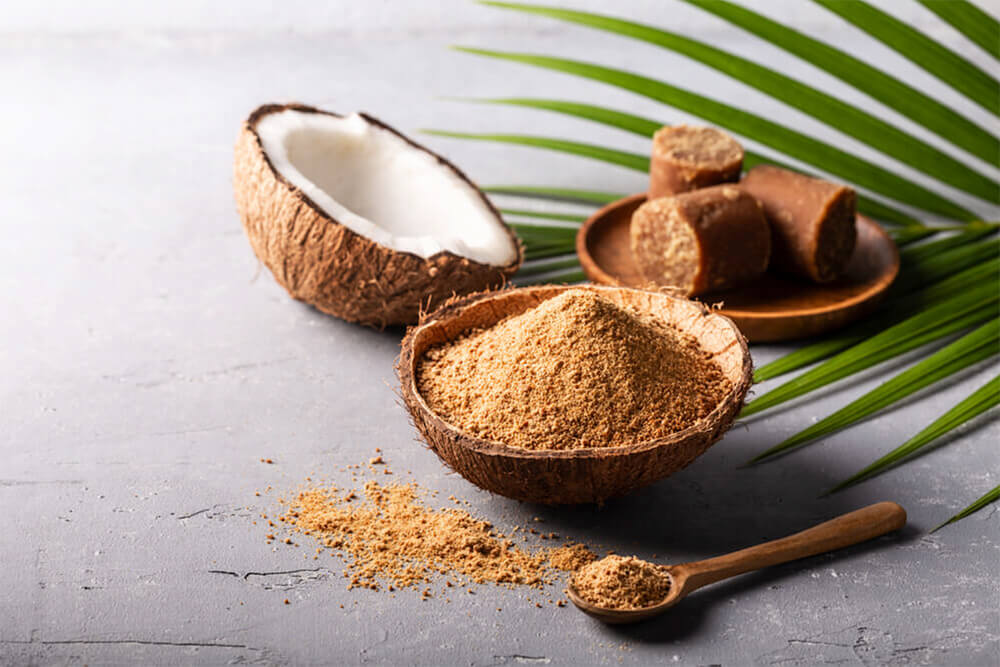
    This dominance is not a recent development — it reflects centuries of agricultural tradition, unique geographic conditions, and an increasingly sophisticated export infrastructure that no other producing country has been able to fully replicate.

    For buyers sourcing coconut sugar globally, understanding why Indonesia leads is not just academic — it explains the quality characteristics, certification availability, and supply reliability that make Indonesian coconut sugar the preferred choice for importers in Europe, the USA, Australia, and Japan.

    This article covers the six structural reasons behind Indonesia’s production dominance, the current state of the global coconut sugar market including organic segment growth, a comparison with other producing countries, and what Indonesia’s position means for buyers making sourcing decisions today.

    For a detailed look at the production process itself — from coconut palm flower sap tapping through granulation — our article on how coconut sugar is produced in Indonesia provides the full technical and cultural context.

    Indonesia Coconut Sugar: Key Facts at a Glance

    MetricDataSource/Notes
    Indonesia’s share of world coconut sugar production> 50%Largest single producing country globally
    Total coconut cultivation area (Indonesia)~3.5 million hectaresLargest in the world — spread across 33 provinces
    Primary producing regionsCentral Java, West Java, Sulawesi, North MalukuCentral Java (Banyumas, Purwokerto) = heartland of traditional coconut sugar production
    Annual coconut sugar export value (Indonesia)USD 100-150 million+Growing annually — driven by organic premium demand from EU and US
    Number of BRCGS-certified coconut sugar facilitiesMore than any other countryIndonesia leads the world in food safety certified coconut sugar supply
    Main export destinationsEU (Germany, Netherlands, France), USA, Australia, JapanEU and US represent majority of certified organic volume
    Organic coconut sugar market growth rate~8-12% per year (2020-2026)Driven by clean label and health food trends in Western markets
    Price competitiveness vs Philippines10-20% more competitiveFor equivalent BRCGS + organic certified product

    1. Unmatched Agroclimatic Conditions for Coconut Palm Cultivation

    coconut sugar Global Coco Sugar

    Indonesia’s geographic position — straddling the equator across an archipelago of more than 17,000 islands — creates agroclimatic conditions that are ideal for coconut palm cultivation in ways that cannot be replicated in other producing countries.

    • Year-round tropical climate: Unlike many agricultural commodities that are highly seasonal, Indonesia’s equatorial location provides consistent temperatures (25-32°C) and rainfall year-round — enabling continuous coconut sap production without the pronounced seasonal fluctuations that affect Philippine and Sri Lankan producers.

    • Volcanic soil fertility: Central Java’s coconut growing regions sit on some of the most fertile volcanic soils in the world. The mineral-rich volcanic substrate — from active volcanoes including Merapi, Merbabu, and Sindoro — produces coconut palms with higher sap yields and more consistent sap quality than palms grown in less fertile soils.

    • Optimal elevation range: The coconut sugar producing regions of Central Java (Banyumas, Purwokerto, Kebumen) are situated at elevations of 200-800 meters above sea level — within the optimal range for coconut sap sugar content. Higher sugar content in the sap means less evaporation required to produce granulated sugar, lower production costs, and more consistent end-product quality.

    • Water availability: Consistent rainfall across most of Indonesia’s coconut growing regions ensures that coconut palms maintain consistent productivity — unlike some Philippine growing regions that experience drought stress during El Niño periods, which can reduce sap yield significantly.

    2. 300+ Years of Unbroken Production Heritage

    coconut sugar Global Coco Sugar

    Indonesia’s coconut sugar production heritage extends back more than a thousand years — with documented commercial production in Java dating to at least the 8th century.

    This depth of tradition is not just cultural — it translates into accumulated production knowledge that has direct commercial implications.

    As we explore in detail in our article on the history of coconut blossom sugar in Indonesia, the specific knowledge of which coconut palms to tap, at what frequency, at what time of day, and how to process the sap optimally has been refined over centuries through direct farmer-to-farmer knowledge transfer in ways that cannot be acquired through formal agricultural training alone.

    The villages of Banyumas, Purwokerto, and Kebumen in Central Java have been synonymous with quality coconut sugar production for generations.

    Farmers in these regions have tapped the same coconut palm groves — sometimes the same individual trees — for multiple generations.

    This accumulated knowledge manifests in measurable ways: lower rejection rates, more consistent color and flavor profiles, and lower post-harvest quality incidents compared to producers in newer producing regions or countries.

    This heritage cannot be replicated by a new entrant to the coconut sugar market — not in five years, not in twenty. It is Indonesia’s single most durable competitive advantage.

    3. Production Scale That No Other Country Can Match

    coconut sugar Global Coco Sugar

    Indonesia’s raw material base for coconut sugar production — the coconut palm plantation area — is the largest in the world.

    With more than 3.5 million hectares of coconut cultivation spread across 33 provinces, Indonesia has a raw material supply that dwarfs its nearest competitors:

    CountryCoconut Cultivation AreaAnnual Coconut ProductionEst. Coconut Sugar Production ShareCertified Export Capacity
    Indonesia~3.5 million ha~18 billion nuts/year> 50% of global coconut sugarHighest — most BRCGS + organic certified facilities
    Philippines~3.3 million ha~15 billion nuts/year~30-35% of global supplySignificant — but fewer BRCGS-certified coconut sugar producers
    Sri Lanka~400,000 ha~3 billion nuts/year~5-8% of global supplyLimited — smaller certified export base
    India~2.1 million ha~21 billion nuts/yearPrimarily copra/oil, not sugarMinimal coconut sugar export
    Thailand~300,000 ha~1.5 billion nuts/yearSmall — primarily palm sugarMostly palm sugar, not coconut palm sugar

    The Philippines is often cited as Indonesia’s closest competitor — and in terms of raw coconut cultivation area, the two countries are comparable.

    The key differentiator is the proportion of coconut production dedicated to sugar versus oil: Indonesia’s Central Java coconut sugar tradition means a much higher proportion of coconut palms are managed specifically for sap production, while Philippine coconut production is more diversified across copra, coconut oil, and desiccated coconut.

    4. The World’s Most Developed Certified Coconut Sugar Export Infrastructure

    Coconut sugar certified

    The story behind the world’s largest coconut sugar producer is not just about agricultural scale — it is about the transformation of a traditional craft product into a globally compliant, certified export commodity.

    Indonesia has more BRCGS certified coconut sugar suppliers than any other producing country in the world.

    This certification leadership reflects a decade of investment by Indonesian producers in food safety management systems, laboratory testing infrastructure, and organic certification frameworks that the global market demands.

    Our guide to finding a bulk coconut sugar supplier in Indonesia covers the full evaluation framework buyers should apply when assessing this certified supply base.

    CertificationIndonesiaPhilippinesSri Lanka
    BRCGS Food Safety Grade AMultiple certified facilities — the most of any producing countrySome certified facilitiesVery limited
    USDA Organic (NOP)Widely available — multiple USDA-accredited certifying bodies activeAvailable but fewer optionsLimited
    EU OrganicStrong infrastructure — Control Union, Skal, IMO all activeAvailableLimited
    JAS Organic (Japan)AvailableAvailableVery limited
    Halal MUINational — widely applicableIDCP/Philippine equivalentNot standard
    ISO 17025-accredited lab testingMultiple options within IndonesiaAvailableLimited local options

    This certification infrastructure advantage is cumulative and self-reinforcing: as more Indonesian producers achieve BRCGS and organic certification, the overall market perception of Indonesian coconut sugar as a reliable, verified source strengthens — which drives more international buyer relationships, which creates more revenue to invest in maintaining and improving certifications.

    5. Indonesian Producers Were First to Meet the Clean Label Revolution

    indonesian coconut sugar producers
    Natural coconut sugar in bowl on wooden table, space for text

    The global health food movement that accelerated in the 2010s created a demand for minimally processed, natural sweeteners with a lower glycemic index than refined white sugar.

    Coconut sugar’s glycemic index of approximately 35 — significantly lower than white sugar’s GI of 60-65 — positioned it perfectly for the clean label, health-conscious premium food segment that was growing most rapidly in Western markets.

    Indonesian producers, with their existing export infrastructure and deepest production tradition, were best positioned to scale certified supply to meet this demand quickly.

    Our article on applications of coconut sugar in the food industry covers the full range of food manufacturing applications where coconut sugar has replaced refined sweeteners.

    The timing of Indonesia’s certification investment — primarily between 2010-2018 — coincided precisely with the peak growth phase of the clean label movement.

    Producers who achieved BRCGS and organic certification during this window established long-term supply relationships with EU and US importers that continue to generate premium pricing and stable demand today.

    6. Competitive Pricing Without Compromising Certification Quality

    the best coconut sugar certification you should consider

    Indonesia’s combination of production scale, agricultural efficiency, and competitive labor costs means that BRCGS-certified, EU Organic coconut sugar from Indonesia is typically 10-20% more price-competitive than equivalent certified product from the Philippines, and 25-40% more competitive than Sri Lankan product.

    For a complete current pricing reference, our article on coconut sugar export price from Indonesia per ton covers 2026 FOB price ranges by product category, certification tier, and volume.

    This pricing advantage is not achieved at the expense of quality — it reflects genuine structural cost advantages including lower raw material costs per unit (higher palm productivity), more established processing infrastructure (lower capital depreciation per MT), and deeper logistical networks (lower per-container handling costs at major Indonesian export ports like Tanjung Emas and Tanjung Perak).

    The Indonesian Organic Coconut Sugar Market: Growth, Trends & Projections

    Within Indonesia’s total coconut sugar production, the organic certified segment has been the fastest-growing subsector for the past decade.

    Our article on exporting organic coconut sugar from Indonesia explains the full certification chain for organic product — from farm inspection through per-shipment Transaction Certificate documentation.

    Market Segment2020 Estimated Value2026 Estimated ValueCAGRKey Driver
    Global coconut sugar market (all)USD 400-500MUSD 700-900M8-10%Health food growth in EU, USA, Australia
    Organic coconut sugar (global)USD 150-200MUSD 320-400M12-15%Premium retail demand, organic label claims
    Indonesia’s organic export valueUSD 60-80MUSD 150-200M+15-18%EU organic retail expansion, US health food
    EU organic coconut sugar importUSD 50-70MUSD 120-150M+12-15%EU organic food market growth, BRCGS requirements
    US organic coconut sugar importUSD 30-50MUSD 70-90M+12-14%Paleo, keto, clean label food trends
    What this market growth means for buyers
    The combination of strong demand growth and the structural supply advantages of the largest coconut sugar producer creates a favorable sourcing environment for buyers: sufficient certified supply to meet growing demand without the supply shortage premiums seen in smaller specialty ingredient markets, increasing number of certified supplier options as more Indonesian producers invest in BRCGS and organic certification, and competitive pricing maintained by Indonesia’s production scale. For buyers establishing long-term supply relationships, annual contracts with Indonesian certified producers are increasingly the standard approach.

    Indonesia’s Coconut Sugar Export Destinations: Where the Product Goes

    Europe is Indonesia’s largest destination for certified organic coconut sugar, followed closely by the USA and Australia.

    For European wholesale buyers specifically, our dedicated article on coconut sugar wholesale importers in Europe covers the full regulatory framework, including BRCGS requirements for EU retail access and EU GSP duty preference rates from Indonesia.

    DestinationPrimary BuyersCertification RequiredVolume Trend
    GermanyNatural food distributors, food manufacturers (Alnatura, dm, Rewe Bio)BRCGS Grade A + EU OrganicGrowing strongly — largest EU organic food market
    NetherlandsCommodity importers (Rotterdam hub), distributorsBRCGS Grade A + EU OrganicStable — major transit point for EU distribution
    United StatesNatural food brands, health food retailers, food manufacturersBRCGS + USDA OrganicGrowing — driven by paleo, keto, clean label
    FranceOrganic food distributors, premium food brandsBRCGS + EU OrganicGrowing — strong organic retail network
    AustraliaHealth food importers, organic food brandsBRCGS + USDA/OrganicStable growth — high per-capita health food spending
    JapanNatural food importers, specialty food brandsBRCGS + JAS OrganicNiche but high-value — premium pricing
    Middle EastFood manufacturers, specialty distributorsBRCGS + Halal MUIGrowing — rising health food awareness
    Source coconut sugar directly from its largest producing country
    Global Coco Sugar is a BRCGS Food Safety Grade A certified exporter of organic and conventional coconut sugar from Central Java, Indonesia. We supply to buyers across Europe, USA, Australia, Middle East, and Japan with full certification documentation, COA from ISO 17025-accredited laboratories, and REX registration for EU GSP preference claims.
    Request a Sample or Bulk Quote >>>
    View Our Certified Coconut Sugar Range >>>

    Conclusion: Why the Largest Coconut Sugar Producer Dominates the Market

    Indonesia’s position as the world’s largest coconut sugar producer is not the result of any single factor — it is the cumulative product of geography, agricultural heritage, production scale, certification investment, and market timing that have compounded over centuries.

    No other producing country combines all six of these advantages simultaneously.

    For buyers, this means that sourcing certified coconut sugar from Indonesia is not just the most obvious choice — it is structurally the most defensible one.

    The combination of the world’s deepest production heritage, the largest certified supply base, and the most competitive pricing for equivalent quality makes Indonesia the natural anchor of any serious coconut sugar sourcing strategy.

    Source from the world’s most experienced coconut sugar producing country
    Global Coco Sugar is a BRCGS Food Safety Grade A certified manufacturer and exporter of organic and conventional coconut sugar from Central Java, Indonesia — connecting centuries of traditional production expertise with the certification infrastructure that global buyers require. Available in granulated, fine powder, and cube formats with full documentation support.
    Contact Our Export Team >>>
    View Our Coconut Sugar Range >>>
    Our Certifications & Company Profile >>>
Secret Link