Tag: coconut sugar

  • Coconut Sugar COA: What Importers and Food Manufacturers Should Check Before Bulk Orders

    Coconut Sugar COA: What Importers and Food Manufacturers Should Check Before Bulk Orders

    Coconut Sugar COA

    When sourcing coconut sugar in bulk, buyers often ask for product specifications, certifications, samples, and price quotations. But one document that should not be overlooked is the COA, or Certificate of Analysis.

    For importers, food manufacturers, procurement teams, and QA/QC teams, a coconut sugar COA helps verify whether a specific batch or lot meets the expected quality parameters before approval, shipment, or repeat order.

    This guide explains what to check in a coconut sugar COA, how it differs from a specification sheet and an organic certificate, and what questions buyers should ask before confirming a bulk order.

    If you are also comparing suppliers, you can review Global Coco Sugar’s organic coconut sugar supplier page to see available product forms and general sourcing information for B2B buyers.

    Quick Answer: What Is a Coconut Sugar COA?

    A coconut sugar COA, or Certificate of Analysis, is a quality document that shows test results for a specific batch or lot of coconut sugar.

    It may include information such as product name, batch number, test date, moisture content, appearance, color, microbiological parameters, heavy metals if requested, and supplier or laboratory details.

    A COA helps buyers confirm whether the supplied batch matches the agreed product standard.

    However, it is not the same as a product specification sheet, organic certificate, food safety certificate, or Transaction Certificate.

    If you are still defining your product standard, start with our organic coconut sugar specification guide before reviewing the COA.

    Why COA Matters Before Buying Coconut Sugar in Bulk

    Why COA Matters Before Buying Coconut Sugar in Bulk

    For small sample orders, buyers may focus mostly on taste, color, and basic product fit. For bulk coconut sugar orders, the risk is higher.

    A full shipment may be used in bakery, beverage, chocolate, coffee, snack, confectionery, healthy food, or private label products, where consistency matters.

    A COA supports buyer-side review by helping procurement and QA teams check whether the product aligns with agreed requirements before shipment or production use.

    • Reduce the risk of receiving coconut sugar outside the expected quality range.
    • Support internal QA/QC approval before bulk purchase.
    • Help compare suppliers using objective documentation, not only price.
    • Support repeat order consistency by comparing batch or lot information.
    • Identify potential issues such as moisture, clumping risk, microbial testing scope, or incomplete documentation.
    • Help food manufacturers and private label buyers prepare documentation for internal approval.

    For food manufacturing applications, COA review should be combined with product sampling, specification review, packaging review, and supplier verification.

    Buyers can also read our guide on coconut sugar in the food industry for a broader view of application and formulation considerations.

    COA vs Specification Sheet: What Is the Difference?
    COA vs Specification Sheet: What Is the Difference?

    One common mistake in procurement is treating every technical document as the same thing. A COA, specification sheet, organic certificate, and Transaction Certificate all serve different purposes.

    DocumentPurposeUsually ShowsBuyer Use
    Specification SheetDefines the target product standardMoisture limit, mesh size, color, shelf life, packaging, origin, product formHelps buyers decide the product standard they need
    COAShows actual test results for a specific batch or lotActual test result, batch number, test date, supplier/lab information, pass/fail if availableHelps buyers verify whether a batch meets the agreed standard
    Organic CertificateVerifies organic certification scopeCertifier, certificate validity, product or operator scopeHelps buyers verify organic claim before sourcing
    Transaction CertificateConnects organic claim to a specific shipmentShipment or lot relation, seller/buyer details, organic quantityMay be needed for organic shipment traceability

    In simple terms: the specification sheet tells buyers what the product should be, while the COA shows what a specific batch or lot actually tested as.

    For organic coconut sugar buyers, the COA should be reviewed together with the supplier’s organic certificate and, when required, shipment-level organic documentation.

    To understand the certification side more clearly, see our organic coconut sugar certification checklist.

    Key Information Every Coconut Sugar COA Should Include
    Key Information Every Coconut Sugar COA Should Include

    Product Name and Product Form

    The COA should clearly identify the product being tested. For coconut sugar, this may include organic coconut sugar, conventional coconut sugar, granulated coconut sugar, powdered coconut sugar, cube coconut sugar, or another product form.

    This matters because buyers should not accept a COA for a different product or product form. A COA for granulated coconut sugar may not represent powdered coconut sugar if the particle size, handling, or processing is different.

    Batch Number or Lot Number

    A strong COA should be traceable to a specific batch or lot number. This is one of the most important parts of COA review because it connects the test result to the actual product being supplied.

    • Match the batch or lot number on the COA with the packing list, label, invoice, or shipment document.
    • For repeat orders, compare COA results across different lots to monitor consistency.
    • Avoid relying only on a generic COA that is not connected to the shipment.

    Test Date and Production Date

    The test date helps buyers understand when the product was analyzed. A COA from a previous batch may not be relevant for a new shipment unless the supplier can clearly explain its relationship to the current product.

    Buyers should request the latest COA for the actual batch or lot being supplied, especially before confirming bulk shipment.

    Supplier, Manufacturer, or Laboratory Information

    A COA should identify who issued the document. Depending on supplier practice and buyer requirements, a COA may be issued by the supplier, manufacturer, or an external laboratory.

    Not every buyer requires third-party laboratory testing for every shipment. However, for stricter QA requirements, buyers may request testing from a laboratory accredited to ISO/IEC 17025, the international standard for testing and calibration laboratories.

    Test Method or Reference Standard

    Some COA documents include test methods or reference standards. This can be useful for QA/QC teams that need to understand how a parameter was measured. If a buyer has specific testing requirements, the method should be clarified before shipment.

    Result, Specification Limit, and Pass/Fail Status

    A useful COA should not only list parameters. Ideally, it should show the actual result, unit, specification limit, and pass/fail or compliance status if available. This helps buyers understand whether the tested batch meets the agreed product specification.

    Key Quality Parameters to Check in a Coconut Sugar COA

    Moisture Content

    Moisture is one of the most important parameters in coconut sugar because it can affect clumping risk, flowability, storage stability, shelf life, and container shipment conditions.

    Global Coco Sugar’s current organic coconut sugar product page lists moisture max 2%, but buyers should always confirm the latest specification sheet and COA before ordering.

    Appearance and Color

    Appearance and color consistency matter for finished product quality, especially in bakery mixes, beverage powders, confectionery, chocolate, retail packs, and private label products.

    Buyers should check whether the COA or specification sheet includes visual parameters and compare them with approved samples.

    Taste and Aroma

    Taste and aroma may not always appear as detailed laboratory parameters on a COA.

    However, buyers should still evaluate sensory consistency through sample approval, especially when coconut sugar is used in products where flavor profile matters.

    Particle Size or Mesh Size

    Particle size can affect blending, dissolution, texture, and processing behavior. Powdered coconut sugar and granulated coconut sugar may perform differently in dry blends, beverages, toppings, or bakery applications.

    If particle size or mesh size is important to your application, confirm whether it appears in the specification sheet, COA, or a separate technical document. Buyers can also review available organic coconut sugar in granule, powder, and cube forms on the Global Coco Sugar product page.

    Microbiological Parameters

    Microbiological testing requirements may vary depending on buyer requirement, destination market, product application, and testing scope. Common parameters that may be requested include total plate count, yeast and mold, coliform, E. coli, and Salmonella.

    Buyers should not assume every COA includes the same microbiological parameters. If these parameters are required by your QA team or destination market, confirm them with the supplier before order confirmation.

    Heavy Metals

    Some buyers, especially larger food brands or buyers selling into stricter markets, may request heavy metals testing. Parameters may include lead, cadmium, arsenic, and mercury depending on testing scope and buyer requirement.

    Do not assume heavy metals testing is included in every COA. Ask your supplier whether it is available, whether it is performed internally or externally, and whether it matches your market requirement.

    Sucrose or Sugar Composition

    Some buyers may ask for sugar composition or nutritional-related parameters when coconut sugar is used in formulation, labeling, or product development. If this is important for your application, request the relevant testing scope before finalizing the order.

    Foreign Matter or Contaminants

    Foreign matter and contaminant control are part of supplier quality management. Depending on the supplier and buyer requirement, this may be covered in the COA, specification sheet, food safety system, or inspection process.

    For buyers evaluating supplier-level food safety, a supplier’s certification and audit system can also be part of the review. Learn more about supplier trust signals in our article on BRCGS certified coconut sugar supplier.

    COA vs Organic Certificate: Why Buyers May Need Both

    A COA and an organic certificate answer different questions. The COA helps verify quality parameters for a batch or lot.

    The organic certificate helps verify whether the supplier, product, or operator is covered under an organic certification scope.

    For buyers that plan to sell or use coconut sugar with an organic claim, COA alone is not enough.

    They may also need to check the supplier’s organic certificate, certificate validity, product scope, certifying body, and whether a Transaction Certificate is required for the shipment.

    This is especially important for importers, distributors, and private label buyers that need documentation for internal approval or market compliance.

    When Should Buyers Request a COA?

    Buyers should request a COA whenever product quality needs to be verified before approval, shipment, or production use. For bulk coconut sugar sourcing, COA review is especially useful in the following situations:

    • Before approving a new supplier.
    • Before sample approval for food manufacturing or private label use.
    • Before the first bulk order.
    • Before shipment if the buyer needs batch-level documentation.
    • During repeat orders to monitor consistency between lots.
    • When changing product form, such as granule to powder.
    • When changing packaging or destination market.
    • When buyer QA/QC requirements become stricter.
    • When the supplier changes facility, source, or production process.

    For buyers preparing a larger sourcing plan, our guide on buying organic coconut sugar in bulk from Indonesia can help with MOQ, quotation, and supplier discussion context.

    Questions to Ask Your Supplier Before Approving a COA

    Before approving a COA, procurement and QA/QC teams should ask practical questions that connect the document to the actual product being purchased.

    • Is this COA for the exact batch or lot being shipped?
    • Does the product name match our purchase order and specification?
    • Does the product form match our requirement, such as granule or powder?
    • Does the COA match the latest specification sheet?
    • Who issued the COA: supplier, manufacturer, or laboratory?
    • What test methods were used?
    • Are microbiological parameters included if required by our QA team?
    • Are heavy metals included if required by our market or internal standard?
    • Can the supplier provide third-party laboratory testing if needed?
    • Can the supplier provide organic certificate and Transaction Certificate if organic claim is required?
    • Can the supplier explain any result that appears outside the expected range?

    Common Red Flags in Coconut Sugar COA Documents

    A COA can help buyers reduce risk, but only if the document is clear, relevant, and connected to the actual shipment. Be careful if you see these red flags:

    • No batch number or lot number.
    • The COA is too generic and not connected to the shipment.
    • The COA date is too old for the current order.
    • The product name does not match the purchase order.
    • No supplier, manufacturer, or laboratory identity is shown.
    • No test method or unclear parameter naming.
    • Results do not match the agreed specification sheet.
    • The document only shows logos or certificate images without actual data.
    • The supplier refuses to explain the COA.
    • The supplier cannot provide an updated COA for the current shipment.
    • The COA appears to come from another company or another product.

    If you are comparing multiple suppliers, you can also review our guide on coconut sugar supplier red flags before confirming a bulk order.

    If you are still building your supplier shortlist, you can also compare coconut sugar suppliers in Indonesia before requesting COA and specification documents from each candidate.

    How Global Coco Sugar Supports COA and Documentation Review

    Global Coco Sugar supplies organic coconut sugar from Indonesia for B2B buyers, including importers, distributors, food manufacturers, procurement teams, and private label buyers.

    Buyers can review available product forms through the organic coconut sugar product page and discuss product specification, COA availability, packaging details, and quotation requirements with the export team.

    Documentation availability and testing scope should be confirmed based on the product, order requirement, destination market, and buyer documentation needs.

    If your procurement or QA team needs to review coconut sugar documentation before placing a bulk order, Global Coco Sugar can help you discuss the latest specification sheet, COA availability, packaging details, and quotation requirements.

    For import documentation context, you can also read our guide on how to import coconut sugar from Indonesia.

    Conclusion

    A coconut sugar COA is an important document for bulk sourcing because it helps buyers verify actual batch or lot quality before approval, shipment, or production use.

    Before confirming a supplier, buyers should check the product name, batch number, test date, moisture, appearance, color, particle size if available, microbiological parameters if required, heavy metals if required, supplier or lab information, and whether the COA matches the agreed specification sheet.

    A COA should not replace supplier verification, organic certification review, sample approval, or food safety review. It should be part of a complete sourcing and QA process.

    Need to review coconut sugar documentation before confirming a bulk order? Contact Global Coco Sugar’s export team to discuss the latest specification sheet, COA availability, packaging details, and quotation requirements.

    Frequently Asked Questions

    What is a COA for coconut sugar?

    A COA for coconut sugar is a Certificate of Analysis that shows quality test results for a specific batch or lot. It may include product name, batch number, test date, moisture, appearance, microbiological parameters, heavy metals if requested, and supplier or lab information.

    Is a COA the same as a specification sheet?

    No. A specification sheet explains the target product standard, while a COA shows actual test results for a specific batch or lot. Buyers should compare the COA against the agreed specification sheet before approving a shipment.

    Is a COA the same as an organic certificate?

    No. A COA verifies quality parameters, while an organic certificate verifies organic certification scope. For organic shipments, buyers may also need a Transaction Certificate depending on market and buyer requirements.

    Should importers request a COA before buying coconut sugar in bulk?

    Yes. Importers should request a COA before bulk orders, especially for first orders, repeat orders, private label projects, or food manufacturing applications where batch consistency and documentation are important.

    What parameters should be checked in a coconut sugar COA?

    Buyers should check product name, batch or lot number, test date, moisture, appearance, color, taste or aroma if listed, particle size if available, microbiological parameters if required, heavy metals if required, and supplier or laboratory information.

    Does every COA need to come from a third-party laboratory?

    Not always. Some buyers accept supplier-issued or manufacturer-issued COA documents, while stricter QA programs may request third-party or accredited laboratory testing. The requirement depends on buyer policy, destination market, and risk level.

    Can Global Coco Sugar provide COA for organic coconut sugar?

    COA availability and testing scope should be confirmed with the Global Coco Sugar export team based on the product, order requirement, destination market, and buyer documentation needs.
  • Organic Coconut Sugar Specifications: What Food Manufacturers Should Check Before Bulk Orders

    Organic Coconut Sugar Specifications: What Food Manufacturers Should Check Before Bulk Orders

    Organic Coconut Sugar Specifications

    Organic coconut sugar can be a strong ingredient option for food manufacturers, importers, distributors, and private label brands looking for a natural sweetener with a caramel-like profile. But before placing a bulk order, buyers should not evaluate the product only by price or product photos.

    For B2B sourcing, product specifications help buyers understand whether the coconut sugar is suitable for their formulation, packaging system, storage condition, export documentation, and internal quality approval process.

    This guide explains the key organic coconut sugar specifications food manufacturers should check before confirming a bulk order, including product form, moisture, mesh size, color, taste, shelf life, COA, certification, packaging, and batch consistency.

    Quick Answer: What Specifications Should Buyers Check?

    Before buying organic coconut sugar in bulk, buyers should check the product form, moisture content, mesh size or particle size, color, taste and aroma profile, shelf life, packaging format, COA, organic certification, and batch consistency.

    These details help procurement teams compare suppliers more accurately and reduce the risk of receiving a product that does not match the intended application.

    Food manufacturers should also confirm whether the supplier can provide updated documents such as a specification sheet, Certificate of Analysis, organic certificate, and shipment-level documentation when required.

    Buyers can also review our organic coconut sugar supplier page for available product forms and packaging options.

    Why Product Specifications Matter in Bulk Coconut Sugar Sourcing

    Why Product Specifications Matter in Bulk Coconut Sugar Sourcing

    In small retail purchases, slight differences in color, texture, or aroma may not create major problems. In food manufacturing, however, those differences can affect finished product appearance, dissolution, sweetness perception, blending performance, shelf life, and customer acceptance.

    For procurement teams, specifications also help standardize supplier comparison. If one supplier offers granulated coconut sugar with a certain particle size and another supplier offers a finer powder, the two products may not perform the same way in bakery, beverage, dry blend, snack, or confectionery applications.

    Clear specifications are also important for food safety and quality control. They allow buyers to align internal requirements with supplier documents, confirm whether the product is suitable for the target market, and prepare better questions before requesting a quotation or sample.

    For broader formulation context, buyers can also read our guide on coconut sugar in the food industry.

    Key Organic Coconut Sugar Specifications to Review

    Organic Coconut Sugar Cube
    Organic Coconut Sugar Cube

    Product Form: Granule, Powder, or Cube

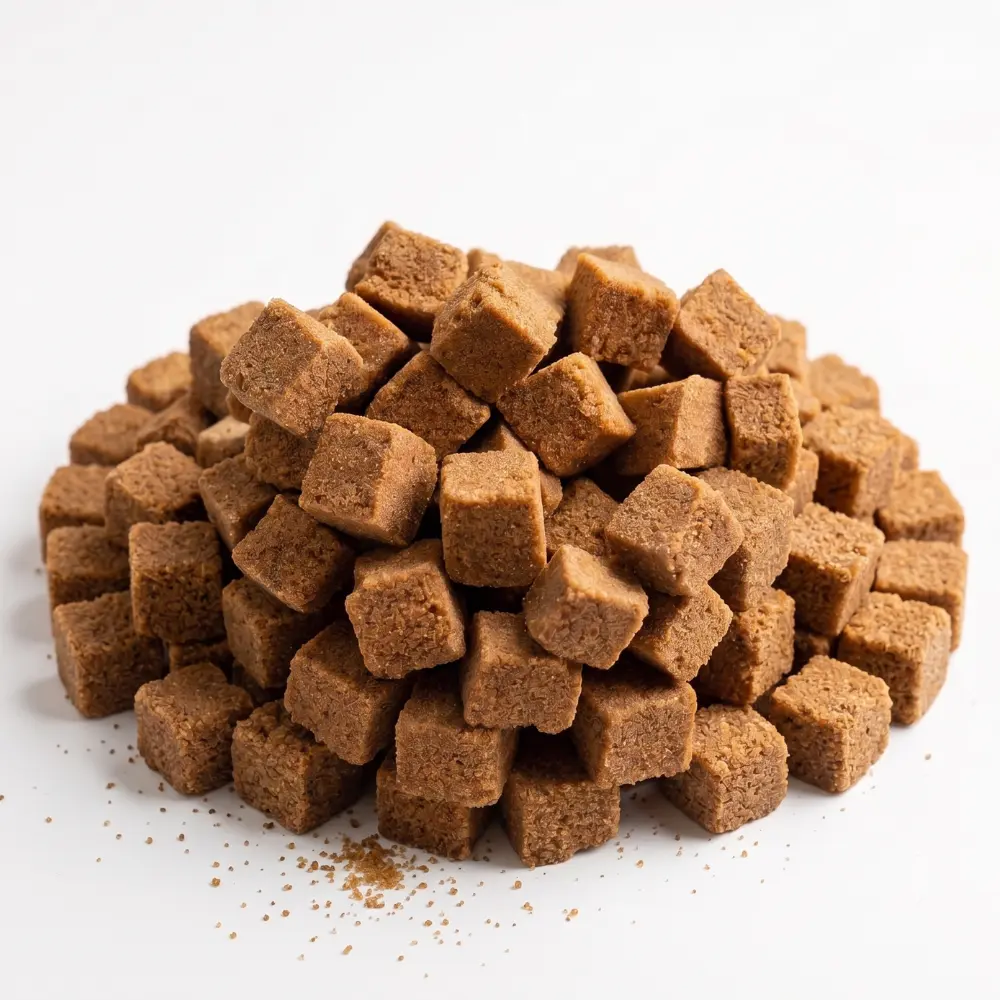
    The first specification to check is product form. Organic coconut sugar may be supplied as granule, powder, or cube, depending on the supplier and buyer requirement. Each form has a different role in food manufacturing and packaging.

    • Granulated coconut sugar is commonly used for bakery, cereal, granola, topping, dry blending, and general food manufacturing.
    • Powdered coconut sugar can be more suitable for beverage premix, dry blends, instant products, and applications that require faster dispersion.
    • Cube coconut sugar is more relevant for retail, horeca, gifting, premium presentation, or table-use formats.

    Global Coco Sugar currently presents organic coconut sugar in granule, powder, and cube forms. Buyers should confirm the latest availability and specification sheet before placing a purchase order.

    Color and Visual Consistency

    Color matters because coconut sugar can influence the appearance of finished products. A darker sugar may be acceptable for chocolate, coffee, granola, cookies, and brown-colored beverages, but it may not be suitable for products that require a light or neutral appearance.

    Global Coco Sugar currently lists the color of its organic coconut sugar as golden brown on its product page. For commercial production, buyers should still request samples and compare color consistency against their own product standard before scaling up.

    Moisture Content

    Moisture content is one of the most important parameters in coconut sugar sourcing. It can affect shelf life, clumping risk, flowability, storage stability, and packaging performance.

    Lower moisture generally helps improve handling and storage stability, especially for dry ingredient applications. However, buyers should not assume that every supplier uses the same moisture specification. Always review the supplier specification sheet and COA.

    Global Coco Sugar currently lists moisture as max 2% on its product page. This should be treated as current product page information, and buyers should request the latest specification sheet before confirming a bulk order.

    Mesh Size / Particle Size

    Mesh size or particle size affects how coconut sugar blends, dissolves, and behaves during processing. A coarser particle may work well in bakery toppings or granola, while a finer particle may be better for beverage powders, premixes, and smooth dry blends.

    If your application requires fast dissolution or a smooth mouthfeel, particle size should be discussed early with the supplier. This is especially important for beverages, chocolate, confectionery, instant mixes, and powder-based products.

    Global Coco Sugar currently lists mesh size as 18-50 on its product page. Buyers should confirm whether this range fits their application and request the latest technical document before ordering.

    Taste and Aroma Profile

    Organic coconut sugar is commonly valued for its natural sweet taste and caramel-like profile. This can work well in bakery, chocolate, coffee, snack, cereal, granola, and certain beverage applications.

    However, flavor suitability should always be tested in the final formulation. A caramel profile may be attractive in brown or toasted products, but it may not fit every product category. Buyers should request samples and conduct internal sensory testing before placing a container or large-volume order.

    Shelf Life and Storage Conditions

    Shelf life is important for inventory planning, export shipping, distributor storage, and finished product production schedules. Buyers should check the declared shelf life, packaging type, recommended storage condition, and whether the product is sensitive to humidity.

    Global Coco Sugar currently lists shelf life as 2 years on its product page. Actual shelf life handling should still be confirmed based on packaging, storage condition, destination market, and shipment plan.

    Origin and Traceability

    Origin and traceability are important for buyers that need supplier qualification, organic compliance, sustainability review, or product storytelling. For organic coconut sugar, buyers should confirm not only the country of origin but also whether the organic certificate scope covers the product and supply chain involved.

    Global Coco Sugar positions its organic coconut sugar as sourced from Central Java, Indonesia. Buyers evaluating Indonesian coconut sugar should still request documentation that supports their own market requirements, especially if organic claims will be used on finished product labels.

    Certificate of Analysis: What Should Be Included?

    organic coconut sugar certificate of analysis (COA)

    A Certificate of Analysis, or COA, is one of the most important documents in bulk coconut sugar sourcing. It helps buyers review quality parameters and confirm whether the batch or lot meets the required specification.

    COA parameters may vary by supplier, buyer requirement, and testing scope. Buyers should request the latest COA for the specific batch or lot whenever possible.

    A coconut sugar COA may include:

    • Batch or lot number
    • Date of analysis
    • Product name and product form
    • Moisture content
    • Appearance, color, taste, or odor if included in the testing scope
    • Microbiological parameters if required by the buyer
    • Heavy metal testing if required by the buyer or destination market
    • Test method or lab information
    • Supplier or facility identification

    Do not rely only on a generic or outdated COA for a large-volume order. If your company requires strict quality approval, request a batch-specific COA and compare it with the supplier specification sheet and sample results.

    For food manufacturers, COA review is also part of supplier qualification. It helps R&D, QA, procurement, and regulatory teams decide whether the ingredient can move from sample review to commercial approval.

    For a deeper document review, read our coconut sugar COA guide to understand how buyers can check batch number, test date, moisture, microbiology, heavy metals, and supplier or laboratory information.

    Organic Certification and Transaction Certificate

    For organic coconut sugar, certification should be verified carefully. Buyers should not rely only on logo images or general marketing statements. The certificate must be current, relevant to the product, and valid for the target market.

    Depending on the destination market, buyers may need to check:

    • USDA Organic certification for the United States market
    • EU Organic certification for the European market
    • JAS Organic certification for Japan
    • Halal certification if required by the market or buyer
    • Kosher certification if required by the buyer
    • Food safety certification such as BRCGS, FSSC 22000, or HACCP if needed for vendor approval

    The most important step is to confirm the certificate scope. A supplier may have an organic certificate, but buyers still need to verify whether the certificate covers the specific product, operator, processing facility, and packaging process involved.

    For organic shipments, buyers may also need an organic Transaction Certificate. This document helps connect a specific shipment to the certified organic supply chain. Requirements can vary by market, certifier, buyer policy, and shipment type.

    For USDA Organic claims, buyers can also use the USDA Organic INTEGRITY Database to check certified organic operations and review supplier certification details before confirming a bulk order.

    For more details, review our organic coconut sugar certification checklist and our guide to choosing a BRCGS certified coconut sugar supplier.

    Packaging Specifications for Bulk Buyers

    packaging custom organic coconut sugar
    packaging custom organic coconut sugar

    Packaging is not only a logistics detail. It can affect storage, shelf life, moisture protection, warehouse handling, labeling, customs clearance, and private label planning.

    Before confirming a purchase order, buyers should ask the supplier about packaging options, packaging material, net weight, carton or sack dimensions, palletization, shipping marks, and whether custom or retail packaging is available.

    Global Coco Sugar currently presents bulk packaging options such as 10 kg, 20 kg, 25 kg, and boxed formats, along with retail and custom packaging options on its product page. Packaging options should be confirmed based on order volume, product form, destination market, and buyer labeling requirements.

    For larger sourcing plans, buyers can also review our guide on how to buy organic coconut sugar in bulk from Indonesia.

    Specification Checklist Before Requesting a Quotation

    Before requesting a quotation, procurement teams can use the checklist below to prepare clear questions for suppliers. This helps avoid comparing incomplete offers or receiving prices for products that do not match the intended application.

    Specification AreaWhat to CheckWhy It MattersDocument to Request
    Product formGranule, powder, or cubeAffects application, processing, and packagingSpecification sheet
    MoistureMaximum moisture levelSupports shelf life, flowability, and clumping controlSpecification sheet / COA
    Mesh sizeParticle size rangeAffects blending, dissolution, and textureSpecification sheet
    ColorVisual consistencyInfluences finished product appearanceSpecification sheet / sample
    Taste and aromaNatural sweet profile and sensory fitImportant for formulation approvalSample / sensory review
    Shelf lifeDeclared shelf life and storage conditionSupports inventory and export planningSpecification sheet
    PackagingBulk, retail, or custom packagingAffects logistics, storage, and labelingPackaging specification
    CertificationOrganic and food safety certificationNeeded for compliance and vendor approvalCertificate copy
    COABatch-specific quality dataHelps procurement and QA verify product qualityCOA
    OriginCountry and sourcing region if availableSupports traceability and supplier reviewCertificate / supplier statement

    Common Specification Mistakes Buyers Should Avoid

    Many sourcing issues happen because buyers compare suppliers only by price or product name. Coconut sugar from different suppliers may have different moisture levels, particle sizes, packaging formats, documentation readiness, and batch consistency.

    Common mistakes include:

    • Requesting a price without specifying product form and packaging requirement
    • Comparing granulated coconut sugar with powdered coconut sugar as if they are identical
    • Not requesting the latest specification sheet before bulk order
    • Using an old or generic COA for commercial approval
    • Not checking organic certificate scope and expiry date
    • Forgetting to ask whether an organic Transaction Certificate can be provided
    • Skipping sample approval before a large-volume order
    • Not confirming packaging suitability for storage and destination market requirements
    • Not aligning supplier specifications with internal QA, R&D, and regulatory requirements

    If you are screening suppliers for the first time, read our guide on coconut sugar supplier red flags before confirming an order.

    How Global Coco Sugar Supports Specification Review

    How Global Coco Sugar Supports Specification Review
    Global Coco Sugar Manufacturer

    Global Coco Sugar supplies organic coconut sugar from Indonesia for B2B buyers such as importers, distributors, food manufacturers, procurement teams, and private label brands.

    Our organic coconut sugar is currently presented in granule, powder, and cube forms, with product information such as golden brown color, max 2% moisture, mesh size 18-50, natural sweet taste, 2-year shelf life, and Indonesia origin listed on the product page. Buyers should request the latest specification sheet to confirm the current details before ordering.

    For specification review, buyers can discuss:

    • Required coconut sugar form for the target application
    • Specification sheet and product details
    • Packaging options for bulk, retail, or custom requirements
    • COA or documentation needs based on buyer requirements
    • Organic certification and export documentation discussion
    • Quotation and sample discussion before bulk order

    Need to review organic coconut sugar specifications before placing a bulk order? Contact Global Coco Sugar to request the latest product specification, packaging details, and quotation for your sourcing review.

    Conclusion

    Organic coconut sugar specifications are essential for food manufacturers and procurement teams that need consistent quality, reliable documentation, and suitable product performance before placing bulk orders.

    Before choosing a supplier, buyers should review product form, moisture content, mesh size, color, taste and aroma, shelf life, COA, certification, packaging, origin, and batch consistency. These details help reduce sourcing risk and make supplier comparison more reliable.

    A good supplier should be able to explain the product clearly, provide updated documentation, and support the buyer through sample review, quotation, and export preparation.

    If you are evaluating organic coconut sugar for food manufacturing, distribution, or private label sourcing, contact our export team to discuss your specification requirements and bulk sourcing plan.

    You can review our bulk organic coconut sugar from Indonesia and contact the export team for the latest specification sheet, packaging details, and quotation.

    Frequently Asked Questions

    What is an organic coconut sugar specification sheet?

    An organic coconut sugar specification sheet is a technical document that describes important product details such as product form, moisture, mesh size, color, taste, shelf life, packaging, origin, and other quality parameters. Buyers use this document to decide whether the product fits their formulation, packaging, storage, and procurement requirements.

    What moisture level should buyers check in coconut sugar?

    Buyers should check the moisture level listed on the supplier specification sheet and COA. There is no single number that should be assumed for every supplier. Global Coco Sugar currently lists moisture as max 2% on its product page, but buyers should request the latest document before ordering.

    Why does mesh size matter in coconut sugar?

    Mesh size or particle size affects dissolution, blending, texture, and processing performance. Finer coconut sugar may be better for beverages, premixes, and dry blends, while granulated coconut sugar may be suitable for bakery, granola, cereal, and general food manufacturing applications.

    Should buyers request COA before ordering bulk coconut sugar?

    Yes. For bulk orders, buyers should request a COA, preferably for the specific batch or lot when available. The COA helps procurement and quality teams verify product parameters before approving shipment or commercial production.

    What documents are needed for organic coconut sugar import?

    Common documents may include organic certificate, specification sheet, COA, invoice, packing list, Certificate of Origin, phytosanitary certificate if required, and organic Transaction Certificate if the buyer needs shipment-level organic documentation. Requirements vary by destination market and buyer policy.

    What packaging options are common for bulk coconut sugar?

    Bulk coconut sugar may be supplied in sacks, cartons, or boxed packaging depending on supplier capability and buyer requirements. Some suppliers also offer retail or custom packaging. Global Coco Sugar currently presents bulk, retail, and custom packaging options on its organic coconut sugar product page.

  • Top 10 Coconut Sugar Suppliers in Indonesia 2026: B2B Buyer Evaluation Guide

    Top 10 Coconut Sugar Suppliers in Indonesia 2026: B2B Buyer Evaluation Guide

    top coconut sugar suppliers in indonesia

    Indonesia is one of the most important sourcing origins for coconut sugar, especially for importers, distributors, food manufacturers, private label brands, and procurement teams looking for organic, bulk, and export-ready supply.

    But choosing the right supplier is not just about finding the lowest price. B2B buyers need to evaluate certification scope, product specifications, documentation readiness, MOQ, packaging options, traceability, communication quality, and export capability.

    This guide lists coconut sugar suppliers in Indonesia that buyers can evaluate in 2026. Global Coco Sugar is listed first because this article is published by Global Coco Sugar, but every supplier in this list should still be verified independently before placing an order.

    For buyers who are still defining their product specifications, you can also review our organic coconut sugar supplier page to understand available product forms, packaging options, and general B2B sourcing details.

    Quick Answer: How to Choose Coconut Sugar Suppliers in Indonesia

    The best coconut sugar supplier for your business depends on your market, product application, documentation requirements, and order volume.

    Before choosing a supplier, B2B buyers should check:

    • Whether the supplier offers organic, conventional, or both types of coconut sugar
    • Product forms such as granule, powder, cube, block, or syrup
    • Certification scope, such as USDA Organic, EU Organic, JAS, Halal, Kosher, BRCGS, FSSC 22000, HACCP, or other food safety standards
    • COA, specification sheet, organic transaction certificate, phytosanitary certificate, and Certificate of Origin availability
    • Bulk packaging, private label packaging, and custom packaging options
    • MOQ, lead time, Incoterms, and export port
    • Whether the supplier is a manufacturer, exporter, trader, or private label partner

    If you are new to sourcing from Indonesia, this guide on how to import coconut sugar from Indonesia can help you understand documents, HS code, supplier verification, and shipment preparation.

    Why Indonesia Is a Key Source for Coconut Sugar

    indonesia is a key source for coconut sugar

    Indonesia has a strong coconut sugar supply ecosystem, especially in regions such as Central Java, Banyumas, Purbalingga, and surrounding areas where coconut palm tapping and coconut sugar production are widely established.

    From a raw material perspective, Indonesia has one of the strongest coconut bases in the world. FAOSTAT tracks “coconuts, in shell” as a primary crop category, and FAO’s historical coconut sector data has consistently identified Indonesia as one of the major coconut-producing countries in Asia.

    More recent FAO-derived market data also estimates Indonesia’s coconut production at around 17.97 million metric tons in 2023, ranking the country #1 globally for fresh coconut production.

    For B2B buyers, this matters because a strong coconut origin can support broader supplier availability, product specialization, and long-term sourcing options.

    Indonesia’s position is also supported by an established coconut-processing ecosystem, not only for coconut sugar but also for coconut oil, coconut water, coconut milk, desiccated coconut, coconut nectar, and other coconut derivatives.

    For coconut sugar specifically, market demand is supported by food and beverage manufacturers looking for natural sweetener alternatives; CBI, the Centre for the Promotion of Imports from developing countries, notes increasing demand for coconut sugar in the European food market, while market research sources also highlight growing use of coconut sugar in food and beverage applications.

    For B2B buyers, Indonesia is attractive because the supplier base includes different sourcing models:

    • Certified organic coconut sugar producers
    • Conventional coconut sugar suppliers
    • Bulk ingredient suppliers for food manufacturing
    • Private label and OEM partners
    • Coconut product exporters offering coconut sugar, coconut nectar, desiccated coconut, VCO, and other coconut derivatives

    However, supplier quality can vary significantly. Some companies have strong documentation and certification systems, while others may only act as traders or brokers. That is why supplier verification is essential before confirming a commercial order.

    For a deeper due diligence framework, read our guide on how to choose a reliable coconut sugar exporter from Indonesia.

    How We Selected These Coconut Sugar Suppliers

    organic coconut sugar supplier indonesia

    This list is based on publicly available information from supplier websites, product pages, company profiles, and related official sources available at the time of review.

    The list is not a final ranking from best to worst. It is a practical starting point for B2B buyers who want to compare potential suppliers and prepare a supplier shortlist.

    Publicly Available Business Information

    Each supplier included here has some public presence that can be checked, such as an official website, company page, product listing, or public company profile.

    Coconut Sugar Product Focus

    Priority is given to companies that publicly mention coconut sugar, organic coconut sugar, coconut palm sugar, coconut nectar, or related coconut sweetener products.

    Certification and Documentation Signals

    When a supplier publicly mentions certifications or documents, those points are included as “publicly stated” information. Buyers should still request current certificate copies, certificate numbers, expiry dates, and product-specific documentation before ordering.

    Export and Bulk Supply Readiness

    For B2B sourcing, export readiness matters. Buyers should check whether the supplier can support bulk orders, export documents, container shipment, private label requirements, or international buyer communication.

    B2B Buyer Fit

    This guide is written for importer, distributor, food manufacturer, procurement, and private label buyer needs, not for household consumers.

    Comparison Table: Coconut Sugar Suppliers in Indonesia

    SupplierProduct FocusPublic Certification / Trust SignalsSuitable Buyer TypeWhat Buyers Should Verify
    Global Coco SugarOrganic coconut sugar, coconut derivativesBRCGS, USDA Organic, EU Organic, Halal, Kosher, JAS Importer, distributor, food manufacturer, private label buyerCurrent certificate scope, COA, MOQ, packaging, export documents
    PT Coco Sugar Indonesia / Coco Sugar®Organic coconut sugarFSSC 22000, Fairtrade, Organic, JAS, EU Organic, USDA Organic, FDA, Kosher, Halal shown publiclyBulk and retail buyersCertificate validity, product scope, MOQ, export terms
    PT Coco Total Sugar Indonesia / CoconutSugar.proBulk organic coconut palm sugarUSDA Organic, EU Organic, FSSC 22000, BRCGS Grade A, Kosher, Halal MUI, FDA Registered shown publiclyBulk importer, distributor, private label buyerCompany details, certificate numbers, lot documents, capacity claims
    PT Javelo Terra Lestari / Natural Coco SugarOrganic coconut sugarOwn processing facility and organic TC capacity mentioned publiclyImporter, organic buyer, bulk buyerOrganic certificate, TC handling, MOQ, lead time
    CV Hasil Barokah Mandiri / HBM CorpOrganic coconut sugarBRC, HACCP, FDA, organic-related claims shown publiclyImporter, distributor, organic buyerCertification scope, export documents, product specs
    Dilpa CoconutOrganic coconut sugar, bulk and private labelBRCGS and Fair Trade images/signals shown publiclyPrivate label buyer, bulk buyerCurrent certification, company registration, packaging capability
    CV Bonafide Anugerah Sentosa / BASFOODOrganic and conventional coconut sugar, coconut productsEU, USDA-NOP organic, Halal, HACCP, GACC mentioned publiclyOEM/private label buyer, importer, multi-product buyerCertificate validity, product scope, MOQ, documentation
    PT Bumiloka Abadi NusantaraOrganic coconut sugar, bulk and private labelOrganic/low GI positioning shown publiclyBulk buyer, private label buyerCertification proof, current product specification, export capability
    CV Gulain IndonesiaGranulated coconut sugar and commodity export productsPublic product specification shown: mesh 8–16, moisture 1.61%, shelf life 24 months, retail and bulk PP bag 25 kg packagingImporter, distributor, commodity buyer, private label/custom packaging buyerCurrent coconut sugar availability, organic certification scope, COA, MOQ, product form, production source, packaging, Incoterms, export port, and shipment documents
    PT Intrafood Singabera Indonesia / SingaberaOrganic coconut sugar, coconut nectar, natural food productsFSSC 22000, SMETA, Organic, Kosher, Halal shown publiclyDistributor, retail/private label, natural food buyerB2B bulk availability, MOQ, export documentation

    Top 10 Coconut Sugar Suppliers in Indonesia to Evaluate in 2026

    1. Global Coco Sugar

    Global Coco Sugar

    Global Coco Sugar is an Indonesian coconut product supplier with organic coconut sugar as one of its main B2B product focuses.

    For buyers looking specifically for organic coconut sugar from Indonesia, GCS offers coconut sugar in granule, powder, and cube forms, with product information such as golden brown color, max 2% moisture, mesh size 18-50, natural sweet taste, two-year shelf life, and Indonesia origin listed on the product page.

    For B2B buyers, the most important point is not only the product itself, but the ability to support procurement screening. Global Coco Sugar’s public pages show positioning around BRCGS Food Safety, HACCP, USDA Organic, EU Organic, JAS, Halal, and Kosher certifications, while the organic coconut sugar product page also presents bulk, retail, and custom packaging options.

    From a buyer’s perspective, GCS is relevant for several sourcing scenarios:

    • Importers looking for Indonesian organic coconut sugar
    • Distributors sourcing bulk coconut sugar for regional markets
    • Food manufacturers using coconut sugar in bakery, beverage, chocolate, coffee, healthy food, confectionery, and related applications
    • Private label buyers that need packaging and documentation discussion
    • Procurement teams that need specifications, certification details, and export documentation before vendor approval

    Global Coco Sugar can be positioned as a supplier to evaluate when documentation, food safety standards, product forms, and export readiness are part of the sourcing requirement.

    Buyers should still request the latest certificate copies, COA, specification sheet, MOQ confirmation, packaging details, and shipment documents before confirming an order.

    Global Coco Sugar export organic coconut sugar to USA

    For buyers comparing multiple suppliers, GCS can support the qualification process through product specification review, quotation discussion, and documentation request.

    You can also review this bulk organic coconut sugar sourcing guide before preparing your inquiry.

    Best for: importers, distributors, food manufacturers, private label buyers, and procurement teams looking for certified organic coconut sugar from Indonesia.

    What buyers should verify: current certificate validity, certificate scope, COA, organic transaction certificate if needed, MOQ, packaging options, lead time, Incoterms, and export document readiness.

    2. PT Coco Sugar Indonesia / Coco Sugar®

    Coco Sugar Indonesia

    PT Coco Sugar Indonesia, also known through the Coco Sugar® brand, presents itself as an organic coconut sugar producer based in Purwokerto, Central Java.

    Its website publicly lists certifications and standards such as FSSC 22000, Fairtrade, Organic, JAS Organic, EU Organic, USDA Organic, Non-GMO, FDA, Kosher, Halal, Vegan, and Paleo.

    The company’s website also explains its process from nectar harvesting, granulation, internal control system, drying, and packing in an FSSC 22000 certified central processing unit.

    For B2B buyers, this makes the company worth evaluating if food safety systems, organic positioning, and process transparency are important.

    Best for: buyers looking for an established organic coconut sugar producer with public certification information.

    What buyers should verify: current certificate copies, product-specific certification scope, MOQ, packaging, documentation package, and whether the supplier can support the buyer’s target market requirements.

    3. PT Coco Total Sugar Indonesia / CoconutSugar.pro

    PT Coco Total Sugar Indonesia

    CoconutSugar.pro publicly identifies the company behind the website as PT Coco Total Sugar Indonesia and positions itself as a wholesale coconut sugar manufacturer from Indonesia.

    The website mentions bulk organic coconut palm sugar, factory-direct supply, USDA Organic, EU Organic, FSSC 22000, BRCGS Grade A, Kosher, Halal MUI, and FDA Registered claims.

    It also mentions export packaging options such as kraft paper sacks, corrugated cartons, and private label retail pouches.

    The site also lists factory statistics such as years of experience, shipments, countries served, and monthly capacity.

    These can be useful screening points, but buyers should verify capacity claims, certificate numbers, company registration, and shipment references directly before relying on them for procurement decisions.

    Best for: bulk importers, distributors, and private label buyers evaluating factory-direct coconut sugar supply.

    What buyers should verify: company documents, certificate scope, factory location, current capacity, export references, COA, and lot-based documentation.

    4. PT Javelo Terra Lestari / Natural Coco Sugar

    PT Javelo Terra Lestari

    PT Javelo Terra Lestari, through Natural Coco Sugar, describes itself as a direct manufacturer specializing in organic coconut sugar.

    The website mentions its own processing facility in Banyumas, Central Java, and sourcing from farmers across Banyumas and Kebumen. It also states a dedicated production capacity for Organic TC orders.

    This supplier may be relevant for organic buyers who need traceability discussion and Transaction Certificate handling.

    However, buyers should still request current organic certificates, TC process details, COA, and export documentation before placing an order.

    Best for: organic coconut sugar buyers, importers, and procurement teams that need direct-manufacturer discussion.

    What buyers should verify: organic certification, TC process, MOQ, lead time, export documents, and product specification.

    5. CV Hasil Barokah Mandiri / HBM Corp

    CV Hasil Barokah Mandiri

    CV Hasil Barokah Mandiri, also known as HBM Corp, presents itself as an organic coconut sugar producer based in Kudus, Central Java.

    Its website mentions partnership with more than 2,000 farmers and states that its products are certified for global export with BRC, HACCP, and FDA standards.

    HBM Corp may be relevant for buyers that want to evaluate farmer-based sourcing, organic coconut sugar production, and food safety claims.

    As with all suppliers, certification validity and product-specific coverage should be confirmed before ordering.

    Best for: importers and distributors evaluating organic coconut sugar producers from Central Java.

    What buyers should verify: current BRC/HACCP/FDA documentation, organic certificate scope, COA, MOQ, packaging, and export process.

    6. Dilpa Coconut

    Dilpa Coconut

    Dilpa Coconut presents itself as a coconut sugar supplier from Indonesia focused on organic coconut sugar, custom bulk, and private label packaging.

    Its website mentions organic coconut sugar, consistency, sustainability, and includes public visual signals related to Fair Trade Organic Coconut Sugar and BRCGS-certified coconut sugar.

    The company may be worth evaluating for buyers who prioritize packaging flexibility or private label discussions.

    Since public information appears relatively concise, buyers should request company documents, certification proof, packaging details, and product specifications before moving forward.

    Best for: private label buyers, bulk buyers, and brands looking for organic coconut sugar packaging discussion.

    What buyers should verify: company registration, certificate validity, packaging capability, MOQ, COA, and export documents.

    7. CV Bonafide Anugerah Sentosa / BASFOOD

    CV Bonafide Anugerah Sentosa

    CV Bonafide Anugerah Sentosa, also known as BASFOOD, presents itself as an Indonesian coconut product exporter and organic coconut palm sugar producer.

    Its website mentions organic and conventional coconut palm sugar, OEM private label, packaging customization, and additional coconut products such as coconut nectar syrup, arenga palm sugar, desiccated coconut, virgin coconut oil, and RBD coconut oil.

    The company also publicly states EU and USDA-NOP organic certification, Halal, HACCP, and GACC registration.

    These are useful buyer-screening points, but importers should still verify certificate scope and current validity directly with the supplier.

    Best for: buyers looking for OEM/private label coconut sugar and multi-product coconut sourcing.

    What buyers should verify: organic certificate number, certificate scope, GACC status, HACCP documentation, MOQ, private label requirements, and export documentation.

    8. PT Bumiloka Abadi Nusantara

    PT Bumiloka Abadi Nusantara positions itself as an organic coconut sugar supplier and manufacturer in Indonesia for bulk wholesale, worldwide export, and custom private label solutions. Its public page also mentions Low GI certified organic coconut sugar.

    This supplier may be relevant for buyers interested in bulk and private label sourcing. Because some claims are strong, buyers should request supporting documents and verify certification status before using the claims on packaging or marketing materials.

    Best for: bulk buyers, private label brands, and food industry buyers evaluating organic coconut sugar suppliers.

    What buyers should verify: Low GI documentation, organic certification, COA, export documents, MOQ, lead time, and private label packaging capability.

    9. CV Gulain Indonesia

    CV Gulain Indonesia

    CV Gulain Indonesia presents itself as an Indonesian commodity trade and export company.

    Its official website lists granulated coconut sugar as one of its products, with publicly stated specifications such as natural brown to dark brown color, mesh 8–16, moisture 1.61%, shelf life 24 months, and retail or bulk PP bag packaging.

    The company profile on Inaexport, a platform under Indonesia’s Ministry of Trade export ecosystem, also lists Gulain Indonesia as an exporter of coconut and sugarcane derivatives, including organic coconut sugar in three different forms.

    The same profile mentions OEM private label availability and custom packaging options.

    Because Gulain Indonesia appears to operate more as a commodity exporter and trading company rather than a coconut sugar-only manufacturer, B2B buyers should verify current product availability, certificate scope, production source, COA, MOQ, packaging options, and export documentation directly before ordering.

    Best for: buyers evaluating Indonesian commodity exporters that publicly list coconut sugar and private label/custom packaging options.

    What buyers should verify: current coconut sugar availability, organic certification scope, COA, MOQ, product form, production source, packaging, Incoterms, export port, and shipment documents.

    10. PT Intrafood Singabera Indonesia / Singabera

    PT Intrafood Singabera Indonesia

    PT Intrafood Singabera Indonesia, through the Singabera brand, presents itself as a manufacturer of ginger drinks, organic coconut sugar, coconut nectar, and premium Indonesian tea and herbal infusion.

    Its website publicly shows certification and audit signals including FSSC 22000, SMETA, Organic, Kosher, and Halal.

    Singabera may be more relevant for buyers looking at branded natural food products, retail-ready products, or distributor opportunities rather than purely bulk industrial coconut sugar.

    However, the company can still be included as a supplier to evaluate because it publicly lists organic coconut sugar and coconut nectar among its products.

    Best for: distributors, retail buyers, natural food buyers, and brands evaluating Indonesian natural sweetener products.

    What buyers should verify: B2B bulk availability, private label availability, MOQ, export documents, product specification, and certificate scope.

    What B2B Buyers Should Verify Before Choosing a Supplier

    A coconut sugar supplier may look credible online, but procurement decisions should be based on documents and verification, not website claims alone.

    Before placing an order, ask each supplier for:

    Product Specification

    Request a product specification sheet that includes:

    • Product form: granule, powder, cube, block, or syrup
    • Moisture level
    • Mesh size or particle size
    • Color range
    • Taste and aroma profile
    • Shelf life
    • Packaging format
    • Storage condition
    • Country of origin

    For food manufacturers, specifications matter because coconut sugar can behave differently in bakery, beverage, confectionery, chocolate, coffee, snack, and healthy food applications.

    Before comparing quotations, buyers should request an organic coconut sugar specification sheet so every supplier is evaluated using the same product standard.

    Certification Documents

    Depending on your target market, request:

    • USDA Organic certificate
    • EU Organic certificate
    • JAS Organic certificate
    • Halal certificate
    • Kosher certificate
    • BRCGS, FSSC 22000, HACCP, or other food safety certification
    • FDA registration if shipping to the United States

    If organic claims will be used on product labels, do not rely only on a general organic certificate. Ask whether the supplier can provide an organic Transaction Certificate for the shipment.

    For more details, read our organic coconut sugar certification checklist.

    COA and Lot-Based Documentation

    A Certificate of Analysis helps buyers review product quality parameters. Ideally, buyers should request COA per batch or per lot, especially for repeat orders and food manufacturing use.

    For buyers that need stronger supplier screening, documentation should be reviewed together with samples before confirming bulk shipment.

    MOQ and Lead Time

    MOQ can vary depending on the supplier, product type, packaging, and whether the order is for bulk, retail packaging, or private label. Always confirm:

    • Minimum trial order
    • Minimum bulk order
    • Full container load options
    • Sample availability
    • Lead time from PO to shipment
    • Seasonal capacity or production schedule

    Packaging Options

    Packaging can affect shelf life, logistics, labeling, and buyer-side repacking. Ask whether the supplier offers:

    • 10 kg, 20 kg, or 25 kg bulk packaging
    • Carton or sack packaging
    • Palletized shipment
    • Retail packaging
    • Custom/private label packaging
    • Moisture-protected export packaging

    If you are building your own brand, this private label coconut sugar guide may help you prepare packaging, certification, and supplier questions.

    Export Documents

    For international shipments, buyers may need:

    • Commercial invoice
    • Packing list
    • Bill of lading
    • Certificate of Origin
    • Phytosanitary certificate
    • Health certificate if required by destination market
    • COA
    • Organic Transaction Certificate if making organic claims
    • Food safety certificate copy
    • Halal/Kosher certificate if required

    Document requirements vary by country, so always confirm with your freight forwarder or customs broker.

    Common Red Flags When Comparing Coconut Sugar Suppliers

    When comparing coconut sugar suppliers in Indonesia, be careful if a supplier:

    • Claims organic certification but cannot provide a current certificate
    • Sends certificate images without certificate number, scope, or expiry date
    • Cannot explain whether they are a manufacturer, exporter, trader, or broker
    • Offers prices far below market level without a clear reason
    • Cannot provide COA or product specification sheet
    • Avoids questions about MOQ, lead time, export documents, or Incoterms
    • Uses another company’s certificate or unclear factory documentation
    • Cannot provide samples before bulk order
    • Has inconsistent product naming across documents
    • Does not clearly explain packaging and shipment preparation

    Buyers should also review the coconut sugar COA for the actual batch or lot, not only a generic sample document.

    For a more complete checklist, read our guide on coconut sugar supplier red flags before confirming a supplier.

    Where Global Coco Sugar Fits in This Supplier Comparison

    Global Coco Sugar may be considered by B2B buyers who are looking for organic coconut sugar from Indonesia and need supplier support beyond basic product availability.

    GCS is especially relevant when the buyer needs to review:

    • Organic coconut sugar in granule, powder, and cube forms
    • Bulk, retail, or custom packaging options
    • Product specification for food manufacturing applications
    • Certification and documentation discussion
    • Export-ready coconut products from Indonesia
    • A supplier that can support importer, distributor, food manufacturer, and private label buyer needs

    Global Coco Sugar’s organic coconut sugar page lists applications such as bakery, beverage, chocolate, coffee, skincare, healthy food, and confectionery.

    This makes the product suitable for different B2B use cases, but buyers should still confirm the final specification based on their formulation, target market, and packaging requirements.

    For buyers comparing suppliers, GCS can be used as a reference point for what to ask during procurement: current certification documents, COA, specification sheet, packaging format, MOQ, lead time, and export documents.

    If you are currently building a supplier shortlist, you can contact our export team to request product specifications, packaging details, and quotation information for your sourcing review.

    Final Supplier Evaluation Checklist

    Before choosing a coconut sugar supplier, use this checklist:

    Evaluation AreaQuestion to Ask
    Company identityIs the supplier a manufacturer, exporter, trader, or broker?
    Product fitDo they offer the exact coconut sugar form you need?
    Organic claimCan they provide a valid organic certificate and shipment-level TC?
    Food safetyDo they have BRCGS, FSSC 22000, HACCP, or similar certification?
    COACan they provide COA for the specific batch or lot?
    SpecificationIs moisture, mesh size, color, taste, and shelf life clearly stated?
    MOQIs the minimum order quantity suitable for your buying plan?
    PackagingCan they supply bulk, retail, or private label packaging?
    Export docsCan they provide invoice, packing list, COO, phytosanitary, and other documents?
    SamplesCan they send samples before bulk order?
    CommunicationDo they respond clearly and consistently to technical questions?
    TraceabilityCan they explain product origin and supply chain control?

    Conclusion

    Finding the right coconut sugar supplier in Indonesia requires more than comparing websites or price offers. For B2B buyers, the strongest suppliers are usually the ones that can provide clear product specifications, valid certification documents, COA, packaging options, export documents, and reliable communication during the procurement process.

    The suppliers listed above can be used as a starting point for your 2026 supplier shortlist. However, every supplier should be verified directly before placing an order, especially if your business needs organic claims, private label packaging, food safety compliance, or shipment-level documentation.

    If you are evaluating Indonesian coconut sugar suppliers for bulk, organic, or private label needs, Global Coco Sugar can support your sourcing review with product specification, packaging information, and quotation discussion.

    Contact Global Coco Sugar’s export team to discuss your bulk coconut sugar requirements.

    Frequently Asked Questions

    Who are the top coconut sugar suppliers in Indonesia?

    Several Indonesian companies publicly present themselves as coconut sugar suppliers, manufacturers, exporters, or organic coconut sugar producers. This guide includes suppliers such as Global Coco Sugar, PT Coco Sugar Indonesia, PT Coco Total Sugar Indonesia, PT Javelo Terra Lestari, CV Hasil Barokah Mandiri, Dilpa Coconut, CV Bonafide Anugerah Sentosa, PT Bumiloka Abadi Nusantara, CV Gulain Indonesia, and PT Intrafood Singabera Indonesia. Buyers should verify each supplier independently before ordering.

    How do I verify a coconut sugar supplier in Indonesia?

    Ask for company documents, current certification copies, product specification sheet, COA, sample availability, MOQ, packaging details, export documents, and buyer references if available. For organic orders, request the organic certificate and confirm whether the supplier can provide a Transaction Certificate for the specific shipment.

    What certifications should a coconut sugar supplier have?

    The required certifications depend on your market. Common documents include USDA Organic, EU Organic, JAS Organic, Halal, Kosher, BRCGS, FSSC 22000, HACCP, and FDA registration for the United States. Always verify the certificate number, expiry date, certifying body, and product scope.

    What documents should I request before importing coconut sugar?

    Common documents include commercial invoice, packing list, bill of lading, Certificate of Origin, phytosanitary certificate, COA, organic Transaction Certificate if applicable, and relevant food safety or organic certificates. Destination market requirements may vary.

    What is the typical MOQ for bulk coconut sugar from Indonesia?

    MOQ varies by supplier, product form, packaging type, and whether the order is bulk, retail, or private label. Some suppliers may accept trial orders, while others may prioritize pallet, container, or metric-ton level orders. Always confirm the current MOQ directly with the supplier.

    Should I choose a manufacturer, exporter, or trading company?

    A manufacturer may offer stronger production control, while an exporter or trading company may offer broader product range or sourcing flexibility. The right choice depends on your volume, documentation needs, quality control process, and target market. In all cases, verify documents and samples before placing a bulk order.

    Is organic coconut sugar from Indonesia suitable for private label brands?

    Yes, organic coconut sugar from Indonesia can be suitable for private label brands if the supplier can support packaging, labeling, certification scope, COA, export documents, and sample approval. Buyers should confirm whether the organic certificate covers the product, facility, and packaging process required for the target market.

  • Coconut Sugar vs Agave Nectar in Food Manufacturing: Technical Comparison for Product Developers

    Coconut Sugar vs Agave Nectar in Food Manufacturing: Technical Comparison for Product Developers

    Coconut Sugar vs Agave Nectar
    Direct Answer: Coconut Sugar vs Agave Nectar for Food Manufacturing
    Coconut sugar and agave nectar serve different functional roles in food manufacturing and are often not direct substitutes.

    Coconut sugar is a granulated dry sweetener (GI ~35, ~92% carbs, primarily sucrose) that behaves like brown sugar — ideal for bakery, confectionery, and snack applications requiring dry sweetener functionality.

    Agave nectar is a liquid sweetener (GI ~15-30, ~75-85% fructose) — ideal for beverages, sauces, dressings, and no-bake applications where liquid sweetener is compatible.

    The critical technical difference is fructose content: agave’s very high fructose (75-85%) creates faster Maillard browning, potential fructose-related health concerns for consumers, and different crystallization behavior than coconut sugar’s primarily sucrose composition.

    Neither is universally ‘better’ — the choice depends entirely on your application, form requirement, and label positioning strategy.

    In the natural sweetener category, coconut sugar and agave nectar are two of the most commonly used alternatives to refined white sugar and high-fructose corn syrup in food manufacturing.

    Both support ‘refined sugar-free’, ‘natural sweetener’, and ‘clean label’ positioning. Both have been commercially established for over a decade.

    But they are functionally very different ingredients — and choosing the wrong one for your application can mean reformulation costs, texture failures, and label claim complications that are expensive to fix after production.

    This technical comparison is written for food technologists, product developers, and procurement managers — not for consumer health decisions.

    It covers the functional chemistry, application suitability, formulation adjustments, supply chain considerations, and label claim implications of each sweetener.

    Browse our certified coconut sugar for food manufacturers for specifications.

    Origins and Basic Composition

     Coconut SugarAgave Nectar
    SourceSap from coconut palm flower buds (Cocos nucifera) — Indonesia, PhilippinesBlue agave plant (Agave tequilana) — primarily Mexico
    Physical formGranulated dry solid — behaves like brown sugarViscous liquid syrup — behaves like honey or maple syrup
    Primary sugar~70-80% sucrose + ~3-9% fructose/glucose~75-85% fructose + ~15-25% glucose (highly fructose-dominant)
    GI (Glycemic Index)~35 (Low) — due to inulin fiber content~15-30 (Very Low) — due to dominant fructose content
    Calories per 100g~375 kcal~310 kcal
    Water contentMax 3% (granulated)~20-25% (liquid form)
    BrixNot applicable — solid~75-80 Brix (standard food grade)
    Relative sweetness vs sugar~85-95% as sweet as white sugar~125-150% as sweet — can use less volume
    Processing levelMinimal — evaporation and crystallization onlyModerate — hydrolysis of inulin to fructose required
    Primary origin countryIndonesia (~70% of global supply)Mexico (~90%+ of global supply)
    The fructose issue — what food manufacturers need to know
    Agave nectar’s very high fructose content (75-85%) is its primary differentiating characteristic — and the most important one for food manufacturers to understand.

    Fructose has a lower GI than sucrose (hence agave’s very low GI), but it is metabolized differently: primarily in the liver rather than cells, and without triggering insulin response.

    At high intakes, fructose is associated with non-alcoholic fatty liver disease (NAFLD) and metabolic issues — which is why the ‘healthy’ reputation of agave has been significantly revised by nutritionists and food scientists since the early 2010s.

    For food label positioning, this means agave’s ‘low GI’ benefit may be challenged by health-informed consumers who are aware of the fructose concern. Coconut sugar’s lower fructose content and primarily sucrose composition avoids this specific controversy.

    Coconut Sugar vs Agave Nectar: Functional Properties for Food Manufacturing

    Technical PropertyCoconut SugarAgave NectarManufacturing Implication
    Physical stateGranulated solidViscous liquidDifferent equipment, mixing protocols, and moisture balance requirements
    DissolutionComplete — dissolves fully in water/battersAlready liquid — no dissolution step neededAgave integrates faster in wet formulations; coconut sugar needs adequate liquid
    Maillard reaction (browning)Enhanced vs white sugar — caramelizes at slightly lower tempEnhanced vs white sugar — fructose Maillard-reacts faster and at lower temperatureBoth brown faster than sucrose — reduce baking temperature 5-10°C for both
    HygroscopicityModerate — lower than brown sugarHigh — fructose is more hygroscopic than sucroseAgave-sweetened products absorb moisture faster — shelf life implications
    CrystallizationCrystallizes normally — can be powderedDoes NOT crystallize at typical formulation concentrations — remains liquidCoconut sugar for set confectionery; agave for chews, gummies, liquid applications
    Viscosity contributionNone — granulatedSignificant — increases batter/sauce viscosityAgave affects texture/flow — factor into rheology specifications
    pH in solution5.5-6.5 (mildly acidic)~5.0-6.0 (mildly acidic)Similar pH — compatible with most food systems
    Water activity impactRaises aw minimally at use levelsCan lower aw — fructose’s hygroscopicityAgave may extend moist product shelf life in some applications
    FermentabilityFully fermentable (sucrose, fructose, glucose)Fully fermentable — very fast fermentation due to fructoseBoth work for fermented products; agave ferments faster — adjust culture protocols

    Glycemic Index Deep Dive: Low GI Positioning Implications

    coconut sugar

    Both sweeteners are positioned as ‘low GI’ alternatives — but the mechanism and implication are different.

    For a complete scientific breakdown of coconut sugar’s GI and what it means for food label claims in EU and US markets, see our dedicated article on the glycemic index of coconut sugar.

    GI FactorCoconut Sugar (GI ~35)Agave Nectar (GI ~15-30)
    GI mechanismInulin fiber slows glucose absorption in small intestineDominant fructose does not trigger insulin — processed primarily by liver
    Blood glucose responseSlower, lower peak than sucrose — genuinely lower GIVery low blood glucose peak — but fructose goes to liver, not cells
    Metabolic concernMinimal at typical serving sizesHigh fructose intake linked to NAFLD, metabolic syndrome at high intake
    Consumer perception (2026)Generally positive — widely accepted ‘natural low-GI’More contested — health-informed consumers aware of fructose concern
    Label claim strengthStrong — GI 35, inulin-based, well-documentedLower GI number but increasingly questioned by nutritionists
    Diabetic positioningAppropriate with moderation disclaimerAppropriate for blood glucose but metabolic concerns apply
    ISO 26642:2010 testingRequired for finished product low-GI claimRequired for finished product low-GI claim

    Application-by-Application Guide: Which to Use Where

    agave nectar application guide

    This is the most practical section for product developers — a direct recommendation per food manufacturing application category:

    Bakery — Cakes, Muffins, Cookies, Quick Breads

    FactorCoconut SugarAgave Nectar
    FunctionalityBehaves like brown sugar — creams with butter, dissolves in batterAdds liquid — requires moisture balance adjustment
    Substitution ratio1:1 vs white/brown sugar by weight¾ cup agave per 1 cup sugar; reduce other liquids by 3-4 tbsp
    Color impactNoticeably darker — golden-brown to dark brown crumbDarker than white sugar — similar to coconut sugar effect
    Oven temperatureReduce 5-10°C vs white sugar (faster caramelization)Reduce 10-15°C vs white sugar (fructose browns faster)
    TextureSlightly denser, chewy, caramel notesMoister, denser due to liquid form and hygroscopic fructose
    Verdict for bakeryPREFERRED — more versatile, easier process controlUsable but requires more formulation adjustment

    Beverages — RTD, Syrups, Coffee/Tea Additives

    FactorCoconut SugarAgave Nectar
    Dissolution in cold liquidDissolves with stirring — may be slow in very coldDissolves instantly — already liquid
    Dissolution in hot liquidDissolves fully within 30-60 secondsInstant — simply stir
    Flavor contributionCaramel notes — detectable in light-flavored beveragesMilder, more neutral sweetness
    Brix control in syrupsRequires dissolution step — less preciseDirect measurement — easier Brix control
    Fermentation (kombucha)Fully fermentable — consistent resultsVery fast fermentation due to fructose — adjust culture protocols
    Verdict for beveragesGood for dark beverages (coffee, chai); less ideal for clear/lightPREFERRED for most beverage applications — faster, cleaner

    Confectionery — Chocolate, Gummies, Caramels, Chews

    FactorCoconut SugarAgave Nectar
    CrystallizationWill crystallize — suitable for set confectioneryDoes NOT crystallize — suitable for soft/chewy confectionery
    Caramel productionCaramelizes at lower temp — excellent caramel developmentFructose caramelizes very fast — precise temperature control needed
    Chocolate applicationsFine grade for ganache, truffle fillingLiquid form for ganache — adds moisture
    Gummies and chewsNot suitable — crystallization creates texture issuesPREFERRED — non-crystallizing liquid ideal for chewy texture
    Hard confectioneryChallenging — lower caramelization temperatureNot suitable — does not set into hard candy structure
    Verdict for confectioneryPREFERRED for chocolate, caramel, set confectioneryPREFERRED for gummies, chews, liquid-based confectionery

    Sauces, Dressings, Glazes, Marinades

    FactorCoconut SugarAgave Nectar
    DissolutionNeeds dissolving in the sauce liquidAlready liquid — instant integration
    FlavorCaramel note adds depth to BBQ, teriyaki, dark saucesNeutral sweet — works in delicate dressings without flavor intrusion
    Coating/glazingExcellent caramelization on protein surfacesVery good — fructose caramelizes at lower temperature for beautiful glaze
    EmulsificationDoes not affect emulsificationDoes not affect emulsification
    Verdict for saucesPREFERRED for flavor-forward, dark sauces and glazesPREFERRED for light dressings, neutral-flavored sauces

    Snack Bars, Granola, Energy Products

    FactorCoconut SugarAgave Nectar
    Binding functionLimited — granulated sugar provides some structureEXCELLENT — liquid agave is a primary binder in many bar formulations
    Cluster formation (granola)Good — slight caramelization creates clustersVery good — sticky liquid creates tight clusters
    Moisture retentionModerate — lower hygroscopicity than honeyHigher — fructose retains moisture, extending soft texture
    Shelf stabilityGood at < 3% moistureRequires careful aw management — hygroscopic fructose
    Verdict for bars/granolaPREFERRED for crispy texture, loose granolaPREFERRED for chewy bars, tight granola clusters, soft texture

    Label Claims: What Each Sweetener Supports

    Label ClaimCoconut SugarAgave NectarNotes
    Refined sugar-free✅ Yes✅ YesBoth are unrefined — legitimately claimed
    Natural sweetener✅ Yes✅ YesBoth qualify — consumer-recognized single ingredients
    Low GI ingredient✅ Yes (GI ~35)✅ Yes (GI ~15-30)Finished product must be tested per ISO 26642 for EU/AU GI claims
    Organic✅ Available — USDA NOP, EU Organic✅ Available — USDA NOP from certified Mexican suppliersBoth organically certifiable — verify supplier certification
    Vegan✅ Yes✅ YesBoth plant-derived
    Clean label✅ Strong — single ingredient, recognized name✅ Strong — single ingredient, recognized nameBoth perform well on clean label scoring
    No added sugar (FDA)❌ No — still a caloric sweetener❌ No — still a caloric sweetenerNeither qualifies as ‘no added sugar’
    Diabetic-friendly (product claim)⚠️ With caveats⚠️ With caveats — fructose concern adds complexityBoth require careful regulatory review before making diabetic claims
    Prebiotic✅ Yes — contains inulin fiber✅ Yes — agave contains inulin (though mostly converted in processing)Coconut sugar’s inulin is more intact than agave’s processed form

    Supply Chain and Commercial Considerations

    BRCGS Certified Coconut Sugar Supplier

    For food manufacturers, sourcing reliability and certification infrastructure are as important as functional properties.

    Our guide on what certifications a coconut sugar supplier should have and our article on BRCGS certified coconut sugar suppliers from Indonesia cover the verification process for coconut sugar.

    For organic documentation requirements, see our guide on exporting organic coconut sugar from Indonesia.

    Commercial FactorCoconut SugarAgave Nectar
    Primary originIndonesia — stable, large-scale supplyMexico — well-established but more geographically concentrated
    Global supply volume~500,000 MT annual production estimate~100,000-150,000 MT annual estimate
    BRCGS certified suppliersMultiple Grade A certified Indonesian exportersLimited BRCGS certified agave suppliers
    USDA Organic availabilityWidely available — established certification infrastructureAvailable — some certified Mexican suppliers
    EU Organic availabilityWidely availableMore limited than US organic
    Price stabilityRelatively stable — established commodityMore volatile — agave plant takes 7-10 years to mature
    MOQ (FCL volume)~14-16 MT (20ft FCL) — widely availableTypically smaller volume, often in IBC tanks or drums
    Shelf life18-24 months (granulated, sealed)24-36 months (syrup, sealed)
    Supply disruption riskLow — multiple Indonesian suppliersModerate — agave supply constrained by 7-10 year plant growth cycle
    Price trend 2026Stable to slight increaseModerate increase — supply pressure from tequila industry competition

    For current pricing and MOQ information for coconut sugar, see our bulk coconut sugar supplier Indonesia guide.

    When Food Brands Use Both Together

    Many food brands use coconut sugar and agave nectar simultaneously in the same product — each contributing a different functional role.

    This is not a compromise; it is often the optimal formulation strategy:

    • Granola bars: Coconut sugar for caramel flavor and crunchy texture elements; agave nectar as the primary binder holding the bar structure together.
    • Beverages with visible sweetener sources: Agave in the liquid base (instant dissolution, neutral flavor); coconut sugar as a rim decoration or added-grain visual element.
    • Baked goods with caramel filling: Coconut sugar in the baked component (dry formulation); agave in the caramel filling (non-crystallizing liquid).
    • Protein bars: Coconut sugar for flavor complexity and caramel notes that mask protein off-notes; agave for binding and moisture retention.
    • Label claim stacking: ‘Sweetened with coconut sugar and agave nectar’ — two recognized natural sweeteners that together support full clean label, refined sugar-free, and natural positioning.

    For the complete range of food industry applications where coconut sugar delivers the strongest technical and commercial results, our article on applications of coconut sugar in the food industry covers all major product categories.

    For a comparison between coconut sugar and its liquid form (coconut nectar), see our article on coconut nectar syrup vs other natural sweeteners.

    Source certified coconut sugar for your commercial formulation
    Global Coco Sugar supplies BRCGS Food Safety Grade A certified organic and conventional coconut sugar from Indonesia — in fine, medium, and coarse grades with full COA from ISO 17025-accredited laboratories. Technical data sheets and R&D samples available for food manufacturer evaluation.
    Contact Our Food Industry Sales Team >>>
    View Our Coconut Sugar Product Range & Specifications >>>

    Conclusion: Complementary Tools, Not Direct Competitors

    Coconut sugar and agave nectar are not competing for the same formulation role — they are complementary ingredients that each excel in different applications.

    The decision framework is straightforward: for applications requiring dry sweetener functionality (bakery, confectionery), coconut sugar is the more versatile and technically reliable choice.

    For applications requiring liquid sweetener functionality (beverages, binding in bars, no-bake applications), agave nectar’s liquid form and non-crystallizing properties make it the better choice.

    The health positioning story has evolved for both sweeteners. Coconut sugar’s low-GI story (based on inulin fiber slowing glucose absorption) remains largely intact.

    Agave’s low-GI story (based on dominant fructose) has become more complicated as the metabolic effects of high fructose intake have been better documented.

    For food brands with health-conscious consumers who research ingredients, coconut sugar’s clean nutritional story may be a lower-risk positioning choice than agave’s increasingly scrutinized fructose content.

    Frequently Asked Questions

    Can you substitute agave nectar for coconut sugar in food manufacturing?

    Not directly. Agave nectar is a liquid sweetener, while coconut sugar is granulated. Recipe adjustments are needed to account for moisture content, sweetness, and browning, so formulation testing is recommended before large-scale production.

    Which has a lower glycemic index: coconut sugar or agave nectar?

    Agave nectar generally has a lower glycemic index than coconut sugar because it contains more fructose. However, a lower GI does not necessarily make it a healthier choice, and any GI claims should be based on testing of the finished product.

    Which is better for bakery applications: coconut sugar or agave nectar?

    Coconut sugar is generally better suited for baking because it behaves similarly to brown sugar and requires fewer formulation adjustments. Agave nectar is often preferred for products where a liquid sweetener and added moisture are beneficial.

    Why does agave nectar have such a low glycemic index?

    Agave nectar’s low glycemic index is mainly due to its high fructose content, which affects blood glucose differently from sucrose. While this lowers its GI, overall nutritional value should be considered alongside other dietary factors.

    Is organic agave nectar available?

    Yes. USDA Organic agave nectar is available from certified suppliers. However, compared with organic coconut sugar, certified organic agave generally has a more limited global supply and fewer sourcing options.

  • Coconut Sugar vs Maple Syrup: Which Is Healthier?

    Coconut Sugar vs Maple Syrup: Which Is Healthier?

    When comparing coconut sugar vs maple syrup, the healthier choice depends on how you use them.

    Coconut sugar is a dry granulated sweetener with a caramel-like flavor, while maple syrup is a liquid sweetener with a distinct maple taste.

    Both are still added sugars, so the comparison should consider serving size, glycemic index, calories, flavor, recipe use, and overall diet rather than assuming one is automatically healthy.

    In this article, we will explore the differences between coconut sugar and maple syrup in terms of their nutritional profiles, health benefits, and potential downsides.

    Quick Answer: Is Coconut Sugar Healthier Than Maple Syrup?

    Coconut sugar and maple syrup are both natural sweeteners, but neither one is automatically “healthy” in every situation.

    Coconut sugar is a dry granulated sweetener with a caramel-like flavor, while maple syrup is a liquid sweetener with a distinct maple taste.

    For health-conscious use, the better choice depends on portion size, recipe type, glycemic index considerations, flavor preference, and overall diet.

    If you are choosing for baking or food production, texture, moisture, shelf life, and formulation performance are also important.

    Coconut Sugar vs Maple Syrup: Quick Comparison

    FactorCoconut SugarMaple Syrup
    FormDry granulated sugarLiquid syrup
    FlavorCaramel-like, earthy, mildly smokyMaple-like, sweet, woody
    Common usesBaking, dry mixes, toppings, beverages, saucesPancakes, beverages, sauces, glazes, baking
    Texture impactWorks well where dry sugar is neededAdds moisture and liquid content
    Color impactCan darken baked goodsCan also darken recipes, depending on amount
    Glycemic considerationOften discussed as lower than refined sugar, but values can varyOften compared with sugar and other liquid sweeteners
    Best forRecipes needing dry sweetener and caramel notesRecipes needing liquid sweetness and maple flavor
    B2B considerationEasier for dry blends, bakery mixes, and bulk ingredient handlingRequires liquid packaging, storage, and formulation adjustment

    What Is Coconut Sugar?

    coconut sugar

    Coconut sugar is a sweetener made from the sap of the coconut palm tree.

    The sap is collected from coconut flower buds, heated to remove excess water, and then crystallized into sugar.

    Because of its brown color and caramel-like taste, some people refer to it as coconut brown sugar, but it is different from regular brown sugar.

    If you are comparing coconut sugar with regular brown sugar, read our guide to coconut sugar vs brown sugar.

    Coconut sugar is commonly used in baking, cooking, beverages, dry mixes, and toppings. It has a deeper flavor than white sugar and can affect the color, texture, and moisture of a recipe.

    What Is Maple Syrup?

    maple syrup

    Maple syrup is a liquid sweetener made from the sap of sugar maple trees.

    The sap is harvested, boiled down, and filtered to create syrup. It has a distinct maple flavor and is often used for pancakes, waffles, oatmeal, sauces, glazes, beverages, and baked goods.

    Because maple syrup is liquid, it behaves differently from coconut sugar in recipes.

    It can add moisture, change texture, and require formula adjustments when used as a replacement for dry granulated sugar.

    What About Honey?

    Honey is another natural liquid sweetener, but it has a different flavor, moisture level, and sweetness profile from both coconut sugar and maple syrup.

    Since this guide focuses mainly on coconut sugar vs maple syrup, honey is best treated as a secondary comparison rather than the main decision point.

    Coconut Sugar vs Maple Syrup: Nutrition Comparison

    Coconut Sugar vs Maple Syrup: Which Is Healthier?

    To compare coconut sugar vs maple syrup more fairly, it is important to look at calories, total sugar, serving size, and how each sweetener is used in recipes.

    Because coconut sugar is dry and maple syrup is liquid, the serving size and formulation impact may differ.

    Nutrition FactorCoconut SugarMaple SyrupWhat It Means
    FormDry granulated sugarLiquid syrupCoconut sugar is easier to use in dry mixes, while maple syrup adds liquid to recipes.
    CaloriesDepends on serving sizeDepends on serving sizeCompare based on actual recipe usage, not only per teaspoon or tablespoon.
    Sugar contentStill an added sugarStill an added sugarBoth should be used in moderation.
    MineralsContains small amounts of mineralsContains small amounts of mineralsMineral content is not usually high enough to make either sweetener a major nutrient source.
    Recipe impactAdds caramel-like flavor and darker colorAdds moisture and maple flavorThe better option depends on the application.

    Coconut Sugar vs Maple Syrup Glycemic Index

    Coconut Sugar vs Maple Syrup Glycemic Index

    Glycemic index is one factor people often compare when choosing between coconut sugar and maple syrup.

    However, GI should not be the only basis for deciding whether a sweetener is healthier.

    Serving size, total sugar intake, recipe use, and overall diet still matter.

    Coconut sugar is often discussed as having a lower glycemic index than refined white sugar, while maple syrup is also commonly compared with other natural sweeteners.

    However, GI values can vary depending on product type, testing method, serving size, and source.

    For everyday use, both coconut sugar and maple syrup should still be consumed in moderation.

    For food brands and manufacturers, glycemic positioning should also be reviewed carefully to avoid unsupported health claims on packaging or marketing materials.

    Potential Benefits and Limitations

    Coconut sugar and maple syrup are often chosen because they are less refined than white sugar and offer distinct flavor profiles.

    Coconut sugar provides a dry, caramel-like sweetness that works well in baking and dry applications.

    Maple syrup provides liquid sweetness and a strong maple flavor that works well in beverages, sauces, glazes, and certain baked goods.

    However, both are still added sugars. Any potential mineral content should be viewed as a small nutritional detail, not the main reason to consume them.

    The better choice depends on taste, recipe function, serving size, and product positioning.

    Honey can be mentioned as another natural sweetener option, but it has a different moisture level, sweetness, flavor, and formulation behavior.

    Since this article focuses on coconut sugar vs maple syrup, honey should not be the main comparison point.

    Potential Downsides of Coconut Sugar and Maple Syrup

    Both coconut sugar and maple syrup can contribute to overall sugar intake when used excessively.

    Coconut sugar is still a sugar, even if it is less refined than white sugar.

    Maple syrup is also a concentrated sweetener and can add moisture, calories, and sugar to recipes.

    For consumers, moderation is still important. For food manufacturers, the main limitation is not only nutrition, but also formulation.

    Coconut sugar may affect color, flavor, and texture, while maple syrup may require adjustments because it adds liquid to the recipe.

    What This Comparison Means for Food Manufacturers

    For food manufacturers, bakery brands, beverage producers, and private label buyers, the choice between coconut sugar and maple syrup is not only about which one is healthier.

    Product form, moisture, texture, flavor profile, packaging, shelf life, and production process can also affect the final product.

    Coconut sugar may be more practical for dry mixes, bakery products, toppings, granola, chocolate, snack products, and powdered formulations because it is available in granulated or powdered form.

    Maple syrup may work better in liquid applications, glazes, sauces, and products where maple flavor is part of the formulation.

    If you are evaluating organic coconut sugar from Indonesia for commercial use, review the organic coconut sugar specifications and request a coconut sugar COA before confirming bulk supply.

    Need coconut sugar for product development or bulk supply? Contact our export team to request specifications, packaging details, or a quotation.

    Conclusion: Which Is Healthier?

    When comparing coconut sugar vs maple syrup, there is no single healthier choice for every situation.

    Coconut sugar may be better when you need a dry granulated sweetener with caramel-like flavor, while maple syrup may be better when you need a liquid sweetener with a distinct maple taste.

    From a nutrition perspective, both should still be used in moderation because they are added sugars.

    The best choice depends on your recipe, serving size, flavor preference, dietary needs, and product goals.

    For commercial food production, coconut sugar may be easier to use in dry mixes, bakery products, snacks, toppings, and powdered formulations.

    Maple syrup may be more suitable for liquid applications, glazes, sauces, and recipes where maple flavor is desired.

  • Coconut Sugar vs Date Sugar: Complete Comparison for Home Bakers, Health-Conscious Consumers & Food Manufacturers

    Coconut Sugar vs Date Sugar: Complete Comparison for Home Bakers, Health-Conscious Consumers & Food Manufacturers

    coconut sugar vs date sugar
    Direct Answer: Coconut Sugar vs Date Sugar — Key Differences
    Coconut sugar and date sugar are both minimally processed natural sweeteners, but they differ fundamentally in source, composition, and baking behavior.

    Coconut sugar (from coconut palm flower sap) is granulated, dissolves completely, has a GI of approximately 35, and behaves similarly to brown sugar in cooking and baking.

    Date sugar (from dried, ground whole dates) is granulated but does NOT fully dissolve, retains the full fiber and mineral content of whole dates, has a GI of approximately 42-55, and creates a denser, moister, slightly grainy texture in baked goods.

    For baking where clean dissolution and smooth texture matter (cakes, cookies), coconut sugar performs better.

    For nutritional density and whole-food positioning, date sugar has more fiber and minerals. Neither can replace the other 1:1 without adjustment.

    When it comes to natural sweeteners, coconut sugar and date sugar are often compared — and frequently confused.

    Both are granulated, both are brown, both are marketed as ‘healthier alternatives’ to refined white sugar, and both appear in health food aisles and clean label food products.

    But underneath their similar appearance, they are quite different ingredients with different nutritional profiles, very different baking behaviors, and different strengths depending on your application.

    This comparison is written from the perspective of a certified coconut sugar producer.

    Browse our organic coconut sugar from Indonesia for specifications and sourcing information.

    What Are They? Origins and Production

    coconut sugar
     Coconut SugarDate Sugar
    SourceSap from coconut palm flower buds (Cocos nucifera)Whole dried dates (Phoenix dactylifera) — ground into granules
    Production processSap collected, gently evaporated, crystallized into granules — minimal processingDates dried, pitted, and ground — essentially dehydrated whole fruit
    Processing levelMinimal — single-step evaporation and granulationVery minimal — mechanical drying and grinding only
    What’s retainedNatural sugars from sap + inulin fiber + trace mineralsALL components of whole date: fiber, minerals, antioxidants, natural sugars
    Primary growing regionIndonesia, Philippines, ThailandMiddle East, North Africa, California (USA)
    Commercial availabilityWidely available globally — major B2B supplier networkMore limited — primarily US and specialty market availability
    Price per kg (retail)USD 5-12/kg retailUSD 8-18/kg retail (typically more expensive)

    Understanding how coconut sugar is produced from coconut palm flower sap through minimal processing explains why it retains its natural trace minerals and inulin fiber — and why it is classified as an unrefined sugar despite being granulated.

    Nutritional Comparison: Coconut Sugar vs Date Sugar

    date sugar
    Nutrient (per 100g)Coconut SugarDate SugarWinner
    Calories~375 kcal~282 kcalDate sugar (lower calorie per 100g — due to higher fiber)
    Total carbohydrates~92-95g~75gDate sugar (lower net carbs when fiber is accounted for)
    Dietary fiber~1-3g (inulin)~8-10g (from whole date flesh)Date sugar (significantly more fiber)
    Sugar content~70-80% sucrose + fructose/glucose~65-70% natural date sugarsSimilar — both primarily natural sugars
    Glycemic Index (GI)~35 (low GI)~42-55 (low to medium)Coconut sugar (lower GI — inulin slows glucose absorption)
    Glycemic Load (per 2 tsp serving)~2.7 (low)~2.5-3.5 (low to moderate)Similar at typical serving sizes
    Potassium~1,030 mg~696 mgCoconut sugar (higher potassium)
    Iron~2.5 mg~1.0 mgCoconut sugar (higher iron)
    Magnesium~29 mg~54 mgDate sugar (higher magnesium)
    AntioxidantsModerate (polyphenols from sap)High (whole date antioxidants retained)Date sugar (higher antioxidant content)
    Inulin (prebiotic fiber)1-3%Minimal (date fiber is primarily insoluble)Coconut sugar for prebiotic benefit specifically
    ProcessingMinimal — evaporation onlyMinimal — drying and grinding onlyTie — both are minimally processed
    The honest nutritional verdict
    Date sugar wins on fiber content and antioxidants — it is essentially ground whole fruit, which means it retains more of the nutritional complexity of the original food. Coconut sugar wins on glycemic index (lower GI due to inulin) and potassium content. For most people choosing between the two for everyday sweetening, the nutritional difference is relatively small at typical serving sizes (1-2 teaspoons in a beverage or recipe). The more meaningful difference is in baking behavior and application suitability — which has nothing to do with nutrition.

    Glycemic Index Deep Dive: Which Raises Blood Sugar Less?

    Coconut sugar has a well-documented GI of approximately 35 — significantly lower than white sugar (GI ~65) and brown sugar (GI ~64).

    This low GI is attributed to the inulin fiber naturally present in coconut palm sap, which slows glucose absorption in the small intestine.

    For a complete scientific breakdown of coconut sugar’s GI and what it means for label claims, see our dedicated article on the glycemic index of coconut sugar.

    Date sugar’s GI is more variable — published figures range from 42 to 55 depending on the date variety (Medjool, Deglet Nour, Barhi have different sugar compositions) and preparation method.

    Date sugar’s higher fiber content (8-10g per 100g vs coconut sugar’s 1-3g) partially offsets its higher sugar content, resulting in a more moderate glycemic response than the raw sugar content might suggest.

    SweetenerGIGlycemic Load (2 tsp)Primary GI-Lowering Mechanism
    Coconut sugar~35 (Low)~2.7Inulin fiber slows glucose absorption
    Date sugar~42-55 (Low-Medium)~2.5-3.5Insoluble fiber slows gastric emptying
    Brown sugar~64 (Medium)~4.5None — refined product
    White sugar~65 (Medium)~4.6None — refined product
    Honey~58-85 (Medium-High)~4.0-6.0Fructose component (slower metabolism)
    Maple syrup~54 (Low-Medium)~3.8Moderate — some polyphenol effect

    Baking Behavior: The Most Important Practical Difference

    coconut sugar baking behavior

    For home bakers and food product developers, the baking behavior difference between coconut sugar and date sugar is far more significant than the nutritional difference.

    They do not behave the same way in recipes — and substituting one for the other without adjustment will produce noticeably different results.

    The Key Difference: Date Sugar Does Not Dissolve

    This is the most critical practical distinction. Coconut sugar dissolves completely in liquids and batters at room temperature and baking temperatures — behaving essentially like granulated brown sugar.

    Date sugar does NOT fully dissolve. Because it is ground whole fruit (including fiber), it retains its fibrous particle structure even when heated. This means:

    • In beverages: Coconut sugar dissolves in hot coffee or tea within 30-60 seconds. Date sugar will partially dissolve but may leave gritty particles at the bottom of the cup — especially in cold beverages.
    • In cake batters: Coconut sugar incorporates smoothly when creamed with butter or mixed into batter. Date sugar creates a denser, slightly grainy texture in fine-crumb cakes.
    • In cookies: Coconut sugar produces crispy edges and chewy centers — similar to brown sugar. Date sugar produces a denser, moister, chewier cookie with slightly visible sugar particles.
    • In frosting: Coconut sugar (powdered in a blender) works in frosting. Date sugar cannot be used in traditional buttercream frosting even when powdered — the fiber content creates unacceptable texture.

    Baking Substitution Table

    ApplicationCoconut SugarDate SugarSubstitution Notes
    Hot beverages✅ Dissolves fully⚠️ Partially dissolvesUse coconut sugar for cleaner beverage sweetening
    Cold beverages✅ Dissolves with stirring❌ Does not dissolve wellCoconut sugar strongly preferred
    Cakes and muffins✅ Excellent — smooth crumb⚠️ Good — denser textureIf substituting: add 1-2 tbsp extra liquid with date sugar
    Cookies✅ Chewy center, crispy edge✅ Dense, moist, chewyBoth work — different texture profile
    Brownies✅ Deep caramel flavor✅ Rich, fudgy, date notesBoth excellent — personal preference
    Granola✅ Excellent caramelization✅ Good — slight graininessBoth work well
    Frosting/icing⚠️ Must powder first❌ Not suitableCoconut sugar only (powdered)
    Sauces and glazes✅ Dissolves cleanly⚠️ Leaves fiber particlesCoconut sugar preferred for smooth sauces
    No-bake energy balls✅ Good binder✅ Excellent binder (fiber)Date sugar excellent here — fiber aids binding
    Fermentation (kombucha)✅ Fully fermentable⚠️ Fiber may affect fermentationCoconut sugar preferred for consistent fermentation

    For complete coconut sugar baking substitution ratios and adjustment guides for white sugar, brown sugar, and liquid sweeteners, see our comprehensive guide on coconut sugar substitutes in baking.

    Flavor Profile: What Do They Taste Like?

    coconut sugar flavor profile
    Flavor AttributeCoconut SugarDate Sugar
    Primary flavor noteRich caramel-butterscotch with earthy undertoneCaramel-toffee with distinctive date fruit note
    Sweetness intensity~85-95% of white sugar~80-90% of white sugar
    AftertasteClean, mild caramelDistinct date/dried fruit note — more complex
    Distinctiveness in recipesSubtle — integrates well without dominatingMore distinctive — date note detectable in finished product
    Pairs best withChocolate, coffee, vanilla, spices, tropical fruitChocolate, cinnamon, nut butters, tahini, Middle Eastern flavors
    Works less well withVery light, delicate flavors (mild vanilla, lemon curd)Light citrus, very neutral-flavored products

    For Food Manufacturers: Which Is More Practical at Scale?

    For food brands and food manufacturers evaluating both sweeteners as production ingredients, the practical considerations go beyond nutrition and flavor.

    Our articles on coconut sugar vs cane sugar for food manufacturing and applications of coconut sugar in the food industry cover the full technical and commercial picture for coconut sugar specifically.

    FactorCoconut SugarDate SugarAdvantage
    Dissolution in productionComplete — no process modification neededIncomplete — requires recipe adjustment or specialized applicationCoconut sugar
    Supply chain availabilityGlobal — Indonesia produces ~70% of world supply, B2B suppliers well-establishedLimited — primarily US and Middle East specialty suppliersCoconut sugar
    Price stabilityRelatively stable — established commodityMore variable — specialty agricultural productCoconut sugar
    Organic certificationUSDA NOP, EU Organic widely availableUSDA NOP available from some suppliersTie — both certifiable
    BRCGS certified suppliersMultiple BRCGS Grade A certified Indonesian suppliersLimited BRCGS certified date sugar suppliersCoconut sugar
    Label claims supportedRefined sugar-free, natural, unrefined, low GI ingredientRefined sugar-free, whole food sweetener, high fiberDifferent claims — both valuable
    MOQ for FCL~14-16 MT (20ft FCL) — widely availableSmaller volumes typically — limited FCL availabilityCoconut sugar for large-scale production
    Consistency batch-to-batchHigh — standardized productionMore variable — depends on date variety and crop yearCoconut sugar
    Application suitabilityBeverages, bakery, confectionery, granola, sauces — broadBars, baked goods, dry mixes — more limitedCoconut sugar (broader)

    When to Choose Coconut Sugar

    • Beverages and sauces: When clean dissolution is required — coconut sugar dissolves completely, date sugar does not.
    • Smooth-textured baked goods: Cakes, cupcakes, muffins where a fine, consistent crumb is important.
    • Food manufacturing at scale: More consistent supply, wider certified supplier network, lower MOQ barriers.
    • Low-GI positioning: Coconut sugar’s GI of ~35 is lower than date sugar’s ~42-55 — stronger low-GI claim.
    • Clean dissolution in fermentation: Coconut sugar is fully fermentable without fiber interference — preferred for kombucha and kefir.
    • Refined sugar-free + unrefined: Both qualify, but coconut sugar’s liquid-to-granule processing is more universally recognized as ‘unrefined.’

    When to Choose Date Sugar

    • Maximum nutritional density: Date sugar retains significantly more fiber (8-10g vs 1-3g per 100g) and antioxidants from the whole fruit.
    • Whole food positioning: Date sugar is literally ground dried fruit — ‘whole food sweetener’ claim is uniquely authentic for date sugar.
    • No-bake energy balls and bars: The fiber content actually helps with binding — date sugar is structurally functional here.
    • Recipes where date flavor is complementary: Middle Eastern flavors, tahini cookies, nut butter bars — date flavor is a positive contribution.
    • Specific health positioning: Higher antioxidant content and significantly higher fiber — stronger nutrition story for fiber-forward positioning.
    Source certified coconut sugar for your product formulation
    Global Coco Sugar supplies BRCGS Food Safety Grade A certified organic and conventional coconut sugar from Indonesia — widely available in FCL quantities with full COA documentation. R&D samples available for product development trials.
    Request Samples or a Bulk Quote >>>
    View Our Coconut Sugar Range & Specifications >>>

    Conclusion: Different Sweeteners for Different Jobs

    Coconut sugar and date sugar are not competing for the same role — they each have distinct strengths that make them the better choice in specific applications.

    Coconut sugar is more versatile across a broader range of cooking, baking, and beverage applications due to its complete dissolution and clean caramel flavor.

    Date sugar offers superior fiber and antioxidant content for applications where whole-food positioning and binding properties are valued.

    As a coconut sugar producer, our honest recommendation: if your recipe or product requires a fully-dissolving granulated natural sweetener with low GI and broad application compatibility, coconut sugar is the better choice.

    If your recipe specifically benefits from higher fiber content and a whole-food sweetener claim — and your application tolerates the partial dissolution and distinct date flavor — date sugar may serve you better.

    Both are genuine improvements over refined white sugar.

    Frequently Asked Questions

    Is coconut sugar or date sugar healthier?

    Both are less refined alternatives to white sugar, but they differ nutritionally. Date sugar contains more fiber because it is made from whole dried dates, while coconut sugar is often valued for its lower glycemic index. The better choice depends on your nutritional priority and application.

    Can I substitute date sugar for coconut sugar in baking?

    Yes, but recipe adjustments may be needed. Date sugar does not dissolve as fully as coconut sugar because it contains fruit fiber, so it can create a denser texture. It works best in bars, cookies, and recipes where a slightly grainier texture is acceptable.

    What is the glycemic index of coconut sugar vs date sugar?

    Coconut sugar generally has a lower glycemic index than date sugar. Both are typically lower than refined white sugar, but actual values may vary depending on product type, processing, and serving size.

    Which is better for baking: coconut sugar or date sugar?

    Coconut sugar is generally more versatile for baking because it dissolves and behaves more like brown sugar. Date sugar is better for recipes where its fiber content and natural fruit flavor are beneficial, such as energy bars or dense baked goods.

    Is date sugar the same as coconut sugar?

    No. Coconut sugar is made from coconut palm sap, while date sugar is made from ground dried dates. They differ in flavor, texture, dissolution, and baking performance, so they are not always directly interchangeable.

  • How Is Coconut Sugar Pricing Determined? 8 Factors Every Buyer Should Know

    How Is Coconut Sugar Pricing Determined? 8 Factors Every Buyer Should Know

    How Is Coconut Sugar Pricing Determined? 8 Factors Every Buyer Should Know
    Direct Answer: What Determines Coconut Sugar Price?
    Coconut sugar pricing is determined by eight interconnected factors: (1) farm gate cost — raw material from smallholder farmers, (2) production method and processing cost, (3) certification tier — conventional vs BRCGS vs organic, (4) grade and particle size, (5) order volume — LCL vs FCL vs annual contract, (6) packaging format, (7) seasonality and market conditions, and (8) supply chain traceability. Of these, certification tier and order volume have the largest single impact on price per kg. A buyer who understands these eight factors can negotiate more effectively, avoid overpaying, and identify when a quoted price is suspiciously low.

    Coconut sugar price quotes from Indonesian suppliers can vary by 40-60% for what appears to be the same product.

    A buyer receiving three quotes for ‘coconut sugar FOB Indonesia’ might see prices ranging from USD 1.50/kg to USD 3.20/kg — and without understanding why, it is impossible to evaluate which quote represents genuine value versus a cut-corner offer.

    This article explains every factor that goes into coconut sugar pricing — transparently, from the perspective of a certified Indonesian producer.

    Browse our certified coconut sugar product range for current specifications.

    Understanding how coconut sugar is produced from coconut palm flower sap provides the foundation for understanding why certain production choices create price differences.

    Factor 1: Farm Gate Cost — The Starting Point of All Pricing

    coconut sugar farm indonesia

    Every coconut sugar price starts with the cost of raw material — the coconut palm flower sap collected by smallholder farmers.

    Farm gate cost is the price paid to farmers per liter of sap or per kg of granulated sugar before any processing, certification, or export costs are added.

    Farm Gate ComponentTypical Cost RangeWhat Drives It
    Sap collection labor (per kg final sugar)USD 0.30-0.50/kgTwice-daily palm tapping is entirely manual — labor cost is the largest farm-level input
    Cooking and evaporation fuelUSD 0.10-0.20/kgTraditional wood fuel vs LPG — organic farms typically use wood, affecting cost
    Granulation and basic processingUSD 0.05-0.15/kgManual stirring during crystallization — still largely artisanal in Central Java
    Farmer cooperative marginUSD 0.10-0.20/kgCooperative overhead, quality control, and profit margin at farm level
    Total farm gate cost (approximate)USD 0.55-1.05/kgStarting point before any export processing, certification, or logistics
    Why farm gate cost varies between suppliers
    Two suppliers can have very different farm gate costs based on: (1) direct sourcing from cooperatives is cheaper than sourcing through intermediary traders, (2) Central Java coconut palms produce higher sap yield per tree than some other regions, (3) organic farming cannot use synthetic yield-enhancing inputs, sometimes resulting in slightly higher per-kg cost. Suppliers who buy through multiple intermediary layers consistently have higher base costs.

    Factor 2: Processing and Production Method

    how coconut sugar produced in indonesia

    After farm gate, the sap undergoes processing at the production facility. The processing method and facility standards directly affect both cost and the certifications the product can claim.

    Processing FactorCost ImpactQuality Impact
    Facility standard (cottage vs industrial)Industrial: +USD 0.10-0.20/kg for capital depreciationIndustrial ensures consistency — COA values stable batch-to-batch
    Stainless steel equipmentHigher capital cost — reflected in priceFood safety requirement for BRCGS — prevents contamination
    Dedicated organic production line+USD 0.15-0.30/kg vs shared linePrevents cross-contamination — required for organic certification
    Laboratory testing per batch+USD 0.05-0.10/kgISO 17025-accredited lab COA — required by serious buyers
    Moisture control and final dryingEnergy cost — variableMax 3% moisture = shelf stability and quality consistency
    Sieving and particle size grading+USD 0.03-0.08/kg per gradeFine, medium, coarse grades — different processing complexity

    Factor 3: Certification Tier — The Biggest Single Price Driver

    the best coconut sugar certification you should consider

    Certification is the factor that most dramatically separates coconut sugar price tiers.

    A BRCGS certified coconut sugar supplier carries significant annual certification costs that are reflected in the product price — and for good reason.

    Our guide on what certifications a coconut sugar supplier should have explains what each certification verifies and why it matters for buyers.

    Certification TierAnnual Cert Cost (Supplier)Price Premium vs UncertifiedWhat Buyer Gets
    No certification (uncertified)USD 0Baseline — lowest priceNo third-party verification. High quality risk. Cannot supply major retailers.
    HACCP onlyUSD 500-2,000+3-8%Basic food safety system. Minimum for most B2B buyers.
    BRCGS Food Safety Grade AUSD 5,000-15,000+15-25%GFSI-recognized. Required for EU/US major retail vendor approval.
    USDA NOP Organic (without BRCGS)USD 3,000-8,000+20-35%Supports organic label claims in US. May not satisfy retail vendor audit.
    EU Organic (without BRCGS)USD 3,000-8,000+20-35%Supports EU organic label claims. Same retail audit limitation.
    BRCGS + USDA Organic (dual)USD 8,000-20,000+35-50%Full compliance for US retail organic. Most comprehensive tier.
    BRCGS + EU Organic + Halal (triple)USD 10,000-25,000+40-60%Maximum market access — EU, US, Middle East retail all covered.
    The transparency paradox: lower price often means higher total cost
    Buyers who choose uncertified coconut sugar to save 20-30% on ingredient cost often discover the true cost is higher: failed vendor audits, product recalls, inability to make marketing claims, and operational cost of managing supplier quality without third-party verification. The certification premium is not markup — it is the cost of verified quality and market access.

    Factor 4: Grade and Particle Size

    coconut sugar grade and size
    GradeParticle SizePrice vs Standard MediumPrimary Demand Driver
    Extra Fine / Fine< 1.0 mmBaselineBaking, coatings, chocolate — most common industrial grade
    Medium1.0-3.0 mm+0-5%Granola, snack bars, general baking — widest application
    Coarse3.0-6.0 mm+5-10%Premium granola, artisan bakery — additional sieving cost
    Long Thread6.0-15 mm+8-15%Artisan confectionery — complex cutting process
    Flakes / ChipsWide flat+10-20%Premium toppings — specialized cutting equipment needed

    Factor 5: Order Volume — The Most Controllable Price Factor for Buyers

    coconut sugar pricing order volume

    Of all factors that determine coconut sugar price, order volume is the one buyers have most direct control over.

    The difference between LCL and FCL pricing is typically 20-40% per kg — making volume consolidation one of the most impactful cost-reduction levers available.

    Order VolumeTypical Premium vs FCL PricePractical Notes
    Sample (1-5 kg)Not applicable — sample pricingTypically shipped at cost or free. Essential step before commercial order.
    LCL (50-499 kg)+25-40% vs FCL per kgHigher freight per kg. Suitable for trial orders only.
    LCL (500-999 kg)+15-25% vs FCL per kgPractical entry for new buyers. Multiple 50 kg sacks in shared container.
    20ft FCL (~14-16 MT net)Standard reference price (0%)Most competitive tier. 50 kg PP sacks or jumbo bags standard.
    40ft FCL (~28-32 MT net)-3-8% vs 20ft FCLVolume discount. Best for established buyers with consistent demand.
    Annual contract (3+ FCL)-8-15% vs spot FCLBest pricing. Supplier values production planning certainty.

    For current 2026 FOB price ranges per tier and certification level, see our regularly updated coconut sugar export price from Indonesia guide. Prices are updated every 2-3 months to reflect current market conditions.

    Factor 6: Packaging Format and Labeling Requirements

    packaging custom organic coconut sugar
    Packaging FormatCost vs Bulk SackBest For
    50 kg PP sack (standard export)Baseline (0%)Food manufacturers, bulk re-packers — most cost-efficient
    25 kg kraft paper bag+5-10%Premium positioning; cleaner handling at destination
    Jumbo bag / FIBC (500-1,000 kg)-3-8%Very large volume industrial buyers — lowest per-kg packaging cost
    1 kg retail bag (plain)+80-150%Re-packers preparing for retail — packaging material + labor
    Custom retail bag with label+120-200%Private label buyers — includes label printing, artwork compliance
    250-500g premium retail+200-400%D2C brands, gifting — smallest unit, highest per-kg packaging cost

    Custom packaging — including branded labels compliant with EU or US labeling requirements — adds design, printing, and compliance review costs not included in standard FOB pricing. Always specify exact packaging requirements in your RFQ.

    Factor 7: Seasonality and Market Conditions

    PeriodTypical Price DirectionDriver
    January-March (Q1)Higher demand — prices firmEU and US buyers planning Q1 procurement; post-holiday restocking
    April-June (Q2)Moderate — prices stable to softeningSeasonal demand moderation; coconut sap yield increases in dry season
    July-September (Q3)Lower demand — best buying windowNorthern hemisphere summer slowdown; ideal for forward purchasing
    October-December (Q4)Rising — prices increase toward year-endHoliday season demand; buyers securing Q1 supply in advance
    El Niño periodsHigher — supply constraint from droughtReduced sap yield in drought-affected growing regions
    Post-harvest peak (May-Aug in Java)More supply — competitive pricingCentral Java dry season = peak coconut sap production period
    Practical tip: July-September is often the best buying window
    Placing FCL orders for delivery in July-September often yields the most competitive FOB pricing. This coincides with peak production in Central Java, lower global demand from Northern Hemisphere buyers, and pre-Q4 inventory building by suppliers. Annual contract buyers who lock in pricing in Q2-Q3 typically secure the best annual rates.

    Factor 8: Supply Chain Transparency and Traceability

    Traceability LevelPrice PremiumWhat Buyer Gets
    No traceability (anonymous supply)0% (lowest price)Cannot verify origin, farming practices, or sustainability
    Supplier certification only (BRCGS, Organic)+0% (included in cert premium)Third-party verified facility and farming — standard for serious buyers
    Cooperative-level traceability (named cooperative)+3-8%Origin traceable to named smallholder cooperative — supports ESG reporting
    Farm-level GPS traceability+8-15%Individual farm coordinates — supports EUDR voluntary compliance, premium retail
    Full chain of custody with blockchain/digital+15-25%Premium segment — complete digital audit trail from farm to export

    Pricing Red Flags: When a Quote Is Too Low or Too High

    Understanding pricing factors makes it easier to identify quotes that don’t add up. Our article on how to choose a reliable coconut sugar exporter from Indonesia covers the full supplier evaluation framework.

    Red FlagWhat It May IndicateHow to Verify
    Quote >25% below typical FOBUncertified product, adulterated quality, or misleading gradeRequest COA from ISO 17025 lab; verify BRCGS at brcdirectory.com
    Organic claimed but no TC offeredOrganic claim not supported by certified lot documentationRequire TC before order confirmation; verify at ams.usda.gov/integrity
    No COA, or COA from in-house lab onlyQuality testing not done independentlySpecify ‘COA from ISO 17025-accredited external laboratory’ in your PO
    Price unchanged regardless of volumeSupplier is trader/broker, not manufacturerAsk for factory visit or facility registration documents
    Quote >30% above typical FOBTrading markup or unexplained premiumCompare 2-3 certified supplier quotes; ask what drives the premium
    Price varies wildly for same specificationRFQ ambiguity — suppliers quoting different productsStandardize RFQ: grade, moisture, certification, packaging, Incoterm

    How to Get Accurate, Comparable Quotes from Multiple Suppliers

    • Product: ‘Coconut sugar, granulated’ — specify grade: fine, medium, or coarse
    • Certification: ‘BRCGS Grade A minimum; USDA NOP Organic [or EU Organic]’ — state exactly which are required
    • Moisture spec: ‘Max 3.0% moisture content, verified by ISO 17025-accredited laboratory COA per production lot’
    • Sulphite: ‘Sulphite-free, SO2 negative — confirm in COA’ if required for clean label
    • Quantity: State exact quantity in MT and preferred packaging (50 kg PP sacks, jumbo bags, etc.)
    • Incoterm: ‘FOB [port name]’ or ‘CIF [destination port]’ — determines which costs are included
    • Delivery timeline: State required delivery window — rush orders cost more

    For a complete breakdown of all costs between FOB Indonesia and your warehouse, see our coconut sugar import guide with landed cost calculation.

    Get a transparent, itemized quote from Global Coco Sugar
    Global Coco Sugar provides detailed FOB pricing within 1 business day for buyers who provide clear specifications. We itemize pricing by product tier, certification, grade, and volume — so you can see exactly what drives each price element. No hidden fees, no ambiguous quotes.
    Request a Quote with Full Pricing Breakdown >>>
    View Our Current Price List & Specifications >>>

    Conclusion: Price Transparency Is a Supplier Quality Signal

    A coconut sugar supplier who can clearly explain every component of their pricing demonstrates the same transparency and documentation discipline that makes them a reliable long-term supply partner.

    Suppliers who resist itemizing their pricing, or whose prices don’t make sense when you apply the framework above, warrant additional due diligence before commercial commitment.

    For buyers, understanding these eight factors transforms price negotiation from guesswork into a structured conversation.

    You will know which factors are negotiable (volume, contract term, packaging simplification), which are not (certification costs, minimum quality standards), and which should immediately raise questions.

    Work with a supplier who shows its pricing work
    Global Coco Sugar provides transparent, itemized pricing for all inquiry tiers. View our current export pricing guide or contact our export team for a detailed quote with full specification breakdown.

    Frequently Asked Questions

    Why do coconut sugar prices vary so much between suppliers?

    Coconut sugar prices vary depending on product specifications, certifications, order volume, and packaging. To compare quotes accurately, buyers should ensure they are requesting the same quality standards and delivery terms from each supplier.

    What is the typical price range for coconut sugar from Indonesia?

    Prices vary based on certification, packaging, order volume, and market conditions. In general, organic and certified coconut sugar commands a higher price than conventional products, while larger orders typically receive more competitive pricing.

    How does organic certification affect coconut sugar price?

    Organic coconut sugar generally costs more than conventional products because of certification requirements, annual audits, and additional compliance throughout the supply chain. This premium reflects the added value of certified organic production.

    Does a larger order always mean a lower price per kilogram?

    In most cases, yes. Larger orders typically benefit from lower unit costs, improved freight efficiency, and better pricing compared to smaller shipments.

    What is the best time of year to buy coconut sugar at the lowest price?

    Pricing is influenced by harvest seasons, market demand, and global supply conditions. Buyers often secure the most competitive pricing by planning purchases in advance and negotiating long-term supply agreements.

  • The Sustainability of Coconut Sugar Production

    The Sustainability of Coconut Sugar Production

    As the world seeks healthier, more sustainable alternatives to highly processed sweeteners, coconut sugar has emerged as a frontrunner.

    Made from the sap of coconut palm blossoms, coconut sugar is minimally processed, rich in trace nutrients, and carries a lower glycemic index than refined white sugar.

    But beyond its nutritional appeal, coconut sugar production offers an often-overlooked benefit: it’s one of the most sustainable sweeteners available today.

    In this article, we explore the environmental, social, and economic sustainability of coconut sugar—from how it’s harvested, to its impact on farming communities and the planet.


    What Is Coconut Sugar?

    Coconut sugar is derived from the sap of coconut palm flower buds. Farmers climb the trees, slice the flower stems, and collect the sap into bamboo or clay containers.

    The sap is then gently boiled and evaporated until it crystallizes into granules.

    Unlike cane sugar, which undergoes industrial processing and refinement, coconut sugar retains natural nutrients such as iron, potassium, zinc, calcium, and inulin, a prebiotic fiber.

    But its production process also requires minimal intervention, making it uniquely eco-friendly.

    For a detailed step-by-step breakdown of the production process, see our guide: How Coconut Sugar Is Made →

    → Read more about the cultural heritage behind coconut sugar production: Coconut Brown Sugar and Its Cultural Importance in Southeast Asia →


    1. Environmentally Friendly Farming

    No Need for Deforestation

    Coconut sugar is harvested from existing coconut palm trees, which are not cut down or destroyed in the process. Unlike other agricultural commodities—like soy, palm oil, or even cane sugar—that can drive deforestation, coconut sugar production thrives on sustainably managed coconut farms.

    The same trees can produce both coconuts and sap, offering dual yields and encouraging farmers to keep trees standing longer. This promotes long-term land use stability and protects vital ecosystems, especially in tropical countries like Indonesia, the Philippines, and Sri Lanka.


    Low Water and Land Use

    Compared to sugarcane and sugar beet crops, which require significant irrigation and land area, coconut palms are highly efficient. They require less water, and because coconut sugar doesn’t demand the destruction of the coconut, the land remains fertile and productive for years.

    According to the Food and Agriculture Organization (FAO), coconut palm trees produce more sugar per acre than sugarcane while using less water and fewer resources.


    Biodiversity Preservation

    Coconut sugar production does not involve the use of pesticides or synthetic fertilizers. The coconut palm’s natural resilience allows it to coexist with other flora and fauna, supporting local biodiversity. In fact, many coconut plantations act as agroforestry systems, combining coconuts with bananas, cacao, coffee, and other crops.

    This polyculture approach enriches the soil, reduces pests naturally, and creates a more resilient and regenerative farming system.


    2. Empowering Local Communities

    Coconut sugar production is not only environmentally sustainable—it’s also economically empowering, particularly for rural communities.

    Smallholder Farming Model

    Most coconut sugar is produced by smallholder farmers who tap the sap using traditional methods passed down through generations. In countries like Indonesia, more than 80% of coconut sugar comes from family farms.

    These small-scale operations require low capital investment and no expensive machinery, making coconut sugar an accessible livelihood for many rural households.


    Job Creation and Skill Preservation

    The harvesting and boiling process requires manual skill, creating jobs at every stage—from sap collection to sugar crystallization and packaging. For many communities, especially women and elders, this work is both a source of income and a means of preserving traditional knowledge.

    By supporting coconut sugar, consumers help sustain cultural practices and rural economies that might otherwise be displaced by industrial farming.


    Fair Trade and Cooperative Models

    Several coconut sugar brands partner with farmer cooperatives and operate under Fair Trade certifications, ensuring ethical labor practices, fair wages, and reinvestment in community development.

    Fair Trade premiums often go toward education, healthcare, and infrastructure improvements in farming villages, further reinforcing the long-term sustainability of the industry.


    3. Minimal Processing, Minimal Impact

    Coconut sugar’s production process is refreshingly simple:

    1. Sap collection using bamboo or natural containers
    2. Slow boiling over wood or biomass fires
    3. Drying and crystallization without chemicals
    4. Packaging using recyclable or compostable materials (in many ethical brands)

    This process:

    • Emits low carbon emissions
    • Requires no chemical refining
    • Uses local materials and fuels

    Compared to the energy- and water-intensive processes used to produce white sugar, coconut sugar leaves a much smaller carbon and environmental footprint.


    4. Health-Conscious, Planet-Friendly Sweetener

    Coconut sugar aligns with the growing demand for natural, low-impact foods. It appeals to health-conscious consumers who want sweeteners that are:

    • Less processed
    • Nutrient-rich
    • Plant-based and vegan
    • Free of additives and bleaching agents

    At the same time, it checks the boxes for environmental and ethical standards—making it one of the few sweeteners that satisfy both wellness and sustainability goals.


    5. Challenges and Room for Growth

    While coconut sugar offers many advantages, it’s important to recognize potential challenges in scaling up sustainably:

    Limited Supply

    Coconut sugar is still a niche product, and global production is limited compared to cane or beet sugar. As demand grows, there’s pressure to increase yields, which could risk overharvesting sap and reducing coconut fruit production if not managed responsibly.


    Balancing Coconut Fruit vs. Sap Production

    A single tree cannot produce both high volumes of coconuts and sugar sap simultaneously. Farmers must choose how to manage their crops, and poorly planned incentives may encourage sap tapping at the expense of coconut fruit harvesting.

    Sustainable balance is key—one that supports both local food systems and sugar demand.


    Certification and Transparency

    Not all coconut sugar brands are equal. Consumers should look for USDA Organic, Fair Trade, and non-GMO labels and support companies that provide transparent sourcing information.

    More investment is needed in traceable supply chains, farmer education, and fair-trade partnerships to maintain long-term sustainability as the industry grows.


    Conclusion: A Sweet Solution for a Sustainable Future

    Coconut sugar represents more than just a healthier sweetener—it’s a model for how food can be produced responsibly, support communities, and protect the planet.

    Its low-impact farming, minimal processing, and fair-trade potential make it one of the most sustainable sugars on the market today.

    For consumers seeking alternatives to processed sugars and unsustainable sweeteners, coconut sugar offers a guilt-free way to enjoy sweetness—while contributing to a healthier world.

    When sourced from ethical brands and harvested by empowered farmers, coconut sugar truly lives up to its promise:
    a sweetener rooted in tradition, community, and sustainability.

    Frequently Asked Questions

    Is coconut sugar more sustainable than white sugar?

    Yes. Coconut sugar requires less water, no deforestation, and minimal chemical processing compared to cane sugar. Coconut palms also produce dual yields — both sap for sugar and coconuts — making them more resource-efficient per acre than sugarcane.

    Is coconut sugar production ethical?

    Most coconut sugar is produced by smallholder farmers using traditional methods, making it one of the most community-driven sweeteners available. Many brands also operate under Fair Trade certifications, ensuring fair wages and reinvestment in farming communities.

    Is coconut sugar organic?

    Coconut sugar can be certified organic when produced without synthetic pesticides or fertilizers — which most traditional coconut farms already practice naturally. Look for USDA Organic or EU Organic certification when sourcing for food manufacturing.

  • How Is Coconut Sugar Made? The Complete Process Explained

    How Is Coconut Sugar Made? The Complete Process Explained

    Coconut sugar comes from a surprisingly simple, centuries-old process — no coconuts are actually cracked open in the making of it.

    Instead, it starts with sap collected from the flower of the coconut palm, which is then boiled down until it crystallizes into the golden-brown granules you see on store shelves.

    In this guide, we walk through every step of that process, from tapping the tree to the final packaged product — plus the modern technologies some larger producers now use to improve consistency and sustainability.

    Coconut Sugar Production: A Two-Step Process

    At its core, making coconut sugar involves just two main stages: tapping the sap from the coconut palm’s flower, and then boiling that sap down into sugar.

    Everything else — from tools used to modern technology — is a refinement of these two fundamental steps.

    Step-by-Step: How Coconut Sugar Is Made

    Step-by-Step: How Coconut Sugar Is Made

    Step 1: Tapping the Coconut Flower

    Coconut sugar doesn’t come from the coconut fruit itself — it comes from the sap of the coconut palm’s flower bud stem, called the spadix.

    Farmers, often called tappers, make a careful cut into the unopened flower bud. This cut allows the sweet, watery sap to flow out steadily.

    A bamboo or plastic container is tied beneath the cut to catch the dripping sap.

    Skilled tappers climb the same trees twice a day — once in the morning, once in the evening — to collect the sap and re-cut the spadix slightly to keep it flowing.

    Step 2: Collecting the Sap

    The collected liquid is called coconut sap — known locally as nira in Indonesia, tinamís in the Philippines, toddy in Sri Lanka, or namwan maphrao in Thailand.

    At this stage, the sap is translucent, milky, and roughly 80% water — closer to a watery juice than anything resembling sugar.

    Timing matters here: fresh sap begins to ferment naturally within hours due to wild yeasts present in the air.

    For this reason, sap must be transported and processed quickly — typically the same day it’s collected — to prevent it from turning into a fermented or sour product before it can be turned into sugar.

    Step 3: Boiling and Evaporation

    The fresh sap is poured into large open pans or woks and heated over a moderate, steady flame.

    As it heats, the water content evaporates, and the sap gradually thickens into a syrup.

    At this intermediate stage, it is sometimes sold separately as coconut nectar or coconut syrup.

    → See: what is coconut nectar and how it differs from coconut sugar

    Step 4: Crystallization

    As the syrup continues to cook and lose moisture, producers stir continuously to encourage even crystallization.

    The liquid eventually transforms into granules as it cools — a process driven primarily by caramelization, which is also responsible for coconut sugar’s characteristic golden-brown color and mild caramel flavor.

    Step 5: Cooling, Sifting, and Packaging

    Once crystallized, the sugar is cooled completely, then sifted through mesh screens to break up clumps and ensure a uniform granule size.

    The final product is then packaged for distribution — ready for retail bags or bulk export shipments.

    From fresh sap to finished sugar, the entire boiling-to-crystallization process typically takes several hours per batch, though total production time depends on batch size, heat source, and humidity conditions.

    how Global Coco Sugar produces and exports coconut sugar from Indonesia

    How Coconut Sugar Production Differs From Cane Sugar

    How Coconut Sugar Production Differs From Cane Sugar

    The simplicity of coconut sugar production stands in sharp contrast to how white (cane) sugar is made.

    Cane sugar production involves crushing sugarcane stalks, extracting juice, boiling at much higher temperatures, and then chemically refining the result — bleaching, filtering, and processing — to strip away color, minerals, and molasses until only pure white sucrose crystals remain.

    Coconut sugar, by comparison, requires only enough heat to evaporate water from the sap and trigger crystallization — no chemical refining, bleaching, or filtering agents are involved.

    This is the primary reason coconut sugar retains its light brown color, subtle mineral content, and is generally considered a less processed sweetener.

    → See our full comparison of coconut sugar vs white sugar for the complete breakdown.

    → For the cultural and historical context of coconut sugar across Southeast Asia, see: The History of Coconut Brown Sugar and Its Cultural Importance →

    Modern Innovations in Coconut Sugar Production

    Modern Innovations in Coconut Sugar Production

    While the traditional process remains largely unchanged at the smallholder level, larger commercial producers have introduced technology to improve consistency, efficiency, and sustainability:

    Improved Sap Collection

    Some operations now use vacuum-assisted collection systems and sealed, sterile containers instead of open bamboo containers — reducing contamination risk and improving sap freshness before processing begins.

    Energy-Efficient Evaporation

    Vacuum evaporators and solar-assisted drying systems are replacing traditional open-pan boiling in some facilities, reducing fuel consumption and providing more consistent syrup quality through controlled, repeatable conditions.

    Quality Control and Traceability

    Standardized lab testing now allows producers to monitor Brix levels (sugar concentration), moisture content, and microbial load throughout production — ensuring consistency across batches.

    Some larger operations have also adopted blockchain-based traceability systems, allowing buyers to verify a product’s journey from farm to final packaging.

    For the full environmental and social sustainability picture, see: The Sustainability of Coconut Sugar Production →

    What Does It Cost to Set Up a Coconut Sugar Manufacturing Plant?

    What Does It Cost to Set Up a Coconut Sugar Manufacturing Plant?

    The cost of setting up coconut sugar production varies enormously depending on scale, location, and level of automation:

    • Smallholder/traditional operation: Minimal capital required — primarily tools for tapping, bamboo or plastic collection containers, and a basic boiling setup. This is how the vast majority of coconut sugar is produced today, typically by individual farming families.
    • Small commercial facility: Requires investment in centralized boiling equipment, basic quality testing tools, and packaging machinery. Costs vary significantly by country and supplier.
    • Industrial-scale facility: Requires significant capital investment in vacuum evaporators, automated crystallization systems, quality control labs, and certification compliance (food safety, organic, export standards) — typically only viable for established exporters serving international markets.

    For most businesses exploring the coconut sugar industry, partnering with an established producer or exporter is significantly more practical than building production capacity from scratch — particularly when navigating food safety certifications and export compliance for international markets.

    → Learn more about our coconut sugar production capacity and export services

    The Bottom Line

    Making coconut sugar is a remarkably simple process at its core: tap the sap, boil it down, let it crystallize.

    What varies between producers is the scale, consistency, and technology applied around those two fundamental steps — from smallholder farmers using bamboo containers and open pans, to industrial facilities using vacuum evaporators and blockchain traceability.

    Regardless of scale, the absence of chemical refining is what keeps coconut sugar minimally processed compared to white sugar — and it’s also why quality can vary significantly between suppliers, making sourcing from a certified, quality-controlled producer an important consideration for buyers.

    → Explore our certified organic coconut sugar, produced and exported from Indonesia

    Frequently Asked Questions

    How is coconut sugar made?

    Coconut sugar is made in two main steps: first, sap is tapped from the flower bud of the coconut palm tree; second, that sap is boiled down until the water evaporates and the syrup crystallizes into granulated sugar. No chemical refining is involved.

    What part of the coconut tree is used to make coconut sugar?

    Coconut sugar comes from the sap of the coconut palm’s flower bud stem (spadix) — not from the coconut fruit itself. Farmers make a cut in the unopened flower bud to collect the dripping sap.

    How long does it take to make coconut sugar?

    From fresh sap to finished sugar, the boiling and crystallization process typically takes several hours per batch. However, sap must be collected and processed the same day to prevent fermentation, so the full cycle from tapping to packaged sugar generally spans one to two days.

    What is coconut sap called?

    Coconut sap has different local names depending on the region: nira (Indonesia), tinamís (Philippines), toddy (Sri Lanka), and namwan maphrao (Thailand). It is roughly 80% water before processing.

    Why does coconut sap need to be processed quickly?

    Fresh coconut sap contains natural sugars that wild yeasts begin fermenting within hours of collection. If not boiled down promptly, the sap can ferment into a sour, alcoholic liquid instead of becoming sugar.

    How is coconut sugar production different from cane sugar production?

    Coconut sugar requires only enough heat to evaporate water from the sap until it crystallizes — no chemical refining is involved. Cane sugar production, by contrast, involves crushing sugarcane, boiling at higher temperatures, and extensive chemical refining (bleaching and filtering) to produce white sugar.

    How much does it cost to start a coconut sugar manufacturing plant?

    Costs vary widely: traditional smallholder production requires minimal capital (basic tapping tools and boiling equipment), while industrial-scale facilities with automated evaporators, quality labs, and export certifications require substantial investment. Most businesses find it more practical to partner with an established exporter rather than build production capacity from scratch.

  • European Coconut Sugar Market: Trends, Growth Drivers & Sourcing Insights for 2026

    European Coconut Sugar Market: Trends, Growth Drivers & Sourcing Insights for 2026

    European Coconut Sugar Market
    Key Data: European Coconut Sugar Market at a Glance
    Market size (2025): USD 113.59 million
    Projected size (2034): USD 191.86 million
    CAGR (2026-2034): 5.99%
    Largest markets: Germany, Netherlands, France, United Kingdom, Scandinavia
    Fastest growing segment: Organic certified — growing at 8-12% vs 5-6% for conventional
    Primary growth drivers: Clean label food movement, organic retail expansion, EU Organic regulation compliance, low-GI sweetener demand

    Europe is the largest and most sophisticated market for certified organic coconut sugar globally — and in 2026, it is also the fastest-evolving.

    Driven by accelerating clean label mandates from major retailers, the EU’s expanding organic food regulation framework, growing consumer demand for low-glycemic natural sweeteners, and the sustainability reporting requirements pushing food brands to verify their ingredient supply chains, the European coconut sugar market is entering a structural growth phase that extends well beyond a consumer wellness trend.

    This market analysis is written from the perspective of a certified Indonesian coconut sugar exporter — giving us direct visibility into what European buyers are requesting, how procurement requirements are changing, and where the most significant market opportunities lie for 2026.

    Browse our certified coconut sugar for European buyers for current specifications and availability.

    For context on Indonesia’s supply capacity and structural advantages, see our article on why Indonesia is the world’s largest coconut sugar producer.

    European Coconut Sugar Market Size and Growth Trajectory

    YearMarket Size (USD Million)Year-on-Year GrowthKey Market Event
    2022~95-100M (estimated)Post-COVID recovery — organic food retail expands in EU
    2023~102-107M (estimated)+6-7%EU Organic Regulation EC 2018/848 fully implemented — raises certification bar
    2024~108-113M (estimated)+5-6%BRCGS becomes de facto standard for EU major retail — supply consolidation to certified suppliers
    2025USD 113.59M~5.6%EUDR enters enforcement discussion — supply chain traceability becomes priority
    2026~USD 120M (projected)~5.7%Clean label acceleration — Lidl, Rewe, Albert Heijn tighten own-label standards
    2028~USD 134M (projected)~5.8%Organic retail continues double-digit growth in Germany and Scandinavia
    2030~USD 150M (projected)~5.9%CSRD reporting drives further ingredient transparency requirements
    2034USD 191.86M (projected)~5.99% CAGRMainstream ingredient in EU premium food manufacturing
    Why 5.99% CAGR is significant for an ingredient market
    A 5.99% compound annual growth rate for a food ingredient market in Europe is well above the general food market growth rate (typically 2-3%). It reflects structural demand expansion — not just price inflation. For suppliers and importers, this means the European coconut sugar market is growing in volume terms, not just value terms. The doubling of market value from ~USD 100M to ~USD 191M over 10 years implies consistent new buyer entry, category expansion, and deeper penetration into mainstream food manufacturing beyond the specialty health food segment where coconut sugar began.

    5 Key Growth Drivers Shaping the European Coconut Sugar Market in 2026

    coconut sugar export from Indonesia price per ton

    Driver 1: Clean Label Mandate from European Retailers

    The single most powerful driver of European coconut sugar demand growth is the clean label mandate from major EU retail chains.

    Retailers including Tesco, Aldi, Lidl, Rewe, Carrefour, and Albert Heijn have progressively tightened their own-label ingredient standards — requiring recognizable, minimally processed ingredients and eliminating artificial sweeteners, colors, and preservatives from tier-1 supplier specifications.

    Coconut sugar’s positioning as a single-ingredient, unrefined, natural sweetener with a recognizable name meets these clean label requirements in a way that processed sweeteners (high-fructose corn syrup, glucose-fructose syrup, dextrose) do not.

    As EU retailers continue to reformulate their own-label products toward clean label standards, coconut sugar is replacing conventional sweeteners in bakery, confectionery, beverages, and breakfast category products.

    Driver 2: Organic Food Retail Expansion — Especially in Germany and Scandinavia

    Germany is Europe’s largest organic food market — and growing. The German organic food market reached approximately EUR 16 billion in 2025, with the organic ingredient procurement chain expanding accordingly.

    German organic food brands (Alnatura, dm Bio, Rewe Bio, Lidl Bioland) have all expanded their coconut-sweetened product ranges in recent years, driven by consumer demand and retailer own-label organic commitments.

    Scandinavia (Sweden, Norway, Denmark, Finland) shows the highest per-capita organic food spending in the EU, with Swedish and Norwegian consumers spending 3-4x the EU average on organic products.

    These markets represent premium-priced, high-growth demand for certified organic Indonesian coconut sugar that commands the highest FOB prices of any European market.

    Driver 3: Low-GI and Diabetic-Conscious Consumer Segment

    The growing European consumer awareness of glycemic index — driven by diabetes prevalence (approximately 59 million Europeans have diabetes, IDF 2023) and metabolic health consciousness — is creating sustained demand for low-GI sweetener alternatives.

    Coconut sugar’s GI of approximately 35 (vs white sugar’s GI of 65) positions it as the most accessible, natural low-GI granulated sweetener for food manufacturers.

    EU food manufacturers targeting the diabetic-conscious and metabolic health segments are incorporating coconut sugar into products that support ‘lower GI ingredient’ positioning.

    This segment is growing alongside the broader health food movement and is expected to be a sustained demand driver through 2030.

    Driver 4: EU Sustainability Regulations Increasing Supply Chain Transparency Pressure

    The EU Corporate Sustainability Reporting Directive (CSRD) and the EU Deforestation Regulation (EUDR) are creating new supply chain transparency requirements that indirectly favor traceable, certified coconut sugar from Indonesian smallholder cooperatives over anonymous commodity sweeteners.

    Under CSRD (applicable from 2024-2026 depending on company size), EU food companies must report on the social and environmental impacts of their supply chains.

    Ingredient sourcing from certified organic, smallholder-supported Indonesian coconut farms provides verifiable, documentable sustainability metrics that support CSRD reporting — a concrete commercial advantage over ingredients with opaque supply chains.

    Driver 5: Functional Food and Beverage Innovation

    The European functional food and beverage market — protein bars, health snacks, adaptogenic beverages, sports nutrition, plant-based products — has been one of the fastest-growing segments in EU food retail since 2020.

    Coconut sugar’s combination of natural origin, clean label status, caramel flavor (which masks bitter notes in protein concentrates and adaptogens), and low-GI positioning makes it an ingredient of choice for product developers in this segment.

    The breadth of applications where coconut sugar delivers commercial and technical value is expanding beyond traditional bakery and confectionery.

    Our article on applications of coconut sugar in the food industry covers the full range of product categories where European food manufacturers are incorporating coconut sugar.

    European Coconut Sugar Market by Country: Where the Demand Is

    european market coconut sugar
    CountryMarket Size EstimateGrowth RatePrimary ChannelKey Demand Driver
    GermanyLargest EU market — ~30-35% of total EU6-8% — above EU averageOrganic food retail (Alnatura, dm, Rewe Bio), food manufacturersLargest EU organic market; strong clean label culture; high health food spending
    Netherlands~15-18% of total EU5-6%Import hub — Rotterdam distribution, food manufacturersTransit/distribution center for EU; strong food manufacturing base; health food retail
    United Kingdom~12-15% of total EU5-7%Health food retail (Waitrose, Holland & Barrett), food brandsPremium health food positioning; strong D2C and e-commerce channel
    France~10-12% of total EU5-6%Organic food retail (Biocoop, Monoprix Bio), food manufacturersGrowing organic retail; strong food manufacturing base
    Scandinavia~8-10% of total EU7-9% — highest per capitaPremium organic retail (ICA, Coop, Rimi)Highest per-capita organic spending in EU; premium price acceptance
    Poland/Baltics~5-7% (growing)8-10% — fastest growthModern trade (Lidl, Biedronka), food manufacturersEmerging market — rapid growth from low base; cost-sensitive buyers
    Italy/Spain~8-10% of total EU4-5%Organic retail, gourmet food brands, food manufacturersGrowing health food awareness; strong artisan and gourmet food culture

    Market Segments: Organic vs Conventional, Retail vs Food Manufacturing

    SegmentEstimated EU Market ShareGrowth RateKey Buyers
    Organic certified (USDA/EU Organic)55-65% of EU coconut sugar market8-12% — above overall marketEU organic food brands, organic retail own-label, natural food manufacturers
    Conventional (BRCGS certified)35-45% of EU coconut sugar market3-5% — slower but stableFood manufacturers, conventional retail, private label at non-organic positioning
    EU Retail channel (packaged)~40-45% of total EU volume6-7%Organic retailers, premium supermarkets, health food chains
    Food Manufacturing channel~45-50% of total EU volume5-6%Bakery, confectionery, snack, beverage manufacturers
    Food Service / HoReCa~8-12% of total EU volume4-5%Premium restaurants, coffee chains, catering
    E-commerce / D2C~5-8% of total EU volume (growing fast)15-20% — highest growth channelHealth food D2C brands, Amazon EU, organic food subscription boxes
    The organic premium segment is the key growth engine
    The most important structural shift in the EU coconut sugar market in 2026 is the accelerating dominance of organic certified product. Organic coconut sugar is growing at 8-12% vs 3-5% for conventional — a gap that is widening, not narrowing. For Indonesian suppliers without EU Organic certification, market access is increasingly constrained as EU retailers and food manufacturers specify organic. For buyers, this means: (1) the organic premium is commercially justified by the market growth differential, and (2) suppliers without EU Organic certification will face increasing difficulty accessing the fastest-growing segments.

    EU Regulatory Context: What’s Changing in 2026 and Why It Matters

    For a complete breakdown of EU import requirements — including BRCGS vendor requirements, EU GSP duty preferences, and organic documentation — our dedicated guides on exporting coconut sugar to Europe and coconut sugar wholesale supplier for European importers cover the regulatory details.

    Regulation / DirectiveEffectiveImpact on Coconut Sugar Market
    EU Organic Regulation (EC 2018/848)2022 (fully implemented)Higher standard for organic certification — some previously certified suppliers lost certification; supply consolidated to fully compliant producers
    BRCGS Version 92023Updated food safety standard — raises bar for BRCGS Grade A certification; some non-compliant suppliers exited EU market
    CSRD (Corporate Sustainability Reporting)2024-2026 phasedLarge EU food companies must report on supply chain sustainability — drives demand for traceable, certified coconut sugar with documented smallholder sourcing
    EU Deforestation Regulation (EUDR)2025-2026 (delayed enforcement)Coconut sugar not currently on mandatory list — but creates due diligence culture that benefits traceable Indonesian supply
    EU Farm to Fork Strategy targetsOngoing — 2030 targetTarget: 25% of EU farmland organic by 2030 — drives organic ingredient demand across all food categories
    Front-of-pack nutrition labelingUnder developmentIf enacted, low-GI positioning of coconut sugar may support favorable front-of-pack scoring vs high-GI sweeteners

    What European Buyers Are Requiring from Indonesian Coconut Sugar Suppliers in 2026

    What European Buyers Are Requiring from Indonesian Coconut Sugar Suppliers in 2026

    Based on our direct experience with European buyers across Germany, Netherlands, France, UK, and Scandinavia, the following requirements have either become mandatory or are emerging as strong preferences in 2026:

    For the complete certification verification guide, see our article on what certifications a coconut sugar supplier should have.

    For specific BRCGS requirements, see our guide on BRCGS certified coconut sugar suppliers from Indonesia.

    RequirementStatus in 2026Market Segment Requiring It
    BRCGS Food Safety Grade AMandatory for major EU retailTesco, Aldi, Lidl, Carrefour, REWE, Albert Heijn, Waitrose
    EU Organic certificationMandatory for organic label claimsAll organic food brands, organic retail channels, EU organic private label
    EU Organic Transaction Certificate per lotMandatory per organic shipmentAll organic buyers — required before container loading
    Pesticide residue testingRequired in COA for organic; increasingly for conventionalEU organic buyers; premium retailers with MRL monitoring programs
    Supply chain traceability (farm level)Emerging — required by premium retailersWaitrose, Biocoop, dm, Alnatura — sustainability-led procurement
    Carbon footprint documentationEmerging — voluntary but growingCSRD-reporting companies; B Corp brands; sustainability-committed retailers
    Non-GMO verificationStandard expectationMost EU food brands and retailers
    Sulphite-free specificationStrong preference — increasingClean label EU brands; allergen-management food manufacturers
    ISO 17025-accredited COA per lotMandatory for serious buyersAll food manufacturers and major retailers
    REX registration (EU GSP preference)Best practice for price competitivenessEU importers who want to minimize import duty via GSP preference

    Coconut Sugar Pricing Trends in the European Market 2026

    For current FOB pricing from Indonesia that underpins EU landed cost calculations, see our coconut sugar export price from Indonesia guide. The following reflects landed price trends at EU destination markets.

    Product TierEU Landed Price 2024EU Landed Price 2026 (est.)Price TrendDriver
    Conventional — BRCGS Grade A (per kg landed EU)EUR 2.40-2.80/kgEUR 2.50-3.00/kg+4-7%Input cost increases; shipping normalization post-2023 lows
    Organic EU Certified (per kg landed EU)EUR 3.00-3.80/kgEUR 3.20-4.00/kg+5-8%Organic premium stable; EU Organic supply consolidation
    Organic BRCGS Grade A (per kg landed EU)EUR 3.20-4.00/kgEUR 3.50-4.30/kg+6-8%Premium for dual certification (BRCGS + EU Organic)
    Private label (full packaging, EU compliance)EUR 5.50-9.00/kgEUR 6.00-9.50/kg+5-8%Packaging cost increases; sustainable packaging premium

    The key pricing dynamic for 2026: the premium between organic and conventional is holding steady at 20-35% rather than compressing, despite increased organic supply from Indonesia.

    This reflects continued organic demand growth outpacing certified supply growth — a favorable environment for certified suppliers to maintain pricing discipline.

    Market Opportunities for Indonesian Coconut Sugar Suppliers in Europe 2026

    • Germany organic private label: The highest-value opportunity in the EU — German organic retailers (dm, Rewe Bio, Alnatura) are actively expanding their own-label organic sweetener ranges. Suppliers with EU Organic certification, BRCGS Grade A, and German-language label compliance capability are preferred.
    • UK functional food brands: The UK health food market — protein bars, functional snacks, adaptogenic beverages — is growing rapidly and coconut sugar’s clean label credentials, caramel flavor (masking bitter notes), and low-GI positioning are ideal for this segment.
    • Nordic premium retail: Scandinavia’s willingness to pay the highest retail prices for premium ingredients makes it the most margin-favorable EU market for certified organic Indonesian coconut sugar. Swedish and Norwegian retailers command retail premiums that support FOB prices 15-25% above Germany.
    • Polish and Baltic food manufacturers: The fastest-growing coconut sugar market by percentage growth — driven by rapid health food awareness increase and competitive pricing. Entry-level BRCGS-certified conventional coconut sugar is the priority product for this market.
    • EU e-commerce and D2C: The fastest-growing channel by percentage — Amazon EU, health food subscription boxes, direct-to-consumer organic brands. This channel accepts higher per-kg prices than bulk food manufacturing but requires EU-compliant retail packaging and labeling.
    Supply the growing European coconut sugar market from Indonesia
    Global Coco Sugar is a BRCGS Food Safety Grade A and EU Organic certified coconut sugar exporter from Central Java, Indonesia. REX registered for EU GSP preference. Transaction Certificates per lot for organic shipments. Sulphite-free certified. Full EU import documentation support including EUR.1 and phytosanitary certificates. Currently supplying buyers across Germany, Netherlands, France, UK, and Scandinavia.
    Contact Our European Export Team >>>
    View Our Certified Coconut Sugar Range >>>

    Conclusion: Europe in 2026 — A Structural Growth Market, Not Just a Trend

    European Coconut Sugar Market

    The European coconut sugar market’s 5.99% projected CAGR through 2034 is not a trend forecast — it is a structural growth projection driven by regulatory, retail, and consumer forces that are reinforcing rather than reversing.

    The clean label mandate from EU retailers, the expansion of EU organic retail, the sustainability reporting requirements under CSRD, and the functional food innovation pipeline all point to sustained, multi-year demand growth.

    For Indonesian coconut sugar suppliers, the European market in 2026 rewards certification depth over volume.

    BRCGS Grade A + EU Organic certification + traceability documentation + sulphite-free specification is the minimum credential package for serious engagement with EU buyers.

    Suppliers who have built this certification infrastructure are positioned for the market’s growth; those who have not face increasingly constrained market access as buyer standards continue to rise.

    Position your brand in the growing European coconut sugar market
    Global Coco Sugar supplies EU-compliant certified organic and conventional coconut sugar from Indonesia to buyers across Germany, Netherlands, France, UK, and Scandinavia. BRCGS Grade A + EU Organic + REX + sulphite-free certified. Full EU documentation support. Contact us to discuss your 2026 supply requirements.
    Contact Our European Export Team >>>
    View Our EU-Compliant Coconut Sugar Range >>>
    Our Certifications & Company Profile >>>

    Frequently Asked Questions

    How big is the European coconut sugar market?

    The European coconut sugar market is valued at over USD 100 million and is projected to continue growing through the coming years. Germany is the largest market, followed by countries such as the Netherlands, France, the UK, and Scandinavia.

    What is driving coconut sugar demand growth in Europe?

    European demand is being driven by growing interest in clean-label ingredients, organic foods, natural sweeteners, and sustainable sourcing. Food manufacturers are also increasingly seeking alternatives to refined sugar that align with consumer wellness and sustainability trends.

    Which EU countries have the highest coconut sugar demand?

    Germany is the largest coconut sugar market in Europe, supported by its strong organic food sector. Other important markets include the Netherlands, France, Scandinavia, and the United Kingdom.

    What certifications do European buyers require from Indonesian coconut sugar suppliers?

    European buyers commonly require certifications such as BRCGS Food Safety, EU Organic (when applicable), and batch-specific Certificates of Analysis (COA). Supply chain traceability and compliance with EU food safety requirements are also increasingly important.

    Is the European coconut sugar market growing faster than the global market?

    European market growth is generally in line with global coconut sugar demand. However, Europe has a stronger focus on premium, certified, and organic products, making it one of the most attractive markets for high-quality coconut sugar suppliers.

Secret Link